


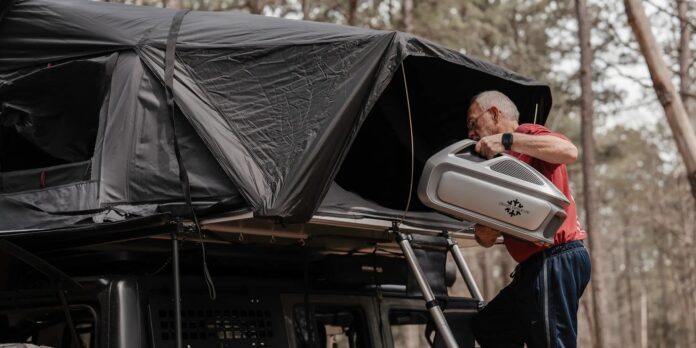
Quick Facts:
- Product: Zero Breeze Mark 3 portable air conditioner.
- Bundles: Unit only, or the AC with 1, 2 or 3 batteries.
- Cooling: 5,280 BTU from a 22 lb unit on 48V DC.
- Battery: 1,022 Wh and 14 lb per pack; up to 5 packs chain.
- Sleep mode: 150 to 200 W, rated 5 to 7 hours per battery.
- Bundle savings: Each bundled battery costs $299 less than a standalone pack.
- Warranty: 1 year.
- Best for: Rooftop tent, truck and van campers who sleep through hot nights.
8 min read
In This Guide
- Overview
- Zero Breeze Mark 3 Bundles Compared: Price, Runtime and Weight
- How Many Hours Each Mark 3 Battery Covers
- Which Mark 3 Bundle Fits Your Nights and Trips
- Who Should Buy the Zero Breeze Mark 3 Unit Only
- Bundle Batteries vs. Your Own Power Station
- Mark 3 Pros and Cons From Owners and the Spec Sheet
- Final Thoughts
- FAQ
4wdTalk earns a commission when you buy through links on this page, at no extra cost to you. As an Amazon Associate, 4wdTalk also earns from qualifying purchases.
Quick Picks
- Our pick, Mark 3 + 2 Batteries, for most summer campers: Check price at ZERO BREEZE (pick AC + 2 Batteries in the Type menu).
- Mark 3 + 1 Battery, for mild nights and short trips: Check price at ZERO BREEZE.
- Mark 3 + 3 Batteries, for desert heat and long camps: Check price at ZERO BREEZE (pick AC + 3 Batteries).
- Unit only, for rigs with a big house battery: Check price at ZERO BREEZE (pick Basic, AC Only).
- Prices checked November 4, 2026.
Overview
Your Zero Breeze Mark 3 bundle decides whether the tent stays cool until sunrise or warms up at 2 a.m. The unit sells four ways: alone, or bundled with one, two or three 1,022 Wh batteries. Prices run from $1,299 to $3,099 on the brand’s own store, price checked November 4, 2026.
Battery count is the real buying decision. In Sleep mode, the unit draws 150 to 200 W, per the maker. Therefore, one battery covers 5 to 7 hours, while a full 8-hour night needs 1,200 to 1,600 Wh. Cooling capacity is rarely the limit, since ENERGY STAR sizes a 5,000 BTU room air conditioner for 100 to 150 square feet.
We dug deep into Reddit, Facebook owner groups and owner reviews to see which bundle owners settle on. Most land on two batteries for summer. I drive a 2025 Chevy Colorado ZR2, and for a midsize truck or rooftop tent, two batteries is where I’d start too. For ducting and wiring steps, see our guide on how to run tent AC off a battery.
Before you add batteries, cut the heat. Reflectix foil insulation for windows, a small fan and a thermometer-hygrometer cost less than one battery. Each degree you block saves watt-hours overnight.
Cut the heat load before you buy more batteries

Reflectix BP24025 24-Inch by 25-Feet Bubble Pack Insulation


TempPro TempAir Digital Hygrometer Indoor Thermometer Room Thermome…
Zero Breeze Mark 3 Bundles Compared: Price, Runtime and Weight
The table lists each bundle as sold on the brand’s own store. Runtime figures come from the maker’s FAQ, and the three-battery row extends the same per-battery math.
| Bundle | Price | Battery | Weight | Sleep mode | Cool mode |
|---|---|---|---|---|---|
| Unit only | $1,299 | None | 22 lb | Your power source | Your power source |
| AC + 1 battery | $1,899 | 1,022 Wh | 36 lb | 5 to 7 hours | 3 to 5 hours |
| AC + 2 batteries | $2,499 | 2,044 Wh | 50 lb | 10 to 14 hours | 6 to 10 hours |
| AC + 3 batteries | $3,099 | 3,066 Wh | 64 lb | 15 to 21 hours | 9 to 15 hours |
Prices above are the no-venting-kit options, price checked November 4, 2026. Each step up adds $600. By comparison, a standalone battery sells for $899, down from a $1,000 regular price. As a result, the two-battery bundle saves $598 over buying the unit and two packs separately. Likewise, the three-battery bundle saves $897.
Also, a separate Venting Kit menu adds a Tent Venting Kit for $50 more. It ships in its own package, and ZERO BREEZE quotes 12 to 15 business days for delivery. For me, the bundle discount is the strongest reason to settle your battery count at checkout.
How Many Hours Each Mark 3 Battery Covers
Start with your night, not the battery. Multiply your mode’s watts by your sleep hours. For example, 8 hours in Sleep mode at 150 to 200 W uses 1,200 to 1,600 Wh. One Mark 3 battery holds 1,022 Wh, so it runs out before morning on most warm nights.
Heat changes the math fast. In Cool mode, the draw climbs to 200 to 350 W, or 1,600 to 2,800 Wh over 8 hours. Consequently, a hot, humid night in Cool mode calls for two or three batteries.
Field reports line up with the spec sheet. Two independent reviewers report 5 to 7 hours per battery in Sleep mode in mild weather. Meanwhile, a rooftop tent owner on hot, humid nights reports using about one and a half batteries over 8 hours. In addition, the brand’s own test ran three batteries for 11 hours 5 minutes at 93 degrees F and 80 percent humidity.
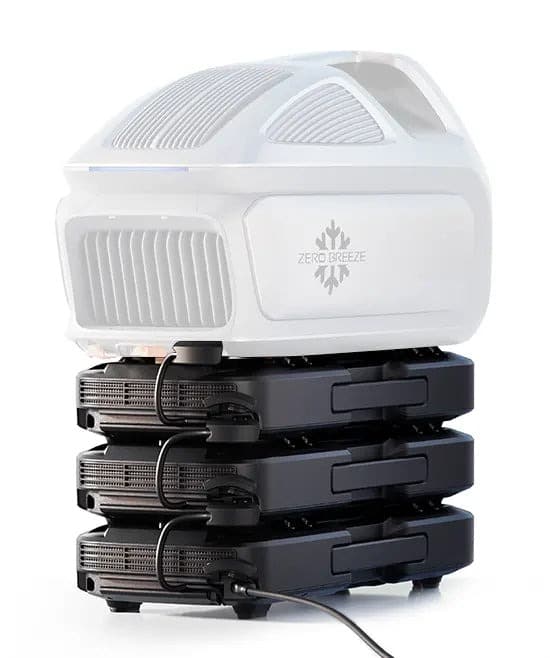
Chained batteries hand off on their own. When the first pack empties, the next one takes over, so you never wake up to swap packs. The system supports up to five batteries in a chain.
Recharge Before the Next Night
Runtime only counts if you refill it. The included 500 W adapter takes one battery from zero to 80 percent in about 2 hours on shore power. Similarly, the built-in 500 W solar controller accepts 12V to 60V panels. However, the battery caps charge current at 10A, so a 12V socket delivers about 120 W. At this rate, a full pack takes about 8.5 hours of driving. Our guide on what size solar panel you need covers the panel side.
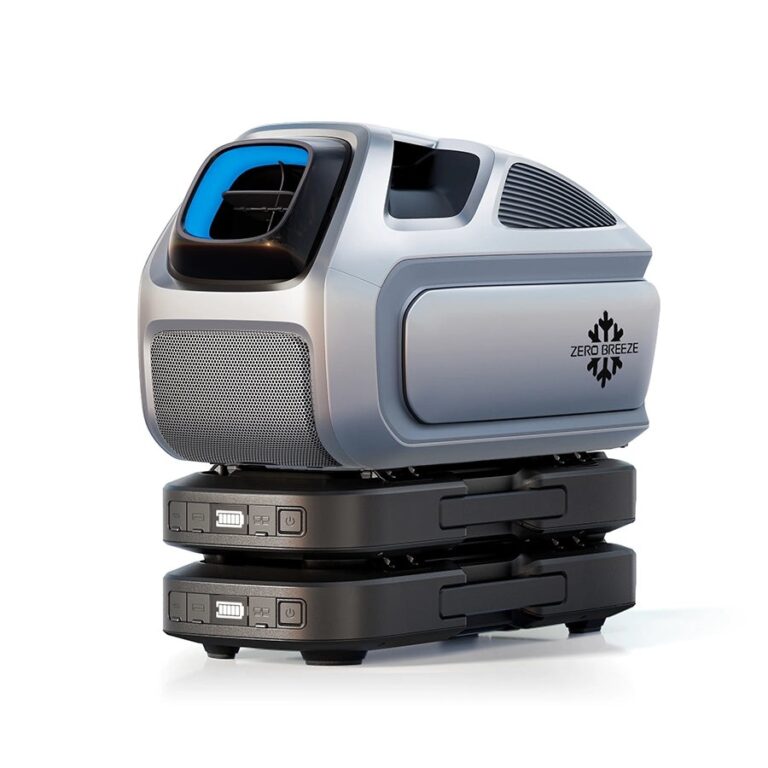
Sleep Cool Until Sunrise With the Mark 3 + 2 Batteries
Pick AC + 2 Batteries in the Type menu for 2,044 Wh, rated 10 to 14 hours in Sleep mode. The packs chain with a built-in cable and switch over on their own.
Check Price at ZERO BREEZE
Which Mark 3 Bundle Fits Your Nights and Trips
Size any overlanding air conditioner to your hottest expected night, then add a margin. Here is how the three battery options map to real trips.
One Battery: Mild Nights and Short Trips
Pick the one-battery set if your nights cool off after dark, you camp in shade or at elevation, or you drive every day. A three-week Southwest test by GPX Adventures found one battery handled nights when the air dropped after sunset. Also, the set is the cheapest battery bundle, at $1,899.
Two Batteries: Most Summer Campers
Two batteries cover a full 8-hour night in Sleep mode with margin, and most owners settle here. The pair weighs 28 lb, so you carry 50 lb in total with the unit. For a rooftop tent, a midsize truck or an SUV, the Mark 3 + 2 Batteries bundle is the one I’d buy. Then refill both packs by day from solar, the vehicle or shore power.
Three Batteries: Desert Heat and Multi-Day Camps
Three batteries suit desert heat, humid coasts and camps where you stay put for days. Use the third pack to run Cool mode in the evening, or to bank power for a cloudy day. However, 64 lb of gear needs real storage space, and the refill load grows with every pack. If you camp this way often, a vehicle house battery plus the unit only might serve you better.
Who Should Buy the Zero Breeze Mark 3 Unit Only
The unit-only option costs $1,299 and ships with a 100V to 240V AC adapter. Therefore, it runs from shore power or an inverter, and it also accepts 48V DC directly. Owners also run it from house batteries and power stations, so skip the bundled packs if your rig already carries serious storage.
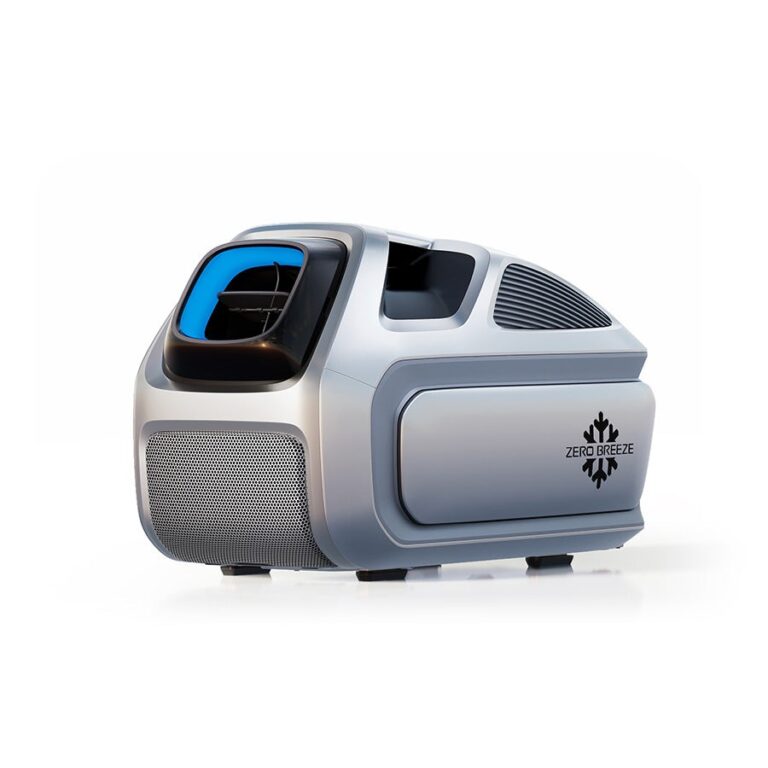
Run the Mark 3 Unit Only From Your Own Power
Pick Basic (AC Only) in the Type menu. The 22 lb unit ships with a 100V to 240V AC adapter and also accepts 48V DC.
Check Price at ZERO BREEZERun the Unit Only From a 12V House Battery
For a 12V house battery, ZERO BREEZE recommends its 12V to 48V Converter with Eye Terminals. This version costs $219, price checked November 4, 2026. Because it pulls heavy current at 12V, the maker calls for a fuse of 60A or more. Feed it from a second battery charged by a DC-DC charger, never your starting battery. Our guide on how to wire a second battery covers charger choices.
For example, one truck camper owner with about 7,200 Wh of lithium skipped the Mark 3 packs entirely. Instead, the unit ran from the house bank through the converter. This setup suits anyone who already carries a large bank and a DC-DC charger.
If you take the converter route, plan on a few parts the converter kit leaves out. Specifically, buy a fuse holder rated 60A or more and a battery monitor to track amp-hours overnight. The Eye Terminals kit includes its own input cable.
12V wiring parts for the converter route

BOJACK 0/2/4 Gauge AWG In Line ANL Fuse Holder with 60 Amp Fuse


Bundle Batteries vs. Your Own Power Station
Any battery powered air conditioner lives or dies by its power source. A power station you already own looks like free runtime. However, the Mark 3 runs on 48V DC, so a typical station feeds it through the AC adapter and the station’s inverter. One early owner points to a 12V to 48V converter as the simpler DC route. Each extra conversion wastes power.
Owners run the unit from a Pecron station and DIY lithium banks, and one charges packs from a Bluetti. On a mild night, one owner ran Sleep mode until morning from a 1,000 Wh station. Notably, Mark 3 packs connect with a built-in cable, switch over on their own and weigh 14 lb each.
Two bundled packs add $1,200 to the unit-only price. Choose bundled batteries if you want a plug-and-sleep setup with no extra wiring. Instead, use your own station or house bank if it already holds 2,000 Wh or more. For other battery powered air conditioner options, see our list of the best portable camping air conditioners.
Mark 3 Pros and Cons From Owners and the Spec Sheet
We weighed owner reports from Reddit, Trustpilot and Facebook owner groups against the spec sheet. Here is where they agree.
Pros
- Real compressor cooling, and Mark 2 upgraders report colder air.
- Rated at 46 dB in Sleep mode, quiet enough to sleep beside.
- Sleep mode runtime lands close to the rated 5 to 7 hours per battery in mild weather.
- Batteries accept 12V to 60V input and run the AC while they charge.
- At 22 lb, the unit fits rooftop tents, minivans, teardrops and truck campers.
Cons
- Some owners report error codes and shutdowns, and one owner reports a leaking unit.
- One battery rarely lasts a hot, humid night, and 12V socket charging runs slow.
- Customer service reports are mixed, with some slow replacements.
The one trade-off I’d flag is reliability. Error codes are the most repeated owner complaint, and the warranty lasts one year. Therefore, run any new bundle at home for a few nights before a long trip.
Final Thoughts
If you sleep through hot summer nights in a tent, truck or van, the Mark 3 earns its place. Its biggest strength is weight: 22 lb of compressor cooling you lift with one hand.
Be honest about your nights before you check out. One battery runs short on warm nights, and a third pack adds weight and a bigger refill job. Also, reliability reports are mixed, so test it at home first. If you camp mostly at elevation or in shade, a fan and a reflective tarp cost far less.
My pick for most overlanders is the two-battery bundle. As an overlanding air conditioner setup, it covers a full night, saves $598 against separate packs and stays light enough to move. Owners with a big house bank should buy the unit only and spend the difference on wiring. Match your pack count to your hottest night, and the tent stays cool until sunrise.
FAQ
How long does a Zero Breeze Mark 3 battery last?
One 1,022 Wh battery runs Sleep mode for 5 to 7 hours and Cool mode for 3 to 5 hours, per the maker. Two batteries double those figures. Heat, humidity and fan speed shorten runtime.
How many batteries do you need for a full night?
Plan on two for an 8-hour summer night in Sleep mode, which needs 1,200 to 1,600 Wh. Cool mode needs two or three, and desert heat calls for three. One battery suits mild or shaded nights.
Does the Mark 3 run from a power station or truck battery?
Yes. It runs from a power station through the included AC adapter, or from a 12V house battery through the brand’s 12V to 48V Converter. Never draw from your starting battery.
Is the battery bundle cheaper than buying batteries separately?
Yes. Each bundled battery adds $600, while a standalone battery costs $899, price checked November 4, 2026. The two-battery bundle saves $598, and the three-battery bundle saves $897.
What changed from the Zero Breeze Mark 2?
Like the Mark 3, the Mark 2 used a detachable battery, rated 840 Wh at 24V. By contrast, the Mark 3 pack holds 1,022 Wh at 48V and chains up to five. It also runs the AC while it charges, with no extra dock. Owners who upgraded report colder air, and the Mark 3 adds a thermostat the Mark 2 lacked. Our Zero Breeze Mark II review covers the older unit.