


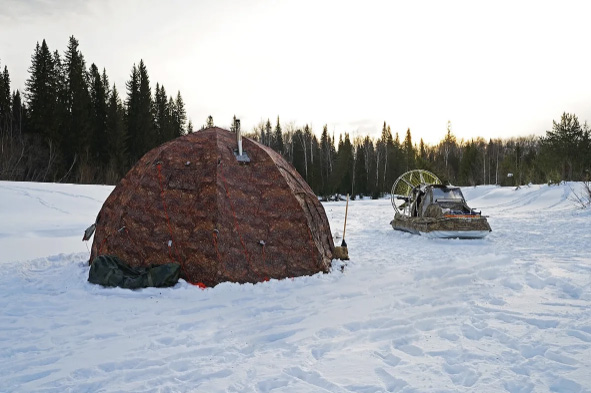

Most campers treat Labor Day as the end of the season. Serious overlanders treat it as the beginning of the best months to be outside. Shoulder season camping, the window from late September through early April when trails thin out and crowds disappear, rewards the campers willing to do a little more prep work.
The fall camping tips in this guide are drawn from real cold-weather use, not theoretical gear comparisons. They cover the two phases of shoulder season separately, because a 35°F October night and a -10°F February night require different gear thresholds and different planning.
The Bereg UP-7 features prominently here because it solves the central problem of shoulder season camping: staying warm in a shelter without buying a separate winter setup. At $2,763.00 USD, it’s a serious investment and it deserves a thorough explanation. This guide gives you the full picture, from the gear checklist to the shelter math, so you finish the season with the right setup for where you camp.
Quick Facts:
- Topic: Shoulder season camping and fall camping tips for overlanders and cold-weather campers
- Featured Shelter: Bereg UP-7 hot tent
- UP-7 Price: $2,763.00 USD
- UP-7 Capacity: 5-7 persons with stove and folding beds; 14 with sleeping bags
- UP-7 Temperature Rating: -58°F / -50°C (arctic cape recommended below -13°F / -25°C)
- UP-7 Setup Time: Under 1 minute (aviation aluminum frame)
- UP-7 Weight: 78.5 lbs (35.6 kg)
- Best for: Overlanders, backcountry hunters, and group campers extending their season into fall and winter
13 min read
In This Guide
- What Is Shoulder Season Camping?
- The Two Phases of Shoulder Season Fall Camping
- Shelter: The Make-or-Break Variable for Fall Camping Tips
- Fall Camping Tips: Sleep System Temperature Ratings
- Cold-Weather Vehicle Prep
- The Bereg UP-7: A Shoulder Season Shelter Case Study
- UP-7 vs. Four-Season Tent: Which One?
- Final Verdict
- Frequently Asked Questions
What Is Shoulder Season Camping?

Shoulder season camping covers the transition periods outside peak summer and deep winter: roughly September through November in the fall, and March through April in the spring. These fall camping tips apply to both windows, though the gear requirements differ significantly between them. For most campers, these periods mean cooler nights, emptier campgrounds, and lower permit pressure. For overlanders and backcountry hunters, however, shoulder season is often the primary season. Elk season in Wyoming runs late September through early November. Dispersed camping in the Rockies and Pacific Northwest is most accessible in October, before snow closes forest roads. Fall camping in these contexts isn’t a novelty extension of summer trips. It’s a distinct activity with its own gear requirements.
The fall camping tips in this guide address two different kinds of shoulder season campers. First, the car camper or overlander who wants to add a few weeks to their season without buying a completely new kit. Second, the serious cold-weather user who’s already committed to year-round camping and wants to do it more efficiently. Both groups benefit from the same core principle: cold weather punishes under-prepared gear faster than any other camping condition. Wet sleeping bags, failed zippers, and condensation-soaked tents are not inconveniences in 25°F weather. They’re trip-enders.
The Two Phases of Shoulder Season Fall Camping

Shoulder season breaks cleanly into two phases, and treating them as the same conditions leads to gear mismatches. Phase 1 runs from late September through late October in most of the continental US. Specifically, overnight lows range from 28°F to 45°F. Precipitation is more likely rain than snow at most elevations below 8,000 feet. A three-season tent with a quality sleeping bag rated to 15°F performs adequately in Phase 1. The risks are wet gear from condensation and rain, not catastrophic cold failure.
Phase 2 runs from November through early April, and this is where gear decisions become consequential. Overnight lows regularly hit 10°F to -20°F at elevation. Snow loading on tent poles becomes a real failure mode. Wind chill at exposed campsites drops effective temperatures below what most four-season tents are rated to handle continuously. For vehicle-based overlanders, a heated shelter system changes the calculation entirely. A wood-stove-compatible hot tent rated for real cold is a different product category from a four-season backpacking tent. Understanding this distinction is the first fall camping tip worth internalizing.
Gear Thresholds by Phase
Phase 1 gear requirements: sleeping bag rated to 15°F or lower, sleeping pad with R-value of 4 or higher, three-season or convertible tent with a rainfly rated above 1,500 mmHg, base layers made from wool or synthetic (no cotton), and a reliable water filter rated for near-freezing temperatures. These are moderate upgrades for most campers who already camp in summer.
Phase 2 gear requirements shift significantly. Specifically, a sleeping bag rated to -10°F or lower becomes the floor for comfort camping. Sleeping pad R-value of 6 or higher is the standard for ground insulation. Shelter must handle snow loading without manual intervention from inside. Additionally, for overlanders using a vehicle as a base, diesel fuel additives or a switchover to winter-blend diesel becomes necessary below 20°F. A four-season camping tent or heated hot tent eliminates the sleeping bag arms race for group camps, which is the most cost-effective approach for extending your camping season into deep winter.
Shelter: The Make-or-Break Variable for Fall Camping Tips
Shelter is where shoulder season camping gets expensive if you make the wrong first purchase. Most campers follow a predictable progression: they push their three-season tent one trip too far, replace it with a four-season tent, and eventually land on a hot tent system after discovering how poorly four-season tents handle condensation without a stove. Each transition costs money and time. As a result, starting with a clear-eyed view of what you need avoids both.
A standard four-season tent handles wind and moderate snow load but does nothing about temperature. You’re still relying entirely on your sleeping bag, pad, and moisture management. Specifically, condensation inside a single-wall or under-ventilated tent destroys sleeping bags faster than any other variable in cold weather camping. After two or three nights, a damp sleeping bag loses a significant portion of its insulation value. However, a well-designed hot tent with double-wall construction, an air gap between layers, and stove compatibility changes this entirely. The gap prevents condensation transfer to the sleeping area. Meanwhile, the stove dries gear, warms the interior, and extends the effective temperature range of your entire sleep system.
Why Shelter Reliability Matters Most in Remote Camps
For camping off grid in remote locations, shelter reliability matters more than at a developed campground. There’s no camp host to help and no emergency gear store nearby. A shelter rated for your worst-case conditions, not your average conditions, is the standard to use when planning backcountry cold-weather trips. The difference between three-season and four-season tent construction matters most in these scenarios, so understanding those specs before buying saves a costly upgrade cycle.
Fall Camping Tips: Sleep System Temperature Ratings

Sleeping bag temperature ratings follow the EN 13537 standard in Europe and the ISO 23537 standard in North America. Both produce four ratings: upper limit, comfort, lower limit, and extreme. The comfort rating is the most useful number for shoulder season planning, because it represents the temperature at which the female reference model sleeps comfortably. Women’s bags are often rated 5-10°F warmer than men’s bags at equivalent fill because the comfort threshold differs between the male and female reference models. For planning purposes, use the comfort rating printed on the bag, not the lower limit or extreme rating, which represent survival thresholds rather than comfortable sleep temperatures.
In Phase 1 shoulder season camping, a bag rated to 15°F at the comfort level is the practical minimum. For Phase 2, a bag rated to -10°F covers most continental US shoulder season conditions below 6,000 feet elevation. Above 8,000 feet in the Rockies or Sierra, a -20°F bag is the more cautious choice. Keep in mind, sleeping bag ratings assume a clean, dry bag. Moisture from condensation or sweat reduces insulation performance significantly; maintaining a dry bag across multi-night trips is as important as the rating itself. Cold weather camping gear maintenance means drying your bag daily, not only at the end of the trip.
Sleeping Pad R-Value: The Underrated Variable
Sleeping pad R-value measures resistance to heat flow through the pad. The scale runs from 1 (minimal insulation) to 9 (extreme cold rated). For shoulder season Phase 1 camping, R-4 is the minimum. For Phase 2, R-6 is the standard most cold-weather campers use. Ground temperature pulls body heat faster than cold air, because conduction transfers heat more efficiently than convection. Therefore, a sleeping bag rated to -10°F on a summer air mattress (R-1) performs like a 15°F bag at best. As a result, pairing a cold-rated bag with a minimum R-4 pad is one of the highest-value fall camping tips for campers who haven’t addressed both variables.
Buy Direct From Bereg Canada
The UP-7: Built for Shoulder Season and Beyond
A -58°F rated hot tent for 5-7 campers, set up in under 60 seconds. One shelter handles every phase of shoulder season camping without a separate winter kit.
Cold-Weather Vehicle Prep for Overlanders

Your vehicle is part of your cold-weather camping system, not merely transport. Diesel vehicles face wax crystal formation in summer-blend fuel starting around 32°F, with full gelling typically occurring between 10°F and 15°F. Adding a fuel anti-gel additive or switching to winter-blend diesel before temperatures drop prevents fuel system failures at start-up. Most diesel anti-gel additives provide protection to -25°F to -40°F and cost $15 to $25 per treatment. For Phase 2 overlanding trips, this is the lowest-cost insurance available.
Battery performance also drops significantly in cold weather. A lead-acid battery at 0°F delivers roughly 50% of its rated cranking amps compared to performance at 80°F. Lithium iron phosphate (LiFePO4) auxiliary batteries handle cold better than lead-acid but still lose capacity below -4°F. For shoulder season overlanding, testing your starting battery before cold-weather trips and carrying jumper cables or a jump pack is the minimum. Alternatively, an onboard air compressor, a recovery kit, and extra fuel round out the vehicle prep for remote cold-weather trips.
Similarly, tire pressure drops approximately 1 PSI per 10°F temperature decrease. A tire set to 35 PSI in 70°F weather reads around 30 PSI at 20°F. Under-inflation in cold weather increases rolling resistance, reduces fuel economy, and risks bead seating failure on hard off-road terrain. Check tire pressure in the morning when temperatures are at their lowest, not after driving when tires have warmed up.
The Bereg UP-7: A Shoulder Season Shelter Case Study

The Bereg UP-7 addresses every Phase 2 shoulder season shelter problem in one product. Its double-wall construction uses Oxford 300 fabric with PU 4,000 mmAq waterproof coating on the outer fly and Oxford 210 with PU 2,000 mmAq on the inner. As a result, an air gap between the layers reduces condensation transfer to the sleeping area. For reference, most budget four-season tents rate between PU 800 mmAq and PU 1,500 mmAq on their outer fabric. The UP-7’s outer fly rating is two to five times higher depending on the comparison model.
The aviation aluminum alloy frame (B95T1, equivalent to USA AA7075 and EU ENAW 7075) uses 10mm rod construction. It sheds snow load through the dome-umbrella geometry rather than requiring occupants to push snow off from inside. At 16.4×16.4×7.5 ft interior, the UP-7 sleeps 5-7 people comfortably with a wood stove and folding beds, or up to 14 in sleeping bag configuration. Two stove jacks (3.3×3.9 in / 84×100 mm diameter, fitting 3.1 in / 80 mm pipe) support two simultaneous stoves for group camps in severe cold. The jacks use heat-resistant fabric with a metal insert pocket, not a simple grommeted hole.
Setup takes under one minute due to the built-in frame design. In Phase 2 shoulder season conditions at -20°F, a one-minute setup versus a 15-minute pole assembly is not a convenience difference. It’s an exposure risk difference. When choosing the right shelter for cold-weather use, setup speed under real field conditions deserves the same weight as temperature ratings. The canvas wall tent selection criteria guide covers frame systems and setup logistics in more detail for campers comparing tent types.
UP-7 Specifications at a Glance
| Specification | Details |
|---|---|
| Price | $2,763.00 USD |
| Interior dimensions | 16.4 x 16.4 x 7.5 ft (5 x 5 x 2.3 m) |
| Packed size | 57 x 16 x 16 in (145 x 40 x 40 cm) |
| Weight | 78.5 lbs (35.6 kg) |
| Frame material | 10mm aviation aluminum alloy B95T1 (USA AA7075 / EU ENAW 7075) |
| Outer fly | Oxford 300, PU 4,000 mmAq |
| Inner fly | Oxford 210, PU 2,000 mmAq |
| Temperature rating | -58°F / -50°C (arctic cape recommended below -13°F / -25°C) |
| Setup time | Under 1 minute |
| Capacity | 5-7 with stove and folding beds; 14 with sleeping bags |
| Stove jacks | 2 x 84×100 mm (fits 80 mm pipe), heat-resistant with metal insert |
| Entrances / Windows | 2 entrances, 2 windows (mosquito net + cold-resistant PVC) |
Save on the Bereg UP-7
One Shelter for Every Phase of Shoulder Season
Rated to -50°C, set up in under 60 seconds, and large enough for a full overlanding group with a stove. The UP-7 replaces your four-season tent and your sleeping bag upgrade at once.
UP-7 vs. Four-Season Tent: Which One Is Right for You?

The comparison between the UP-7 and a standard four-season tent starts with what the word “four-season” means in practice. Most four-season tents are designed for backpackers who need a tent light enough to carry and structurally sound enough to handle alpine wind and moderate snow loading. Specifically, they are not designed for heated interiors, group occupancy, or multi-day stationary use. The Hilleberg Nammatj, for example, weighs approximately 2.3 kg minimum and retails around $1,075 USD. However, it handles four-season alpine conditions well but offers no stove compatibility and produces significant condensation in extended cold use.
The UP-7 as a System vs. Individual Gear Upgrades
The UP-7 is a different product category. Its 78.5 lb weight makes it a vehicle-based shelter, not a backpacking option. However, for overlanders who drive to camp, the weight trade-off is irrelevant. Instead, the comparison is about system cost over time. A quality four-season camping tent at $800 to $1,200 USD still requires sleeping bags rated to -20°F or colder for Phase 2 shoulder season camping. Those bags run $300 to $700 each. For a group of four, the sleeping bag cost alone runs $1,200 to $2,800, plus the tent itself.
A hot tent in the UP-7 price range reduces dependence on high-end sleeping bags because a wood stove keeps the interior warm through the night. Note: a stove is not included with the UP-7 and is sold separately; select one to fit the 3.1 in (80 mm) stove jack diameter. For comparing the full cold weather camping gear system cost, this detail changes the math significantly. Extending your camping season with this setup ends up costing less per person than outfitting a group for Phase 2 with individual cold-rated sleeping systems.
Choosing Between Hot Tent and Four-Season Camping Tent
The verdict for most 4WDTalk readers is straightforward: the UP-7 is the better choice for vehicle-based group camping in Phase 2 conditions. The hot tent vs. four-season tent breakdown on 4WDTalk covers this comparison in full detail. Solo backpackers at elevation with a carry-in kit are the one case where a four-season tent remains the practical tool. For everyone else driving to camp with a group, the system economics favor the UP-7.
Final Verdict
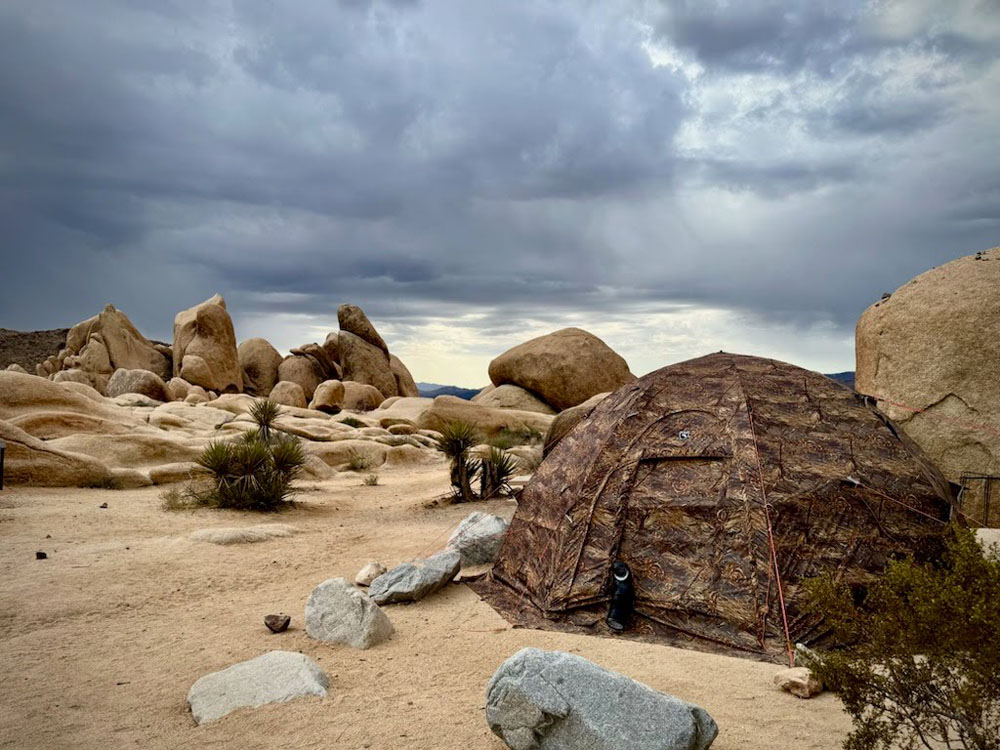
Shoulder season camping is accessible to most overlanders and serious campers willing to upgrade two variables: shelter and sleep system. For Phase 1 fall camping (September through late October), however, the changes are modest. A 15°F sleeping bag, an R-4 sleeping pad, and a three-season tent with a quality rainfly handle the conditions. Also, cold-weather vehicle prep, specifically diesel fuel treatment and a battery check, rounds out the Phase 1 prep list. These are low-cost upgrades for campers who already own baseline gear.
Phase 2 is where the decisions become consequential. Below 20°F overnight, a four-season tent without a heating system asks a lot from your sleeping bag and your body. For solo backpacking-style camps, an expedition sleeping bag rated to -10°F or colder paired with a quality four-season camping tent works, at high cost per person. For overlanders camping in groups with vehicle access, a hot tent system like the UP-7 is the more efficient path. It handles the shelter, condensation, and temperature variables in one product rather than requiring coordinated upgrades across every gear category.
UP-7 Value: System Cost vs. Individual Gear Cost
The UP-7 at $2,763.00 USD is a serious number. However, compared to outfitting a group of five for Phase 2 shoulder season camping with individual cold-rated sleeping systems and a capable four-season camping tent, the total system cost is often similar or lower. It also extends the season further than sleeping bag upgrades alone. The 78.5 lb packed weight means it stays with the vehicle, which is where most 4WDTalk readers are camping anyway.
For campers who aren’t ready for the UP-7 investment, the Phase 1 upgrades are worth making this fall. Start with the sleep system. A sleeping pad with R-value under 4 is the most common reason campers feel cold even in a rated sleeping bag. Fix the pad first, then the bag. After a few shoulder season trips, the shelter upgrade case makes itself. These fall camping tips help extend your camping season from weekend car camping to full winter overlanding, and the gear threshold is lower than most people expect for Phase 1. Extending your camping season doesn’t require a complete kit overhaul; it requires fixing the right variables in the right order.
Ready to Extend Your Season?
The Bereg UP-7: The Shelter Built for These Conditions
Aviation aluminum frame, dual stove jacks, and a -58°F temperature rating. Built for the conditions where other shelters quit. Available direct from Bereg Canada.
Frequently Asked Questions
What is shoulder season camping?
Shoulder season camping refers to camping outside the peak summer window, specifically the September through November fall transition and the March through April spring transition in most of the continental US. For overlanders and backcountry hunters, this period often coincides with the most productive and least crowded time to be in the field. Overnight temperatures range from the high 20s°F in Phase 1 to well below 0°F in Phase 2, requiring a different gear approach than summer camping.
How cold is too cold to go camping?
There is no universal lower limit; the threshold depends on your gear, your shelter type, and your experience level. With a sleeping bag rated to -10°F, a sleeping pad at R-6, and a heated shelter, camping at -30°F is manageable for prepared overlanders. The practical limit for most campers without a heated shelter is around 0°F to -10°F with appropriate cold weather camping gear. Below 0°F, a hot tent system like the UP-7 stops being a luxury and becomes the practical choice for staying safe overnight.
What sleeping bag temperature rating do I need for fall camping?
For Phase 1 shoulder season camping (28°F to 45°F overnight lows), a sleeping bag rated to 15°F at the comfort level is the practical minimum. For Phase 2 camping (10°F to -20°F overnight), a bag rated to -10°F is the standard. Use the EN 13537 or ISO 23537 comfort rating, not the survival or extreme rating, for planning purposes. Pair any cold-weather bag with a sleeping pad rated R-4 or higher; ground conduction reduces effective bag performance more than air temperature in most shoulder season conditions.
Is a regular tent good enough for shoulder season camping?
A three-season tent works for Phase 1 shoulder season camping with the right sleeping system. For Phase 2 conditions below 20°F overnight, a three-season tent’s waterproof coating and ventilation system are generally insufficient to manage condensation across multiple nights. A four-season tent improves wind and snow load performance but still relies entirely on your sleeping bag for warmth. A hot tent system with stove compatibility, like the UP-7, is the most efficient Phase 2 solution for vehicle-based overlanders because it addresses temperature, condensation, and shelter durability in one product.
What gear do I need for shoulder season camping?
For Phase 1 shoulder season camping, the core list includes: sleeping bag rated to 15°F, sleeping pad with R-value of 4 or higher, tent with a rainfly rated above 1,500 mmHg, wool or synthetic base layers (no cotton), and a water filter rated for near-freezing temperatures. For Phase 2, also add: sleeping bag rated to -10°F or colder, sleeping pad at R-6, heated shelter or quality four-season tent, diesel fuel treatment if overlanding, and a jump pack or battery tester. Extend camping season success comes from addressing the sleep system first, then the shelter.
Friendly disclaimer: Our articles may contain affiliate links that support us without costing you more, and sometimes we spice things up with sponsored content—but only for products we truly stand behind!