


Quick Facts:
- What it is: a dealer installed GPS tracker, added to the vehicle by the selling dealership rather than the factory
- Common brands: Ikon Technologies, Spireon, LoJack, RecovR, Elo GPS, CarRx, Advantage GPS, Apex Protect
- Where owners find them: OBD-II port splitter, kick panel, passenger footwell, fender liner, taped to the inner fender, clamped to the battery
- States with owner reports: at least 16, across every region of the country
- How common: unknown, and nobody publishes a rate. Our count comes from owner posts, not from a survey
- States banning the practice: zero
- Vehicles affected: Bronco, Tacoma, 4Runner, Silverado, Wrangler, F-150, Maverick and more
- New or used: both, and several owners paid cash
- Typical disclosure: one signature line inside the finance paperwork, or nothing at all
12 min read
In This Guide
- One Bronco Owner Found a Dealer Installed GPS Tracker Under the Hood
- Who Builds These Units and Who Sells Them to Your Dealer
- Where Owners Keep Finding Them
- The Reports Now Span at Least 16 States
- What the Law Says About a Dealer Installed GPS Tracker
- Dealer Trackers vs. Factory Telematics
- How to Tell If Your Truck Carries One
- What This Means, Whether You Already Signed or Not
- Frequently Asked Questions
One Bronco Owner Found a Dealer Installed GPS Tracker Under the Hood
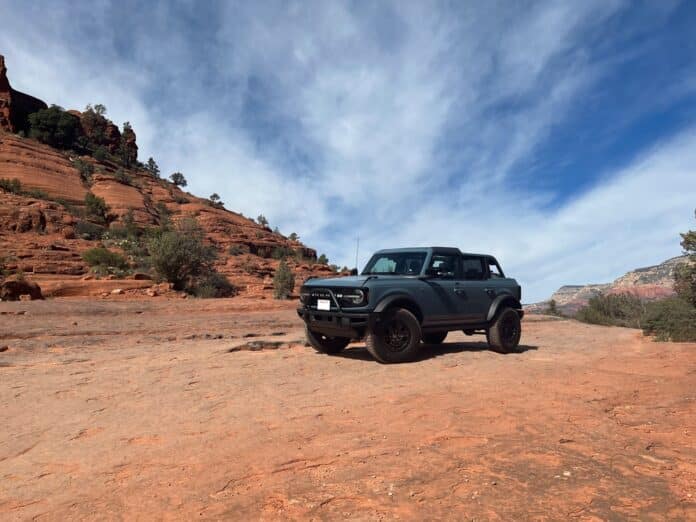
An Idaho owner popped the hood on his 2025 Bronco Badlands and spotted a small black box beside the fuse box, blinking amber and green with a red wire running into the battery wiring. Heavy double-sided tape held it to the body, label side down, so nothing identified it from above. He pulled the power feed, waited, then saw no faults. Working the box loose revealed a label reading “Ikon Technologies.” A dealer installed GPS tracker had ridden along since the day he bought the truck.
He had bought it used, from the same dealership originally ordering the vehicle. Notably, his first instinct was to look under the dash, because so many owners have found trackers there. Only later did he think to check the engine bay.
Two other owners answered his thread within days. One in West Palm Beach bought his Bronco new and found a unit in the dash under the steering wheel. Another north of Seattle found a RecovR module beneath the passenger footwell mat. Three owners, three states, three different hiding spots. None of them recalled a conversation at the dealership about any of it.
Why Dealerships Put Them There in the First Place
Dealerships have a real reason for putting these units on the lot. Inventory walks off, and a tracker helps find it. Some stores also resell the hardware in the finance office as a theft-recovery product. There it sits on the menu beside the other dealer add-ons. The problem starts later, when a truck leaves the lot with the module still aboard, still powered, still reporting, and nobody tells the person driving it.
Checking your own truck takes a flashlight, a set of trim tools and, for the spots you cannot reach, a borescope. The full sweep comes later in this guide. Here is the short version of what it takes.
| Start Here | See Behind Trim | Check the Port | |
|---|---|---|---|
| Product | TOP PICK Tresalto Trim Kit Tresalto Trim Kit | 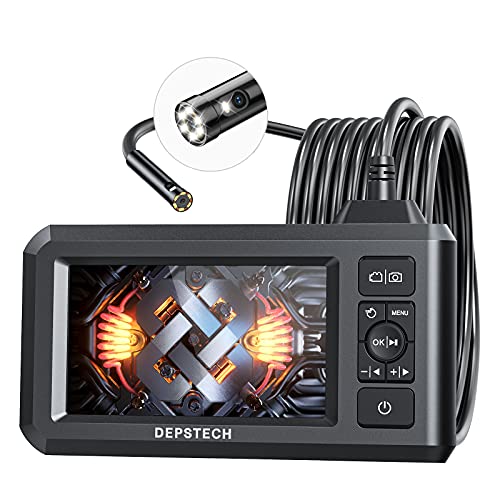 DEPSTECH Borescope DEPSTECH Borescope |  ANCEL AD310 ANCEL AD310 |
| Rating | ★★★★★ 4.7 27,500 ratings | ★★★★☆ 4.5 7,300 ratings | ★★★★☆ 4.6 66,500 ratings |
| Job on your truck | Pops kick panels and dash trim | Looks behind panels you cannot pull | Confirms nothing rides on the OBD port |
| Skill needed | None | None | Plug in and read |
| Price | $7.49 as of Oct 22, 3:29 pm | $59.99 as of Oct 22, 9:41 pm | $28.49 as of Oct 22, 4:08 pm |
| Check Price → | Check Price → | Check Price → |
Who Builds These Units and Who Sells Them to Your Dealer
Owners name the same handful of companies over and over. Ikon Technologies turns up most, followed by Spireon, RecovR, Elo GPS, CarRx, Advantage GPS and Apex Protect. None of these are obscure regional outfits. The largest of them market nationally rather than by region.
Ikon, Spireon, RecovR and the Rest
Solera owns two of the biggest names at once. It bought Spireon in March 2022, and Spireon had already bought the LoJack US business from CalAmp for $8.0 million a year earlier. Spireon’s franchise-dealer brand, Kahu, folded into the LoJack name on June 15, 2021. Any current reference to Kahu therefore points at a brand retired five years ago.
Procon Analytics runs three brands from one Irvine address, each aimed at a different kind of store. Advantage GPS serves buy-here-pay-here lots and subprime lenders. Elo GPS goes to independents, while CarRx goes to franchise dealerships. Ikon Technologies, based in Arlington, Texas, is the former Skypatrol USA, relaunched under its current name in December 2018. RecovR, owned by the Kudelski Group, went nationwide in June 2021.
From Subprime Lots to Franchise Dealer Showrooms
Ten years ago this was almost entirely a subprime story. A 2014 New York Times investigation found the devices in roughly 2 million vehicles, and in about one quarter of subprime auto loans. Back then the hardware existed to enforce payment. It usually paired with a starter interrupt device capable of shutting the vehicle down remotely.
Since roughly 2018, the same hardware has moved into mainstream franchise stores. Spireon added 73 new franchise dealer customers in the first half of 2018 alone. Ikon Technologies now markets GPS to franchise dealerships as a finance-office product. Its pitch calls the item non-cancellable and resistant to chargebacks. The shift explains why owners with strong credit keep finding this hardware. They order a Bronco or a Tacoma brand new, then find a module aimed historically at borrowers in trouble.
Where Owners Keep Finding Them
Installers work fast and hide the unit where a customer will not look during a test drive. Across dozens of owner reports, the same locations repeat.
Under the Hood and on the Battery
The engine bay hides a lot. Owners have found modules taped to the inner fender and tucked against the fender liner. Others sit clamped directly to the battery terminals, or spliced into the main wiring loom through an inline fuse. An Albuquerque owner found a similar module inside his 2025 4Runner’s fender, stuck with double-sided tape and wired to the battery. His photos almost exactly match the Idaho Bronco, though the brand on his unit stayed unconfirmed in the thread. In Sugar Land, Texas, another owner found an Ikon AN76 taped to the inner fender of a Silverado 1500 Duramax. His sales manager had promised it would not go on the truck.
Behind the Dash and the Kick Panel
Inside the cabin, the OBD-II port does most of the work. Installers use a Y-splitter or a short adapter cable, so the diagnostic port still functions. Meanwhile the module rides behind the dash. Owners also report units behind the driver-side kick panel, above the pedal box, and under the passenger footwell mat. One turned up in a seat-back pocket as a wireless unit with no wiring at all. Those battery-powered versions have nothing to disconnect, because they never touched the truck’s electrical system. Pulling a fuse will not stop one.
All the Hiding Spots at a Glance
| Hiding Spot | How It Connects | Difficulty to Spot |
|---|---|---|
| OBD-II port, behind dash | Y-splitter or piggyback cable | Easy with a flashlight |
| Driver-side kick panel | Spliced into a fuse-panel circuit | Requires trim removal |
| Passenger footwell, under mat | Self-powered, no wiring | Easy, lift the mat |
| Inner fender, engine bay | Double-sided tape, inline fuse to battery | Moderate, look low and behind |
| Battery terminals | Clamped directly to the posts | Easy once you look |
| Seat-back pocket | Battery-powered wireless unit | Easy, but rarely searched |
The Reports Now Span at Least 16 States
Owner posts across roughly twenty forums produce reports from 16 states. The list runs Arizona, California, Colorado, Florida, Georgia, Idaho, Illinois, New Mexico, North Carolina, Ohio, Oklahoma, Pennsylvania, South Carolina, Tennessee, Texas and Washington. Every region of the country appears. Texas produces the most posts. Truck forums skew heavily toward Texas anyway, so the raw count says more about where posters live than where the practice concentrates.
Two patterns matter more than the map. First, the same vendor and the same install signature show up in states sharing no dealer group. One install signature, taped under the hood and wired to the battery, appears on an Idaho Bronco, an Albuquerque 4Runner and a Houston-area Silverado. Owners identified Ikon hardware on two of those three. Second, the clustering runs by dealer group rather than by geography. Owners in Nashville, Rialto and Friendswood all quote a variation of the same line from a salesperson or service advisor: “the store puts them on every vehicle it sells.”
How to Read This Sample
Because the sample comes from self-selected forum posts, it supports no rate at all. Nobody counts the owners who never looked. The honest claim therefore stays narrow. Reports come from at least 16 states, and a dealer installed GPS tracker follows national vendor channels rather than a regional quirk. Anyone quoting a percentage of vehicles is guessing. The last credible national figure dates to 2014, and the industry’s own finance-office benchmark does not track this category.
Notably, the vehicles skew toward exactly what you would expect on an off-road site. Broncos, Tacomas, 4Runners, Silverados, Wranglers, F-150s and Mavericks dominate the reports. Partly this reflects the forums, since 4Runner, Bronco and Wrangler owners run some of the most active communities online. Several of those owners paid cash. A Rialto, California, buyer reported a dealership installing the units on every vehicle regardless of financing. An Edmond, Oklahoma, buyer discovered his tracker only because a five-year Ikon subscription he never purchased appeared on his account.
What the Law Says About a Dealer Installed GPS Tracker
Here is the short version. Roughly 26 states plus the District of Columbia regulate private location tracking. Almost every one of those laws turns on consent. A signature inside the finance stack satisfies the requirement. The practice therefore stays legal in essentially every state. Only the thickness of the disclosure obligation shifts as you cross a state line.
No State Bans a Dealer Tracker
Seven states go further than generic consent rules. Each writes specific requirements for dealer or lender hardware. California limits its rules to buy-here-pay-here dealers under Civil Code 2983.37, which leaves franchise stores outside the statute. Nevada runs the strictest regime. Creditors cannot charge the consumer for a starter interrupt device, and they owe 48 hours of notice. Installers need certification, while activating the device counts as constructive repossession. New York requires certified-mail notice ten days before any remote disablement, with criminal exposure attached. Similarly, New Jersey, Colorado, Rhode Island and Oklahoma each add notice or written-consent conditions. The last two exempt dealers outright once written consent exists.
Ban attempts keep dying. New York legislators introduced outright prohibitions four separate times between 2013 and 2020. Every version stalled in committee. Illinois House Bill 4166 would have barred a starter interrupt device installed solely to secure payment on the vehicle. It died in Rules in 2021. Montana and Florida both amended 2025 bills to carve out financed vehicles after industry lobbying.
The Federal Rule Died in Court
A national backstop nearly arrived. The Federal Trade Commission’s CARS Rule would have required express informed consent before folding any add-on into a contract. It also barred charging for add-ons providing no benefit to the buyer. A tracker billed to the customer sits squarely inside the definition. Then the Fifth Circuit vacated the rule on procedural grounds in January 2025. The agency formally withdrew it from the Code of Federal Regulations on February 12, 2026.
Yet the vacatur rested on procedure rather than on any finding of lawful conduct. Enforcement against this specific practice, though, remains close to nonexistent. In February 2017 the FTC opened an inquiry into GPS and kill-switch use by two large subprime lenders. Nine years later it has published no disposition.
States Are Filling the Gap
With the federal rule gone, individual legislatures have moved. California SB 766 takes effect October 1, 2026. It requires total-price disclosure covering any item installed on the vehicle, plus written notice stating dealer add-ons remain optional. Pennsylvania, Massachusetts and Oregon have each tightened dealer advertising or fee rules since 2024. For a Bronco or Tacoma buyer, the practical effect depends entirely on which side of a state line the dealership sits.
Dealer Trackers vs. Factory Telematics
Your truck already reports its location. FordPass, Toyota Connected Services and OnStar all pull position data. You agreed to it in the owner’s manual and the app terms. So why does a second box matter?
Three differences stand out. First, you control the factory system through an account you own, and you switch data sharing off inside the app. The dealer unit answers to a third party you never contracted with. Second, factory telematics report to the manufacturer under a published privacy policy. A GPS tracking device added at the dealership reports instead to a vendor whose retention rules you never saw. Nevada, notably, is the only state we found forcing a purge schedule, at 180 days.
Third, the legal footing differs. A federal court in California ruled in 2023 on the reach of the state’s anti-tracking statute. It covers a separate device attached by the alleged wrongdoer, while a built-in telematics unit falls outside. An aftermarket module bolted in by a dealership fits the first description precisely. Compared to factory hardware, the dealer box sits on weaker ground. Even so, no prosecution of a dealership under any state tracking statute has surfaced.
For what it is worth, tracking hardware does earn its keep in the right hands. Silverado 1500 and F-150 sit near the top of the NICB theft rankings. Our look at the most stolen trucks of 2025 makes the case for a tracker you control yourself. One Seattle-area owner kept the module he found. Now he drops it in the truck before parking somewhere sketchy.
How to Tell If Your Truck Carries One
Start with the paperwork rather than the truck. Pull the deal jacket and read every page, including the pages nobody reads. Look for a line item naming a theft-recovery product or a telematics subscription. Also look for a vendor name from the list above, or a separate consent form authorizing location monitoring. Several owners found the charge only after the fact. One found a five-year subscription he never agreed to.
Then sweep the vehicle. A flashlight and twenty minutes cover most of it. Check the OBD-II port first, feeling behind it for a splitter or a second cable. Pull the driver-side kick panel and the passenger footwell mat. Open the hood and look low along both inner fenders, then at the battery posts. A borescope helps you see behind trim without pulling it. Meanwhile a plastic trim kit keeps you from cracking clips on a new truck.
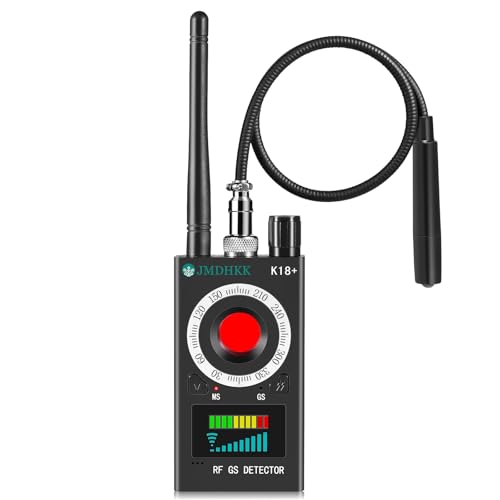
An RF detector adds one more layer, though it finds a GPS tracking device only while the unit transmits. Many modules report on a schedule instead, so a quiet detector proves nothing on its own. Sweep with the truck keyed on, repeat the pass a few times across a day, and treat the result as one input rather than a verdict.
RF detectors if you want a second layer



Found something? Our full walkthrough on how to find and remove the tracker covers device types, safe battery-disconnect steps and the warranty question. Photograph the unit in place before touching anything. A dated photo becomes your evidence if the conversation with the dealership turns unfriendly.
What This Means, Whether You Already Signed or Not
Most readers arrive here after the fact, having already bought the truck. If you find a module and nobody disclosed it, the money is the first thing worth checking. Owners report finance-office charges between roughly $600 and $1,300. The same hardware sells used on eBay near $60, and a consumer-grade tracker you own outright costs a fraction of either figure. Pull the contract and look for the line item, because an undisclosed charge is easier to dispute than an undisclosed device. If a charge appears and nobody mentioned it, put your complaint to the general manager in writing, then to your state attorney general’s consumer protection division. Several owners who pushed got the charge reversed, although the dealership still declined to pull the hardware.
The Hardware Is Not the Real Problem
On the device itself, a module sitting on the lot is a legitimate inventory tool. The failure sits in the handoff rather than the hardware. A dealership tracking its own unsold inventory acts reasonably. However, a dealership sending you home in a financed truck with a live hidden GPS tracker nobody mentioned has a disclosure problem. No amount of theft-recovery framing fixes it.
The trade-off cuts both ways, though. Owners in high-theft metros sometimes keep the unit deliberately, because a second locator beats none if the truck disappears. Others object on principle, especially after paying cash. Both positions hold up. The deciding factor is whether you made the choice or somebody made it for you. Similar math shows up whenever a store bundles hardware into a deal, which raises the same question we put to winch buyers: is the dealer-installed option worth it once you price the aftermarket version?
Three Steps for Your Next Dealer Visit
Buying again? Three steps cover you next time. Ask directly whether the vehicle carries a dealer installed GPS tracker, and get the answer in writing. Read the add-on section of the contract line by line, especially when buying a used truck. Then sweep the vehicle yourself within the first week. The cheapest time to settle this is before the deal closes, rather than eighteen months into a loan.
Frequently Asked Questions
Is a dealer installed GPS tracker legal?
Yes, in every state, provided the buyer consented. About 26 states plus the District of Columbia regulate private location tracking. Those statutes turn on consent rather than prohibition. A signature on a disclosure page inside the finance paperwork satisfies the requirement almost everywhere. Seven states add dealer-specific notice rules, and none of them ban the practice.
Does a dealer have to tell you about a tracker?
It depends on the state and on how the store structures the sale. California requires written consent, though only from buy-here-pay-here dealers, so franchise stores fall outside the rule. Colorado, Nevada, New Jersey, New York, Rhode Island and Oklahoma each impose notice or written-consent conditions. Elsewhere a general consent statute applies, and a buried signature line clears it.
Will removing a tracker void your factory warranty?
An aftermarket module added by the dealership forms no part of the manufacturer’s warranty. Removing it should not affect factory coverage under the Magnuson-Moss Warranty Act. Financing changes the calculation, because your contract might treat the device as a bargained-for term. No documented case has surfaced of a lender accelerating a loan over a removal, though the warning circulates widely online. Ask a consumer-finance attorney before cutting anything on a financed vehicle.
Do new vehicles get trackers, or only used ones?
Both. Owner reports include brand-new custom orders, demo units, dealer loaners and cash purchases with no financing attached. The practice began in buy-here-pay-here and subprime lending. It then moved into franchise showrooms as a finance-office product starting around 2018. Credit quality no longer predicts whether a vehicle carries one.
How do you find a hidden GPS tracker in a truck?
Work the paperwork first, then the vehicle. Check the OBD-II port for a splitter. Pull the driver-side kick panel and the passenger footwell mat. Then open the hood and inspect both inner fenders and the battery posts. A borescope reaches behind trim without removing it. An RF detector finds a unit only while it transmits, so silence proves nothing on a module reporting to a schedule.