



Quick Facts:
- Topic: The best free dispersed camping in the USA for off-roaders and overlanders
- States covered: 10, from the Mojave to the Northern Rockies
- Land managers: BLM and the national forests
- Typical cost: $0 on most BLM and national forest land
- Permits: None for dispersed camping; California requires a free campfire permit
- Stay limit: 14 days is the norm; Montana allows 16
- Vehicle needed: Graded gravel reaches many sites; high-clearance or 4WD opens the rest
- Best season: Desert in fall through spring; mountains in summer
- Heads up: Carry water in the desert, store food in bear country, and check fire restrictions
- Best for: Overlanders who want solitude, dark skies, and legal free camping
13 min read
In This Guide
- The Best Free Dispersed Camping in the USA: What Off-Roaders Need to Know
- The Rules of Free Dispersed Camping
- When and Where to Find the Best Free Dispersed Camping
- The Desert Southwest: Arizona, Utah, Nevada, and New Mexico
- California and the Pacific Northwest
- The Northern Rockies: Colorado and Montana
- National Resources for Planning a Trip
- Which Region Fits Your Trip?
- Final Verdict
- Frequently Asked Questions
The Best Free Dispersed Camping in the USA: What Off-Roaders Need to Know
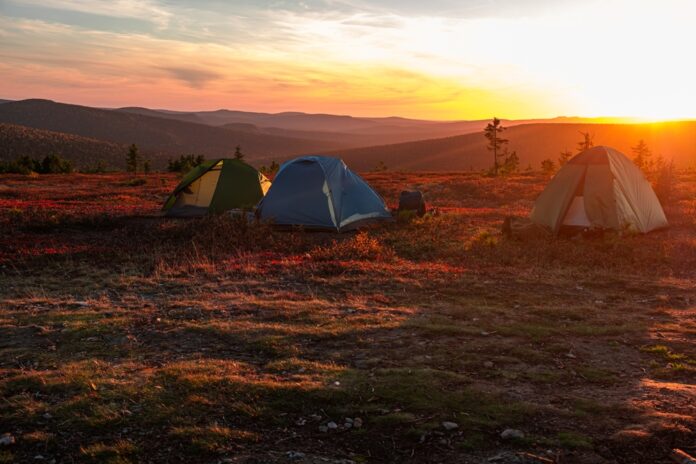
The best free dispersed camping in the USA buys you solitude, dark skies, and a legal place to park the rig far from any fee booth. Hundreds of millions of acres of it lie across the West, most on BLM or national forest land where camping outside developed campgrounds costs nothing. For an off-roader or overlander, public land camping like this is the whole point.
This guide is the hub for our state-by-state series. Below, we route you to 10 states we have covered in depth, grouped by region, with the marquee spots and the honest catches for each. Every destination offers free primitive camping on BLM or forest land, so the trip costs nothing. We also grade the terrain, because some sites take any vehicle while others want high-clearance or 4WD.
Before you go, learn the national ground rules, since they change by agency and by season. New to the idea? Our guide on dispersed camping done right covers the mindset, and how to find free camping covers the scouting. With those basics down, the best free dispersed camping in the country opens up from the Mojave to the Montana high country.
The Rules of Free Dispersed Camping
The rules stay consistent nationwide, with a few state twists worth knowing. On BLM and national forest land, dispersed camping is free and needs no reservation. Stay limits, campfire rules, and bear rules shift by state, so here is the national reference for free primitive camping on federal land.
| Rule | Details |
|---|---|
| Cost | $0 for dispersed sites on BLM and national forest land |
| Reservation | None required for dispersed camping |
| Stay limit (BLM) | 14 days within a 28-day period, then move on |
| Stay limit (national forest) | Usually 14 days in 30; Montana allows 16 in 30 |
| Campfires | Fire-season bans are common; California requires a free campfire permit even for a gas stove |
| Bear food storage | Required in grizzly country: hard-sided vehicle or certified container |
| Camp location | On bare ground, within about 150 feet of an open route, 200 feet from water |
| Waste | Pack out all trash; bury human waste 6 to 8 inches deep |
The Motor Vehicle Use Map is the legal source of truth, since motorized dispersed camping is allowed only along open routes. Follow leave no trace principles at every site. Overuse is exactly why popular corridors near Moab, Sedona, and Lake Tahoe keep converting to designated or fee-only camping. Camp on already-used ground, pack out everything, and the free system stays open for the next rig.
When and Where to Find the Best Free Dispersed Camping
Timing matters as much as location for public land camping, because the country splits into two calendars. The desert runs cool and comfortable from fall through spring, then bakes dangerously in summer. Meanwhile the mountains flip the pattern, holding snow until early summer and opening from roughly June through October. Match your region to the season and the trip gets far easier.
Fire, water, and bears
Three hazards shape a Western trip. Fire comes first. Stage 1 and Stage 2 restrictions ban open flame across much of the West each summer, so a permitted gas stove is often the only legal way to cook. Water comes second in the desert Southwest, where most sites have none and summer heat turns deadly. Carry at least a gallon per person per day. Bears come third in the Northern Rockies, where grizzly food-storage orders make a locked hard-sided vehicle mandatory. Plan for all three and you avoid the mistakes ending trips early.
The Desert Southwest: Arizona, Utah, Nevada, and New Mexico
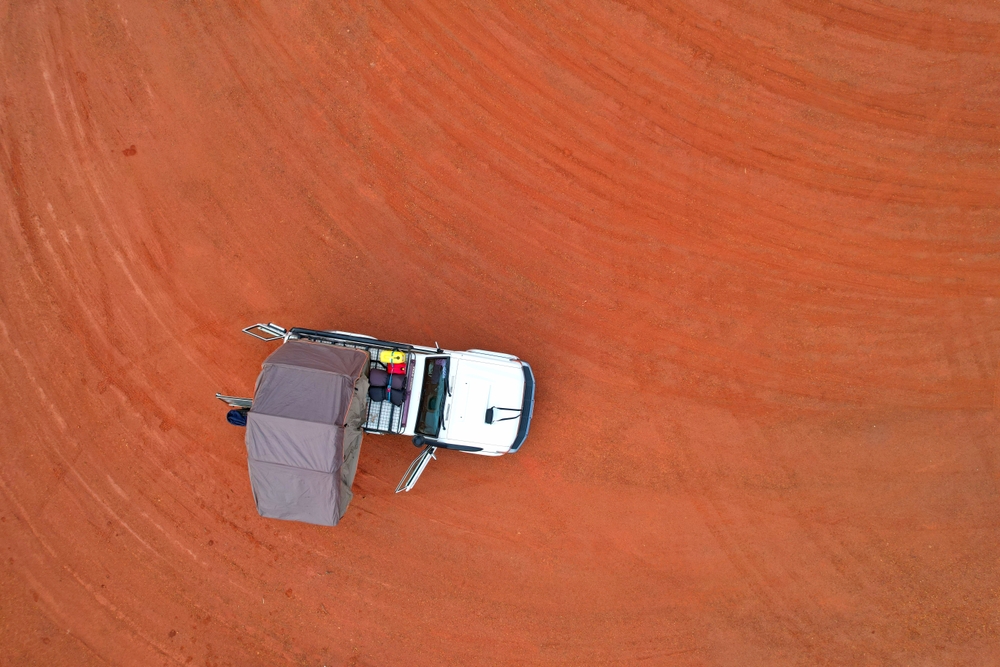
The Southwest is the heartland of free desert camping and BLM boondocking, with vast valleys and red-rock country in every direction. This region delivers the best free dispersed camping for the cool months, roughly October through April, when the low desert is comfortable and the crowds thin out. Water and heat are the constant cautions.
Arizona
Arizona runs on two seasons. In winter, the low desert around Quartzsite opens huge BLM 14-day areas for boondockers. Come summer, the Mogollon Rim along Forest Road 300 offers cool pine camping at elevation. Heat is the thing to plan around, so time the desert for the cool months and climb the Rim when it warms. Our free dispersed camping in Arizona guide maps the spots and the fee traps to avoid.
Utah
Utah gives you red-rock and slickrock camping for free, which makes it the quiet alternative to paying near Moab. Valley of the Gods and the Lockhart Basin road deliver iconic desert sites, and most reward high-clearance. Spring and fall are the windows, since summer heat is severe and some famous areas near Moab have shifted to fee sites. The full picks are in our dispersed camping in Utah roundup.
Nevada
Nevada is roughly 80% public land and the emptiest state in the guide. The Black Rock Desert playa and the BLM valleys along US-50, the Loneliest Road, offer wide-open BLM boondocking under some of the darkest skies anywhere. Water and heat lead the planning, and the playa turns to trapping mud when wet. The low desert runs fall through spring, while the high ranges hold summer. Our full Nevada guide publishes shortly.
New Mexico
New Mexico splits between low Chihuahuan desert and high country around the Gila and the Sangre de Cristos. El Malpais National Conservation Area along County Road 42 and the Gila corridor on NM-15 put you on the Continental Divide and at the edge of true wilderness. Fire restrictions ran heavy in 2026, and a few famous areas have closed to camping, so the honesty flags matter here. Our full New Mexico guide publishes shortly.
California and the Pacific Northwest
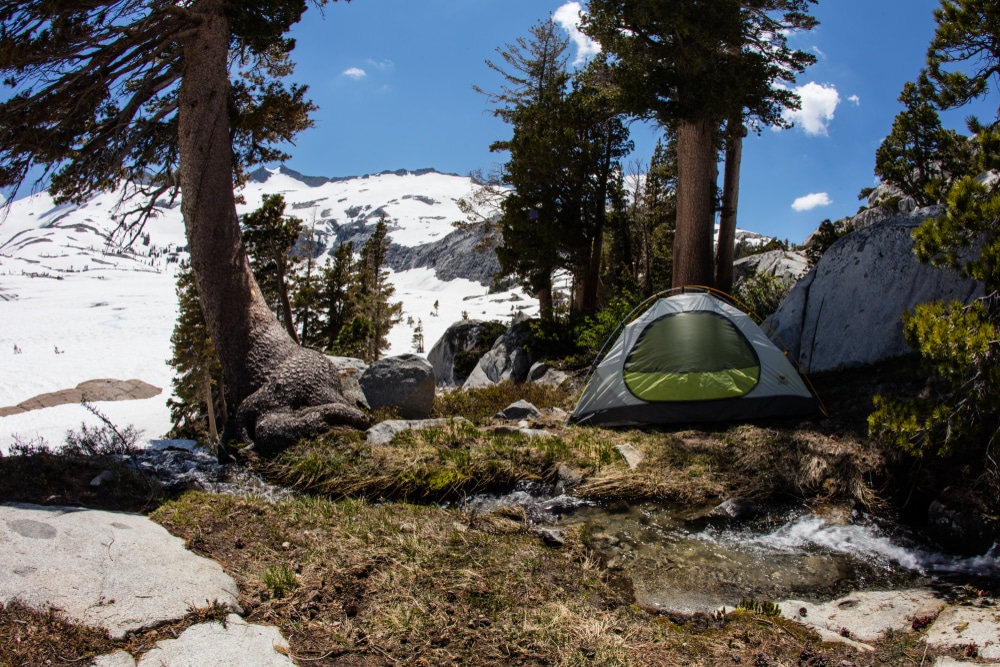
The West Coast trades pure desert for volcanoes, alpine crests, and fog-soaked forest. Here the best free dispersed camping comes with more regulation, so the rules tighten and the seasons shorten. Even so, the free country on offer rivals anywhere, from Mojave washes to the North Cascades.
Southern California
Southern California packs 1.6 million free Mojave acres plus the rock-crawling mecca of Johnson Valley, home to King of the Hammers. Anza-Borrego, a rare state park with an open-camping policy, adds space near the cities alongside the BLM desert. Plan it for October through April, since the desert bakes in summer. Our free dispersed camping in Southern California guide has the details.
Northern California
Northern California is volcano-and-4×4 country, built around Mount Shasta, the McCloud forest roads, and the obsidian flows of the Medicine Lake Highlands. The season runs roughly May through September at elevation. Its honest catch is the California Campfire Permit, which the state requires for any stove or fire, plus a full dispersed-camping ban inside the Lake Tahoe Basin. Our dispersed camping in Northern California guide covers the campfire-permit rule in full.
Oregon
Oregon hides one of the West’s great free camps at the Alvord Desert, a drive-anywhere playa beneath Steens Mountain. The southeast high desert stretches the season from June into November, longer than most mountain zones. Fire restrictions still clamp down in late summer, so a stove beats a campfire plan. Our dispersed camping in Oregon guide covers the playa and the forest roads.
Washington
Washington rewards a capable rig with Harts Pass, the highest road in the state, and the Little Naches OHV network on the drier east side. The window is short, from late June to mid-October, once the passes melt out. Note the wet west side and the state DNR 10-day stay limit, which runs shorter than the federal norm. See our dispersed camping in Washington guide for the routes and the stay-limit details.
The Northern Rockies: Colorado and Montana
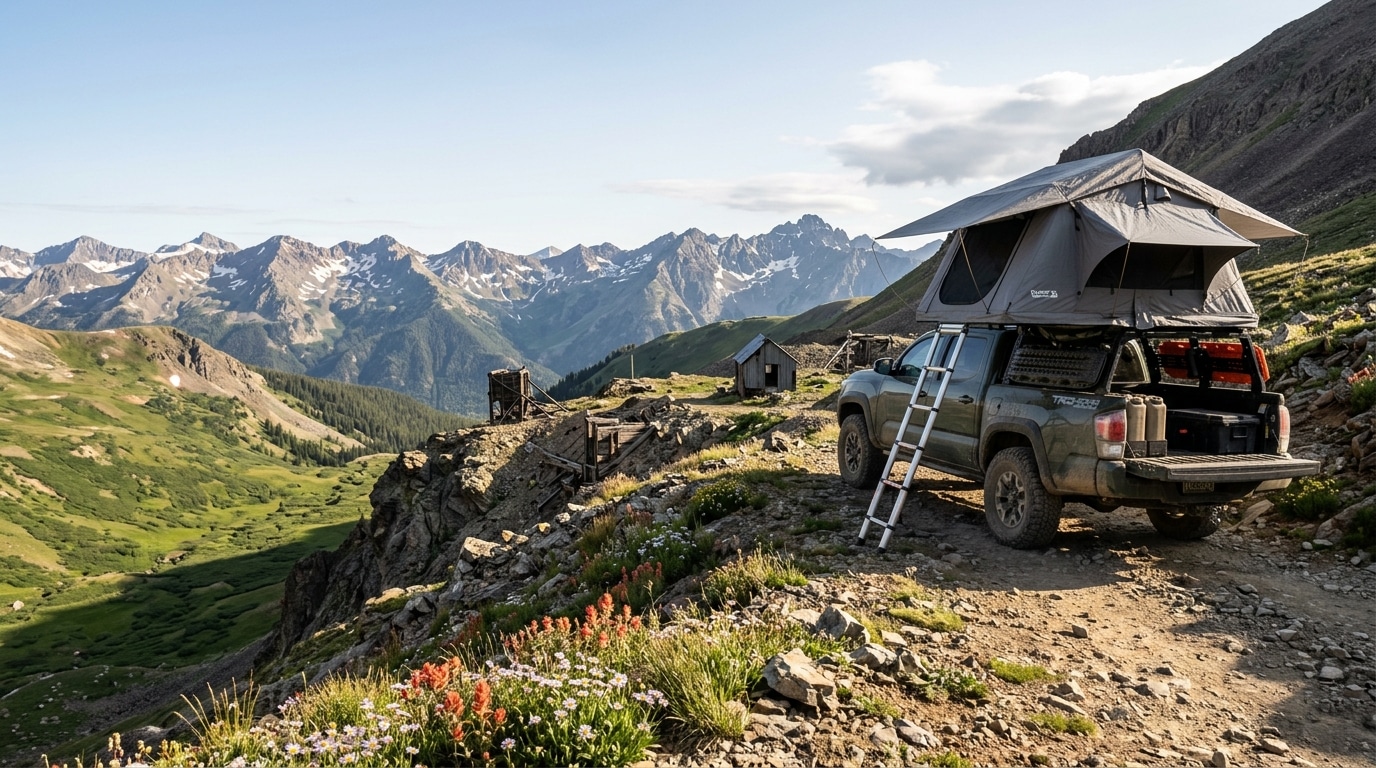
Farther inland, the Rockies deliver the high-altitude prizes: shelf roads, alpine lakes, and passes above 12,000 feet. Some of the best free dispersed camping in the guide waits up here, though the season is the shortest, roughly July through September. This region also carries the strictest bear rules once you reach the Northern Rockies.
Colorado
Colorado is the alpine 4×4 dream, with the Alpine Loop between Silverton and Lake City and the aspen country over Kebler Pass. Shelf roads climb past 12,000 feet between old mining towns, so high-clearance and nerve both help. July through September is the window, and afternoon thunderstorms are the daily hazard at altitude. Our dispersed camping in Colorado guide has the routes.
Montana
Montana crowns the series with free alpine camping and a front-row seat to Glacier and Yellowstone. The Beartooth Highway near Pilot Creek and the Hungry Horse Reservoir loop stand out, and both sit in grizzly country. Bear food-storage orders are mandatory here, so a locked hard-sided vehicle is standard gear. The season runs late May through October. See the dispersed camping in Montana guide for the full list.
National Resources for Planning a Trip
Conditions change fast, so bookmark the official sources before any trip. Each link below resolves to the agency managing the land, the fire rules, or the reservations for developed alternatives, and together they cover the whole country.
| Resource | Use it for | Link |
|---|---|---|
| BLM Recreation | BLM dispersed rules, maps, and state offices | blm.gov |
| USDA Forest Service | Forest alerts, fire orders, and travel maps | fs.usda.gov |
| Recreation.gov | Reservations and permits for developed sites | recreation.gov |
| InciWeb | Active wildfire incidents nationwide | inciweb.wildfire.gov |
| California Campfire Permit | The free permit required for any stove or fire in California | readyforwildfire.org |
| Leave No Trace | The seven principles for low-impact camping | lnt.org |
From the 4wdTalk Garage
Across ten states, the same rig habits carry over. For graded gravel like the Mojave washes or the US-50 valleys, a high-clearance crossover or a stock truck does the job. Airing down to around 20 psi calms the washboard. On alpine shelf roads in Colorado, the Utah slickrock, and the wet desert playas, you want real 4WD, a low range, and recovery gear. Sand, mud, and rock each strand the underprepared in different ways.
Two habits travel with you everywhere. First, match the season to the region, since the desert kills in summer and the mountains lock up in winter. Second, carry the essentials for self-reliance. Pack extra water, a propane stove for fire-ban country, a bear-proof plan in the Northern Rockies, and a paper map where cell signal disappears. Camp on used ground, air back up on pavement, and you leave every one of these places open for the next overlander.
Which Region Fits Your Trip?
Start with the calendar. A fall or winter trip points to the Desert Southwest, where Arizona, Utah, Nevada, and New Mexico stay comfortable while the mountains sleep under snow. By summer, the Rockies and the Pacific Northwest take over, since Colorado, Montana, and the Cascades only open from July onward.
Then match the terrain to your rig. A stock crossover or a 2WD truck does well on the graded BLM valleys of Nevada, the Mojave, and the Arizona desert. Those stay easy in dry weather. Owners of a 4WD with low range earn the Colorado shelf roads, the Utah slickrock, and the Montana high country.
Finally, pick your flavor. Dark skies and pure solitude point to Nevada or New Mexico. Rock-crawlers head to Southern California or Utah. Alpine scenery means Colorado or Montana. Any of them delivers some of the best free dispersed camping in the country once you plan around the season.
Final Verdict
The United States offers more free public land camping than almost anywhere on earth, and the ten states in this guide are the cream of it. From the Mojave to the Montana high country, an overlander with a capable rig and a little planning camps for free almost indefinitely. This is the quiet luxury of the American West.
The catch is responsibility, not cost. You have to read the fire orders, carry water in the desert, and store food in bear country. Knowing which famous areas now charge fees or have closed matters too. People who skip the homework get turned around or worse. Those who plan around season, water, fire, and bears get a continent of free country to themselves.
The one thing money cannot buy here is timing. A free site in the wrong season is a closed road or a 105-degree afternoon with no water, while the same spot two months earlier is the best night of the trip. Spend your planning on the calendar and the fire orders, not the budget, and a high-clearance rig opens more country than any amount of cash.
Use this hub as your map, then dive into the state guide for wherever you are headed. Each one names the marquee spots, grades the roads, and flags the honest catches. Together they add up to the best free dispersed camping in the USA, mapped for the way off-roaders and overlanders travel.
Free Dispersed Camping Guides by State
- Arizona
- Utah
- Southern California
- Northern California
- Oregon
- Washington
- Colorado
- Montana
- New Mexico (publishing soon)
- Nevada (publishing soon)
Frequently Asked Questions
Is dispersed camping free in the USA?
Yes. Dispersed camping on BLM and national forest land is free across the country, with no reservation required. Developed campgrounds, national parks, and some monuments charge fees. Confirm whether a named site is free dispersed or a paid site before you go.
How long is a dispersed camping stay on public land?
The norm is 14 days. BLM uses 14 days within a 28-day period, and most national forests use 14 days within 30. Montana forests allow 16 days, and a few areas set shorter limits, so check the local rule. After the limit, you relocate to a new area.
Do you need a permit for free dispersed camping?
No permit is needed for the camping itself. California is the exception for fire: the state requires a free campfire permit for any stove or fire on federal land. Always check current fire restrictions, which often ban open flame entirely in summer.
Where is the best free dispersed camping in the USA?
It depends on the season. The best free dispersed camping in the cool months is in the Desert Southwest, across Arizona, Utah, Nevada, and New Mexico. In summer, the Rockies and the Pacific Northwest take over, led by Colorado, Montana, Oregon, and Washington.
What are the best states for boondocking?
For sheer space and BLM boondocking, Nevada and Arizona lead, since both are mostly public land. Utah, Colorado, and Montana stand out for scenery. Each state guide in this series maps the marquee spots and the honest catches for its region.
Are campfires allowed at dispersed sites?
Often not in summer. Stage 1 and Stage 2 fire restrictions ban wood and charcoal fires across much of the West each year. A permitted gas stove is often the only legal option. Carry a stove, and check the forest or BLM alerts page before every trip.