



Quick Facts:
- Topic: Forest Service over-snow vehicle rule
- Regulation: 36 CFR Part 212, Subpart C
- Effect: Riding outside designated areas is prohibited
- Who acts: BlueRibbon Coalition action alert
- Date: Alert launched July 2, 2026
- Goal: Rescind Subpart C and restore open winter access
- Status: Rule in force; rescission is a proposal
- Best for: Snowmobilers and mixed-use trail users
4 min read
In This Article
Over-Snow Vehicle Rule Overview
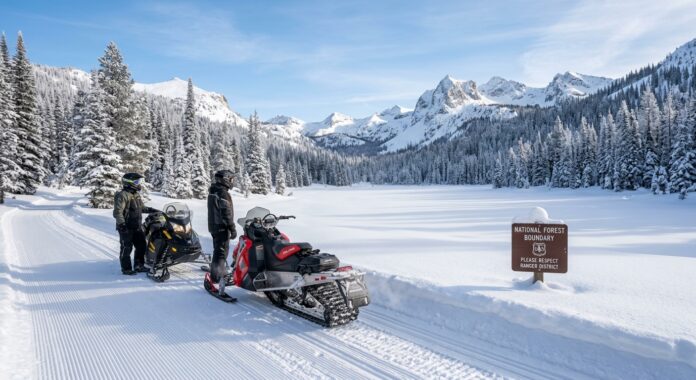
The over-snow vehicle rule sets how the US Forest Service manages winter travel across National Forests. Formally, it lives in the regulations as 36 CFR Part 212, Subpart C. Under the rule, forests draw lines on a map and designate where snowmobiles and other over-snow vehicles ride. Riding outside those designated areas is prohibited once a forest adopts its map.
On July 2, 2026, the BlueRibbon Coalition launched an action alert to rescind Subpart C. The advocacy group argues the rule turns winter access into a permission system. Because Congress never ordered a separate winter program, BlueRibbon says the agency added red tape without need. For snowmobilers and mixed-use trail families, the campaign reopens a long access fight.
This regulation stays current federal policy for now. However, the rescission push signals where public-lands politics head next. For 4×4 and overland readers, winter travel management shapes access to the same forests you explore in summer. Similarly, the outcome affects grooming programs and rural winter economies.
What the Rule Requires
Subpart C requires each forest to designate roads, trails, and areas for over-snow vehicle use. After a forest adopts its map, riding off the designated system becomes illegal. Notably, the program runs separately from Subpart B, which governs summer travel. As a result, forests complete a second round of planning, maps, and environmental review for winter.
This split creates extra steps. For example, winter planning needs its own NEPA documents and its own public comment periods. Each round also opens a new door for litigation. Because anti-access groups use these openings, BlueRibbon argues the structure favors closures over riding and steadily tightens snowmobile access. The group points to years of staff time spent on separate winter maps.
Access by the Numbers
California forests show how the designations play out. On the Tahoe National Forest, the agency designated 414,721 acres for over-snow vehicle use out of about 850,000 acres. Grooming covers up to 247 miles there. On the Stanislaus National Forest, only 119,104 acres of 898,099 stay open for cross-country use. Stanislaus grooming runs 24.7 miles, plus another 58.4 ungroomed miles.
Lassen tells a similar story. There, 747,192 acres of 1.2 million stay open for cross-country over-snow travel. Meanwhile, the Rio Grande National Forest in Colorado weighs a draft plan covering 1.84 million acres. Because each map sets hard limits, snowmobile access shrinks wherever a forest trims the open acres.
Why BlueRibbon Wants Subpart C Rescinded
BlueRibbon builds its case on existing authority. Specifically, the Forest Service already holds power to close areas for safety, resource damage, or wildlife concerns. Given this authority, the group calls a second nationwide program unnecessary. Congress never passed the rule. Instead, the agency created it administratively and later expanded it after litigation from anti-access groups.
The coalition wants a different approach. For instance, it asks for site-specific evidence before any closure. It also wants protection for grooming routes and historic riding areas. Above all, BlueRibbon frames over-snow travel as a legitimate use of National Forest land through its public action alert.
What the Over-Snow Vehicle Rule Means for You
This rule matters even if you never ride a snowmobile. Winter designations shape the same forests you wheel in summer. Because travel management maps guide both seasons, tighter winter rules often signal tighter access overall. For trail users, the lesson is simple: track forest planning before closures land.
You hold a real role here. During any comment period, submit specific input on the routes you use. Learning to read a travel map also helps you spot changes early. Our guide on how to find dispersed camping and read an MVUM walks through the same map skills, while our dispersed camping hub covers the access rules beside them.
Frequently Asked Questions
What is the over-snow vehicle rule?
The rule is the Forest Service framework for winter travel on National Forests. It requires forests to designate where snowmobiles ride. Riding outside those areas is prohibited once a map takes effect.
What is 36 CFR Subpart C?
Subpart C is the section of federal regulations holding the over-snow vehicle rule. It sits under 36 CFR Part 212. The section runs separately from the summer travel rules in Subpart B.
Why does BlueRibbon want Subpart C rescinded?
BlueRibbon argues the agency already holds authority to close problem areas. Therefore, the group sees a second nationwide program as unnecessary red tape. It wants site-specific evidence before any winter closure.
Does Subpart C affect 4×4 access?
Yes, indirectly. Winter designations cover the same forests you wheel in summer. Because travel maps guide both seasons, winter closures often preview broader access limits.
How do I comment on a winter travel plan?
Watch your local forest for open comment periods on travel management. Then submit specific notes on the routes you use. BlueRibbon also runs alerts routing public comments to the agency.