


Quick Facts:
- Build: Coyote swap in a 1956 Ford F-100 named GT/FX.
- Builder: Fat Fender Garage of Gilbert, Arizona.
- Engine: Gen 3 Ford 5.0-liter Coyote V8 with a 3.0-liter Whipple supercharger.
- Power: 800 horsepower and 750 pound-feet of torque.
- Transmission: Ford 10R80 10-speed automatic.
- Chassis: Fat Fender Garage FF1 Performance Coilover Chassis.
- Build time: More than 15,000 hours.
- Debut: SEMA 2026, revealed November 3, 2026.
- Price: Not announced.
- Best for: Classic Ford truck fans and anyone weighing an engine swap.
5 min read
In This Article
Overview
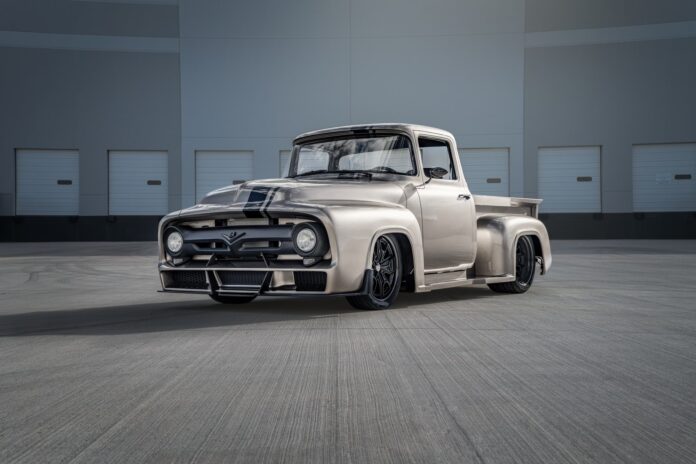
The GT/FX shows what a Coyote swap looks like when the shop upgrades every other part to match. Fat Fender Garage, a custom truck builder in Gilbert, Arizona, revealed the 1956 Ford F-100 on November 3 for SEMA 2026. Notably, the builder reports more than 15,000 hours of design, engineering and fabrication.
Power comes from a Gen 3 Ford 5.0-liter Coyote V8 topped with a 3.0-liter Whipple supercharger. According to the release, the engine makes 800 horsepower and 750 pound-feet of torque. Then Ford’s 10R80 10-speed automatic sends the output to the rear wheels.
No price has been announced. The builder frames the truck as a showcase, including its chassis, interior and FF Performance Parts line. For another Ford truck with a Coyote under the hood, read about the twin-turbo Coyote Maverick. Our SEMA 2026 guide for truck owners also shows where this reveal fits.
These are general references, not parts from the GT/FX. For engine swap help, read How to Swap Ford Modular Engines into Mustangs, Torinos and More. Ford Coyote Engines: How to Build Max Performance covers the engine itself. The Complete Book of Classic Ford F-Series Pickups: Every Model from 1948-1976 covers the truck family.
Books on engine swaps and classic Ford trucks


The Complete Book of Classic Ford F-Series Pickups: Every Model fro…
Coyote V8 and Chassis Key Facts
This table lists the main specs in one place. The builder’s release supplies most of the figures, and Car and Driver adds the brake and tire details. Likewise, Car and Driver, Motor1 and Carscoops report the same engine and output.
| Specification | Details |
|---|---|
| Truck | 1956 Ford F-100, named GT/FX |
| Engine | Gen 3 Ford 5.0-liter Coyote V8 |
| Supercharger | 3.0-liter Whipple |
| Output | 800 hp and 750 pound-feet of torque |
| Transmission | Ford 10R80 10-speed automatic |
| Exhaust | Three-inch system, Borla XR-1 Raceline mufflers, electric cutouts |
| Chassis | FF1 Performance Coilover Chassis |
| Brakes | Wilwood discs, six-piston front and four-piston rear calipers |
| Wheels and tires | HRE wheels, Toyo Proxes Sport 2 tires, 315/35R-20 at the rear |
| Build time | More than 15,000 hours |
| Price | Not announced |
What the Coyote Swap Delivers Under the Hood
The Coyote swap makes 800 horsepower because Fat Fender Garage added a 3.0-liter Whipple supercharger to a Gen 3 5.0-liter V8. Torque measures 750 pound-feet, according to both the builder and Car and Driver. Ford’s 10R80 also handles the shifting.
The exhaust matches the output. For example, the shop built a three-inch system with Borla XR-1 Raceline mufflers, JMD resonators and electric cutouts. In addition, custom valve covers dress up the engine bay.
One detail needs a flag. Meguiar’s lists the truck at 725 horsepower in its SEMA booth release. However, the builder, Car and Driver, Motor1 and Carscoops all report 800 hp, so this article uses 800.
Chassis, Brakes and Tires Support the Coyote Swap
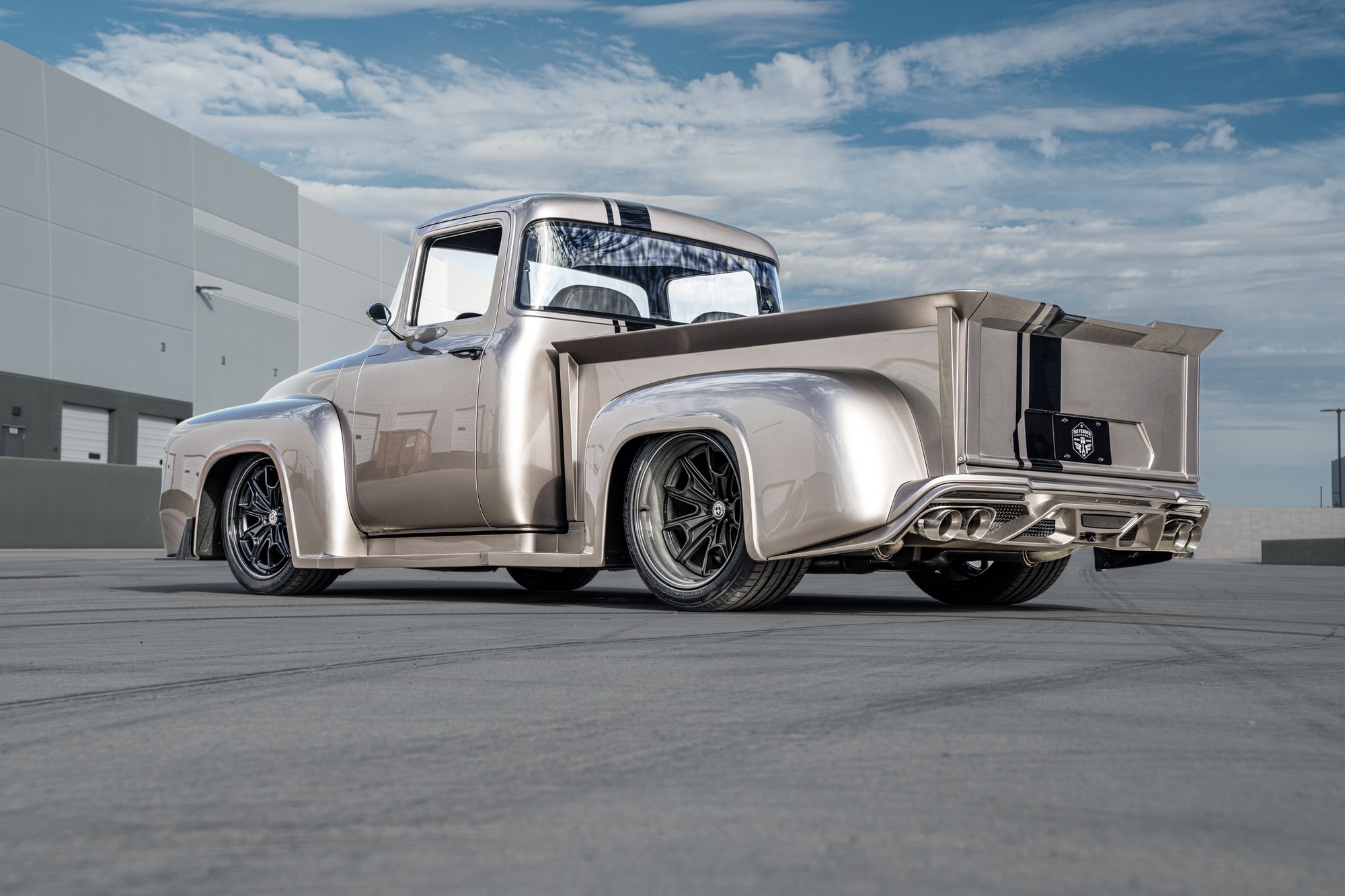
The F-100 rides on the FF1 Performance Coilover Chassis instead of the original frame. According to the shop, the chassis and suspension prioritize body control, sharp cornering response and stability under acceleration and braking. To me, this chassis is the real headline.
Car and Driver lists Wilwood disc brakes for stopping power. Six-piston calipers sit up front, and four-piston calipers sit at the rear. HRE wheels also carry Toyo Proxes Sport 2 tires, measuring 315/35R-20 at the rear.
The tire size tells you the truck’s purpose. A 35-series sidewall suits pavement, not rocks. The Shelby two-door F-150 also trades trail ability for road speed.
Body and Cabin Changes
Fat Fender Garage gave the body the same attention as the chassis. First, the shop fabricated the all-steel body by hand. Fat Fender Garage pancaked the roof and hood, sectioned the cab by two inches and widened the front and rear fenders. A grafted-in GT350 rear diffuser and chin splitters also add a track-day look.
Per the builder, the factory grille is the only major exterior piece left unmodified. For me, leaving it alone is the smartest choice on the truck, because the F-100 stays recognizable. Behind the cab, the bed also gets flared double walls and a tailgate with a push-button drop.
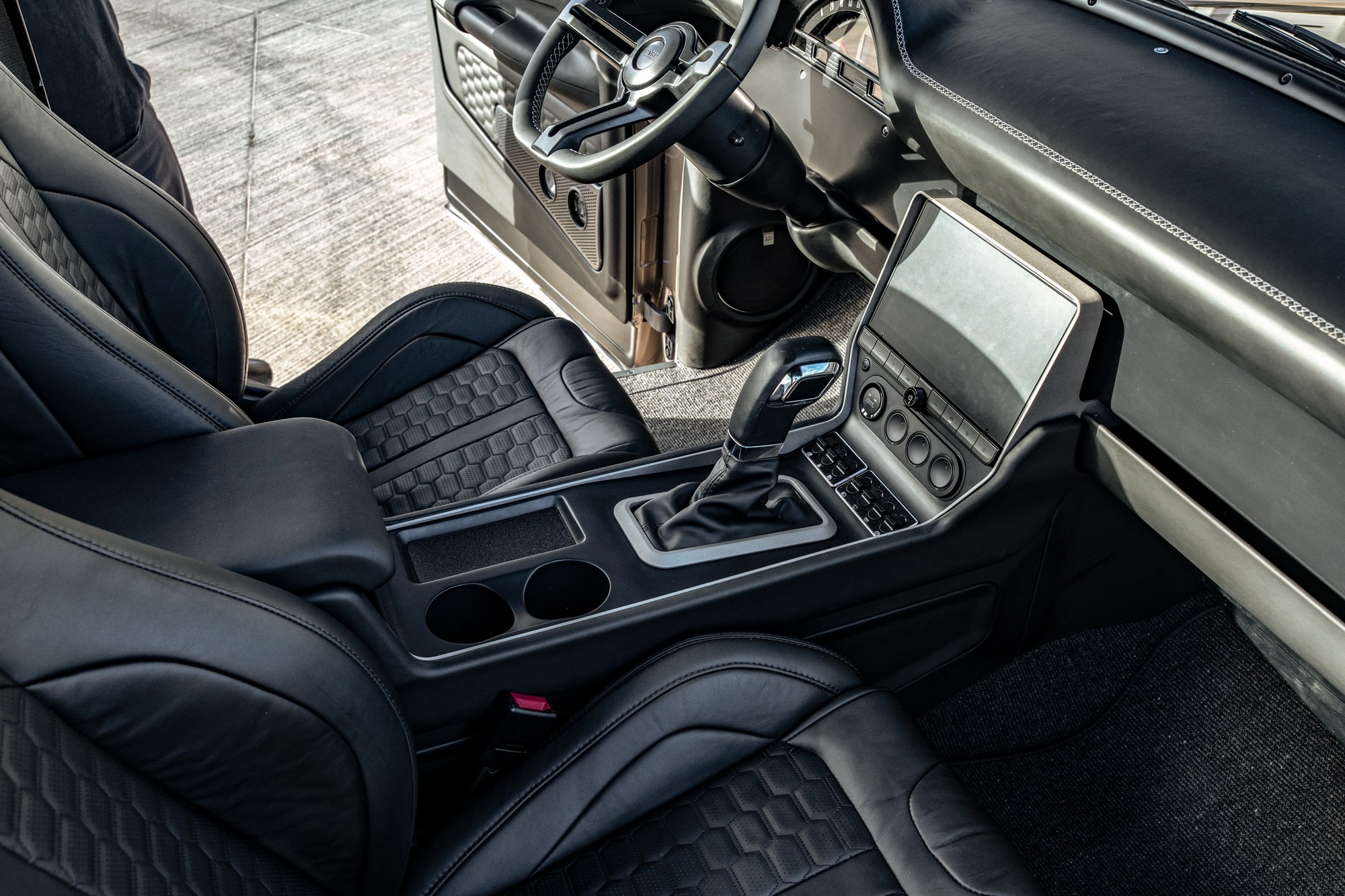
Inside, the shop fitted a black interior with custom-upholstered bucket seats and a leather dash pad. A concealed climate-control system also pushes air through one hidden vent. Modern gauges, audio and door actuators then complete the cabin.
What This Means for You
If you own a classic Ford truck, the GT/FX shows where the work goes. First, treat a Coyote swap as a whole-truck project. The builder paired the engine with a new chassis, six-piston front brakes, a 10-speed and a three-inch exhaust. However, a 15,000-hour show build sets the ceiling, not the minimum, for your truck.
Planning a smaller swap of your own? Start your shop-gear list with an engine hoist, a load leveler, jack stands and a torque wrench. Every swap begins with the old engine coming out, so those tools come first. Next, price the brakes and the transmission before you buy the engine.
This kit suits a home garage. A load leveler comes with the Goplus 2 Ton Folding Engine Lift. TONDA Jack Stands 3 Ton arrive as one pair. EPAuto 1/2-inch Drive Click Torque Wrench covers 10 to 150 ft/lb. Read the Goplus hoist reviews first, because it rates 4.0 stars against 4.6 for the stands and the wrench.
Shop gear for an engine swap


If you want a classic Ford for the trail, this build is the wrong template. None of the four reports mentions off-road use. The 315/35R-20 rear tires also point to pavement.
Final Thoughts
As a show truck, the GT/FX earns the attention. However, a Coyote swap alone does not make a 1956 F-100 interesting. Instead, the new chassis, the brakes and the hand-built body make 800 hp believable.
I do not call it a trail truck, and I do not think it needs to be. Fast cars were my passion before off-roading took priority, so I still enjoy watching a shop treat an old Ford like a supercar project.
Fat Fender Garage has not announced a price. Until it does, use this build as a checklist for a serious swap. Then enjoy it for what it is, a supercharged classic Ford.
FAQ
How much power does the Coyote engine in the GT/FX make?
The builder rates the Gen 3 Coyote V8 and its 3.0-liter Whipple supercharger at 800 horsepower and 750 pound-feet of torque. Car and Driver, Motor1 and Carscoops also report the same figures. However, Meguiar’s SEMA booth release lists 725 horsepower, which conflicts with those four sources.
How much does the Fat Fender Garage GT/FX cost?
Fat Fender Garage has not announced a price for the GT/FX, and Motor1 reports the same. Still, the builder says it offers components for home builders and complete turnkey vehicles.
Why did Fat Fender Garage build a new chassis for the Coyote swap?
The builder says the FF1 Performance Coilover Chassis was engineered to give the classic F-100 handling akin to a modern supercar. Specifically, it prioritizes body control, sharp cornering response and stability under acceleration and braking.
Is the GT/FX an off-road truck?
No source describes it as one. Instead, the builder pitches supercar-style handling, and the rear tires measure 315/35R-20. Treat it as a road truck and a show truck.
Which Coyote engine does the F-100 use?
The truck uses a Gen 3 Ford 5.0-liter Coyote V8. A 3.0-liter supercharger from Whipple sits on top, and Ford’s 10R80 10-speed automatic follows it.
Related Reading