


I’ve camped and overlanded most of my life. I started in tents, moved to rooftop tents, and later tried truck bed campers and trailers. Along the way, I’ve made nearly every mistake a new camper makes. I overloaded trucks, bought shelters built for someone else, and skipped basic checks before a trip. Those errors cost money, and a few cost entire weekends.
This guide covers the truck camper mistakes I see most often, so you avoid them. Specifically, you’ll learn how payload, bed size, and packing habits shape a good first purchase. I’ll also point to my own reviews of the Freedom Camper and the lightweight camping trend, since both influence how I advise first-time buyers today.
Quick Facts:
- Topic: Truck camper mistakes for first-time buyers
- Mistakes covered: Eight, from payload errors to packing habits
- Skill level: Beginner
- Lightest slide-in example: Freedom Camper, starting at 175 lbs
- Freedom Camper price: $3,499.99 with a 3-year limited warranty
- Best first step: Check your payload placard before shopping
- Best for: Truck owners buying a first camper
8 min read
In This Guide
- Truck Camper Mistakes Start With Payload
- Buying the Wrong Type of Shelter
- Truck Camper Mistakes With Bed Measurements
- Overpacking Your First Trip
- Skipping the Test Night at Home
- Ignoring Ventilation and Weather
- Planning a First Trip Too Far From Home
- A Simple First Truck Camper Option
- Pros and Cons of a Lightweight First Camper
- Final Verdict
- Frequently Asked Questions
Truck Camper Mistakes Start With Payload

The most common of all truck camper mistakes is ignoring payload. Many buyers pick a camper first and check the truck afterward. Consequently, they find the problem at the dealership, or worse, on the highway. Payload is the maximum weight your truck carries, and it includes passengers, gear, water, fuel, and the camper itself.
Find your exact number on the placard inside the driver’s door jamb. Most half-ton trucks list 1,500 to 2,000 lbs, although trim and options change the figure. Additionally, NHTSA tire and loading guidance explains why exceeding rated limits affects braking, tires, and handling.
Here’s the math. A traditional hardside camper weighs 900 to 2,000 lbs. On a truck with 1,600 lbs of payload, a 900 lb camper leaves about 700 lbs for everything else. By comparison, a 175 lb Freedom Camper leaves roughly 1,400 lbs. For first time truck camper buyers, truck camper payload deserves attention before any other spec.
Buying the Wrong Type of Shelter
Many new campers buy a shelter built for a different travel style. A rooftop tent suits someone who moves camp daily. Trailers suit families wanting a kitchen and standing room. Slide-ins suit anyone who wants fast setup and a truck returning to normal use on Monday.
Therefore, define your trips before you shop, and check truck camper payload again once you know the weight. Define your trips first, because the answer changes everything else. Count the nights you camp each year, and note how often you haul cargo. Then compare options on weight, setup time, and cost. My truck camper vs teardrop trailer comparison walks through those trade-offs with real numbers.
Also, avoid buying for a dream trip. A shelter built for a month in Alaska sits unused if you camp three weekends a year. Start with the trips you take, and upgrade once the habit is built.
Buy Direct From Freedom Campers
A 175 lb Slide-In Built for First-Time Campers
The Freedom Camper starts at $3,499.99, slides in without drilling, and ships from Lamar, Missouri, with a 3-year limited warranty.
Truck Camper Mistakes With Bed Measurements

Bed length sounds simple, yet buyers still get it wrong. Manufacturers list bed length for the whole box, but wheel wells reduce the flat floor space. Measure the usable width between the wheel wells and the length from the tailgate to the bulkhead.
Check the tailgate too. Some campers sit flush with the bed rails, while others hang past them. Moreover, a bed liner or tonneau cover adds thickness, so account for it in your numbers. Write the measurements down and compare them with the camper’s listed footprint before you order. Also photograph the tape measure at each spot, so you have proof if a dealer questions the numbers. Specifically, this habit saves returns, restocking fees, and weeks of waiting on a replacement.
The Freedom Camper comes in a 48×79 size for short beds and a 58×89 size for larger ones. For a deeper look at fit and features, read my guide on what to look for when buying a truck bed camper.
Overpacking Your First Trip
New campers pack for every possible problem. As a result, the truck rides heavy and the camper turns into a storage unit. Water alone adds up fast, since it weighs 8.34 lbs per gallon. Ten gallons adds 83 lbs before you pack a single canned meal.
Pack in layers instead. For truck camper payload, every item counts, so weigh the heavy pieces first. Water, coolers, and tools make up most of the load. Start with shelter, sleep, water, and cooking. Then add recovery gear if your route needs it. Everything else stays home until you’ve proven you need it.
Likewise, weigh your loaded truck at a public scale once. The number often surprises people. Compare it against your door jamb placard, and trim weight until you’re comfortably under the limit.
Skipping the Test Night at Home
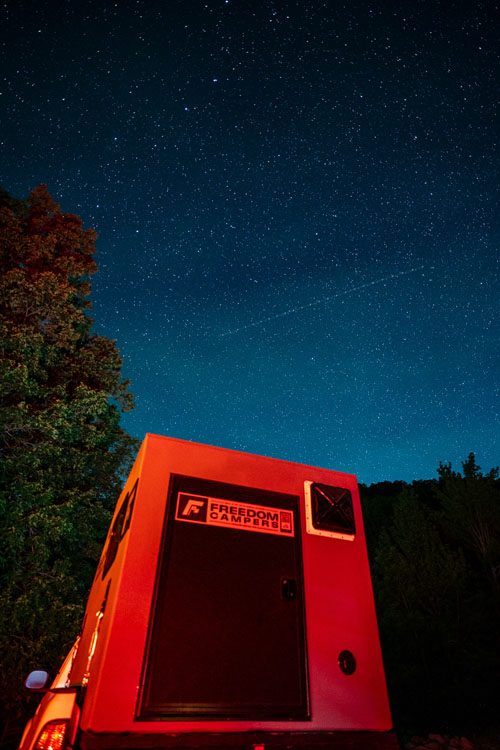
Your first night in a new camper should happen in your driveway. Install the camper, secure the tie-downs, and sleep in it. Because home is close, any missing piece costs you a ten-minute trip instead of a ruined weekend.
During the test night, check how the bed feels, how fast you set up, and where gear lives. Notice noise, light, and temperature too. Then fix problems while the garage is still within reach.
Also practice loading and unloading. A slide-in camper installs in under 30 minutes for most first-time users, yet this number drops with practice. Moreover, confirm the camper stays tight after a short drive around the block. Then recheck the straps, since webbing settles after the first few miles. Finally, keep a short checklist in the glove box, so each install follows the same steps.
Ignoring Ventilation and Weather
Breathing adds moisture to the air, and a closed shelter traps it. Without airflow, condensation forms on walls and ceilings, and you wake up damp. New campers often seal everything tight on a cold night, which makes the problem worse.
Crack a window or vent, even in winter. Additionally, store wet gear outside the sleeping area. If you plan to camp in cold shoulder seasons, read my notes on four-season shelter requirements before you buy.
Check the forecast for wind as well. Strong gusts push on a tall camper, and a loose tie-down turns into a bigger problem. Therefore, tighten straps before every drive and again after the first few miles.
Planning a First Trip Too Far From Home

Excitement pushes new campers toward remote destinations. However, a first trip works best close to home, near cell service and a repair shop. You learn the rig without adding risk.
Pick a nearby campground or dispersed site within two hours of your driveway. Stay one or two nights, and write down what worked. For longer stays, a base camp strategy helps, and my overlanding basecamp setup guide covers the planning.
Download offline maps before you leave, and pack a paper map as backup, since signal drops quickly outside town. Tell someone your route and return time as well. These habits cost nothing, and they matter more than any gear upgrade.
A Simple First Truck Camper Option
Complexity is a mistake of its own. A simple setup keeps weight low and makes problems easy to spot. The Freedom Camper takes this approach, weighing 175 lbs in the 48×79 size and 195 lbs in the 58×89 size. It slides into the bed with adjustable tie-down straps, so there’s no drilling and no permanent mount.
The price is $3,499.99, and a 3-year limited warranty backs it. It’s built in Lamar, Missouri. For first time truck camper buyers, a light truck bed camper keeps payload open and makes the test night easy. My full Freedom Camper review covers installation and trail performance in detail.
Ready to Buy?
No Drilling, No Permanent Mounts
Two platform sizes fit short and standard beds. Built in Missouri and backed by a 3-year limited warranty.
Pros and Cons of a Lightweight First Camper
Pros
- A 175 lb camper leaves about 1,400 lbs of payload on a 1,600 lb truck
- Installation takes under 30 minutes
- No drilling or permanent mounts
- The truck returns to daily use in minutes
- A 3-year limited warranty backs the camper
- Easy to test at home before a trip
Cons
- A slide-in uses your bed space
- Less interior room than a full trailer
Final Verdict
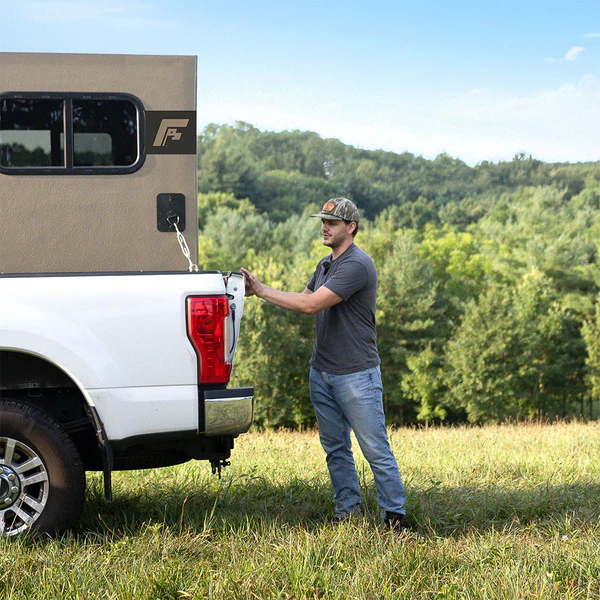
Most truck camper mistakes come from skipping simple checks. Payload, bed size, and a test night prevent the costliest errors. Spend an afternoon on those three steps, and you avoid problems costing owners hundreds of dollars.
Shelter choice matters too. Rooftop tents suit people who move camp often and keep the bed free. Trailers suit families wanting kitchens and standing room, provided the truck handles the tongue weight. However, both add commitment, so think about how often you’ll camp.
For a first purchase, I recommend a light slide-in. The Freedom Camper weighs 175 to 195 lbs, costs $3,499.99, and installs without drilling. Therefore, it keeps payload open and lets you learn the rig on easy trips. Its main trade-off is bed space.
If the budget is tight, start with a ground tent and upgrade after you build the habit. Whatever you choose, camp often and learn from each trip. Use matters more than gear.
Today’s Best Deal
Start Camping With a Shelter Built for Your Bed
175 lbs. No permanent mounts. A 3-year limited warranty. Ships from Lamar, Missouri.
Frequently Asked Questions
What is the biggest mistake first-time truck camper buyers make?
Ignoring payload is the biggest mistake. Check the door jamb placard first, then subtract passengers, water, and gear. The remaining number is your camper weight budget.
How do I measure my truck bed for a camper?
Measure the width between the wheel wells and the length from the tailgate to the bulkhead. Add any liner thickness, and compare the numbers with the camper’s listed footprint.
Is a lightweight truck bed camper good for beginners?
Yes, a light camper keeps payload open and installs fast. The Freedom Camper weighs 175 to 195 lbs and slides in without drilling, so beginners learn the rig with little risk.
Should I test a camper before a long trip?
Yes, sleep in it at home first. A driveway test night reveals missing gear, noise, and fit problems while help is close.
How far should a first camping trip be?
Stay within two hours of home for a first trip. You learn the rig near cell service and repair shops, and you keep a mistake from becoming an emergency.
Heads up: Clicking on our affiliate links and exploring our sponsored content helps us at no extra cost to you, and we only recommend gear we’re absolutely crazy about!