


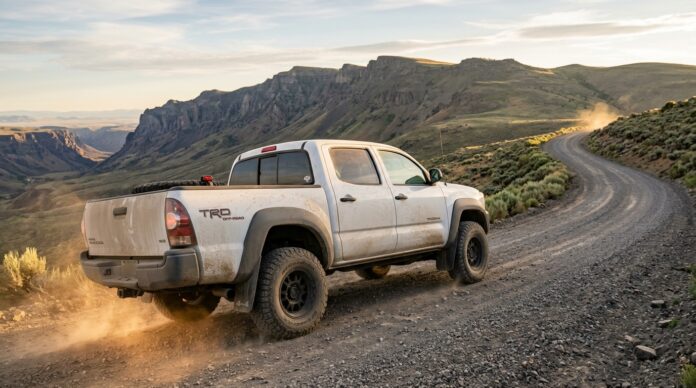

I’ve hammered my truck down hundreds of miles of washboard roads over the past decade. I’ve learned most of what I know the hard way: loose bolts, rattled gear, a cracked bracket on a rock slider, and one memorable afternoon diagnosing a mystery vibration that turned out to be a wheel weight shaken completely off. Corrugated dirt roads are one of the most underestimated hazards in overlanding, and the drivers who handle them well aren’t lucky by accident. They’ve figured out the system.
At 4WD Talk, we test gear in the real conditions our readers face, including the bone-jarring washboard sections that connect trailheads, dispersed campsites, and remote passes across the West. I’ve run the MORRFlate TenSix PSI Pro Gen 2 on enough of these roads to say with confidence that tire pressure management is the single biggest lever you have. Get that right alongside your speed and line choice, and washboard roads go from rig-punishing to manageable. Here’s everything I’ve learned.
Quick Facts:
- Primary hazard: Resonance between vehicle and road ripple frequency causes amplified vibration and component wear
- Speed sweet spot: Typically 35–55 mph (vehicle-dependent) to skim over tops of ripples
- Tire pressure drop: 10–15 PSI below street pressure for most 32″–35″ tires on washboard
- Key risk: Loose fasteners, cracked welds, damaged suspension bushings, and gear shifting inside the cab
- Re-inflation tool: MORRFlate TenSix PSI Pro Gen 2 (10.6 CFM, inflates four 35″ tires in under 5 min)
- Warranty: MORRFlate 3-Year No Hassle
Why Washboard Forms and Why It Matters

Washboard doesn’t appear randomly. It forms through a feedback loop between vehicle tires and loose road surface. As tires roll over small irregularities, they bounce at a frequency tied to vehicle speed and suspension stiffness. The bouncing tire pushes loose gravel into ridges, and those ridges reinforce the pattern for every vehicle that follows. The ripples grow deeper and more consistent over time, which is why busy roads get worse faster.
The problem isn’t the visual appearance of the road. The problem is resonance. When your suspension oscillates at the same frequency as the ripple spacing, the amplitude of the vibration multiplies. Between ridges, your wheels are leaving the ground, your steering loses feel, and every fastener, bushing, and weld in your rig absorbs shock at an accelerated rate. Drivers who treat washboard like a slow-speed problem make it worse, because low speed puts you right in the resonance band where the damage accumulates fastest.
Speed: The Counterintuitive Fix
The instinct on a rough road is to slow down. On washboard, slowing down often makes the ride worse. The goal is to find the speed where your tires skim across the tops of the ridges rather than dropping into each trough. For most trucks and SUVs, this “float” speed falls somewhere between 35 and 55 mph on typical washboard.
You’ll feel it when you hit it. The violent shaking smooths into a fast hum, steering firms up, and the noise level drops noticeably. This isn’t a myth or a technique that works for everyone. It’s physics: at float speed, your suspension doesn’t have time to fully compress and extend between each ridge, so the oscillation dampens instead of amplifying.
Float speed varies by vehicle, tire size, suspension setup, and road ripple spacing. My 4Runner with an Old Man Emu lift and 35s floats around 42–48 mph on most Wyoming dirt roads. A friend’s stock Tacoma with 32s floats closer to 38 mph on the same surface. You find your rig’s number by accelerating gradually until the shaking eases, then holding that speed as conditions allow.
The caveat: float speed requires enough straight, predictable road to use safely. On a road with tight corners, blind curves, or cross traffic, you hold a speed that keeps the rig under control first and smooth second. Washboard technique never overrides basic trail safety.
Tire Pressure: Your Biggest Lever
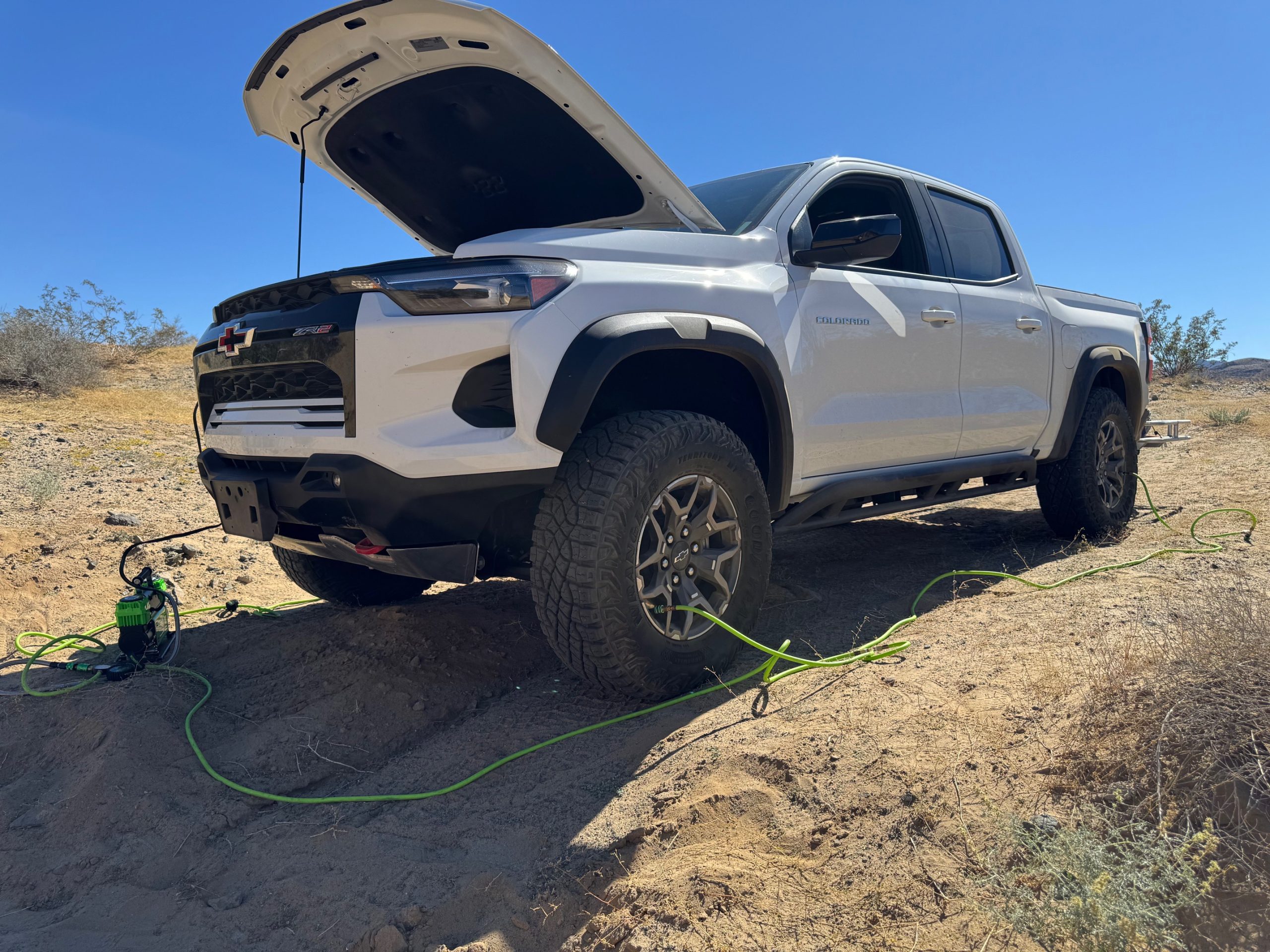
Speed helps, but tire pressure is what separates drivers who arrive at camp with intact gear from those who spend the evening tightening bolts. Airing down for washboard isn’t the same as airing down for rock crawling. You’re not looking for maximum sidewall flex. You’re looking for a compliant tire footprint that absorbs micro-impacts before they transmit up through the suspension.
For most 32″–35″ tires on washboard, dropping 10–15 PSI below your highway pressure makes a meaningful difference. If you run 35 PSI on the highway, try 20–25 PSI on rough corrugated dirt. The tire conforms better to the road surface, reduces the impulse load at each ridge, and lets your suspension work in a more controlled range. The ride improvement is significant enough that drivers who’ve never tried it often don’t believe the difference until they feel it.
Re-Inflating Once You Hit Pavement
The challenge is re-inflation at the other end. If you’re covering long washboard sections before hitting pavement, you need a compressor that keeps up. I’ve used the MORRFlate TenSix PSI Pro Gen 2 on every significant overlanding trip for the past three years, and it handles four 35″ tires in under five minutes with the Quad hose kit. At 10.6 CFM, it doesn’t make you stand around waiting. You air down, drive the rough section, pull over at the pavement, and you’re rolling again before anyone gets impatient.
Gear We Use
Re-Inflate Four Tires in Under 5 Minutes
The MORRFlate TenSix PSI Pro Gen 2 runs at 10.6 CFM with a 3-Year No Hassle Warranty. Stop waiting on your compressor.
One important note: airing down for washboard only works if you’re monitoring pressure and re-inflating before you return to highway speeds. Running low pressure at highway speeds generates heat in the sidewalls and risks a blowout. Airing down is a technique, not a set-and-forget setting. Understanding the full air-down and air-up process before your first long washboard run is worth the time.
Line Choice and Reading the Road

Not all washboard is equal across the road surface. The center of the lane often has deeper ripples because it sees the most traffic from vehicles straddling the crown. The edges near the shoulder sometimes offer smoother texture, either because they’ve seen less traffic or because grading equipment leaves them more level.
On roads wide enough to allow it, experiment with your lateral position. Moving your tires six inches to the outside of the main wheel track sometimes puts you on a significantly smoother surface. The improvement isn’t always there, but when it is, it’s immediate and obvious. Keep your eyes further down the road than you normally would. Washboard creates visual noise that makes it hard to read transitions, corner entries, and surface changes at a glance.
Watch for sections where the ripple depth changes suddenly. A transition from shallow washboard to deep washboard at float speed will pitch the front end hard enough to upset steering. Scrub speed before sections you haven’t driven before. On roads you know well, you develop a mental map of where the rough spots are and adjust speed before you get there.
What Washboard Destroys (and How to Protect It)

Washboard vibration transmits through the whole vehicle. The components that suffer most are the ones held by rubber bushings, threaded fasteners, or friction rather than positive mechanical engagement. Here’s where the damage accumulates:
Suspension bushings and ball joints absorb millions of small impacts at accelerated frequency. Worn bushings transmit more vibration to the chassis and accelerate wear on adjacent components. Check them before long trips on rough roads and replace them at or before the manufacturer interval if you do significant corrugated miles.
Loose fasteners are the most common and most overlooked washboard casualty. Skid plate bolts, rock slider mounting hardware, roof rack fasteners, and auxiliary lighting mounts all loosen over extended washboard sections. Carry thread-locking compound and a basic socket set. A torque check the night before a long dirt day takes ten minutes and saves real problems.
Gear inside the cab shifts, slides, and falls with every ripple. Gear bags left on the seat or floor become projectiles. Cargo nets and tie-downs aren’t optional on washboard. Secure everything before the rough section starts, including water bottles, recovery gear staged for quick access, and anything on the dash or console.
Electronics and lighting are vulnerable to vibration fatigue on wiring connections. Aftermarket lighting especially benefits from strain-relief loops and secure mounting brackets rather than free-hanging wire runs. On a long washboard trip, a wiring connection that was marginal becomes a wiring connection that fails.
Exhaust hangers and heat shields rattle loose faster on corrugated roads than on almost any other surface. Listen for new rattles after washboard sections and investigate them rather than ignoring them. Heat shields that come loose contact other components and create serious problems.
Airing Back Up Efficiently

The biggest friction point in the air-down-for-washboard system is re-inflation time. If airing up takes 20 minutes, drivers skip it and run low pressure on pavement, which creates risk. If it takes five minutes, it becomes a normal part of the routine.
The TenSix PSI Pro Gen 2’s 80% duty cycle (45 minutes on, 10 minutes off) means it handles multiple inflation sessions in a single day without thermal shutdown. On group trips, I’ve aired up six rigs back to back at a trailhead without needing to let the unit cool between vehicles. For solo trips, the Quad hose kit filling all four tires simultaneously is the faster approach. If you’re on a group trip, the flexibility to run one hose per vehicle in sequence without waiting for cooldown is the real advantage.
For Group Trips
Air Up Six Rigs Without the Wait
80% duty cycle means the TenSix handles back-to-back inflation sessions all day. One compressor for the whole group.
Build the air-up stop into your route planning rather than treating it as an afterthought. Identify where the washboard section ends and where the pavement or high-speed gravel begins. Stop there, inflate, and drive on. It takes five minutes and removes the temptation to skip it.
Prep Before You Go

Washboard preparedness starts before you leave the driveway. A few items that pay for themselves on corrugated roads:
Check your lug nut torque before any significant dirt trip. Washboard vibration loosens lug nuts faster than almost any other road condition. A torque wrench check takes two minutes per wheel. Lug nuts that back off on the road take hours to deal with and risk wheel separation.
Inspect your spare tire mount. Rear-mounted spare carriers see intense vibration on washboard, and a carrier that’s slightly loose becomes a rattling, potentially failing carrier after 30 miles of corrugated road. Check the mounting hardware, the hitch receiver fit if you’re running a receiver-mount spare, and the tire retention hardware.
Know your target air pressure before you go. For your specific tire size and load, identify the pressure you’ll run on pavement, the pressure you’ll run on washboard, and the minimum pressure you’d run on technical terrain. Write them on a card and keep it in the glovebox. Guessing at the trailhead leads to inconsistent results.
Carry a quality tire pressure gauge. The gauge on most portable compressors is accurate enough for inflation, but a standalone gauge gives you a faster read when you’re checking multiple tires. A gauge in your pocket means you check pressure; a gauge buried in the gear bag means you skip the check.
Pros and Cons of Common Approaches
Float Speed + Aired Down
- Smoothest possible ride on corrugated roads
- Least suspension stress over distance
- Least gear shift and rattle inside cab
- Requires re-inflation before pavement
Slow Speed + Street Pressure
- Feels cautious but amplifies resonance
- Maximum vibration transmission to chassis
- Accelerated bushing and fastener wear
- No re-inflation needed (but at high cost to rig)
Frequently Asked Questions
What speed should I drive on washboard roads?
Most trucks and SUVs find a float speed between 35 and 55 mph where the vibration dampens. Accelerate gradually until the shaking eases, then hold that speed. Your specific float speed depends on your vehicle, suspension, and tire size.
How much should I air down for washboard roads?
For 32″–35″ tires, dropping 10–15 PSI below highway pressure is a good starting point. If you run 35 PSI on pavement, try 20–25 PSI on corrugated dirt. Re-inflate before returning to highway speeds.
Does airing down help on washboard?
Yes, significantly. A softer tire footprint absorbs micro-impacts before they transmit through the suspension. Combined with float speed, airing down is the most effective technique for reducing washboard damage to your vehicle.
What gets damaged most by washboard driving?
Suspension bushings, loose fasteners (skid plate bolts, rack mounting hardware), exhaust hangers, and electrical connections take the most punishment on corrugated roads. Check all fasteners before long dirt trips and re-check after.
How do I find the smoothest line on a washboard road?
Move your tire track laterally from the center of the lane toward the shoulder. Less-traveled wheel paths often have shallower ripples. Look further ahead than usual to read surface changes before you reach them.
What compressor should I use for airing back up after washboard?
You need something fast enough to make re-inflation a habit rather than a burden. The MORRFlate TenSix PSI Pro Gen 2 fills four 35″ tires in under five minutes at 10.6 CFM. Its 80% duty cycle handles back-to-back sessions on group trips without thermal shutdown.
Heads up: Clicking on our affiliate links and exploring our sponsored content helps us at no extra cost to you, and we only recommend gear we’re absolutely crazy about!