


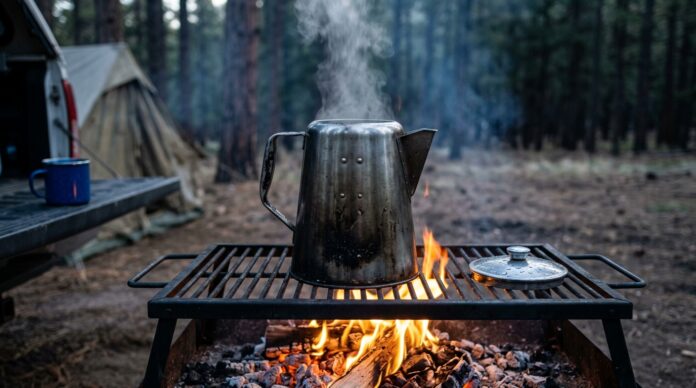
Quick Verdict: This cowboy coffee recipe boils coarse grounds straight in the pot over an open fire. A splash of cold water then drops them to the bottom. Two tablespoons of grounds per 8 ounces of water, one boil, a four-minute rest, and a slow pour. No filter, no paper, no power draw on the house battery. It runs on whatever fire is already burning at camp.
Save this recipe for your next trip.
Last updated: August 2026 | Prep 5 min | Cook 12 min | Serves 4.
Written by Alex Schult
Editor in Chief of 4wdTalk.com. 15+ years of off-road and overlanding experience with 1,000+ hours on the trail.
This recipe was tested on an actual overland trip. Amazon affiliate links support 4wdTalk.com at no extra cost to you.
In This Recipe
Why This Recipe Works for Overlanders
Every drip machine, pour-over cone, and espresso setup asks for something a rig does not always have: paper filters, a flat surface, or 900 watts of inverter. A cowboy coffee recipe strips the process down to grounds, water, heat, and time. If the fire is already lit for breakfast, the coffee costs nothing extra in fuel or amp hours.
Boiling water pulls flavor out of coarse grounds in about four minutes because heat, not pressure, does the work. Coarse particles hold together instead of breaking into silt, so most of the bed sinks once the pot comes off the flame. A splash of cold water speeds the drop. Once the top layer cools, those grounds sink through the warmer liquid below.
This cowboy coffee recipe also scales without new gear. One pot serves two people or six, since the ratio stays fixed. Two tablespoons of coarse grounds per 8 ounces of water covers any batch size. Cleanup takes one rinse and a knock against a rock, and no soggy paper goes into the pack-out bag.
Equipment You Need
The kit list for this cowboy coffee recipe is short, though two pieces matter more than the rest. Use an enamel or stainless pot with a wide base and a real pouring lip. A rolled rim dribbles grounds down the side and into the mug when you tip it. A 12-cup percolator body works well with the basket and stem pulled out, since the tall shape keeps the settled bed far from the spout. Long tongs and heat gloves handle the pot once the handle climbs past 300F. Skip plastic knobs and soldered seams, because both fail fast in direct fire.
Camp Kit for This Brew
- Stainless or enamel pot, 1.5 quarts or larger, with a pouring lip.
- Folding grill grate to hold the pot 3 to 4 inches over the flame.
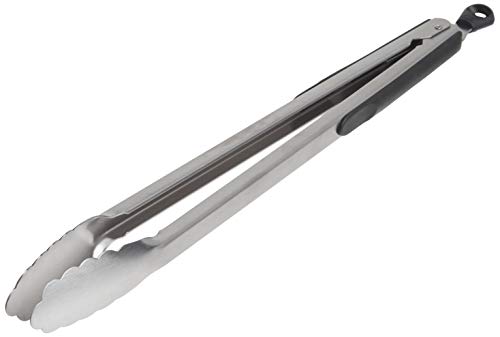
- Long-handled tongs for repositioning the pot without a burn.
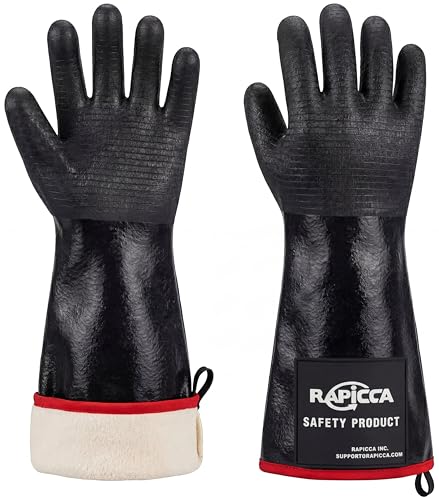
- Heat-resistant gloves rated to at least 500F, since handles run hotter than the flame rating suggests.
- Long spoon for the initial stir, then a quick pass before the pour.
- Burr grinder at home, or a bag of pre-ground coarse coffee.
- Small bottle of cold water, because settling the grounds takes a cold splash.
- Insulated mugs, since boiled coffee cools fast in morning air.
Gear for This Recipe

GSI Outdoors Percolator Coffee Pot I Glacier Stainless Steel with S…
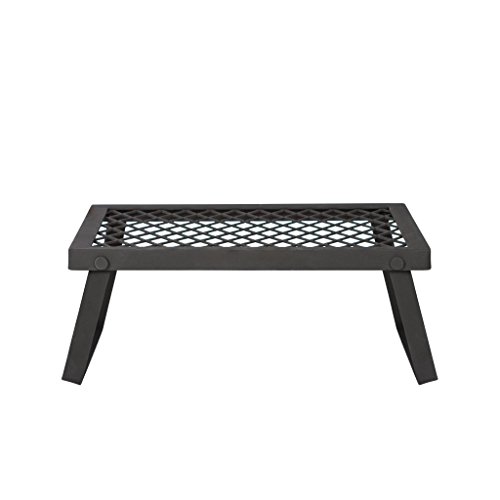
Amazon Basics Heavy-Duty Portable Camping Grill Grate for Outdoor O…
Ingredients
Serves 4 | Prep 5 min | Cook 12 min | Open flame.
- 32 ounces cold water (4 cups).
- 8 tablespoons coarse ground coffee, roughly the texture of raw sugar.
- 2 tablespoons cold water, reserved for settling.
- 1 pinch fine salt, optional, to soften bitterness.
- 1 cinnamon stick, optional.
- Sugar, powdered creamer, or shelf-stable milk to serve.
Step-by-Step Instructions
Home Prep
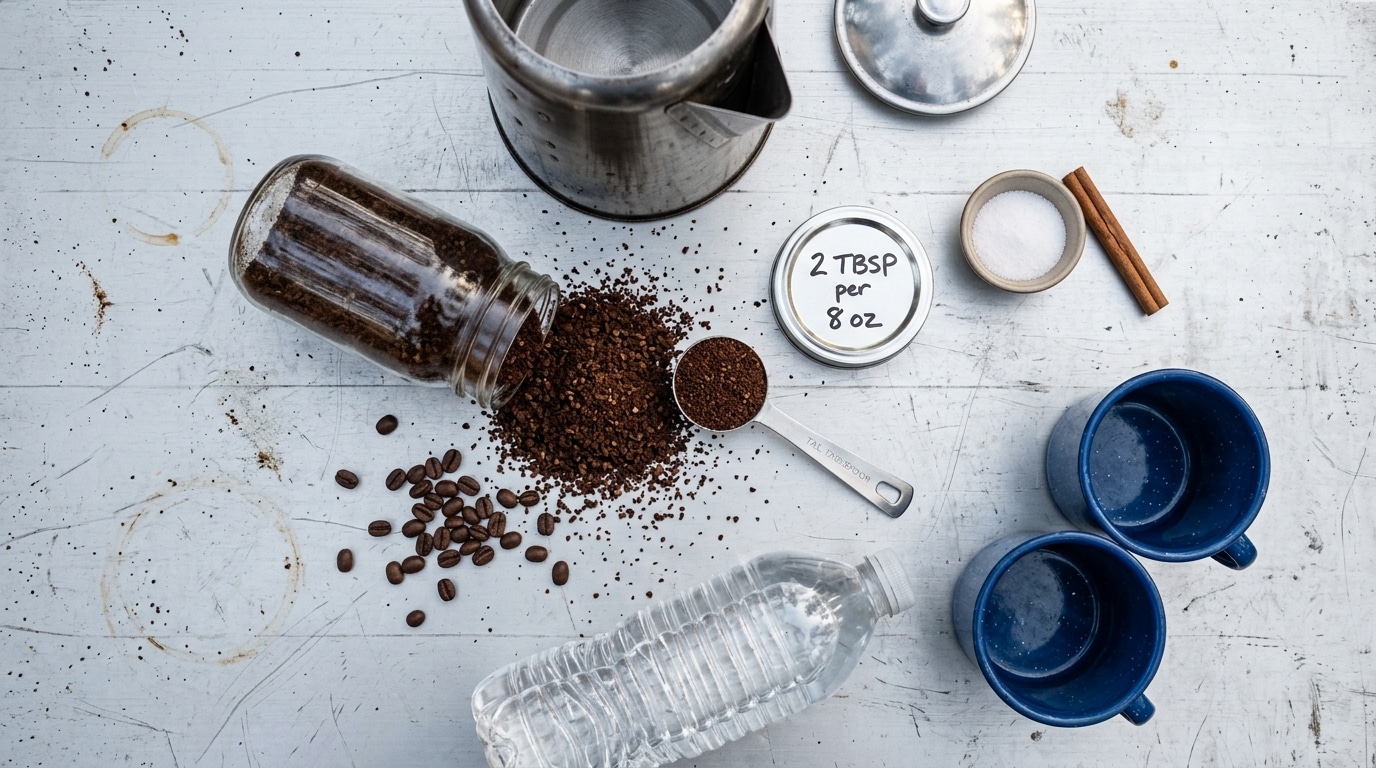
- Grind 8 tablespoons of whole beans on the coarsest setting your burr grinder offers. Particles should look like raw sugar, because flour-fine grounds never settle.
- Seal the grounds in a jar or a zip bag, then squeeze the air out. Ground coffee goes flat after about 10 days in a hot drawer system.
- Write the ratio on the lid with a marker: 2 tablespoons per 8 ounces. Morning math before caffeine is a losing game.
- Fill a 1-liter bottle with drinking water and stage it beside the pot. Then nobody hunts through the fridge slide at 6 a.m.
At Camp
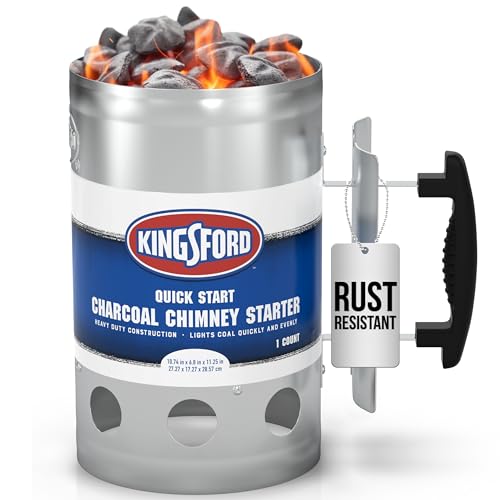
- Light the fire 20 minutes before coffee time. A chimney of briquettes takes 15 to 20 minutes instead. This brew wants live flame, not a mature coal bed.
- First, pour 32 ounces of water into the pot. Set it on a grate 3 to 4 inches above the flames, lid off, so you read the surface.
- Watch for a rolling boil, usually 5 to 8 minutes over open flame. Wind and cold air stretch it closer to 10 minutes, so read the surface.
- Pull the pot off the heat with tongs and gloves. Rest it on a rock for 30 to 45 seconds, since a full boil sits above the ideal brew band.
- Next, stir in the 8 tablespoons of coarse grounds along with the optional pinch of salt. Grounds float at first, which is normal.
- Then let the pot sit off the flame for 4 minutes. If the morning is below 40F, park the pot at the edge of the coals to hold temperature.
- Sprinkle the 2 reserved tablespoons of cold water across the surface, or dribble them down the inside wall. Grounds sink within 30 seconds as the top layer cools.
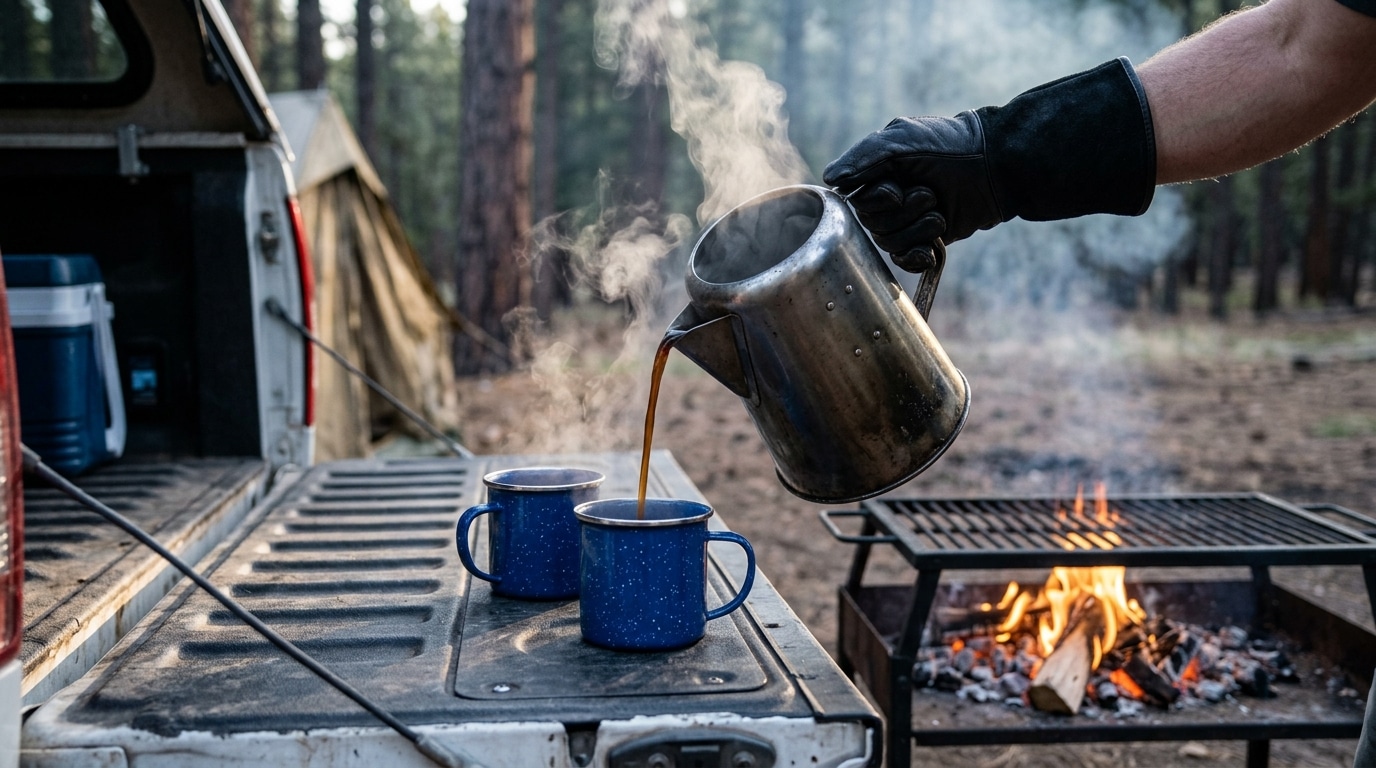
- Pour slow and low into preheated mugs, stopping before the last inch of liquid. Whatever silt escapes settles in the mug during the first minute.
Fire and Heat Management
Boiling water is the one camp task rewarding raw flame over patience. Hardwood burned down to coals for 45 to 60 minutes gives steady heat for skillets. Yellow flame brings a pot of water up faster, so coffee goes first. Build the coal bed for breakfast, then use the early flame stage for coffee.
| Heat Source | Appearance | Approx Temp | Common Use |
|---|---|---|---|
| Open flame | Active yellow-orange flames | 600F+ and uneven | Bringing the cowboy coffee pot to a boil, searing skewers, marshmallows |
| Hot coals | Bright orange, minimal ash | 500F-600F | Grate searing steak or chicken, cast iron skillet |
| Medium coals | Orange with gray ash | 350F-450F | Grate cooking fish, kebabs, pie irons, most mains |
| Low coals or embers | Mostly gray ash, soft glow | 250F-350F | Holding the finished pot warm, dump cake, slow bakes |
Rake the fire into two zones before the pot goes on. Flame on one side brings water up fast. Meanwhile, a low ember zone holds the finished pot near 160F without cooking the grounds further. Grate height is the other lever, so raise the grate to slow a pot running too hard.
Brew Temperature and Altitude
Coffee extracts best between 195F and 205F. A rolling boil at sea level reaches 212F, above the band, which pulls harsh compounds out of the grounds. So resting the pot 30 to 45 seconds off the flame drops it into range. There is no doneness temperature to chase here, so brew temperature is the number worth watching.
Elevation moves the whole scale down, since water boils about 2F lower per 1,000 feet of gain. At 5,000 feet, water boils near 202F. At 7,500 feet it boils near 198F, and at 10,000 feet near 194F. Each of those numbers still lands at or below the top of the extraction band. A Rockies boil is a weaker starting point rather than a hotter one.
- Sea level to 3,000 ft: Rest the pot 30 to 45 seconds after the boil, then steep 4 minutes.
- 3,000 to 6,000 ft: Rest 15 to 20 seconds only, then steep 5 minutes.
- 6,000 to 8,000 ft: Skip the rest entirely, add grounds at the boil, and steep 5 to 6 minutes.
- Above 8,000 ft: Steep 6 minutes and add a half tablespoon of grounds per 8 ounces to rebuild strength.
Weak, thin coffee at 8,000 feet is an extraction problem, never a bean problem. This cowboy coffee recipe gives you two levers: more contact time, or more grounds in the pot. Adjust one at a time so the result stays readable. Finally, note the winning combination on the lid of the coffee jar.
Field Tips
Wind over 10 mph is the biggest variable in this whole cowboy coffee recipe. Moving air strips heat off the pot wall faster than the flame replaces it, so a 6-minute boil stretches to 12. So stack rocks on the windward side of the fire ring. Parking the rig 8 to 10 feet upwind of the pit works as a break too.
Cold mornings compound the problem. Below 40F ambient, add 3 to 5 minutes to the boil and expect to burn more fuel. Preheating the mugs with a splash of hot water buys another 10 degrees at the table. Cold enamel steals the heat back before the first sip.
Altitude deserves the same respect at camp as it does in a kitchen. The USDA notes water boils at lower temperatures as elevation climbs, so recipes need longer times. Their high-altitude cooking guidance is worth a read before a Rockies trip. Coffee follows the same physics as beans and pasta, so budget the extra minutes.
Pour technique separates a clean mug from a gritty one. First, hold the pot low, then tip it in one smooth motion. Never stop mid-pour, since setting the pot down re-suspends the bed. Once four mugs are full, dump the last inch and the grounds into a bag for pack-out. More detail on fire-side workflow lives in our Camp Cooking for Overlanders guide.
Fire and Cleanup Gear


Variations and Substitutions
Once the base cowboy coffee recipe is dialed, small swaps change the cup without breaking the method. Change one variable per pot so the result tells you something useful.
- Eggshell clarified: Stir a crushed eggshell in with the grounds. Calcium carbonate binds acidic particles and weighs the bed down, an old chuckwagon fix for a rough roast.
- Salted pot: A pinch of fine salt per 32 ounces blunts bitterness by suppressing the sour notes on the tongue. If you overdo it, the cup turns flat.
- Cinnamon and cardamom: Drop a cinnamon stick and two crushed cardamom pods in before the boil. Strain them out with the pour.
- Cold-start method: Add grounds to cold water, then bring the whole pot to a boil and pull it immediately. Extraction runs stronger and rounder, though the grounds settle slower.
- Half-batch for two: Use 16 ounces of water with 4 tablespoons of grounds. Smaller volumes lose heat faster, so cut the steep to 3 minutes.
- Percolator conversion: Keep the basket and stem in the 12-cup pot. Then run a traditional perc cycle of 7 to 10 minutes over medium coals.
- Camp mocha: Whisk 2 tablespoons of cocoa powder and 2 tablespoons of sugar into the finished pot. Rich enough to carry a cold ridge-line breakfast.
- Decaf evening pot: Same ratio, same timing, with coarse decaf. It gives the fire circle a hot drink after dinner without wrecking anyone’s sleep.
Storage and Leftovers
Leftover coffee from this cowboy coffee recipe holds its flavor for about 30 minutes on low embers. Past the half hour, the remaining grounds turn it harsh. Decant what nobody drinks into an insulated bottle, where it stays above 140F for 4 to 6 hours. A vacuum bottle at a 10 a.m. trail stop pays back the whole 12-minute task.
Whole beans stay fresh for 3 to 4 weeks in a sealed container, while pre-ground coffee fades after about 10 days. Pack out wet grounds in a sealed bag rather than scattering them. Caffeine harms wildlife and slows plant growth at established sites. Rinse the pot with hot water and wipe it dry before it goes back in the kitchen box. Coffee oils turn rancid in a warm rig.
Frequently Asked Questions
What is the correct ratio for a cowboy coffee recipe?
Use 2 tablespoons of coarse grounds per 8 ounces of water. So a 32-ounce pot takes 8 tablespoons, roughly half a cup. The ratio holds steady at any batch size. Above 7,000 feet, add a half tablespoon per 8 ounces to make up for cooler boiling water.
How do you keep grounds out of the cup?
Three habits handle it. First, grind coarse so particles stay heavy. Second, sprinkle 2 tablespoons of cold water on the surface after the steep. Once the top layer cools, the grounds sink. Third, pour in one slow motion and stop before the last inch of liquid.
Why does boiled camp coffee taste bitter?
Bitterness comes from water above 205F or a steep running past 6 minutes. Pull the pot off the flame before the grounds go in, then time the rest at 4 minutes. A pinch of salt masks whatever bitterness remains, and a coarser grind prevents over-extraction on the next pot.
What grind size works for a campfire coffee recipe?
Coarse, at about the texture of raw sugar or breadcrumbs. Medium and fine grinds create silt, because the particles stay suspended no matter how long the pot rests. If a bag is labeled for French press, it is already in the right range for this method.
How long should cowboy coffee steep?
Four minutes off the heat at elevations under 3,000 feet. Between 3,000 and 6,000 feet, stretch it to 5 minutes. Above 6,000 feet, run 5 to 6 minutes because water boils near 198F and extraction slows. After 7 minutes the cup turns harsh at any elevation.
Does an eggshell clear the coffee?
Yes, within reason. Crushed shell adds calcium carbonate, which binds acidic particles and pulls fines toward the bottom of the pot. The trick shows up in chuckwagon accounts for good reason. Cold water settling works nearly as well, with no shell to pack out afterward.
What pot works best over an open flame?
Stainless steel or enamel over steel, 1.5 quarts or larger, with a pouring lip and a riveted handle. Also, a 12-cup percolator body doubles as a boiling pot with the basket out. Avoid aluminum with plastic knobs and anything nonstick, since direct flame ruins both coatings fast.
How is this different from a percolator or French press?
A percolator recycles boiling water through a basket for 7 to 10 minutes. Similarly, a French press steeps at 200F behind a metal screen. So this method skips the hardware and lets gravity do the filtering. Fewer parts break on a washboard road, and there is nothing to lose in the dirt.
You Might Also Like
- Campfire Cooking Recipes
- Camp Cooking for Overlanders
- Campfire Cast Iron Breakfast Skillet (recipe coming soon)
- Campfire Cinnamon Rollups (recipe coming soon)
- Pie Iron Breakfast Sandwiches (recipe coming soon)