



Quick Facts:
- Topic: Cold weather camping tips for staying safe and warm
- Biggest risk: Hypothermia (core temp below 95°F) and carbon monoxide
- Sleep system: Pad R-value 4.0 to 5.4 for 20°F nights, 5.5+ for 0°F
- Shelter pick: Stout 16 ft (5M) Pro four-season bell tent
- Heat source: Wood stove or diesel heater through a sealed stove jack
- Cost of the tent: $1,223 for the 16 ft dual-door Pro Edition
- Best for: Overlanders and families camping below freezing
8 min read
In This Guide
- Cold Weather Camping Tips Start Before You Leave Home
- Cold Weather Safety Numbers at a Glance
- Layer Your Clothing and Keep It Dry
- Build a Sleep System That Blocks Ground Cold
- Cold Weather Camping Tips for Heating a Tent Safely
- Spot Hypothermia and Frostbite Early
- Manage Condensation and Airflow
- Why a Four-Season Bell Tent Handles the Cold
- Final Verdict
- Frequently Asked Questions
Cold Weather Camping Tips Start Before You Leave Home
Cold weather camping tips matter most once the temperature drops below freezing, because the small mistakes you shrug off in summer turn dangerous in winter. Hypothermia sets in when your core temperature falls below 95°F, and a damp base layer or a thin sleeping pad speeds up the slide. Therefore, preparation starts at home, not at the trailhead.
This guide walks through the safety habits and cold weather camping gear we rely on for trips into the Sierra and the high desert. You will get clear steps for layering, sleep systems, safe tent heat, and early warning signs of cold injury. Every tip below has one goal: keeping your body warm and your air clean.
We also cover the shelter we reach for when nights drop into the teens. Specifically, a four-season canvas bell tent with a stove jack changes cold weather tent camping from an endurance test into a comfortable basecamp. Before the gear, though, memorize a handful of numbers.
Cold Weather Safety Numbers at a Glance
These figures come from the CDC, the U.S. Consumer Product Safety Commission, and REI’s cold-weather guidance. Print them, save them to your phone, or tape them inside your gear bin. Because cold dulls your judgment, these cold weather camping tips work best with the numbers ready before you need them.
| Safety Metric | Number to Know |
|---|---|
| Hypothermia threshold | Core temperature below 95°F |
| Sleeping pad R-value, 20°F nights | 4.0 to 5.4 |
| Sleeping pad R-value, 0°F nights | 5.5 or higher |
| Sleeping bag rating | 10°F below your coldest expected night |
| Carbon monoxide symptoms | Headache, dizziness, nausea (mimics the flu) |
| Tent ventilation | Keep one vent or window cracked at all times |
Buy Direct From Stout
A Four-Season Tent Built for Cold Nights
The Stout 16 ft Pro bell tent uses 340gsm canvas and an adjustable stove jack, so you heat your shelter safely down into the teens.
Layer Your Clothing and Keep It Dry
Your clothing traps warm air in three jobs, so treat it as a system. A moisture-wicking base layer of polyester or merino wool moves sweat off your skin. Next, an insulating mid layer of fleece or puffy synthetic holds your body heat. Finally, a waterproof shell blocks wind and snow.
Skip cotton entirely. Because cotton soaks up moisture and stops insulating once wet, a soggy cotton hoodie pulls heat straight out of you. REI’s cold-weather advice puts the rule plainly: stay warm, do not get warm. In practice, add a layer before you feel cold, not after.
Sweat is the hidden enemy on winter hikes. Consequently, strip a layer during hard effort and add it back the moment you stop. Keep a dry backup base layer sealed in a bag for sleep, and never crawl into your bag wearing the damp shirt you hiked in.
Build a Sleep System That Blocks Ground Cold
The frozen ground steals more heat than the night air, so your sleeping pad does the heavy lifting. R-value measures how well a pad resists this heat loss, and the scale is linear. A pad rated 5.0 insulates roughly twice as well as one rated 2.5.
For nights near 20°F, choose a pad with an R-value between 4.0 and 5.4. When temperatures approach 0°F, step up to 5.5 or higher. A simple trick stacks a closed-cell foam pad under an insulated air pad, because R-values add together and the foam adds puncture protection.
Match your bag to the cold, too. Pick a sleeping bag rated at least 10°F below the coldest night you expect, since you are able to vent a warm bag but never add warmth to a cold one. A liner adds 5°F to 25°F more. For a full breakdown, read our guide to keeping a tent warm overnight, and consider a raised cot to lift you off the frozen floor.
Cold Weather Camping Tips for Heating a Tent Safely
A heated tent is the difference between misery and comfort, yet tent heat carries the deadliest risk in winter camping. Carbon monoxide is odorless and colorless, and it reduces your blood’s ability to carry oxygen. The CPSC warns plainly against using any fuel-burning heater or lantern while you sleep in an enclosed space.
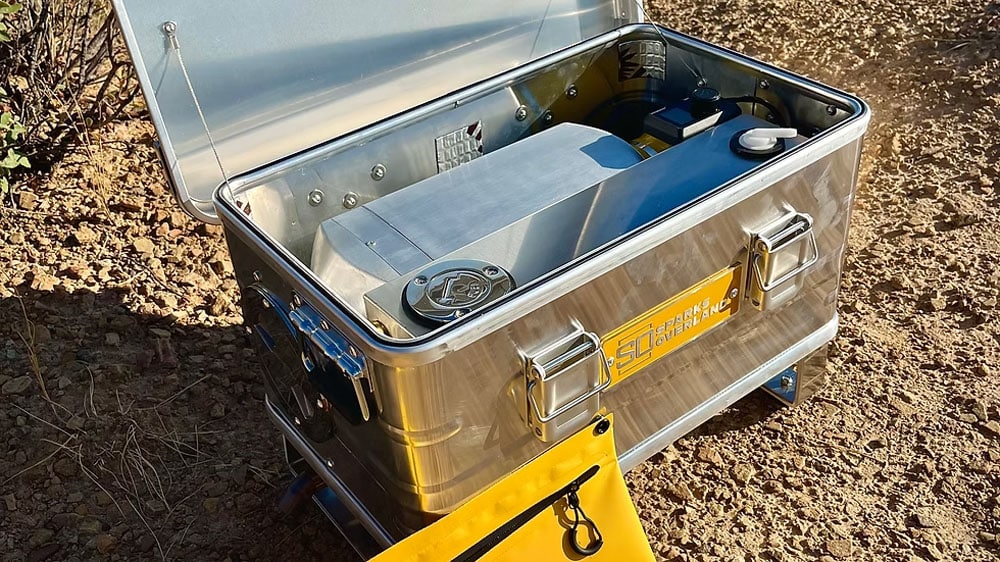
Safe heat means a sealed system, not an open flame. A wood stove or diesel heater vents exhaust outside through a stove jack, which keeps combustion gases out of your breathing air. Read how a diesel heater works before you buy, because the vented design is what makes it safe.
Follow four rules every night. First, run only vented heat sources, never a propane camp stove or charcoal indoors. Second, mount a battery carbon monoxide detector at head height. Third, keep a low vent cracked for makeup air. Fourth, learn the symptoms from the CPSC guidance on camping heaters, since headache and dizziness look like the flu. When in doubt, get outside into fresh air immediately.
Spot Hypothermia and Frostbite Early
Cold injuries creep in quietly, so watch your group for the first signs. According to the CDC, early hypothermia shows as shivering, exhaustion, confusion, fumbling hands, memory loss, and slurred speech. Notably, the person affected rarely notices the change, which is why partners check on each other.
Frostbite attacks fingers, toes, ears, nose, and cheeks first. Look for skin turning white or grayish, then numb or waxy to the touch. If you see pale patches or clumsy movements, act right away rather than waiting for it to pass.
Treat early hypothermia by getting the person into a warm, dry shelter and swapping wet clothes for dry ones. Add warm drinks and calories, and share body heat inside a sleeping bag. Because severe hypothermia is a medical emergency, seek professional help whenever symptoms move past mild shivering.
Manage Condensation and Airflow
Every breath and every heater releases moisture, and in a sealed tent the water condenses on cold walls. Left alone, it drips onto your bag and steals insulation. Airflow solves the problem without freezing you out.
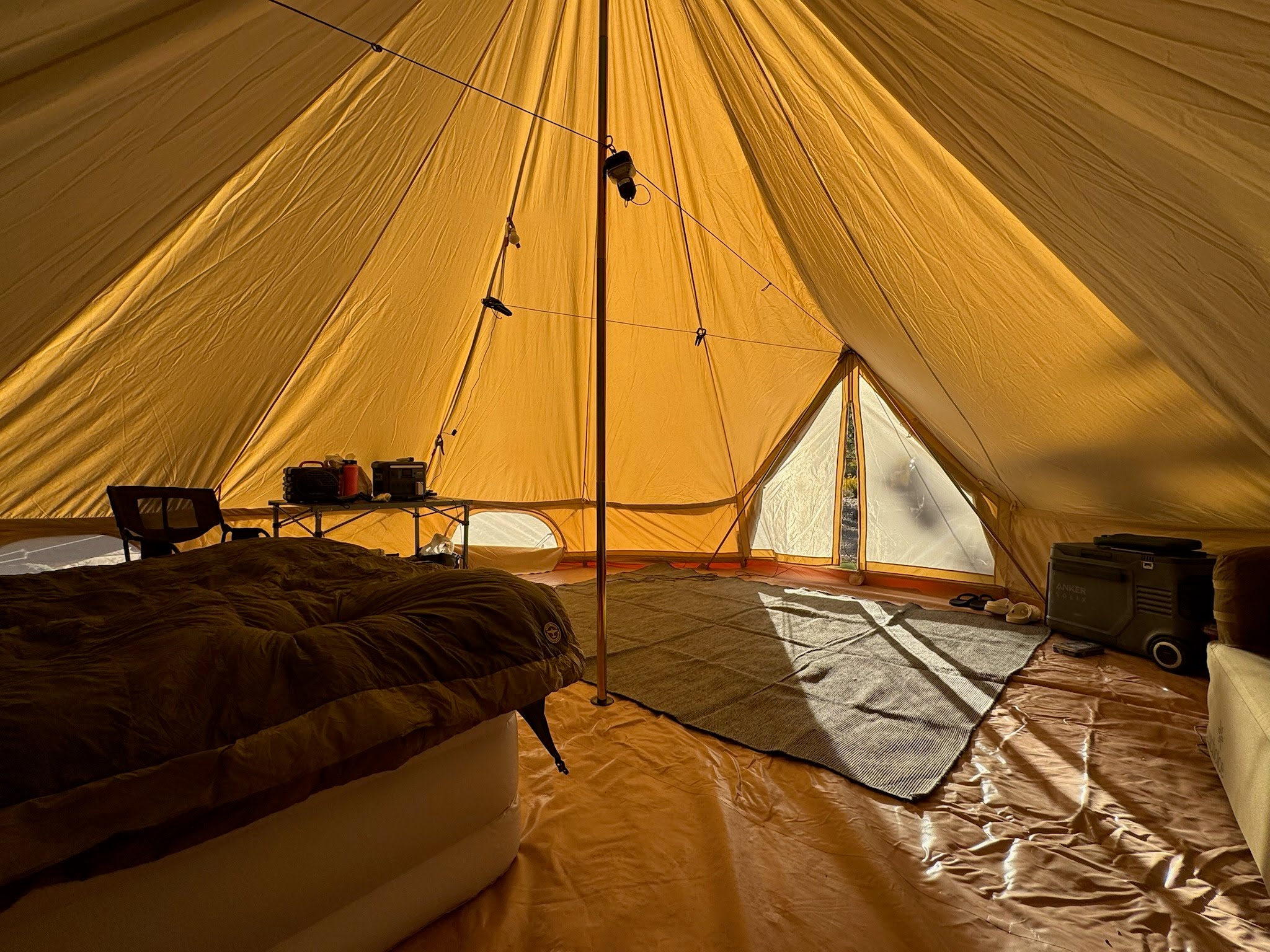
Crack a low vent and a high vent to create a gentle current, since warm damp air rises and escapes while dry air enters low. Canvas manages this better than nylon, because the natural fiber breathes. During our three-month test, condensation stayed manageable as long as one window or door zip remained cracked.
Wipe the interior canvas dry each morning, and keep damp boots and jackets out of the sleeping area so they do not add moisture overnight. Never seal the tent fully, even in a storm. For a deeper look at moisture control in canvas shelters, see our notes on winter camping in a canvas tent.
Why a Four-Season Bell Tent Handles the Cold
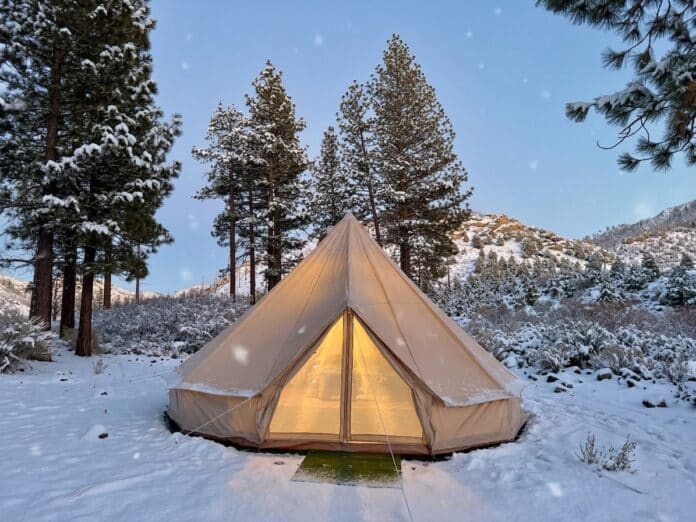
Your shelter sets the ceiling on how safe and warm you stay, so it deserves the most thought. A four-season bell tent solves the two hardest winter problems at once: it holds real heat and it vents combustion gases through a stove jack. We field-tested the Stout 16 ft Pro Edition for three months, and it earned a spot in our regular winter kit.
The 340gsm single-weave cotton canvas is fireproofed, waterproof, and mold-resistant, so a wood stove sits safely inside. Its adjustable 3 to 6 inch stove jack fits most compact stoves and diesel heater flues. Dual A-frame doors and four windows also give you the cross-ventilation the condensation section calls for.
| Specification | Details |
|---|---|
| Model | Stout 5M Bell Tent Pro Edition (16.4 ft) |
| Canvas | 340gsm (10.06 oz) single-weave cotton, fireproofed |
| Stove jack | Adjustable, 3 to 6 inch range |
| Doors and windows | Dual A-frame doors, 4 mesh windows |
| Groundsheet | Heavy ripstop PVC, bathtub style |
| Packed weight | 96 lbs |
| Price | $1,223 (16 ft dual-door Pro Edition) |
| Best for | Overlanders and basecamp families below freezing |
At 96 lbs packed, this tent suits vehicle camping rather than backpacking. For our full hands-on notes, read our 3-month Stout 5M field test. Bigger groups should compare it with the larger 6M Stout bell tent, which sleeps four to six.
Ready to Buy?
Check Today’s Price on the Stout 16 ft Bell Tent
Get the stove-jack canvas tent we field-tested for three months, with dual doors and a waterproof bathtub floor.
Final Verdict
Cold weather camping rewards preparation and punishes shortcuts. If you master four things, you cover most of the risk: dry layers, an insulated sleep system, vented heat, and a partner who watches for cold injury. Good cold weather camping gear helps, yet these habits protect you whether you sleep in a truck bed or a canvas tent.
The trade-off with a four-season tent is weight and price. At 96 lbs and $1,223, the Stout 16 ft Pro suits overlanders who drive to camp, not hikers counting ounces. Backpackers should instead pick a lightweight mountaineering tent and lean harder on their sleep system.
For vehicle-based winter camping, the value is strong. You gain a fireproofed canvas shelter, a safe stove-jack heat setup, and room to stand and dry gear. Paired with the safety numbers above, it turns a cold trip into a warm basecamp.
Put these cold weather camping tips into practice, add a shelter matched to your conditions, and build winter experience one trip at a time. Match the gear to the cold, respect the carbon monoxide risk, and every winter trip gets safer.
Frequently Asked Questions
What temperature is too cold for tent camping?
No single number stops you, since gear and skill set your limits. With a four-season tent, a bag rated 10°F below the low, and a pad above R-value 5.0, campers sleep safely well below 0°F. Beginners should start above 20°F and build up.
How do you heat a tent safely in cold weather?
Use only vented heat, such as a wood stove or diesel heater running through a stove jack. Never burn propane, charcoal, or gas inside a sealed tent. Add a battery carbon monoxide detector and keep one low vent cracked for fresh air.
What R-value sleeping pad do you need for winter?
For nights near 20°F, use a pad rated 4.0 to 5.4. At 0°F, choose 5.5 or higher. Stacking a foam pad under an air pad adds their R-values together and boosts warmth on frozen ground.
Is a canvas bell tent good for cold weather camping?
Yes, canvas is one of the best choices for cold weather tent camping. The heavy fabric holds heat, breathes to limit condensation, and accepts a stove jack for safe wood-stove or diesel heat. Our tested pick is the Stout 16 ft Pro.
How do you prevent carbon monoxide poisoning in a tent?
Vent every fuel-burning appliance outside, run a carbon monoxide detector, and never sleep with an unvented heater. Watch for headache, dizziness, and nausea, which mimic the flu. At the first symptom, move into fresh air and shut off the source.