


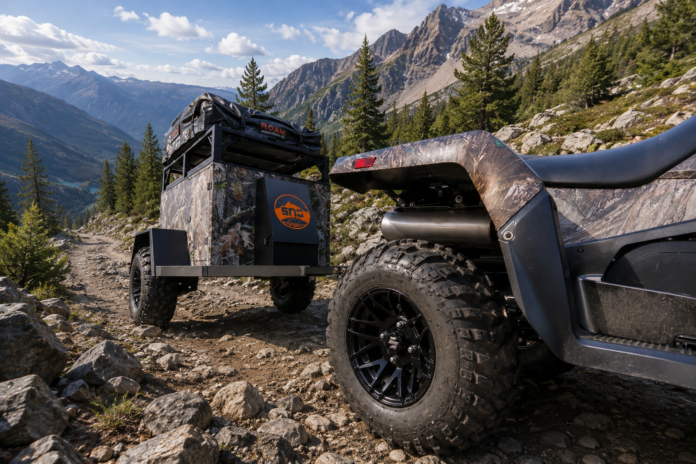

I’ve spent most of my life hauling camp gear into the backcountry, first as a kid sleeping in canvas tents and now as the founder of 4WDTalk. Over those decades, one lesson has stuck with me above all others: a lightweight off-road trailer changes everything about how you travel. After touring the SNO Trailers facility and dragging their trailers down washboard roads and rocky two-tracks myself, I’ve seen firsthand why weight deserves the top line on your spec sheet.
Most buyers compare trailers by price, storage, and sleeping arrangements. Weight, however, quietly shapes every mile of your trip and every repair bill afterward. In this guide, I’ll explain how trailer weight affects your tow rig’s drivetrain, brakes, and fuel bill, where a lighter build lets you go, and why the SNO Trailers Recon has become my favorite example of a manufacturer getting it right.
Quick Facts:
- Topic: Why a lightweight off-road trailer protects your tow vehicle and expands your range
- Featured trailer: SNO Trailers Recon
- Dry weight: 875 lbs
- Suspension: Timbren 3500 lb HD Axle-Less
- Departure angle: 40 degrees
- Dimensions: 10’2″ L x 6’0″ W x 5’4″ H
- Starting price: $13,995 USD
- Best for: Overlanders, remote campers, and ATV or side-by-side owners who want off-grid range without punishing their tow rig
9 min read
In This Guide
- Lightweight Off-Road Trailer Overview: Why Weight Is the Spec to Watch
- SNO Trailers Recon: Key Specs at a Glance
- How Trailer Weight Affects Your Drivetrain and Brakes
- Where a Lightweight Off-Road Trailer Takes You
- Build Quality Lessons From the SNO Trailers Facility
- The Vehicle Longevity Math Nobody Runs
- Lightweight vs. Heavy Off-Road Trailers: Which Should You Choose?
- Pros and Cons of the SNO Trailers Recon
- Final Verdict
- Frequently Asked Questions
Lightweight Off-Road Trailer Overview: Why Weight Is the Spec to Watch

A lightweight off-road trailer is built to follow your rig anywhere while asking as little of it as possible. The category generally runs from roughly 800 to 4,000 lbs, and the SNO Trailers Recon sits at the featherweight end at 875 lbs dry. By contrast, full-size travel trailers often exceed 6,000 lbs before you load a single cooler.
So who benefits most from going light? In my experience, three groups stand out. Weekend campers towing with mid-size trucks and SUVs gain margin on payload and braking. Side-by-side and ATV owners gain a trailer their machines pull without strain. Meanwhile, long-haul overlanders gain range and access, which is why the Recon fits weekend trips and long expeditions alike. Off-road travel rewards the rig carrying less, every single time.
Price matters here too. The Recon starts at $13,995, and your money goes into the parts doing the work: suspension, frame, body, and wheels rather than square footage. On a recent trip into the Wind River Range, I watched a friend’s heavy camper turn around at a rutted climb while a lighter setup rolled through without drama. Moments like those explain the spec sheet better than any brochure.
SNO Trailers Recon: Key Specs at a Glance
| Specification | Details |
|---|---|
| Dry weight | 875 lbs |
| Suspension | Timbren 3500 lb HD Axle-Less |
| Departure angle | 40 degrees |
| Dimensions | 10’2″ L x 6’0″ W x 5’4″ H |
| Frame | Powder-coated steel with proprietary anti-rust base coating |
| Body | Aluminum |
| Wheels and tires | 2 Method wheels with 275 all-terrain tires |
| Electrical | 7-pin wiring junction box with premium trailer lights |
| Standard colors | SNO White, Storm Gray, Desert Sand |
| Starting price | $13,995 USD |
Buy Direct From SNO Trailers
Configure Your Recon Today
Build an 875 lb overlanding trailer around your trips, from tents and awnings to solar and kitchen pullouts.
How Trailer Weight Affects Your Drivetrain and Brakes
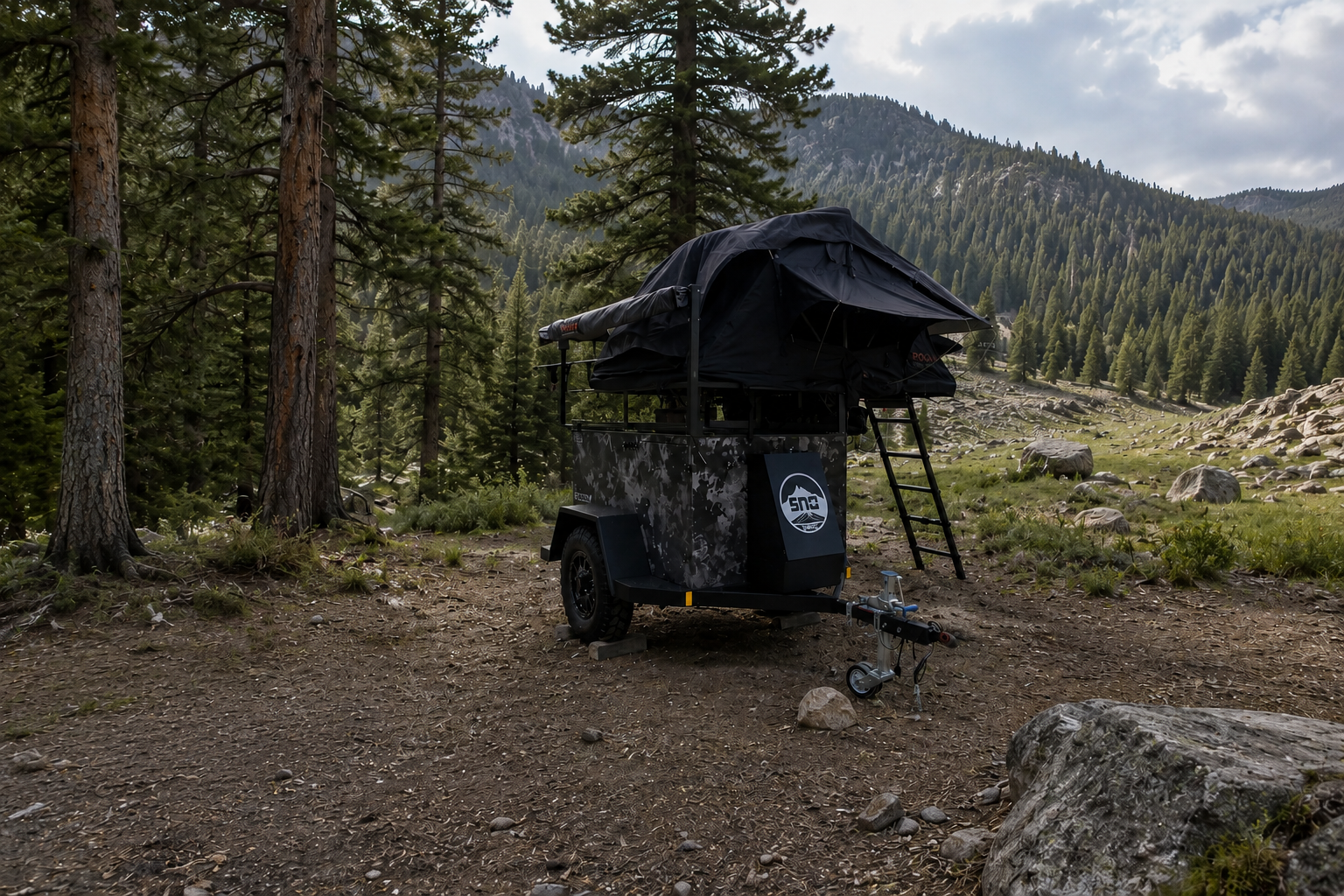
Every extra pound behind your hitch makes your tow rig work harder. Specifically, the engine burns more fuel to accelerate the load, and the transmission generates more heat moving it. Heat shortens transmission life, because fluid breaks down faster at high temperatures and degraded fluid accelerates internal wear. Repair shops see this pattern constantly in rigs towing near their limits.
Braking tells the same story in reverse. Your brakes convert motion into heat, so a heavier trailer dumps more heat into your pads and rotors on every stop. Added trailer weight increases both stopping distance and pad wear, especially on long descents. An 875 lb load barely registers by comparison. For example, my Jeep Gladiator’s brakes shrug off the Recon on mountain grades where heavier setups leave the smell of cooked friction material hanging in the air.
Suspension wears differently under load too. Heavy tongue weight sags the rear of your truck, which changes alignment geometry and chews through rear tires unevenly. Therefore, keeping the load light protects components most owners never connect to their towing habits. Vehicle longevity isn’t one big decision; instead, it’s thousands of small loads your rig either absorbs or avoids.
Where a Lightweight Off-Road Trailer Takes You
Weight savings show up most clearly when the pavement ends. A lightweight off-road trailer follows your rig through tight switchbacks, soft sand, and rutted climbs where heavier campers force a turnaround. The Recon’s 40-degree departure angle clears ledges and washouts at angles most travel trailers won’t touch, while its Timbren axle-less suspension lets each wheel articulate independently over rocks.
Size compounds the advantage. At 10’2″ long and 6’0″ wide, the Recon threads narrow forest roads and squeezes into trailside camps a full-size camper passes by. SNO Trailers even designed it light enough for an ATV or side-by-side to tow, which opens trail networks no truck-based setup reaches. I’ve covered how the Recon supports remote camping in more depth, and the short version holds: lighter equals farther.
Off-road travel also punishes momentum mistakes less when the load is light. Consequently, a stuck recovery with an 875 lb trailer involves a strap and a few minutes instead of a winch, shovels, and a ruined afternoon. Ask anyone who’s dug a 5,000 lb camper out of soft sand at dusk.
Build Quality Lessons From the SNO Trailers Facility

Light only matters when it’s also strong, and cheap lightweight builds fail fast on washboard. Walking the SNO Trailers facility floor showed me where the Recon’s 875 lbs comes from. The frame is powder-coated steel over a proprietary anti-rust base coating, while the body is aluminum. In other words, the weight savings come from smart material choices rather than thinner metal or skipped reinforcement.
The rolling hardware tells the same story. Method wheels wrapped in 275 all-terrain tires come standard, and the Timbren 3500 lb HD suspension is rated for four times the trailer’s dry weight. Margins like those are what separate a true overlanding trailer from a utility trailer wearing knobby tires. I took a closer look at the Recon’s build quality in a dedicated article, if you want the full teardown.
After years of meeting the SNO team and putting their trailers through Wyoming rock gardens, mud, and snow, I’ll say it plainly: their commitment to well-made trailers is second to none. Quality control at the facility level shows up later as silence on the trail, with no rattles, no cracked welds, and no loose hardware after a hard weekend.
The Vehicle Longevity Math Nobody Runs
Trailer shoppers price the trailer but rarely price its effect on the tow rig. Lighter loads improve fuel economy, and the savings compound over thousands of towing miles. Brake pads and rotors last longer because each stop generates less heat. Similarly, transmissions run cooler, which stretches fluid life and pushes back expensive service intervals.
The longevity gains extend to tires and suspension as well. Less tongue weight means less rear sag, more even tread wear, and bushings working within their design range instead of beyond it. None of these line items looks dramatic on its own. Added together over five or ten years of ownership, however, they often cover a meaningful chunk of the trailer’s purchase price.
There’s a resale angle too. A truck with an easy towing history runs better and shows better than one worked near its limits every summer. Buying light is one of the few decisions protecting both your adventure budget and the rig making those adventures possible.
Tow Light, Go Farther
875 lbs of Off-Grid Capability
Pair a 40-degree departure angle with Timbren HD suspension and your rig works less while you go farther.
Lightweight vs. Heavy Off-Road Trailers: Which Should You Choose?
The honest difference comes down to living space versus access and wear. Heavy trailers buy you standing room, full kitchens, and bathrooms, but the bill arrives as reduced trail access, faster component wear, and a required heavy-duty tow vehicle. Light trailers like the Recon trade interior square footage for go-anywhere capability and a gentler life for your drivetrain.
Your tow rig should drive the decision. If you own a half-ton or smaller and your destinations involve dirt, going light is the clear call. On the other hand, if your family camps exclusively at developed campgrounds off the highway and you already own a three-quarter-ton truck, a larger camper makes sense. There’s no wrong answer, only a wrong match.
Budget rounds out the picture. A heavy camper often demands a tow vehicle upgrade costing more than the trailer itself. By comparison, an 875 lb trailer works with the vehicle, or even the side-by-side, already sitting in your garage.
Pros and Cons of the SNO Trailers Recon
Pros
- 875 lb dry weight tows behind an ATV, side-by-side, or any 4×4
- Timbren 3500 lb HD axle-less suspension rated at 4x the dry weight
- 40-degree departure angle clears obstacles most campers won’t
- Powder-coated steel frame with anti-rust base coating plus aluminum body
- Method wheels and 275 all-terrain tires come standard
- Compact 10’2″ x 6’0″ footprint fits narrow forest roads and tight camps
- 7-pin wiring junction box and premium trailer lights included
Cons
- No interior living space; at 5’4″ tall it’s a gear hauler, not a camper you stand in
- $13,995 starting price runs higher than basic utility trailers
- Popular upgrades like the kitchen pullout, solar, and fridge cost extra
- 3 standard colors; premium finishes add to the price
- Cargo volume trails full-size trailers for big-family base camps
Final Verdict
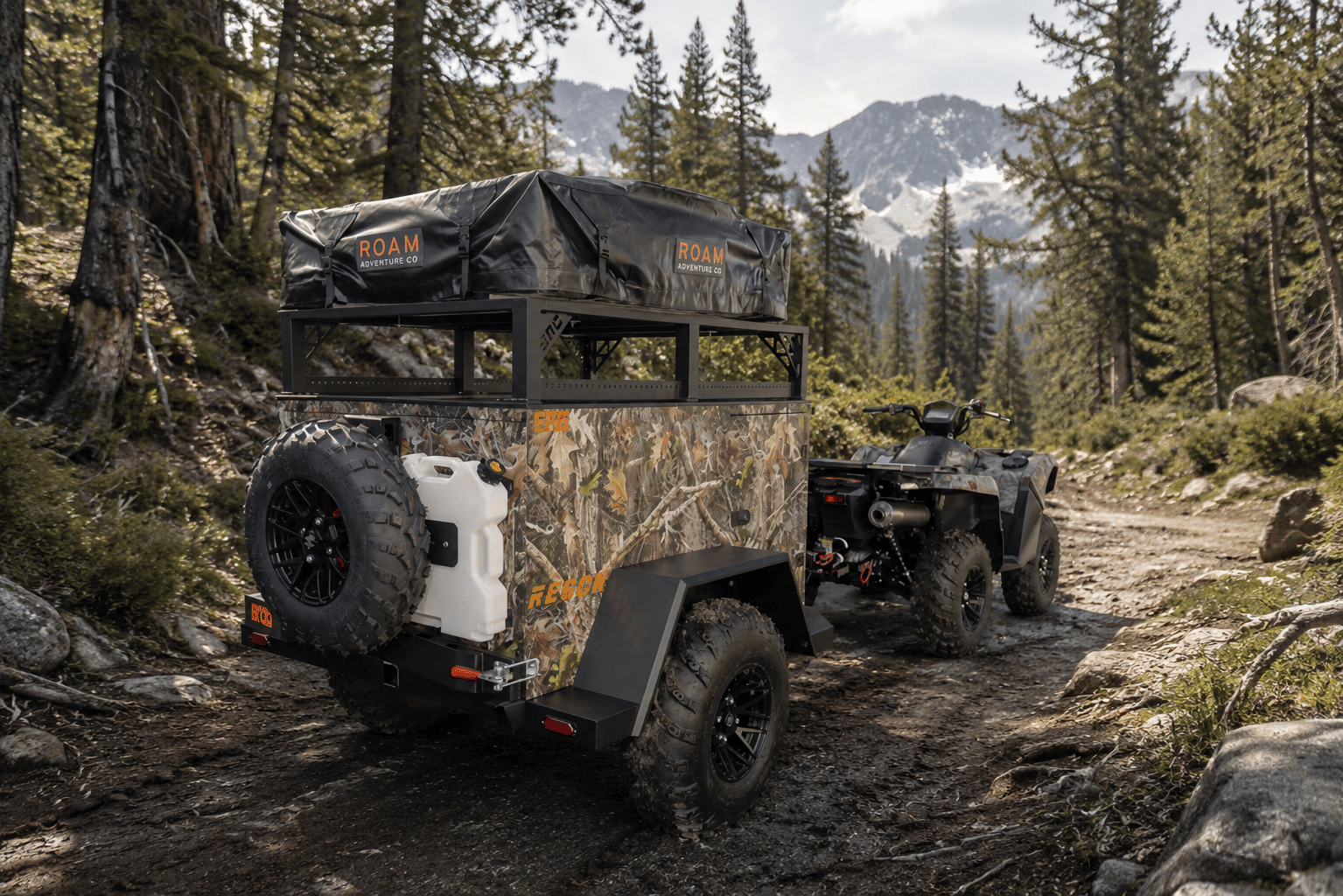
The SNO Trailers Recon is built for travelers who measure a trip by how far past the trailhead they get. Its biggest strength is the weight-to-capability ratio: at 875 lbs with a 40-degree departure angle and Timbren HD suspension, it follows nearly anything with a hitch into terrain where most campers tap out. As someone who’s toured the facility and towed their trailers through the backcountry, I trust how this thing is screwed together.
The trade-offs are honest ones. You won’t stand up inside it, cook in an enclosed galley, or shelter a family of five through a storm. Buyers wanting interior living space should look at SNO’s larger Alpine or a traditional travel trailer, and accept the access and wear costs coming with the extra pounds.
On value, the math favors the Recon more than the sticker suggests. Beyond the build itself, you’re buying slower brake wear, a cooler transmission, better fuel economy, and trail access no heavy camper matches. Spread across a decade of trips, those savings are real money.
My recommendation is simple. For overlanders, hunters, and remote campers running mid-size rigs or side-by-sides, the Recon is the smartest tow-anything option I’ve tested. If your camping happens at paved campgrounds instead, save yourself the off-road premium and buy a conventional lightweight travel trailer.
Ready to Buy?
Check Today’s Price on the SNO Trailers Recon
Configure your Recon direct from SNO Trailers, with financing options available and three standard colors to choose from.
Frequently Asked Questions
How much should an off-road trailer weigh?
Lighter is better as long as the build stays strong. The lightweight category runs from roughly 800 to 4,000 lbs, and staying well under your vehicle’s tow rating leaves margin for gear, water, and rough terrain. At 875 lbs, the Recon leaves enormous margin for almost any 4×4.
Does towing a trailer damage your vehicle?
Towing within your ratings won’t break anything, but it does accelerate wear on the transmission, brakes, suspension, and tires. Heat is the main culprit, and heavier loads generate more of it. Because of this, a lighter trailer meaningfully slows the wear clock on every one of those systems.
Is a lightweight trailer better for overlanding?
For most people, yes. An overlanding trailer earns its keep by reaching remote camps, and a lighter build improves clearance choices, recovery odds, fuel range, and vehicle longevity. Heavier rigs make sense mainly for stationary base camps near maintained roads.
How heavy is the SNO Trailers Recon?
The Recon weighs 875 lbs dry, with a Timbren suspension load rating of 3,500 lbs. Its footprint measures 10’2″ long, 6’0″ wide, and 5’4″ tall, so it stays small enough for an ATV or side-by-side to tow comfortably.
What vehicles tow a lightweight off-road trailer?
Nearly anything with a hitch and a 7-pin connector. Mid-size trucks, SUVs, and Jeeps handle the category easily, and sub-1,000 lb models like the Recon also work behind ATVs and side-by-sides. Always confirm your specific tow rating and loaded weight before heading out.