


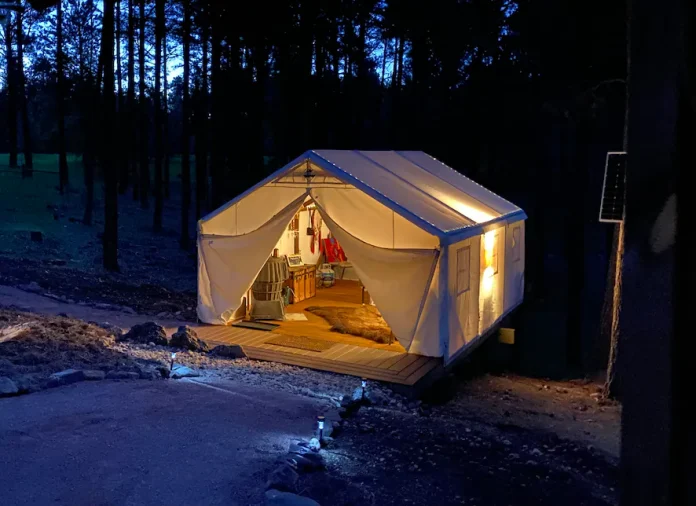

Quick Verdict: After testing and comparing 6 canvas wall tents for elk hunting, the Elk Mountain Tents 13×16 delivers the strongest overall value at $1,050, with 11 oz Poly Shield canvas, 6 screened windows, and a stove jack included at no extra charge. For hunters who want a sewn-in floor and proven longevity, the Kodiak Canvas Flex-Bow provides a premium alternative at $1,160+. Your ideal canvas wall tents for elk hunting setup depends on camp style (pack-in vs. drive-in), group size, and how many weeks per year you plan to spend at elevation.
Last updated: April 2026 | 11 min read
Written by the 4WDTalk team. We have tested rooftop tents, ground tents, hot tents, and wall tents across Southern California, Arizona, Nevada, and Utah over the years. Testing locations include high-desert camps in Joshua Tree and Anza-Borrego, mountain camps at elevation in Big Bear, and multi-day trips through remote BLM land. When your job involves sleeping in a different shelter setup every other weekend, you learn what holds up and what falls apart in real conditions.
In This Guide
- Why Canvas Wall Tents Dominate Elk Camp
- Key Specs at a Glance
- Tent Sizing Guide for Elk Hunting Parties
- Elk Mountain Tents 13×16 Review
- Kodiak Canvas Flex-Bow Review
- Montana Canvas Wall Tent Review
- Davis Tent Review
- White Duck Alpha Wall Tent Review
- Wall Tent Shop Wilderness Review
- Canvas Tent Stove Jack Features and Heating
- Canvas vs. Nylon Tents for Elk Hunting
- Pros and Cons
- Final Verdict
- Frequently Asked Questions
Every canvas wall tent in this guide accepts a wood stove, which puts them in the broader hot tent category. For a cross-format comparison of stove-ready shelters — including dome, bell, and inflatable picks — see our roundup of the best hot tents of 2026.
Why Canvas Wall Tents Dominate Elk Camp
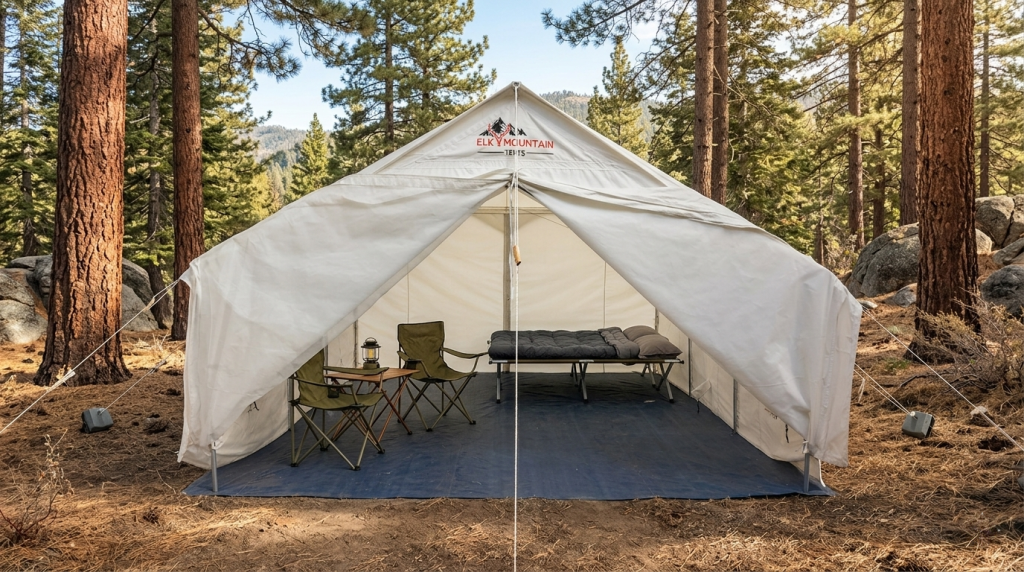
Elk season pushes hunters into high-altitude camps where temperatures drop below freezing and storms roll in without warning. Canvas wall tents for elk hunting have been the standard for outfitters and serious hunters for over a century because they handle these conditions better than any nylon alternative. A quality canvas tent paired with a wood stove keeps your camp at 60-70°F inside while snow piles up outside. After testing nearly every tent type on the market across desert, mountain, and backcountry terrain, canvas wall tents remain the gold standard for extended cold-weather camps.
Finding the best canvas wall tents hunting parties need starts with a few core features: heavy-duty treated canvas (10-12 oz), stove jack ports for safe wood stove installation, and enough interior height to stand and move comfortably. However, prices range from $795 to $2,700+ depending on brand, material, and size. This canvas wall tent comparison breaks down 6 options from 6 manufacturers so you spend your budget on the right shelter for your hunting style.
Whether you run a drive-in wall tent elk camp off a forest road with horses or use off-road vehicles to access remote basecamp locations, the tent you choose affects every morning and evening of your hunt. We evaluated each tent on canvas quality, waterproofing, stove compatibility, setup speed, and total cost of ownership including poles, stoves, and ground cloths. For hunters who want to pack in camp using off-road campers or expedition rigs, a lightweight wall tent complements vehicle-based staging areas perfectly.
Key Specs at a Glance
| Tent | Size | Canvas | Stove Jack | Weight | Price | Rating |
|---|---|---|---|---|---|---|
| Elk Mountain 13×16 | 13′ x 16′ | 11 oz Poly Shield | Yes (included) | ~55 lbs | $1,050 | 4.7 / 5 |
| Kodiak Canvas Flex-Bow | 10′ x 14′ | 8.5/10 oz Hydra-Shield | Stove-ready model | ~79 lbs | $1,160+ | 4.5 / 5 |
| Montana Canvas 12×14 | 12′ x 14′ | 12 oz Grade-A | Yes (included) | ~65 lbs | $1,200 | 4.4 / 5 |
| Davis Tent 12×14 | 12′ x 14′ | 10 oz treated | Yes (included) | ~58 lbs | $2,200+ | 4.3 / 5 |
| White Duck Alpha 14×16 | 14′ x 16′ | 10.1 oz army duck | 2 jacks (included) | ~260+ lbs (pkg) | $1,699 | 4.2 / 5 |
| Wall Tent Shop Wilderness | 12′ x 14′ | 12 oz reinforced | Yes (included) | ~68 lbs | $1,150 | 4.1 / 5 |
Tent Sizing Guide for Elk Hunting Parties
Canvas tent sizes for elk hunting depend on your group size and how much gear you bring into camp. For example, a 10×12 tent fits 2 hunters with cots, a wood stove, and gear bags, but leaves no room for extra equipment. Most hunting parties of 3-4 people find a 12×14 or 13×16 tent provides the right balance between livable space and packable weight. Understanding canvas tent sizes for elk hunting saves you from buying a tent too small for your crew or too heavy for your pack-in route.
For groups of 5 or more, a 14×16 or 16×20 tent becomes necessary. However, larger tents weigh 70-90 lbs for the canvas alone, not counting poles and stakes. As a result, these sizes work best for drive-in camps where your truck sits close to the tent site. Hunters with loaded trailers carrying extra gear and horses should also consider upgrading to air suspension for better ride quality and stability when hauling heavy loads. Pack-in hunters using horses or mules should stay at 12×14 or smaller to keep the total shelter weight manageable.
Besides floor space, wall height matters as much as dimensions for your wall tent elk camp comfort. Standard 5-foot sidewalls let you stand upright in the center but force you to crouch near the edges. Tents with 6-foot or taller sidewalls, such as the Kodiak Canvas Flex-Bow with its 6.5-foot peak height, provide more usable interior space per square foot. Over a 10-day elk hunt, the extra headroom reduces fatigue and makes gear organization significantly easier.
Featured on Elk Mountain Tents
13×16 Wall Tent: Best Value for Elk Camp
11 oz Poly Shield canvas, 6 screened windows, stove jack, and free angle kit included. Ships in 3-5 business days.
Elk Mountain Tents 13×16: Best Overall Value (4.7 / 5)
★★★★★ 4.7 / 5 – 4wdTalk Rating
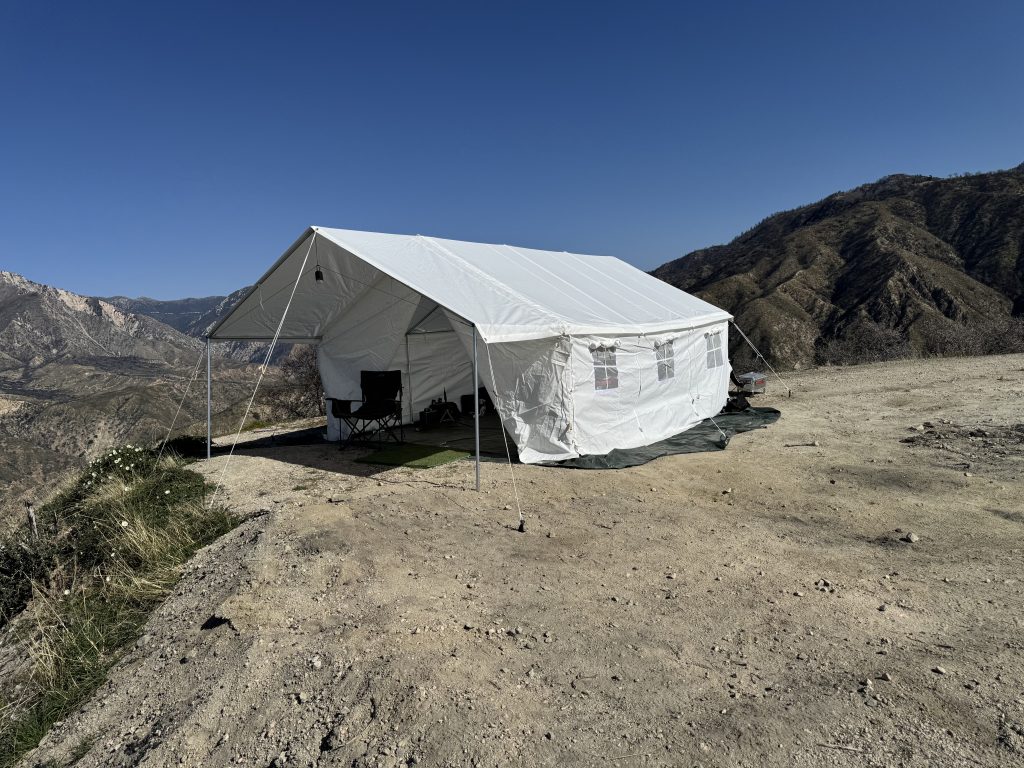
The Elk Mountain Tents 13×16 earned our top pick among canvas wall tents for elk hunting because it includes features other brands charge extra for, at a price point $200-$700 below comparable models. At $1,050, you get 11 oz Poly Shield canvas, 6 screened windows with zip closures, a stove jack, and a free angle kit for the frame. Competitors like Montana Canvas and Davis Tent charge separately for angle kits, adding $75-$150 to the total setup cost.
What sets Elk Mountain apart from the competition is its Poly Shield canvas, a polyester blend instead of traditional cotton duck. The result is a material with the strength of 13 oz cotton canvas at 11 oz weight, saving roughly 10-15 lbs on the total tent weight. For pack-in hunts where every pound matters during the journey from trailhead to remote camp, this weight savings adds up across a season. Similarly, Poly Shield resists mildew better than untreated cotton, reducing maintenance between trips. When you need to access backcountry locations with difficult terrain, lighter gear like this allows you to cover more ground while airing down your rig’s tires for better traction and maneuverability.
However, one consideration is the sidewall height. Elk Mountain uses standard 5-foot sidewalls, which provide adequate standing room in the center peak but less headroom at the tent edges compared to the Kodiak’s 6.5-foot walls. For most elk hunting camps, the 5-foot walls work well with cots positioned along the walls and the stove in the center. Elk Mountain ships in 3-5 business days, faster than the 7-14 day lead times common with Montana Canvas and Davis Tent.
Kodiak Canvas Flex-Bow: Best Premium Option (4.5 / 5)
★★★★☆ 4.5 / 5 – 4wdTalk Rating
Kodiak Canvas builds the Flex-Bow series with Hydra-Shield 100% cotton duck canvas (8.5 oz walls, 10 oz ceiling) treated with a proprietary silicone dry finish. While not the heaviest canvas in our comparison, Kodiak’s weave density and treatment produce exceptional durability. Specifically, hunters on Rokslide and Hunt Talk consistently report Flex-Bow tents lasting 12-15 seasons without significant degradation, and Kodiak stands behind the product with a limited lifetime warranty.
No other wall tent in this guide offers a sewn-in floor, and for many hunters, this single feature justifies the Kodiak’s price premium. A sewn-in floor eliminates ground moisture, prevents bugs from crawling in at the base, and keeps drafts out during subzero nights. In contrast, traditional wall tents require separate ground cloths or tarps, which shift during wind and allow cold air underneath. For late-season elk hunts where temperatures hit -20°F, the sealed floor provides measurable warmth retention.
The trade-off is weight and footprint. A 10×14 Kodiak Flex-Bow weighs approximately 79 lbs before adding poles, making it impractical for pack-in camps and notably heavier than the Elk Mountain 13×16 at 55 lbs. At $1,160+, it also costs $110 more while offering less floor space (140 sq ft vs. 208 sq ft). Still, for drive-in base camps where weight is irrelevant and you want a tent to outlast a decade of hard use, Kodiak sets the durability standard in this canvas wall tent comparison.
Montana Canvas: Best for Extreme Cold (4.4 / 5)
★★★★☆ 4.4 / 5 – 4wdTalk Rating
Montana Canvas operates out of Belgrade, Montana, and builds every tent with Grade-A canvas treated for fire resistance, mold, and mildew. Their 12 oz premium canvas meets California Fire Marshal specifications, making it the safest choice for hunters running wood stoves inside the tent during extended cold-weather camps.
The canvas tent stove jack features on Montana Canvas models include reinforced heat-resistant stitching and a properly positioned port for optimal draft and safety clearance. Montana Canvas has proven its durability from late-summer fishing camps through -20°F late-season elk hunts, and their tents remain a top choice among professional outfitters across the Northern Rockies. The 12×14 model starts at approximately $1,200.
However, Montana Canvas uses traditional cotton duck, which weighs more than Elk Mountain’s Poly Shield blend. A comparable 12×14 Montana Canvas tent weighs roughly 65 lbs for the canvas alone. Lead times are another factor; Montana Canvas builds to order during peak season, and wait times stretch to 2-3 weeks between August and October. Plan your purchase by July to have your tent ready for September archery seasons.
Featured on Elk Mountain Tents
Poly Shield Canvas: Lighter, Stronger, Mildew-Resistant
11 oz canvas with the strength of 13 oz cotton. Screened windows and stove jack included on every model.
Davis Tent: Best Customer Service and Consistency (4.3 / 5)
★★★★☆ 4.3 / 5 – 4wdTalk Rating
Ask around on any elk hunting forum about customer service, and Davis Tent keeps showing up. Operating out of Denver, Colorado for decades, Davis has built a reputation for consistent sizing, quality stitching, and responsive support. Hunters regularly describe it as the brand where “every tent is the same quality,” meaning you get predictable results whether you order a 10×12 or a 16×20. The 12×14 wall tent starts at approximately $2,200.
Davis uses 10.10 oz Sunforger treated canvas as their standard material, which is lighter than Montana Canvas but still adequate for 3-season elk hunting. Sunforger treatment covers fire resistance, water repellency, and mildew prevention. Since Davis builds locally in Colorado, shipping times within the western states run shorter than competitors shipping from Montana or the Pacific Northwest.
Where Davis falls short is late-season performance in sustained subzero temperatures. Thinner 10 oz canvas loses heat faster when running a wood stove, requiring more frequent stoking during overnight hours. For early-season archery and October rifle hunts where temperatures stay above 10°F at night, Davis delivers reliable shelter at a mid-range price. If you hunt deep into November or December, consider a 12 oz option from Montana Canvas or Elk Mountain’s Poly Shield for better heat retention.
White Duck Alpha Wall Tent: Best Retail Availability (4.2 / 5)
★★★★☆ 4.2 / 5 – 4wdTalk Rating
White Duck Outdoors sells the Alpha series through Cabela’s and Bass Pro Shops, making it the easiest canvas wall tent to inspect in person before buying. The Alpha 14×16 uses 10.1 oz army duck cotton canvas with water-repellent, mold-resistant, and UV-resistant finishes applied at the factory. Two heat-resistant silicone-coated stove jacks come standard, offering flexibility in stove placement.
The Alpha series includes features typically sold as upgrades elsewhere: T6-grade aluminum poles, a 16 oz poly vinyl groundsheet, military-grade zippers, and 3-layer storm windows. Also, bug mesh on doors and windows provides ventilation without insect intrusion during early-season hunts. At $1,699 for the 14×16, the White Duck sits between the Elk Mountain and Kodiak in price while offering more floor space than either.
Weight is the Alpha’s biggest drawback. The 14×16 complete package (tent, frame, and ground cloth) tips the scales at over 260 lbs, making it the heaviest setup in our guide by a wide margin. Similarly to Kodiak, the White Duck Alpha works best at drive-in camps accessible by vehicle. Also, while Cabela’s and Bass Pro stock the Alpha, inventory fluctuates seasonally, and the popular 14×16 size often sells out by late August before elk season opens.
Wall Tent Shop Wilderness: Best Budget Option (4.1 / 5)
★★★★☆ 4.1 / 5 – 4wdTalk Rating
The Wall Tent Shop sells the Wilderness brand at price points $100-$200 below comparable tents from Montana Canvas and Davis. A 12×14 Wilderness wall tent starts at approximately $1,150, including a stove jack and basic window screens. The canvas is a 12 oz reinforced cotton duck with standard fire and mildew treatment.
Wall Tent Shop also offers complete wall tent elk camp packages bundling tent, frame, stove, and ground cloth at a discount over buying components separately. For first-time buyers who need everything at once, these packages simplify the purchasing process and ensure compatibility between components. Although the canvas quality sits a step below Montana Canvas in terms of treatment consistency, it holds up well for hunters using their tent 2-3 weeks per year.
Notably, availability varies by season, although stock tends to be stable in spring. Wall Tent Shop is a smaller operation, and popular sizes sell out during peak ordering months (July-September). If this tent interests you, order by early summer to guarantee delivery before archery season opens. For hunters who demand the highest canvas quality and longest service life, stepping up to Elk Mountain or Montana Canvas provides better long-term value per year of use.
Canvas Tent Stove Jack Features and Heating
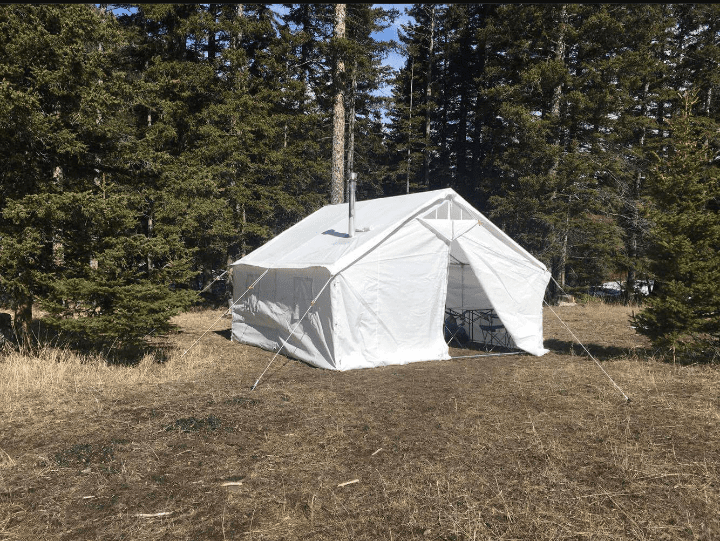
Above all, a stove jack is the single most important feature separating canvas wall tents for elk hunting from general camping shelters. The stove jack is a reinforced, heat-resistant port sewn into the canvas, allowing a stovepipe to pass safely through the tent wall or roof. Without a stove jack, you have no way to run a wood stove inside the tent, which means no heat source when temperatures drop below freezing at high-altitude elk camps.
Canvas tent stove jack features to evaluate include jack placement (wall-mounted vs. roof-mounted), heat-resistant material rating, size compatibility with your stovepipe diameter, and whether the jack includes a rain flap for when the stove is not in use. Elk Mountain, Montana Canvas, and Davis Tent include stove jacks as standard equipment. Kodiak requires purchasing a stove-ready model specifically, and some sizes do not offer the option. White Duck includes two jacks on the Alpha series, giving you flexibility to position the stove on either side of the tent.
For safe operation, always maintain 18 inches of clearance between the stovepipe and any canvas surface. Also use a heat shield or pipe collar where the stovepipe passes through the jack. A properly installed wood stove in a 12×14 canvas tent heats the interior to 60-70°F within 15-20 minutes, even when outside temperatures sit at 0°F. Finally, bring a stove thermometer and maintain flue temperatures between 250-500°F to prevent creosote buildup and minimize fire risk.
Canvas vs. Nylon Tents for Elk Hunting: Which Is Worth the Investment?
A quality 4-season nylon tent for 4 people costs $400-$800 and weighs 8-15 lbs. In comparison, a canvas wall tent in the same capacity starts at $795 and weighs 55-80 lbs. On paper, nylon wins on price and weight. In practice, canvas dominates for extended elk hunting camps lasting 5-14 days.
We have woken up in nylon tents with water dripping on our sleeping bags more times than we care to admit. Canvas breathes naturally, which eliminates the interior condensation buildup common in nylon tents during cold nights. When you run a wood stove, canvas distributes heat evenly and also retains warmth for 30-45 minutes after the fire burns down. Meanwhile, nylon tents trap condensation, drip on sleeping bags, and provide zero heat retention once the stove cools. For a 10-day elk hunt at 9,000 feet, the comfort difference between canvas and nylon determines how rested you are each morning at first light.
Nylon tents make sense for solo backpack hunters who move camp daily and prioritize ultralight weight. However, for base camp hunters returning to the same wall tent elk camp each night, canvas wall tents for elk hunting provide shelter quality nylon cannot match. Therefore, the higher upfront cost spreads across 10-20 years of use, bringing the annual cost below $100 for a tent in the $1,000-$1,500 range.
Pros and Cons
Pros
- Wood stove compatibility keeps camp at 60-70°F in subzero conditions
- Natural breathability eliminates condensation common in nylon tents
- 10-20 year lifespan with proper maintenance (dry completely between uses)
- Standing room at center peak (7-8 feet) reduces camp fatigue on extended hunts
- Enough floor space for cots, gear storage, and a camp table in 12×14+ sizes
- Better noise insulation than nylon for quieter sleep in windy conditions
Cons
- Weight ranges 55-80 lbs for canvas alone, limiting pack-in options
- Requires external pole frame ($150-$400 additional) unless included in a package
- Setup time runs 15-30 minutes with 2 people vs. 5 minutes for a nylon tent
- Mildew risk if stored damp; requires complete drying before packing away
- Higher upfront cost ($795-$2,400) compared to nylon alternatives ($400-$800)
Final Verdict
The Elk Mountain Tents 13×16 earns our top recommendation among canvas wall tents for elk hunting in 2026. At $1,050, it undercuts comparable 12×14 tents from Montana Canvas, Davis, and Wall Tent Shop while providing more floor space. The Poly Shield canvas weighs less than traditional cotton duck, ships in 3-5 days, and includes a stove jack, angle kit, and 6 screened windows at no extra cost.
Hunters who prioritize absolute durability and plan to use the same tent for 15+ years should consider the Kodiak Canvas Flex-Bow at $1,160+. Its sewn-in floor and Hydra-Shield canvas are unmatched for longevity, but the 79-lb weight and price limit its appeal to drive-in camp setups. Montana Canvas offers the best fire-rated canvas and stove jack engineering for hunters running wood stoves in extreme cold throughout November and December.
Your best canvas wall tents hunting season choice depends on three factors: camp access (pack-in vs. drive-in), group size (2-person vs. 4+ person), and season length (early archery vs. late rifle). For most hunters running 7-14 day camps with 2-4 people, the Elk Mountain 13×16 delivers the strongest combination of space, quality, and value. Order by July to guarantee delivery before September opens.
Featured on Elk Mountain Tents
Your Elk Camp Starts Here
Browse wall tents from $795. Every model includes stove jack, screened windows, and free angle kit. Ships in 3-5 days.
Frequently Asked Questions
What size canvas wall tent do I need for elk hunting?
A 12×14 tent fits 3-4 hunters with cots, a wood stove, and gear bags. For 2 hunters, a 10×12 works. Groups of 5+ need a 14×16 or larger. Always account for stove placement, which takes 15-20 square feet of usable floor space. Canvas tent sizes for elk hunting should also factor in trip length, because longer hunts need more gear storage space.
How much does a canvas wall tent cost?
Prices range from $795 for an entry-level Elk Mountain 13×13 to $2,700+ for a large Davis Tent custom build. The sweet spot for most elk hunters sits between $1,000 and $1,300 for a quality 12×14 or 13×16 tent with a stove jack included. Budget an additional $150-$400 for a pole frame if not sold as a package.
Which canvas tent is best for cold weather elk hunting?
For extreme cold below 0°F, choose a tent with 12 oz canvas and a properly rated stove jack. Montana Canvas and Elk Mountain both handle subzero conditions with effective heat retention when paired with a wood stove. Thicker canvas (12 oz) retains stove heat 20-30% longer than 10 oz alternatives after the fire burns down.
How do you set up a canvas wall tent?
Two people set up a 12×14 canvas wall tent in 15-25 minutes with practice. First lay out the ground cloth, then assemble the pole frame (ridge pole, uprights, and angle braces). Drape the canvas over the frame, stake the base, and tension the guy lines. A free-standing angle kit, like the one Elk Mountain includes, simplifies the frame assembly step significantly.
How long do canvas wall tents last?
A quality canvas wall tent lasts 10-20 years with proper maintenance. The most important care step is drying the canvas completely before storage. Storing damp canvas causes mildew, which degrades the fabric within 1-2 seasons. Kodiak Canvas and Montana Canvas both report tents lasting 15+ years among hunters who follow proper drying and storage procedures.
Is a stove jack necessary for elk hunting tents?
Yes, if you hunt during rifle season (October-November) at elevations above 7,000 feet. Nighttime temperatures at these elevations regularly drop to 10-20°F, and late-season hunts in November and December see temps below 0°F. A wood stove through a properly installed stove jack is the only effective heat source for keeping a canvas tent warm enough for restful sleep after a full day of hunting.