


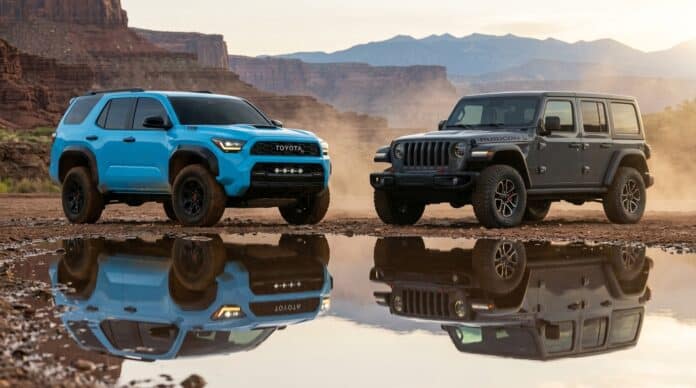

Quick Facts: The 2026 Jeep Wrangler vs 2026 Toyota 4Runner showdown pits two legends against each other. Wrangler starts at $38,030 with standard 4WD, 12.9 inches of ground clearance, and a 47.4 degree approach angle. The 4Runner starts at $43,065, tows up to 6,000 pounds, and offers an optional third row plus an i-Force Max hybrid making 326 horsepower and 465 pound-feet of torque. Both rank among the top overlanding rigs sold today.
Last updated: 05/2026 | 9 min read
In This Comparison
2026 Jeep Wrangler vs 2026 Toyota 4Runner Overview
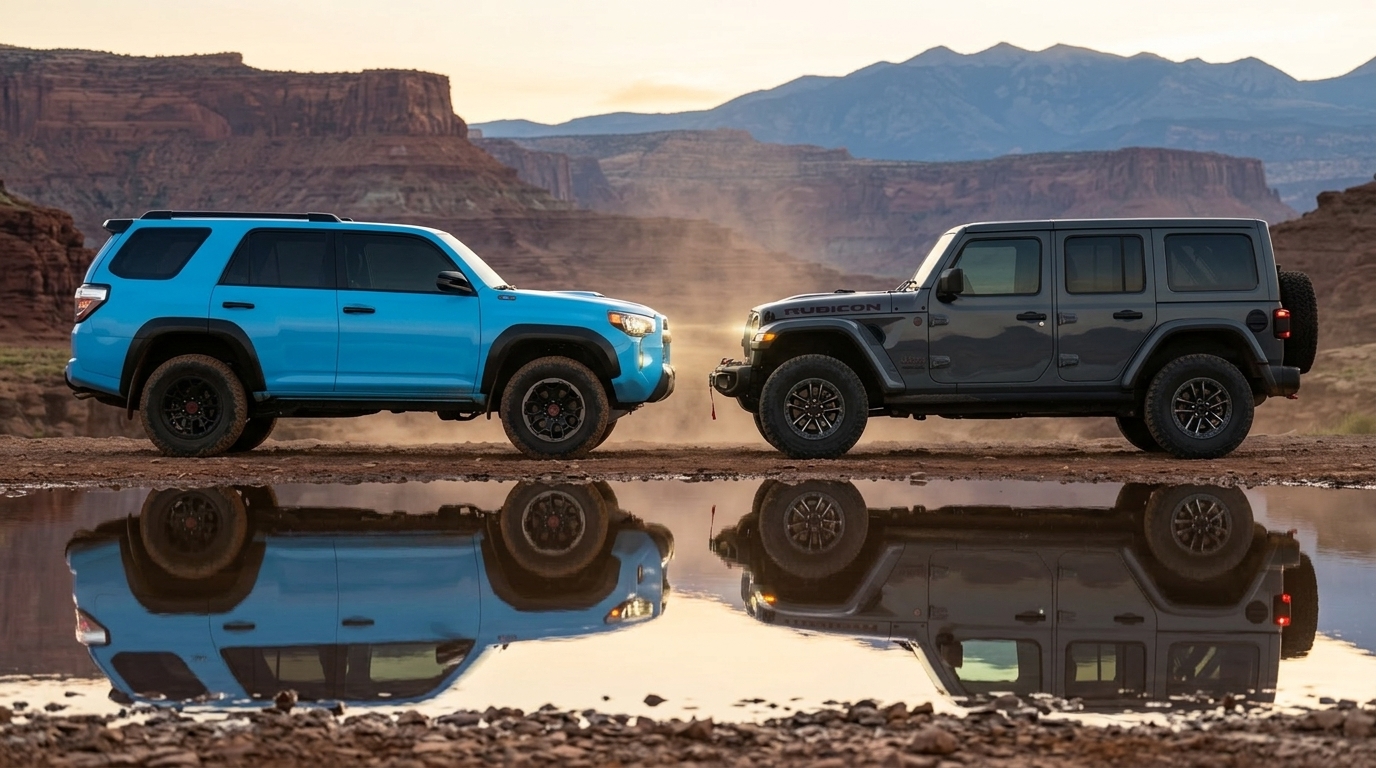
The 2026 Jeep Wrangler vs 2026 Toyota 4Runner debate keeps splitting overland forums, dealer lots, and trailhead campsites. Both rigs trace their roots to military and utility origins, and both arrive in 2026 with body-on-frame chassis, locking differentials on top trims, and serious factory off-road hardware. But they answer the same question in opposite ways. The Wrangler stays committed to removable doors, fold-down windshield, and solid front and rear axles. Toyota’s 4Runner enters the second year of its sixth-generation redesign with a fully boxed frame, available hybrid power, and an optional third row.
For shoppers cross-shopping these two for daily driving plus weekend trail use, the choice often comes down to compromise tolerance. If you want the most authentic open-air off-roader sold today, the Wrangler still owns this lane. Need trail capability with seven seats, smoother highway manners, and Toyota’s reliability reputation? The 4Runner is the safer bet. Both vehicles continue to dominate overlanding builds, and both routinely appear on lists of the best overland vehicles for 2026.
Pricing widens the gap further. Entry-level 2026 Wrangler Sport four-door models start at $38,030 with destination, while the base 4Runner SR5 begins at $43,065. At the top of each lineup, the V8-powered Wrangler Moab 392 reaches $81,990, and the hybrid 4Runner TRD Pro tops out at $69,395. Two trucks, two missions, two price ladders.
Key Specs at a Glance
| Specification | 2026 Jeep Wrangler | 2026 Toyota 4Runner |
|---|---|---|
| Starting price (with destination) | $38,030 | $43,065 |
| Top trim price | $81,990 (Moab 392) | $69,395 (TRD Pro hybrid) |
| Trim count | 9 | 9 |
| Standard drivetrain | 4WD on every trim | 2WD base, 4WD optional or standard |
| Base engine | 3.6L V6, 285 hp, 260 lb-ft | 2.4L turbo I4, 278 hp, 317 lb-ft |
| Top engine | 6.4L V8, 470 hp, 470 lb-ft | 2.4L i-Force Max hybrid, 326 hp, 465 lb-ft |
| Best EPA combined mpg | 21 mpg (2.0L turbo) | 23 mpg (hybrid) |
| Max towing | 5,000 lb (select 4-door) | 6,000 lb |
| Ground clearance | Up to 12.9 in | Up to 10.1 in (TRD Pro, Trailhunter) |
| Approach / Departure | 47.4° / 40.4° | 33° / 24° |
| Water fording | Up to 35 in | Not officially rated |
| Cargo behind rear seat | ~13 cu ft (2-door), ~32 cu ft (4-door) | 48.4 cu ft (non-hybrid) |
| Seating | 4 (2-door) or 5 (4-door) | 5 standard, optional 7 (SR5, Limited) |
Price and Value
Wrangler buyers walk in with a $5,035 head start. The 2026 Sport four-door begins at $38,030 including the $1,995 destination charge, and even popular trims like the Sport S, Willys, and Sahara stay below $50,000. However, the Moab 392 swings hard the other direction at $81,990 thanks to its 6.4-liter V8 and exclusive equipment. For 2026, Jeep also dropped free scheduled maintenance, although five years or 60,000 miles of roadside assistance and 10 years of Jeep Connect basics still ship on every Wrangler.
By contrast, the 2026 4Runner SR5 starts at $43,065 with the $1,495 destination charge, and the top hybrid TRD Pro reaches $69,395. Toyota counters its higher entry price with ToyotaCare, which covers two years or 25,000 miles of scheduled maintenance plus two years of unlimited-mileage roadside assistance. Buyers also receive five-year trials of Safety Connect and Service Connect, a one-year Remote Connect trial, and a 30-day or three-gigabyte Wi-Fi hotspot trial.
For budget-driven trail buyers, the Wrangler wins on raw entry price. Once you weigh ownership cost over five years, however, the included Toyota maintenance and stronger resale narrow the gap considerably.
Engines, Transmissions, and Fuel Economy
Powertrain choice is where these rigs diverge most. The 2026 Jeep Wrangler offers three engines. First, the standard 3.6-liter Pentastar V6 makes 285 horsepower and 260 pound-feet of torque, paired with a six-speed manual or optional eight-speed automatic. Notably, it remains one of the few new SUVs sold with a true row-it-yourself stick shift. Second, a 2.0-liter turbocharged inline-four delivers 270 horsepower with the eight-speed automatic only. Finally, the Moab 392 swings a 6.4-liter HEMI V8 producing 470 horsepower and 470 pound-feet of torque. The plug-in hybrid 4xe is gone for 2026.
Across the showroom, the 2026 Toyota 4Runner takes a more focused approach with two turbocharged 2.4-liter four-cylinder options, both routed through an eight-speed automatic. Its base i-Force engine produces 278 horsepower and 317 pound-feet of torque. Above it, the i-Force Max hybrid lifts output to 326 horsepower and 465 pound-feet of torque, with the electric motor sitting between the engine and transmission. Toyota makes the hybrid standard on Platinum, TRD Pro, and Trailhunter trims and optional on TRD Off-Road and Limited for an extra $2,800. Every i-Force Max 4Runner comes with 4WD.
EPA combined fuel economy lands at 19 mpg for the V6 manual Wrangler, 20 mpg for the V6 automatic, 21 mpg for the 2.0-liter turbo, and 14 mpg for the V8 Moab 392. The 4Runner returns 22 mpg combined for the 2WD non-hybrid, 21 mpg for the 4WD non-hybrid, and 23 mpg for the hybrid. Net result: the 4Runner hybrid out-torques every Wrangler short of the V8 while burning less fuel.
Off-Road Capability
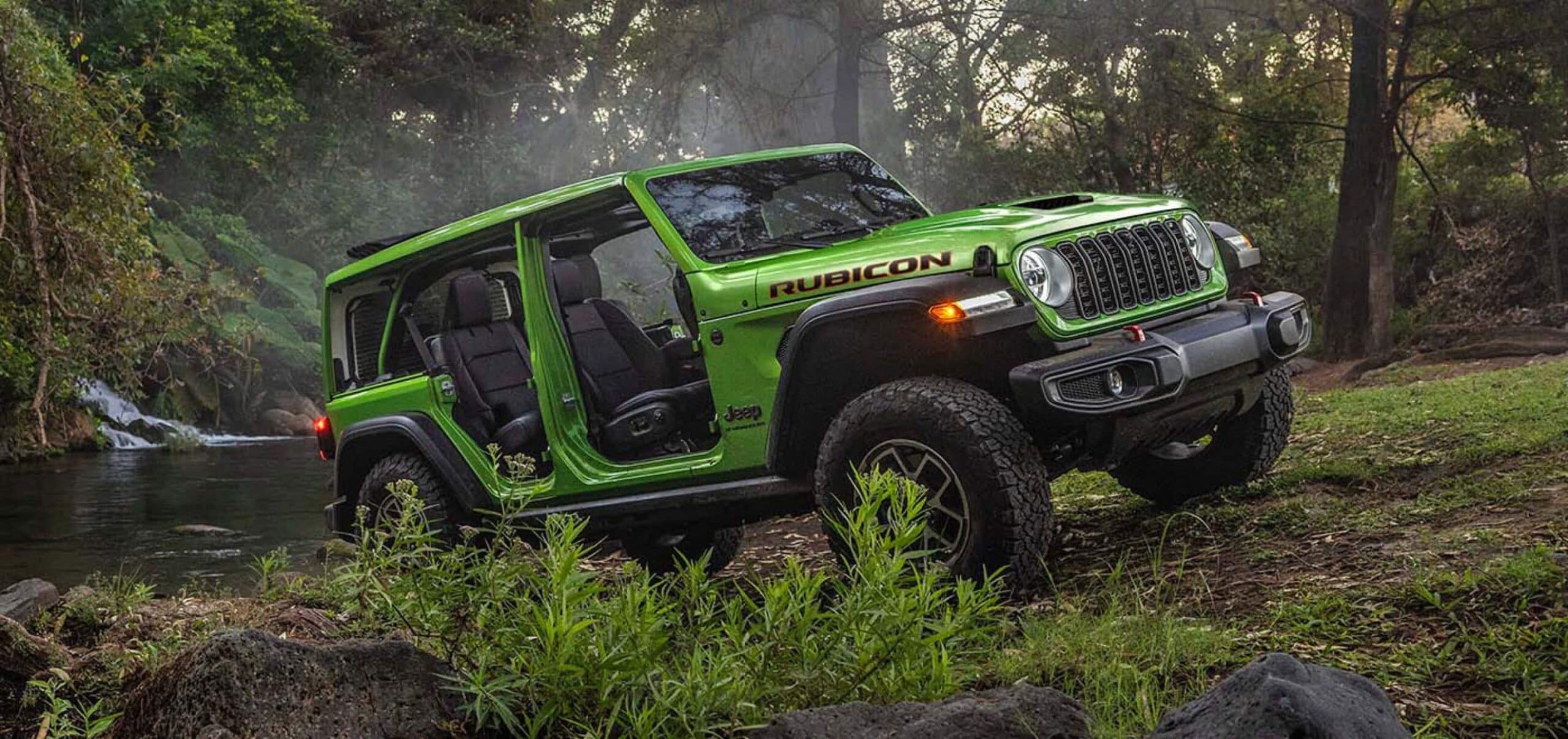
The Wrangler’s lead shows up here. With 35-inch tires on the Rubicon X or Moab 392, the 2026 Wrangler delivers up to 12.9 inches of ground clearance, a 47.4 degree approach angle, a 40.4 degree departure angle, a 26.7 degree breakover angle, and 35 inches of water fording. Rubicon trims add Tru-Lok front and rear electronic locking differentials, an electronic sway-bar disconnect, and a Rock-Trac transfer case with a 4:1 low range. Solid axles front and rear stay non-negotiable. For overlanders building out a trail rig, see the top upgrades for an overlanding Jeep Wrangler for storage, suspension, and recovery ideas.
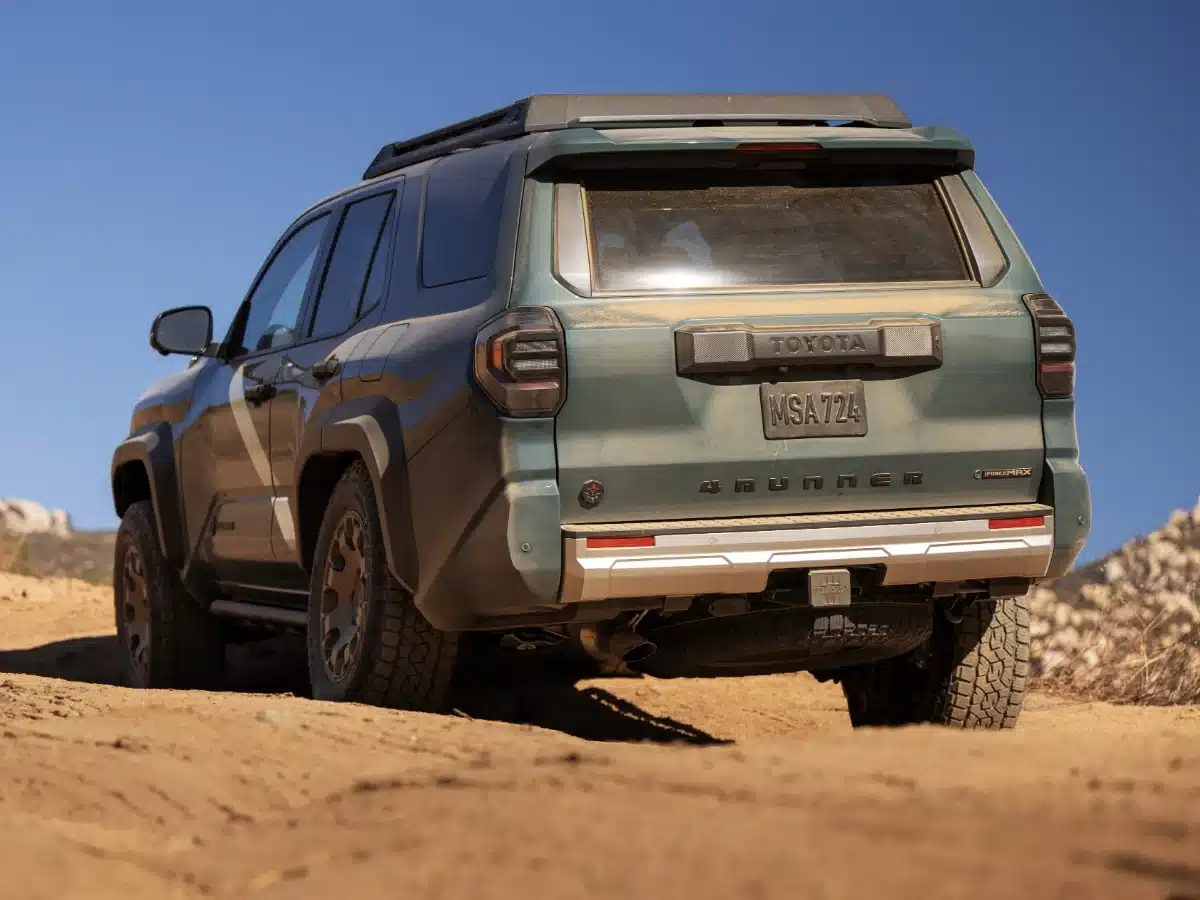
The 2026 Toyota 4Runner counters with serious factory hardware, especially on the TRD Pro and Trailhunter. Both trims provide 10.1 inches of ground clearance, a 33 degree approach angle, and a 24 degree departure angle. The TRD Pro rides on Fox QS3 adjustable shocks with remote reservoirs, while the Trailhunter swaps in Old Man Emu shocks tuned for heavy overland loads. Trailhunter trims also ship with rock rails, an intake snorkel, an onboard ARB-style air compressor, and steel skid plates protecting the oil pan, transfer case, and rear differential. Toyota offers Crawl Control, Multi-Terrain Select, a locking rear differential, and a stabilizer-bar disconnect depending on trim.
For raw geometry on rocks, the Wrangler still leads on every angle. On balanced overland performance with weight-rated suspension and built-in air, however, the Trailhunter gets closer than any factory 4Runner before it.
Interior, Cargo, and Daily Driving
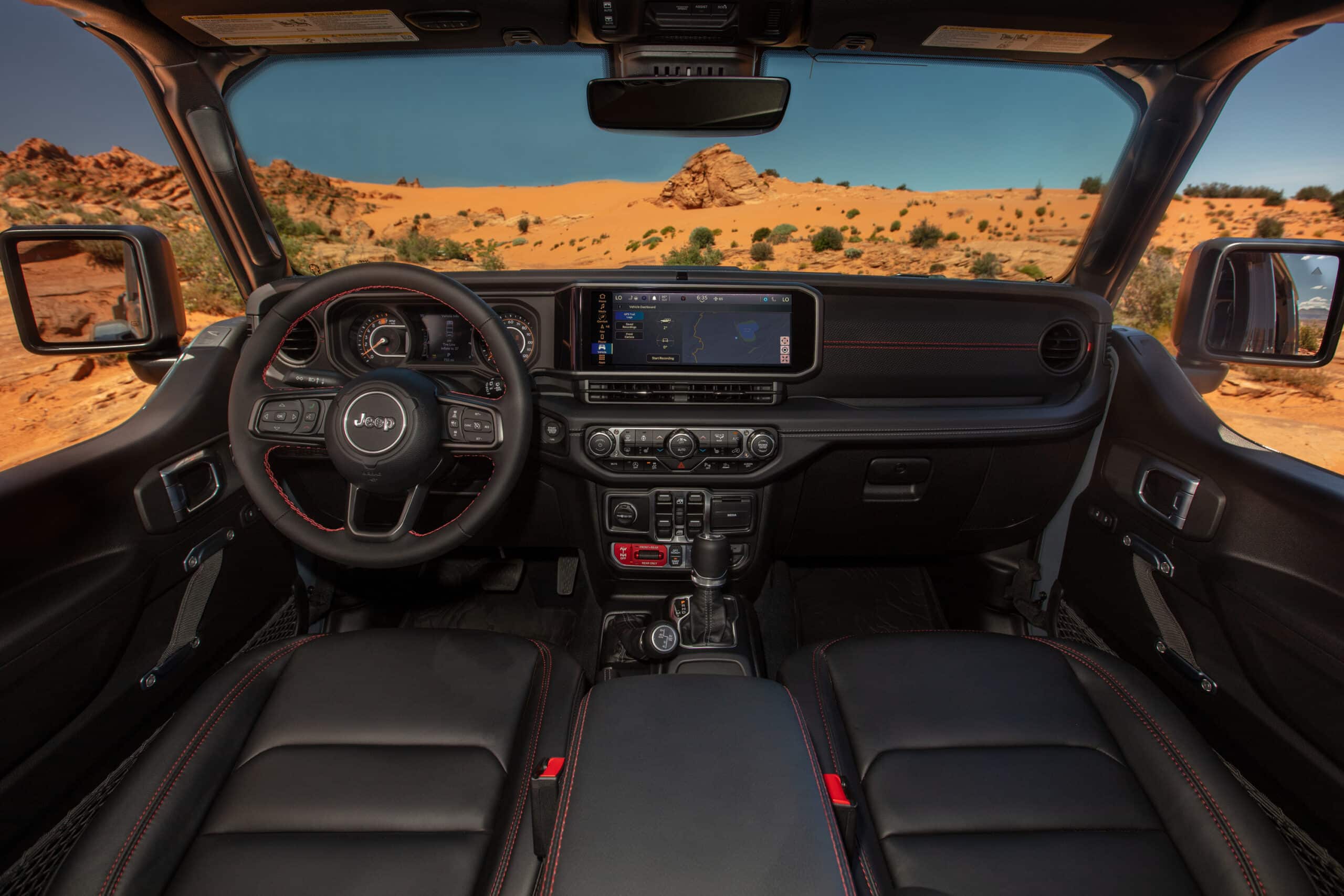
Open-air driving is what the Wrangler still does better than anything. Both two- and four-door 2026 Wranglers keep removable doors, fold-down windshield, and a choice of soft, hard, or Sky One-Touch power tops. The two-door seats four people and offers roughly 13 cubic feet of cargo space behind the rear seat. A four-door seats five and opens up to about 32 cubic feet behind the second row. The cabin rides stiffly on solid axles, steering wanders at highway speeds, and wind noise climbs with road speed. Owners accept these trade-offs because nothing else delivers the trail freedom the Jeep does.
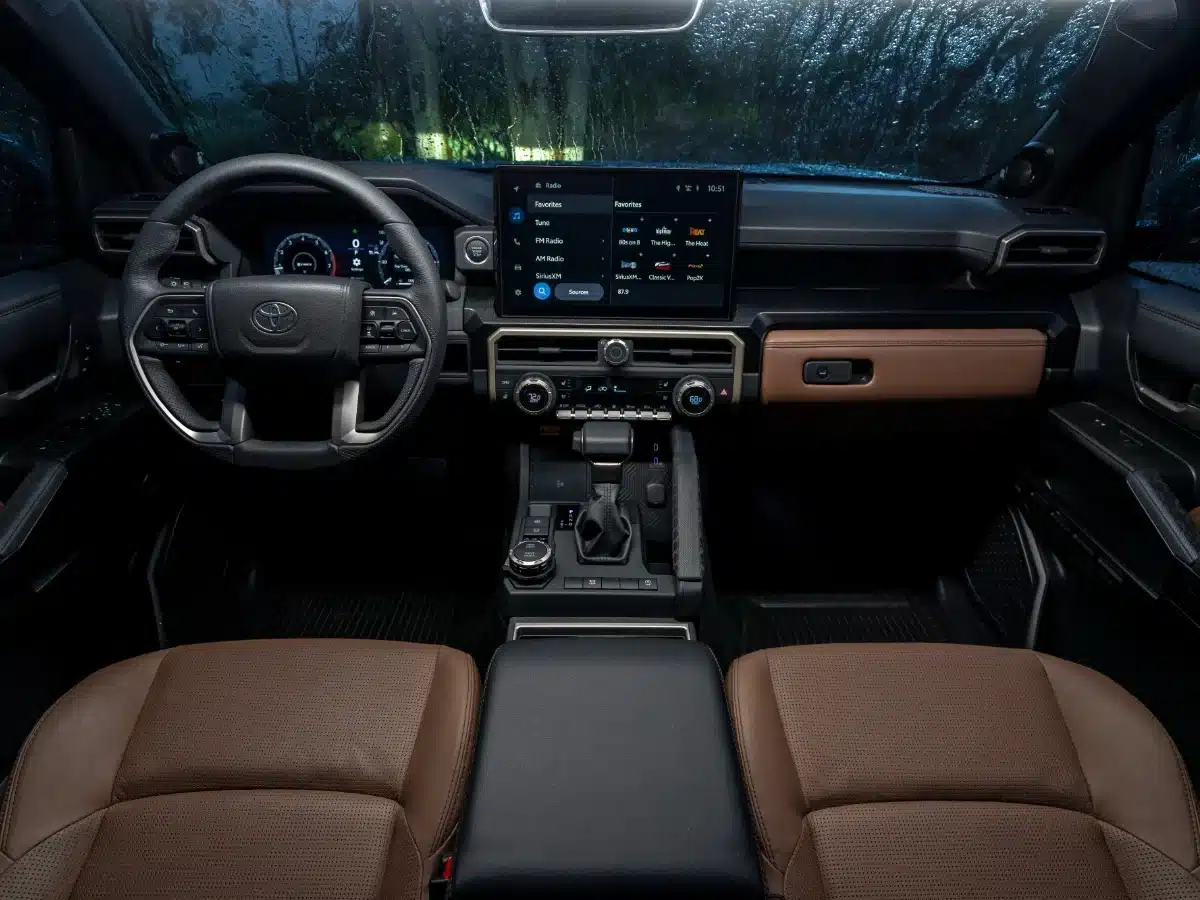
Inside, the 2026 4Runner feels closer to a modern crossover than a traditional body-on-frame SUV. Two-row trims provide 48.4 cubic feet of cargo space behind the rear seat in non-hybrid form and 42.6 cubic feet in hybrid form. Three-row 4Runners (available on SR5 and Limited) shrink cargo to 12.1 cubic feet behind the third row. The wheelbase stretches to 112.2 inches, and the cargo opening clears about 30 inches with roughly 40 inches between wheel wells. As a daily driver and family hauler, the 4Runner feels more composed on pavement, quieter at speed, and easier to park. Friends of mine running Bronco Badlands and 4Runner builds out of Big Bear and Joshua Tree consistently report the 4Runner’s cabin feels closer to a Highlander than an old-school SUV at highway speed.
For solo trail riders or couples chasing weekend missions, the Wrangler still works as transportation. Once you add families running car seats, dog crates, or third-row duty, the 4Runner’s space advantage becomes a deal-maker.
Technology, Infotainment, and Safety
Both rigs run modern infotainment, although the philosophies differ. The 2026 Wrangler ships with Uconnect 5 on a 12.3-inch touchscreen across every trim, with wireless Apple CarPlay, wireless Android Auto, and over-the-air updates as standard equipment. Jeep’s Off-Road Pages+ feature delivers turn-by-turn trail guidance, downloadable offline maps, real-time tracking, and waypoint marking. A two-year subscription opens up more than 200 premium trail guides for backcountry use.
The 2026 Toyota 4Runner offers either an 8-inch or 14-inch touchscreen running Toyota Audio Multimedia, plus wireless CarPlay and Android Auto on every trim. Higher trims pair the larger screen with a 14-speaker JBL premium audio system. Connected services include Safety Connect, Service Connect, Drive Connect with cloud navigation and the “Hey, Toyota” voice assistant, and Remote Connect for door control and remote start.
On the safety side, every 2026 4Runner ships with Toyota Safety Sense 3.0 standard, including adaptive cruise control, lane centering, automatic emergency braking with pedestrian and motorcyclist detection, traffic sign recognition, and automatic high beams. NHTSA gave the 2026 4Runner a four-star overall rating. IIHS scored it Good in the updated side test and Marginal in the updated moderate overlap front test, so it did not earn 2026 Top Safety Pick status. The Wrangler’s base Sport keeps driver assistance minimal, though higher trims add adaptive cruise, blind-spot monitoring, rear cross-traffic alert, and park assist. IIHS rated the 2026 Wrangler Good in moderate overlap and side impact, though it also missed Top Safety Pick.
2026 Jeep Wrangler vs 2026 Toyota 4Runner: Which Should You Buy?
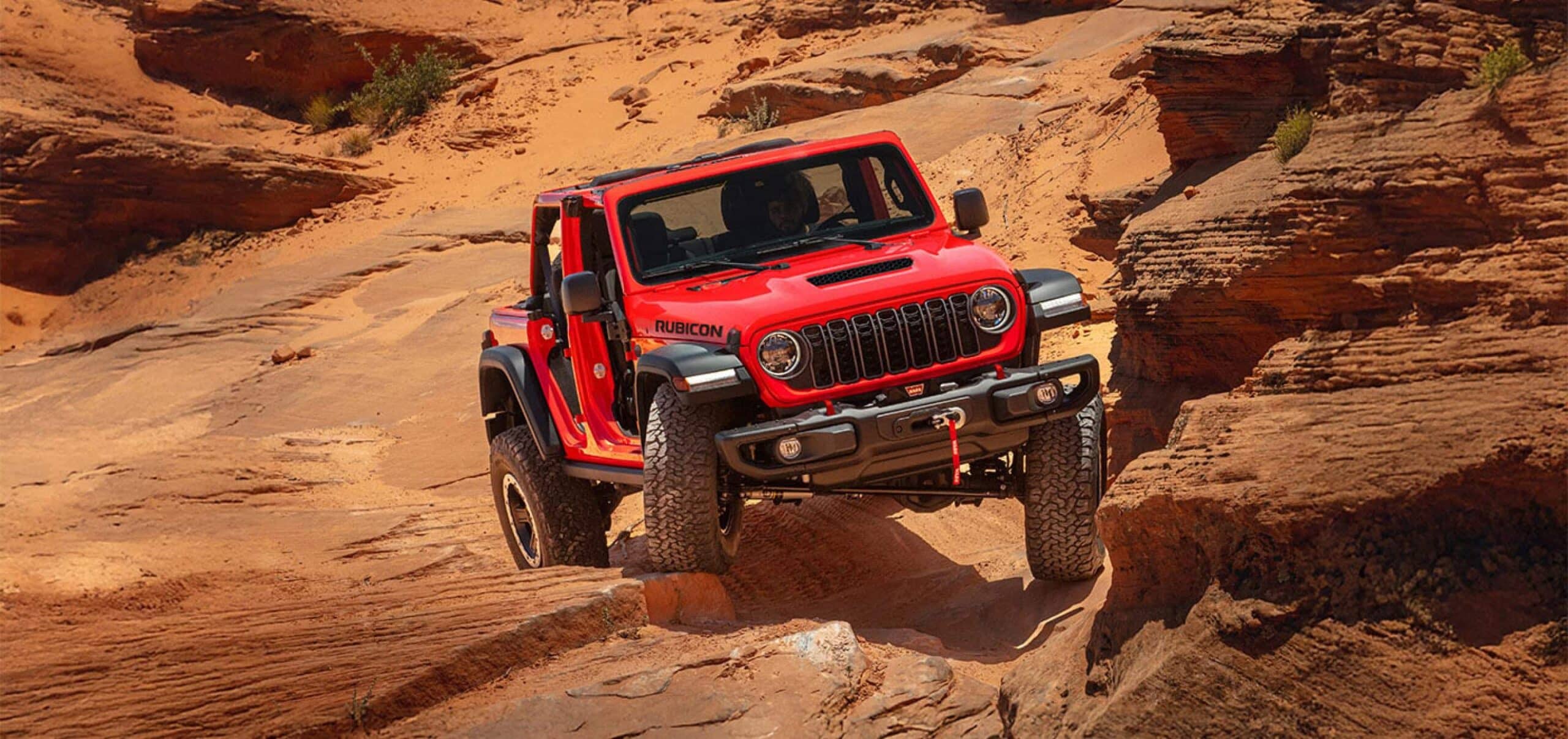
Three answers cover most buyers. First, if hard-core trail performance is the top priority and you are willing to accept stiff ride quality and modest cargo space, the Wrangler wins. Solid axles, a 47.4 degree approach angle, 35-inch fording depth, and removable doors are unmatched. Rubicon and Rubicon X trims drop you onto challenging trails straight from the dealer.
Second, if you want serious off-road capability paired with seven-passenger flexibility, smoother on-road manners, and Toyota’s long-term reliability reputation, the 2026 Toyota 4Runner is the smarter buy. Trailhunter and TRD Pro trims close most of the trail gap, while SR5 and Limited models with the optional third row give you family logistics no Wrangler delivers.
Third, on value the math depends on miles. The Wrangler wins on sticker by $5,035. Toyota counters with two years of free maintenance, stronger fuel economy across most trims, and historically stronger resale. Over a five-year hold, those line items often reshape the price gap.
Pros and Cons
Pros
Jeep Wrangler
- Best-in-class 47.4 degree approach angle and 12.9 inches of ground clearance
- Removable doors, fold-down windshield, and three top options
- $5,035 lower starting price than the 4Runner
- Standard 4WD on every trim from Sport to Moab 392
- Six-speed manual transmission still offered on V6 models
- 35-inch water fording depth
Toyota 4Runner
- Up to 6,000 pounds towing on most trims
- i-Force Max hybrid produces 326 horsepower and 465 pound-feet of torque
- 48.4 cubic feet of cargo space behind the rear seat
- Optional third-row seating on SR5 and Limited trims
- Toyota Safety Sense 3.0 standard on every trim
Cons
Jeep Wrangler
- Stiff ride and busy steering on highway pavement
- Only 13 cubic feet of cargo behind the rear seat in two-door form
- 4xe plug-in hybrid discontinued for 2026
- Free scheduled maintenance dropped for 2026
Toyota 4Runner
- Higher $43,065 starting price
- IIHS rated Marginal in updated moderate overlap front test
- 33 degree approach and 24 degree departure trail angles fall short of the Wrangler
- Hybrid cargo space drops to 42.6 cubic feet
Final Verdict
For pure trail dominance and open-air character, the 2026 Jeep Wrangler still owns the category. Solid axles, a removable top, electronic sway-bar disconnect, and segment-leading geometry make it the rig to beat once the pavement ends. I have owned five Jeeps across the years, including a 2020 Gladiator I drove for four years before trading it in. No other factory SUV matches the freedom of dropping the doors at a trailhead and rolling into Big Bear or Moab with the windshield folded.
The trade-offs follow you home. Highway noise, busy steering, modest cargo space, and a thirsty V6 add up over a 30,000-mile year. If your weekly mission includes school drop-off, two car seats, and a long commute punctuated by occasional weekend trail runs, the Wrangler will wear on you.
The 2026 Toyota 4Runner answers those daily-life problems while keeping serious overlanding chops. Trailhunter trims with Old Man Emu shocks, a snorkel, and an onboard air compressor give you a factory rig ready for week-long backcountry travel. Hybrid efficiency, six-thousand-pound towing, and an optional third row solve real family math. Toyota’s reliability track record, shown by its tie for the top spot in the 2026 J.D. Power U.S. Vehicle Dependability Study Upper Midsize SUV segment, sweetens the deal further.
Buy the Wrangler if your weekends define your week. Choose the 4Runner if your week defines your weekends. Both rigs continue to dominate overlanding builds, and both remain among the smartest factory off-road buys for 2026. Shoppers who want a midsize truck alternative with similar off-road talent should also weigh the Chevy Colorado ZR2 as a third option before signing.
Frequently Asked Questions
Is the 2026 Toyota 4Runner better off-road than the 2026 Jeep Wrangler?
Not on raw geometry. The 2026 Jeep Wrangler delivers up to 12.9 inches of ground clearance, a 47.4 degree approach angle, and 35 inches of water fording, while the 4Runner TRD Pro and Trailhunter top out at 10.1 inches of clearance and a 33 degree approach. However, the Trailhunter closes the overlanding gap with Old Man Emu shocks, a snorkel, and a factory air compressor.
Which is more reliable, the Jeep Wrangler or the Toyota 4Runner?
Toyota holds the long-term edge. The 2026 4Runner ties for the top spot in its segment in the J.D. Power 2026 U.S. Vehicle Dependability Study, which measures problems after three years of ownership. By contrast, the Wrangler does not rank in the top three in its Compact SUV segment for dependability, although it does rank second in initial quality.
Does the 2026 Jeep Wrangler still come with a manual transmission?
Yes. The 2026 Wrangler still offers a six-speed manual transmission with the 3.6-liter V6, making it one of the few new SUVs sold today with a true stick shift. An eight-speed automatic remains optional with the V6 and standard with the 2.0-liter turbo and 6.4-liter V8.
Which one is better for overlanding, the Wrangler or the 4Runner?
Both excel, although for different overlanding styles. The Wrangler suits short, technical trips where extreme articulation and water crossings matter most. Meanwhile, the 4Runner Trailhunter shines on multi-day expeditions where cargo space, hybrid range, and onboard air compress the prep list. Many seasoned overlanders end up running both at different points in their build journey.
How much does a 2026 Jeep Wrangler cost compared to a 2026 Toyota 4Runner?
The 2026 Jeep Wrangler Sport four-door starts at $38,030 with destination, while the 2026 Toyota 4Runner SR5 starts at $43,065. At the top end, the V8 Wrangler Moab 392 reaches $81,990, and the hybrid 4Runner TRD Pro tops out at $69,395. Wrangler wins on entry price, while the 4Runner wins on top-trim value.
Does the 2026 Toyota 4Runner offer a hybrid?
Yes. The i-Force Max hybrid pairs the 2.4-liter turbocharged four-cylinder with an electric motor for a combined 326 horsepower and 465 pound-feet of torque. EPA fuel economy is 23 mpg combined. The hybrid is standard on Platinum, TRD Pro, and Trailhunter trims, and optional on TRD Off-Road, TRD Off-Road Premium, and Limited for an additional $2,800.