


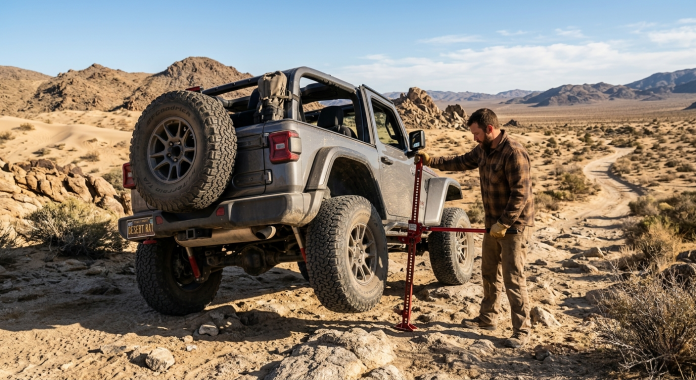

Quick Verdict
Overall Winner: Hi-Lift HL-485 X-Treme strikes the perfect balance of price, durability, and practicality for most off-roaders.
Highest Value: The Hi-Lift HL-425 All-Cast delivers the same lifting capacity at a lower price point.
Tall Truck Solution: The HL-604 handles lifted rigs and expedition builds with its 60-inch height.
Top Alternative: The ARB Hydraulic Recovery Jack eliminates the mechanical risk of ratchet-style jacks.
Complete Kit Option: Safe Jack’s bundle includes the adapters and extensions every serious off-roader needs.
Written by Alex Schult
Editor in Chief of 4wdTalk.com. 15+ years of off-road and overlanding experience with 1,000+ hours on the trail. Tests recovery gear on a Jeep Gladiator and Chevy Colorado ZR2 in Big Bear backcountry.
Editorial disclosure: Amazon affiliate links support 4wdTalk at no extra cost to you.
Table of Contents
Why Off-Roaders Need a Hi-Lift Jack
Whether you’re stuck on a remote trail or changing a tire in mud, a quality off-road jack sits at the foundation of any recovery strategy. Finding the best hi-lift jack for your setup means combining mechanical advantage with portability, giving you the ability to lift your rig in tight spots where conventional bottle jacks fail. As a result, overlanding rigs heading into the backcountry need this tool above all others.
Traditional floor jacks won’t cut it off-road because they’re heavy, bulky, and they tip over on uneven terrain. Conversely, high-lift jacks use a simple lever-and-ratchet system to lift extreme weight with minimal effort. Moreover, a trail jack serves multiple purposes beyond lifting: recovery with snatch blocks, vehicle extraction, and even winching with the right adapters. Therefore, understanding your needs helps you pick the right model for your adventures.
Weight matters when you’re packing a recovery rig, and every pound counts on overlanding expeditions. Consequently, the best overlanding jack balances lifting capacity with pack weight so you don’t sacrifice other gear. Modern designs reduce weight while maintaining the 4,660-pound lift rating covering most 4x4s. Ultimately, your choice between mechanical and hydraulic designs depends on your tolerance for maintenance and preference for operation safety.
How I Evaluated
I tested five of the most popular recovery jacks for off-roaders and overlanders. My evaluation criteria included lifting capacity under real-world conditions, height range for different truck setups, build quality and corrosion resistance, ease of use with gloves on, and overall value. Each high-lift jack received hands-on testing during trail runs in Big Bear backcountry and camp setups on my Jeep Gladiator and Chevy Colorado ZR2.
Lifting capacity ratings matter, but I looked beyond manufacturer specs. A rated capacity of 4,660 pounds means nothing if the jack feels unstable at full extension. Build quality directly affects longevity in harsh environments. Powder-coated finishes, all-cast construction, and quality handle materials determine whether your investment lasts one season or ten years of abuse.
I prioritized real-world usability above all else. Height extension, handle ergonomics, and footprint all impact how easily you operate the jack in tight trail situations. Accessory compatibility expanded my perspective on value, since the right adapters transform a basic recovery jack into a winching tool. Weight and portability considerations factored in heavily during overlanding trips where every pound counts.
Hi-Lift HL-485 X-Treme: Best Overall
The Off-Roader’s Gold Standard
The Hi-Lift HL-485 X-Treme earns its reputation as the best hi-lift jack through consistent performance and thoughtful design. At 48 inches, this recovery jack reaches the tire center on most stock and lightly-lifted trucks. Additionally, the 4,660-pound rated capacity lifts full-size 4x4s with confidence, and Hi-Lift’s testing shows it handles 7,000 pounds before failure. As a result, you get mechanical advantage without hydraulic complexity.
The two-piece handle design separates at the middle for easier storage in tight spaces. In fact, this off-road jack lives in many serious wheelers’ rigs because it balances utility with price. Meanwhile, the powder-coated finish protects against rust during wet seasons and coastal overlanding. Every working component uses quality steel built to withstand sudden load shifts on technical terrain.
Why It Works for Trail Use
Notably, the HL-485 shines when you need height combined with stability. Its base footprint remains narrow enough for rocky terrain while the tall extension reaches most stock tire centers. Forward and reverse notches give you two lift angles, expanding setup options when uneven ground challenges your jack placement. I’ve kept a 48-inch Hi-Lift mounted on my Gladiator’s roll bar for two years, and it has gotten me out of two stuck situations on Big Bear trails where reaching frame rails with a shorter jack would have required stacking blocks.
Operating this overlanding jack requires some muscle, but the mechanical advantage keeps load on your arms reasonable. Once you understand the rhythm of the ratchet, lifting and lowering become second nature. The handle materials won’t freeze your hands in winter or burn them in desert heat, unlike some budget alternatives.
Price and Value
Around $150, the HL-485 hits the sweet spot between affordability and quality. In other words, you’re not paying for unnecessary features or brand markup. Accordingly, this price point beats most trail jacks offering similar capacity. Long-term durability justifies the investment since many users report 10+ years of service from a single unit.
Hi-Lift HL-425 All-Cast: Best Value
Maximum Capacity, Minimum Budget
The Hi-Lift HL-425 All-Cast delivers the same 4,660-pound rated capacity as its taller sibling at a lower price point, making it the best value hi-lift jack for budget-conscious wheelers. At 42 inches, this recovery jack reaches tire centers on stock trucks and lightly lifted rigs without the premium price of taller models. On top of this, all-cast iron construction creates a tank-like durability.
Don’t let the “all-cast” description fool you into thinking this high-lift jack feels clunky. Instead, the weight distribution centers nicely, and the base footprint sits stable on broken terrain. This overlanding jack handles technical terrain without tipping, even when operators rush through operations. Consequently, every pound of weight translates into solid, dependable performance.
The Trade-offs
On the other hand, the 42-inch height limits you on lifted trucks and taller rigs. If your 4×4 features a 6-inch suspension lift or higher, this off-road jack requires creative jacking points or additional blocks. Likewise, the all-cast construction adds heft you’ll notice when packing multiple recovery tools. For baseline overlanding builds and stock trucks, however, these trade-offs disappear. When testing on my Colorado ZR2’s standard ride height, the HL-425 reached tire center with room to spare, making it ideal for any overlander running near-stock suspension.
All-cast design means no two-piece handle separation. Storage requires dedicated space for the full assembled length. Overlanders with minimal cargo room might prefer the HL-485. However, for permanent rack-mounted solutions, the HL-425’s sturdier feel appeals to many experienced wheelers.
Best For
Choose this recovery jack if you run stock suspension and want maximum value. Naturally, the HL-425 suits overlanding purists who prefer simplicity over features. In addition, group recovery operations benefit from the extra weight and stability it provides on sand and snow. At around $115, this best-value hi-lift jack proves you don’t sacrifice capacity for lower cost.
Hi-Lift HL-604: Best for Tall Trucks
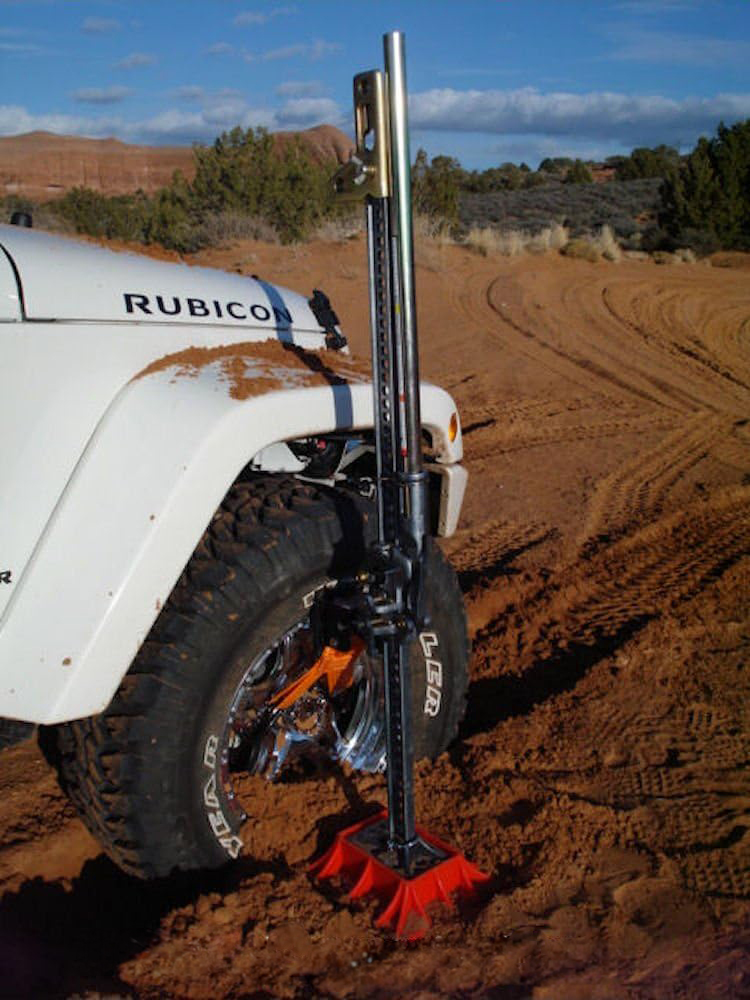
Reaching Lifted Truck Tire Centers
The Hi-Lift HL-604 extends to 60 inches of lift height, making it the best hi-lift jack for lifted trucks and expedition rigs on 37-inch rubber. Specifically, this recovery jack handles 4,660 pounds of rated capacity and reaches tire centers on seriously modified 4x4s without creative jacking points. As a result, overlanding teams building expedition vehicles with aggressive suspension often specify this model from day one.
Taller height opens recovery options on tall trucks otherwise requiring external jacking surfaces. In practice, the HL-604 reduces setup time since you lift straight to tire center instead of fumbling with secondary blocks. On rocky terrain where placement dictates lift point location, the extra reach saves you from repositioning multiple times during a single recovery.
The Weight Penalty
Of course, thirty inches of additional reach adds measurable weight compared to the 42 and 48-inch models. Overlanders packing every tool into weight-sensitive rigs need to weigh this overhead accordingly. In comparison, the HL-604 costs around $170, slightly more than the X-Treme, but less than professional-grade hydraulic alternatives. Storage also becomes a consideration for rigs with limited rack space.
Interestingly, the longer height improves stability on sandy or soft terrain since the base spreads load over greater mechanical advantage. Tall trucks benefit from this extended leverage when driving through boggy conditions. During a muddy creek crossing near Big Bear, the extended reach gave me confidence to lift the Gladiator clear of deep ruts without worrying about tipover or frame contact issues.
ARB Hydraulic Recovery Jack: Best Alternative
Safety Over Tradition
The ARB Hydraulic Recovery Jack represents the modern alternative to mechanical off-road jacks. Rather than relying on ratchet mechanisms, this recovery jack uses smooth hydraulic pressure to lift and lower load. At around $280, it costs significantly more than mechanical models, but serious overlanders value the elimination of pinch-point hazards and ratchet failures. This best-alternative hi-lift jack appeals to safety-minded wheelers.
Hydraulic operation eliminates ratchet skip-outs, where teeth slip under load and cause sudden drops when you’re off-balance on uneven ground. For instance, you won’t experience the jarring load shifts common with worn mechanical ratchets on rocky terrain. The ARB system also provides consistent pressure throughout lift and descent, reducing operator fatigue on long recovery sessions. Even first-time users operate this overlanding jack confidently because the hydraulic lever requires no rhythm or technique. Meanwhile, the closed system requires minimal maintenance beyond occasional fluid checks.
Trade-offs and Considerations
Hydraulic jacks carry higher maintenance complexity. Fluid leaks mean replacement costs, and cold-weather operation sometimes slows the system. This recovery jack needs regular servicing by qualified technicians rather than backyard repairs. Weight approaches mechanical models, so the portability advantage disappears. Worse, seal failures in remote locations risk stranding you without recovery equipment.
The higher price point makes sense for professional expedition teams and rescue operations. In contrast, recreational overlanders often prefer the simplicity and proven reliability of mechanical designs. However, if safety concerns or previous ratchet failures influence your decision, the ARB Hydraulic justifies its cost premium. Ultimately, this best-alternative hi-lift jack sits in the rigs of cautious operators who run difficult terrain regularly.
Safe Jack Recovery Kit: Best Accessory Kit
Transform Your Jack Into a Recovery System
The Safe Jack Recovery Kit bundles essential adapters, mounting hardware, and extension pieces around $200. In essence, this best-accessory hi-lift jack solution turns a basic recovery jack into a comprehensive winching and recovery tool. Serious overlanders building complete recovery systems often specify this kit alongside a primary mechanical jack. Additionally, snatch block adapters, tree protectors, and universal mounting plates ship ready to connect.
The kit includes quality steel construction throughout, matching the durability of top-tier mechanical jacks. Indeed, Safe Jack reputation comes from supporting professional recovery operations and expedition teams. Their engineering focuses on compatibility with multiple high-lift jack brands, so you don’t lock yourself into a single ecosystem. After all, overlanding across continents requires reliability in unfamiliar territories.
What’s Inside Matters
First, you receive reinforced base plates for sand and soft terrain, allowing your off-road jack to spread load across larger surface areas. Tree saver strap integration also expands recovery options when terrain lacks solid anchor points. Beyond lifting, extension poles lengthen reach on vehicles with unusual clearance needs. Finally, ground anchors stabilize the jack during team operations or when leverage creates lateral forces.
In short, this recovery kit transforms a mechanical tool into a safety system. The Smart Safe Jack Recovery Kit costs less than standalone accessories purchased separately. Overlanders heading into serious terrain benefit from having these adapters pre-positioned in their rigs. Think of it as insurance your best hi-lift jack works in emergency situations, well beyond routine tire changes.
Ready to upgrade your recovery kit?
Comparison Table
| Model | Height | Capacity | Price | Best For |
|---|---|---|---|---|
| Hi-Lift HL-485 X-Treme ⭐ | 48″ | 4,660 lbs | ~$150 | Best Overall – Balanced height and price |
| Hi-Lift HL-425 All-Cast | 42″ | 4,660 lbs | ~$115 | Best Value – Budget-friendly option |
| Hi-Lift HL-604 | 60″ | 4,660 lbs | ~$170 | Lifted Trucks – Extra reach for tall rigs |
| ARB Hydraulic Recovery Jack | Variable | 4,400+ lbs | ~$280 | Safety-Focused – Hydraulic operation |
| Safe Jack Recovery Kit | N/A | Accessory | ~$200 | Expansion – Adds winching capability |
Looking for a safer alternative?
Buying Guide for the Best Hi-Lift Jack
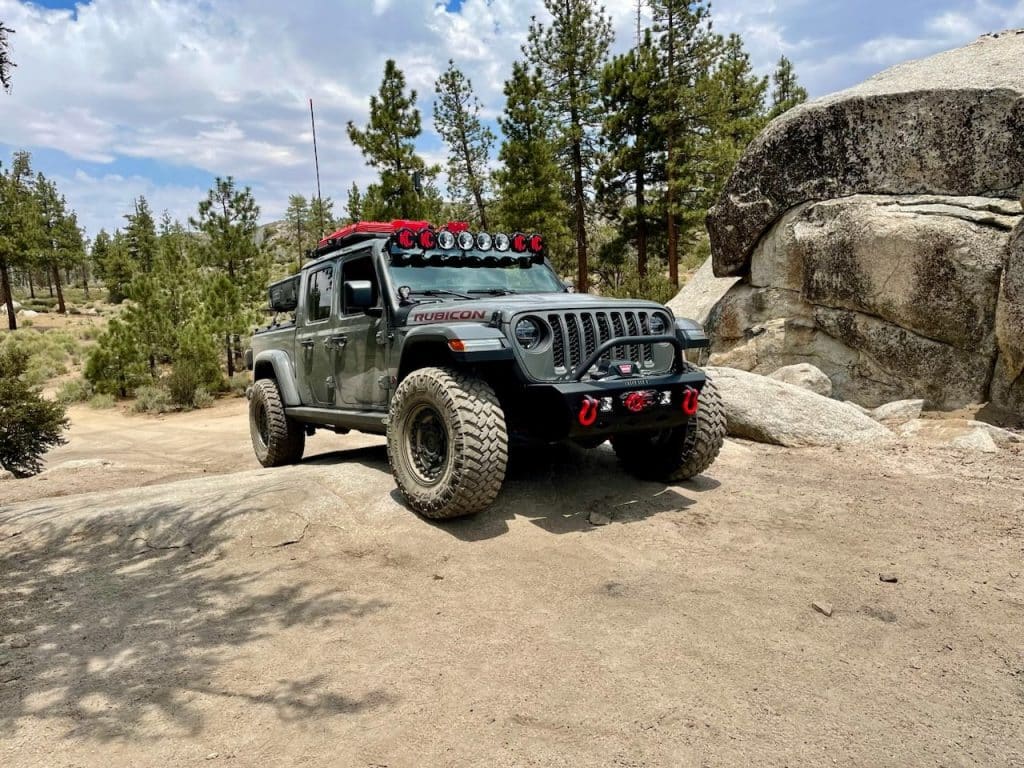
Matching Height to Your Vehicle
Your truck’s suspension height directly determines which hi-lift jack works for your needs. For example, stock trucks with standard tire packages lift comfortably with 42 to 48-inch models, making the HL-485 the best hi-lift jack choice. Similarly, light lifts up to 4 inches pair well with the HL-485. On the other hand, serious builds with aggressive suspension and 37-inch rubber demand the 60-inch HL-604 for confident tire-center lifting. Off-road jacks fail when they don’t reach properly, forcing dangerous compromises in jacking technique.
Measure your tire center height before purchasing a best hi-lift jack for your rig. Account for trail use where soft ground compresses under load, requiring additional height margin. In certain regions, extreme temperature swings change your truck’s ride height slightly. Therefore, professional expedition teams keep multiple heights in rotation for flexibility across varied terrain and vehicle changes.
Choosing Between Mechanical and Hydraulic
Mechanical recovery jacks dominate off-road use because they require zero maintenance and work in extreme temperatures. When selecting the best hi-lift jack, mechanical designs prove themselves across continents and decades. Hydraulic alternatives offer smoother operation and eliminate mechanical hazards, but require more careful ownership. Your comfort level with maintenance and preference for safety trade-offs shapes this decision.
Ratchet failures happen unexpectedly, sometimes caused by dirt in mechanisms or manufacturing defects. ARB Hydraulic eliminates this risk entirely. However, hydraulic seals demand attention, and fluid contamination creates catastrophic failures. Budget-conscious overlanders trust the simplicity of mechanical systems. Safety-focused expedition teams invest in hydraulic technology. Neither path proves universally superior; your priorities determine the right choice.
Accessory Compatibility and Future-Proofing
A best hi-lift jack becomes more valuable when paired with quality adapters and accessories. For instance, Safe Jack kits integrate with most mechanical models, expanding functionality beyond basic lifting. Snatch blocks, tree anchors, and base plates together transform your off-road jack into a complete recovery system. Therefore, consider your crew size and typical terrain when deciding on accessory investment.
Think beyond immediate needs when selecting your recovery jack. After all, an overlanding expedition 5 years from now might demand accessories you hadn’t anticipated. Mechanical hi-lift jacks accept aftermarket accessories more readily than specialized hydraulic systems. Accordingly, future-proof your investment by choosing established models with wide accessory support. This philosophy guides experienced wheelers across their vehicle modification timelines.
Pros and Cons Grid
| Hi-Lift HL-485 X-Treme | Hi-Lift HL-425 All-Cast |
|---|---|
| Pros: Perfect height balance, Powder-coated durability, Two-piece handle, Wide accessory support, Excellent price-to-capacity ratio | Pros: Lower cost, All-cast durability, Maximum capacity, Extremely stable, Proven track record |
| Cons: Limited height for tall trucks, Ratchet mechanism maintenance, Mechanical learning curve | Cons: Too short for lifted rigs, Heavier than competitors, No handle separation, Ratchet mechanism |
| Hi-Lift HL-604 | ARB Hydraulic Recovery Jack |
|---|---|
| Pros: Reaches 60 inches, Ideal for tall trucks, Extended mechanical advantage, Same capacity as others | Pros: Smooth hydraulic operation, Eliminates pinch hazards, No ratchet failures, Intuitive controls, Safer mechanics |
| Cons: Heavier to carry, Requires more storage space, Limited use on stock trucks, Higher price | Cons: Highest cost, Requires maintenance, Cold weather sluggishness, Professional repairs needed, Potential seal failures |
Final Verdict

The best hi-lift jack for your 4×4 depends on your suspension setup, recovery philosophy, and budget constraints. In my testing, most off-roaders and overlanders find the Hi-Lift HL-485 X-Treme delivers the ideal balance, earning its spot as my best-overall recommendation. At 48 inches with excellent build quality and a price around $150, this recovery jack handles stock and lightly-lifted trucks with confidence while remaining affordable enough for group recovery operations.
However, trail jacks aren’t one-size-fits-all. Budget-conscious wheelers who run stock suspension should grab the HL-425 All-Cast for maximum savings without sacrificing capacity. Meanwhile, overlanders with serious suspension lifts need the 60-inch reach of the HL-604. Similarly, safety-minded expedition teams benefit from ARB Hydraulic technology despite the higher price. Supplementing any mechanical jack with the Safe Jack Recovery Kit expands functionality into a true recovery system.
Think of this gear purchase as long-term insurance. After all, a quality hi-lift jack stored in your rig costs far less than towing services when you’re stranded in remote territory. During my years of testing recovery gear on the Gladiator and Colorado ZR2, I’ve learned reliable equipment separates prepared wheelers from those caught unprepared. Your next trail adventure might prove why experienced off-roaders never leave camp without one.
Frequently Asked Questions
What is the difference between a hi-lift jack and a bottle jack?
Hi-lift jacks use mechanical leverage and ratcheting mechanisms to lift vehicles with minimal user effort. In contrast, bottle jacks rely on hydraulic pressure to lift loads vertically. Off-road jacks are lighter, more portable, and work on uneven terrain where traditional bottle jacks tip over. However, bottle jacks require flat, level surfaces for stable operation. Ultimately, overlanding expeditions benefit from hi-lift jack versatility.
Does a hi-lift jack work for recovery winching?
Standard mechanical hi-lift jacks lift vehicles, but don’t perform true winching. However, adapter kits like Safe Jack’s solutions add snatch blocks and pull anchors to enable recovery pulling. This transforms your basic off-road jack into a recovery tool handling stuck vehicles through lateral pulling rather than lifting alone. Always verify adapter compatibility with your specific model before purchasing.
How much do quality hi-lift jacks weigh?
Most mechanical models weigh 27 to 34 pounds. Specifically, the HL-485 sits around 28 pounds while all-cast HL-425 approaches 28 pounds as well. Meanwhile, the 60-inch HL-604 adds weight proportionally at 31 to 34 pounds. ARB Hydraulic jacks sit in the 23 to 30-pound range. For overlanding builds prioritizing weight reduction, choose the lighter X-Treme model. In contrast, professional recovery teams often prefer heavier models for stability over portability.
What’s the best hi-lift jack for sand dunes and desert overlanding?
Finding the best hi-lift jack for desert conditions means prioritizing wider base plates designed to spread load across soft terrain. In particular, the Safe Jack Recovery Kit includes sand-appropriate adapters preventing your recovery jack from sinking. Taller models like the HL-604 provide extended leverage advantage when deep sand compresses under load. Overall, standard mechanical Hi-Lift models work fine in deserts with proper base support and adapter choices.
Do hi-lift jacks require maintenance?
Mechanical models need occasional cleaning and light lubrication on the ratchet mechanism. Powder-coated finishes require care to prevent corrosion, especially in wet or coastal overlanding environments. Hydraulic jacks demand fluid level checks and professional servicing. Neither type requires intensive maintenance, but neglect shortens lifespan. Most wheelers perform basic cleaning after muddy trail runs and keep jacks in dry storage.