


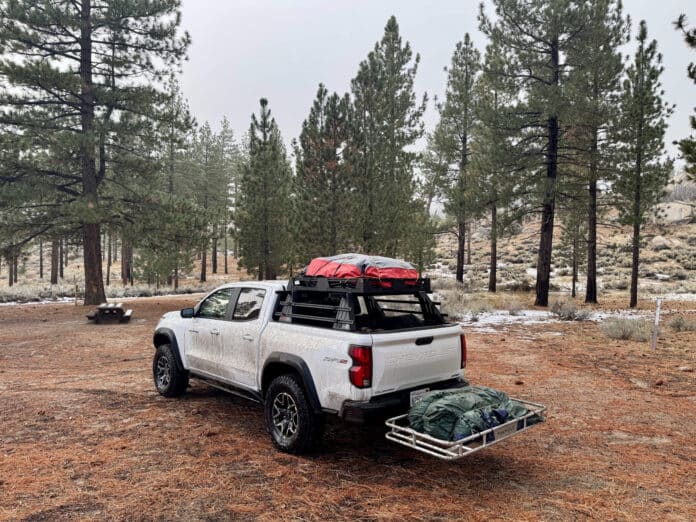

Quick Verdict: After six months hauling gear on my 2025 Chevy Colorado ZR2, the Pakmule Pro earns its $1,045 price tag. The 42-pound aluminum hitch rack carries a 650-pound rated load with zero rattle and zero rust, thanks to STABLELOK threaded-pin technology and TIG-welded 100 percent aluminum construction. I have loaded it with storage totes, camp chairs, firewood, and a large inflatable rooftop tent without a single failure. The Pro loses departure angle on technical trails and adds rear-end length you will feel in tight reverse. However, for stability, build quality, and longevity, I have not found a competitor in its class to match it.
Last updated: 05/2026 | 12 min read
In This Article
- Why Trust This Pakmule Pro Review
- Pakmule Pro Quick Facts
- Six Months on a Colorado ZR2
- Build Quality and Materials
- STABLELOK Anti-Wobble System
- No-Rock Stability Under Load
- Lightweight for Its Size
- What I Hauled: Real Cargo Scenarios
- Departure Angle and ZR2 Fit
- Pakmule Pro Review From Other Testers
- Pros and Cons
- Price and Value Analysis
- Pakmule Pro Review: Final Verdict
- Frequently Asked Questions
Why Trust This Pakmule Pro Review
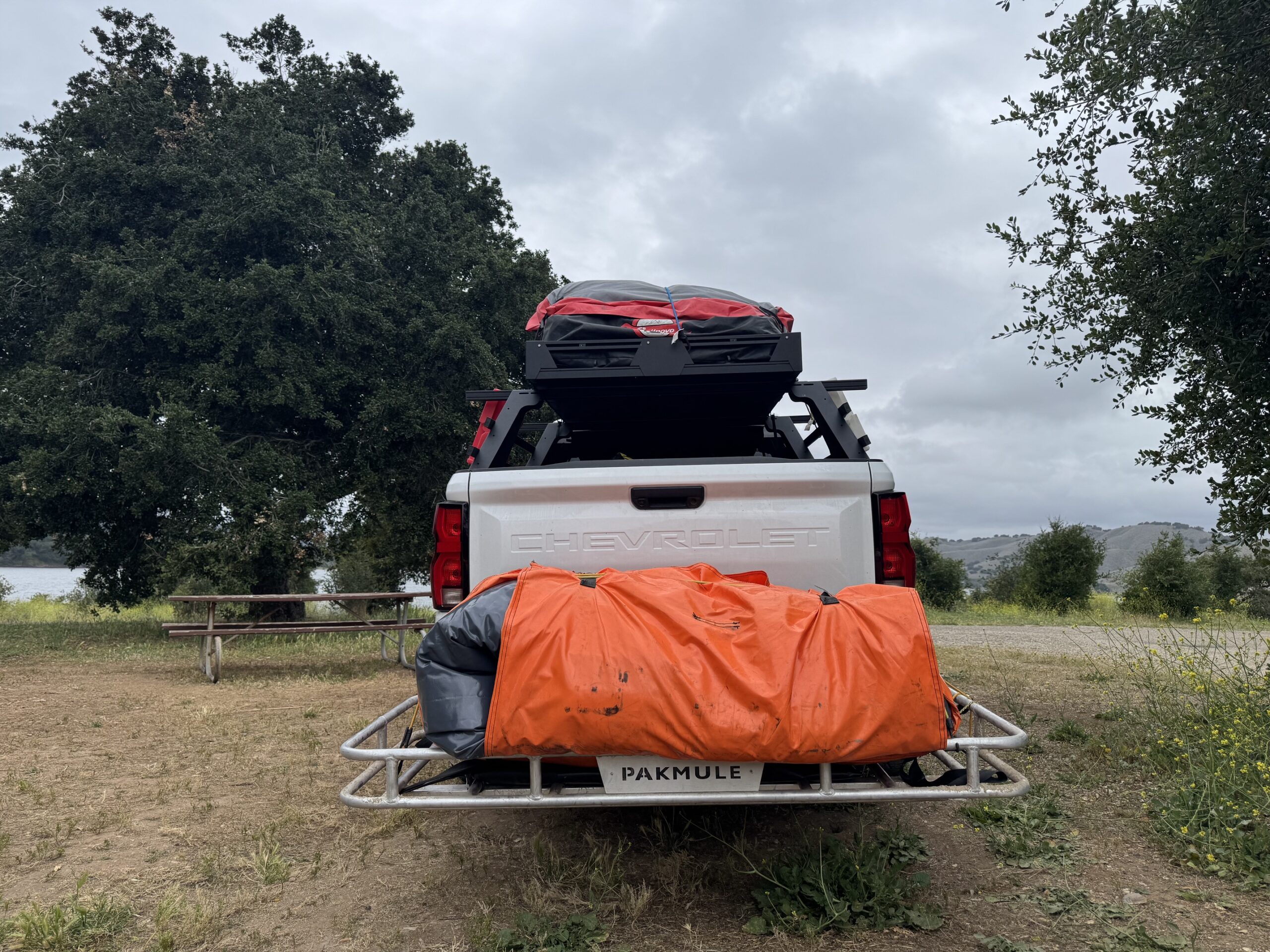
I am Alex Schult, owner of 4wdTalk.com. Over the past six months, I have logged thousands of mixed miles with the Pakmule Pro mounted to my 2025 Chevy Colorado ZR2: highway slabs at 70 mph, fire roads, washboard dirt, and rocky transitions through Big Bear and the Mojave. Before the ZR2, I ran a Jeep Gladiator for three years with a different brand of hitch carrier. In fact, the contrast in build quality is what motivated this review.
Notably, this review is not a quick-look impression. It covers six months of repeated loading, road miles, and dirt miles, with the carrier mounted to a stock 2-inch receiver. Every observation below comes from direct use, not from a press demo or a single weekend test. For background on the truck itself, my 2025 Chevy Colorado ZR2 one-year review covers the platform, the Multimatic DSSV shocks, and how it handles weight added behind the rear axle.
Pakmule Pro Quick Facts
| Specification | Detail |
|---|---|
| Weight | 42 pounds |
| Load capacity | 650 pounds rated |
| Outside dimensions | 66 x 29 inches |
| Inside dimensions | 64 x 27 inches (about 12 square feet) |
| Material | 100 percent aluminum, fully TIG-welded, heat-treated |
| Anti-wobble | STABLELOK threaded-pin system, requires 7/8-inch socket |
| Hitch fit | 2-inch standard, 2.5-inch, or 3-inch with proper pin |
| Made in | New Braunfels, Texas, USA (70 percent recycled aluminum) |
| Aluminum price (May 2026) | $1,045 |
| Black price (May 2026) | $1,195 |
| Warranty | One-year factory warranty |
| Lock | Stainless steel anti-theft lock included |
Six Months on a Colorado ZR2
My ZR2 has a 5-foot bed, which is generous for a midsize but quickly fills up when you load a rooftop tent annex, a recovery kit, a 12V fridge, two camp chairs, and four days of food. The Pakmule Pro, however, adds nearly 12 square feet of cargo space behind the rear bumper, roughly half the footprint of a full-size pickup bed. For an off-road truck, the math is hard to ignore.
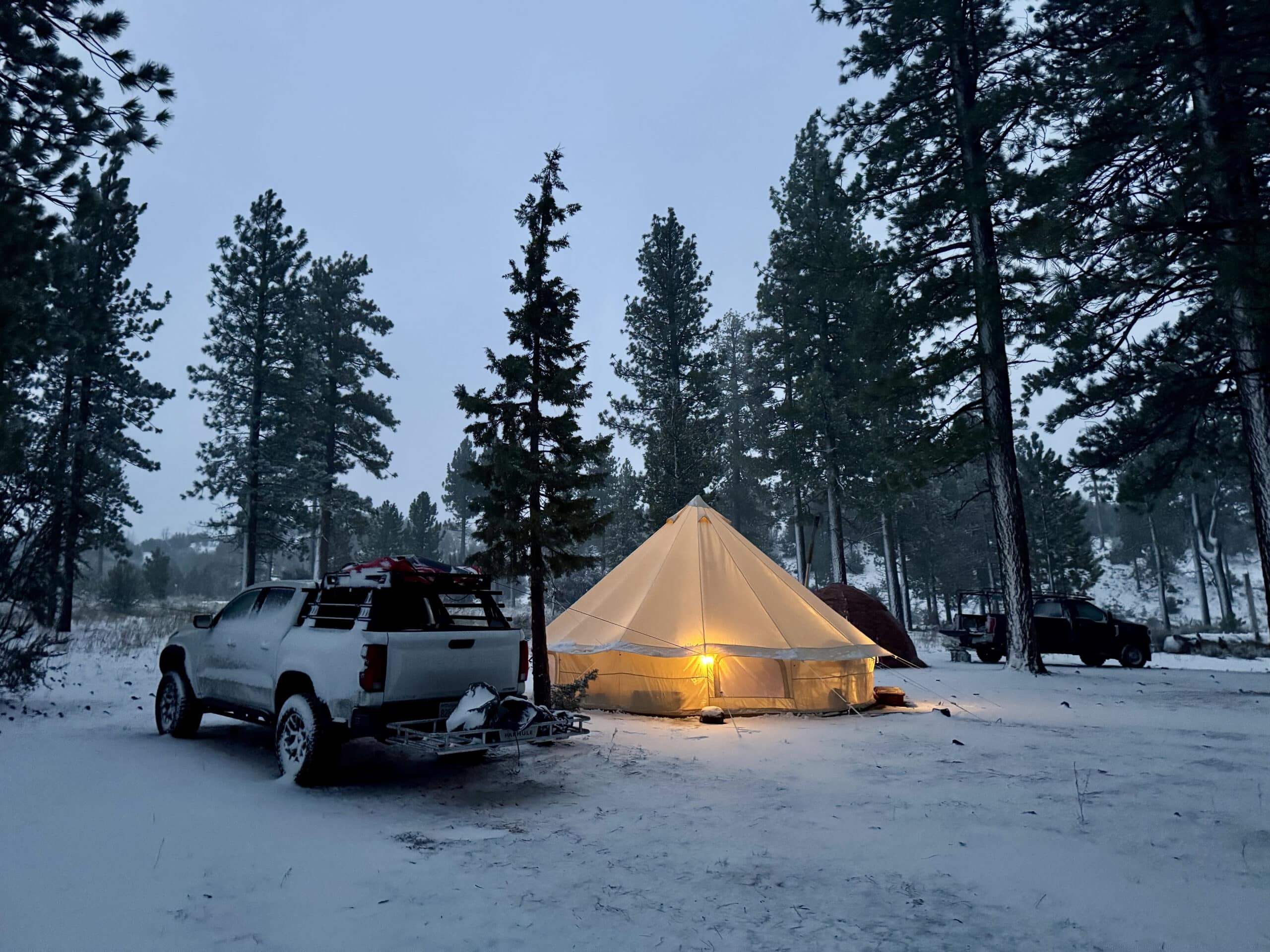
Over the past six months, I have used the Pro in three repeating scenarios: weekend overlanding runs, firewood pickups, and trips up to my regular Big Bear camping spots. Specifically, the combined miles include highway slabs at 70 mph, fire roads, washboard dirt, and a few rocky sections where I needed a spotter for the rear overhang. As a result, the carrier has not loosened, has not rusted, and has not made a single rattle on the ZR2’s 2-inch receiver.
For context on how I built the rest of my kit around it, see 5 things I have in my overlanding kit in 2025. Indeed, the Pro is now item number six.
Featured Product
Pakmule Pro Aluminum Hitch Cargo Carrier
42 pounds. 650-pound capacity. STABLELOK anti-wobble. TIG-welded aluminum. Made in Texas with a one-year factory warranty.
Build Quality and Materials
The Pakmule Pro arrives fully assembled in a single box. There are no fasteners to install, no plastic corners to crack, and no painted finish to chip. Every joint is hand TIG-welded in New Braunfels, Texas, then heat-treated for additional strength. Specifically, the frame is round-tube aluminum drawn from 70 percent recycled stock, which the company sources to keep manufacturing waste low.
Round tubing matters more than it sounds. For example, square tubing has corners where ratchet straps slip and where powder coating chips first. By contrast, the Pakmule Pro’s rounded edges keep straps in place under load, and the bare aluminum surface has no coating to fail. I scraped the rear underrail twice in six months, once on a creek-crossing dip near Big Bear and once on a fire road washout in the Mojave. As a result, the aluminum dinged slightly in both spots, but there is no rust to worry about and no powder coat to chip away.
The 2-inch tongue is solid aluminum bar stock running the full length under the tray. Indeed, this is a structural decision worth understanding. Most hitch racks bolt a smaller arm to the receiver and weld the basket on top, which creates a stress concentration where the arm meets the basket. However, the Pakmule design eliminates this joint entirely. Notably, independent reviewers at MotorTrend and Field Ethos arrived at the same conclusion after extended testing on Wranglers and hunting trucks.
For broader context on USA-made overland gear, the Pro is also featured in our roundup of top American-made overland companies.
STABLELOK Anti-Wobble System
How STABLELOK Works
Most hitch carriers wobble side to side a half inch or more inside the receiver, which translates to several inches of sway at the rear of the basket. Over rough roads, the wobble grows worse. As a result, fasteners loosen, and the rack rattles loud enough to drive you out of your seat at highway speed.
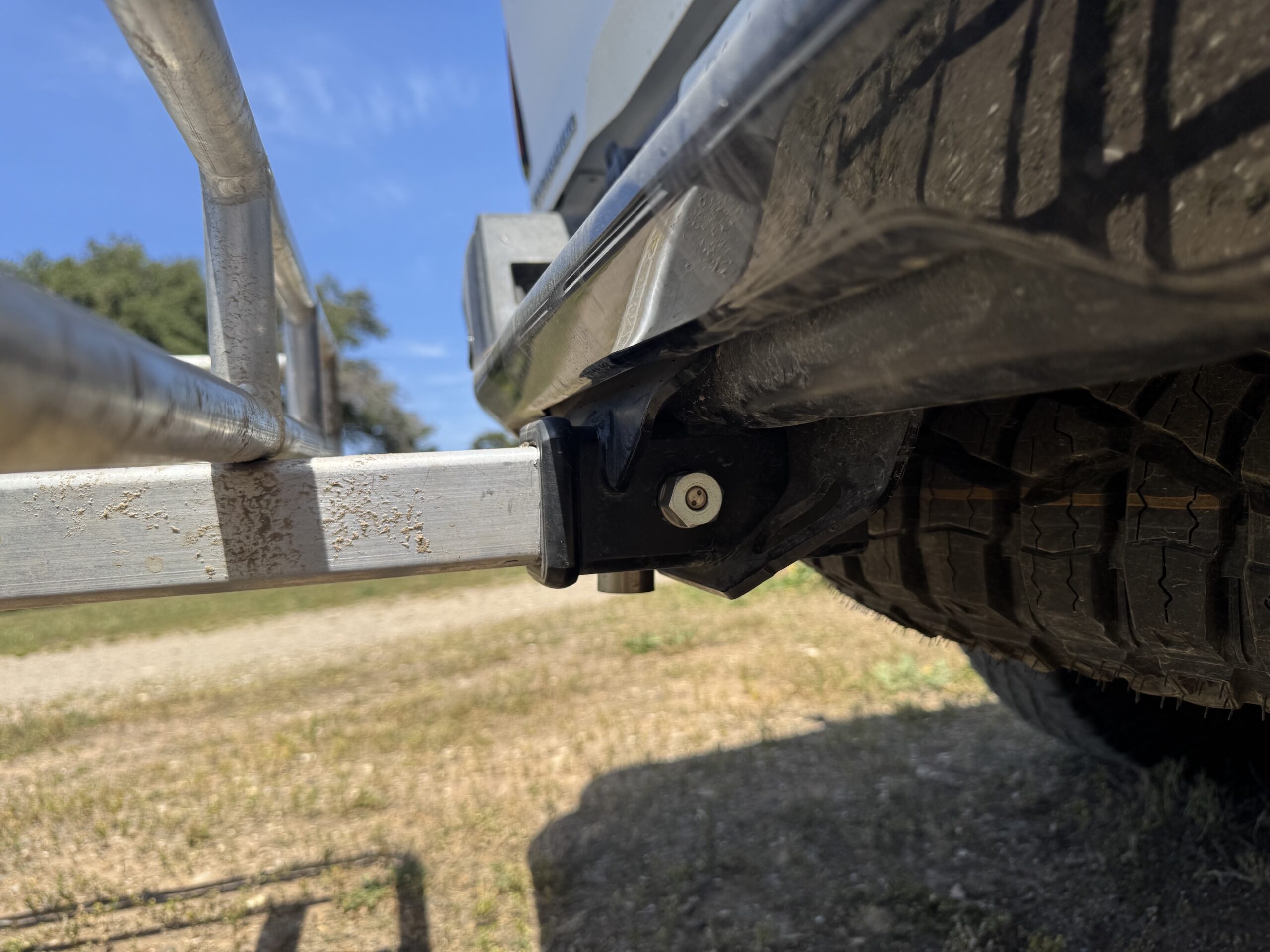
However, the Pakmule Pro solves this with STABLELOK, a patented system using a threaded pin and a sleeve arrangement instead of a smooth hitch pin. You insert the rack into the receiver, thread the pin through the receiver hole into the aluminum tongue, and torque it down with a 7/8-inch socket. As a result, the threading pulls the tongue tight against one side of the receiver, eliminating slop in both directions.
Installing the Threaded Pin Correctly
Two notes from my own install. First, the 7/8-inch deep socket is not included in the box, which is a fair complaint at this price point. Pakmule sells an American-made ratchet and socket set as an accessory if you do not already own one. Second, the threading needs to be tight, not snug. To verify this myself, I intentionally backed the pin off to a hand-snug position on a dirt road, and the basket rocked roughly half an inch within the first quarter mile. With the pin properly torqued, however, the same road produced zero visible movement on the rear-view camera. In addition, Car and Driver reached the same conclusion in their 2026 best hitch cargo carriers test, where they noted the Pro’s stability “depends on proper installation of their unique pin system.”
Field Note: Recheck Torque After Rough Roads
One field note worth flagging: after the first rough dirt road run, I rechecked the threaded pin and it had backed off about a quarter turn. Similarly, Exploring Overland’s reviewer noted the same behavior after seven miles of washboard. Consequently, I now run a torque check before every trip and have not had the pin loosen since.
No-Rock Stability Under Load
Stability is where the Pakmule Pro separates from every hitch carrier I have tried. For example, with 200 pounds of firewood loaded and the threaded pin properly torqued, I drove a five-mile washboard road into camp and watched the rear-view camera through the whole trip. As a result, there was no visible side-to-side movement of the basket, even on the rough sections where most hitch racks turn into a metronome.
This matters for two reasons beyond comfort. First, repeated wobble fatigues the welds at the tongue-to-basket joint, which is where cheap carriers eventually crack. Second, a stable rack lets the driver behind you see your brake lights without watching them swing back and forth.
The center-load tip from longtime Pakmule users holds up. In particular, heavy items belong in the middle of the basket, with lighter gear pushed to the outer thirds. Doing this reduces the rocking moment around the receiver and keeps the rear suspension predictable. For instance, I made the mistake of loading two 60-pound storage stows on one corner during my first trip and felt the truck list slightly to one side. Since then, centered loads have eliminated the issue.
Independent confirmation also lines up with my own findings. Notably, Car and Driver’s 2026 hitch carrier test gave the Pro an A+ assembly grade and described it as “extremely stable in testing.” Similarly, Field Ethos reviewer Mike Schoby called it “bombproof” after a thousand-mile road trip and Montana big-game hunts hauling moose quarters. Both results match what I see on washboard with the threaded pin properly torqued.
Lightweight for Its Size
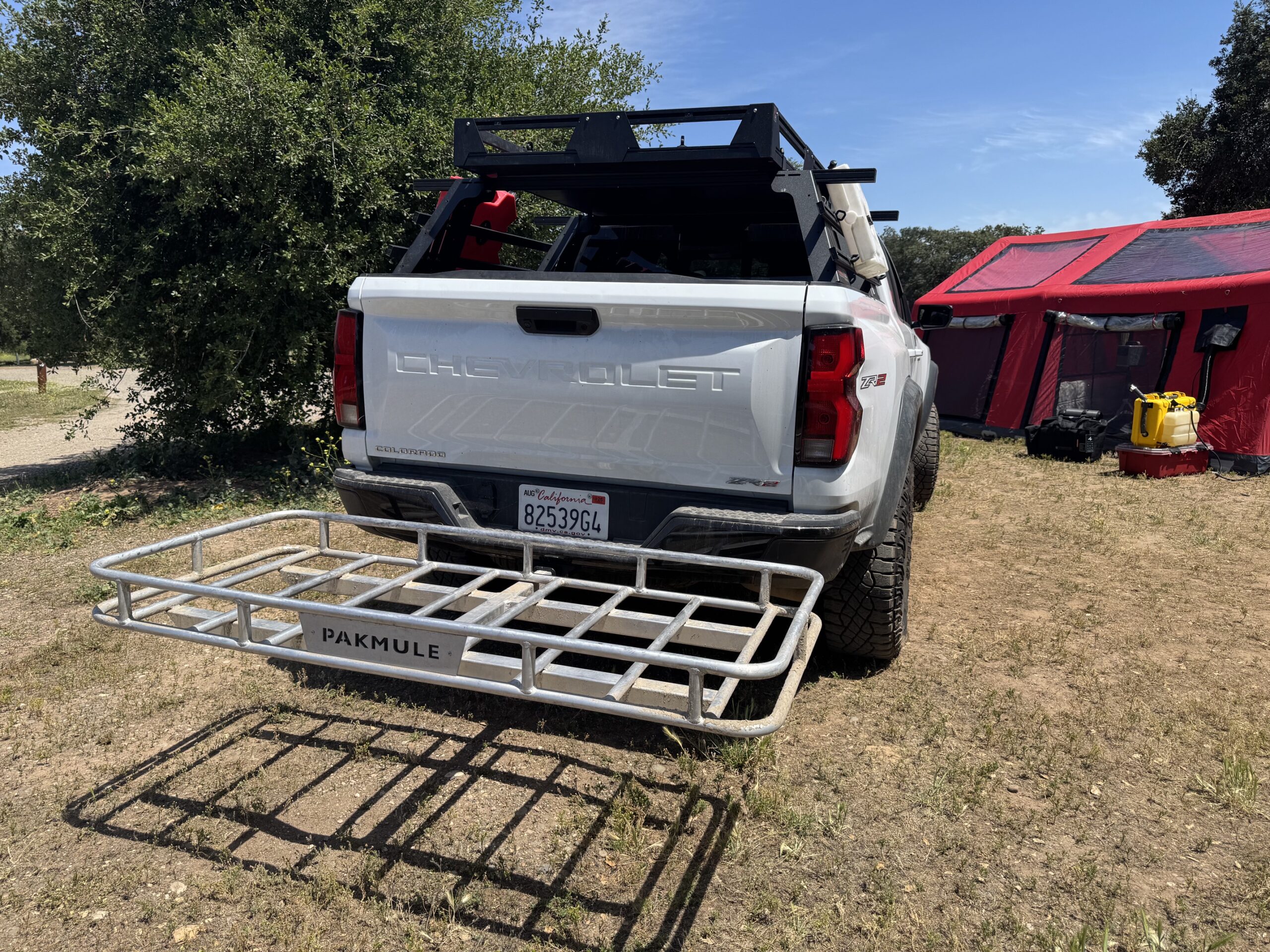
The Pro weighs 42 pounds. For a fully TIG-welded aluminum basket measuring 66 by 29 inches outside, this number is hard to beat. By comparison, the closest steel carrier on the market weighs 65 to 75 pounds empty, and most aluminum competitors with similar capacity sit in the 50-pound range with thinner tubing.
The weight matters in three places. First, installation: I lift the Pro onto the receiver myself in about 30 seconds with no struggle. Second, fuel economy: an extra 25 pounds behind the rear axle adds a small but real penalty. Third, storage: I hang the Pro from a single garage hook between trips, which Pakmule supports with a wall-bracket accessory.
For a midsize truck like my ZR2, the lightweight design also means the Pro counts as little of the rear hitch’s tongue weight rating. Tongue weight is the downward force a hitch carrier exerts on the receiver. Most midsize trucks, including the 2025 Colorado ZR2, rate the rear receiver in the 350 to 500-pound range for weight-carrying applications. The Pakmule Pro itself only consumes 42 of those pounds, leaving plenty for cargo. Always check your owner’s manual for the exact rating before loading.
However, the tradeoff for the weight savings is the price. Aluminum, especially heat-treated and TIG-welded American aluminum, costs more than steel. Notably, reviewer Mike Schoby at Field Ethos put it bluntly: cheap Chinese carriers fail within a few years, where the Pakmule should outlast the truck. Ultimately, six months in, I see no reason to disagree.
What I Hauled: Real Cargo Scenarios
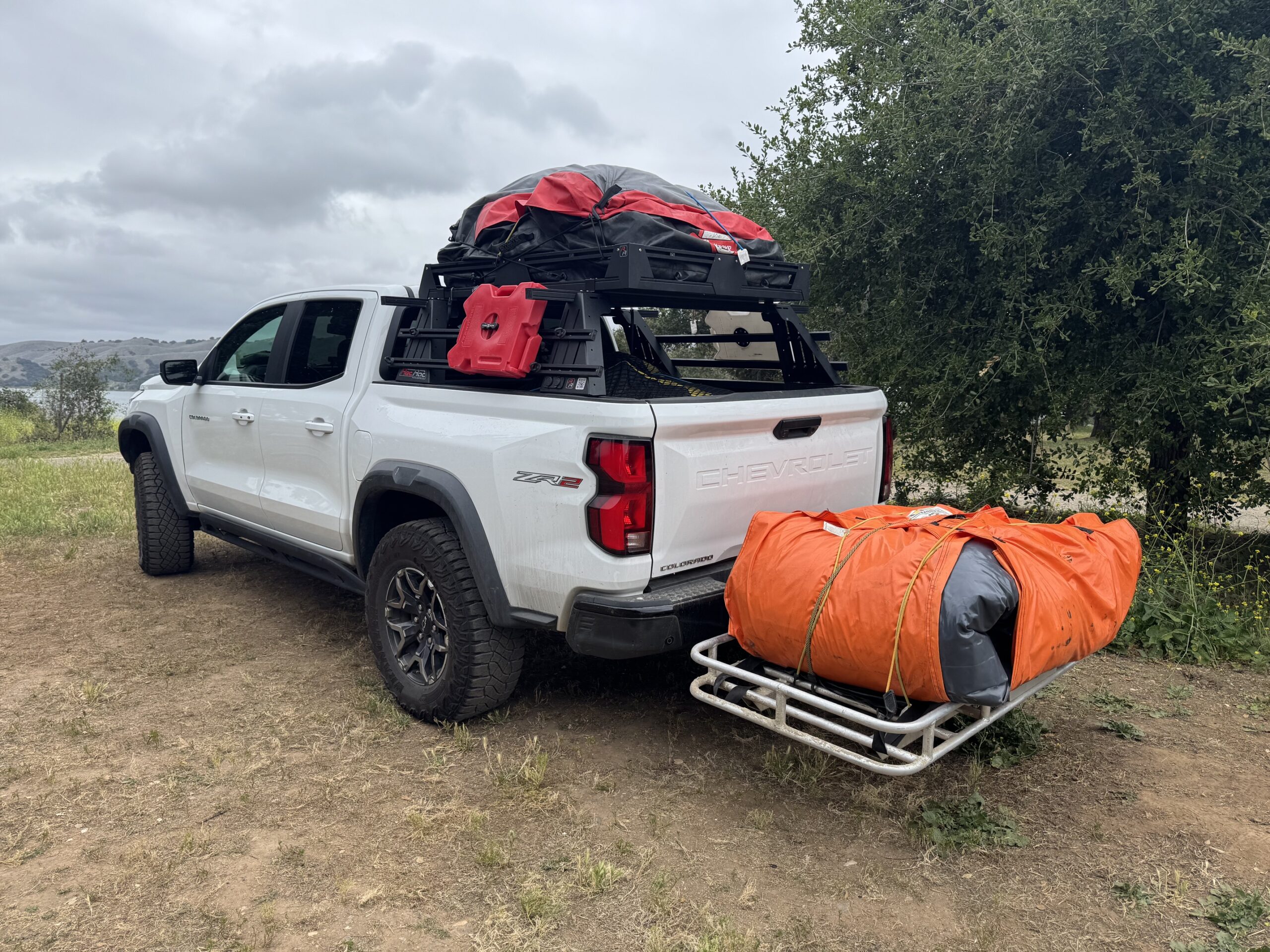
Below are four loads I have run on the ZR2 over the last six months, with notes on how each behaved on the Pakmule Pro.
Storage Stows and Totes
Three black-and-yellow 27-gallon storage stows fit on the Pro with a few inches of side play. Notably, this is the same setup MotorTrend ran on their long-term Wrangler 392, where the testers noted three Costco Greenmade totes loaded “perfectly.” On my ZR2, two centered totes plus a recovery kit balanced cleanly without lateral lean. As a result, the straight rails along the basket gave me four anchor points for ratchet straps, and the round tubing kept the strap hooks from sliding.
Camp Chairs
Two folded heavy-duty camp chairs sit flat on the basket floor with room to spare. Specifically, the round tubing gives me four anchor points along the side rails, so a single 6-foot ratchet strap holds both chairs without slipping. After 1,200 miles of mixed driving, the chairs have not shifted and the strap webbing shows no fraying. In addition, Pakmule’s own MULEstraps work well here if you prefer a stainless cam-buckle setup.
Firewood
The Pro shines as a firewood hauler. For example, a typical Big Bear firewood run is two to three bundles, each about 25 pounds, plus bigger split rounds for longer stays. In particular, the basket holds eight grocery-store bundles with ease and keeps the bark and pine sap entirely outside the truck. Running cut wood inside a Colorado bed is a recipe for gouged plastic and sticky residue. However, the Pakmule keeps it where it belongs.
Large Inflatable Camp Tent
The biggest test was hauling a large inflatable rooftop tent up to camp. Specifically, inflatable tents pack down to a duffel-shaped roll roughly 36 inches long and 16 inches square, weighing around 70 to 80 pounds. The roll fit lengthwise on the Pro with the integrated MULEstrap loops clamping it flat against the floor. As a result, there was no roll, no shift, and no scuffing of the tent’s exterior fabric. Ultimately, for overlanders whose hardshell or oversized inflatable will not fit inside the bed, the Pro turns into the practical solution.
Departure Angle and ZR2 Fit
This is the section honest reviewers have to write. Specifically, the Pakmule Pro extends about 39 inches behind the receiver, which on a Colorado ZR2 with a 5-foot bed pushes the rear of the basket roughly two-and-a-half feet past the bumper. On flat ground or moderate trail, the carrier clears everything fine. However, the moment you hit a sharp dip, a steep climb-out, or a transition between two angles, the Pro becomes the lowest point on your truck.
I have scraped the bottom rail twice in six months. Specifically, once was on a campground entry dipping into a creek crossing, and once on a fire road washout. Neither caused damage, because the aluminum frame is structurally sound and the rear underbody panels of the ZR2 are higher than the basket’s lowest point. Still, you will notice the lost departure angle, especially if your truck spends time on technical trails.
For most overlanding routes, the impact is small. However, on rock-crawling routes, you should pull the Pro before the trail. The 30-second install means it is easy to bring along and remove only when needed. As an example, on touring routes such as the kind I run between Big Bear and Joshua Tree, I leave it on the entire trip.
Two ZR2-specific notes. First, the ZR2’s factory hitch is a Class 3 2-inch receiver, which fits the standard Pakmule pin without any adapter. Second, the rear license plate is fully obstructed when the Pro is loaded above 18 inches of cargo height, so I run a license plate relocation bracket. Notably, this is a common requirement on hitch carriers, mentioned in Car and Driver’s hitch buying guide as a routine consideration to avoid an obstructed plate ticket.
Pakmule Pro Review Verdicts From Other Long-Term Testers
Pakmule has been on the market since 2017, with an earlier prototype design dating to 2012. Long-term Pakmule Pro review coverage is easy to find, and the patterns line up with my six-month experience.
- MotorTrend (Four Wheeler): Tested the Pro Swayback variant on a long-term Jeep Wrangler 392 over thousands of miles, including coolers, firewood, and a 140cc Kawasaki motorcycle. Verdict: “made believers” with a strong recommendation across vehicles. Their one quibble was the 7/8-inch socket not being included in the box.
- Car and Driver: Named the Pakmule Pro “Best Premium” in their 2026 best hitch cargo carriers test on a Hyundai Santa Cruz. The unit earned an A+ assembly grade because it ships fully welded with no assembly required.
- Field Ethos: Reviewer Mike Schoby ran an Original Pro across a 1,000-mile Canada road trip with cases of bismuth shotshells, then loaded moose quarters from Montana big game. Verdict: “the most well-made, high quality hitch haulers in existence.”
- Exploring Overland: Long-form review noted even, solid TIG welds and standout stability versus competing racks, with one fair caveat about the threaded pin loosening slightly on washboard. The reviewer’s recommended habit of rechecking torque every few miles matches what I do on the ZR2 today.
Notably, two consistent criticisms cross every review and my own experience. First, the Pro is not cheap, and second, it offers no swing or tilt feature for accessing your tailgate when loaded. Consequently, if you need rear access on the trail, you either remove the cargo or live with reaching over.
Pros and Cons
Pros
- 650-pound load capacity at only 42 pounds of dry weight
- STABLELOK threaded pin eliminates side-to-side wobble
- 100 percent aluminum, fully TIG-welded, will not rust
- Round tubing keeps ratchet straps in place
- Made in Texas with 70 percent recycled aluminum
- Arrives fully assembled, 30-second install
- Anti-theft lock included in the box
- Six accessory options: decking, stirrup step, rod holders, MULEstraps, Hitchin Post wall mount, and Bike Bit
- One-year factory warranty
Cons
- $1,045 starting price is the highest in its class
- 7/8-inch socket required and not included
- No swing-away or tilt feature for tailgate access
- Reduces departure angle on technical trails
- Threaded pin needs torque check after rough driving
- No factory reflectors or LED brake-light kit
- License plate fully blocked when loaded above 18 inches; requires a $40 to $60 relocation bracket
- Black powder-coat option adds $150 to the price
Price and Value Analysis
How the Pakmule Pro Compares to Cheaper Alternatives
At $1,045 for the aluminum finish, the Pakmule Pro sits at the top of the hitch cargo carrier market. For comparison, a Harbor Freight 500-pound aluminum carrier runs around $79, a MaxxHaul steel carrier sells for $62 on Amazon, and a Yakima EXO SwingBase paired with the GearLocker box totals roughly $1,000 to $1,200 depending on the retailer, based on Car and Driver’s 2026 pricing.
Why the Premium Price Makes Sense
The fair question is whether the Pakmule Pro is worth ten times a Harbor Freight unit. In short, two factors decide it. First, the steel-versus-aluminum gap. Specifically, a steel rack rusts within two to three seasons of normal use, especially in road-salt climates. The Pakmule, however, will outlast my truck. Second, the assembly difference. Cheap racks ship in pieces with riveted plastic corners and bolt-together panels. After a few off-road trips, those bolts vibrate loose and welds crack. By contrast, the Pro is one welded piece with no fasteners to fail.
Who Benefits Most From the Investment
If you replace a $79 carrier every two years, you spend $400 over a decade and live with rust, wobble, and assembly time you would rather skip. The Pakmule Pro purchases buy-once-cry-once peace of mind. Owners of a 4Runner, a Wrangler, a Bronco, a Tacoma, or a ZR2 like mine will find the math works in their favor.
To get a broader look at how to add cargo capacity to a midsize truck, see our guide on the best ways to carry bikes, kayaks, and outdoor gear on your truck. Notably, for Wrangler and Gladiator owners specifically, the lower-rail Pakmule Scout variant pairs well with a swing-out spare, as discussed in this Jeep storage system guide.
Ready to Add Cargo Space?
Get the Pakmule Pro Direct from the Manufacturer
Order in aluminum or black, choose the correct pin for your hitch (2-inch standard, 2024+ Toyota specialty, or 3-inch extended), and ship from Texas. Six-month tested on a 2025 Colorado ZR2.
Pakmule Pro Review: Final Verdict
After six months on a 2025 Chevy Colorado ZR2, the Pakmule Pro is the best hitch cargo carrier I have used. Specifically, the threaded STABLELOK pin removes the wobble problem every cheap rack suffers from, the all-aluminum construction will outlast the truck, and the 42-pound dry weight makes daily install and removal painless. As a result, I have hauled storage totes, camp chairs, firewood, and a large inflatable tent without a single failure.
Still, the Pro is not perfect. For example, it costs more than ten times a Harbor Freight basket, it does not swing or tilt, and the missing 7/8-inch socket at this price point is a fair gripe. In addition, the lost departure angle on technical trails means you will pull it for rock-crawling routes. However, none of those issues are deal-breakers for the kind of overlanding most midsize-truck owners do.
If you have been running a $79 hitch basket and replacing it every two seasons, the Pakmule Pro is the upgrade you stop replacing. In particular, for a 2025 Colorado ZR2 owner, a Wrangler driver, a 4Runner builder, or a Bronco overlander, the Pro fits the use case. My rating after six months is 4.7 out of 5. Granted, the price is high, and this is a real tradeoff worth weighing. However, for overlanders who plan to use this carrier for a decade or more, the math favors buying once and skipping the replacement cycle.
Frequently Asked Questions
Is the Pakmule Pro worth the price?
For owners who use a hitch carrier regularly and want a buy-once product, yes. At $1,045 the Pro costs ten times a basic Harbor Freight basket but ships fully welded, will not rust, and uses a threaded anti-wobble pin no budget rack offers. After six months on my 2025 Colorado ZR2 the carrier shows zero wear, where a previous $79 carrier I owned developed wobble and surface rust within a season.
What hitch size does the Pakmule Pro fit?
The standard pin fits most 2-inch and 2.5-inch receivers, which covers around 90 percent of vehicles. A specialty pin is required for 2024 and newer Toyota Tacoma, Sequoia, and Lexus LX600 with their wider hitches. A 3-inch extended pin fits the 2024 Land Cruiser, Lexus GX 550, Rivian R1S and R1T, and Ford Super Duty trucks. Pakmule lists the correct pin for each vehicle on the product page.
What is the weight capacity of the Pakmule Pro?
The Pakmule Pro is rated for 650 pounds of cargo. Your usable capacity is the lower of the rack’s rating or your vehicle’s hitch tongue weight, which is typically 350 to 500 pounds for a midsize truck or SUV. Always check your owner’s manual for the tongue weight rating before loading.
Does the Pakmule Pro wobble?
Properly installed, no. The STABLELOK threaded pin uses a 7/8-inch socket to torque the rack tight against the receiver, eliminating side-to-side wobble. If you install it like a standard hitch pin without torquing the threads, the rack will move. Recheck the pin torque after rough roads, since washboard will back the threading off slightly.
Is the Pakmule Pro waterproof?
The frame itself is 100 percent aluminum and immune to water, salt, and rust. The Pro has no enclosed compartment, so any cargo you place on it needs its own weatherproofing. Hard storage totes or a waterproof cargo bag handle this for under $50.
How long does the Pakmule Pro take to install?
About 30 seconds once you have the routine down. Slide the tongue into the receiver, drop the threaded pin through the hole, torque it with a 7/8-inch socket until tight, then snap on the included anti-theft lock. Removal takes the same 30 seconds in reverse.
Is the Pakmule Pro made in the USA?
Yes. Every Pakmule Pro is fully TIG-welded by hand in New Braunfels, Texas. The aluminum is American-sourced and the company reports using 70 percent recycled material. There are no imported parts.
What is the difference between the Pakmule Pro and Pakmule Scout?
The Pro and Scout share the same cargo footprint but differ in side-rail height. The Pro has the standard 6.5-inch interior wall, while the Scout uses a lower rail to clear rear-mounted spare tires on Wranglers, Broncos, and similar SUVs with swing-out gates. For trucks like the Colorado ZR2 with no rear tire on the tailgate, the Pro is the better choice.