


As the founder of 4WDTalk, I spend a lot of time around overland trailers, and the first place I look on any of them is underneath. Cabinets, awnings and paint get the attention at a trade show. However, the frame decides whether a trailer survives its fifth season of washboard, ruts and rocky two-tracks. When I size up a trailer, I lie on the ground with a flashlight before I ever open the galley.
Most buyers never get this close to a chassis, so this guide does the crawling for you. You’ll learn what separates a good trailer frame from a weak one, from material choice to how the joints hold together. Then, we’ll look at the Iron Peak XTR-10, which skips welding entirely. Instead, its all-aluminum frame is held together with Huck fasteners, and the result is 210 pounds lighter than a comparable welded steel frame.
Quick Facts:
- Topic: What makes a good off-road trailer frame
- Featured trailer: Iron Peak XTR-10, made in the USA
- Frame material: All-aluminum tube, black powder coated
- Joining method: Huck fasteners, no welding
- Weight savings: 210 lbs vs. a welded steel frame, per Iron Peak
- XTR-10 dry weight: 2,110 lbs
- Ground clearance: 22 inches
- Best for: Buyers comparing overland trailer construction
8 min read
In This Guide
- Why the Off-Road Trailer Frame Matters Most
- XTR-10 Frame Facts at a Glance
- The Anatomy of a Good Off-Road Trailer Frame
- Aluminum Trailer Frame vs. Welded Steel Frame
- How Huck Fasteners Work
- Advantages of Huck Fasteners on a Trailer
- Inside the XTR-10 Frame
- Huck-Fastened Aluminum vs. Welded Steel
- Final Verdict
- Frequently Asked Questions
Why the Off-Road Trailer Frame Matters Most
An off-road trailer frame carries every other part of the build. In fact, the cabin, suspension, water tank, battery and hitch all bolt to it. As a result, a weak frame turns every other upgrade into a liability on rough ground.
Off-road use loads a frame in ways highway towing never does. For example, one wheel climbs a rock while the other drops into a rut, which twists the whole chassis. Meanwhile, miles of washboard send constant vibration through every joint. A good frame handles both without cracking or loosening.
Overall, two choices shape a frame more than anything else: the material and how the joints are made. Most trailers use welded steel. In contrast, a growing number of builders use aluminum and mechanical fasteners. For background on one builder taking the second path, see how Iron Peak builds every XTR-10.
XTR-10 Frame Facts at a Glance
| Specification | Details |
|---|---|
| Frame material | Aluminum tube, black powder coated |
| Joining method | Huck fasteners, no welds |
| Weight savings | 210 lbs vs. a welded steel frame |
| Dry weight | 2,110 lbs |
| Tongue weight | 260 lbs |
| Suspension | Cruisemaster CRS2 independent |
| Hitch | Cruisemaster DO35 articulating coupler |
| Underbody protection | Aluminum skid plate under the water tank |
| Built in | USA |
Made in the USA
See the Frame Under the Iron Peak XTR-10
An all-aluminum, Huck-fastened chassis sheds 210 pounds compared with a welded steel frame.
The Anatomy of a Good Off-Road Trailer Frame
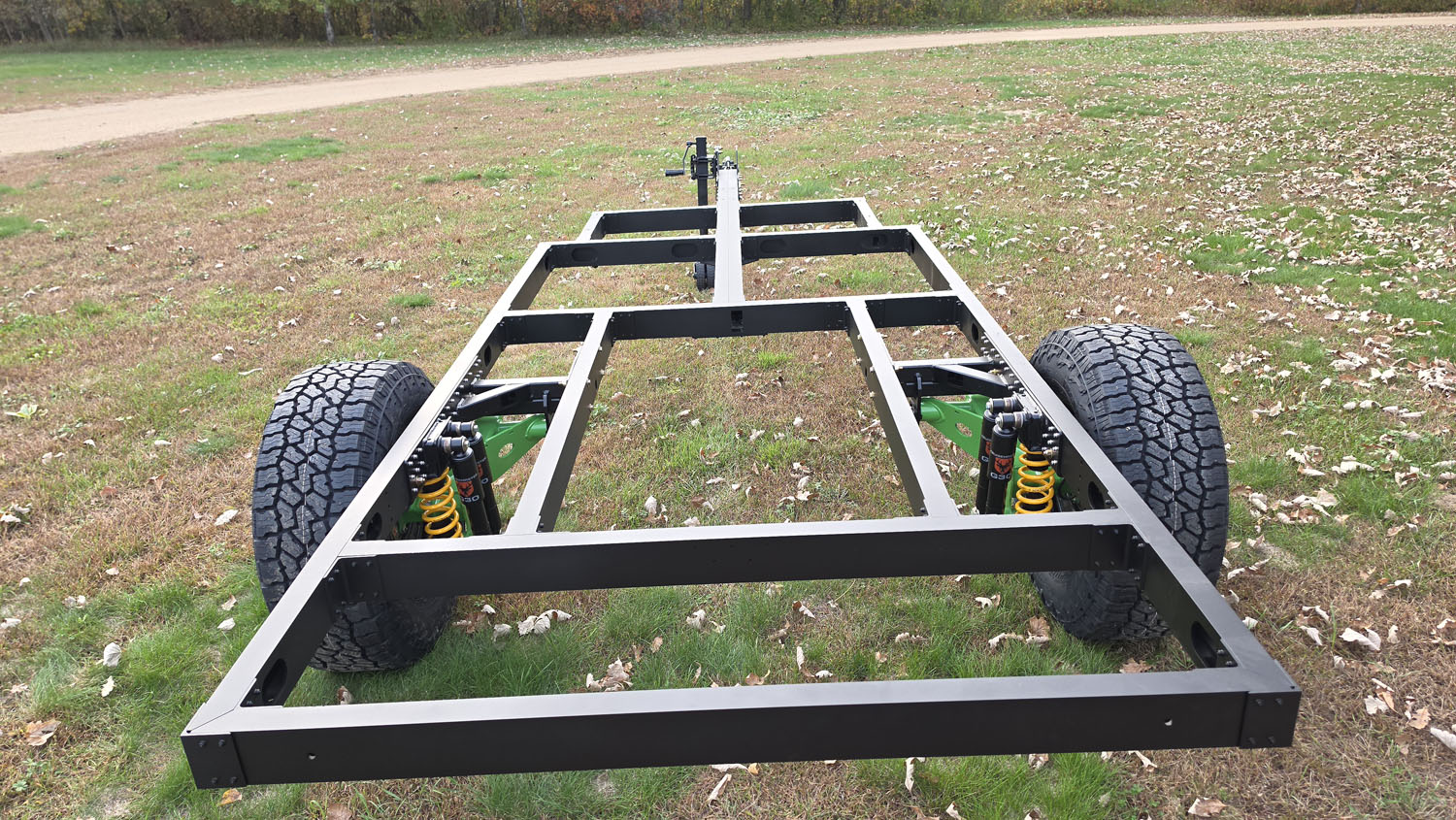
A good off-road trailer frame does four jobs well. It stays stiff under load, flexes without cracking, resists corrosion, and keeps its joints tight for years. Here’s how each part of the chassis contributes.
Main Rails and Cross Members
First, the main rails run front to back and carry most of the load. Cross members tie them together and stop the frame from twisting into a parallelogram. On a good frame, cross members sit under every heavy point, such as the water tank, battery box and galley.
Tongue and Hitch Mount
Next, the tongue takes the hardest hits on any trailer. Every pothole, brake stop and articulation cycle passes through it. Therefore, look for a tongue built as one continuous structure with the main rails, rather than a short piece added at the front.
Suspension Mounts
Similarly, suspension mounts concentrate force into small areas of the trailer chassis. Independent suspension, for instance, loads each wheel’s mount on its own. A strong frame spreads those loads into the rails through gussets and wide mounting plates.
Corrosion Protection
Finally, road salt, mud and creek crossings attack a frame from below. Steel needs paint, powder coat or galvanizing to stop rust. Aluminum resists corrosion on its own, although a powder coat still adds a tougher outer layer.
Aluminum Trailer Frame vs. Welded Steel Frame
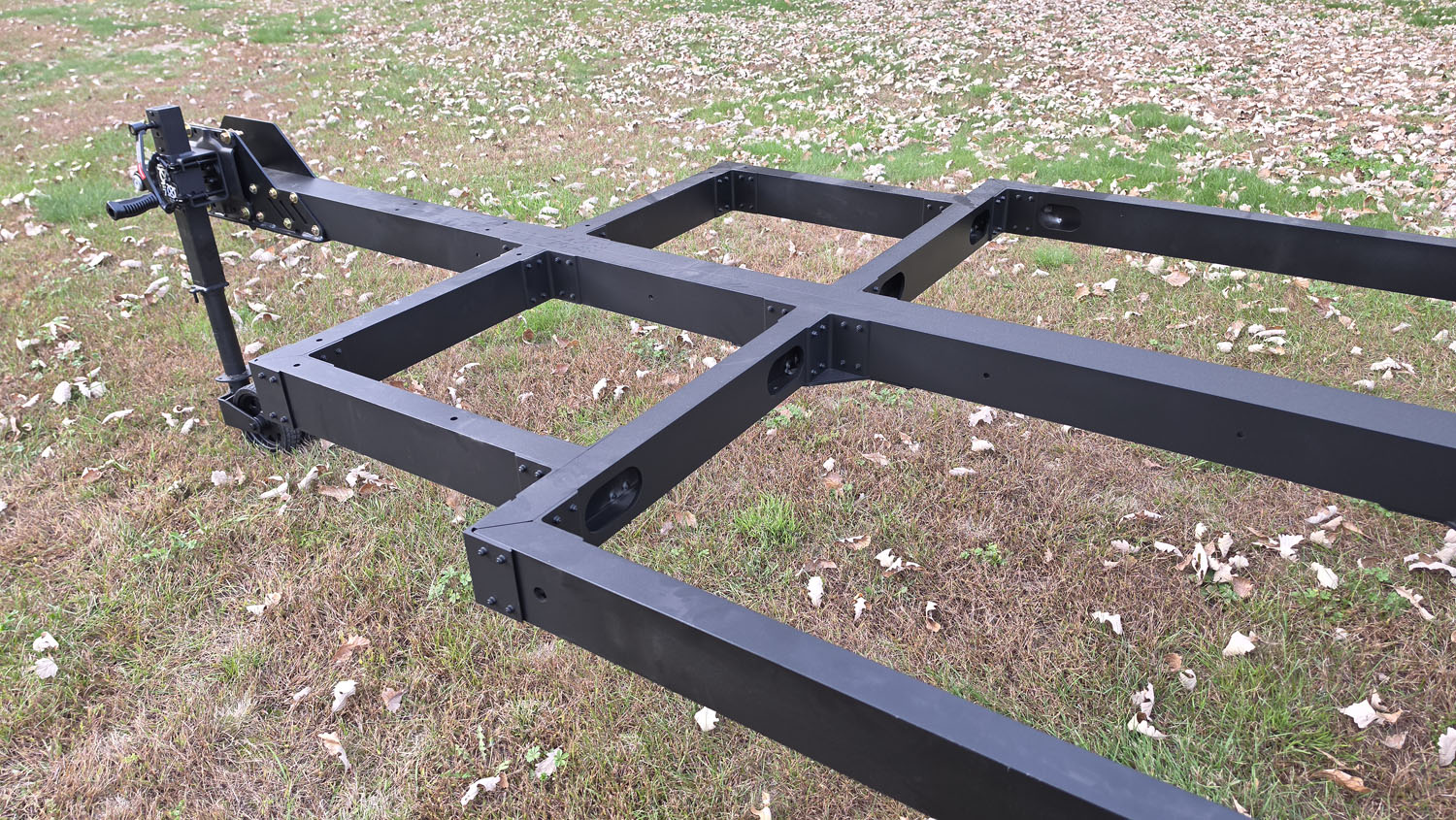
Steel remains the most common trailer frame material, and for good reasons. It’s strong, cheap and easy to repair with a welder in almost any town. However, steel is heavy, and it rusts once its coating chips.
An aluminum trailer frame weighs far less for the same footprint. Aluminum weighs about one-third as much as steel by volume, so builders use larger tube sections to match steel’s stiffness. Even with bigger tubes, the finished frame comes out lighter. On the XTR-10, Iron Peak puts the savings at 210 pounds.
Why Welding Aluminum Is Tricky
For one thing, welding aluminum takes more skill than welding steel. Also, the heat from welding softens heat-treated aluminum near the joint. Builders who weld aluminum frames often add extra material at each joint to make up for this. As a result, a welded aluminum frame gives back some of its weight savings.
This is where mechanical fastening changes the math. By joining aluminum without heat, a builder keeps the full strength of the tube at every joint.
How Huck Fasteners Work
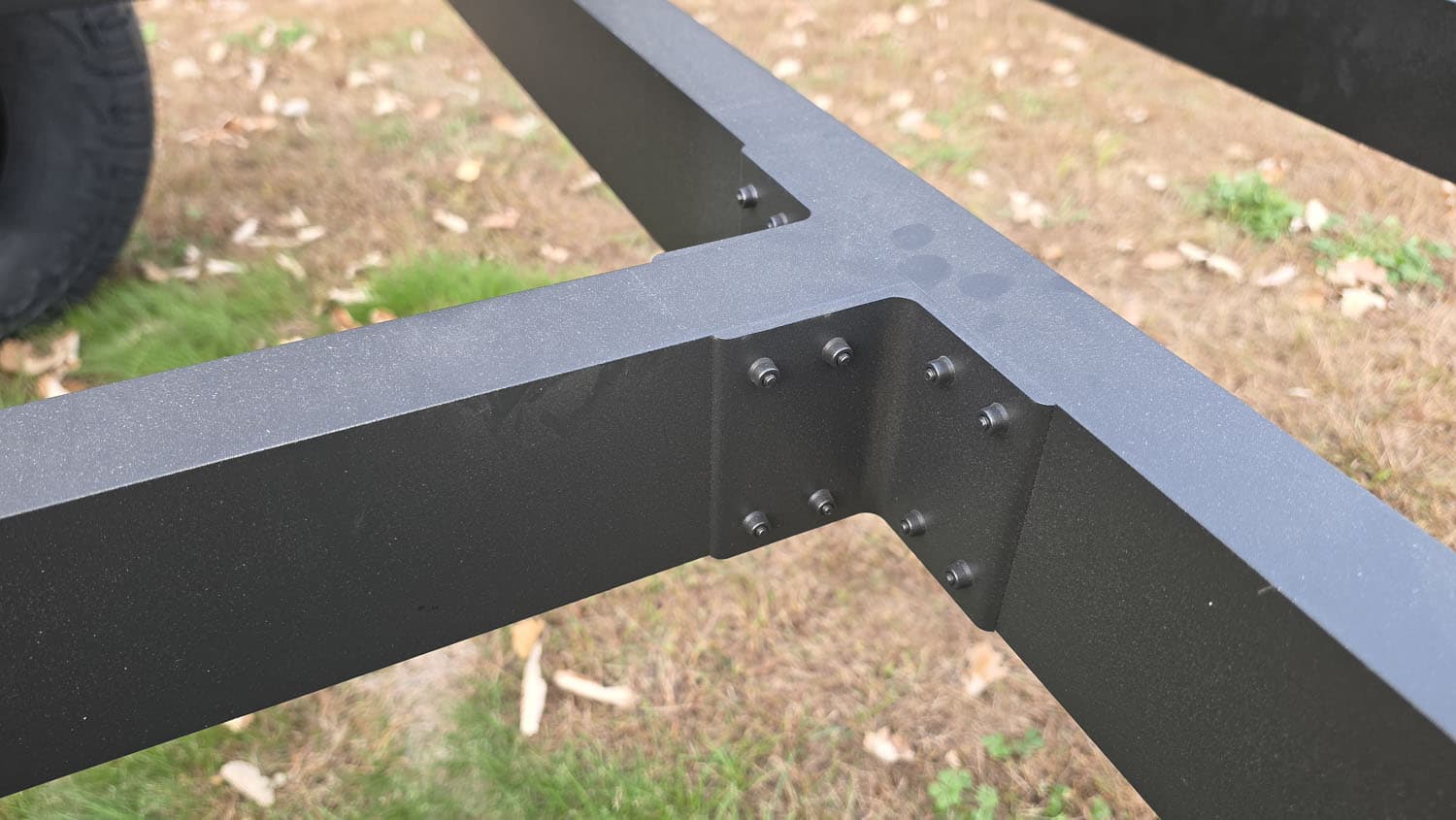
Huck fasteners are a family of permanent mechanical fasteners, including lockbolts and structural rivets. Howmet Fastening Systems makes them, and they show up in truck chassis, rail cars, bridges and military vehicles.
Pin, Collar and Swage
A Huck lockbolt has two parts: a grooved pin and a smooth metal collar. First, the installer slides the pin through holes in both pieces of the frame. Next, the collar goes over the pin’s tail. Then, a hydraulic tool pulls the pin tight and swages the collar, crushing it into the pin’s locking grooves.
Clamp Force Without Torque
Typically, a regular bolt depends on torque, and torque varies with thread friction. In contrast, a Huck fastener’s clamp force comes from stretching the pin and forming the collar. Consequently, every fastener in a joint clamps with the same force. According to Howmet’s welding vs. fastening white paper, a BobTail lockbolt installs in as little as two seconds.
From experience: When I look under a trailer, I check the joints before anything else. Cracked welds and rust streaks at a seam tell you more about a build than any spec sheet. A frame with clean, consistent joints usually means the rest of the trailer got the same attention.
Advantages of Huck Fasteners on a Trailer
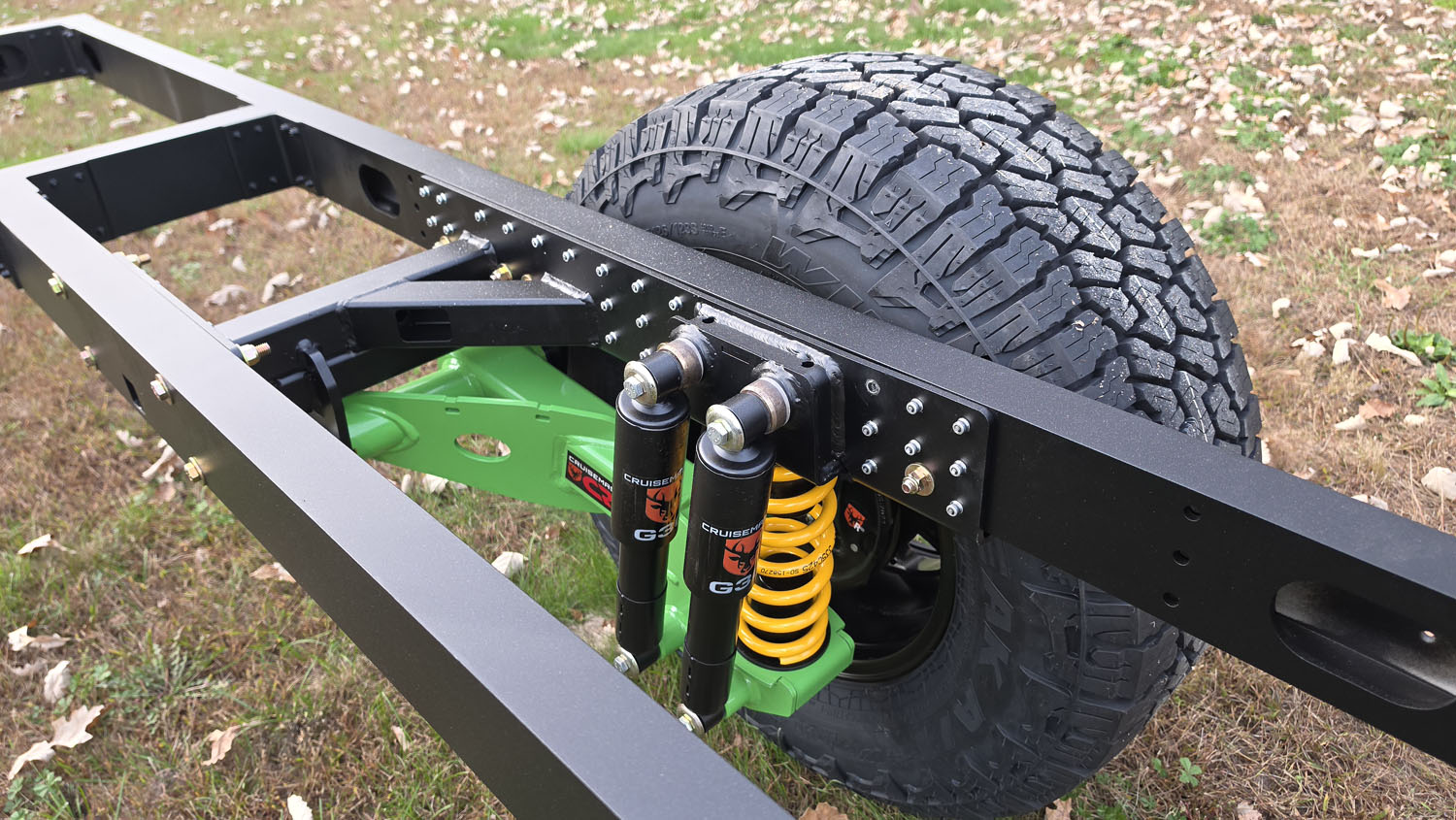
Huck fasteners solve the two problems off-road trailers face most: vibration and fatigue. Here are the main advantages, drawn from Howmet and its distributors.
Vibration Resistance
A standard nut and bolt leaves small gaps between the threads. Under side-to-side vibration, those gaps let the nut back off and lose clamp. Instead, a Huck lockbolt collar fills the locking grooves completely, so there’s no gap to work loose. Washboard roads put exactly this kind of vibration into a trailer for hours at a time.
Fatigue Strength
For context, fatigue is the slow cracking caused by repeated loads, and it’s the main way trailer frames fail. Arconic, now Howmet, reports the BobTail Huck lockbolt offers up to 10 times the fatigue strength of conventional nuts and bolts. Similarly, welds concentrate stress at the edge of the bead, where fatigue cracks often start.
No Retorquing
Because the collar locks permanently, a Huck joint needs no retorquing. German technical approval for the BobTail found retensioning is neither possible nor necessary. As a result, there’s one less maintenance task on your list.
No Heat Damage or Burned Coatings
Fastening adds no heat, so the aluminum keeps its full temper at every joint. Also, welding prep strips protective coatings from the parts. A fastened frame keeps its finish intact right up to the joint.
Consistent Quality
Meanwhile, weld quality depends on the skill of the welder and the conditions on the day. In contrast, every installed Huck fastener clamps the same way. This consistency matters on a frame with dozens of joints.
Inside the XTR-10 Frame

The Iron Peak XTR-10 puts these ideas together on a production overland trailer. Its frame uses black powder-coated aluminum tube, joined entirely with Huck fasteners. Iron Peak builds it in the USA and uses no welding anywhere on the frame.
In addition, the weight savings ripple through the rest of the trailer. The XTR-10 weighs 2,110 pounds dry, with a 260-pound tongue weight. A welded steel version would sit closer to 2,320 pounds, based on Iron Peak’s 210-pound figure. Therefore, you keep more of your tow vehicle’s payload for water, gear and people.
Beyond weight, the trailer chassis also supports serious running gear. It carries Cruisemaster CRS2 independent suspension, a DO35 articulating coupler and an aluminum skid plate over the 38-gallon water tank. For a full tour of the trailer built on top of it, read getting to know the XTR-10.
No Welds, No Rust
A Lighter Frame Leaves More Payload for You
Build an XTR-10 on a Huck-fastened aluminum chassis with Cruisemaster suspension and 22 inches of clearance.
Huck-Fastened Aluminum vs. Welded Steel
To start, a welded steel frame wins on cost and field repair. Almost any welding shop fixes a cracked steel rail, even in a small town. Also, steel frames cost less to build, which keeps entry-level trailer prices down.
A Huck-fastened aluminum frame wins on weight, corrosion resistance and long-term joint integrity. You save weight, skip rust, and avoid welds as fatigue starting points. However, a damaged aluminum section usually goes back to the builder or a specialist shop for repair.
Pick welded steel if price and roadside repair matter most to you. On the other hand, pick Huck-fastened aluminum if you tow with a midsize truck or SUV, drive salted winter roads, or run long washboard routes.
Final Verdict
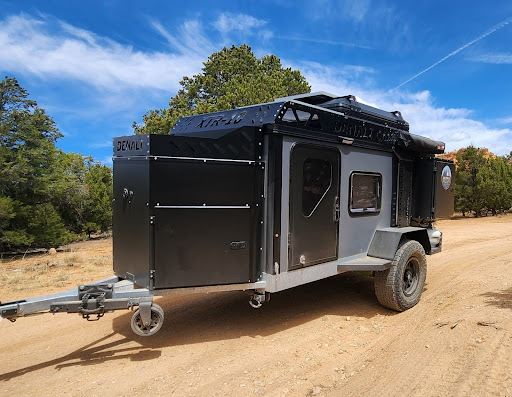
A good off-road trailer frame stays stiff, survives vibration, resists corrosion and keeps its joints tight. The Iron Peak XTR-10 checks each box with an aluminum frame held together by Huck fasteners. Its biggest strength is the 210-pound weight savings without welds to crack.
However, the trade-off is repair access. A welded steel frame gets fixed in almost any town, while aluminum repairs need a specialist. Buyers who travel far from support and want simple field repairs should weigh this carefully.
As for value, the frame earns its place. Saving 210 pounds frees payload, eases towing and cuts stress on your hitch. Meanwhile, corrosion resistance protects resale value after years of salted roads.
My recommendation: put the frame at the top of your trailer checklist, ahead of cabinets and gadgets. If you’re shopping steel-framed options, inspect the welds closely. For more on the company behind the XTR-10, read our Iron Peak Campers review.
Buy Direct From Iron Peak
Start Your Iron Peak XTR-10 Build
Configure a made-in-the-USA overland trailer built on a welding-free aluminum frame.
Frequently Asked Questions
What makes a good off-road trailer frame?
A good off-road trailer frame stays stiff under load, flexes without cracking, resists corrosion and keeps its joints tight. Look for continuous main rails, cross members under heavy loads, and strong suspension mounts.
What are Huck fasteners?
Huck fasteners are permanent mechanical fasteners made by Howmet. A lockbolt uses a grooved pin and a collar swaged into the grooves. The result is a joint with consistent clamp force and high vibration resistance.
Are Huck fasteners stronger than welding?
Huck fasteners and welds each make strong joints. Huck fasteners add no heat, resist vibration and offer high fatigue strength. Welds create rigid joints but concentrate stress at the bead, where fatigue cracks often start.
Is an aluminum trailer frame better than steel?
An aluminum trailer frame weighs less and resists rust better. Steel costs less and repairs more easily in the field. On the XTR-10, aluminum saves 210 pounds compared with a welded steel frame.
Do Huck fasteners need retorquing?
No. A swaged Huck collar locks permanently, so the joint needs no retorquing. German technical approval for the BobTail lockbolt found retensioning is neither possible nor necessary.