



Quick Facts:
- Question: Is bear spray legal in California?
- Statewide answer: Yes, under Penal Code 22810
- Inside national parks: No, all 9 California units
- Legal basis: Federal rule 36 CFR 1.4, not state law
- Bears present: Black bears only, no grizzlies since the 1920s
- Penalty risk: Federal misdemeanor plus confiscation
- Carry instead: Approved canister, park locker, clean camp
- Best for: Overlanders and vehicle campers crossing park boundaries
9 min read
In This Guide
- Is Bear Spray Legal in California? The Short Answer
- Why the Park Service Counts It as a Weapon
- Where Bear Spray Is Legal in California and Where It Is Not
- Bear Spray vs Pepper Spray: The Distinction Fails
- What to Carry Instead
- Vehicle Food Storage Rules by Park
- Handling a Black Bear Encounter
- Final Verdict
- Frequently Asked Questions
Is Bear Spray Legal in California? The Short Answer
Yes and no, and the split trips up thousands of visitors every summer. So here is the direct version: is bear spray legal in California as a matter of state law? Yes. California Penal Code 22810 lets any adult buy, own, and carry a defensive aerosol for self-defense. Drive onto federal park land, however, and the answer flips completely.
All nine of California’s national parks prohibit it. Yosemite, Sequoia, Kings Canyon, Redwood, Lassen Volcanic, Death Valley, Joshua Tree, Pinnacles, and Channel Islands all fall under the same federal rule. Those nine hold the formal National Park title. Yet the rule reaches every NPS site in the state, including Mojave National Preserve and Point Reyes. Therefore, cross the park boundary with a canister in your door pocket and you hold a prohibited weapon under federal law.
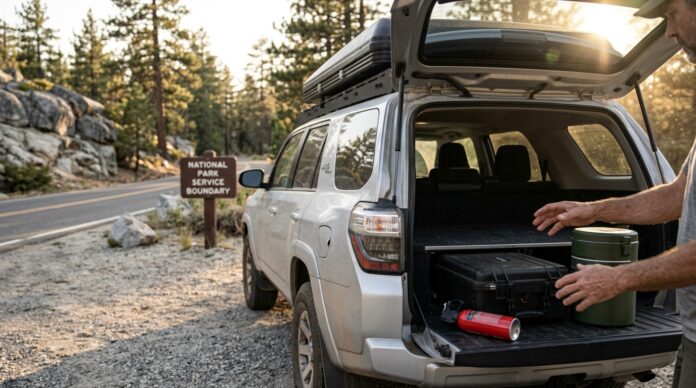
For overlanders, the timing matters more than the rule itself. A single day of driving often crosses national forest, BLM, and park land in sequence. Your spray stays perfectly legal on two of those three. On the third it becomes a federal misdemeanor, with no sign at the boundary telling you so.

BearVault BV500 Journey Bear Resistant Food Container - Extra Large
The see-through canister sized for a full week solo, or a shorter trip split between two.
- 700 cubic inches, about a week of food
- Clear body shows contents without opening
- Wide mouth fits bulky food bags
- IGBC and SIBBG approved for the Sierra
- 41 ounces, heavier than a weekend canister
- Yosemite still lists legacy model numbers, so confirm before you go
Why the Park Service Counts It as a Weapon
The mechanism surprises most people, because it has nothing to do with bears. Section 1.4 of 36 CFR defines the terms for every national park in the country. Under it, a “weapon” includes any irritant gas device. Bear spray fits, since it is a pressurized canister discharging aerosolized capsaicin.
Then 36 CFR 2.4 does the work. It prohibits possessing, carrying, or using a weapon inside a park unit, with narrow exceptions for designated hunting areas, target ranges, research permits, and residential dwellings. None of those exceptions cover a visitor with a canister on their belt. Absent a park-specific carve-out, the default federal answer is no.
Two California parks state it in their own words. For example, the Sequoia and Kings Canyon laws page names it outright, listing “bear spray; and other compressed gas irritant devices” among items illegal to possess. Yosemite’s Superintendent’s Compendium lists “irritant gas devices” alongside slingshots and pellet guns as prohibited weapons.
The other seven California units do not restate the rule on their public pages. Instead they inherit the federal default, since none of them publishes an exception. Rangers still enforce it, however, so the practical answer stays identical across all nine.
Safety note: Firearms hold an explicit federal possession protection dating to February 22, 2010, which lets lawful owners carry them in national parks consistent with state law. Irritant gas devices hold no equivalent carve-out. No NPS document creates an exception for a sealed canister locked in a trunk, so treat park boundaries as a hard stop.
Where Bear Spray Is Legal in California and Where It Is Not
Jurisdiction, not geography, decides the answer for you. The table below maps the land types an overland route crosses in a typical Sierra weekend. Notably, the boundary between a national forest campground and a national park campground often sits a few miles apart on the same road.
| Where you are | Defensive spray status | Governing authority |
|---|---|---|
| California generally | Legal for adults | Penal Code 22810 |
| National forest land | Legal | USDA Forest Service |
| BLM land | Legal | Bureau of Land Management |
| Yosemite | Prohibited, stated explicitly | Park compendium plus 36 CFR 2.4 |
| Sequoia and Kings Canyon | Prohibited, stated explicitly | Park laws page plus 36 CFR 2.4 |
| Other 7 California park units | Prohibited by default | 36 CFR 1.4 weapon definition |
| Yellowstone, Glacier, Grand Teton | Legal and recommended | Park-specific grizzly guidance |
The last row explains most of the confusion online. NPS runs entire pages telling Glacier and Grand Teton visitors to carry spray, calling it the most effective deterrent available. Those parks hold grizzlies. A hunter killed California’s last confirmed grizzly near Sequoia in 1922, and the final reported sighting came in 1924. Only black bears remain, and CDFW counts 49,000 to 71,000 of them.
Bear Spray vs Pepper Spray: The Distinction Fails
With no grizzlies in the mix, some visitors hunt for a workaround rather than an alternative. Plenty of forum advice suggests carrying a small personal defense canister, on the theory the ban is aimed at large bear-specific formulas. The bear spray vs pepper spray distinction is real commercially. Bear spray holds at least 7.6 ounces, or 215 grams, of formula at 1 to 2 percent capsaicin and related capsaicinoids, plus EPA pesticide registration. Personal defense spray, in contrast, runs 2.5 ounces or smaller.
Federally, though, the distinction collapses. Section 1.4 itself draws no line by size, strength, or intended target. Sequoia’s own page lists bear spray and “other compressed gas irritant devices” in a single breath, which sweeps in every drugstore keychain canister. Consequently, swapping a large canister for a small one changes nothing about your exposure.
One more myth deserves debunking. Nothing in California law bans the product, so the phrase “illegal in California” is badly misleading. Buy it at any sporting goods counter in the state. Then keep it in your rig for a Nevada or Wyoming trip, entirely within the law.
What to Carry Instead
Four things replace the canister you leave behind: a hard-sided canister, an IGBC-certified cooler, a campsite food locker, and an air horn. Park guidance treats food control as the real safety tool, and the data supports the position. For example, Yosemite logged roughly 1,600 human-bear incidents in 1998 and $660,000 in property damage. By 2015, after two decades of mandatory food storage and locker installation, incidents fell to 76 and damage to $4,909.
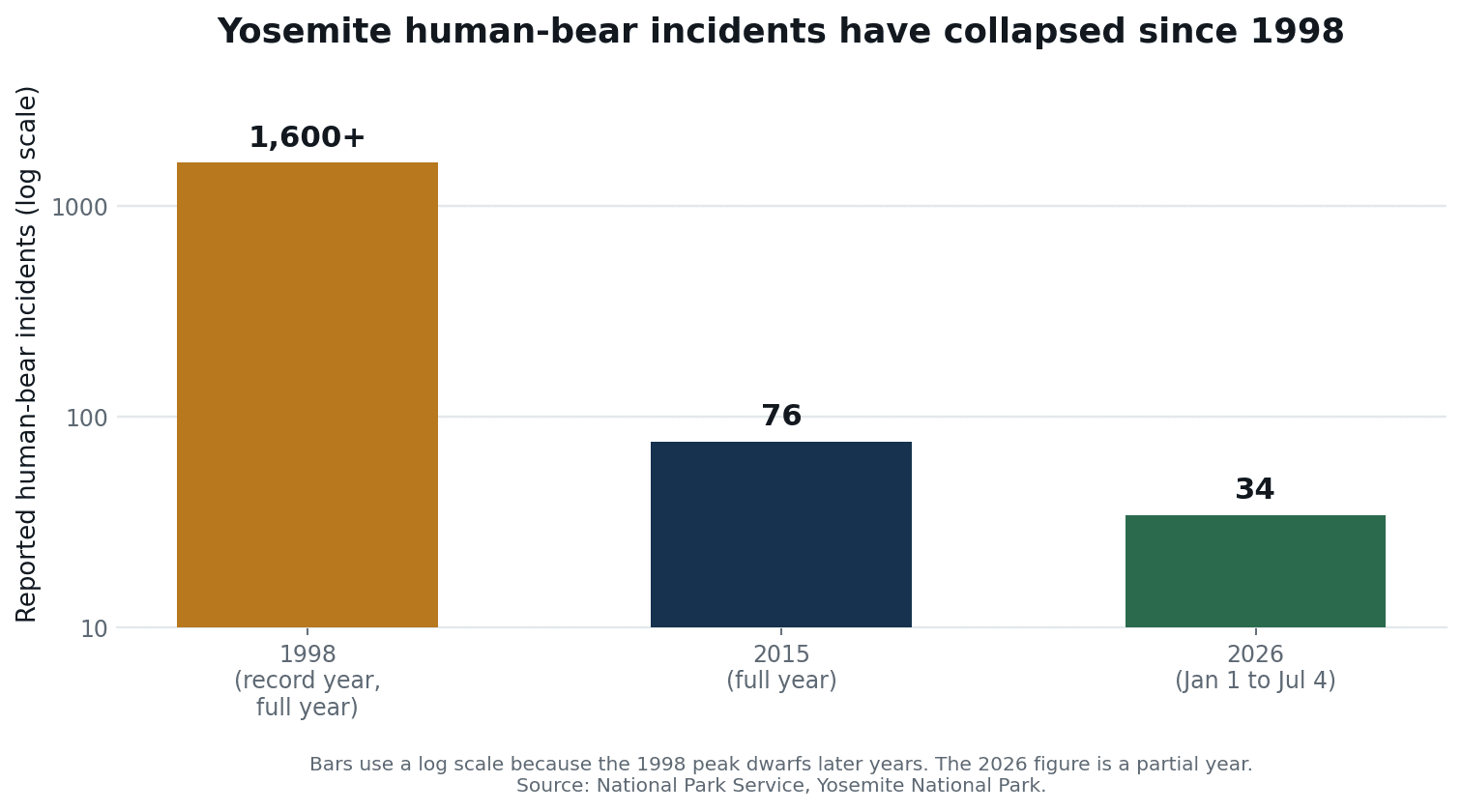
Through July 4 of this year, the park recorded 34 incidents. While up 26 percent year over year, the figure sits 91 percent below the 1998 peak. Vehicles also struck six bears during the same period. Food storage, therefore, moved the needle in a way no deterrent spray ever demonstrated in these parks.
Which Canister Is Approved for the Sierra Parks
Sierra parks approve specific models through the Sierra Interagency Black Bear Group. A bear canister for a weekend runs smaller and lighter than most buyers expect, so match capacity to trip length. The BearVault BV500 suits a long trip or two people, while the BV425 and the Bare Boxer Contender 101 cover a solo weekend.
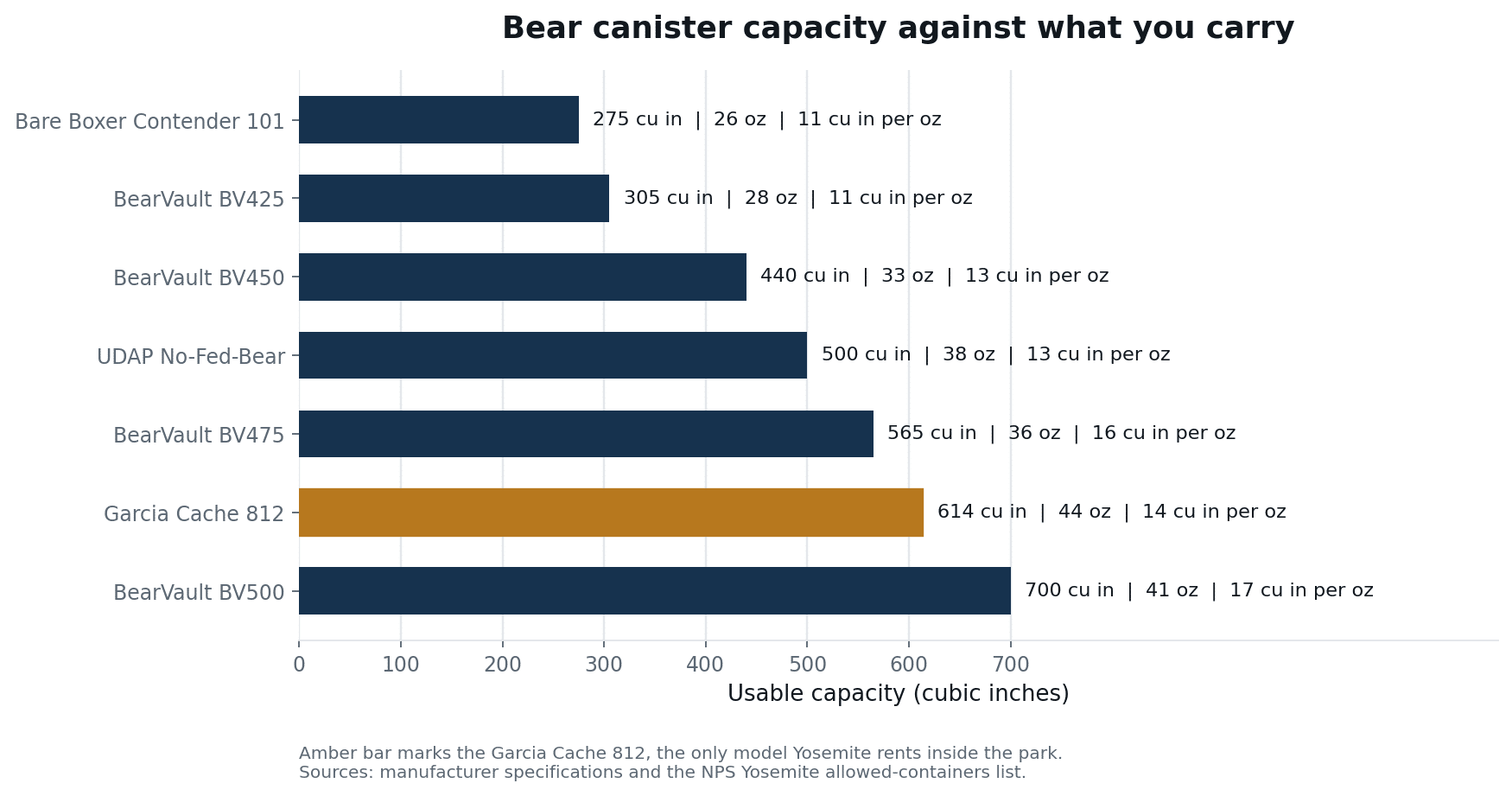
Two cautions apply before you order. Yosemite’s allowed-containers page still uses legacy BearVault model numbers, so confirm current BV425 and BV475 acceptance with the park before a trip. Ursack soft-sided bags, meanwhile, hold IGBC certification but do not appear on the Sequoia and Kings Canyon approved list at all.
What Else Is Worth Carrying: Coolers, Lockers, and Noise
A bear resistant cooler works for basecamp, though certification matters more than brand reputation. The IGBC certified list includes Yeti, Grizzly, Canyon, Bison, and Wyld models. Certification also carries a printed warning: a bear resistant cooler needs bolts or padlocks to qualify. RTIC and ORCA do not appear on the current list despite common assumptions. For a deeper breakdown of what belongs where, our bear country food storage rules guide covers the vehicle side in detail.
Park lockers finish the job at camp, so use the cooler to move food to the box rather than to hold it overnight. Beyond storage, an air horn gives you a legal noisemaker for scaring a bear out of camp. Similarly, group presence carries real weight. Since bears in developed areas respond to aggressive noise, several people yelling together beat one person with any single tool.
| Best for Solo Weekends | Best Large-Capacity Canister | Top Pick | Best Soft-Sided Pick | Best Budget Canister | |
|---|---|---|---|---|---|
| Product |  BearVault BV425 BearVault BV425 |  Garcia Backpackers' Cache 812 Garcia Backpackers' Cache 812 | TOP PICK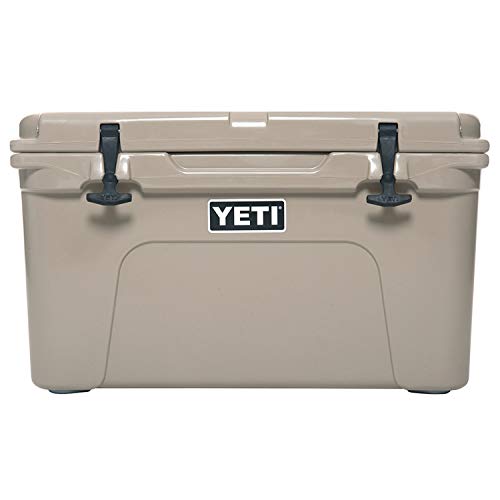 YETI Tundra 45 YETI Tundra 45 | 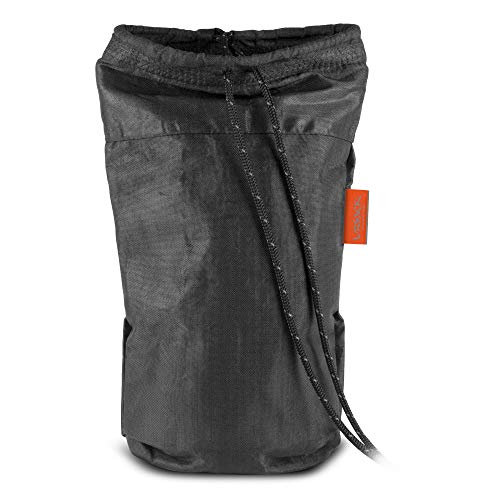 Ursack AllMitey Ursack AllMitey |  UDAP No-Fed-Bear UDAP No-Fed-Bear |
| Rating | ★★★★★ 4.7 2,252 ratings | ★★★★☆ 4.6 531 ratings | ★★★★★ 4.7 4,831 ratings | ★★★★☆ 4.5 37 ratings | ★★★★☆ 4.3 115 ratings |
| Capacity | 305 cu in | 614 cu in | 45 qt (54 cans) | ~650 cu in | 500 cu in |
| Weight | 28 oz | 44 oz | 24.6 lb | 9.5-13 oz | 38 oz |
| Price | $84.95 as of Sep 26, 9:13 pm | $88.95 as of Sep 26, 9:13 pm | $325.00 as of Sep 26, 9:13 pm | $69.99 as of Sep 26, 9:13 pm | |
| Check Price → | Check Price → | Check Price → | Check Price → | Check Price → |
Vehicle Food Storage Rules by Park
Here the rules diverge in ways worth knowing before you park for the night. Yosemite and Sequoia treat your vehicle differently, and a rooftop tent changes the calculation again. Our tips for camping in national parks cover the campground side more broadly.
| Storage question | Yosemite | Sequoia and Kings Canyon |
|---|---|---|
| Food in vehicle, daytime | Allowed, out of sight, windows closed | Allowed in trunk or out of sight |
| Food in vehicle after dark | Prohibited, locker required | Allowed when no locker exists |
| Hard-sided trailer or RV | Allowed, sealed when unattended | Allowed, sealed when unattended |
| Pop-up or soft-sided trailer | Never allowed for food | Use a locker instead |
| Empty cooler | Counts as food, store it | Counts as food, store it |
| Maximum fine | Up to $5,000 plus impoundment | Citation and food confiscation |
The definition of food catches people out repeatedly. Yosemite includes any scented item regardless of packaging: canned goods, drinks, soaps, cosmetics, toiletries, trash, and empty ice chests, even certified bear-resistant ones. Sequoia adds sunscreen, first-aid kits, baby wipes, insect repellent, pet food, and even baby car seats.
Rooftop tent owners face a specific trap. A tent on the roof does not make the vehicle below it compliant after dark in Yosemite, so plan on a locker run before bed. Camp outside park boundaries instead, and dispersed camping in Northern California often requires a canister under wilderness rules anyway.
Handling a Black Bear Encounter
Black bear protocol differs sharply from grizzly protocol, and consequently mixing them up gets people hurt. NPS guidance for black bears is direct: stand your ground, identify yourself by talking calmly, wave your arms slowly, and make yourself look large. Never run, and never climb a tree, because black bears climb better than you do.
In a developed area, campground, or parking lot, the instruction changes to active hazing. Yell aggressively and as loudly as possible until the animal leaves. Group up to present a bigger presence, but avoid surrounding the bear or blocking its exit route.
Safety note: If a black bear attacks, do not play dead. NPS instructs visitors to escape to a vehicle or building. If escape fails, fight back with any object available, concentrating blows on the face and muzzle. Playing dead is grizzly guidance and works against you here.
Campsite choice reduces the odds before any of this applies. First, keep cooking, eating, and sleeping areas separated. Then avoid pitching over an obvious game trail or berry patch. Our checklist on how to pick a safe campsite walks through the terrain reads worth making before you commit.
Final Verdict
For anyone planning a California trip, the practical rule is simple: leave the canister at home or stage it outside park boundaries. Plan the swap at the entrance station rather than at your campsite, because no signage marks the change for you. Risking a federal misdemeanor over a tool the agency considers unnecessary for black bears makes little sense.
Trade-offs exist, and honest coverage should name them. Colorado’s parks hold only black bears too, yet Colorado Parks and Wildlife encourages spray. Two 2026 California incidents outside park land keep the debate alive. In Crestline, a bear clawed a teenager through a bedroom window. Near Mammoth Lakes, a homeowner fought one off with a hatchet after it went for his partner and their dogs. Readers who want a deterrent still have legal options on forest and BLM land where most overland camping happens anyway.
Value, meanwhile, sits in the swap. An approved canister and a disciplined camp routine cost less than premium spray. Moreover, neither expires, and both address the behavior driving nearly every incident. Yosemite’s 91 percent drop since 1998 came from storage compliance, not from deterrents.
Finally, build the trip around jurisdiction. Carry spray on your national forest and BLM nights, store it outside the boundary before a park entrance, and run an approved canister plus locker discipline inside. Overlanders crossing several land types in a weekend need both halves of the plan, not one or the other.
Frequently Asked Questions
Is bear spray legal in California outside national parks?
Yes. California Penal Code 22810 permits any adult without disqualifying convictions to buy, possess, and use a defensive aerosol for self-defense. National forest and BLM land across the state impose no equivalent ban, so the restriction applies only inside National Park Service boundaries.
Can you buy bear spray in California?
Yes, sporting goods retailers across the state sell it legally. State law caps aerosol size at 2.5 ounces for personal defense products. EPA-registered bear formulas, however, follow separate labeling rules.
What is a bear canister and when do you need one?
A bear canister is a hard-sided container a bear cannot open, bite through, or carry off. Yosemite requires one for all overnight wilderness trips, since counterbalance food hangs no longer qualify. Sequoia and Kings Canyon require one seasonally in several named basins.
What is the penalty if a ranger finds spray in your vehicle?
Possession inside a park unit violates 36 CFR 2.4, a federal misdemeanor. Outcomes range from confiscation and a warning to a citation, depending on the ranger and the circumstances. No published exception covers sealed storage in a locked trunk during transit.
Do California parks provide bear boxes at campsites?
Yosemite provides food lockers at every campsite, tent cabin, and most trailhead parking lots. Sequoia and Kings Canyon supply metal boxes roughly 47 inches wide by 33 inches deep at most campsites and trailheads. Boxes are shared, and personal locks are not permitted.