



You can plan the perfect route, pack the right food, and still end up stranded if your gear isn’t built for what the backcountry actually throws at you. Cell service disappears. Tires need air. Things get stuck. Temperatures climb. The difference between a great trip and a bad one usually comes down to whether you had the right tools before you needed them.
This guide covers six pieces of tech and gear purpose-built for remote overland travel, spanning navigation, communication, tire management, power, refrigeration, and recovery. Each one earns its place in a serious build.
Written by Alex Schult
Editor in Chief of 4wdTalk.com. 15+ years of off-road and overlanding experience with 1,000+ hours on the trail across the Sierras, Mojave, and Big Bear backcountry.
Quick Verdict: Remote overland route planning demands more than a good map and a full tank of fuel. The gear you carry determines whether a mechanical hiccup becomes a brief delay or a genuine emergency. Covering navigation, tire management, communication, power, refrigeration, and recovery, the six pieces of technology and gear in this guide work together to keep you self-sufficient miles from the nearest pavement. Prices range from $35 per year for a navigation app to $1,399 for a capable power station, so there is an entry point for every build stage.
Last updated: May 2026 | 10 min read
In This Guide
- Why Remote Overland Route Planning Requires the Right Tech
- Gear Overview at a Glance
- Navigation: onX Offroad
- Communication: Garmin inReach Messenger Plus
- Tire Management: MORRFlate TenSix PSI Pro Gen2
- Power: EcoFlow DELTA 2 Max
- Refrigeration: TRP 4×4 Mammoth Fridge/Freezer
- Recovery: MAXTRAX MKII Recovery Boards
- How to Build Your Overland Kit by Stage
- Pros and Cons
- Final Verdict
- Frequently Asked Questions
Why Remote Overland Route Planning Requires the Right Tech

Serious remote overland route planning starts long before you air down your tires. It starts with an honest inventory of what happens when things go wrong at mile 40 of a two-track with no cell signal, no recovery vehicle nearby, and a storm rolling in from the west. The gear you pack is the answer. Done right, it transforms a vehicle into a self-sufficient platform capable of handling mechanical problems, navigational challenges, and multi-day stays without outside support.
The overlanding market has matured considerably over the past decade. Today’s purpose-built tools, including smart compressors, satellite communicators, and lightweight fridge-freezers, are lighter, faster, and more capable than anything available five years ago. However, the sheer volume of options also creates noise. Not every product earns a place in a serious build. The six pieces of gear covered in this guide are selected because they address distinct, non-negotiable needs: knowing where you are, telling someone else where you are, managing tire inflation for overlanding terrain, generating and storing power, keeping food safe for extended trips, and getting unstuck without outside help.
Overlanders building their first remote-capable rig will find this guide useful as a framework. Experienced travelers who have already patched together a kit will find it valuable for identifying gaps. Either way, the goal is the same: fewer compromises and more confidence on route.
Gear Overview at a Glance
| Product | Category | Price | Key Spec |
|---|---|---|---|
| onX Offroad | Navigation App | $34.99–$99.99/yr | 650K+ miles of trail data, offline maps |
| Garmin inReach Messenger Plus | Satellite Communicator | $500 | Photo/voice/text via Iridium, 25-day battery |
| MORRFlate TenSix PSI Pro Gen2 | Tire Compressor | $325 | 10.6 CFM, airs 35″ tires 10–40 psi in under 5 min |
| EcoFlow DELTA 2 Max | Portable Power Station | ~$849–$1,399 | 2,048Wh, 2,400W output, expandable to 6kWh |
| TRP 4×4 Mammoth Fridge/Freezer | Refrigeration | $450 | 40L, 15 lbs, Bluetooth app control, 5°F minimum |
| MAXTRAX MKII Recovery Boards | Recovery Gear | $279.99/pair | 45″ long, 7.5 lbs each, UV-stable nylon |
Navigation: onX Offroad
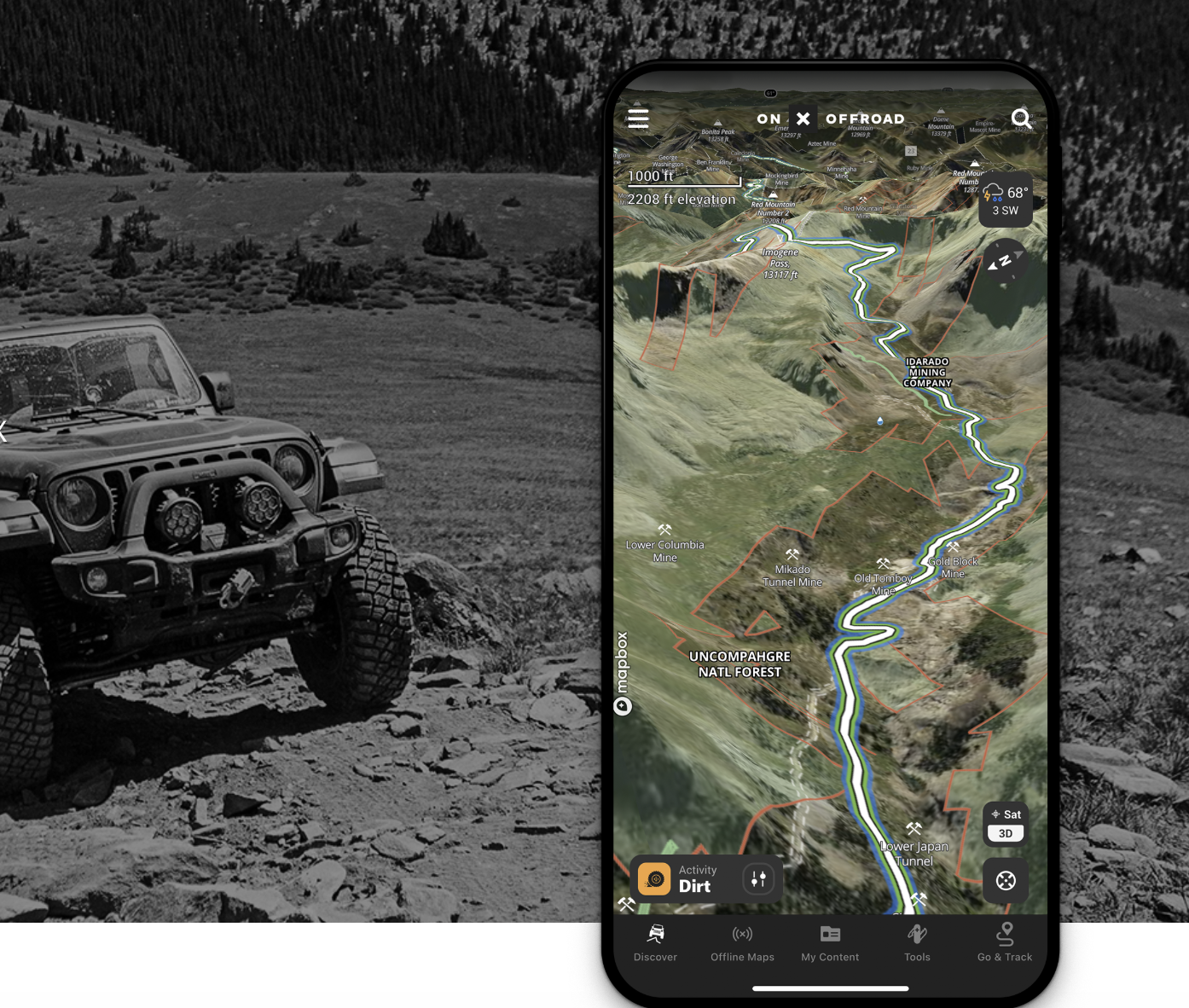
Before a single tire leaves the pavement, remote overland route planning depends on accurate, offline-capable maps. onX Offroad has become the dominant choice in this category because it solves the most critical problem of backcountry navigation: usability for off-road navigation without cell service. The app offers over 650,000 miles of color-coded trail data covering four-wheel-drive routes, ATV tracks, and overlanding corridors across the United States, all downloadable to your device before you leave the driveway.
If you get the premium membership like I did, priced at $34.99 per year, unlocks featured trails with difficulty ratings, unlimited offline map downloads, and access to 852 million acres of public land data. For travelers who frequently push into areas with ambiguous land boundaries, the Elite tier at $99.99 per year adds private landowner names and parcel boundaries, particularly useful for remote western states where public and private land interlock in complex patterns. Recent satellite imagery, updated on a two-week cycle, is also an Elite-exclusive feature letting you scout trail conditions before committing to a route.
The practical value of onX becomes clear in situations where Google Maps provides a blank screen. You set a waypoint at camp, download the surrounding area at high resolution, and drive out with a full picture of your route, alternate exits, and water sources. Android Auto and Apple CarPlay integration puts the same data in your dash display. For overlanders who prefer dedicated GPS hardware, onX pairs well with a mounted tablet running the app full-time.
Communication: Garmin inReach Messenger Plus

The Garmin inReach Messenger Plus occupies a category where getting it wrong has serious consequences. At $500, it is the first satellite communicator capable of transmitting both photos and 30-second voice messages via the Iridium satellite network, in addition to standard two-way text messaging and SOS alerting. The combination matters in real-world emergencies, where a rescue coordinator receiving a photo of your vehicle’s location and condition mobilizes the right response faster than text alone.
Battery life is a genuine standout: up to 25 days of use in 10-minute tracking mode, and up to 600 hours in low-power messaging mode. For multi-week expeditions, the longevity removes battery anxiety from the equation. The device weighs 4.1 ounces, carries an IPX7 water resistance rating, and pairs with the Garmin Messenger smartphone app, which automatically switches between Wi-Fi, cellular, and satellite connectivity depending on what is available. Subscription plans start at $14.99 per month, required for satellite access.
Also worth noting: the inReach Messenger Plus doubles as a safety charging device for a depleted phone, a small but meaningful feature when you are far from any outlet. For overlanders running group trips, the app supports group messaging and real-time location sharing, so everyone in the convoy knows where the others are without burning through message allotments. No other device at this price point combines photo messaging, voice memos, interactive SOS, and 25-day battery life in a single package.
Tire Management: MORRFlate TenSix PSI Pro Gen2
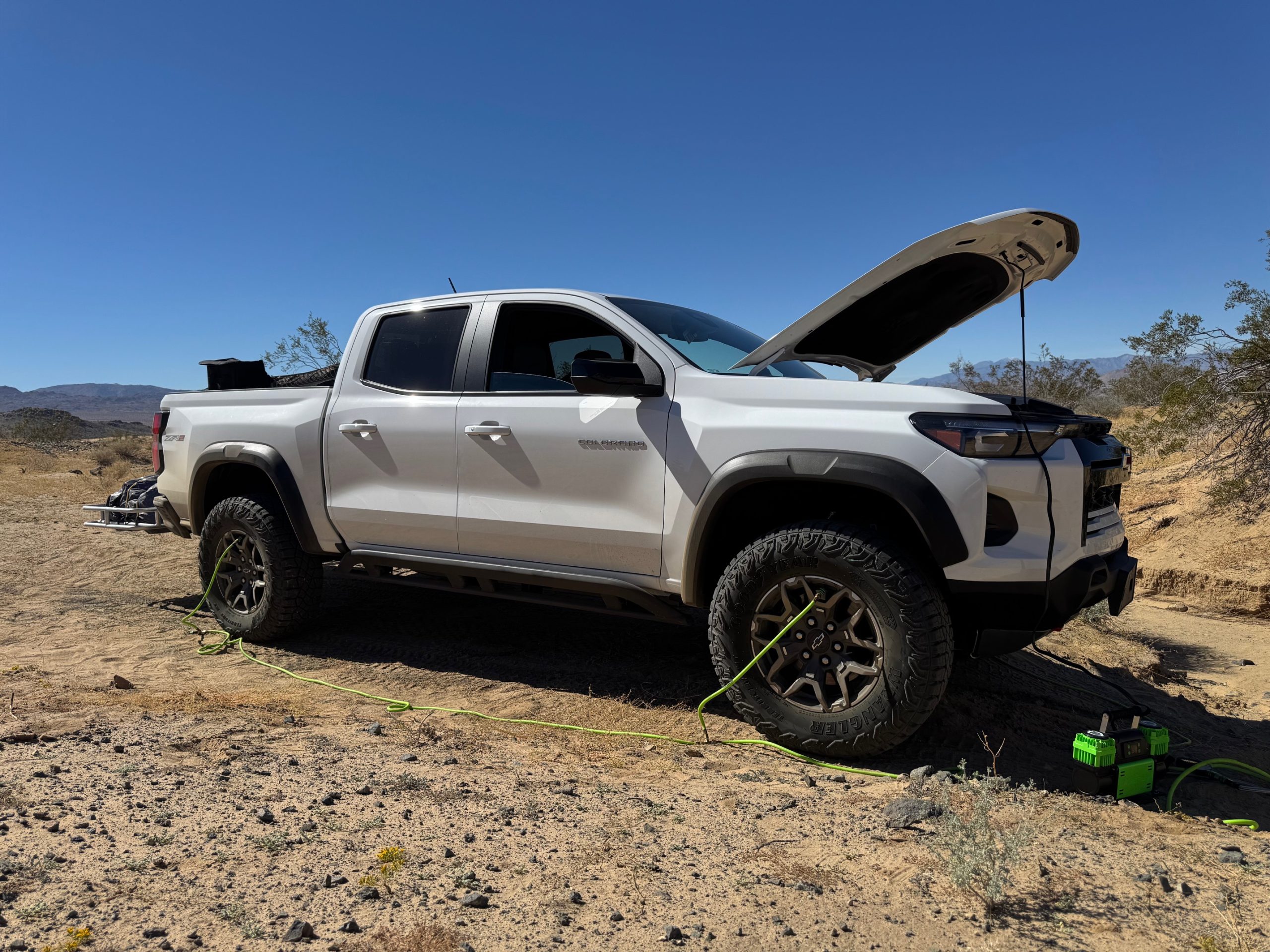
Airing down for the trail and airing back up for the highway represents the most time-consuming ritual in tire inflation during overlanding, unless you have the right equipment. The MORRFlate TenSix PSI Pro Gen2 addresses this directly. At 10.6 CFM, it is engineered specifically to work with MORRFlate’s 4-tire hose kits, filling all four tires simultaneously and bringing a set of 35-inch tires from 10 psi to 40 psi in under five minutes, which is something I’ve personally witnessed over the last few years using this compressor in the field. Compared to single-tire compressors, representing a 300–400% reduction in air-up time.
The PSI Pro designation refers to the digital auto-stop feature: set your target pressure with the plus and minus buttons, press go, and walk away. Once every tire reaches the programmed value, the compressor shuts off automatically. This automation removes the need to hover over each stem with a gauge, which is especially welcome at the end of a long day on rough terrain. The 80% duty cycle at 0 psi allows for 45 minutes of continuous operation, enough to service six to eight vehicles before a 10-minute cooldown. Operating amperage runs approximately 50 amps while running, peaking at 90 amps.

Gen2 upgrades over the original TenSix include a stainless steel outlet hose for better heat dissipation, resized aluminum heat sinks, internal aluminum cylinders replacing mild steel, new piston rings for heat resistance, and a purge valve to release internal pressure after use. I had the original TenSix, and I can tell you the Gen2 is much improved.
The compressor weighs 20 lbs in its padded carrying bag and measures 14x7x9 inches. MORRFlate backs it with a three-year no-hassle warranty. For tire inflation during overlanding on 33-inch or larger tires, no portable compressor currently matches its speed. One important design note: the TenSix is optimized for four-tire simultaneous inflation. Using it on a single tire at a time significantly reduces its duty cycle and is not recommended for sustained use.
Cut Air-Up Time by 75% on Your Next Run
The MORRFlate TenSix PSI Pro Gen2 fills four 35-inch tires from 10 to 40 psi in under five minutes. Digital auto-stop, 3-year warranty, made for serious overlanders.
Power: EcoFlow DELTA 2 Max
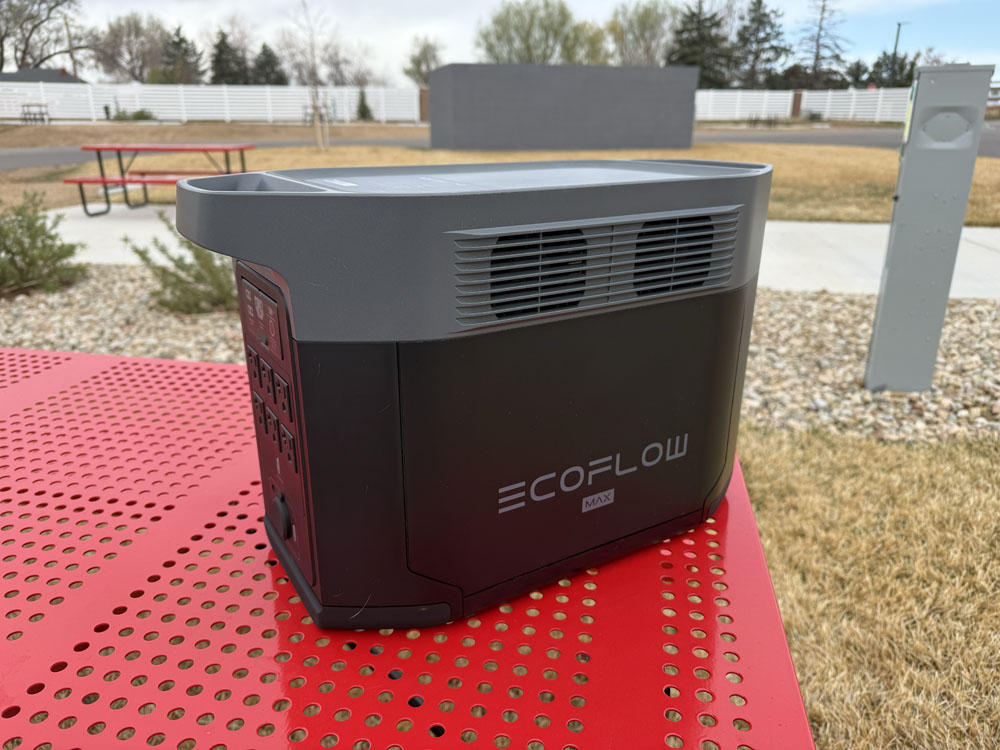
Remote overland route planning increasingly relies on powered devices: navigation tablets, satellite communicators on charge, fridge compressors, lighting, and camera equipment. The EcoFlow DELTA 2 Max handles all of it from a single 50-pound unit with a 2,048Wh LiFePO4 battery and 2,400W of continuous AC output. Street price typically runs between $849 and $1,399 depending on promotions.
The LFP battery chemistry is a meaningful differentiator in this class. With 3,000 cycles to 80% capacity, the DELTA 2 Max delivers roughly 10 years of daily use before degradation becomes noticeable, six times longer than units using standard lithium-ion chemistry. Recharging is equally capable: combined AC and solar input accepts up to 1,000W from solar panels, reaching 80% charge in 43 minutes under optimal conditions. EcoFlow’s 800W Alternator Charger, sold separately, allows the unit to recharge directly from the vehicle’s alternator, approximately 1 kWh per 1.3 hours of driving. Learn more in my detailed EcoFlow DELTA 2 Max review.

Practical runtime for an overlanding build running a 40L fridge, LED lighting, and device charging will vary, but the 2,048Wh base capacity covers two to three days of moderate use before requiring a solar top-up. The expandable ecosystem, up to two Smart Extra Batteries bringing total capacity to 6,144Wh, means the portable power station grows with your overlanding needs. Fifteen output ports (6 AC, 4 USB-A, 2 USB-C, 2 DC, 1 car port) and Wi-Fi plus Bluetooth app control round out a well-engineered package. At 30 dB operating noise, it runs quietly enough to leave on overnight. If you’re like me and have a pretty sensitive ear to fan noise, you’ll appreciate this unit. It’s been a champ over the years, and has proven to be a great addition to my kit.
Refrigeration: TRP 4×4 Mammoth Fridge/Freezer
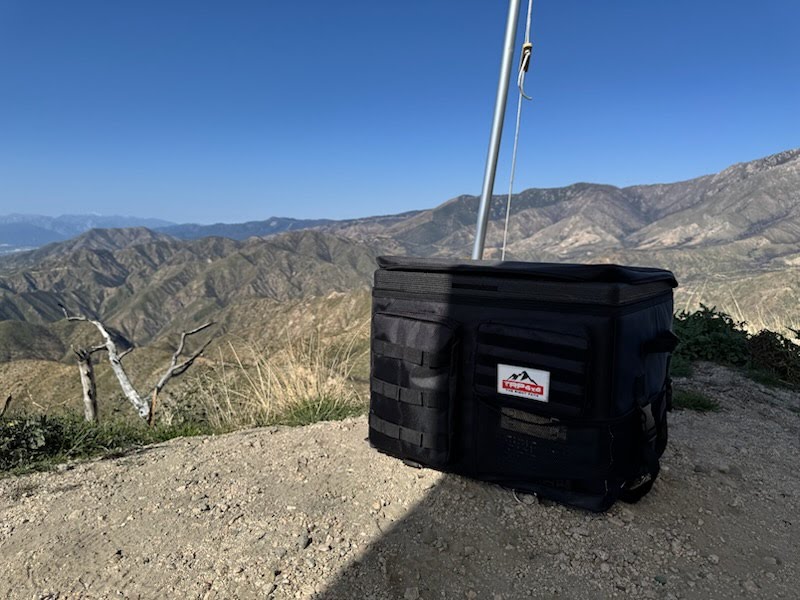
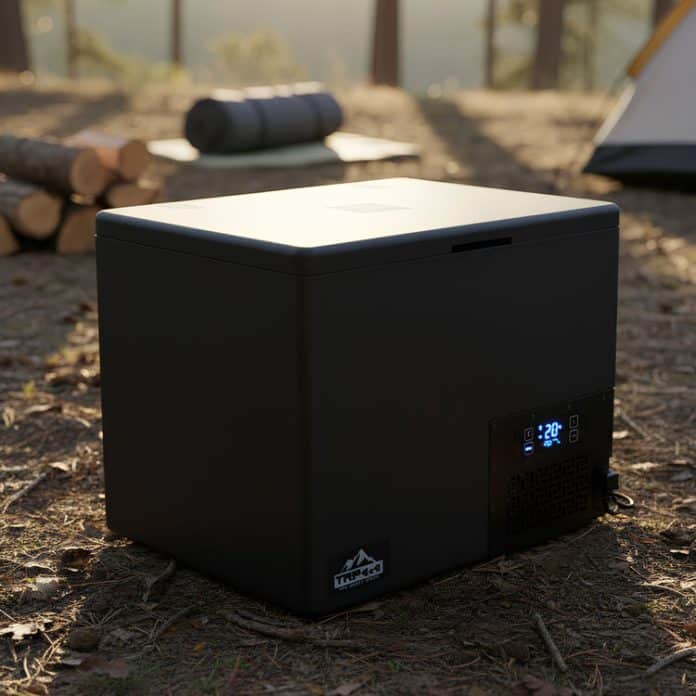
Most overlanding fridges present the same trade-off: capacity comes at the cost of weight, and weight constrains where the vehicle goes. As I’ve found with the TRP 4×4 Mammoth Fridge/Freezer approaches this differently. At 15 pounds and $450, the 40-liter Mammoth weighs dramatically less than the 40–60-pound units that dominate the market, without compromising on cooling performance. When you’re moving your fridge from your truck to your tent like I do, the compact, lightweight build is definitely a bonus.
The fully hermetic compressor maintains temperatures from 5°F to 14°F (-10°C) at the freezer end, placing it firmly in true fridge-freezer territory rather than glorified cooler territory. ECO and MAX modes offer practical flexibility: MAX gets contents cold quickly after restocking, while ECO maintains temperature efficiently once the unit stabilizes. Real-world testing in warm Southern California conditions and at elevation in the Sierra Nevada showed consistent temperature hold even with frequent lid openings and overnight temperature swings.
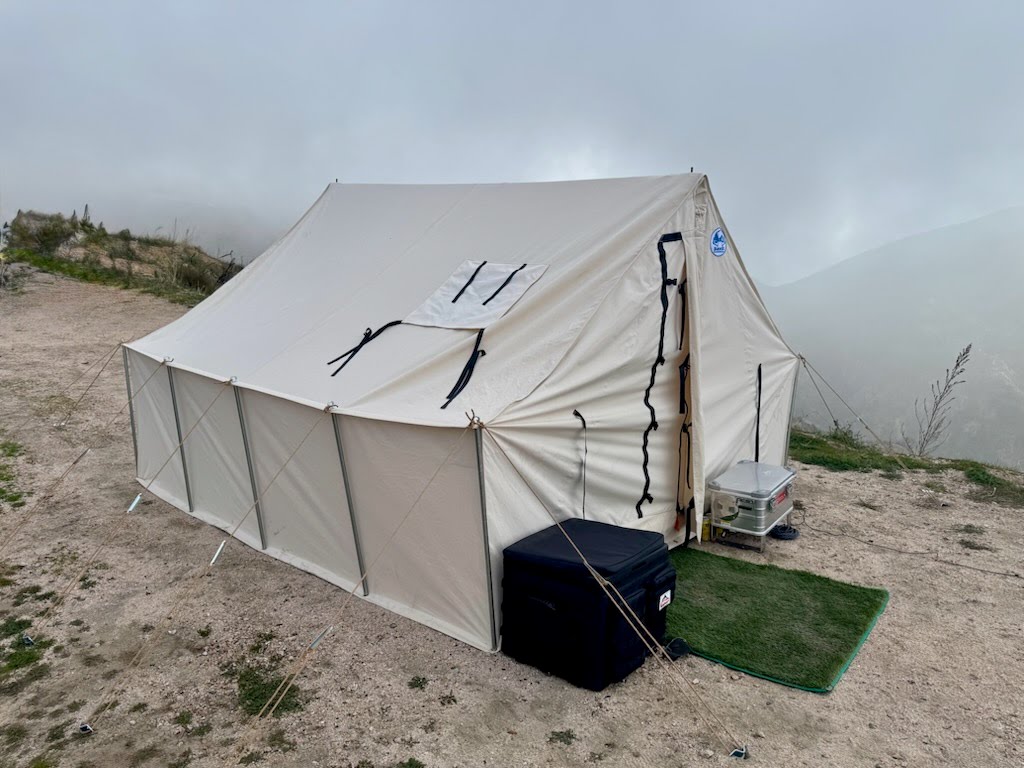
As I note in my TRP 4×4 Mammoth Review, bluetooth connectivity links the Mammoth to TRP’s mobile app, letting you adjust temperature settings, switch modes, and monitor performance from your phone without opening the lid, a convenience paying dividends during long drives when the fridge sits in the rear of the vehicle. A clear LED digital display handles monitoring when the phone is elsewhere. Built for portability and multi-use, the Mammoth works as well on a beach day or at home in a garage as it does strapped into a cargo bay on a remote two-track. TRP 4×4 designs overland gear for real-world versatility, not only ideal conditions. A one-year warranty covers the unit. For solo travelers, couples, and weekend overlanders, the Mammoth’s weight-to-performance ratio is the best currently available at this price.
15 Pounds of True Fridge-Freezer Performance
The TRP 4×4 Mammoth holds 40L, freezes to 5°F, and runs on Bluetooth app control. The lightest serious overland fridge at this price.
Recovery: MAXTRAX MKII Recovery Boards

No matter how carefully you plan a route, terrain presents situations the map did not show. Recovery gear is therefore not optional for remote overland travel, it is a baseline requirement. MAXTRAX MKII Recovery Boards, sold in pairs for $279.99, are the established standard in vehicle traction-based recovery. Made in Australia from UV-stabilized engineering-grade reinforced nylon, each board measures 45 inches long, 13 inches wide, and weighs 7.5 pounds.
The operating principle is straightforward: when a vehicle is stuck in sand, mud, or snow, you place the boards at the leading edge of the drive wheels, and the aggressive large cleats grip both the tire tread and the surface beneath it, providing enough purchase to idle out of the situation without additional torque or wheel spin. University of Queensland testing confirmed the boards flex completely around a 33-inch tire without breaking. Six built-in handles make positioning fast even in awkward conditions, and the shovel ends on each board help clear material from around the tires before placing them.
Included Telltale leashes, bright orange cords attached to each board, solve the practical problem of losing boards in deep mud or snow. MAXTRAX backs the boards with a lifetime warranty against faulty materials and workmanship. For single-vehicle travel, four boards (two pairs) provide redundancy and the ability to bridge longer spans in deep terrain. Mounting options include roof racks, rear doors, and purpose-built brackets available separately. The boards stack to 3.5 inches height per pair, so storage is manageable even in a tightly packed build.
How to Build Your Overland Kit by Stage
Not every overlander needs all six pieces of overland gear immediately. A practical approach prioritizes by risk exposure and trip duration. For day trips on rated trails with other vehicles, navigation and recovery gear address the most common scenarios: getting lost and getting stuck. onX Offroad Premium at $34.99 and a pair of MAXTRAX MKII boards at $279.99 cover those two categories for under $315 combined.
As trips extend to overnight and multi-day, refrigeration and power become necessary. The TRP 4×4 Mammoth Fridge/Freezer at $450 paired with the EcoFlow DELTA 2 Max at roughly $849–$1,399 creates a capable, self-sufficient camp power and food storage system. Adding the MORRFlate TenSix PSI Pro at $325 handles tire pressure management for serious terrain, and the Garmin inReach Messenger Plus at $500 addresses the communication gap that every solo or remote overlander eventually faces.
Total cost for the full six-item kit ranges from approximately $2,340 to $2,890 depending on where the DELTA 2 Max is purchased. It is a significant investment, but spread across years of use and multiple vehicles, each piece earns its place. The alternative, being stranded without communication, stuck without recovery tools, or running low on power with no backup, carries costs harder to measure and easier to avoid.
Pros and Cons
Pros
- onX Offroad provides 650,000+ miles of trail data with full offline functionality, no cell signal needed once maps are downloaded
- MORRFlate TenSix PSI Pro airs four 35-inch tires from 10 to 40 psi in under five minutes with automatic shutoff at target pressure
- Garmin inReach Messenger Plus is the only satellite communicator that transmits photos and voice messages via Iridium, with 25-day battery life
- TRP 4×4 Mammoth Fridge weighs only 15 pounds, dramatically lighter than comparable 40L units at 40–60 lbs, while maintaining genuine freezer temperatures to 5°F
- EcoFlow DELTA 2 Max LFP battery delivers 3,000 cycles to 80% capacity, providing roughly 10 years of daily use
- MAXTRAX MKII boards provide solo vehicle self-recovery in sand, mud, and snow without tools, winches, or a second vehicle
- Entire six-item kit covers navigation, communication, tire management, power, food preservation, and recovery in one coherent build
Cons
- Garmin inReach Messenger Plus requires an active subscription at $14.99/month minimum, ongoing cost on top of the $500 hardware price
- MORRFlate TenSix PSI Pro is designed for four-tire simultaneous use; single-tire inflation significantly degrades duty cycle and is not recommended for sustained use
- EcoFlow DELTA 2 Max weighs 50 lbs, which limits portability for builds where weight savings are critical
- onX Offroad Elite at $99.99/year is necessary for private land boundary data, the feature most valuable in remote western states
- Full six-item kit requires an upfront investment of $2,340–$2,890 depending on power station pricing
Final Verdict
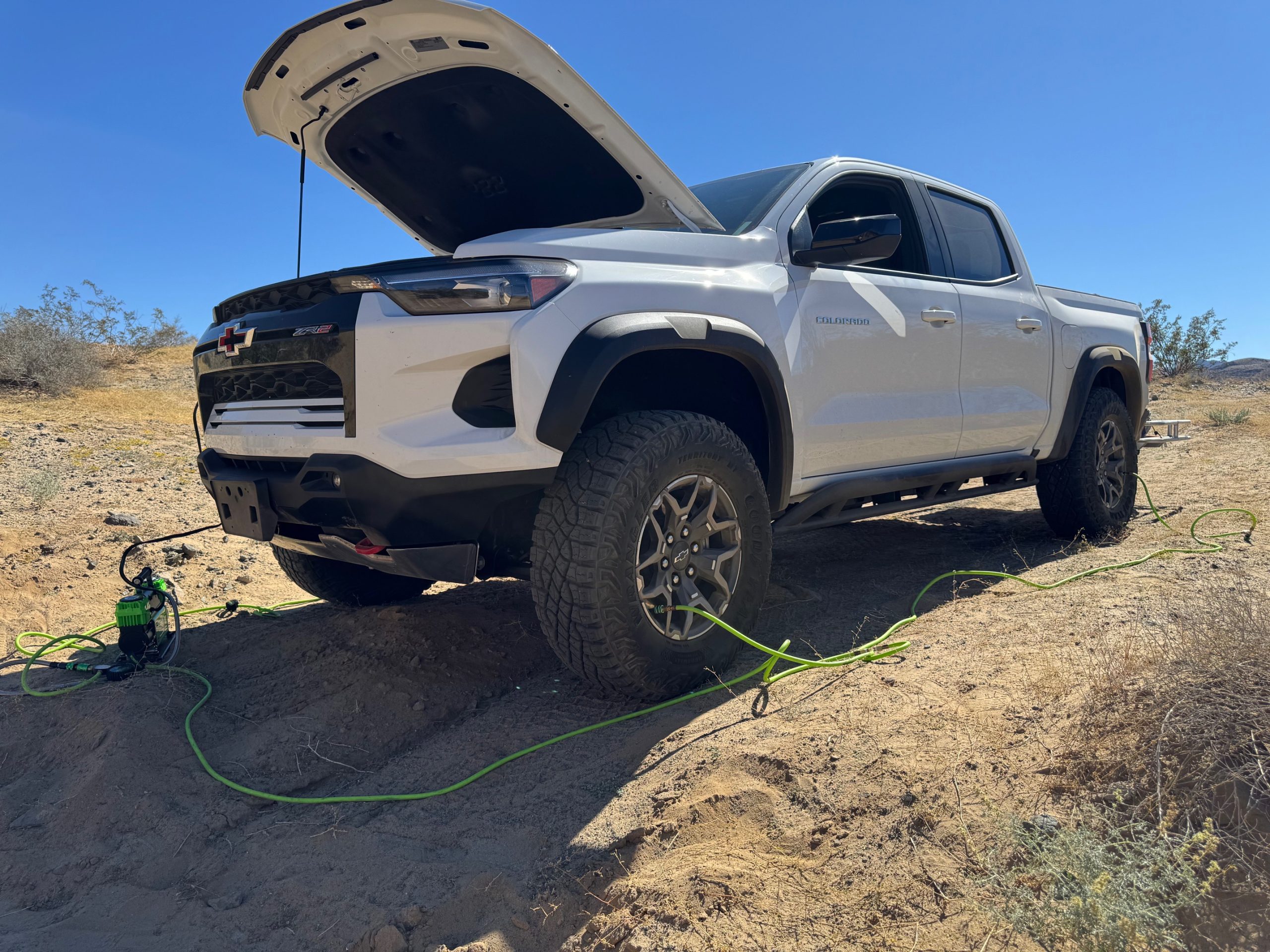
Remote overland route planning succeeds when the gear you carry is specific to the problems you will genuinely face. Each item addresses a defined gap: knowing where you are, staying connected when cell service ends, managing tire pressure efficiently, generating power for days without shore power, keeping food cold and safe, and recovering a stuck vehicle without outside help. Together, they form a system rather than a random collection of accessories.
Travelers who prioritize weight savings should look closely at the TRP 4×4 Mammoth Fridge at 15 pounds as a clear standout versus heavier alternatives, and consider whether the DELTA 2 Max’s 50-pound footprint fits their build or whether a smaller power station better matches their actual consumption. Solo overlanders should make the Garmin inReach Messenger Plus their first purchase before everything else, communication is the only item on this list where the consequence of not having it cannot be recovered from in the field.
Each product here has been selected based on verified specifications, real-world performance data, and pricing current as of May 2026. Budget-focused overlanders should prioritize navigation and recovery gear first, then add power and refrigeration as trips grow longer. The MORRFlate TenSix PSI Pro is most valuable for overlanders running 33-inch or larger tires who air down regularly, and it pairs best with a MORRFlate 4-tire hose kit to realize its full potential. Overlanders running smaller tires or shorter trips will find the MORRFlate FiveSix a more appropriately sized alternative at $160.
Frequently Asked Questions
What is the most important piece of gear for remote overland route planning?
A satellite communicator is the single most important item for remote travel, because it is the only piece of gear that functions when everything else fails. The Garmin inReach Messenger Plus provides two-way text messaging, photo sharing, and interactive SOS via the Iridium network, which covers the entire globe. Navigation apps and recovery gear matter enormously, but communication with emergency services is the baseline safety requirement for any truly remote route.
How much power does a 40L overlanding fridge draw from a portable power station?
A quality 40L fridge-freezer like the TRP 4×4 Mammoth typically draws 30 to 50 watts average in ECO mode once the contents are cold. At 40W average draw, the EcoFlow DELTA 2 Max’s 2,048Wh capacity would theoretically power the fridge for approximately 51 hours before requiring a recharge. In practice, total system loads from lighting, device charging, and other electronics reduce that runtime, so plan for 24 to 36 hours of mixed use between solar recharges.
Does onX Offroad work without cell service?
Yes. onX Offroad allows you to download offline maps before a trip for use in areas with no cell coverage. Your phone’s internal GPS provides off-road navigation tracking independent of any data connection, so you see your blue dot moving on the downloaded map even when completely off-grid. For remote overland route planning, downloading maps at high resolution for your full intended route, plus a buffer area for detours, is a standard practice before departure.
Is the MORRFlate TenSix PSI Pro compatible with stock valve stems?
Yes, the TenSix PSI Pro works with standard Schrader valve stems found on most vehicles. However, MORRFlate’s own data shows that a single Schrader valve stem limits airflow to approximately 1.8 to 2 CFM at 20 psi, which creates a bottleneck when using the compressor on one tire at a time. Connecting all four tires simultaneously via a MORRFlate 4-tire hose kit removes that bottleneck and allows the compressor to use its full 10.6 CFM output efficiently.
Are MAXTRAX MKII recovery boards effective in all terrain types?
MAXTRAX MKII boards work in sand, mud, snow, and loose gravel, any soft surface where tire spin is the primary issue. They are most effective when placed correctly: clearing loose material from behind the drive wheels first, positioning the boards at the leading edge of the tire rather than beneath it, and idling rather than applying throttle aggressively. The boards are less effective on hard surfaces like rock, where traction board recovery is not the appropriate technique. For rock-based recoveries, a kinetic rope or winch is the appropriate tool.
A quick heads-up: If you snag something through our affiliate links or check out our sponsored content, we might earn a commission at no extra cost to you. But fear not, we’re all about recommending stuff we’re truly stoked about!