


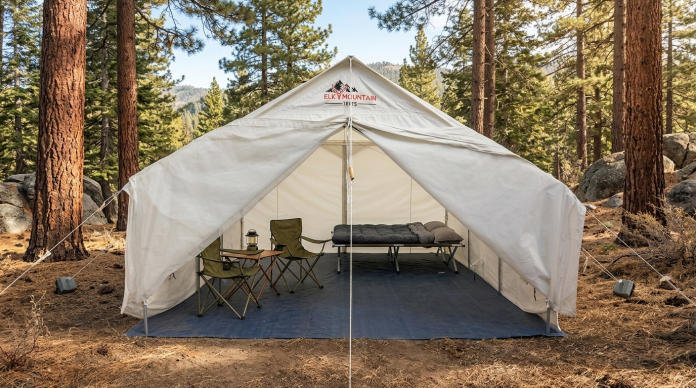

Quick Verdict: The wall tent vs bell tent decision comes down to how you camp. Wall tents deliver 30-40% more usable floor space per square foot because of their vertical sidewalls, and they handle wood stove heating more efficiently for extended backcountry stays. Bell tents set up in 15-20 minutes with one person and weigh 30-50% less, making them the better pick for weekend glamping, car camping, and situations where you move camp frequently. For overlanders who do both, Elk Mountain Tents builds their wall tents and bell tents from the same polyester canvas fabric, so you get equal durability regardless of which shape you choose.
Last updated: March 2026 | 12 min read
In This Article
- Wall Tent vs Bell Tent Overview
- Key Specs at a Glance
- Structure and Design Differences
- Setup Time and Portability
- Weather Performance: Wind, Rain, and Snow
- Interior Space and Livability
- Heating and Wood Stove Use
- Best Uses for Each Tent Style
- Canvas Materials: Cotton vs Polyester
- Side-by-Side Comparison: Which Should You Pick?
- Pros and Cons
- Final Verdict
- Frequently Asked Questions
Wall Tent vs Bell Tent Overview: Which Canvas Shelter Fits Your Camping Style?
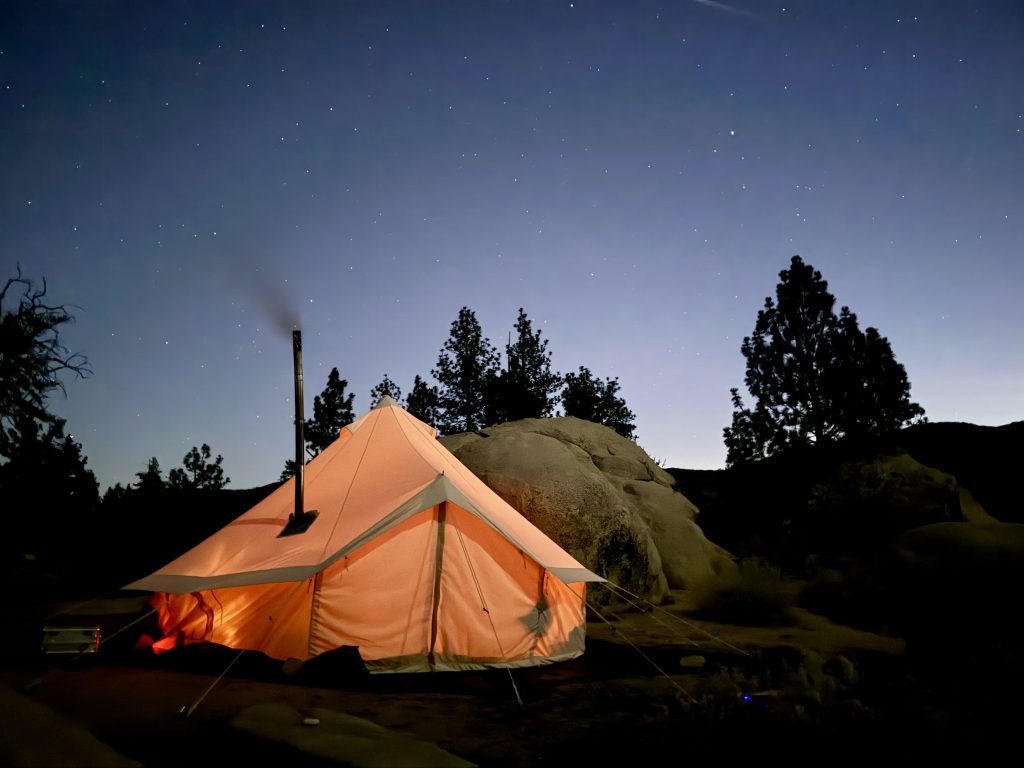
Pick the wrong canvas shelter, and you spend $700-$1,700 on a tent you dread setting up or one you outgrow in a season. The wall tent vs bell tent debate shows up in every overlanding forum and hunting camp discussion because these two shelters look similar on paper but perform drastically differently in the field. However, they solve different problems for different campers, and understanding the trade-offs before you buy saves years of frustration.
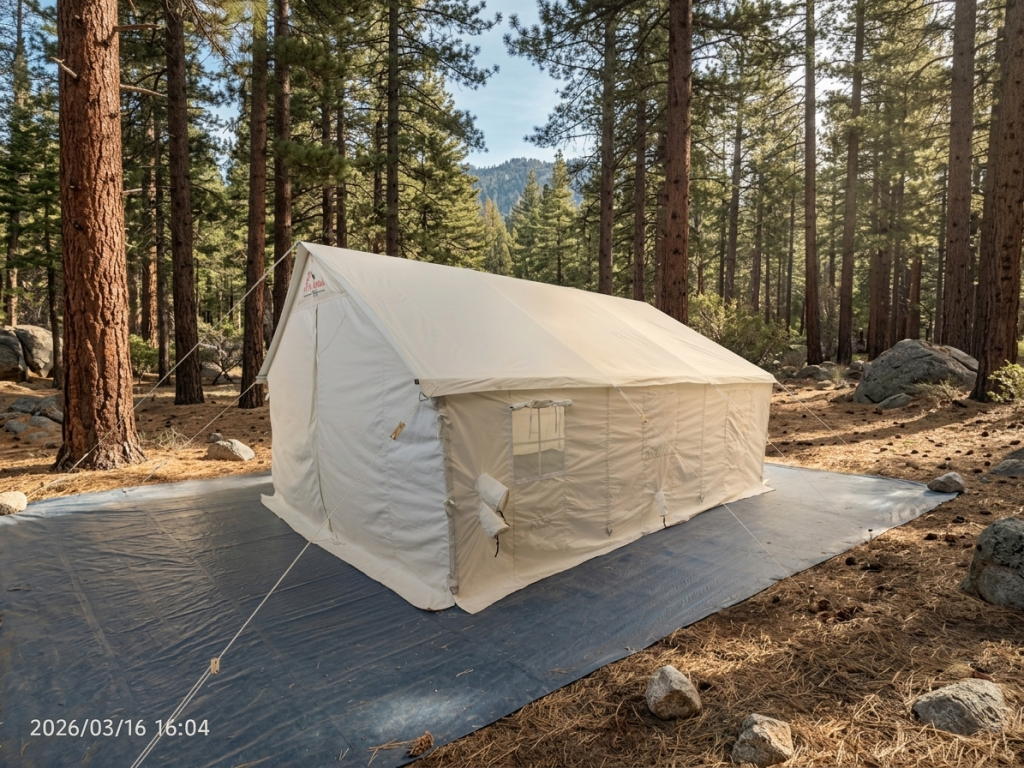
Wall tents use a rectangular frame with vertical sidewalls (typically 4-5 feet tall) and an A-frame ridge. Historically, this design originated with military field camps and became the standard shelter for hunting outfitters and backcountry base camps. Bell tents use a single center pole with a conical shape, low 1-3 foot sidewalls, and guy ropes radiating outward. Their design traces back to the Sibley tent patent of 1856.
Overlanders pulling a trailer benefit from the wall tent’s semi-permanent base camp with stand-up headroom across the entire floor. Meanwhile, car campers and glampers who set up for a weekend prefer bell tent camping because of faster setup and a smaller packed footprint. Elk Mountain Tents sells both styles starting at $745 for their Yukon Bell Tent and $1,050 for their Standard Canvas Wall Tent, giving you a direct apples-to-apples canvas tent comparison from the same manufacturer.
Key Specs at a Glance
| Feature | Wall Tent (13×16) | Bell Tent (16 ft diameter) |
|---|---|---|
| Floor Area | 208 sq ft | ~201 sq ft |
| Usable Standing Area | ~185 sq ft (90%) | ~100 sq ft (50%) |
| Peak Height | ~9 ft at ridge | 10 ft at center pole |
| Sidewall Height | 4-5 ft | 1-3 ft |
| Setup Time | 45-90 min (2 people) | 15-20 min (1 person) |
| Packed Weight | 75-110 lbs (tent + frame) | 45-65 lbs (tent + pole) |
| Stove Jack | Yes (standard) | Yes (on most models) |
| Price Range | $1,050-$1,749 | $745-$995 |
| Wind Resistance | Moderate (flat walls catch wind) | Excellent (conical shape deflects) |
| Best For | Hunting, base camps, extended stays | Glamping, car camping, festivals |
Featured at Elk Mountain Tents
Canvas Wall Tents Starting at $1,050
Elk Mountain builds their wall tents with polyester canvas for higher tear strength, lighter weight, and zero mildew risk. Sizes from 13×13 to 13×20 with stove jack, screened windows, and full back door included.
Structure and Design Differences
The structural gap between these two shelters is the single biggest factor in the wall tent vs bell tent decision. A wall tent uses a rigid external frame (steel or aluminum poles) forming a rectangular box with an A-frame roof. This frame creates vertical sidewalls from floor to about 4-5 feet, then angles up to a ridge peak at 8-9 feet.
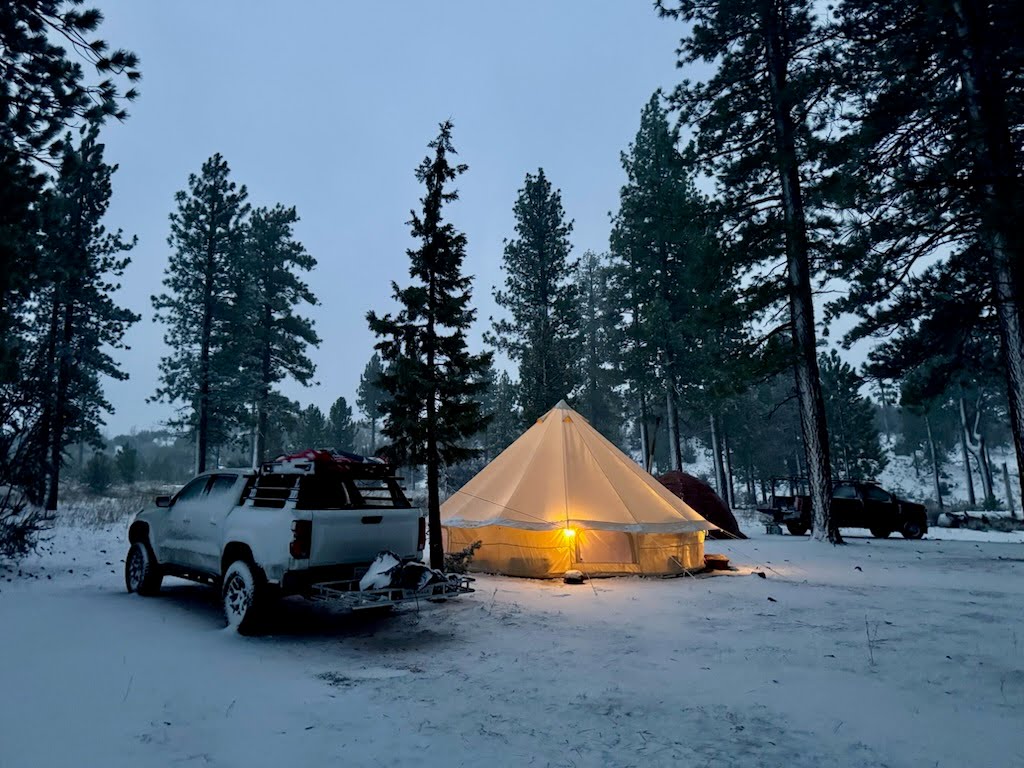
Bell tents rely on a single center pole and tension from guy ropes staked in a circle around the perimeter. As a result, the canvas drapes from the center peak down to short sidewalls (typically 1-3 feet), creating the signature cone shape. Because the entire structure depends on one pole and stake tension, setup hardware weighs significantly less.
Consequently, the rectangular floor plan of a wall tent allows you to push furniture, cots, and storage against the walls without losing headroom. In a bell tent, the sloping walls mean anything taller than 2 feet needs to sit toward the center. For a 16-foot bell tent with 201 square feet of total floor area, only about 50% provides full standing height. A comparably sized wall tent (13×16) gives you standing height across roughly 90% of its 208 square feet.
Setup Time and Portability
Bell tent camping wins the portability contest by a wide margin. One person sets up a bell tent in 15-20 minutes: spread the canvas, insert the center pole, walk the perimeter staking guy ropes, and tension the walls. The entire package (tent, pole, stakes, bag) weighs 45-65 lbs and fits in the back of an SUV or on a roof rack.
Wall tent camping requires two people and 45-90 minutes for a typical setup. First, you need to assemble the external frame (connecting ridge poles, eave poles, and uprights), drape the canvas over the frame, then stake out the base and guy lines. Including stove pipe assembly, floor installation, and interior arrangement, experienced crews report 2-3 hours for a complete camp. The frame alone weighs 40-60 lbs, and the full kit (tent, frame, stakes, stove) fills 60% of a short truck bed.
For overlanders who move camp every few days, this weight and setup difference matters. If you establish a base camp for a week-long hunting trip and stay put, the extra setup time pays off in livability. As a result, your trip style determines which trade-off works in your favor.
Weather Performance: Wind, Rain, and Snow
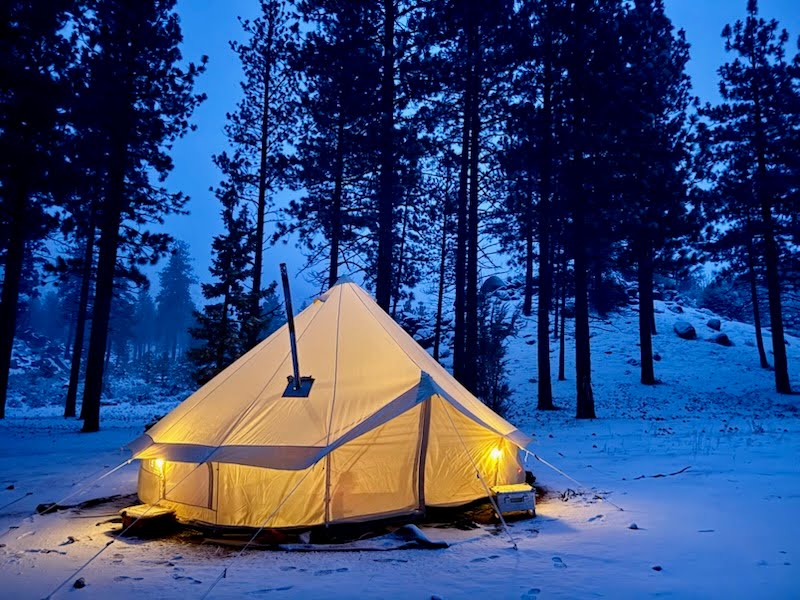
Once your tent is standing, the next question is how it handles weather. The conical shape of a bell tent deflects wind more effectively than the flat sidewalls of a wall tent. Because of this shape, wind flows around and over the cone rather than pushing against a flat surface, which is why bell tents have been used in exposed, windy environments for over 150 years. On the other hand, wall tents with flat vertical sides act like sails in strong gusts and need additional guy ropes and stakes for high-wind stability.
Both styles handle rain well when properly set up, since canvas naturally swells when wet and becomes more water-resistant. Still, the steep pitch of a bell tent sheds water and snow faster than the lower-angle roof of a wall tent. Additionally, wall tents face real snow load problems in winter because wet, heavy snow accumulates on the flatter roof sections and requires manual clearing to prevent collapse.
However, wall tents outperform bell tents for heat retention. The rectangular shape with higher sidewalls creates a more efficient volume-to-surface-area ratio for wood stove heating. Additionally, the vertical walls allow you to add insulation liners from floor to ceiling, while bell tent liners lose effectiveness along the angled walls near the ground.
Interior Space and Livability
Livability separates these two shelters more than any spec sheet reveals. A 13×16 wall tent gives you 208 square feet of rectangular floor space with 4-5 foot sidewalls. You stand upright everywhere except the last 6 inches near the walls. Therefore, furniture placement follows a logical grid: cots line both long walls, a table goes in the middle, and the stove sits near the door with the pipe exiting through the stove jack.
A 16-foot bell tent provides roughly 201 square feet of circular floor space, but the conical shape forces a different layout. Since the center pole occupies the middle of the tent, so you arrange sleeping and living areas in a ring around it. Cots and tall furniture only work within 4-5 feet of the center pole where headroom allows. Beyond this radius, the sloping walls limit you to low-profile items like sleeping pads, storage bins, and shoes.
Solo or couple campers find this circular layout works fine and even feels cozy. However, groups of 4-6 sharing a hunting camp with gear, wet clothing to dry, and cooking equipment need the wall tent’s noticeably greater functional space. Specifically, a rectangular floor plan creates natural divisions for sleeping, cooking, and gear storage zones.
Heating and Wood Stove Use
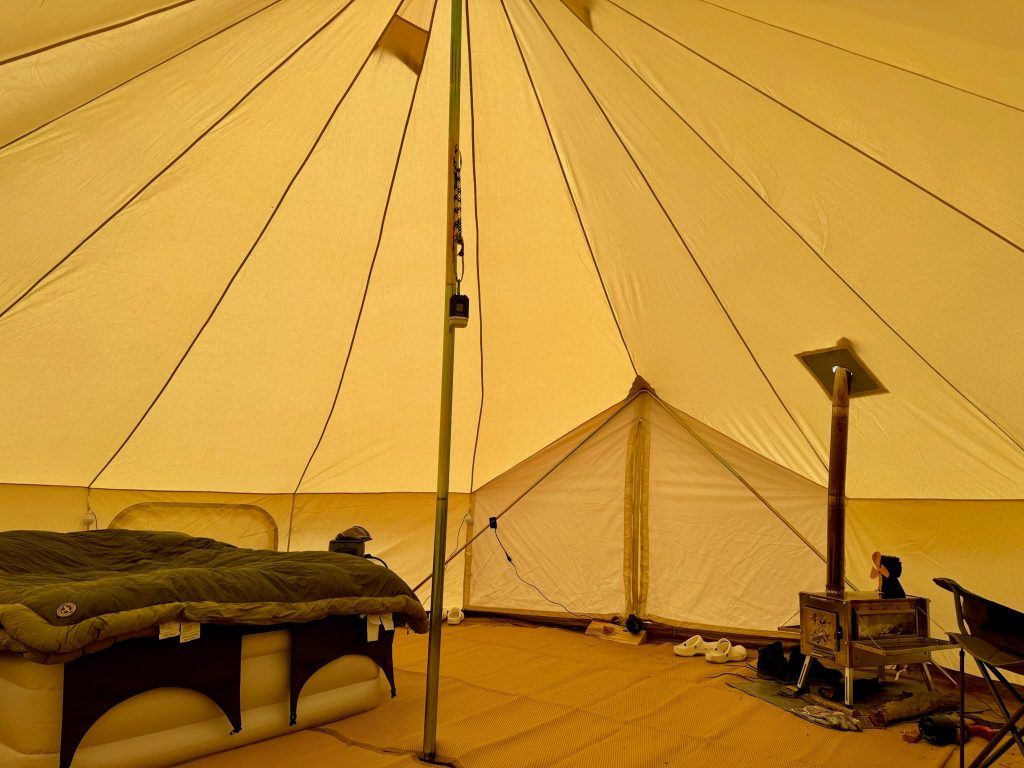
Both wall tents and bell tents accept wood stoves through stove jacks, but wall tent camping offers a more practical stove setup. In a wall tent, the stove typically sits near the front door on one side. The pipe exits through a stove jack in the wall or roof, keeping the hot pipe away from the center of the living space. Notably, Elk Mountain includes a stove jack on every wall tent they sell.
In a bell tent, the stove needs to sit off-center (usually near the door) because the center pole occupies the prime location. The pipe angles up and exits through a stove jack in the canvas wall. Since the walls slope inward, pipe routing requires more planning to maintain safe clearances from the canvas. Elk Mountain’s Yukon Bell Tent includes a built-in stove jack for this purpose.
For overnight heating, experienced wall tent campers report holding comfortable temperatures (60-70°F) with a single load of coal burning 6-8 hours. The rectangular volume heats more evenly because the stove sits against a wall and radiates across the space. In contrast, bell tents lose some heating efficiency because warm air rises to the peak (10-11 feet up) and the conical shape creates a larger volume of air per square foot of floor space.
Featured at Elk Mountain Tents
Yukon Bell Tent Starting at $745
The Yukon Bell Tent comes in 13, 16, and 20 ft diameters with 4 screened windows, built-in stove jack, and the same tear-resistant polyester canvas as Elk Mountain’s wall tents. Sets up in under 20 minutes.
Best Uses for Each Tent Style
Wall tent camping excels in three specific scenarios. First, week-long (or longer) hunting base camps where you need room for 2-4 people, a stove, cooking equipment, and gear storage. Second, semi-permanent overlanding camps where you stay in one location and want cabin-like comfort. Third, cold-weather camping where wood stove heating efficiency matters. If your rig includes a trailer and you plan to set up once per trip, the wall tent delivers the most livable shelter per dollar.
Bell tent camping serves different needs. For instance, bell tent glamping operations choose bell tents because guests find the circular, open interior more visually appealing. Similarly, weekend car campers benefit from the 15-minute solo setup and lighter packed weight. Festival and event camping works better with a bell tent because you move in and out of the tent throughout the day rather than living inside it. Also, families with young children appreciate the single-room, open-floor layout where everyone sleeps in a circle around the center pole.
Some overlanders own both. They bring the wall tent for fall and winter hunting seasons and switch to the bell tent for summer car camping. Because both Elk Mountain options use the same polyester canvas, maintenance routines stay identical regardless of which tent you pack.
Canvas Materials: Cotton vs Polyester
Traditional canvas tents use 100% cotton duck canvas, typically in 8 oz to 12 oz weights. Cotton breathes well, absorbs and releases moisture naturally, and develops a tighter weave when wet (improving waterproofing over time). However, cotton canvas must dry completely before storage or mold sets in fast. It weighs 30-50% more than polyester, shrinks after the first few wettings, and requires re-waterproofing treatments every 1-2 seasons.
Elk Mountain Tents uses a proprietary polyester blend they call Poly Shield. This material weighs less than cotton canvas, resists tearing at higher force levels, and does not absorb water. Consequently, you never need to season a new tent (cotton canvas requires a break-in process before first use) and mildew risk drops to near zero. The trade-off is breathability: polyester does not wick moisture the way cotton does, so ventilation through windows and vents becomes more important.
Polycotton blends (a 65/35 polyester-cotton mix) represent a middle ground. They breathe better than 100% polyester while weighing less than 100% cotton. Still, they retain some of cotton’s mold susceptibility and need periodic re-waterproofing. For the canvas tent comparison, material choice affects weight, maintenance, and long-term durability regardless of whether you pick a wall tent or bell tent shape.
Side-by-Side Comparison: Which Should You Pick?
The wall tent vs bell tent choice reduces to three questions. How long do you stay in one spot? A wall tent rewards you with livability on trips of 3+ days where the setup cost spreads across multiple nights. Conversely, a bell tent rewards you on 1-2 night trips where fast setup and teardown matter more than interior space.
How many people share the shelter? With 3-6 people and gear, the wall tent’s rectangular layout creates 30-40% more functional space. Solo campers or couples, on the other hand, get more than enough room from a bell tent and save $300-$750.
How cold does it get? Both accept wood stoves, but the wall tent holds heat more efficiently in sub-freezing conditions because of its lower ceiling volume and vertical walls. For three-season canvas tent camping in moderate weather, the bell tent performs equally well and sets up in a fraction of the time.
Pros and Cons
Wall Tent Pros
- 90% usable standing space vs 50% in a bell tent
- Rectangular layout fits standard furniture (cots, tables, shelves)
- Superior wood stove heating efficiency in cold weather
- 4-5 ft sidewalls allow wall-to-wall insulation liners
- Multiple screened windows (4-6) provide cross-ventilation
- Proven in decades of outfitter and hunting camp use
Wall Tent Cons
- 75-110 lbs packed weight requires a truck or trailer
- 45-90 minute setup needs 2 people minimum
- External frame adds bulk (fills 60% of a short truck bed)
- Flat sidewalls catch wind; extra guy ropes needed in gusts
- Higher price point ($1,050-$1,749 for quality models)
Bell Tent Pros
- 15-20 minute setup by one person
- 45-65 lbs packed weight fits in an SUV
- Conical shape handles high winds better than flat walls
- Steep pitch sheds rain and snow quickly
- Lower starting price ($745-$995 for quality models)
- Visually appealing circular interior for glamping
Bell Tent Cons
- Center pole limits furniture placement options
- Less efficient wood stove heating (warm air rises to 10+ ft peak)
- Sloped walls reduce functional storage along perimeter
- Guy ropes spread wide; needs more campsite footprint
Final Verdict
The wall tent vs bell tent decision is a question of trade-offs, not quality. These shelters share 10-20 year lifespans with proper care. They handle three-season camping with confidence, and they support wood stove heating for cold-weather trips.
If you hunt, overland to remote base camps, or camp in groups of 3-6, the wall tent is the right choice. The extra setup time and weight are worth it because you get a shelter with full standing height everywhere, efficient stove heating, and room to live comfortably for a week or more. Elk Mountain’s canvas wall tent offers this at a competitive price point with polyester canvas, which eliminates the mold and seasoning hassles of traditional cotton.
If you car camp on weekends, run a bell tent glamping rental, or value fast solo setup, the bell tent fits your needs at a lower price point. You give up interior efficiency in exchange for portability and simplicity. Elk Mountain’s Yukon Bell Tent gives you the same polyester canvas durability in a lighter, faster-pitching package.
For overlanders who do both styles of camping (and many do), owning one of each from the same manufacturer simplifies maintenance and ensures consistent canvas quality across your shelter kit. The wall tent handles your fall hunting trips, and the bell tent covers summer weekends. Total investment for both starts around $1,795 at Elk Mountain, which is less than a single premium cotton wall tent from most competitors.
Featured at Elk Mountain Tents
Ready to Choose Your Canvas Shelter?
Browse Elk Mountain’s full lineup of wall tents and bell tents. Polyester canvas, included stove jacks, and direct-to-consumer pricing with no middleman markup.
Frequently Asked Questions
Is a bell tent or wall tent better for winter camping?
A wall tent performs better in winter because its rectangular shape and vertical sidewalls create more efficient wood stove heating. The lower ceiling volume (compared to a bell tent’s tall center peak) keeps warm air closer to the living space. Wall tents also accept full-height insulation liners more effectively than the angled walls of a bell tent.
How long does a wall tent last?
A quality wall tent lasts 10-20 years with proper care. The biggest lifespan factors are drying the tent completely before storage, avoiding prolonged UV exposure, and re-waterproofing cotton canvas every 1-2 seasons. However, polyester canvas tents (like Elk Mountain’s Poly Shield models) skip the re-waterproofing requirement and resist mildew, which extends their functional lifespan.
Do you need two people to set up a wall tent?
Yes, wall tent camping typically requires at least two people for setup. The external frame assembly and canvas draping are difficult for one person to manage safely, especially in wind. Smaller wall tents (10×12 or under) are possible solo, but manufacturers recommend two people for anything 13×13 and above. Bell tents, by contrast, are designed for solo setup in 15-20 minutes.
Are bell tents good for hunting camps?
Bell tents work for small hunting camps (1-2 people) in moderate weather. However, most hunting outfitters prefer wall tents for groups because the rectangular layout fits more cots and gear, the sidewalls support better insulation, and the stove heating efficiency is higher. For a solo archery hunter who moves camp frequently, a bell tent offers a lighter, faster-pitching alternative.
What size wall tent do I need for 4 people?
A 13×16 wall tent (208 sq ft) comfortably fits 4 people on cots with room for a stove, table, and gear storage. Experienced wall tent users consistently recommend buying one size larger than you think you need. A 13×20 (260 sq ft) gives 4 people room to spread out and dry gear without feeling cramped during a multi-day trip.
How much does a bell tent weigh compared to a wall tent?
A mid-size bell tent (16 ft diameter) weighs 45-65 lbs packed, including the center pole and stakes. By comparison, a wall tent (13×16) weighs 75-110 lbs with the external frame included. The frame accounts for most of the extra weight. This 30-50% weight difference makes bell tent glamping and car camping practical from an SUV, while wall tents typically need a truck bed or trailer.