


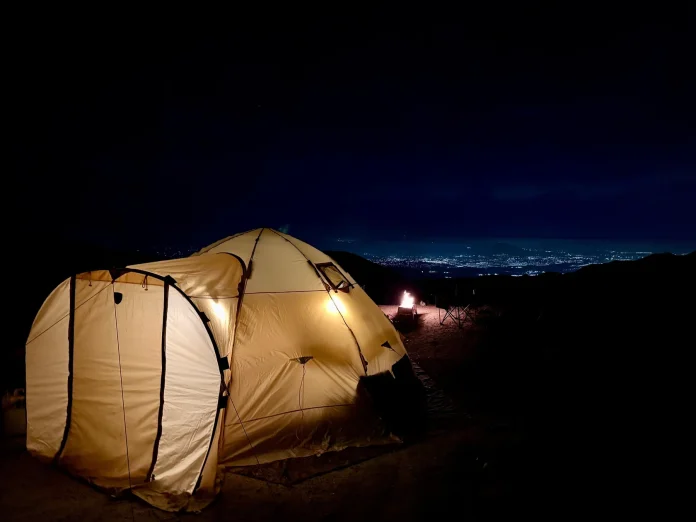

Arriving after sunset turns a ten-minute chore into a guessing game. Because you miss rocks, roots, and slopes in the dark, tired hands make slow, sloppy choices. This guide gives you a routine to pitch camp after dark with the Bereg UP-5, so a late arrival ends with a warm tent instead of a long argument over where the stakes went.
Experienced campers treat the first ten minutes after arrival as the whole job: shelter first, warmth second, everything else afterward. This routine follows the same order, and it also works the UP-5’s specs into each step, so you know what to carry, where to stake, and when to light the stove. Rehearse it once at home, because a routine you know by feel beats one you read by headlamp.
Quick Facts:
- Topic: How to pitch camp after dark with the Bereg UP-5
- Tent: Bereg UP-5 dome-umbrella hot tent
- Weight: 64 lb
- Size: 14.4 by 14.4 by 7.2 ft (L x W x H)
- Capacity: 3 to 5 with stove and beds, up to 11 in sleeping bags
- Frame: Built-in 0.4 in aluminum, aircraft alloy B95T1
- Setup time: About 1 minute
- Price: $2,423.00 at Bereg Canada
- Verdict: A built-in frame suits late arrivals, but the routine you rehearse matters more than the tent.
8 min read
In This Guide
- How to Pitch Camp After Dark With the UP-5
- Bereg UP-5 Specs for Late Arrivals
- Pitch Camp After Dark: Prepare Before You Leave
- Campsite Selection in the Dark
- Pitch the UP-5 Step by Step in the Dark
- Stove and Safety Checks for a Late Camp
- Bereg UP-5 vs. UP-7 After Dark
- Final Verdict: Is the UP-5 Good for Night Setup?
- FAQ: Pitch Camp After Dark
How to Pitch Camp After Dark With the UP-5
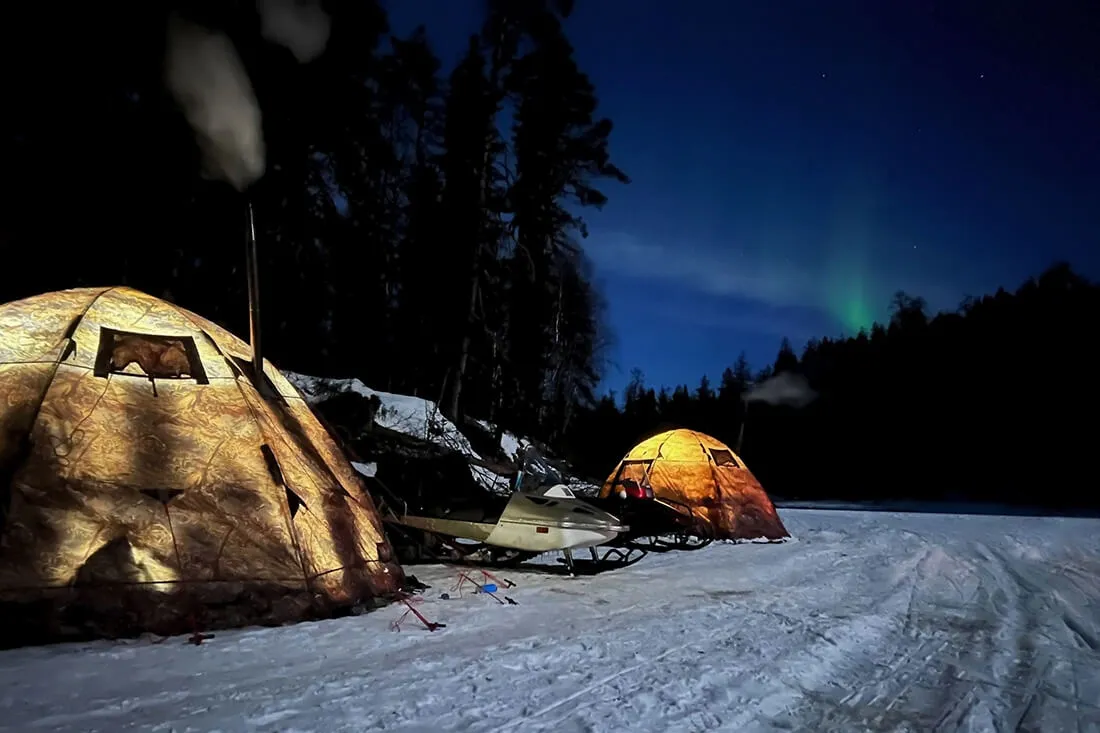
First, to pitch camp after dark, you need three things: a routine, light you control, and a tent going up fast. The Bereg UP-5 supplies the last one, since its built-in frame opens like an umbrella. However, the first two come from you, and they decide whether setup takes minutes or an hour.
Darkness changes your priorities. Because you see less, you should work in a fixed order and leave every optional job until morning. Therefore, this guide ranks tasks by urgency: shelter first, warmth second, cooking third.
You’ll get a prep list for home, a method for reading a site by headlamp, and a numbered pitching order for the UP-5. Then we cover stove safety at night, since a hot tent adds risk when you’re tired. Finally, we compare the UP-5 with the UP-7 for larger groups.
Specifically, the UP-5 weighs 64 lb, so plan to carry it in two trips or with help. Also, keep the packed tent near the vehicle door, because you’ll reach for it first.
Bereg UP-5 Specs for Late Arrivals
| Specification | Details |
|---|---|
| Weight | 64 lb |
| Packed size | 51 x 12 x 12 in |
| Dimensions (L x W x H) | 14.4 x 14.4 x 7.2 ft |
| Useful area | 141 sq ft |
| Capacity | 3 to 5 with stove and beds, up to 11 in sleeping bags |
| Frame | 0.4 in aluminum rod, aircraft alloy B95T1 |
| Outer fly | Oxford 300, PU 4000 |
| Inner fly | Oxford 210, PU 2000, removable |
| Entrances | 2 zippered, with mosquito nets |
| Floor | Removable zippered spring-summer floor |
| Price | $2,423.00 |
Three details matter most after dark. First, the built-in frame means you never sort poles by headlamp. Second, two zippered entrances let you load gear through one door while the other stays closed. Third, reflective tie-down points catch light, so you find each guy line quickly.
The frame opens in about one minute, which delivers fast setup. Even so, speed alone doesn’t make a routine, because a quick frame still needs good anchors and a flat spot.
Buy Direct From Bereg Canada
Bereg UP-5 Hot Tent
A 14.4 by 14.4 ft double-wall tent with a built-in aluminum frame and two entrances.
Pitch Camp After Dark: Prepare Before You Leave

Most late-night trouble starts at home, because nobody rehearsed the routine. Specifically, pitch the tent once in daylight and time each step. Then coil the guy lines so they come out in order.
Stage a Night Pitching Kit
Pack one labeled bag with everything you need in the first ten minutes. Load it last, because it should come out first. Also keep the tent bag where you reach it without unloading anything else.
- Mallet or heavy rock for driving stakes
- Spare stakes and the guy-line set
- Work gloves and a spare lamp
- Carbon monoxide alarm and fresh batteries
Also assign jobs before you arrive. For example, one person holds the light and checks the ground, while another carries the tent bag and the stake bag. Because everyone knows the plan, you spend less time talking in the dark and more time working.
Choose Lights That Preserve Night Vision
Use a lamp with a red mode for close work, since red light keeps your eyes adjusted. Keep white light for reading terrain, and aim it away from other campers. In addition, hang a lantern from the vehicle rack so both hands stay free.
Campsite Selection in the Dark

Choose the spot before you unload. First, park, switch off the main beams, and give your eyes a few minutes to adjust. Next, decide where the vehicle goes: park so the body blocks the wind, but leave about six feet between the bumper and the tent, because guy lines need room. Also point the door away from the road, since passing headlights sweep the camp.
Read the Ground by Headlamp
Sweep the area slowly with your light held low, because low light throws shadows across bumps and holes. Look for roots, rocks, ant mounds, and standing water. Then walk the footprint on foot, since your boots find slopes your eyes miss.
Pitch on Flat, Dry Ground First
A 14.4 by 14.4 ft footprint needs a flat patch about 17 by 17 ft, including room for stakes and guy lines. Avoid dry washes, low bowls, and the base of slopes, because cold air and runoff collect there. Meanwhile, check overhead for dead branches before you commit.
Safety note: Check overhead before you stake a single corner. A dead branch you miss in the dark becomes a hazard in the first gust.
Pitch the UP-5 Step by Step in the Dark
The UP-5’s built-in frame opens in about one minute. Still, the order matters more than the speed, so follow these steps every time. New to hot tents? Start with our hot tent camping beginner’s guide first.
- Park with your headlights on the pitch site, then set the packed tent where the door will sit.
- Weigh the packed tent with a pack, because a gust catches an open frame.
- Open the frame, lock it, and stand with your back to the wind.
- Stake the four floor corners first, then the skirt loops.
- Clip the guy lines to the reflective tie-down points and snug each one.
- Carry bedding in first, then close both doors.
- Walk the perimeter, tug each stake, and check each zipper.
Finish the pitch before you cook, unload the whole vehicle, or set up chairs. Afterward, dinner moves at your pace, because shelter already stands. Also, a finished pitch lets everyone warm up and rest, which keeps tempers calm when the group is tired and hungry. Our year-round vehicle camping guide shows the same quick pitch beside a rig.
Stove and Safety Checks for a Late Camp

Before you think about heat, secure the tent against wind. Bereg adds a protective skirt with stake loops, so stake the skirt in addition to the corners. Since night winds shift without warning, a fully anchored tent protects you better than a fast one.
Specifically, Bereg designed the UP-5 for wood stoves, with a heat-resistant stove jack and a removable heat-resistant wall. Notably, the company recommends Atom or Fireplace (Large), Vector, and Satellite stoves, and it sells them separately.
Light the stove only after the tent stands fully staked, because a tired crew rushes stove work. Keep the fire small, then check the pipe clearance with your lamp. Finally, let the fire burn down before you sleep. Keep a small extinguisher or a lidded bucket of sand near the door, because a stove fire demands a fast response.
Safety note: Fit a carbon monoxide alarm, keep the pipe clear of the fabric, and never leave a burning stove unattended. If you feel dizzy or get a headache, leave the tent and breathe fresh air at once.
Built for Small Groups
Room for 3 to 5 With a Stove
Check current pricing and stock for the UP-5 at Bereg Canada.
Bereg UP-5 vs. UP-7 After Dark
The UP-5 weighs 64 lb and covers 14.4 by 14.4 ft, compared to the UP-7’s 78.5 lb and 16.4 by 16.4 ft. In the dark, a smaller tent means less ground to stake. However, both models open in about one minute, so speed comes down to your routine.
Specifically, the UP-5 suits groups of three to five, while the UP-7 suits five to seven. For example, a couple arriving late gains little from the larger tent. Our UP-5 vs. UP-7 comparison covers the decision in more depth, including weight and space.
Final Verdict: Is the UP-5 Good for Night Setup?
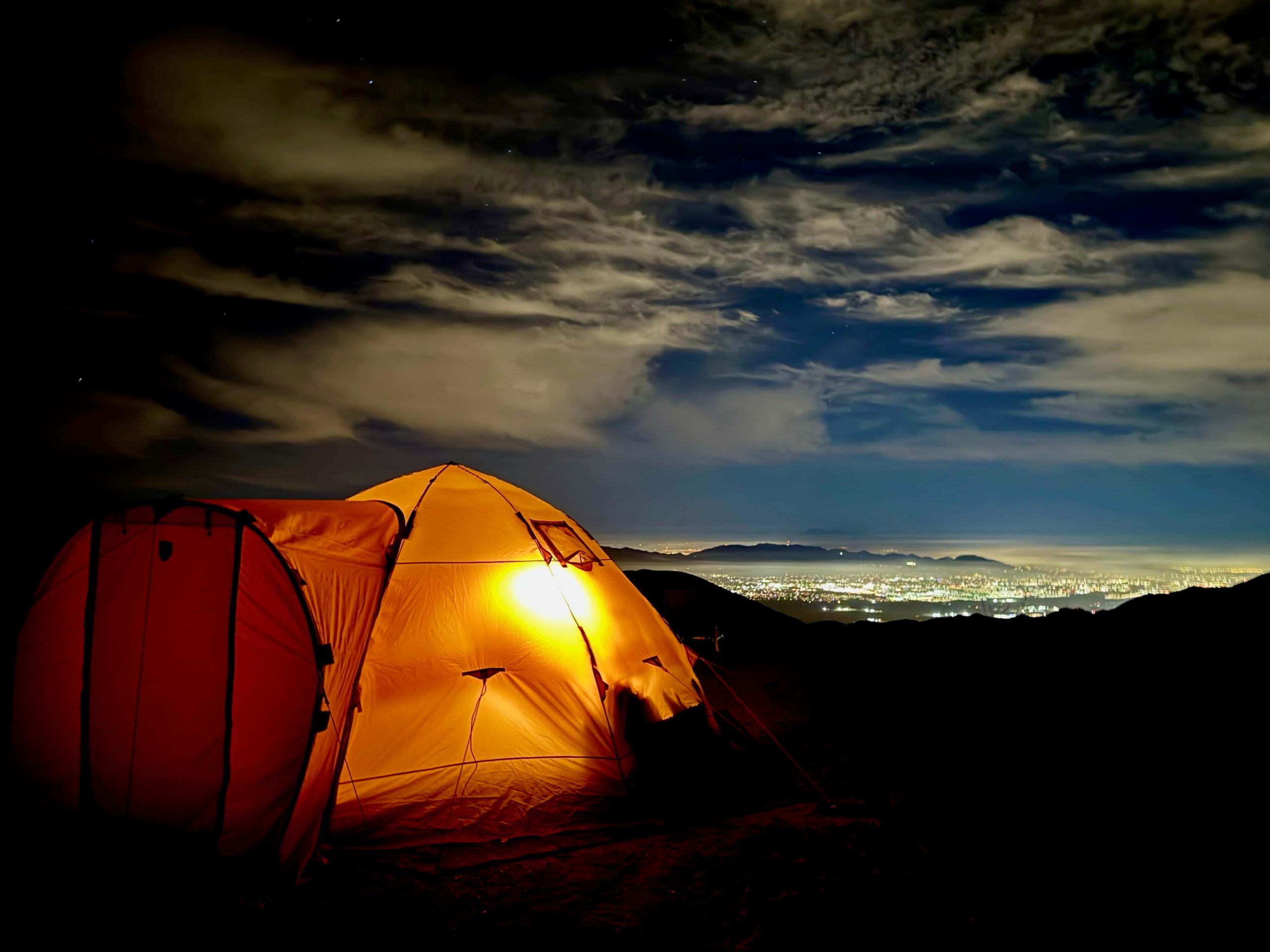
The Bereg UP-5 suits couples and small groups who often arrive late, especially those who want a built-in frame and no loose poles. Moreover, its one-minute setup, 14.4 by 14.4 ft footprint, and reflective tie-down points support a routine to pitch camp after dark. Therefore, paired with a rehearsed order, the tent delivers fast setup when you’re tired.
However, the UP-5 has limits. Specifically, at 64 lb it needs a vehicle or a second person, and the $2,423.00 price sits above casual weekend budgets. Also, stoves sell separately, so budget for one if you want heat.
Specifically, the UP-5 makes sense on value when you camp in cold or changing weather and want a stove-ready shelter. Its removable floor, two entrances, and mini vestibule connector justify the price for this use, while summer-only campers pay for features they rarely use.
Our recommendation: buy the UP-5 for small-group trips, rehearse the pitch at home first, and keep the kit bag within reach for late arrivals. For groups of five or more, look at the Bereg UP-7 instead. Check Bereg Canada’s UP-5 page for current stock and pricing before you order.
Ready to Buy?
Make Your Next Late Arrival Easy
Confirm stock, colors, and accessories like the insulated floor before you order.
FAQ: Pitch Camp After Dark
How long does it take to pitch camp after dark?
The UP-5 frame opens in about one minute. However, staking, guy lines, and gear take longer, so time your home rehearsal to set your own baseline.
Should you set up the tent or cook first?
Set up the tent first. Shelter protects you from wind and cold, while dinner waits without harm. Then light the stove and cook.
What light works best for camp setup?
Use a lamp with white and red modes. White light reads terrain, while red light preserves night vision for close work such as clipping lines.
Is it safe to run the stove right after arriving?
Wait until the tent stands fully staked. Bereg designed the UP-5 for wood stoves but sells them separately, so check the pipe, the heat-resistant wall, and your carbon monoxide alarm before you light it. Also keep the fire small and stay awake while it burns.
Just so you know, some of the cool stuff we mention comes with affiliate links, meaning we earn a commission if you buy (no extra charge to you!). Plus, we occasionally feature sponsored content, but rest assured, we only shout out products we genuinely stand behind.