


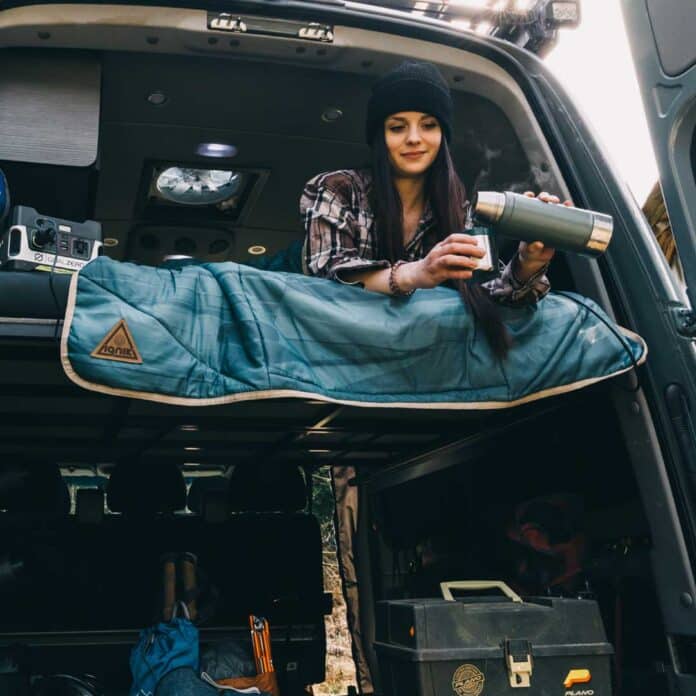

The temperature drops to 18°F around 2 a.m., and your sleeping bag has lost its fight. You zip tighter, curl up, and count the hours until sunrise. Most cold-weather campers know this night, and it often ends with someone running the engine for heat or leaving camp early. Better options exist, and many of them run on the same 12V battery already powering your fridge.
I’ve been camping long enough that I plan camp heat around real limits like battery size, cargo space, and safety. In this guide, I compare a heated bed cover, a heated blanket, rechargeable warmers, and combustion heaters so you know what each option costs in watts and where each one fits.
Quick Facts:
- Topic: Staying warm at camp with 12V heated gear
- Heated bed cover: Flipside single, $199.95, 48W max
- Double cover: Flipside Double, $379.95, 96W max per side
- Heated blanket: Topside, $249.95, 48W max
- Warmers: Ripple 4-pack, $129.95, 3 hours on High
- Power need: A 12V battery, sold separately
- Sponsor: 4xSolar
- Best for: Cold-weather car campers and overlanders
7 min read
In This Guide
- Why 12V Heat Beats a Cold Night at Camp
- Heated Bed Cover Options at a Glance
- Flipside Heated Bed Cover: Heat Under You
- Topside Heated Blanket: Heat on Top
- Battery Math for an Overnight Heated Bed Cover
- Ripple Warmers: Heat in Your Pockets
- Stoves and Heaters: Where Combustion Fits
- Final Verdict: Build Your Camp Warmth Plan
- Camp Heating FAQ
Why 12V Heat Beats a Cold Night at Camp
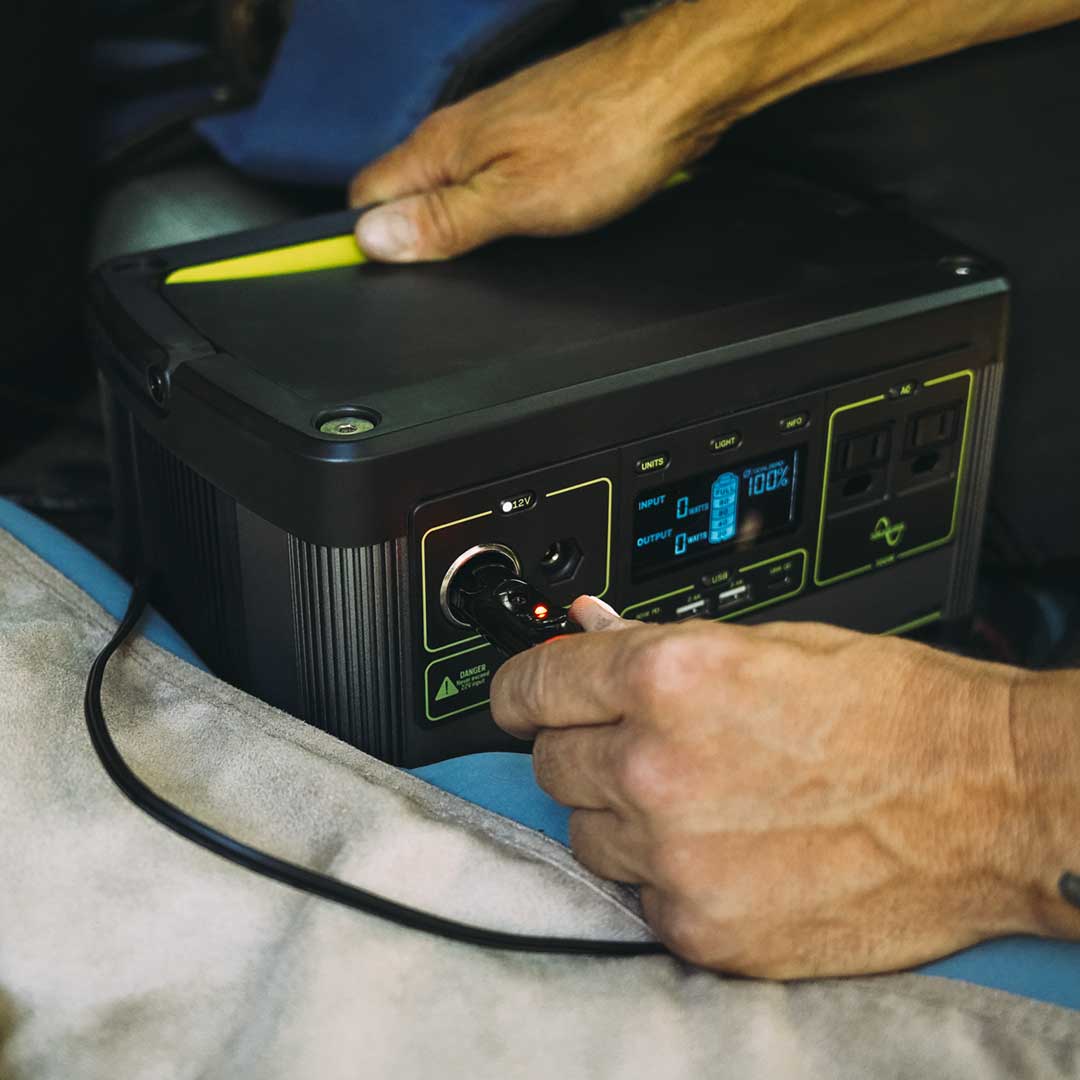
Heating the whole tent is hard work, but heating your body is easy. A heated bed cover warms the small space around you, so it needs far less energy than a space heater. Most 12V heated blanket models draw 40 to 60 watts which puts them in the same range as a small fridge compressor.
The trade-off is power. Every watt comes from a battery, so planning matters more than gear choice. Our guide to keeping your Jeep battery alive at camp covers the basics, and the 12V fridge sizing guide shows how to budget amp-hours before you add a heater.
Heated Bed Cover Options at a Glance
4xSolar sells three heated covers and blankets, plus a warmer set. Here is how the specs compare, based on the product pages.
| Product | Price | Max Heat Output | Fits |
|---|---|---|---|
| Flipside Heated Bed Cover | $199.95 | 48W | 1 person, 25 x 72 in |
| Flipside Heated Bed Cover Double | $379.95 | 96W per side | 2 people |
| Topside Heated Blanket | $249.95 | 48W | 1 person |
| Ripple Hand Warmers, 4-pack | $129.95 | Not listed | Pockets and gloves |
All three covers need a 12V battery, which 4xSolar does not include. Each ships with a vehicle adapter, and 4xSolar notes none of them works with the Anker Solix C1000.
Buy Direct From 4xSolar
Flipside Heated Bed Cover for One
A 25 x 72 inch heated cover with a smart controller and built-in safety sensors. $199.95 at 4xSolar.
Flipside Heated Bed Cover: Heat Under You
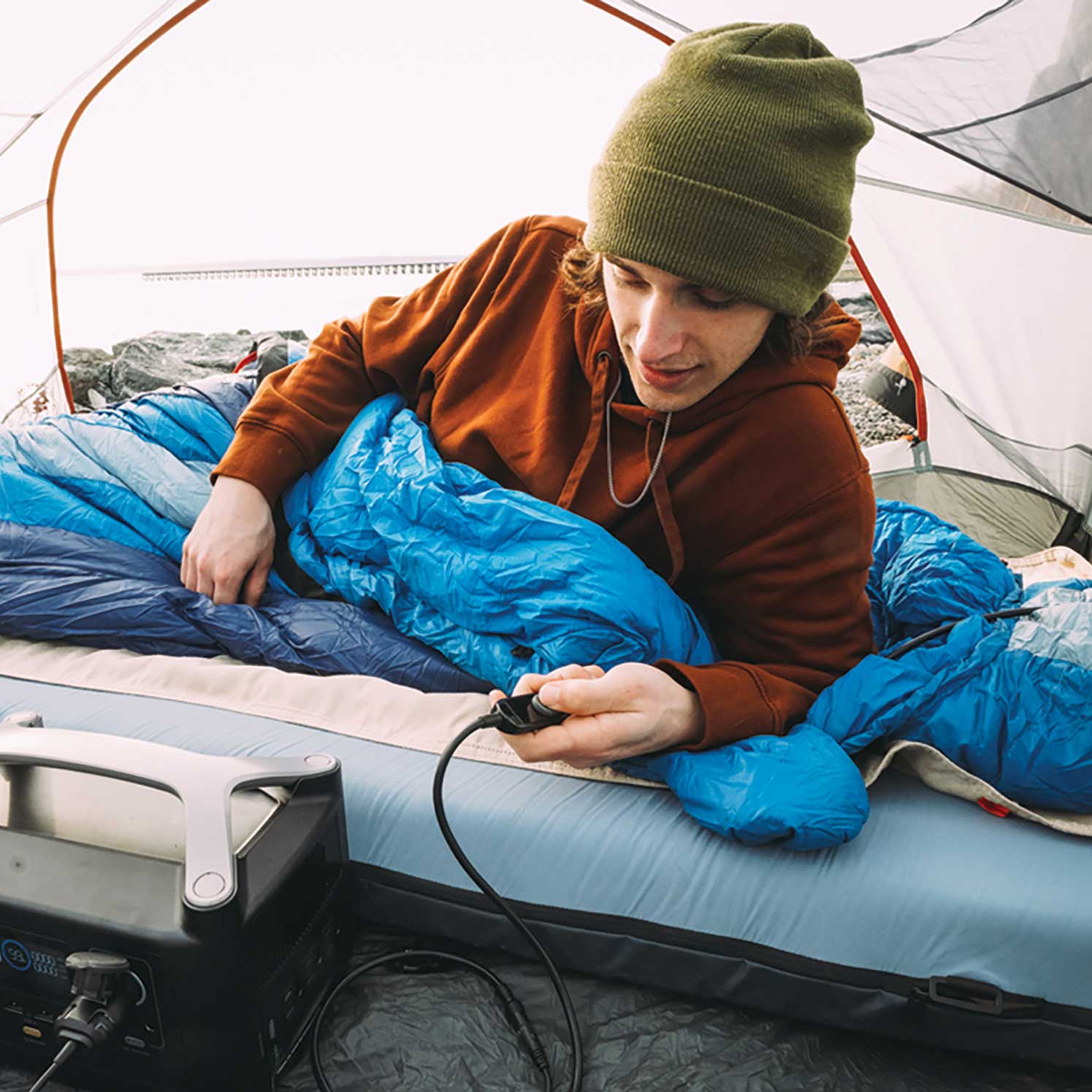
Placement decides how well this gear works. Heat rises, so a pad under your sleeping bag warms you through the bag floor, where insulation compresses and loses its loft. Meanwhile, a cover on top loses warmth to the cold air above it.
The Flipside Heated Bed Cover fits one person at 25 x 72 inches, according to 4xSolar. It draws up to 48W, and its controller remembers your settings. Also, 4xSolar lists a recycled polyester shell and built-in safety sensors. The page does not list temperatures or amp draw, so check with 4xSolar before you buy.
For couples, the Flipside Heated Bed Cover Double joins two covers with separate controllers, so each sleeper picks a heat level. It reaches 96W per side and costs $379.95. Expect a larger load too, since both sides together approach 192W at full heat by my math.
Topside Heated Blanket: Heat on Top
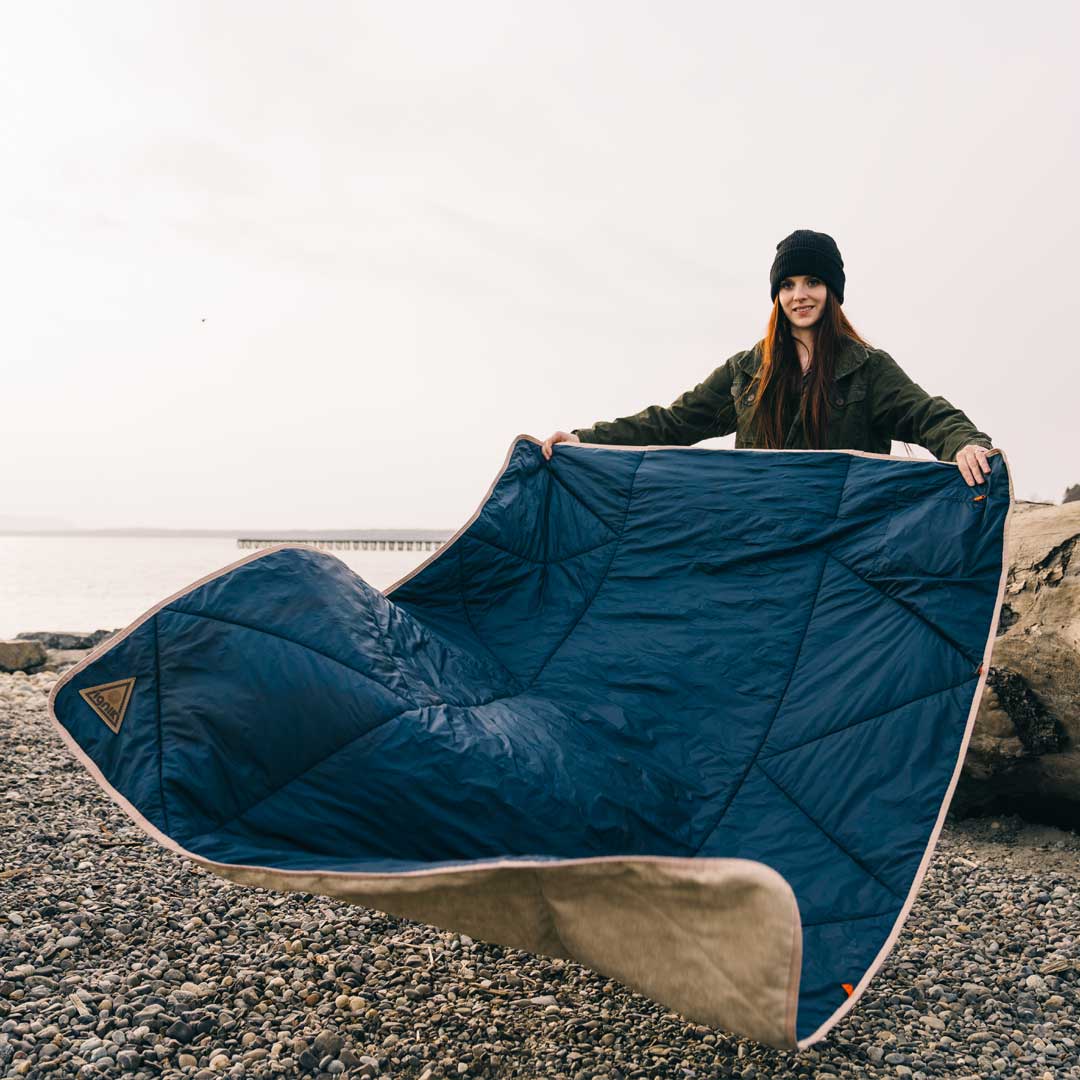
The Topside Heated Blanket suits campers who like a warm layer over their chest and legs. It also costs $249.95 and shares the 48W maximum with the single Flipside. Its controller likewise remembers settings and includes safety sensors.
Which one should you buy? For most sleepers, I’d start with the heated bed cover, since heat under you fights the cold ground. Add the Topside blanket if you sleep cold or camp in deep winter. In truck beds and rooftop tents, thin mattresses make the under-body layer especially valuable.
Layer Your Warmth
Topside Heated Blanket
A 48W 12V blanket with a smart controller with memory and built-in safety sensors. $249.95 at 4xSolar.
Battery Math for an Overnight Heated Bed Cover
Every 12V cover or blanket follows the same rule: watts divided by 12 gives amps. A 48W cover draws about 4 amps at full heat, and the double draws about 8 amps per side. These figures are my estimates, since 4xSolar lists watts but not amps.
Next, multiply by hours. Eight hours at full heat uses roughly 384Wh, or 32Ah, for one cover. In practice, the controller cycles the heat, so real use runs lower. You probably need at least 500Wh with 4A output for heated blankets, which gives you a safe margin.
| Setup | Full-Heat Draw (Estimate) | 8-Hour Maximum (Estimate) |
|---|---|---|
| One 48W cover or blanket | About 4A | About 32Ah (384Wh) |
| Cover plus blanket | About 8A | About 64Ah (768Wh) |
| Flipside Double, both sides | About 16A | About 128Ah (1,536Wh) |
Never run any of these from your starter battery. A starter battery tolerates deep drains poorly, and it also needs enough charge to crank the engine at dawn. Instead, use a deep-cycle battery or a power station. Also, check your outlet limit. Many power stations cap their 12V port at 10 amps, so the Flipside Double at full heat is likely to exceed a small station’s port. Verify the rating before you plan around it, and ask 4xSolar if you’re unsure.
Solar helps during the day. A hood panel feeds the battery while you hike, and our flexible vs. rigid solar panel guide explains which type suits your rig.
Ripple Warmers: Heat in Your Pockets
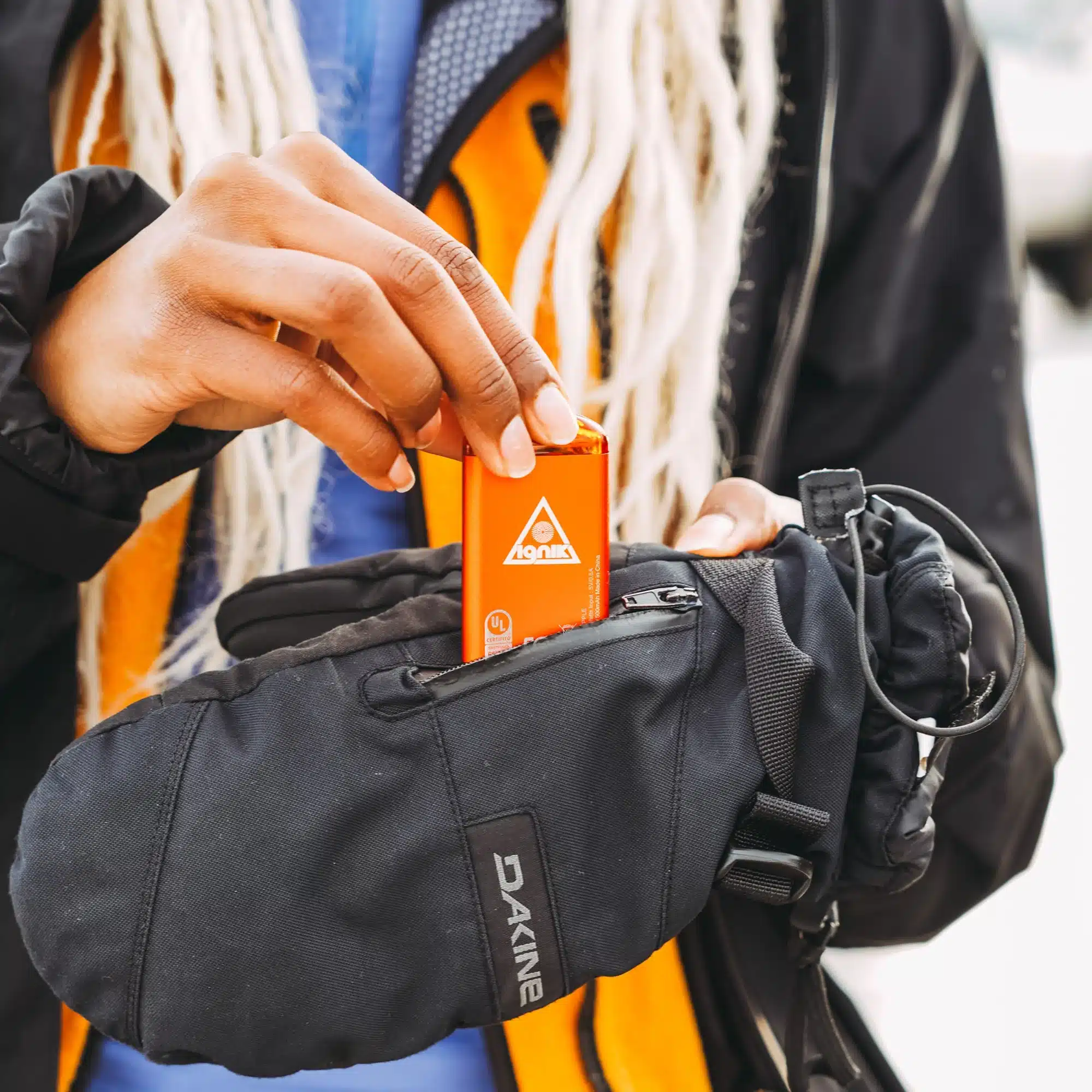
Cold hands end camp chores fast. The Ripple Rechargeable Hand Warmers 4-Pack costs $129.95 and gives each person in a small group a warmer. 4xSolar lists two modes, Turbo and Efficiency, with 3 hours of heat on High and 8 to 12 hours on Efficiency.
These hand warmers charge in a USB-C dock, which uses one cable and magnetic connections. The dock needs a 5V, 2A wall adapter. Because the set uses 5V power, you charge it from a power station USB port or a vehicle USB outlet. The warmers also carry an IPX4 water rating, so frost and splashes are fine.
Group size matters, too. Four warmers cover a couple’s hands and a pair of pockets or boots. For bigger groups, buy a second set, or rotate the warmers between chores while the dock recharges them.
Pockets, gloves, and the foot of a sleeping bag all work well. Warm hands during camp setup mean fewer rushed decisions, which matters when light fades. The page does not list battery capacity or temperatures, so treat the run times as the maker’s figures.
Warm Hands, Anywhere
Ripple Rechargeable Hand Warmers, 4-Pack
Turbo and Efficiency modes, a USB-C charging dock, and a rugged travel case. $129.95 at 4xSolar.
What a Full Cold-Weather Kit Costs
Overall, the full kit looks reasonable. The Flipside single, the Topside blanket, and one Ripple 4-pack total $579.85 at the listed prices. Then add a battery, which is the real variable. Still, you skip a fuel appliance, a tank, and most of the safety worries, so the kit suits first-time winter campers.
Layering also stretches your battery, so dress for the night. A good sleeping bag and pad hold the heat your cover makes, so the cover cycles off more often. Likewise, a dry shelter with a closed door keeps the warmth near you. Therefore, each small step trims the amps, and the amps decide how long the night lasts.
Stoves and Heaters: Where Combustion Fits
Heated gear warms people, while a stove or heater warms space. The two work best together, so think of them as different jobs rather than rivals.
A diesel heater is the most power-efficient combustion option. They need roughly 0.5 to 2 amps once lit, after an 8 to 15 amp startup surge lasting a few minutes. This load is small beside a heated blanket, though a diesel heater needs fuel and a vented exhaust.
Propane and wood stoves skip the battery entirely. However, they add moisture, fire risk, and carbon monoxide. A closed tent magnifies every one of those problems, so ventilation and a battery-powered CO alarm come first.
Fuel choice shapes the plan as well. A diesel heater sips battery power but needs a fuel source, an exhaust line, and an intake. Propane heaters are simpler, but most rely on ventilation you control. Whatever you pick, read the manual, and test the setup at home before a cold trip.
Safety first: Carbon monoxide is invisible and odorless. Never sleep with an unvented combustion heater running, and keep a working CO alarm inside your shelter. Keep cords clear of sharp edges, and never fold or cover the gear while it heats.
My approach is simple. Run the heated cover for sleep, use the warmers during the day, and light a vented heater only while you’re awake and alert. As a result, you never depend on one heat source, and you shorten the hours a fuel appliance runs.
Final Verdict: Build Your Camp Warmth Plan
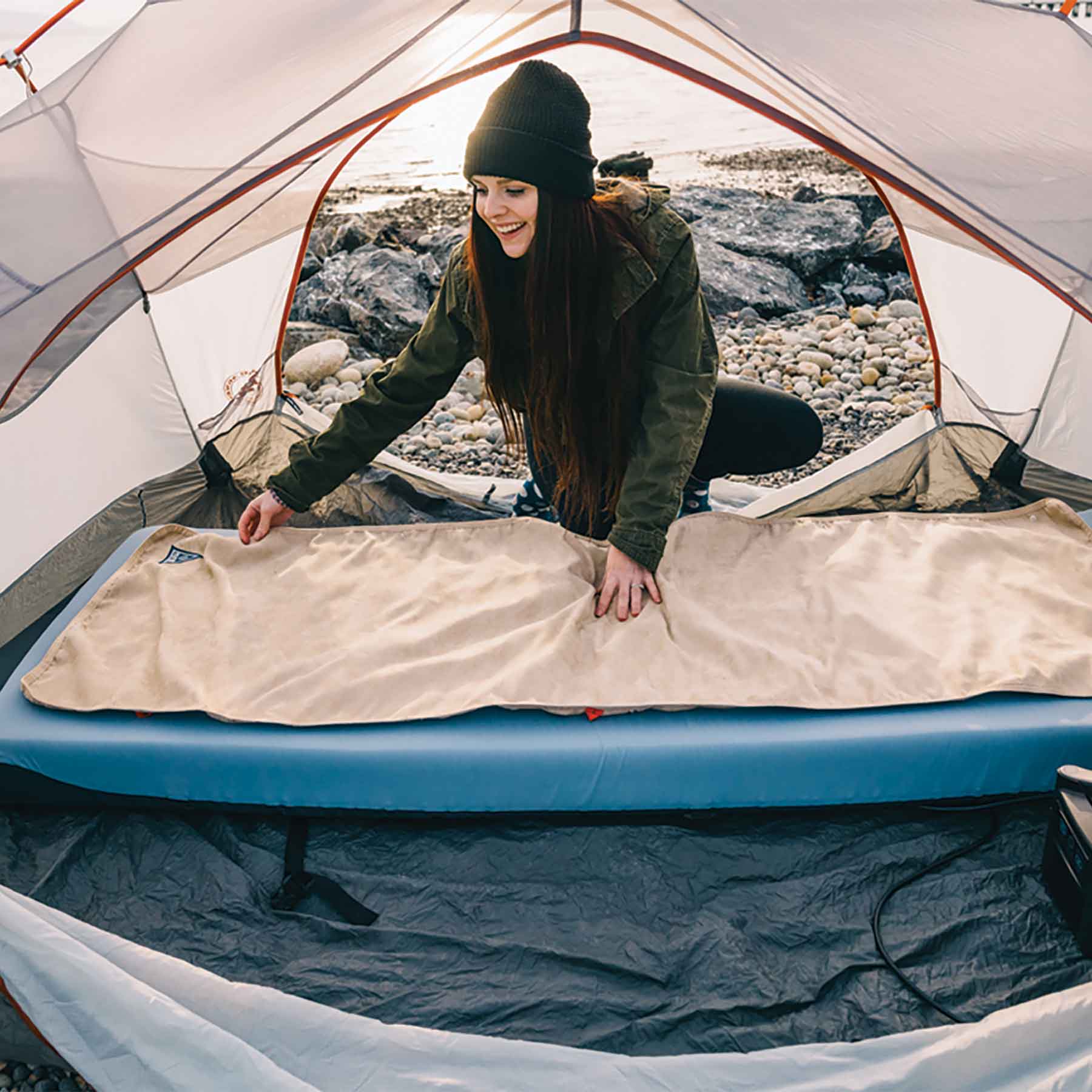
For solo campers, the Flipside single heated bed cover delivers the most warmth per watt, because it heats the spot where you lose the most. Couples should look at the Flipside Double, but they need a bigger battery. Cold sleepers gain from adding the Topside blanket, and every group benefits from the Ripple set.
Start with the battery. Size it for the hours you plan to heat, protect your starter battery, and add solar if you stay put for several nights. Then pick the gear, since the battery decides what you run all night.
Camp Heating FAQ
Does a heated bed cover drain a car battery?
Yes, if you run it off the starter battery overnight. A 48W cover draws about 4 amps at full heat by my math. Use a separate deep-cycle battery or a power station instead.
How many watts does a 12V heated blanket use?
Most 12V camping blankets list 40 to 60 watts. 4xSolar lists 48W for the Flipside single cover and the Topside blanket, and 96W per side for the Flipside double.
Are 12V heated bed covers safe to sleep on?
4xSolar says its covers include built-in safety sensors and a controller with memory. Still, follow the maker’s instructions, keep cords clear of your body, and never fold the cover while it heats.
How long do rechargeable warmers last?
4xSolar lists the Ripple warmers at 3 hours on High and 8 to 12 hours on Efficiency mode. They recharge in a USB-C dock.
Is a diesel heater safe in a tent?
Only with the exhaust vented outside and a carbon monoxide alarm inside. Carbon monoxide is invisible and odorless, so never trust your nose.
Heads up: Clicking on our affiliate links and exploring our sponsored content helps us at no extra cost to you, and we only recommend gear we’re absolutely crazy about!