


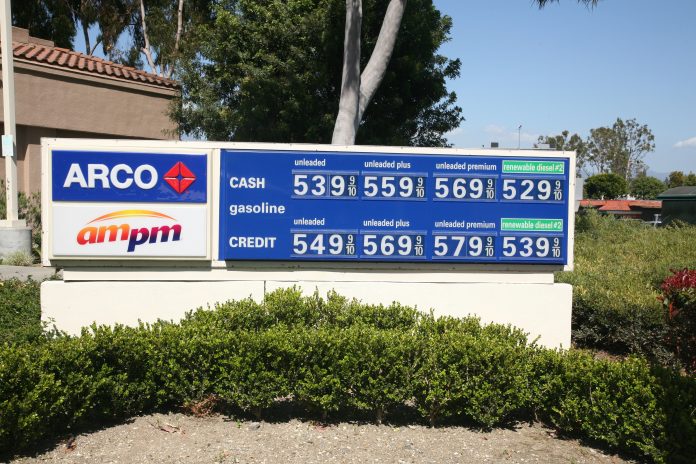

Quick Verdict: Gas prices 2026 have surged to $3.98 nationally for regular unleaded and $5.37 for diesel, the highest levels in four years. The Iran war and Strait of Hormuz closure triggered a 33% spike in three weeks, adding nearly $1 per gallon across the country. For truck and 4WD owners running 12-19 MPG vehicles, annual fuel costs have jumped by $600 or more compared to early January. Diesel owners face even steeper increases, with a 44% price jump since the start of the year.
Last updated: March 2026 | 8 min read
In This Article
- Gas Prices 2026 Overview for Truck Owners
- Key Numbers at a Glance
- The Iran Crisis and Oil Markets
- Gas Prices by State: Cheapest and Most Expensive
- Diesel Prices 2026: The Bigger Story
- How Gas Prices Hit Truck and 4WD Owners Harder
- Spring Trail Season: Trip Cost Breakdown
- Gas vs. Diesel Trucks: Fuel Cost Comparison
- How to Save Money on Fuel
- Pros and Cons of Owning a Truck in a High-Fuel Market
- Final Verdict
- Frequently Asked Questions
Gas Prices 2026: Why Every Truck Owner Should Pay Attention

Gas prices 2026 have hit their highest level since 2022, and truck owners are feeling the pain more than anyone. The national average for regular unleaded reached $3.98 per gallon in late March, while diesel crossed $5.37. Notably, both numbers represent four-year highs driven by a geopolitical crisis most Americans did not see coming.
For the 4WD community, these prices hit differently. However, while a sedan owner getting 30 MPG absorbs a price increase over time, a Ram 1500 V-8 owner getting 12-19 MPG feels it immediately. According to the Detroit News, the average Ram driver now spends roughly $600 more per year on fuel than the average Honda driver. Consequently, the gap widens every time crude oil ticks higher.
Understanding why are gas prices so high in 2026 requires looking at three factors: the Iran war and Strait of Hormuz closure, regional supply chain differences across states, and the outsized impact on diesel specifically. This article covers all three, plus practical strategies for reducing your fuel costs during spring trail season and beyond.
If you have been weighing diesel versus gasoline fuel costs for your next build, the current pricing environment makes the decision more complex than it was six months ago.
Key Numbers at a Glance
| Metric | Current (March 2026) | January 2026 |
|---|---|---|
| National Avg. Regular Unleaded | $3.98/gal | ~$2.98/gal |
| National Avg. Diesel | $5.37/gal | $3.53/gal |
| Brent Crude Oil | ~$107-108/barrel | ~$76/barrel |
| Most Expensive State (CA) | $5.50+/gal | ~$4.20/gal |
| Cheapest State (KS) | $3.15/gal | ~$2.50/gal |
| 30-Gal Diesel Fill (March) | $161 | $106 |
| Price Change (Gas, 3 Weeks) | +33% | N/A |
| Price Change (Diesel, 2 Months) | +44% | N/A |
Featured on Amazon
MORRFlate TenSix: Inflate All 4 Tires at Once
The MORRFlate TenSix lets you air up all 4 tires simultaneously after hitting the trail. Proper tire pressure improves fuel economy by 3% (DOE). At $3.98/gallon, recovering MPG lost to underinflated all-terrains saves you real money every week.
The Iran Crisis and Why Gas Prices Surged So Fast
On February 28, 2026, joint military strikes by the U.S. and Israel on Iranian targets triggered retaliatory actions from Iran, including an effective shutdown of the Strait of Hormuz. Approximately 20% of the world’s daily oil supply moves through this waterway. After Iran’s Islamic Revolutionary Guard Corps halted vessel traffic, global oil markets responded within hours.
Brent crude oil surpassed $100 per barrel in mid-March for the first time since 2022, reaching approximately $107-108 at its peak. As a result, gas prices today jumped roughly 33% in three weeks. AAA confirmed the national average added nearly $1 per gallon in under a month.
Unlike regional supply disruptions, this crisis affects every state simultaneously. Every gas station in America sources fuel from global crude oil markets. Consequently, when 20% of supply gets blocked, the entire pricing system adjusts upward. Therefore, for truck owners filling 25-36 gallon tanks, each $1 increase translates to $25-36 more per fill-up.
Gas Prices by State: Where You Pay the Most and Least
While the Iran crisis drove the global spike, regional factors create additional variation. State-level fuel prices spread over $2.25 between the most expensive and cheapest markets. Consequently, if you are trailering a rig across multiple states this spring, your fuel stops matter.
| Most Expensive States | Price | Cheapest States | Price |
|---|---|---|---|
| California | $5.50+ | Kansas | $3.15 |
| Hawaii | ~$5.07 | North Dakota | $3.35 |
| Washington | ~$4.75 | Oklahoma | $3.22 |
| Nevada | ~$4.40 | Arkansas | $3.24 |
The cheapest states sit near major pipelines and Gulf Coast refineries, which is why they absorb global price shocks better. Specifically, Oklahoma, Kansas, and Arkansas benefit from proximity to Cushing, the largest crude oil storage hub in North America. If your route to Moab, Big Bend, or the Rubicon crosses these states, fill up there.
For a 30-gallon truck tank, the difference between filling up in Kansas ($94.50) versus California ($165+) is over $70 per stop. As a result, over a multi-day trip with two or three fills, strategic fuel stops save you $150-200.
Diesel Prices 2026: Why Truck Owners Should Watch This Number
Diesel prices 2026 tell a more alarming story than regular unleaded. Diesel crossed $5.37 per gallon this week, up from $3.53 in January. This represents a 44% increase in two months, according to EIA data.
For Power Stroke, Duramax, and Cummins owners, a 30-gallon fill now costs roughly $161. In January, the same fill ran about $106. As a result, you are spending $55 more per tank. If you fill up twice a month, the annual increase totals roughly $1,320.
The Ripple Effect on Everything You Buy
However, diesel prices do not stay at the pump. Diesel also powers the trucks delivering every product you purchase, from groceries to parts for your build. Axios reported in mid-March 2026 the $5 diesel threshold is creating inflationary pressure across the U.S. economy. Shipping costs go up first; as a result, those costs get passed to you at the store, the dealership, and the parts counter. For example, aftermarket parts suppliers have already announced 5-8% price increases tied directly to higher shipping rates.
If you have been considering diesel engine efficiency for off-roading, the fuel cost equation has shifted since January. Diesel still offers better torque and towing MPG, but the per-gallon premium over regular gas has widened from roughly $0.55 in January to $1.39 in March.
Featured on Amazon
Clean Your Injectors and Boost Fuel Efficiency
Hot Shot’s Secret Everyday Diesel Treatment cleans injectors, boosts cetane, and improves efficiency in Power Stroke, Duramax, and Cummins engines. Over 8,600 reviews and 4.7 stars. At $5.37/gal diesel, every MPG matters.
How Gas Prices 2026 Hit Truck and 4WD Owners Harder
For comparison, the average new car sold in America gets approximately 28 MPG combined. A 2026 Ram 1500 with the HEMI V-8 gets 12-19 MPG depending on configuration. Meanwhile, the Jeep Wrangler Rubicon sits at 19-21 MPG combined. The Ford F-250 Super Duty diesel averages 14-17 MPG in real-world owner reports (EPA does not rate heavy-duty trucks).
At $3.98 per gallon and 12,000 annual miles, here is what fuel costs by vehicle type:
| Vehicle | MPG | Annual Fuel (March) | Annual Fuel (Jan.) |
|---|---|---|---|
| Honda Civic (30 MPG) | 30 | $1,593 | $1,192 |
| Jeep Wrangler Rubicon | 20 | $2,388 | $1,788 |
| Ram 1500 HEMI V-8 | 15 | $3,184 | $2,384 |
| F-250 Diesel (at diesel prices) | 15 | $4,296 | $2,824 |
Notably, the F-250 diesel driver saw the largest jump: $1,472 more in annual fuel costs since January alone. Even the Wrangler owner faces $600 more per year. Consequently, these are significant numbers for any household budget.
Spring Trail Season: What Your Trip Will Cost in Fuel
Spring trail season is here. Moab Easter Jeep Safari, Overland Expo, Big Bend, the Rubicon Trail, and Uwharrie are all on the calendar. At current gas prices today, your trip fuel math looks different than it did in January.
For a 500-mile round trip in a Wrangler getting 20 MPG, you are spending about $100 at the national average. In January, the same trip cost approximately $74. Similarly, for a diesel truck towing a trailer at 10 MPG, a 500-mile round trip now runs $268. Two months ago, the same run was $177.
Also, if you are towing from the West Coast to Moab, the total distance is roughly 1,200 miles round trip. At 10 MPG tow economy and $5.37 diesel, the fuel bill alone hits $644. By comparison, a driver towing from Oklahoma City covers about 1,200 miles round trip at $3.22 gas, spending approximately $386 at 10 MPG. Consequently, your starting location now has a $258 impact on trip fuel cost.
Gas vs. Diesel Trucks in 2026: Which Costs Less to Run?
Before March 2026, diesel trucks held a clear advantage in cost-per-mile for towing and highway driving, because diesel engines deliver superior low-end torque and better loaded MPG. However, the diesel premium has changed the equation.
In January, diesel cost $0.55 more per gallon than regular gas. Since then, the spread widened to $1.39. For a driver covering 12,000 miles per year at 15 MPG (diesel) versus 15 MPG (gas V-8), the diesel truck’s annual fuel bill is $4,296 while the gas truck runs $3,184. Therefore, the diesel costs $1,112 more per year in fuel alone, despite better truck fuel economy under load.
Diesel still wins for heavy towing, where the MPG gap between gas and diesel engines widens under load. A gas V-8 towing a 7,000-lb trailer often drops to 8-9 MPG, while a diesel typically maintains 10-12 MPG. At those numbers and current prices, the diesel costs $5.37 per mile divided by 11 MPG = $0.49/mile, versus gas at $3.98 divided by 8.5 MPG = $0.47/mile. The towing cost difference is now nearly a wash.
How to Save Money on Fuel in 2026
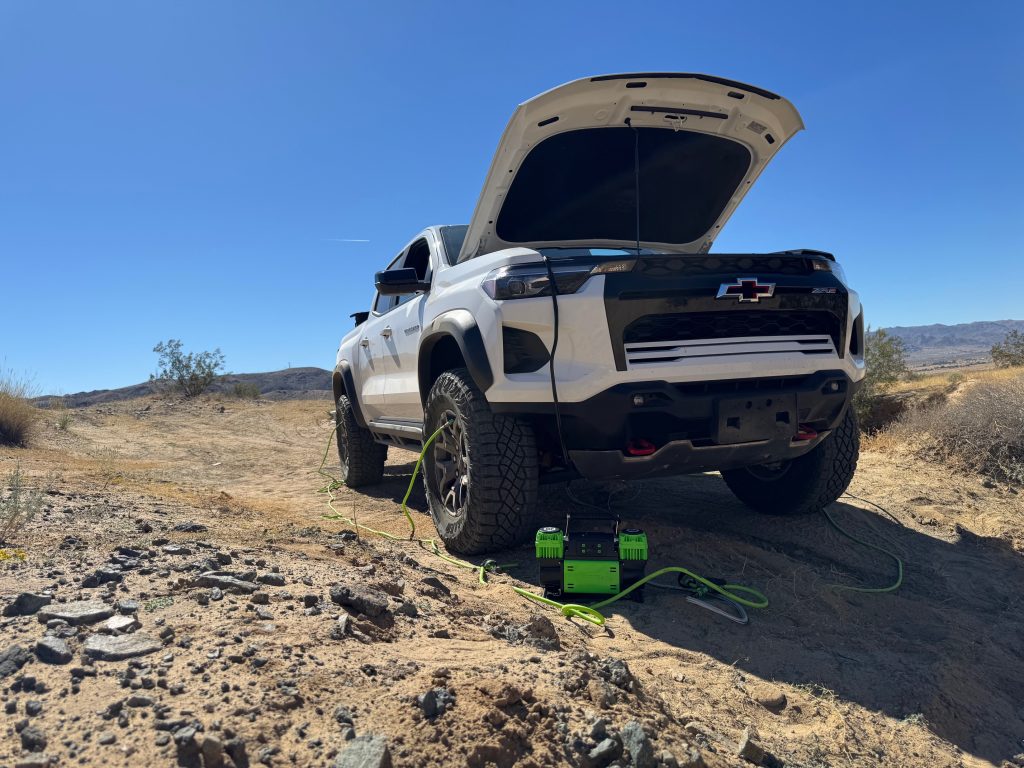
At current gas prices 2026 levels, small truck fuel economy improvements produce meaningful annual savings. Here are the highest-ROI adjustments.
First, check your tire pressure before every highway drive. The Department of Energy confirms properly inflated tires improve fuel economy by approximately 3%. On a truck running all-terrain tires, underinflation is especially common after off-road trips. Also, learn how tire pressure affects fuel efficiency and traction to make informed decisions on and off the trail.
On the Road: Speed, Fueling Stops, and Towing Prep

Second, slow down on the highway. Every 5 MPH over 50 costs you roughly $0.29 more per gallon in fuel efficiency. If you are towing, the aerodynamic penalty is even steeper; dropping from 75 to 65 MPH while towing improves fuel economy by 10-15%.
Third, fuel up in cheap states. If your route crosses Oklahoma, Kansas, Missouri, or Arkansas, fill your tank there. GasBuddy shows real-time station prices. At a 30-gallon fill, a $1 per gallon difference saves you $30 per stop.
Fourth, for diesel owners, a quality fuel additive like Hot Shot’s Secret Everyday Diesel Treatment ($34.69 for 32 oz) cleans injectors and boosts cetane. Specifically, clean injectors improve combustion efficiency, which translates to better MPG in older trucks with carbon buildup.
Fifth, if you are towing, check your trailer’s wheel bearings and tire pressure before each trip. A dragging bearing or underinflated trailer tires cut your tow vehicle’s MPG by 5-10%. Also, remove unnecessary cargo weight; every 100 lbs of excess weight reduces fuel economy by roughly 1%.
Pros and Cons of Owning a Truck in a High-Fuel Market
Pros
- Newer truck engines (Hurricane I-6, EcoDiesel) deliver 20-25% better fuel economy than V-8 predecessors
- Fuel-saving modifications (tire pressure, driving habits, additives) recover 5-10% efficiency
- Gas prices by state vary over $2.25/gallon; strategic fuel stops significantly reduce trip costs
- Diesel trucks retain higher resale values, partially offsetting fuel costs
- 4WD capability and towing utility are irreplaceable for off-road and hauling needs
- Fuel price comparison apps (GasBuddy) save 20-40 cents/gallon at warehouse clubs
Cons
- Ram 1500 V-8 owners spend ~$600 more per year on fuel than Honda Civic drivers at current prices
- Diesel prices surged 44% in 2 months; a 30-gallon fill now costs $55 more than in January
- F-250 diesel annual fuel bill hits $4,296 at current prices (15 MPG), up $1,472 since January
- Towing a trailer at 10 MPG costs $0.49-0.54/mile at current diesel prices
- $5 diesel creates inflationary pressure on parts, accessories, and aftermarket gear
Final Verdict
Gas prices 2026 represent a temporary spike driven by the Iran conflict, layered on top of a global oil market already running with limited spare capacity. The $3.98 national average and $5.37 diesel prices are painful, especially for truck and 4WD owners running vehicles in the 12-20 MPG range.
The Strait of Hormuz crisis is the primary short-term driver behind gas prices 2026 reaching these levels. If diplomatic channels reopen shipping traffic, crude prices will decline and pump prices will follow within weeks. However, energy analysts warn the conflict timeline is uncertain, and prices will likely remain elevated through at least Q2 2026.
For truck owners, the practical response is efficiency, not panic. Maintaining proper tire pressure, slowing down on highways, using quality fuel additives, and planning fuel stops through cheap states are proven strategies with measurable savings. A 3% improvement from tire pressure plus a 10% gain from driving habits adds up to hundreds of dollars per year at current prices.
Gas prices 2026 are high, but they will not stay this high permanently. In the meantime, the best move is making every gallon count. If you are considering a new truck purchase, compare gas versus diesel fuel cost models using current pricing, not January numbers, before committing.
Frequently Asked Questions
Why are gas prices so high in 2026?
Specifically, the primary driver is the Iran war and resulting closure of the Strait of Hormuz, which blocked approximately 20% of global daily oil supply. Brent crude surged past $107 per barrel, and the national gas average jumped 33% in three weeks. AAA confirmed prices added nearly $1 per gallon in under a month.
How much does it cost to fill up a truck in March 2026?
At the national average of $3.98 for regular, a 26-gallon truck tank costs about $103. For diesel trucks, a 30-gallon fill at $5.37 per gallon runs approximately $161. In January, the same diesel fill cost $106, a difference of $55 per tank.
What are the cheapest states for gas right now?
According to AAA data, the cheapest state-level prices show Kansas ($3.15), North Dakota ($3.20), Oklahoma ($3.22), and Arkansas ($3.24) in March 2026. Notably, these states benefit from proximity to Gulf Coast refineries and the Cushing crude oil storage hub. Prices fluctuate daily, so check GasBuddy for real-time numbers.
Will gas prices go down in 2026?
Short-term relief depends on whether the Strait of Hormuz reopens to shipping traffic. If the geopolitical situation stabilizes, crude prices will drop and pump prices will follow within weeks. However, most energy analysts expect gas prices 2026 to remain elevated through at least Q2. The EIA had originally forecast $4.12 diesel for the year, well below the current $5.37.
How do diesel prices 2026 compare to gasoline?
Diesel is running $1.39 more per gallon than regular unleaded as of late March 2026 ($5.37 vs. $3.98). In January, the spread was only $0.55. As a result, this widening gap changes the cost-per-mile math for diesel truck owners, especially for non-towing daily driving where diesel’s MPG advantage is smaller.
How does tire pressure affect truck fuel economy?
The U.S. Department of Energy reports properly inflated tires improve fuel economy by approximately 3%. For a truck getting 15 MPG and driving 12,000 miles per year, the 3% improvement saves roughly $95 annually at gas prices today of $3.98. Underinflated all-terrain tires are especially common after off-road trips, making a portable inflator a worthwhile investment.