


Our team at 4WDTalk has tested tents, stoves, and camp kitchens for years, and we’ve seen both extremes up close. Some campers haul a full living room into the woods. Others strip everything down until a cold night feels like punishment. Still, both groups ask the same question. How much camp comfort is too much?
This guide gives you a way to answer it for your own trips. Specifically, it covers minimalist camping, luxury camping, and the middle ground between them. The Elk Mountain Yukon Bell Tent serves as the example, because its size and stove option show where comfort starts to pay off. Also, we drew the details from the product page and our own Elk Mountain coverage, including our Elk Mountain wall tent review.
Quick Facts:
- Topic: Balancing camp comfort between minimalist and luxury camping
- Best for: Campers deciding how much gear and space they truly need
- Core idea: Add comfort only where it improves sleep, warmth, or time outdoors
- Example shelter: Elk Mountain Yukon Bell Tent in 13, 16, and 20 ft sizes
- Key detail: Standing height from a single center pole, with a stove jack option
- Trade-off: More space and warmth in exchange for more weight and setup
8 min read
In This Guide
- Why Camp Comfort Is a Real Question
- Elk Mountain Yukon Bell Tent at a Glance
- Minimalist Camping: What You Gain and Give Up
- Luxury Camping: When Camp Comfort Takes Over
- How to Find Your Camp Comfort Balance
- Why a Bell Tent Fits the Middle Ground
- Comfort Upgrades Worth Packing, and What to Skip
- Keep Setup Simple
- Pros and Cons of the Yukon for Balanced Camping
- Minimalist Camping vs. Luxury Camping
- Final Verdict
- Frequently Asked Questions
Why Camp Comfort Is a Real Question
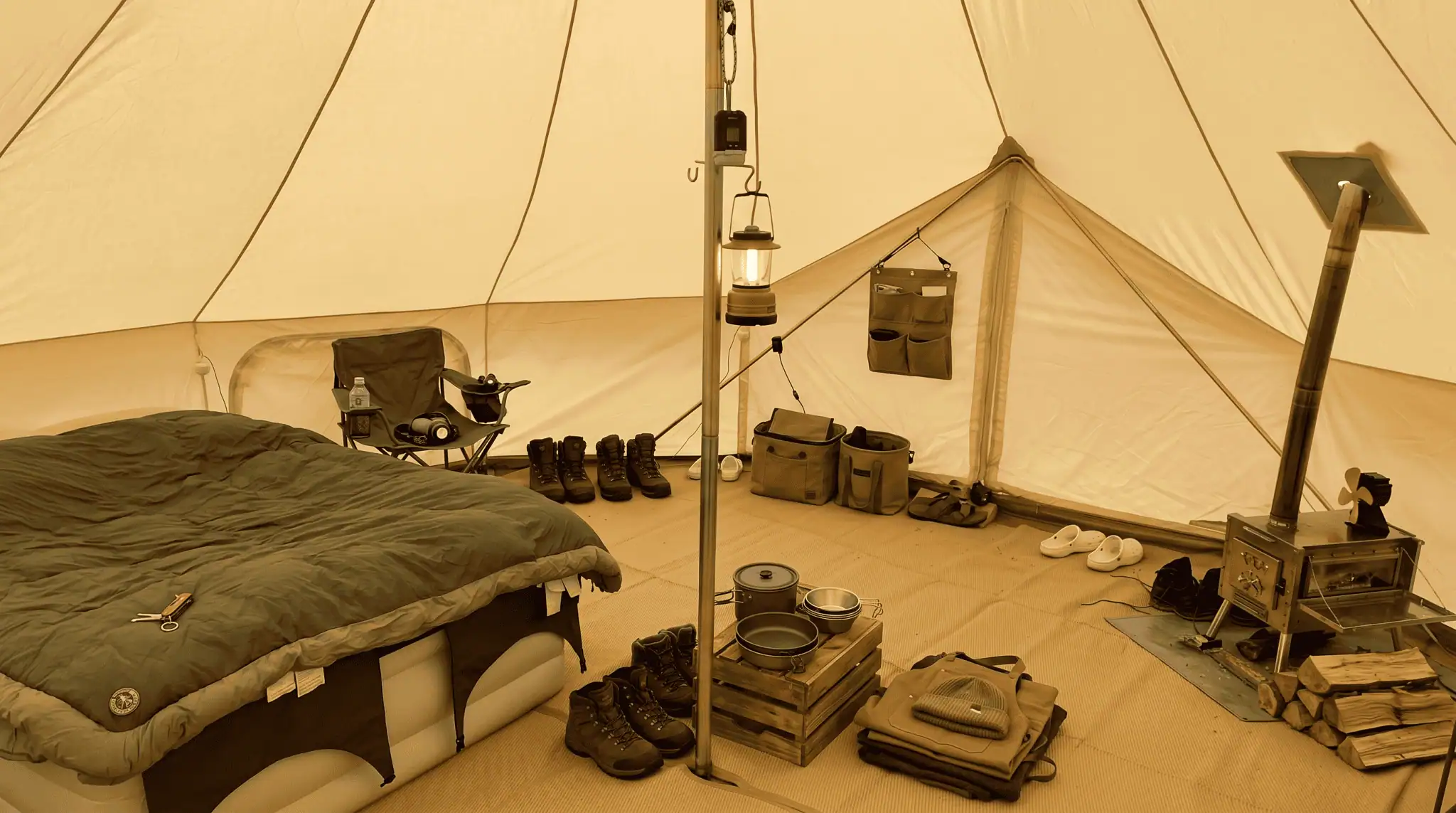
Camp comfort is the gap between what you need and what you want. Needs are shelter, warmth, water, and sleep. Meanwhile, wants are everything else. So, the trick is knowing which wants earn a place in the truck.
Neither extreme is wrong. However, each one fails in a predictable way. For example, minimalists get worn out and skip trips. In contrast, luxury campers spend half the weekend packing and unpacking.
So, the goal isn’t less or more. It’s the right amount for the trip in front of you. A weekend with kids needs different gear than a solo night near the trailhead.
Your own habits matter too. To start, think about the last three trips you took. Which items did you use every day, and which never left the bin? This list is a better guide than any gear review.
Elk Mountain Yukon Bell Tent at a Glance
| Feature | Detail |
|---|---|
| Sizes | 13 ft, 16 ft, and 20 ft diameter |
| Center height | 8 ft, 10 ft, and 11.5 ft |
| Floor area | About 133, 201, and 304 square feet |
| Weight | 80, 95, and 115 pounds |
| Sidewalls | 3 feet |
| Windows | Four screened windows |
| Vents | Four screened peak vents |
| Door | Zippered front door |
| Frame | Galvanized steel center pole and A-frame door poles |
| Fabric | PolyShield polyester blend, with a PolyShield+ upgrade |
| Stove jack | Cut the opening yourself in 4, 5, or 6 inch sizes |
Buy Direct From Elk Mountain
See the Yukon Bell Tent Lineup
Three sizes, a steel frame, and a stove jack option for a balanced camp.
Minimalist Camping: What You Gain and Give Up
Minimalist camping rewards speed. First, you pack in minutes, pitch in minutes, and leave little behind. Because light gear fits any vehicle, you stay free to chase a good site or a better view.
Next, cost is another gain. A small tent, a pad, and a stove cover the basics for little money. In addition, fewer items mean fewer things to lose, clean, or repair.
However, the trade-offs add up. For instance, a small shelter leaves no room to stand, dress, or wait out rain. Also, cold nights feel longer, and bad weather pushes everyone into cramped quarters. Over several days, this wear shows in mood and sleep.
Overall, minimalist camping works best for short trips and fast moves. In addition, it suits campers who enjoy the challenge. However, for longer stays, it asks more of your body than most people expect.
Luxury Camping: When Camp Comfort Takes Over
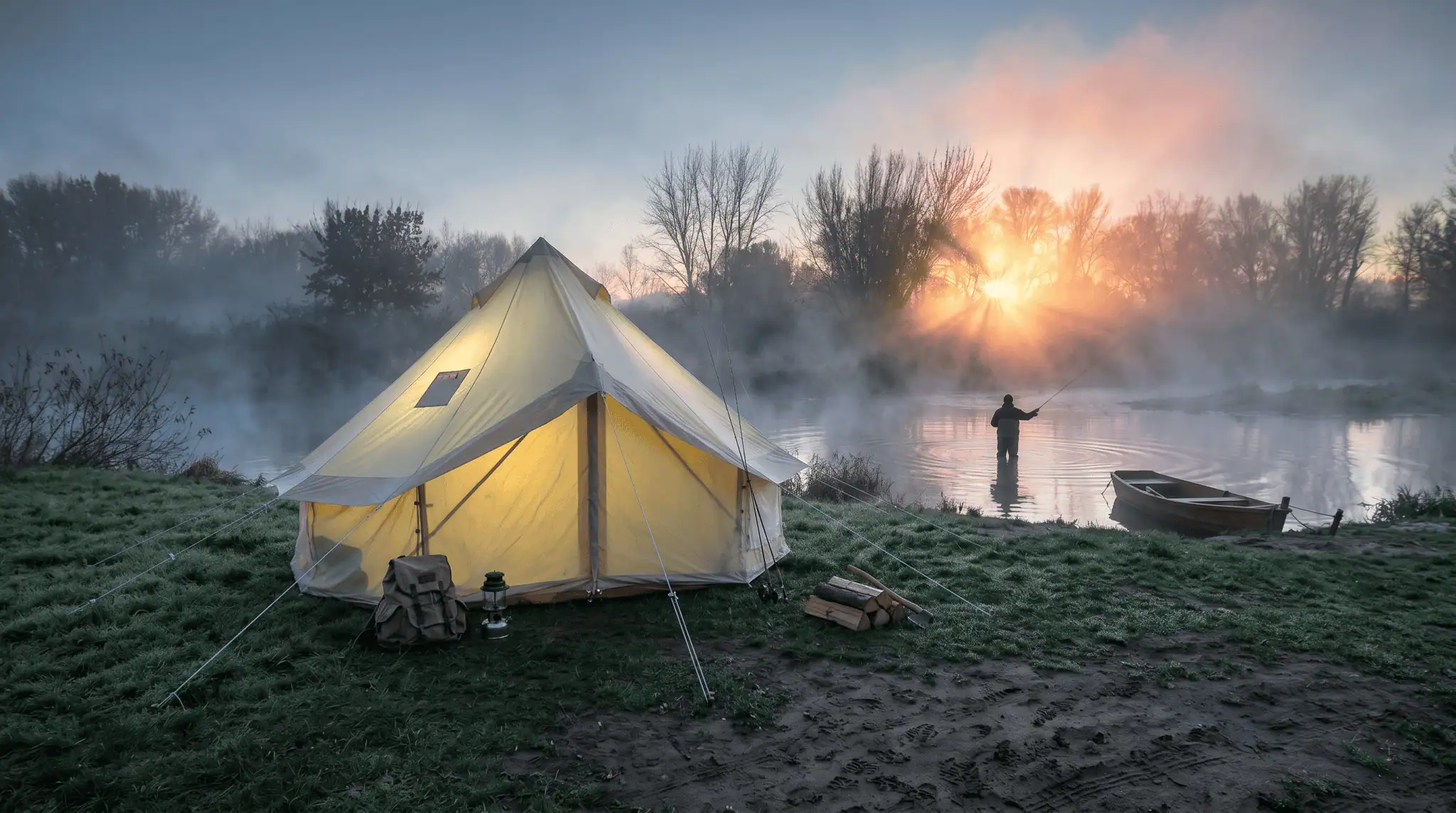
Luxury camping flips the balance. You bring real beds, rugs, tables, heat, and a full kitchen. Then camp feels like a second home, and bad weather loses most of its sting.
Still, there are costs. Setup takes hours, and teardown takes as long. Next, the truck fills up, so every extra item pushes out something else. Meanwhile, the time you spend managing gear is time you aren’t spending outdoors.
In addition, luxury changes the feel of a trip. When camp is too comfortable, some people stop exploring. Instead, others feel tied to a site because moving it would take a full day.
This doesn’t make luxury camping a mistake. It makes it a choice. In fact, families, hunting parties, and long basecamp stays often justify the extra weight. By contrast, weekend trips with one night per site usually don’t.
How to Find Your Camp Comfort Balance
Four questions help you settle on the right amount of camp comfort. Then answer them honestly, and the gear list almost writes itself.
Stay Length Shapes Camp Comfort
First, length of stay matters most. Thus, one night favors light gear. Three or more nights favor space and comfort, because setup time spreads across more days.
Group Size Changes Camp Comfort
Second, group size changes everything. Kids, older relatives, and first-time campers all do better with more space and warmth. In contrast, solo travelers and experienced pairs handle less.
Weather Tests Camp Comfort
Third, check the forecast first. Cold, wet, or windy trips reward a sturdy shelter and a heat source. Meanwhile, mild weather lets you skip both and save the weight.
Setup Effort Limits Camp Comfort
Finally, be honest about setup. If a long pitch makes you dread the trip, scale down. Comfort which keeps you home isn’t comfort at all.
Why a Bell Tent Fits the Middle Ground
In short, a bell tent sits between a small dome and a full wall tent. Also, it stands on one center pole, so it pitches faster than most large shelters. In return, you get standing room and a round floor with space for cots and bags.
The Elk Mountain Yukon shows how this works. Its center height runs from 8 feet on the 13 ft model to 11.5 feet on the 20 ft model. In addition, four screened windows and four peak vents move air through the tent, and a zippered front door keeps entry simple.
Size is the main choice. For example, the 13 ft model offers about 133 square feet and weighs 80 pounds. The 20 ft model offers about 304 square feet and weighs 115 pounds. So, you pick the footprint which matches your group, not a one-size-fits-all shelter.
Still, heat is where the Yukon steps toward luxury. The tent includes a stove pipe jack with cover, and you cut the opening in a 4, 5, or 6 inch size. Then a stove turns a cold shoulder-season night into a pleasant one. Our guide to winterizing a bell tent covers the preparation in more detail.
There are limits worth knowing. First, the product page says the tent isn’t designed for snow loads. Also, it notes the 20 ft center pole might bow, and it suggests a rigid pipe or lumber as an upgrade. Overall, these are fair trade-offs for a tent at this price.
Comfort Upgrades Worth Packing, and What to Skip
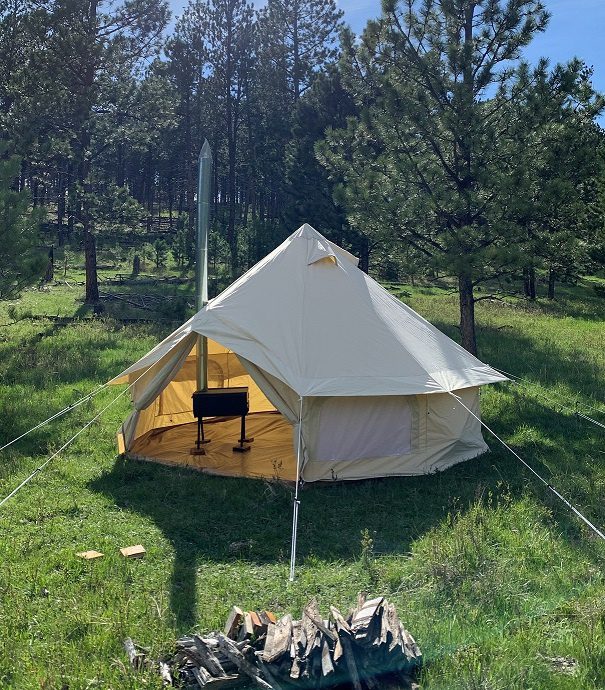
In fact, some comfort items change the whole trip. Others only add weight. Use this short list of comfort upgrades as a starting point.
- Worth packing: a good sleeping pad or cot, a warm bag, and a reliable light
- Worth packing: a stove and stove mat if you camp in the cold
- Worth packing: a rug or mat at the door to keep dirt out
- Worth packing: a comfortable chair for camp
- Often skippable: large furniture sets, extra lanterns, and duplicate cookware
- Often skippable: anything you didn’t use on your last trip
So, sleep deserves the biggest share of your budget. After all, a good night changes how you feel about everything else. Then warmth comes second, and space comes third.
Next, optional add-ons help. Elk Mountain sells a tent fly, an awning, and inside ground cloths for the Yukon. So, add them only if your trips call for extra shade, rain cover, or floor protection.
Keep Setup Simple
However, setup time is where comfort gets expensive. A bell tent goes up faster than a large wall tent, which is a real advantage on trips with a single night per site. Bring the stakes, a mallet, and a helper, and the first pitch goes smoothly.
In contrast, larger shelters ask for more patience. For a sense of scale, our setup guide for the 13×16 wall tent shows how much work a bigger, comfort-first camp involves. In fact, our reviewer needed about 60 minutes with two people on the first pitch.
This comparison helps frame the choice. So, if you stay several nights, a longer setup pays off. On the other hand, if you move often, a quicker bell tent is the better fit.
Ready to Find Your Balance?
Pick the Yukon Size Which Fits Your Crew
Compare diameters and add a stove jack for cold-weather trips.
Pros and Cons of the Yukon for Balanced Camping
Overall, no shelter fits every trip. Here is how the Yukon stacks up for campers who want comfort without excess.
Pros
- Standing height from a single center pole
- Three sizes, from about 133 to 304 square feet
- Four windows and four peak vents for airflow
- Stove jack option for cold-weather trips
- Steel frame, ropes, and carry bag come with the tent
Cons
- Heavier and bulkier than a dome tent
Minimalist Camping vs. Luxury Camping
| Factor | Minimalist Camping | Luxury Camping |
|---|---|---|
| Setup time | Short | Long |
| Gear load | Light and compact | Heavy and bulky |
| Sleep quality | Basic, weather dependent | Best of the three styles |
| Weather comfort | Limited | Strong with a stove or heater |
| Cost | Low | High |
| Best for | Short trips and quick moves | Longer stays and families |
Indeed, most campers don’t live at either end. Instead, they move along the scale depending on the trip. A quick overnight leans minimalist, while a family week leans toward luxury.
Thus, the Yukon fits the middle well. It adds real space and optional heat, yet it still packs into a truck bed. In short, it lets you add comfort in steps instead of all at once.
Final Verdict
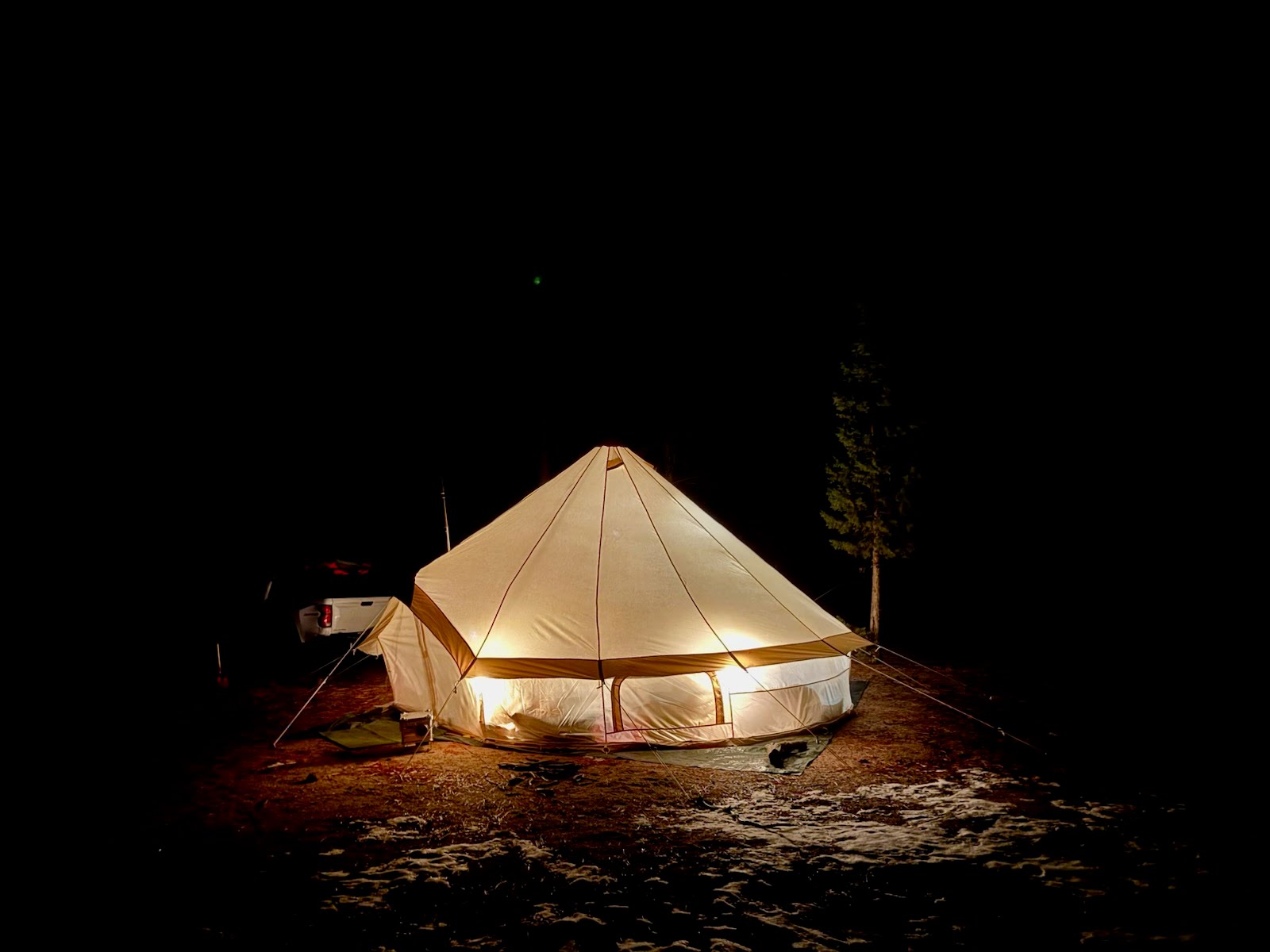
Camp comfort is too much when it costs more than it gives. If gear slows you down, keeps you off the road, or buries the trip in chores, scale back. If you dread cold nights or cramped mornings, add a little.
However, the right answer changes with the trip. For example, short and fast trips favor minimalist camping. Meanwhile, long stays, families, and cold weather favor a roomier setup. In fact, most of us need both styles at different times.
The Elk Mountain Yukon Bell Tent suits the middle ground well. It offers standing room, three sizes, and a stove jack option without the setup burden of a large wall tent. Remember its limits, including snow loads and the bowing risk on the largest size.
So, start with your next trip and ask the four questions above. Pack for the trip you’re truly taking, not the one you picture. Over time, your own gear list will show where your balance sits.
Gear Up for the Next Trip
Explore the Elk Mountain Yukon Bell Tent
A roomy, stand-up shelter for campers who want comfort without excess.
Frequently Asked Questions
How much camp comfort is too much?
Comfort becomes too much once packing and setup eat more time than you spend enjoying camp. If gear slows you down or stops you from going, scale back.
What is the difference between minimalist and luxury camping?
Minimalist camping uses the least gear needed for safety and sleep. Luxury camping adds space, furniture, and heat for a home-like feel. Most campers land somewhere in between.
Is a bell tent good for camping comfort without going overboard?
Yes, for many campers. A bell tent gives standing room and a roomy floor from a single center pole, so it adds comfort without a pile of extra gear.
Can the Yukon Bell Tent handle winter camping?
It accepts a stove jack, so cold shoulder-season trips work well. The page notes it isn’t designed for snow loads, so clear snow and watch the forecast.
What size Yukon Bell Tent should I pick?
Choose by group size and gear. The 13 ft model offers about 133 square feet, the 16 ft about 201, and the 20 ft about 304.
Heads up: Clicking on our affiliate links and exploring our sponsored content helps us at no extra cost to you, and we only recommend gear we’re absolutely crazy about!