


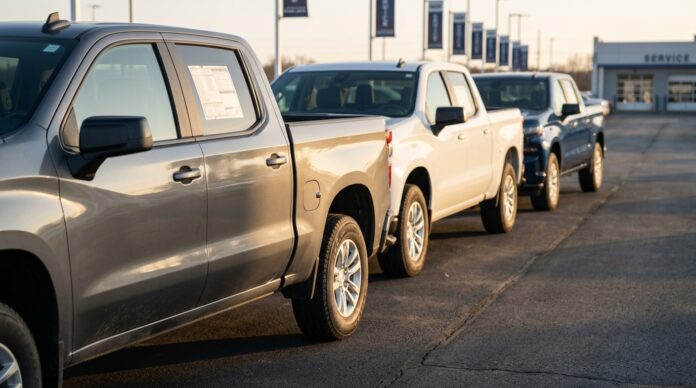
Quick Facts:
- Topic: Truck tariffs and the January 2027 price question
- In force now: 25% on imported cars and light trucks since April 3, 2025
- Parts: 25% on listed auto parts since spring 2025
- Heavy duty: 25% on medium- and heavy-duty trucks since November 1, 2025
- January 2027 plan: 50% on Canadian cars, trucks, parts and steel
- Legal status of the 50%: announced only, with no proclamation on file
- Charged on: customs import value, not the window sticker
- Full-size pickup average price: $67,446 in August 2026
- Best for: buyers weighing a truck, tire or build purchase before winter
9 min read
In This Guide
- Where Truck Tariffs Stand Right Now
- Truck Tariff Rates and Effective Dates
- What Tariffs on Tires Add to a Set
- What the 50% Canada Tariff Plan Says
- What Truck Tariffs Already Added to Sticker Prices
- Auto Parts Tariffs and Your Off-Road Build
- Buying Before January 1 Compared With Waiting
- Will Truck Tariffs Lift Used 4×4 Values?
- The Verdict on Truck Tariffs and Your Next Truck
- Truck Tariffs FAQ
Where Truck Tariffs Stand Right Now
Truck tariffs stopped being a future problem more than a year ago. Nobody has written the widely reported 50% rate into law, so no firm deadline exists yet. Meanwhile a 25% duty has applied to imported cars and light trucks since April 3, 2025, under Section 232 of the Trade Expansion Act. Listed auto parts followed a month later at the same rate, and medium- and heavy-duty trucks joined the list on November 1, 2025.
The January 2027 number works differently, and its scope matters more than its size. On August 24, 2026, President Trump posted a plan on Truth Social. It would raise duties on Canadian cars, trucks, parts and steel to 50% starting January 1, 2027. Since then, no proclamation or Federal Register notice has appeared. As of September 12, 2026, the 50% figure sits in the record as an announcement about one trading partner.
One mechanical detail decides how much of any rate reaches you. Customs charges the duty on import value, not on the window sticker. A 25% rate on a vehicle entering at $14,000 therefore produces roughly $3,500 of duty, not a quarter of a $55,000 MSRP.
Duty also attaches at the moment of import. A truck already sitting on a dealer lot entered under the rate in force on its import date. So a January 1 change leaves existing inventory alone and reaches only units crossing the border afterward.
Truck Tariff Rates and Effective Dates
Four duty layers touch a modern 4×4 purchase, and all four run under Section 232. Notably, the headline rate lands at 25% across almost every layer. Origin therefore matters more than the layer itself.
| Duty layer | Rate | In force since |
|---|---|---|
| Imported cars and light trucks | 25% | April 3, 2025 |
| Listed auto parts | 25% | May 3, 2025 |
| Medium- and heavy-duty trucks | 25% | November 1, 2025 |
| Medium- and heavy-duty truck parts | 25% | November 1, 2025 |
| Japan-, EU- and Korea-built vehicles | 15% | 2025 |
| Most United Kingdom-built vehicles | 10% | 2025 |
| USMCA-qualifying parts | 0% | May 3, 2025 |
| Vehicles 25 years and older | 0% | April 3, 2025 |
Two provisions soften the numbers for North American trucks. First, USMCA-qualifying vehicles from Canada and Mexico owe the 25% on non-United States content only. So a Silverado built in Oshawa pays on a slice of its value. Second, automakers with United States assembly plants apply for an offset worth 3.75% of the MSRP value of the vehicles they build here. The offset runs through April 30, 2030. The offset lands with the automaker rather than with you, though it shapes how much cost reaches the sticker.
Where Your Truck Is Built Decides Your Rate
Assembly location drives your exposure more than badge or trim. Toyota builds the 4Runner in Tahara, Japan, at the 15% rate, plus the Tacoma in Mexico and the Tundra in San Antonio. Ford assembles the Bronco and Ranger in Wayne, Michigan. Jeep builds the Wrangler and Gladiator in Toledo, and the new Recon in Toluca, Mexico. Chevrolet builds the Colorado in Wentzville, Missouri, while Oshawa in Ontario handles part of Silverado production.
Check the build country before you sign, since the window sticker names the final assembly point. The first character of the VIN also tells you. A 1, 4 or 5 means the United States, 2 means Canada, 3 means Mexico and J means Japan.
What Tariffs on Tires Add to a Set
Tariffs on tires arrive from two directions at once. The 25% parts duty covers passenger and light truck tires under three HTS lines in Chapter 40, in force since spring 2025. On top of the parts layer, long-running trade cases add antidumping and countervailing duties by country of origin. A single imported set therefore carries two stacked bills.
| Top Pick | Best Budget | Best Winter-Rated | Best 35-Inch | |
|---|---|---|---|---|
| Product | TOP PICK BFGoodrich KO2 265/70R17 BFGoodrich KO2 265/70R17 |  Falken Wildpeak A/T4W Falken Wildpeak A/T4W |  BFGoodrich KO2 285/70R17 BFGoodrich KO2 285/70R17 | BFGoodrich KO2 35-Inch |
| Rating | ★★★★★ 4.8 1,200 ratings | ★★★★★ 4.9 88 ratings | ★★★★☆ 4.6 177 ratings | ★★★★★ 4.8 1,288 ratings |
| Load Range | C | Standard | C | E |
| 3PMSF Rated | Yes | Yes | Yes | Yes |
| Price | $272.07 as of Sep 12, 5:55 pm | $213.11 as of Sep 12, 5:55 pm | $316.99 as of Sep 12, 12:33 pm | $394.99 as of Sep 12, 1:50 pm |
| Check Price → | Check Price → | Check Price → | Check Price → |
Work a real set through the math and the stack gets clearer. A set of light truck all-terrains entering at $600 picks up $150 from the parts duty alone. Add a country case at 10% and the landed cost climbs another $60 before distributor or installer margin. Chinese-made tires fare far worse, since the China-wide antidumping rate reached 76.46% in August 2026.
Korean and Thai rates sit far lower. Hankook came in at 13.03%, Kumho at 10.53% and Nexen at 8.02% in the most recent Korean results. The Thailand rate fell to 2.90% for non-examined companies, down from 17.08% in the original 2021 order. Compared with those swings, retail pricing has moved gently. Makers announced increases of 1% to 4% across 2026, reaching 8% in select categories.
Two moves protect you here. Buy tires built in North America when the fitment works, since USMCA-originating tires clear at 0% under the parts annex. Also watch date of manufacture rather than date of sale. Tire age limits key off the DOT build date, as our guide to California tire law rules explains. Our roundup of the best off-road tires this year lists build origin.
What the 50% Canada Tariff Plan Says
Trump’s August 24 post promised 50% duties on “all Cars, Trucks, both large and small, Automotive Parts, and Steel” from Canada. The start date given was January 1, 2027. He added one qualifier: “Build in the U.S. and there are ZERO TARIFFS.” Notably, no annex of tariff codes accompanied the post, and no agency has published an implementing document since.
Three questions therefore have no published answer. Does the 50% cover light-duty pickups and SUVs, or only some weight classes? Would USMCA content keep a full exemption, a partial one or none? Finally, does the existing 3.75% assembly offset survive?
Why the Section 338 Canada Duty Skips Pickups
Do not confuse the announcement with the Section 338 action against Canada, which is real and in force. Proclamation 11048 and two companion proclamations added a 50% duty on roughly $20 billion of Canadian goods, effective August 22, 2026. Together they reach 554 tariff codes across goods including dairy, alcohol, cement and plywood.
Customs and Border Protection guidance placed passenger vehicles, light trucks and their parts at 0% additional duty under the action. Those goods already carry Section 232 duties. As of September 2026 the Canada 50% skips pickups entirely, although the administration signed a further order on September 8, 2026 widening the product list. The real rate on a Canadian-built pickup today stays 25% on non-United States content. A proposed cut to 15% collapsed in late August 2026.
What Truck Tariffs Already Added to Sticker Prices
Dealer-lot evidence now covers the first full year of duties. An analysis reported by Automotive News in February 2026 measured MSRP increases by assembly country. Canadian-built vehicles rose about 10%, near $4,000 on average. Japan-built vehicles added roughly $3,300, Germany-built about $2,800 and Mexico-built near $1,500. Vehicles assembled in the United States showed no significant increase.
Segment averages tell a calmer story. Kelley Blue Book put the average new-vehicle price at $50,089 in August 2026, up 1.9% year over year. Full-size pickups averaged $67,446, up 2.1%. Cox Automotive put those moves below the long-term average of roughly 3%, since automakers absorbed cost and leaned on incentives worth 6.5% of transaction price.
Importers outside North America felt it harder. Jaguar Land Rover absorbed roughly 410 million pounds in United States import duties from April 2025 onward. It then announced plans in September 2026 to cut about 4,000 jobs, as our report on tariff costs hitting Land Rover lays out. Those pressures reach buyers through thinner discounts and longer waits rather than through a line item. No dealer itemizes a tariff on a buyer’s order, because the cost already sits inside MSRP.
Auto Parts Tariffs and Your Off-Road Build
Auto parts tariffs reach deeper into a build than most owners expect. The 2025 parts annex spans nine tariff chapters, including rubber, glass, steel articles, machinery, electrical goods and vehicle parts. Specific lines cover bumpers, suspension and shock absorbers, road wheels, brakes and radiators.
Read the annex against a typical overland build, and the overlap is nearly total. A steel bumper, a lift kit, a wheel and tire package and a regear all sit inside it. USMCA-qualifying parts still clear at 0%. However, the exemption excludes knock-down kits and parts compilations, so ask the seller about origin before you order a kit-form suspension package.
The scope also keeps growing. An interim final rule in September 2025 created a quarterly inclusions process, with petition windows in January, April, July and October. The January 2026 round drew 11 petitions covering about $14 billion of imports. Critically, the rule sets out no path for removing a part once it lands in the annex.
Brand-level numbers stay scarce, since most suppliers fold duty cost into general increases. ARB gives the clearest picture. The company raised prices by a little over 2% in August 2025, then by 3.5% to 4% effective April 2026. ARB attributed both moves to inflation rather than to duties. SEMA reports $52.92 billion in accessory and performance sales for 2025, with pickup and SUV work at 43% of the total. Before you buy armor or a rack, check how insuring your aftermarket parts changes your premium.
Buying Before January 1 Compared With Waiting
Buying before January 1 pays off in one case. The vehicle you want carries Canadian content, and the 50% plan becomes law as posted. Under those terms, the non-United States share of a Canadian-built pickup moves from 25% to 50%. Nothing else in the announcement reaches a Japan-built 4Runner, a Mexico-built Tacoma or a bumper imported from Australia or Asia.
| What you are buying | Buy before January 1 | Wait |
|---|---|---|
| Canadian-built vehicle | Yes, the only direct exposure | Only for lot stock already imported |
| United States-built pickup | No tariff reason to rush | Yes, buy on incentives |
| Japan, EU or Korea build | Rate already priced in at 15% | Yes, watch for new trade deals |
| Tires and build parts | Yes, the annex keeps growing | No, supplier increases stack up |
| Used truck | No duty applies either way | Yes, wholesale values are soft |
| Financing | Only at a rate you would accept anyway | Yes, a worse rate erases a duty saving |
Where Waiting Wins for Truck Buyers
Waiting wins nearly everywhere else. A Tundra from San Antonio, a Bronco from Wayne or a Colorado from Wentzville already sits at the low end of exposure. Incentive spend on full-size pickups ran at 8.6% of transaction price in July 2026, among the highest of any segment. Those discounts respond to inventory rather than to trade policy, so a patient buyer keeps the lever either way.
Interest cost deserves a seat at the table too. A rushed purchase at a worse rate erases a tariff saving on a 72-month note. Similarly, a trade-in under time pressure gives up more than a duty change would take. Our look at the best time to buy a truck during an earlier supply shock still holds up here.
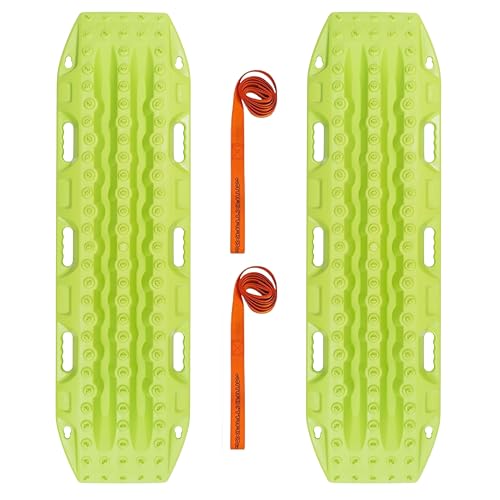
For parts, the math flips toward acting sooner, though not because of January. Duties already apply at 25%, the annex only grows through quarterly petitions, and suppliers raise prices on their own schedule. Also, a lift kit or tire set carries no financing penalty.
Tariff-exposed build parts



Will Truck Tariffs Lift Used 4×4 Values?
Wholesale data says no, at least through the middle of 2026. In mid-August 2026, the Manheim Used Vehicle Value Index read 207.4, down 1.2% from July and flat year over year. Non-adjusted wholesale prices fell 0.8% month over month. Notably, Cox Automotive called pickups soft, declining year over year as buyers rotated toward cheaper segments.
Retail tells a different story, so watch which number a headline uses. Average used-vehicle listing prices reached $27,239 in August 2026, up 7% year over year. Tight inventory of late-model trade-ins keeps retail firm.
Used truck prices did climb in 2025, when tariff effects supported higher wholesale values. Since then, the wholesale pattern has reversed. Cox forecast the index to finish 2026 about 2% above its December 2025 level, in line with the average annual move since 1998. No current report attributes 2026 used truck prices to duty changes.
A three-year-old truck carries no import duty either way, so the used lane stays the cleanest hedge against the January announcement.
The Verdict on Truck Tariffs and Your Next Truck
Buy before January 1 only when the truck carries Canadian content. Everything else in the announcement leaves your purchase alone, and the duties already in force landed in 2025 rather than next year. If your short list runs through Toledo, Wayne, San Antonio or Wentzville, the duty story reaches you mostly at the parts counter. All four plants sit in the United States.
Shoppers eyeing Oshawa in Ontario should treat the fourth quarter of 2026 as a real window. The 50% plan lacks legal text today, yet ordering early costs you little at a financing rate you would accept anyway. Watch for a proclamation in the Federal Register through November, because a January 1 start with no published rule by then would slip.
Buy on incentives and inventory instead of on a headline. Those levers move more money on a $67,000 pickup than the offset math does.
Parts and tires deserve their own timeline. Auto parts tariffs already apply at 25%, the annex grows every quarter, and suppliers keep raising prices independently. For anyone with flexibility, a late-model used 4×4 remains the strongest alternative.
Truck Tariffs FAQ
Which trucks pay the highest truck tariffs?
A Nissan Patrol or any 4×4 from outside North America, Japan, the EU, South Korea and the United Kingdom pays the full 25% rate. Japan-, EU- and Korea-built models such as the 4Runner and Lexus GX 550 pay 15%, while most United Kingdom builds pay 10%. USMCA-qualifying trucks from Canada and Mexico pay on non-United States content only.
Are tire prices going up because of tariffs?
Yes, though slowly. Tariffs on tires include the 25% parts duty in force since spring 2025 plus country-specific antidumping and countervailing duties. Tire makers announced increases of 1% to 4% across 2026, reaching 8% in select categories. A larger 2025 wave ran up to 25% on some light truck lines.
Do tariffs apply to aftermarket off-road parts?
Most of them, yes. The Section 232 parts annex covers bumpers, suspension components, wheels, brakes and radiators at 25%. USMCA-qualifying parts clear at 0%, although knock-down kits and parts compilations lose the exemption.
Will used truck prices rise because of tariffs?
Wholesale values tracked flat year over year in August 2026, with the Manheim index at 207.4 and pickups declining. Retail listing prices ran higher, averaging $27,239 and up 7% year over year. Import duties apply to new imports only, so a used purchase carries no direct duty exposure.
Should you buy a truck before January 1, 2027?
Only when the truck carries Canadian content. Vehicles assembled in the United States show no real tariff-driven MSRP increase. Canadian builds added about $4,000 and Japanese builds roughly $3,300 during 2025. Since the 50% plan carries no proclamation, treat it as a risk to manage rather than a certainty.
Related Reading
Every rate above traces to three primary sources. Those are the Federal Register notice on automobile imports, the October 2025 proclamation on medium- and heavy-duty vehicles, and CBP guidance messages. Rates reflect the record as of September 12, 2026.