


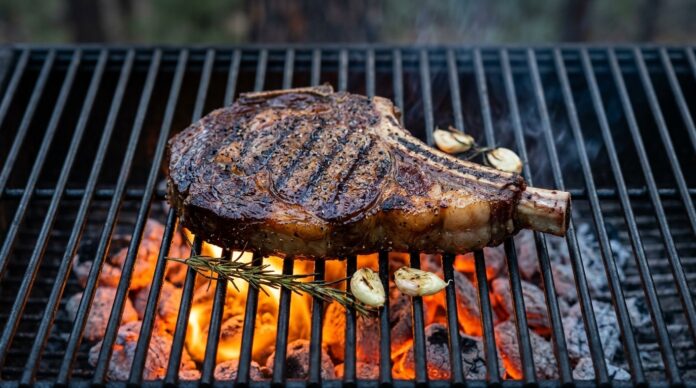
Quick Verdict: This campfire ribeye starts with a 1.5-inch bone-in steak, dry-brined with coarse salt 45 minutes ahead. Sear it on a grate over hot coals at 500F to 600F for 3 to 4 minutes per side. Then slide it to the cooler zone of a two-zone fire and probe it up to your target. USDA lists 145F with a 3-minute rest as the safe minimum for whole-muscle beef. Rest 8 minutes before slicing, because carryover adds another 5F.
Save this recipe for your next trip.
Last updated: August 2026 | Prep 15 min | Cook 15 min | Serves 4.
Written by Alex Schult
Editor in Chief of 4wdTalk.com. 15+ years of off-road and overlanding experience with 1,000+ hours on the trail.
This recipe was tested on an actual overland trip. Amazon affiliate links support 4wdTalk.com at no extra cost to you.
In This Recipe
Why This Recipe Works for Overlanders
A thick steak over open fire fails in two ways. Either the crust chars around a raw center, or a gray band forms under a weak sear. A campfire ribeye solves both problems with a two-zone fire. Hot coals on one side build the crust in 6 to 8 minutes. Meanwhile, the cooler side carries the interior up to temperature without adding more color.
Thickness and bone both matter here. A campfire ribeye at 1.5 inches, bone-in, is the right cut for fire work. Fat marbling renders as it heats and bastes the meat, so the steak forgives a coal bed running 50F hot. The bone slows heat transfer along one edge, which widens the window between medium rare and medium. Steaks under an inch overshoot before a sear finishes.
Dry brining handles the rest. Coarse salt applied 45 minutes ahead pulls moisture to the surface, then the meat reabsorbs it as a concentrated brine. The exterior dries during the wait, and a dry exterior browns faster over coals. No marinade, no sloshing bag in the cooler, and no acid softening the surface.
Equipment You Need
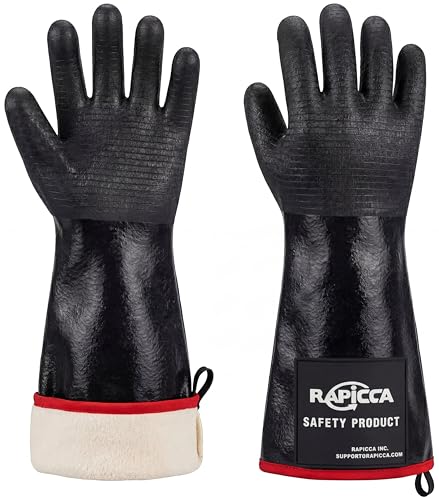
A campfire ribeye needs less gear than most fire-cooked mains, though three pieces are non-negotiable. First, a steel grate rated for direct coal contact holds the steak 3 to 4 inches over the bed. Second, long locking tongs flip an 18-ounce steak without dropping it in the ash. Third, an instant-read thermometer is the only honest way to read doneness on a thick cut. Heat gloves round out the kit, since raking a two-zone bed puts your hands over 600F coals.
Camp Kit for This Steak
- Folding steel grill grate, 12 by 24 inches, rated for direct coal contact.
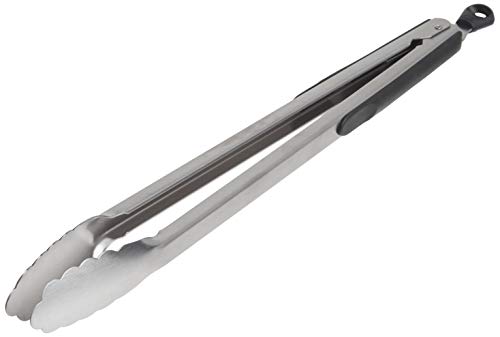
- Long locking tongs, 16 inches, for flipping the steak and raking coals.
- Instant-read digital thermometer with a 2 to 3 second read time.
- Heat-resistant gloves rated to at least 500F.
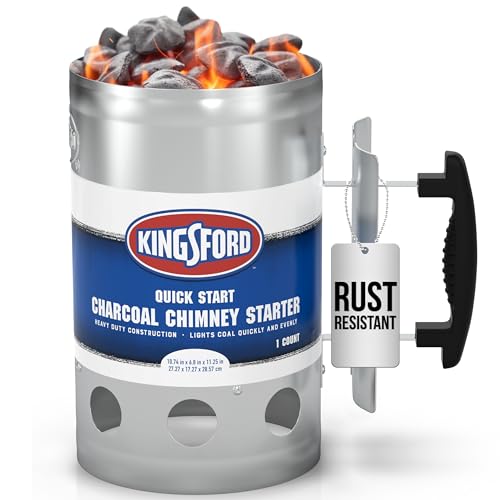
- Chimney starter, for a 20-minute coal bed when hardwood runs short.
- Cast iron skillet, 10.25 inches, for the butter baste and for flare-ups.
- Cutting board and a sharp 8-inch knife.
- Two hardwood splits per steak: oak, hickory, almond, or fruitwood.
Gear for This Recipe
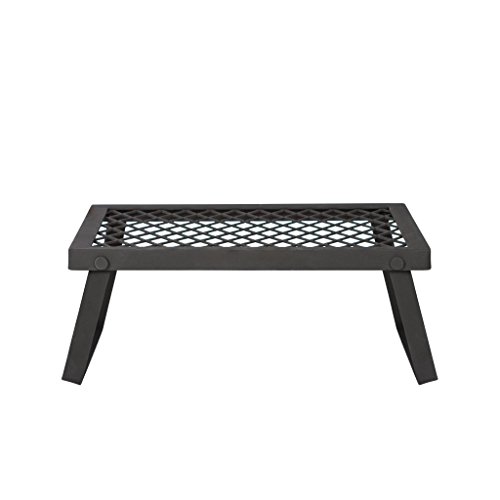
Amazon Basics Heavy-Duty Portable Camping Grill Grate for Outdoor O…

TempPro TempSwift 1 Sec Meat Thermometer Digital for Kitchen Cookin…
Ingredients
Serves 4 | Prep 15 min | Cook 15 min | Hot coals plus a cool zone.
- 2 bone-in ribeye steaks, 1.5 inches thick, 18 to 20 ounces each.
- 2 teaspoons coarse kosher salt, roughly 1 teaspoon per steak.
- 1 teaspoon coarse ground black pepper.
- 2 tablespoons beef tallow or another oil rated above 400F.
- 3 tablespoons salted butter.
- 4 garlic cloves, smashed.
- 2 sprigs fresh rosemary or thyme.
- Flaky finishing salt, for the sliced steak.
Step-by-Step Instructions
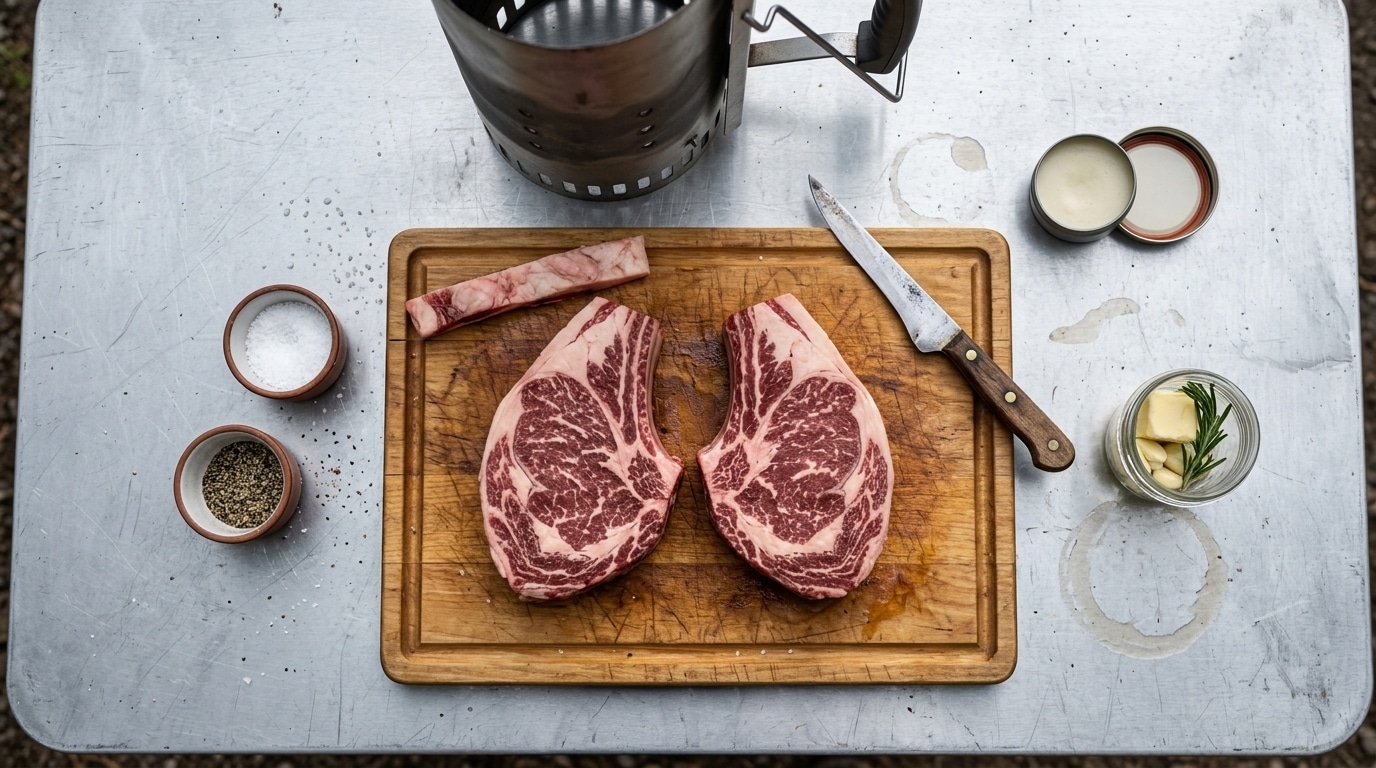
Home Prep
- Trim the fat cap down to 1/4 inch with a sharp knife. A thick cap drips more grease onto the coals and drives flare-ups.
- Bag each steak flat and stow them on the bottom cooler shelf at 40F or below, away from ready-to-eat food.
- Portion the kosher salt and pepper into one small container. Then no measuring happens beside a hot fire.
- Seal the butter, smashed garlic, and herb sprigs in a jar. Also stage two hardwood splits per steak and load the chimney starter.
At Camp
- Light the fire 45 to 60 minutes before dinner so the hardwood burns down to coals. A chimney of briquettes takes 15 to 20 minutes instead.
- While the fire works, salt the steaks on all sides, including the fat cap. Set them on a plate, uncovered, for 45 minutes under 75F ambient.
- Once the splits collapse into glowing chunks, rake two thirds of the coals to one side. Build the pile 2 to 3 inches deep, then spread the last third thin across the far side.
- Set the grate 3 to 4 inches over the bed and preheat it 5 minutes. A bare hand held 4 inches above the sear zone should force you away in 3 seconds.
- Pat the steaks dry, then coat them lightly with tallow. Season with the pepper now, since pepper applied earlier scorches during the sear.
- Lay the steaks over the hot zone and sear 3 to 4 minutes without moving them. Flip once with tongs and sear the second side another 3 to 4 minutes.
- Move both steaks to the cool zone and probe from the side, an inch off the bone. Add butter, garlic, and herbs to a skillet on the hot zone. Spoon the foam over the meat every minute.
- Pull each steak 5F under target, since carryover adds about 5F during the rest. Rest the campfire ribeye 8 minutes on a warm plate, slice against the grain, and finish with flaky salt.
Fire and Heat Management
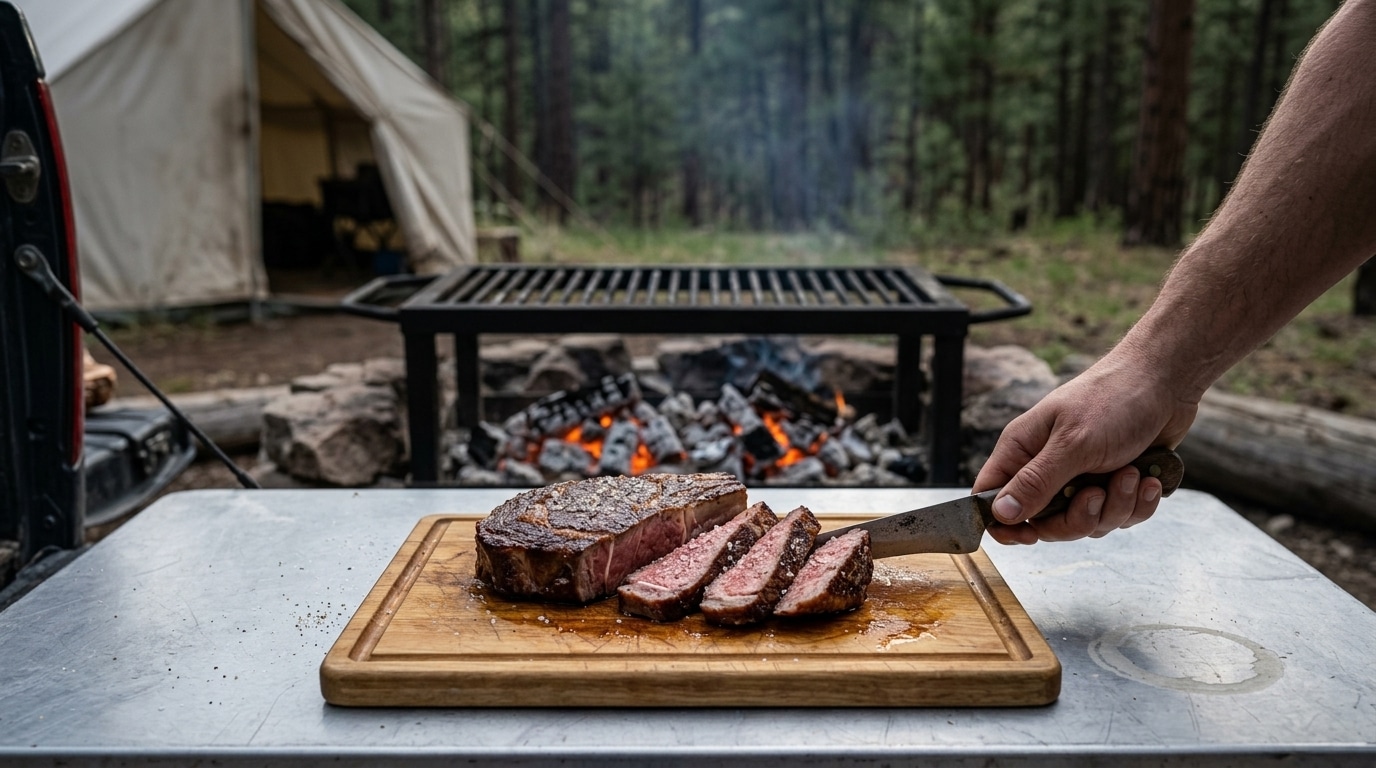
Coal temperature drives every number in this recipe. A campfire ribeye wants two heat levels inside one fire ring. The sear zone runs 500F to 600F, while the finish zone sits at 350F or lower. Read the bed by eye first, then confirm with a bare hand held 4 inches over the grate. Three seconds of tolerance means hot coals, while 5 to 6 seconds means medium.
| Heat Source | Appearance | Approx Temp | Common Use |
|---|---|---|---|
| Open flame | Active yellow-orange flames | 600F+ and uneven | Boiling water, searing skewers, marshmallows, popcorn |
| Hot coals | Bright orange, minimal ash | 500F-600F | Searing the campfire ribeye on a grate, cast iron skillet |
| Medium coals | Orange with gray ash | 350F-450F | Grate cooking fish, kebabs, pie irons, most mains |
| Low coals or embers | Mostly gray ash, soft glow | 250F-350F | Finishing the steak to target, dump cake, slow bakes |
Building the Two-Zone Fire
Start the fire 45 to 60 minutes before dinner. Two or three hardwood splits burn down to a usable bed inside an hour. A chimney of briquettes shortcuts the wait to 15 or 20 minutes. Once the wood collapses into glowing chunks, rake two thirds of the coals to one side. Pile them 2 to 3 inches deep for the sear.
Spread the remaining third across the far side in a thin layer, roughly one coal deep. Leave a 4-inch gap of bare ground between the zones so heat stops bleeding across. Grate height is the second lever on a campfire ribeye. Run the low setting for searing. Raise the grate or spread the coals thinner if the bed pushes past 600F.
Flare-Up Control
Fat renders out of a campfire ribeye the moment the meat hits 500F coals. Those drips ignite on contact and throw yellow flame up around the steak. Flame deposits soot and bitter compounds on the crust, so kill it fast. Move the steak to the cool zone with tongs and let the flare burn itself out, usually within 10 seconds.
Never squirt water on the coals. Steam blasts ash onto the food and drops bed temperature by 100F. Two habits prevent most flare-ups. First, trim the fat cap to 1/4 inch at home. Second, keep the sear zone raked flat, because grease pools in the low spots of a mounded bed. An inverted cast iron skillet held over the steak for 5 seconds smothers a stubborn flare.
Field Tips
Pull temperature is the one number worth memorizing. USDA lists 145F with a 3-minute rest as the safe minimum for beef steaks and chops. The agency safe temperature chart puts it alongside 165F for poultry. Cooking a campfire ribeye below 145F is a personal-preference call rather than the USDA minimum. The doneness ladder runs 125F rare, 130F to 135F medium rare, and 140F medium.
Carryover adds roughly 5F after the steak leaves the fire, so pull it 5F under target. A campfire ribeye pulled at 128F settles near 133F on the board. Rest it 8 minutes on a warm plate. Slicing early dumps the juice onto the board.
Probe from the side, never through the face of the steak. A thermometer entering the top of a 1.5-inch cut reads a temperature gradient rather than the true center. Slide the probe in horizontally until the tip reaches the middle, staying an inch clear of the bone. Bone reads cooler, so contact sends the reading 8F off course.
Weather moves the whole timeline. Wind over 10 mph burns fuel faster and creates hot spots, so build a rock windbreak on the upwind side. Below 40F ambient, add 3 to 5 minutes to the finish stage and expect to feed the fire more often. More fire-side workflow lives in our Camp Cooking for Overlanders guide.
Fire and Cleanup Gear


Variations and Substitutions
Once the base campfire ribeye method is dialed, these swaps change the result without breaking the two-zone structure. Change one variable per cook.
- Dirty steak on the coals: Skip the grate and lay the salted steak straight onto clean hardwood coals. Knock the ash off first with a few hard fan strokes. Sear 4 to 5 minutes per side, brush the surface, then finish on the cool zone. Use untreated hardwood only, never briquettes with binders.
- Reverse sear: Start on the cool zone until the interior reads 110F, roughly 20 minutes. Then move the steak to the hot coals for 90 seconds per side.
- Boneless ribeye: A boneless cut at the same thickness cooks 2 to 3 minutes faster. Start probing at the 8-minute mark and shorten the finish stage.
- Cast iron finish: Sear on the grate, then move the steak into a preheated 10.25-inch skillet on the cool zone. Basting works better in a pan than over open grate bars.
- Coffee and chile rub: Add 1 teaspoon of finely ground coffee and 1/2 teaspoon of ancho chile powder to the pepper. Apply both at the fire, since rubs darken fast at 550F.
- Tomahawk or cowboy cut: A 2-inch tomahawk needs the same sear plus 12 to 18 minutes on the cool zone. Prop the long bone against a rock, clear of the coals.
- Compound butter finish: Mash 3 tablespoons of butter with garlic, parsley, and salt at home. A slice melting over the rested steak replaces the skillet baste.
- Charcoal-only build: Two chimneys of briquettes create both zones without hardwood. Dump one chimney deep on the sear side, then spread a half chimney thin on the finish side.
Storage and Leftovers
Sliced leftovers keep 3 to 4 days in a cooler holding under 40F. Wrap the meat tight in foil, then bury it under ice rather than resting it on top. Cooler lids leak warm air, so a buried package holds temperature longer. Toss anything left above 40F for more than 2 hours.
Reheat leftover campfire ribeye gently, because a second hard sear turns medium rare into shoe leather. Warm the slices in a covered skillet on medium coals for 3 to 4 minutes with a spoonful of butter. USDA calls for reheating leftovers to 165F, so probe before serving. Cold slices also work on a breakfast hash the next morning, no reheat required.
Frequently Asked Questions
What temperature should a campfire ribeye reach?
USDA sets 145F with a 3-minute rest as the safe minimum for whole-muscle beef steaks. Anything below 145F is a personal-preference choice rather than the published minimum. The ladder runs 125F rare, 130F to 135F medium rare, and 140F medium. Pull the steak 5F under target, since carryover adds about 5F during the rest.
How long do you sear a ribeye over campfire coals?
Three to four minutes per side over hot coals reading 500F to 600F. A campfire ribeye at 1.5 inches builds a full crust in 6 to 8 minutes of sear time. After the second side, move the steak to the cool zone and finish by temperature rather than by the clock. Thickness and coal depth shift the timing more than any other factor.
Do you need a grate, or does dirty steak work better?
Both produce a strong crust. A grate gives cleaner control and no ash on the surface. Dirty steak laid on clean hardwood coals sears faster and picks up more smoke character. Use hardwood coals only for the dirty method, never briquettes with binders or wood treated with fluid.
Why dry brine a campfire ribeye 45 minutes ahead?
Salt pulls moisture to the surface first, then the meat reabsorbs the brine as seasoning. Forty-five minutes covers the exchange while leaving the exterior dry to the touch. A dry exterior browns faster over coals, so the crust forms before the center overshoots. Under 15 minutes leaves surface water sitting on the steak, which steams instead of searing.
How do you stop flare-ups when cooking steak over a fire?
Move the steak to the cool zone and let the flare burn out, usually inside 10 seconds. Never splash water on the coals, because steam throws ash onto the food and drops bed temperature by 100F. Trimming the fat cap to 1/4 inch prevents most flare-ups. Keeping the sear bed raked flat stops grease from pooling in low spots.
How thick should the steak be for this method?
One and a half inches is the target, at 18 to 20 ounces of bone-in weight. Cuts under an inch reach 145F before a crust develops, so the sear and the interior finish out of sync.
How long should the steak rest before slicing?
Eight minutes on a warm plate. During the rest, carryover raises the internal temperature about 5F while the muscle fibers relax and reabsorb juice. Slicing at minute two spills the liquid onto the board.
Which wood works best for a campfire ribeye?
Oak, hickory, almond, and fruitwood all burn down to dense, long-lasting coals. Oak is the workhorse, because it holds sear temperature for 30 minutes or more. Softwoods like pine burn fast, throw sparks, and leave resinous smoke on the meat. Two splits per steak covers the sear and the finish.
You Might Also Like
- Campfire Cooking Recipes
- Camp Cooking for Overlanders
- Campfire Kebabs (recipe coming soon)
- Campfire Grilled Chicken Quarters (recipe coming soon)
- Coal-Roasted Potatoes (recipe coming soon)