


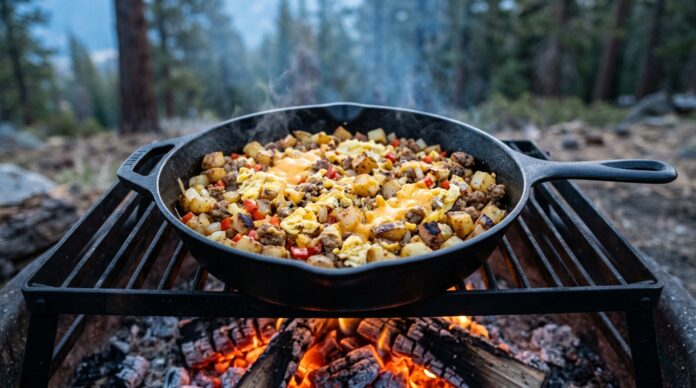
Quick Verdict: This campfire breakfast skillet builds a full morning meal in one 10-inch cast iron pan: breakfast sausage, diced potatoes, onion, peppers, eggs, and sharp cheddar. Par-cook the potatoes at home, brown everything over hot coals, then finish the eggs over medium coals. Twenty-five minutes at the fire, one pan to wipe out, and four people eat before the tents come down.
Save this recipe for your next trip.
Last updated: August 2026 | Prep 15 min | Cook 25 min | Serves 4
Written by Alex Schult
Editor in Chief of 4wdTalk.com. 15+ years of off-road and overlanding experience with 1,000+ hours on the trail.
This recipe was tested on an actual overland trip. Amazon affiliate links support 4wdTalk.com at no extra cost to you.
In This Recipe
Why This Recipe Works for Overlanders
A campfire breakfast skillet clears the morning bottleneck at camp. Sausage, potatoes, and eggs share one pan, so nothing sits cold while a second batch cooks. Cast iron also holds heat well past the moment it leaves the coals, which keeps the last serving as hot as the first. One pan means one cleanup while the coffee finishes.
Heat staging drives the whole recipe. Hot coals at 500F to 600F crisp the potato edges and render the sausage fat in under ten minutes. After the browning stage, a move to medium coals at 350F to 450F drops the pan into egg territory, where 160F arrives without a rubbery curd. Two zones in one fire ring cover both stages with no extra gear.
Weight works in your favor here. A 10-inch skillet runs about 5 pounds, so it rides in a drawer system without babying. The seasoned surface resists coal grit, ash, and scrapes from a metal spatula. Nothing else in a camp kitchen takes a 600F coal bed at 7 a.m. and a wet rag five minutes later.
Equipment You Need
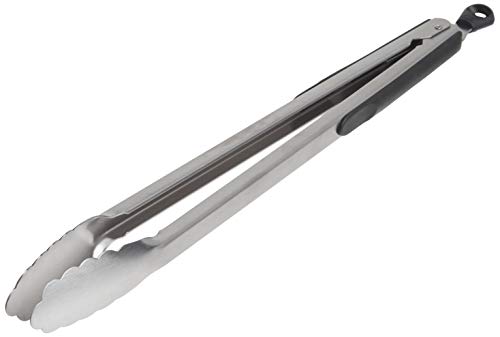
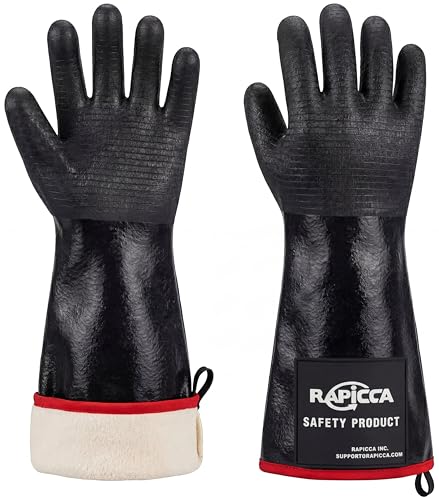
A 10-inch cast iron skillet anchors this campfire breakfast skillet recipe, alongside the core kit covered in Camp Cooking for Overlanders. Ten inches feeds four people without crowding the potatoes, and crowded potatoes steam instead of crisping. Set the skillet on a folding camp grill grate rather than straight on the coals, since a grate lets you slide the pan between zones. Long locking tongs move hot food and reposition coals from a safe distance. Heat-resistant gloves rated to at least 500F handle the pan move, because the handle reaches coal temperature within four minutes. Add an instant-read thermometer to confirm the sausage hits 160F before the eggs go in.
Camp Kitchen Checklist
- 10-inch preseasoned cast iron skillet
- Folding camp grill grate, 12 by 24 inches or larger
- 16-inch locking tongs
- Heat-resistant gloves rated 500F or higher
- Instant-read thermometer
- Metal or stiff nylon spatula
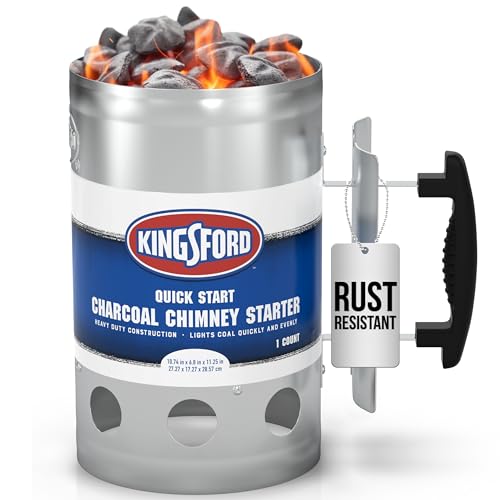
- Chimney starter plus hardwood or briquettes
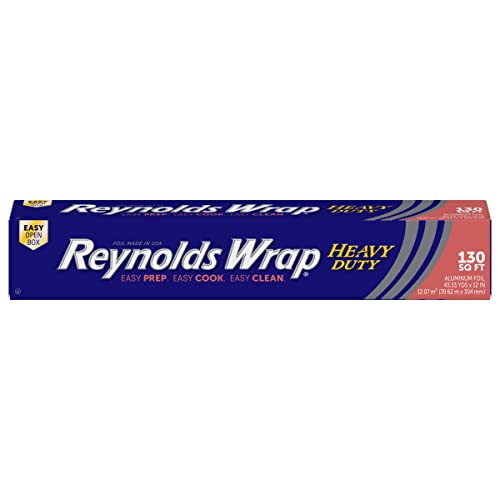
- Heavy duty foil for a lid and for leftovers
- Stiff plastic scraper and a water bottle for cleanup
Gear for This Recipe

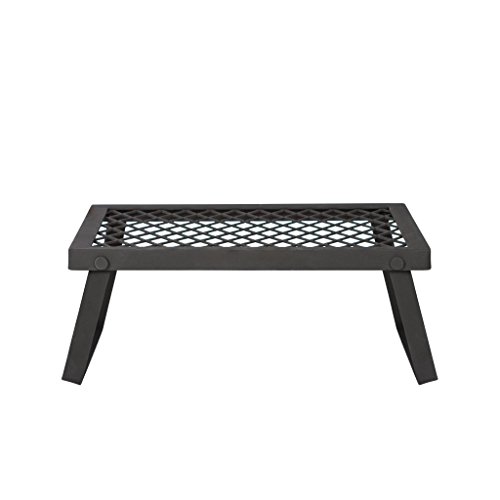
Amazon Basics Heavy-Duty Portable Camping Grill Grate for Outdoor O…
Ingredients
Serves 4 | Prep 15 min | Cook 25 min | Hot coals, then medium coals
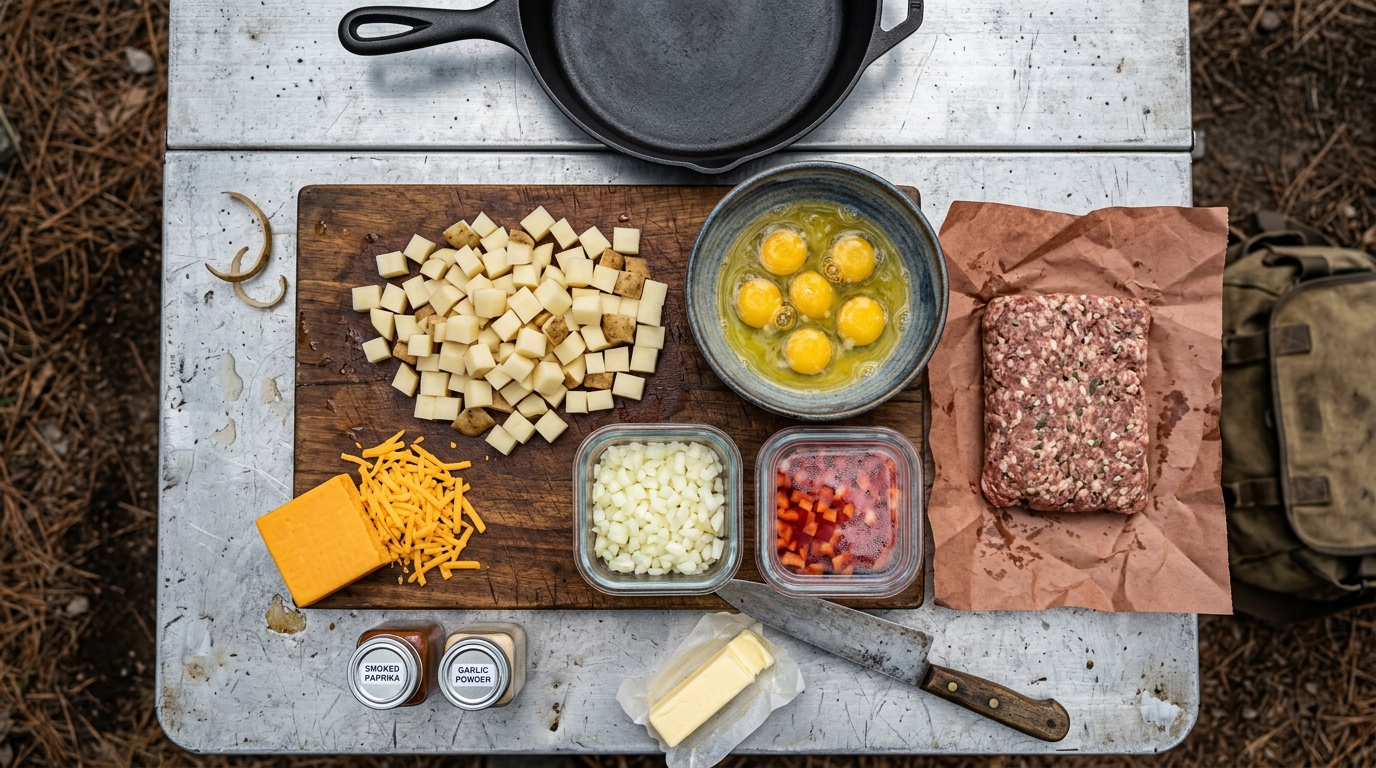
- 1 pound ground breakfast sausage, or 8 slices thick-cut bacon
- 1.5 pounds russet potatoes, diced into half-inch cubes
- 8 large eggs, beaten
- 1 medium yellow onion, diced
- 1 red bell pepper, diced
- 1 cup shredded sharp cheddar
- 2 tablespoons vegetable oil
- 2 tablespoons butter
- 1 teaspoon smoked paprika
- 1 teaspoon garlic powder
- Salt and black pepper, to taste
- Hot sauce, optional
Step-by-Step Instructions
Home Prep
- Dice the potatoes into half-inch cubes. Boil them 8 minutes, until a fork meets slight resistance, then drain and cool. Par-cooking cuts skillet time by 12 minutes.
- Dice the onion and the bell pepper. Store both in one sealed container.
- Mix the smoked paprika, garlic powder, salt, and pepper in a small jar.
- Crack the eggs into a leakproof bottle and shake. Beaten eggs pour faster at camp, and the bottle keeps shell fragments out of the drawer system.
- Shred the cheddar and bag it. Hold the sausage, eggs, and cheese in the cooler below 40F until breakfast.
At Camp
- Build the fire 45 to 60 minutes ahead so hardwood burns down to coals. A chimney of briquettes takes 15 to 20 minutes instead.
- Rake the coals into two zones. Bank a deep bed on one side for hot coals at 500F to 600F. Spread a thin layer on the other side for medium coals. Set the grate over both zones.
- Preheat the skillet over the hot zone for 3 minutes, then add the oil. Drop in the sausage and break it apart with the spatula. Brown 5 to 6 minutes.
- Push the sausage to one side of the pan. Add the potatoes in a single layer and leave them alone 4 minutes, then stir once and crisp 3 minutes more.
- Stir in the onion, pepper, and spice mix. Cook 3 minutes, until the onion turns translucent. Confirm the sausage reads 160F on the thermometer.
- Slide the skillet to the medium zone. Add the butter, then pour the eggs across the whole surface.
- Stir slowly every 20 seconds until the eggs read 160F, roughly 4 minutes. Pull the pan off the grate, scatter the cheddar over the top, tent with foil 2 minutes, and serve.
Fire and Heat Management
Coal temperature decides whether the potatoes crisp or steam. Read the bed by eye before the skillet goes on. Then confirm by holding your hand 5 inches above the grate. Three seconds of tolerance means hot coals, and six seconds means medium. Grate height also controls heat, so raise the grate or spread the coals to drop temperature. The same two-zone bed drives most of the Campfire Cooking Recipes in this series.
| Heat Source | Appearance | Approx Temp | Common Use |
|---|---|---|---|
| Open flame | Active yellow-orange flames | 600F+ and uneven | Boiling water for coffee, too hot for the skillet |
| Hot coals | Bright orange, minimal ash | 500F-600F | Browning sausage and crisping potatoes in the campfire breakfast skillet |
| Medium coals | Orange with gray ash | 350F-450F | Setting the eggs and melting the cheddar |
| Low coals or embers | Mostly gray ash, soft glow | 250F-350F | Holding the cooked skillet warm for second servings |
Field Tips
Dry the potatoes before they hit the pan. Surface water drops the skillet below the browning point, so wet cubes steam into mush. Spread them on a towel while the sausage browns.
Trust the thermometer over the clock on both proteins. Ground pork sausage needs 160F internal, and eggs need 160F as well, per the USDA safe temperature chart. Probe the thickest sausage crumble rather than the pan edge, since edges run hotter than the center.
Wind over 10 mph burns fuel faster and creates hot spots across the bed. Stack rocks or use the fire ring wall as a windbreak on the upwind side. Rotate the skillet a quarter turn every 2 minutes when gusts push flame toward one edge.
Ambient temperature under 40F adds 3 to 5 minutes and burns more fuel. Above 5,000 feet, water boils lower and cooking runs slower, so add 5 minutes to the potato boil at home. Keep a foil sheet handy as a lid, because a covered pan recovers heat faster in cold air.
Fire and Cleanup Gear

Variations and Substitutions
The base campfire breakfast skillet takes swaps well once the two-zone timing feels natural. Change one element at a time, so the pan stays at the right heat when the eggs go in.
- Bacon instead of sausage: Cook 8 slices of thick-cut bacon first, then pull it out and crumble it. Reuse the rendered fat for the potatoes and fold the bacon back in with the cheese.
- Chorizo version: Swap in 1 pound of fresh Mexican chorizo and skip the paprika. Cook to 160F, then finish with cotija and cilantro.
- Hash brown shortcut: Frozen shredded hash browns replace the par-boiled potatoes. Add them straight from the cooler and cook 2 extra minutes.
- Southwest build: Stir in 15 ounces of drained black beans and a diced jalapeno with the onion. Finish with pepper jack instead of cheddar.
- Vegetarian skillet: Drop the sausage and add 8 ounces of sliced mushrooms plus one diced zucchini. Cook the vegetables 6 minutes before the eggs go in.
- Dairy-free build: Skip the cheese and butter, then use an extra tablespoon of oil for the eggs. The potatoes still crisp the same way.
- Breakfast burrito conversion: Warm 8-inch flour tortillas on the grate for 20 seconds per side. Spoon the skillet in, roll, and wrap in foil for a trail lunch.
- Sweet potato swap: Sweet potatoes need 6 minutes of par-boiling rather than 8, and they scorch faster over hot coals. Move them to the medium zone one minute early.
Storage and Leftovers
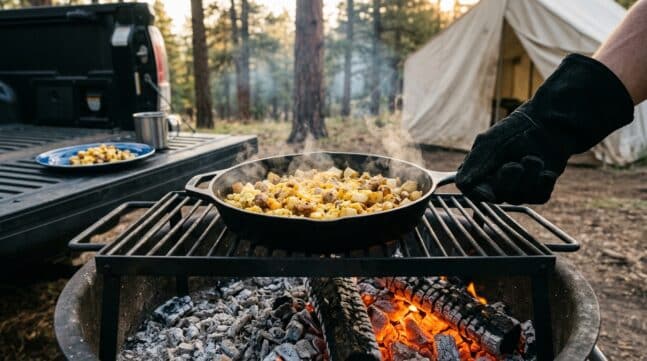
Leftover campfire breakfast skillet keeps in a sealed container in the cooler at under 40F for 2 days. Cool the food before it goes in, since a hot container warms every drink around it. Pack the eggs and potatoes together rather than in separate bags, because a full container holds cold longer.
Reheat on medium coals for 5 to 7 minutes, stirring twice, until leftovers reach 165F. Add a splash of water and cover with foil, so the potatoes soften rather than scorch. Wipe the warm skillet with a paper towel, scrape stuck food with a plastic scraper, then rinse and dry it over the last of the coals. A thin coat of oil before storage keeps rust out of the drawer system.
Frequently Asked Questions
What size cast iron skillet works best for a campfire breakfast skillet?
A 10-inch skillet feeds four people without crowding. Twelve inches serves six, though the extra weight and the wider heat footprint make coal management harder. Under 10 inches, the potatoes stack up and steam instead of crisping.
How hot should the coals be for a campfire breakfast skillet?
Start over hot coals at 500F to 600F for the sausage and the potatoes. Then move the pan to medium coals at 350F to 450F before the eggs go in. Eggs above 450F set into rubber within seconds.
Do you need to par-cook the potatoes at home?
Par-boiling half-inch cubes for 8 minutes cuts skillet time from 20 minutes to 7. Raw potatoes work, though they need a foil lid and closer heat management. Par-cooked cubes also brown more evenly across the pan.
What internal temperature should the sausage and eggs reach?
Ground pork sausage reaches 160F, and eggs reach 160F as well. Check the sausage with an instant-read thermometer in the thickest crumble. Eggs at 160F look set, with no visible liquid across the surface.
How do you keep eggs from sticking to cast iron over a campfire?
Preheat the pan, add fat, then drop the heat before the eggs go in. A seasoned surface with 2 tablespoons of butter releases eggs cleanly at 350F to 450F. Stirring every 20 seconds also keeps curds off the bottom.
Bacon or sausage in a campfire breakfast skillet?
Both work well. Sausage renders more fat for the potatoes and needs no removal step, while bacon adds crunch and a smokier note. Cook bacon first, pull it out, then return the crumbles at the end so it stays crisp.
How long does a campfire breakfast skillet take at camp?
Cook time runs 25 minutes once the coals are ready. Add 45 to 60 minutes for a hardwood fire to burn down, or 15 to 20 minutes for a chimney of briquettes. Home prep the night before takes 15 minutes.
How do you clean a cast iron skillet at camp?
Scrape the pan while it stays warm, then rinse with hot water and no soap. Dry it over the coals for 2 minutes, until no moisture remains on the surface. Finish with a thin coat of oil on the cooking surface.
You Might Also Like
- Campfire Cooking Recipes
- Camp Cooking for Overlanders
- Breakfast Skewers (recipe coming soon)
- Pie Iron Breakfast Sandwiches (recipe coming soon)
- Cowboy Coffee (recipe coming soon)