



Some links below are Amazon affiliate links. If you buy through them, they support 4wdTalk at no extra cost to you.
Quick Facts:
- Topic: Budget overland build for new and 2WD owners
- Skill level: Beginner friendly
- Starter budget: Under $5,000 including a used vehicle
- Gear-only budget: $800 to $1,500 if you already own a truck or SUV
- First upgrades: AT tires, recovery gear, sleep and kitchen kit, tire deflator
- What a 2WD rig handles: Fire roads, most Forest Service roads, dispersed camping
- Best for: Budget-minded overlanders who refuse to spend $60K to start
8 min read
In This Guide
Budget Overland Build Overview: You Do Not Need $60K
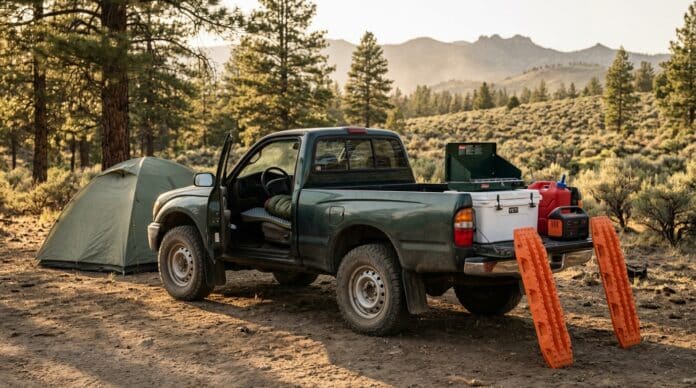
A budget overland build proves one thing quickly. You reach the campsite in the same spot whether you drove a $70,000 rig or a $6,000 one. I have built and tested both, and the truth is blunt. Most of what sells expensive builds sits parked at the trailhead while the cheap stuff does the work. So the gatekeeping around “buy a Raptor first” misses how overlanding functions.
This guide speaks to three readers. First, the beginner who wants to camp off pavement without a loan. Second, the 2WD truck or SUV owner told their rig is useless. Third, anyone intimidated by six-figure Instagram builds. Because the entry point sits far lower than the hype suggests, more people belong out there than they realize.
Compared to a fully kitted rig, a budget setup trades comfort features for the same trail access. You still air down, still air back up, and still sleep under the same stars. However, you skip the $8,000 slide-in camper and the dual-battery lithium bank. Instead, you spend where it counts and pocket the difference for fuel and permits. Budget overlanding rewards this focus more than any single expensive part.
Budget Overland Build Tiers and a Sub-$5K Starter
Overlanding on a budget works best when you match spending to real needs. Below, three tiers show what each dollar range buys. Notably, the jump from Tier 1 to Tier 2 delivers the biggest capability gain per dollar.
| Tier | Total Cost | What You Get |
|---|---|---|
| Tier 1: Bare Start | $300 to $800 in gear | Recovery boards, tire deflator, ground tent, cooler, water jugs |
| Tier 2: Capable Kit | $1,200 to $2,000 in gear | AT tires, recovery kit, power station, camp kitchen, GMRS radio |
| Tier 3: Full Starter Rig | Under $5,000 with vehicle | Used 4-cyl truck or SUV plus the Tier 2 kit |
Here is a sub-$5K starter build I would put together today. An older, higher-mileage four-cylinder truck or SUV runs $3,000 to $3,800 in most markets. Then add a used set of AT tires for $450, X-BULL recovery boards for around $108, a tire deflator and 12V compressor for $90, a $199 power station, and a $250 ground tent and sleep system. This totals roughly $4,300 to $4,700. Consequently, budget overlanding gets you camping anywhere legal within a weekend of buying.
Today’s Best Value
Skip $300 MAXTRAX and Still Get Unstuck
X-BULL recovery boards do the same job in sand and mud for a fraction of the price. They are the smartest first buy on any tight budget.
Where Capability Truly Comes From
Trail capability comes from three cheap things far more than from expensive mods. First, tires grip the ground, so they matter more than horsepower or lift height. Second, recovery gear gets you out when tires alone fail. Third, trip planning keeps you off terrain your rig cannot handle in the first place.
Consider a common scenario. A stock RAV4 on fresh AT tires, aired down to 22 psi, will follow a graded Forest Service road where a lifted rig on worn highway tires struggles. Because traction and float beat brute force on most surfaces, the cheap rig wins. The myth of spending your way to access falls apart under field conditions.
Planning is the free upgrade nobody markets. Reading a Motor Vehicle Use Map, checking recent trail reports, and knowing when snowmelt turns clay to soup prevents most stranding situations. As a result, a thoughtful driver in a modest vehicle out-travels a reckless one in an expensive build. Skill and homework compound; dollars alone do not.
What a 2WD Rig Handles and Its Limits
A 2WD truck or SUV handles more than the internet admits. On dry graded surfaces, it reaches most trailheads and campsites people visit each weekend. For 2WD overlanding, honest expectations matter more than horsepower. Below sits the split between reasonable use and real limits.
Realistically, a 2WD rig covers fire roads, the majority of Forest Service roads (FSRs), gravel county roads, and the dispersed camping on public land drawing most beginners outdoors. According to the Bureau of Land Management, millions of acres of public land sit open to dispersed camping, and most of it connects by maintained road. Add a limited-slip or a locking rear differential, and a rear-wheel-drive truck becomes surprisingly stubborn in loose dirt and light mud.
Still, limits are real and worth respecting. Deep sand, technical rock crawling, steep loose climbs, and unplowed snow demand four-wheel drive and low range. Meanwhile, low ground clearance on a car-based crossover ends the trip faster than the missing second axle. For this reason, matching the route to the rig protects both your day and your oil pan.
The Highest-Value Cheap Upgrades First
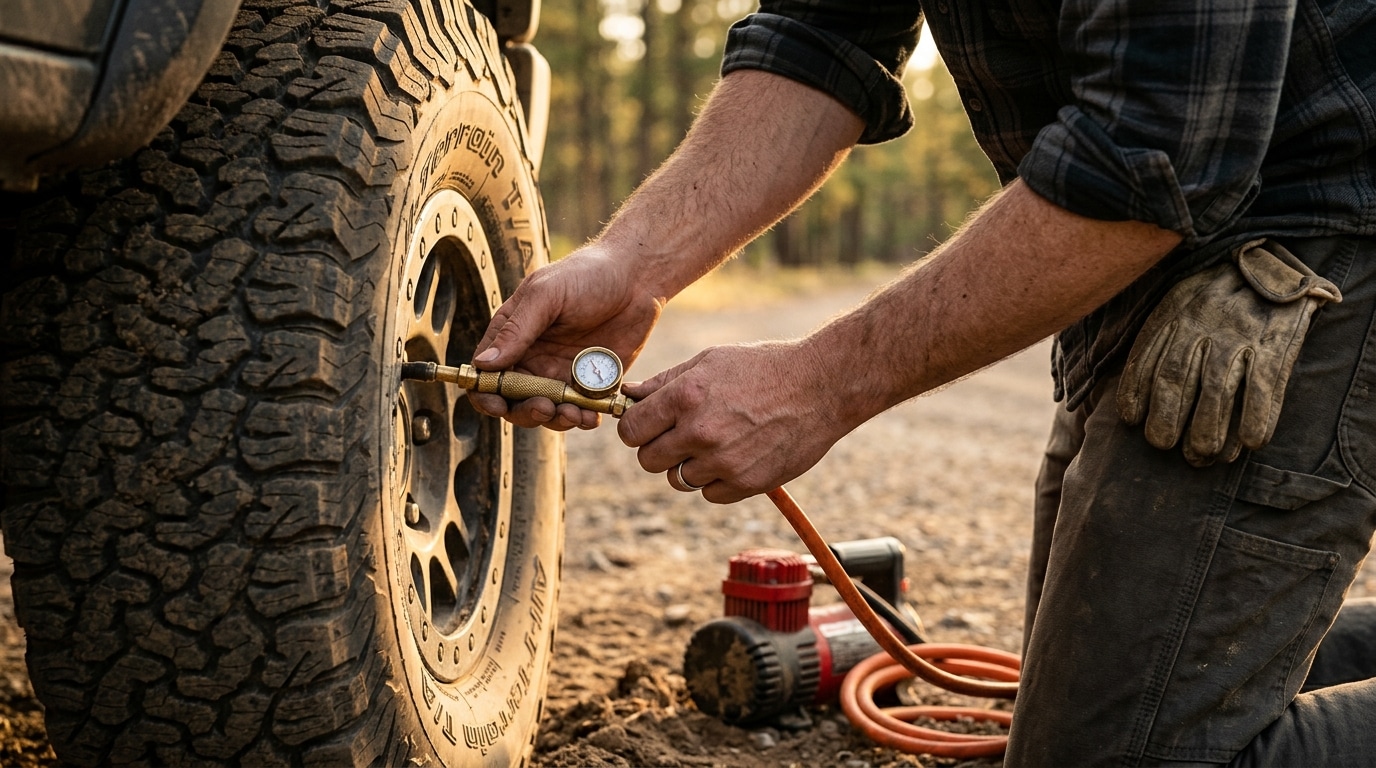
Spend in this order, because the first dollars return the most capability. All-terrain tires top the list. A quality set runs $600 to $900 new, or $300 to $500 used, and they transform grip on dirt, gravel, and wet grass. Above all, tires do more for access than any suspension mod at this budget.
Recovery gear comes second. A pair of traction boards, a rated recovery strap, a shackle set, and gloves cost under $200 together. This kit turns a stuck afternoon into a five-minute fix. For a fuller breakdown, our guide to off-road recovery gear covers what belongs in a starter kit. Similarly, a $90 tire deflator and 12V compressor let you air down for traction and air back up for pavement, which is arguably the cheapest performance upgrade in overlanding.
A Basic Sleep and Kitchen Setup
Sleeping and eating gear ranks third, since comfort keeps you out longer. A $150 to $300 ground tent, a foam pad, and a warm bag cover shelter. A two-burner propane stove, a cheap cooler, and stackable totes handle the kitchen. Later, a portable power station keeps phones, lights, and a 12V fridge running through a weekend. These items also double for family camping, so the money works twice.
What to Skip Early
Several popular purchases add cost without adding trail access early on. Skip the roof-top tent at first. A $1,500 tent raises your center of gravity, cuts fuel economy, and does the same job as a $250 ground tent for your first season. Likewise, hold off on a winch. Recovery boards and a strap solve almost every beginner situation for a tenth of the price.
Suspension lifts also wait. A two-inch lift looks the part, yet it changes little on the graded roads a starter rig should run. Similarly, snorkels, light bars, and full skid-plate packages solve problems you have not met yet. Some interior additions do earn their keep, though, so our list of essential interior upgrades flags the cheap ones worth adding first. Spend on tires, recovery, and sleep before anything cosmetic.
Buying a Used Platform Wisely
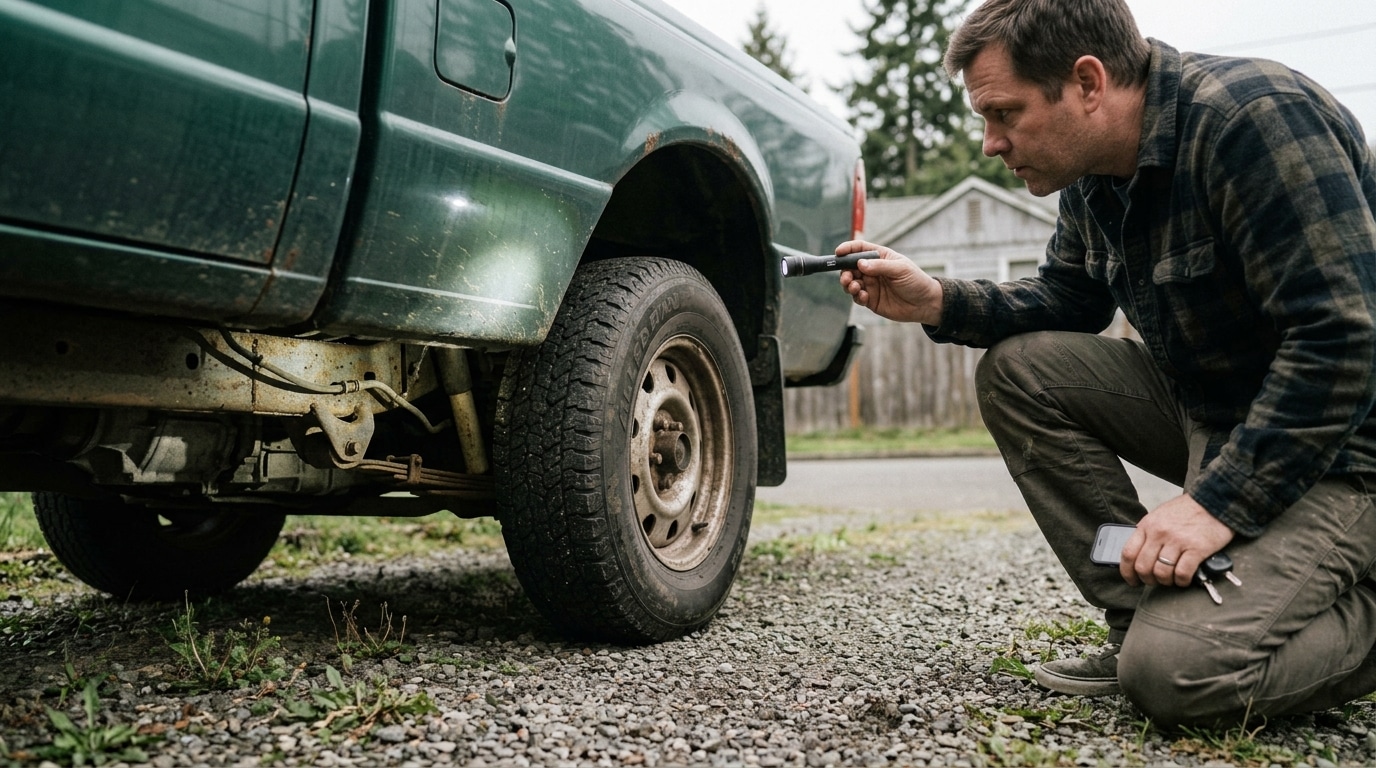
The vehicle is the biggest line item, so buy it well. Reliability beats capability for a first rig, because a truck in the shop travels nowhere. Older four-cylinder Toyota, Honda, and Nissan models earn their reputation, and even a base 2WD trim serves fine. A high-mileage engine with clean records beats a pretty rig with a mystery past.
Inspect the boring parts before the fun ones. Check for rust on the frame and brake lines, confirm the maintenance history, and budget $500 for immediate fixes on any used purchase. Deciding between body styles is worth a read too; our guide to choosing a truck or an SUV weighs cargo space against enclosed storage. A used 4Runner or Tacoma costs more but holds value; a Frontier, RAV4, or older F-150 saves cash upfront. Consequently, your budget and your local market should drive the pick, not brand loyalty.
Final Verdict
A budget overland build fits the beginner, the 2WD owner, and anyone who refuses to spend $60K to sleep in the dirt. Its greatest strength is simple. You spend on the few things creating access, and you ignore the many things creating only photos. For most new overlanders, this focus delivers full weekends outdoors for the price of a single expensive mod.
The trade-offs stay honest. If your goal is technical rock crawling, deep sand dunes, or serious winter travel, a cheap 2WD rig will disappoint you, and you should save toward a proper four-wheel-drive platform instead. For everyone else chasing fire roads and quiet campsites, the modest rig delivers the same view.
On value, nothing else in the hobby comes close. Under $5,000 buys a running vehicle and a genuinely capable kit, while a single flatbed camper costs triple the total. Therefore, the smart first move is a reliable used truck or SUV, all-terrain tires, and a basic recovery and sleep setup. Start there, log real trips, and let experience, not marketing, tell you what to upgrade next. If you outgrow it, a used Tacoma on 33s is the logical next step.
Power Your First Camp
Run Lights and a Fridge Without a Dual-Battery Build
The Jackery Explorer 300 packs 292Wh into a 7.5 lb box and keeps a starter camp powered all weekend for a fraction of a wired setup.
Frequently Asked Questions
Is 2WD overlanding a real option for beginners?
Yes, and more of it than people expect. A 2WD truck on all-terrain tires handles fire roads, most Forest Service roads, and dispersed camping on dry graded surfaces. It struggles only in deep sand, snow, and technical terrain, where four-wheel drive earns its place.
How much does a budget overland build cost?
A gear-only budget runs $800 to $1,500 if you already own a truck or SUV. A full starter rig, including a reliable used vehicle, fits under $5,000. Overlanding on a budget rewards spending on tires and recovery first, then adding comfort gear over time.
What are the first overland upgrades to buy?
Buy in this order: AT tires, recovery gear, a tire deflator and compressor, then a basic sleep and kitchen kit. These four categories create nearly all real trail access for the money. Cosmetic and heavy mods should wait until you log real trips.
Do you need 4WD for dispersed camping?
Not for most sites. The majority of dispersed camping areas connect by maintained gravel or dirt roads within reach of a 2WD rig on good tires. Four-wheel drive helps for remote or seasonal spots, yet it is not a requirement for the average weekend.
Is a used truck a good overland platform?
A reliable used truck is the smartest overland platform for a tight budget. Older four-cylinder Toyota, Honda, and Nissan models offer proven durability at low prices. Inspect the frame for rust, confirm service history, and budget for immediate repairs before you commit.
What overland gear should beginners skip?
Skip roof-top tents, winches, suspension lifts, and light bars at first. They add cost without adding access on the roads a starter rig should run. Spend the money on AT tires, recovery gear, and a solid sleep system instead.