



Quick Facts:
- Topic: Removing ticks and preventing bites on the trail
- Removal tool: Fine-tipped tweezers, no folk remedies
- Method: Grasp at the skin, pull straight up, steady pressure
- Lyme window: Most cases need a tick attached more than 24 hours (CDC)
- Most dangerous stage: Nymphs, poppy-seed size, peak April through July
- Top prevention: 0.5% permethrin on clothing and gear, EPA repellent on skin
- Best for: Campers, hikers, overlanders, and their dogs
8 min read
In This Guide
- How to Remove a Tick and Stay Ahead of Lyme
- Common US Ticks and What They Carry
- How to Remove a Tick the Right Way
- What Not to Do: Skip the Folk Remedies
- What to Do After a Tick Bite
- Tick-Borne Illness Signs to Watch
- How to Get Rid of Ticks and Prevent Bites
- Tweezers vs. Tick-Removal Tools
- Final Word Before You Hit the Trail
- Frequently Asked Questions
How to Remove a Tick and Stay Ahead of Lyme
A tick bite turns a great trip into a month of worry, so the simplest skill is knowing how to remove a tick fast and clean. Ticks wait in tall grass and brush, latch on as you pass, and feed for days if you let them. The good news: quick removal and a little prevention shut down most of the risk. This guide walks you through tick identification, the exact removal steps, the warning signs of Lyme and spotted fever, and the gear to keep ticks off you in the first place.
Ticks matter most for the overland and camping crowd because you spend your weekends exactly where they live. Dispersed sites, brushy trails, and tall summer grass all put you in their path. Treating tick awareness as part of basic camping safety keeps a fun weekend from following you home.
Back in Army basic training at Fort Leonard Wood, Missouri, our drill sergeants passed down a backwoods trick: bite the head off a wooden match and swallow it, since the sulfur in your sweat supposedly drives ticks away. We did it, of course. A mouthful of match head surely ranks among the healthiest things a soldier ever swallowed. Here is the truth: it does nothing to ticks, and match heads hold potassium chlorate and other chemicals no one should eat. Skip the folklore, and lean on the gear and repellents proven to work.
Common US Ticks and What They Carry
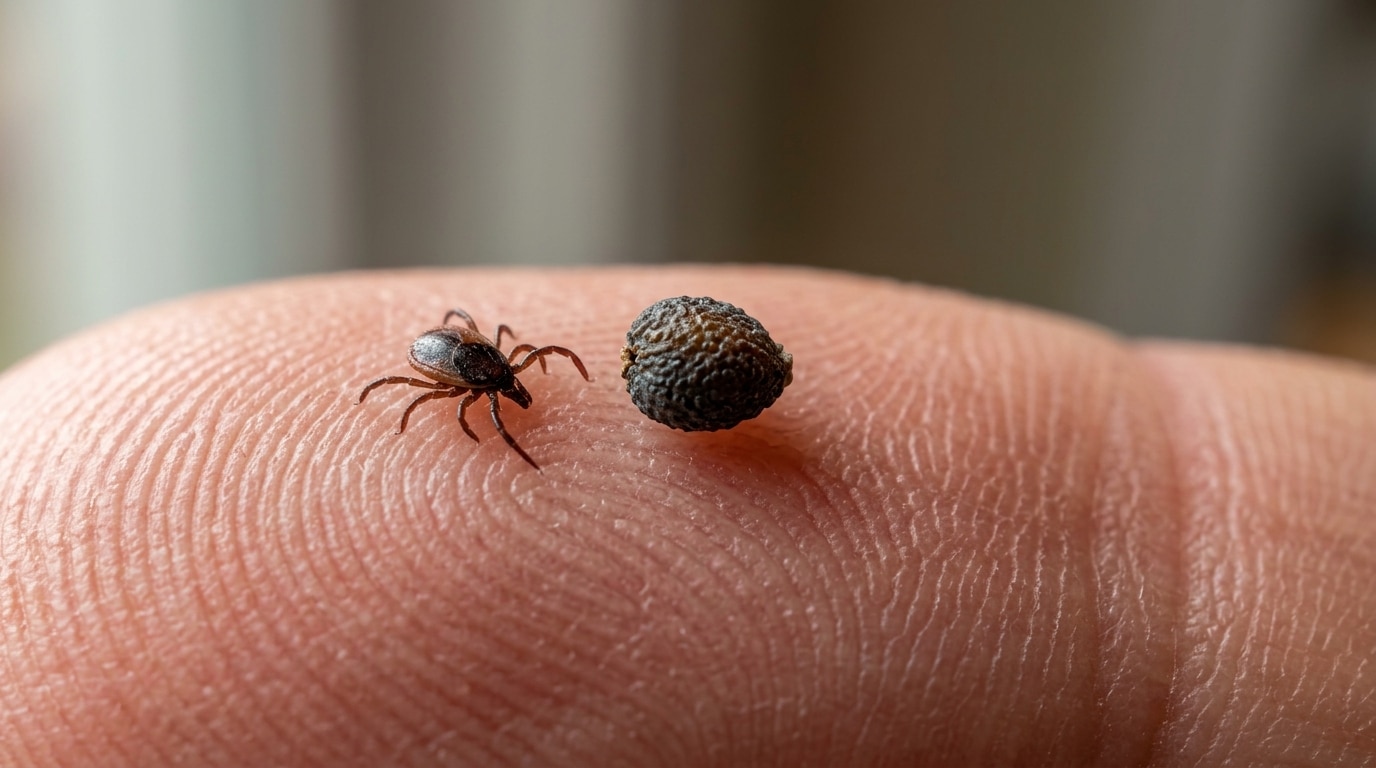
Different ticks carry different diseases, so a quick look at the species near you sharpens your guard. The blacklegged tick spreads Lyme; the others bring their own list. Nymphs are the real threat, since a poppy-seed tick is easy to miss until it has fed.
| Tick | Where | Carries |
|---|---|---|
| Blacklegged (deer) tick | Eastern US, upper Midwest | Lyme, anaplasmosis, babesiosis |
| Western blacklegged tick | Pacific Coast | Lyme, anaplasmosis |
| American dog tick | East of the Rockies | Rocky Mountain spotted fever, tularemia |
| Lone star tick | Southeast, East, Midwest | Ehrlichiosis, STARI, alpha-gal allergy |
| Brown dog tick | Nationwide, Southwest border | Rocky Mountain spotted fever |
Stop Ticks Before They Bite
Permethrin Gear Spray
Treat your clothing, boots, and pack with 0.5% permethrin. It kills ticks on contact and lasts through several washes. Use on gear, never on skin.
How to Remove a Tick the Right Way
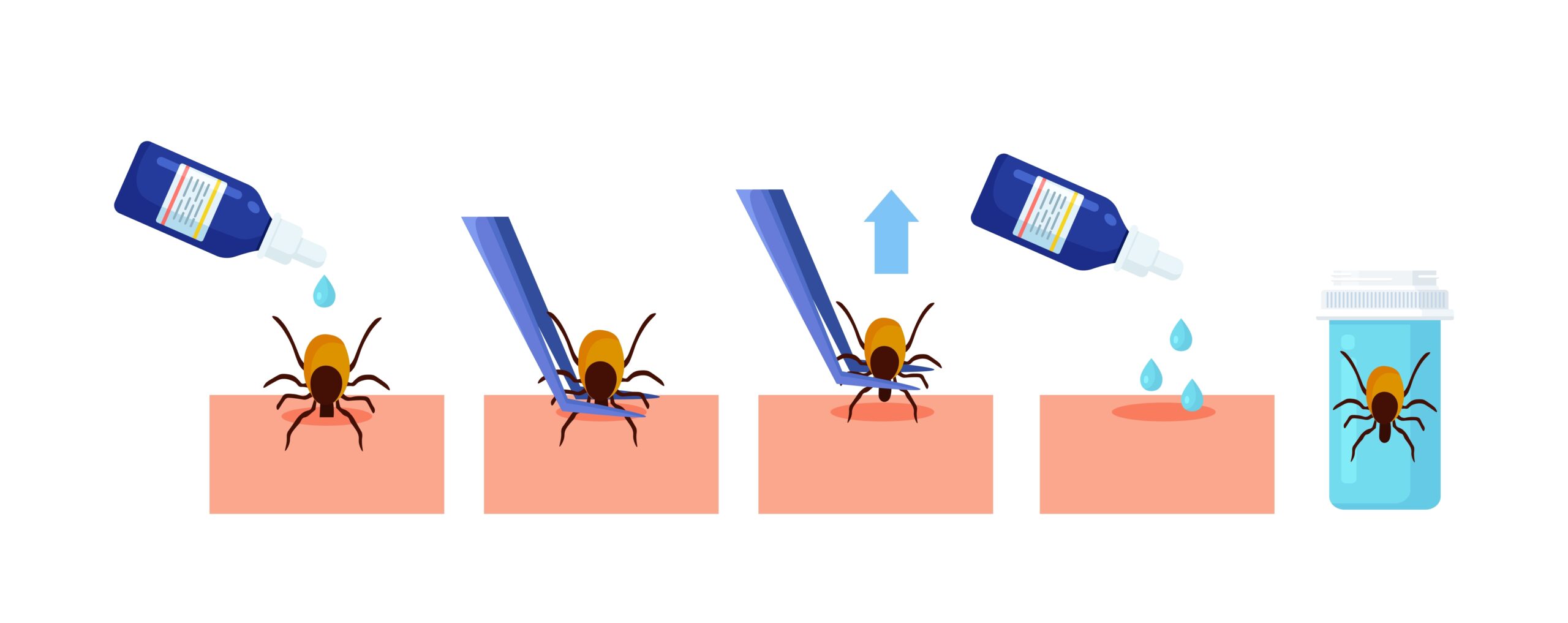
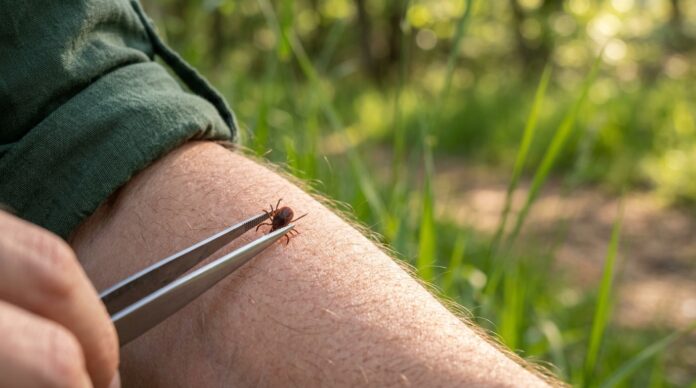
The CDC method for how to remove a tick is plain and proven. Grab fine-tipped tweezers, skip the folk remedies, and work fast, because removing the tick within 24 hours sharply lowers your Lyme risk. Follow these four steps.
- Grasp the tick with fine-tipped tweezers as close to your skin as possible.
- Pull straight upward with steady, even pressure. Do not twist or jerk, since twisting breaks off the mouthparts.
- Clean the bite and your hands with soap and water or rubbing alcohol.
- Kill the tick in alcohol, seal it in tape or a bag, or flush it. Never crush it with bare fingers.
The best way to remove a tick is the boring way: slow, steady, and straight up. Speed of removal beats any clever trick, so reach for the tweezers the moment you spot one. Good tick removal starts before the trip, with the right tools already packed. A well-stocked first aid kit keeps fine-tipped tweezers within reach at camp.
Sometimes a tick head stuck in skin stays behind after you pull. Leave it alone if it does not lift out easily, because your skin pushes the fragment out as it heals. Digging and picking raise the infection risk more than the leftover mouthparts do. After removal, run a full-body check, since one attached tick often means others are crawling.
What Not to Do: Skip the Folk Remedies
Folk remedies make tick removal worse, not better. The CDC warns against petroleum jelly, nail polish, heat, or any substance meant to make a tick back out on its own. Each one irritates the tick and pushes more infected fluid into the bite. The burning-match trick from my training falls under the same rule: unproven and risky.
Twisting, squeezing the body, and waiting for the tick to let go all raise your odds of infection. A panicked yank leaves mouthparts behind, while a slow squeeze empties the tick’s gut into your skin. Pull it straight out and move on. Simple wins here.
What to Do After a Tick Bite
Once the tick is out, log the details before you forget them. Note the date and where you likely picked it up, then photograph the tick if you still have it, since the species hints at which diseases matter most. Knowing what to do after a tick bite comes down to three habits: record the bite, watch your body, and act early if symptoms show.
Watch the bite and your skin for a rash or fever over the following weeks. See a doctor if either shows up within several weeks of the bite, and tell the provider when and where it happened. Do not bother mailing the tick to a testing lab, because the CDC notes a positive tick does not confirm infection, and symptoms usually appear before results return.
Cover Exposed Skin
Pack a Skin Repellent Too
An EPA-registered spray with DEET or picaridin guards the skin your permethrin-treated clothing does not cover. One bottle in the rig covers the whole crew.
Tick-Borne Illness Signs to Watch
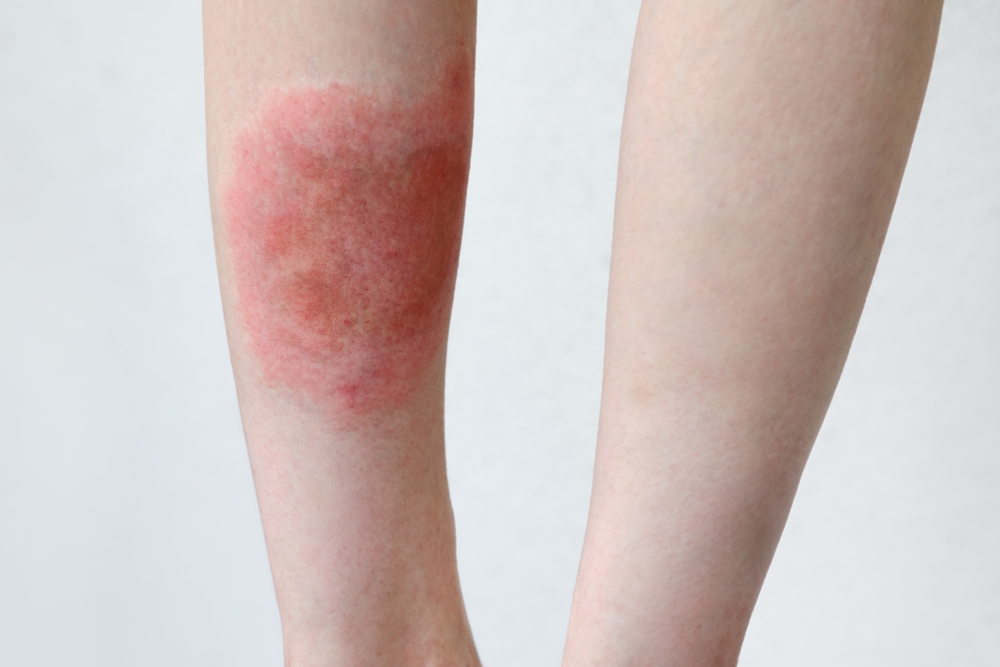
Most tick bites cause nothing worse than a small, itchy bump. The diseases ticks carry, however, deserve real respect. Lyme disease shows an expanding rash, called erythema migrans, in roughly 70 to 80 percent of infected people, usually 3 to 30 days after the bite. The rash spreads up to 12 inches across and sometimes clears in the center for a target look, though it does not always form a clean bull’s-eye. Fever, chills, headache, fatigue, and aching joints often arrive with or without any rash.
Rocky Mountain spotted fever is the emergency in this group. Fever and headache come first, and the rash usually appears 2 to 4 days after the fever starts. Treated early with doxycycline, it resolves; caught late, it kills. For this reason, a high fever within a week or two of a tick bite means you call a doctor now, rather than waiting for a rash to confirm it.
How to Get Rid of Ticks and Prevent Bites
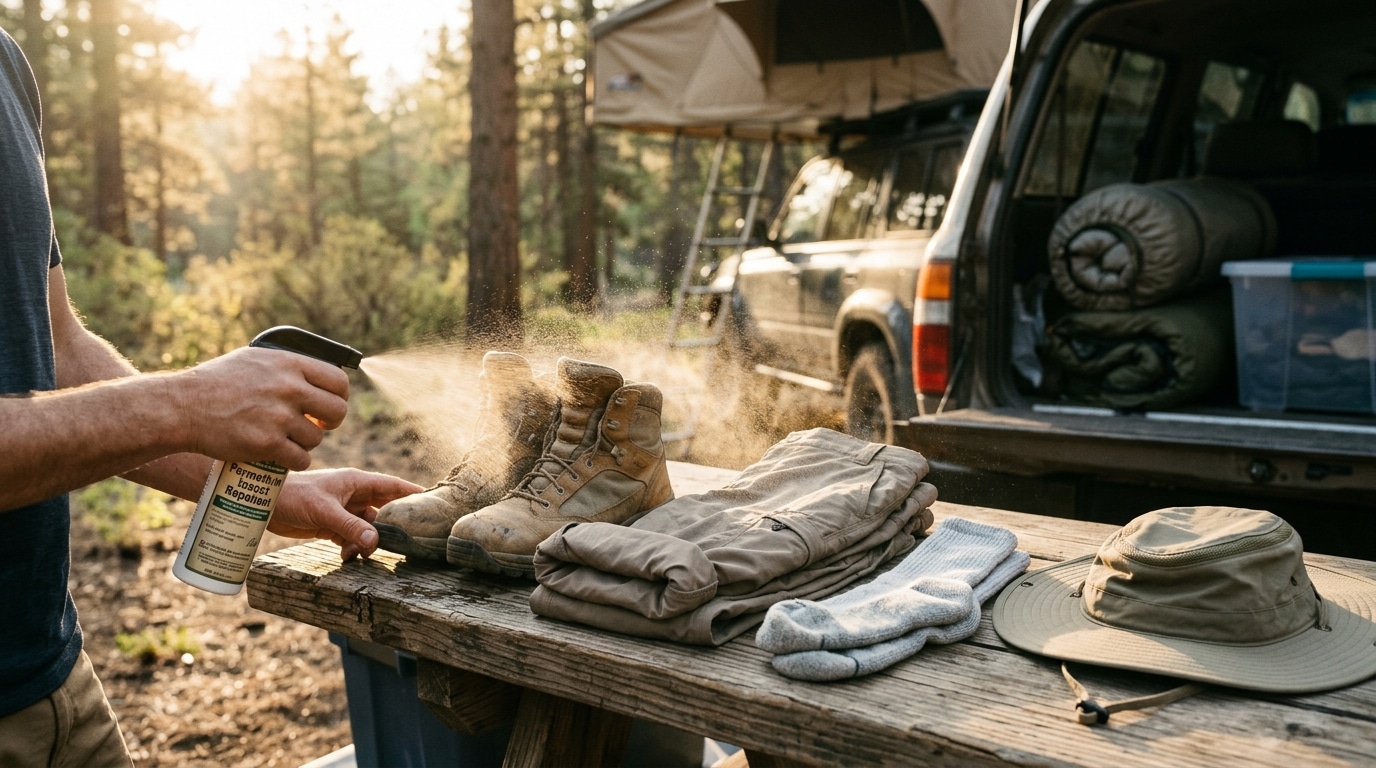
Learning how to get rid of ticks before they reach skin beats every removal trick. Treat your clothing, boots, and pack with 0.5 percent permethrin, which kills ticks on contact and survives several washes. Apply permethrin to gear and clothing only, never to skin. For exposed skin, use an EPA-registered repellent with DEET, picaridin, IR3535, or oil of lemon eucalyptus.
Dress to block access. Tuck long pants into your socks, wear light colors to spot crawlers early, and walk down the center of the trail away from tall grass. Families with kids find the same habits work at any age, a point covered in our camping with kids guide.
Back at camp or home, a few habits finish the job. Run your clothes through a dryer on high heat for 10 minutes to kill hidden ticks. Shower within two hours, then run a full-body check: scalp, ears, armpits, waist, and behind the knees. Your dog needs the same check, since ticks ride in on fur and find you later. Our guide to overlanding with dogs covers canine first aid for the trail. Knowing how to get rid of ticks at the source, your gear and your skin, keeps the whole group safer.
Tweezers vs. Tick-Removal Tools
Tweezers versus a dedicated tick tool is a fair question, since both make tick removal quick when you act fast. Fine-tipped tweezers cost little, live in any first aid kit, and grip the tick close to the skin. Tick-removal tools, the little notched plastic hooks, slide under the tick and lift with less pinching, which helps with tiny nymphs and squirming dogs.
For one tick a year, tweezers win on simplicity. Frequent trips through tick country justify a dedicated tool in the kit. The best way to remove a tick is the one you have on hand and use correctly. Either way, the rule holds: grasp low, pull straight, and skip the folklore.
Final Word Before You Hit the Trail
Reading the trail for ticks ranks beside water and weather as a survival basic. Knowing how to remove a tick is half the battle; stopping the bite is the other half. Most bites end in a harmless bump, yet the small share carrying Lyme or spotted fever make speed and prevention worth the habit.
Prevention is never perfect. Nymphs the size of a poppy seed hide in folds and hairlines, so a missed check happens to everyone. When a bite turns into a spreading rash or a fever, treat it as a doctor’s visit, not a wait-and-see.
The cheapest insurance costs a few dollars. A bottle of permethrin for your clothes, a skin repellent, and tweezers in the kit stack the odds in your favor for a whole season. Spend the little bit now, and the trail stays fun.
Forget the match heads. Spot the ticks, treat your gear, and carry a real repellent so a night in the brush never turns into a month of fevers.
Ready to Gear Up?
Check Today’s Price on Tick Repellent
Treat your gear with permethrin and pack a skin spray before the next trip. A few dollars of repellent beats a month of fevers and doctor visits.
Frequently Asked Questions
What is the best way to remove a tick?
Grip the tick with fine-tipped tweezers as close to the skin as possible, then pull straight up with steady pressure. Do not twist, squeeze the body, or use heat. Clean the bite afterward, and save the tick in a bag in case you need to show a doctor.
What should you do about a tick head stuck in skin?
Try to lift it out gently with tweezers. If a tick head stuck in skin will not come free easily, leave it alone and let your body push it out as the skin heals. Picking at it raises the infection risk more than the small fragment does.
How long does a tick need to be attached to give you Lyme?
In most cases, a blacklegged tick must feed for more than 24 hours before it passes the Lyme bacterium, according to the CDC. Removing the tick within a day greatly lowers your risk. Other tick-borne diseases transmit on different timelines, so prompt removal always helps.
Do all ticks carry Lyme disease?
No. Only blacklegged and western blacklegged ticks spread Lyme, and many of them carry nothing at all. Blacklegged ticks across much of the Southeast are almost never infected. Other ticks carry different illnesses, which is why identifying the species helps.
What does a tick bite look like compared to a mosquito bite?
A fresh tick bite often looks like a small red bump, much like a mosquito bite, and it usually fades in a day or two. Watch instead for a rash growing over several days or a bump with the tick still attached. An expanding rash needs a doctor.
Does eating sulfur or a match head keep ticks away?
No. No public-health agency recognizes sulfur or match heads as a tick repellent, and the evidence behind the folk trick is thin to none. Match heads also hold chemicals no one should swallow. Stick with permethrin on your gear and an EPA-registered repellent on your skin.