



Quick Facts:
- Vehicle: Ford Ranger Super Duty (toughest factory Ranger)
- Engine: Retuned 3.0-liter V6 turbodiesel, 10-speed automatic
- Traction: Locking front and rear diffs, two-speed transfer case
- Ground clearance: Almost 300 mm (about 11.8 inches)
- Wading depth: 850 mm (about 33.5 inches)
- Fuel tank: 130 liters standard (about 34 gallons)
- Extra cargo: Over 1,000 kg (about 2,200 lb) more than a standard Ranger
- Best for: Overlanders and remote workers who carry and tow heavy loads
9 min read
In This Article
Ford Ranger Super Duty Overview: A Heavy-Duty Mid-Size Truck
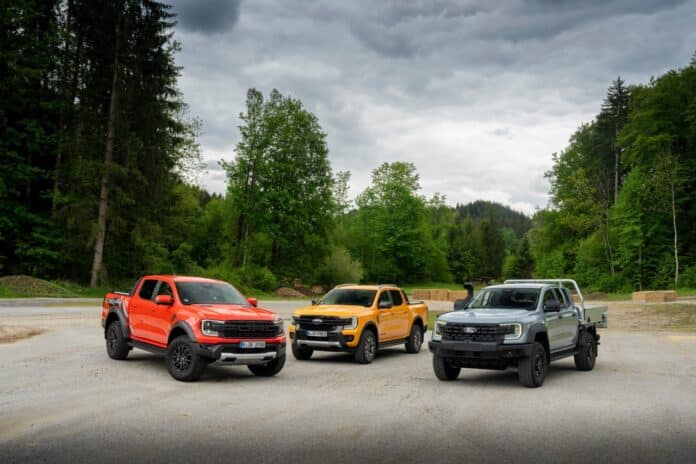
The Ford Ranger Super Duty is the toughest factory Ranger Ford has built. Ford engineered it for drivers who carry and tow heavy loads into hard-to-reach places. As a result, the Ranger Super Duty pairs mid-size agility with heavy-duty hardware. For overlanders and remote workers, this combination opens routes a standard mid-size truck struggles to reach.
Ford first launched the truck in Asia-Pacific markets such as Australia, New Zealand, and Thailand, then brought it to Europe. Read Ford’s own Ranger Super Duty engineering briefing for the full background. Demand came from operators at the extreme edge of capability: mining, remote emergency services, defense, and heavy forestry. Because these buyers used to upgrade trucks themselves, Ford built the upgrades into the factory truck instead.
Under the hood sits a 3.0-liter V6 turbodiesel paired with a 10-speed automatic. Ford retuned both for heavy loads and long stretches off pavement. Moreover, the truck keeps Ranger comfort and tech, including a 12-inch SYNC touchscreen and heated seats, so you do not trade daily livability for capability.
The headline gain is load capacity. Ford says the Ranger Super Duty carries and tows roughly a tonne more than a standard Ranger, which works out to over 2,200 pounds of extra cargo capability. For context, the truck lets you pack a full overland kit, water, fuel, and a camper without maxing out the chassis.
Key Specs at a Glance
| Specification | Details |
|---|---|
| Engine | Retuned 3.0L V6 turbodiesel |
| Transmission | 10-speed automatic |
| Differentials | Electronic locking front and rear |
| Transfer case | Two-speed, intelligent all-wheel drive |
| Ground clearance | Almost 300 mm (about 11.8 in) |
| Wading depth | 850 mm (about 33.5 in) |
| Wheel hubs | Eight-stud pattern, larger bolts |
| Fuel tank | 130 liters (about 34 gallons) |
| Cooling | Increased 25 percent over standard Ranger |
| Extra cargo | Over 1,000 kg (about 2,200 lb) |
What Makes the Ranger Super Duty Different
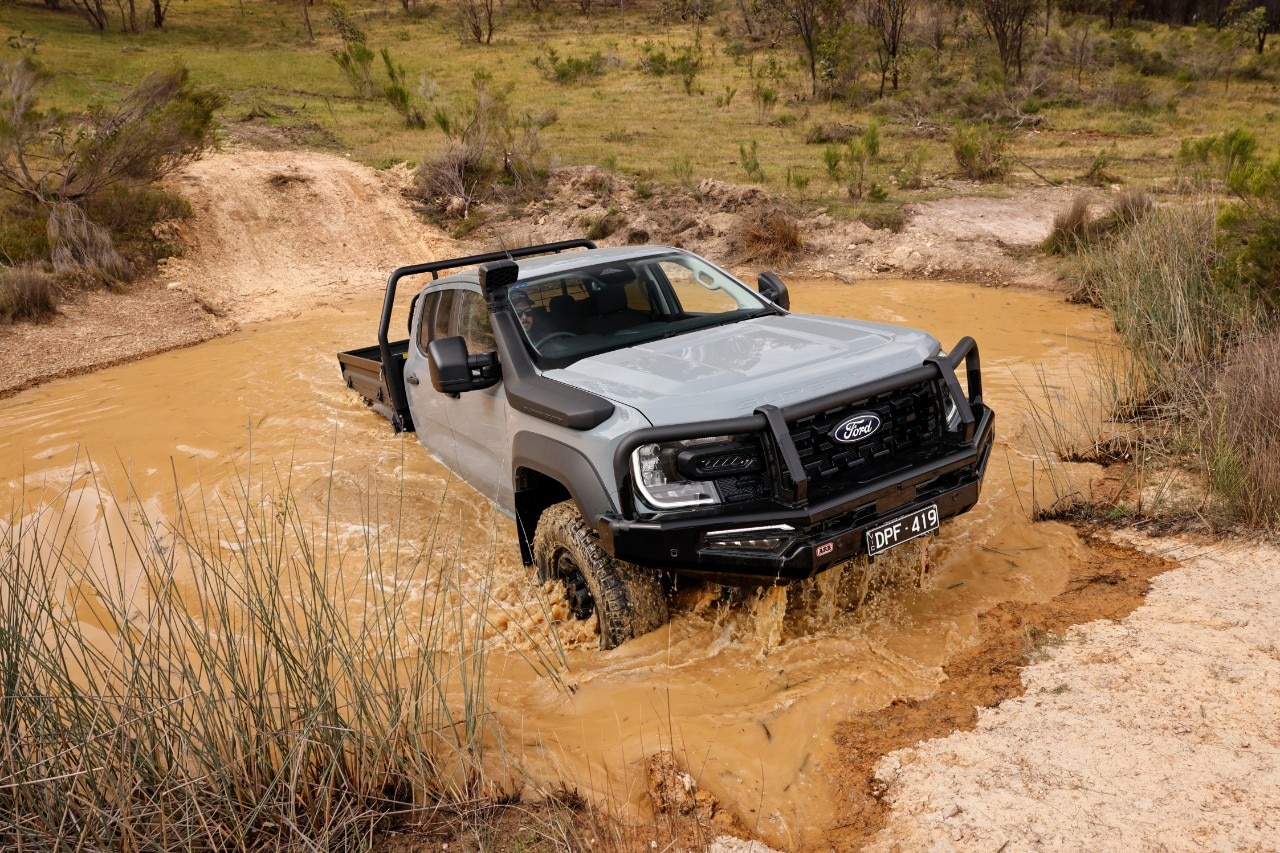
Ford did most of the work in the hardware, not the styling. The Ranger Super Duty gets a thicker chassis frame, reinforced driveshafts, and upgraded suspension. It also carries the strongest rear axle Ford has ever fitted to a Ranger. Together, these parts let the truck handle weight a standard Ranger cannot match.
The wheel hubs tell the same story. Ford moved to an eight-stud hub pattern with larger bolts to manage the higher loads. In addition, the tow bar mount and recovery hooks gained extra strength. Because Ford reinforced these high-stress points, the truck holds up under repeated heavy towing and recovery.
Cooling and fuel both scale up for the extra duty. Ford increased cooling capacity by 25 percent, which helps the engine and transmission shrug off heavy pulls and slow technical trails. In addition, a 130-liter fuel tank comes standard, giving you about 34 gallons of range between fill-ups. For remote travel, the big tank matters as much as any off-road part.
Off-Road Hardware and Clearance
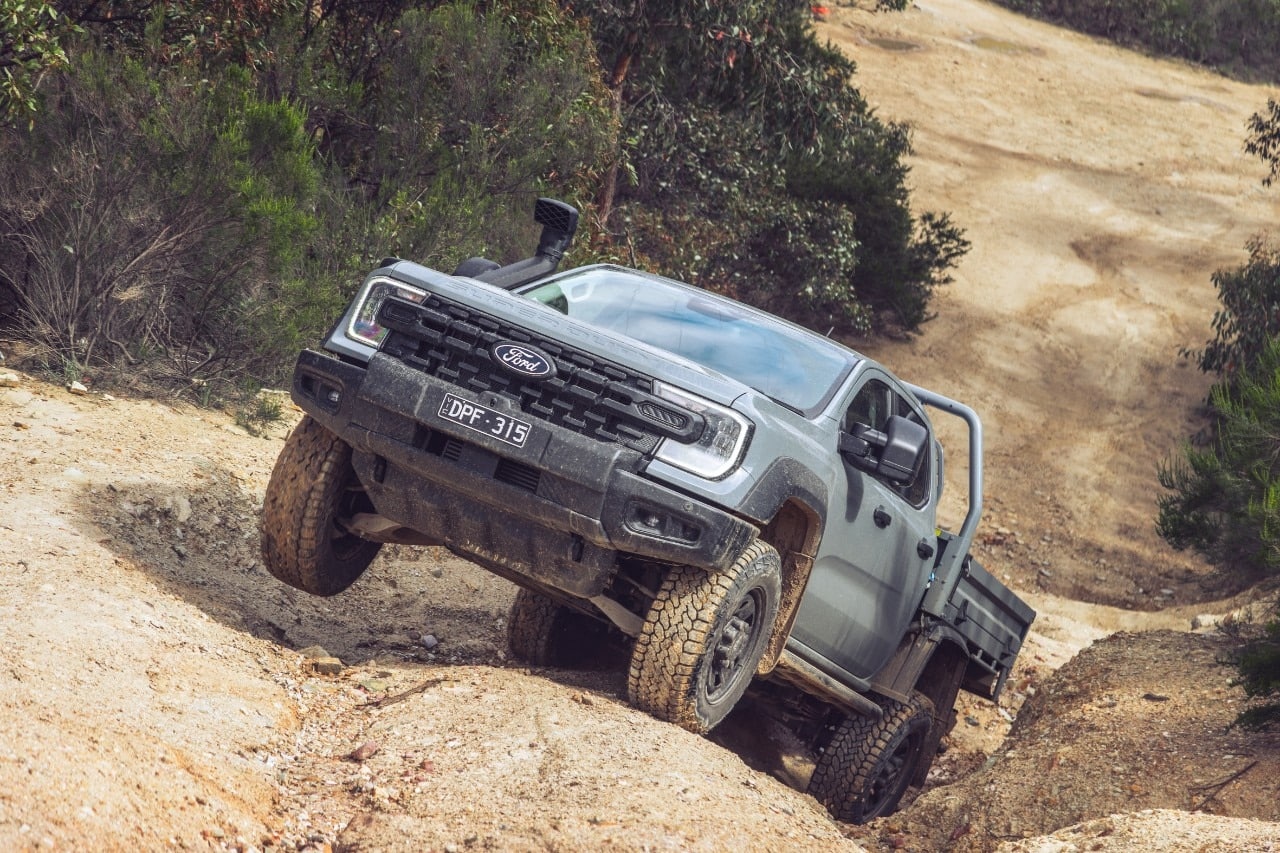
The Ranger Super Duty earns its name on the trail, not only on the spec sheet. Ground clearance measures almost 300 mm, or close to 11.8 inches, so the truck clears ruts and rocks a stock pickup would scrape. Ford also raised wading depth to 850 mm, about 33.5 inches, which lets you ford deeper crossings with confidence.
Traction hardware backs up the clearance. Ford added new electronically locking front and rear differentials plus a two-speed transfer case. While most mid-size trucks offer only a rear locker, dual lockers keep both axles driving when a wheel lifts. Consequently, the Ranger Super Duty crawls through terrain where lesser trucks stop.
Underbody protection rounds out the package. Ford shielded the underbody with high-strength steel and moved the transmission and differential breathers high, away from water and sand. Because the breathers sit higher, deep crossings and dust do not choke the drivetrain. This detail separates a true off-road truck from a lifted street truck.
The intelligent all-wheel-drive system ties the hardware together. It constantly reads conditions, then sends torque where a laden truck needs it most. You still select drive modes for sand, mud, or rock, so the system adapts to the surface under you. For an off-road truck carrying heavy loads, this automation keeps momentum without constant driver input.
Built to Carry and Tow More
Load capacity defines the Ranger Super Duty. Ford targeted the same off-road reach as a standard Ranger while carrying over 1,000 kg more cargo, roughly 2,200 pounds. For overlanders, the headroom turns a tight build into an easy one. You add a flatbed camper, water, recovery gear, and fuel without crowding the limit.
Towing capacity matters most when the trailer fights back. Ford rates the Ranger Super Duty for heavier loads than a standard Ranger, and the reinforced rear axle keeps the towing capacity usable off pavement. Because the cooling system grew by 25 percent, the drivetrain holds temperature on long grades. For drivers who tow a heavy off-road trailer, real towing capacity beats a high number on paper.
Smart towing tech supports the muscle. The Ranger Super Duty is the first Ranger with Onboard Scales and Smart Hitch, so the SYNC screen shows your payload and helps balance trailer weight. Ford also fitted Pro Trailer Backup Assist, which lets you reverse a trailer with a console knob. On tight trailheads and campsites, these tools reduce stress.
The strengthened tow bar and eight-stud hubs make the numbers usable, not theoretical. Because Ford reinforced the rear axle and frame, you tow near the limit over rough ground instead of only on smooth highways. For anyone hauling a heavy off-road trailer, this durability is the real story. Compare the approach with a teardrop setup in our guide to an extreme off-road teardrop trailer.
The Overlanding Angle: Range, Switches, and Build-Outs
The Ranger Super Duty reads like a factory overland platform. The 130-liter tank stretches your range between stations, which matters on long desert and backcountry routes. Combined with the diesel’s efficiency, the big tank reduces fuel stops on multi-day trips. For remote overlanding, fewer stops mean more time on the trail.
Ford also designed the truck for accessories. The cab includes six pre-wired auxiliary switches and a built-in device holder, so you wire lights, compressors, and fridges without drilling the dash. Because the wiring is ready, your build stays clean and reversible. This factory provision saves hours of custom electrical work.
Even the sensor layout helps builders. Ford packaged the rear sensors and cameras in a single bar to simplify tray, flatbed, and camper conversions. As a result, specialist shops adapt the truck faster and with less rework. If you plan a flatbed camper or a drawer system, this design lowers the cost of the build. For more platform ideas, see our best overland vehicles guide.
How Ford Tested the Ranger Super Duty
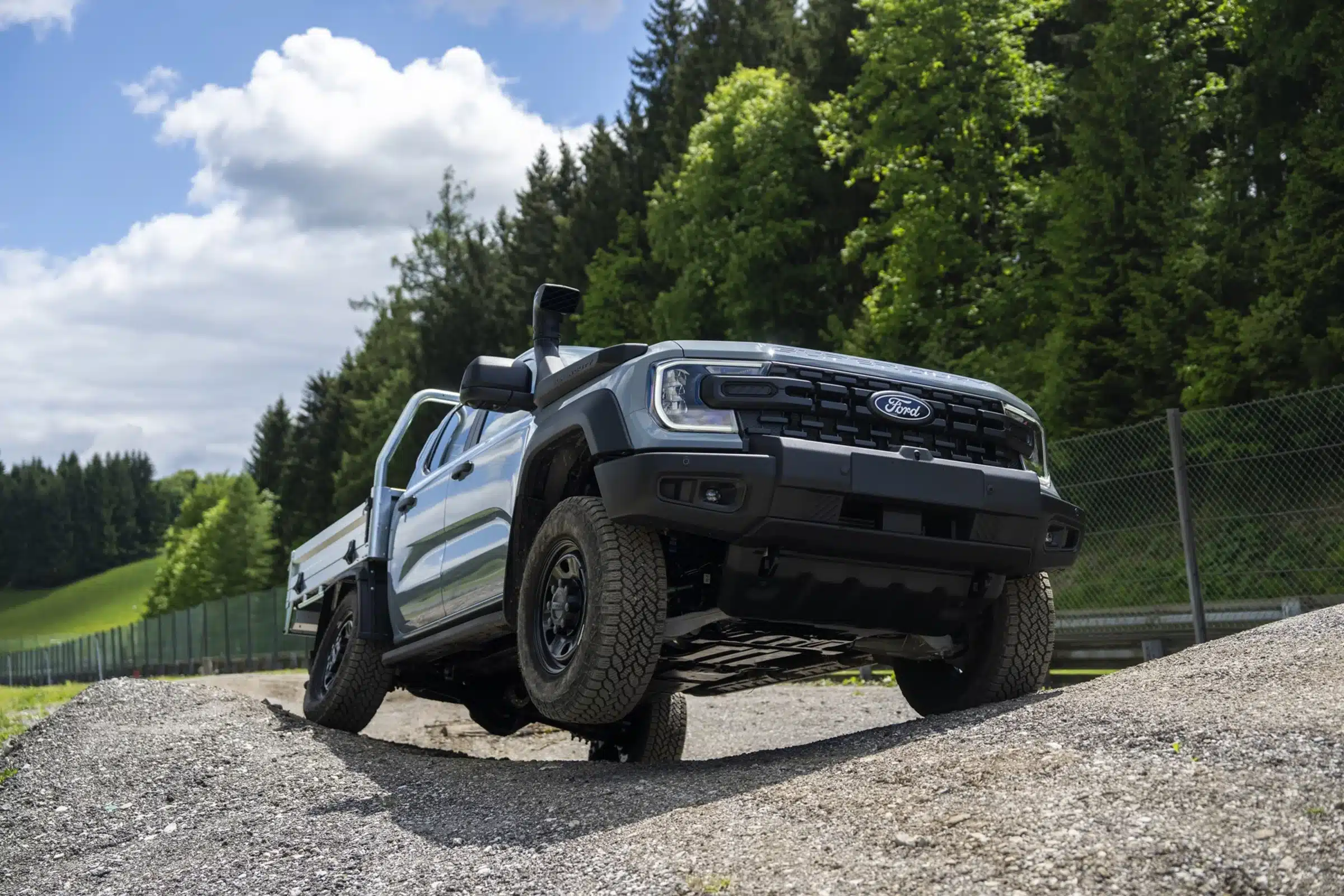
Ford invented new tests to earn the Super Duty badge. Engineers drove the truck through a mud bath repeatedly until 600 kg of mud packed the wheel wells, then confirmed the truck still ran as expected. Because mud traps heat, corrodes parts, and chokes airflow, this test mirrors the worst real-world conditions. Passing it proves the truck survives punishment most pickups never face.
The durability program went further still. Ford ran around-the-clock rough-road testing so severe robots took over some driving, since the vibration and impact exceeded what humans tolerate. Engineers also ran standard tests longer and heavier, in the drive modes Super Duty owners use most. As a result, the validation reflects real overlanding and work abuse, not a gentle lab cycle.
Much of the work happened in Australia, a country built around pickups. Crews drove fully laden prototypes across the Simpson Desert and counted 797 sand dunes over a 590-kilometer route. Then they repeated the run to confirm the results. For overlanding buyers, this desert validation signals the truck handles soft sand and heat under load.
How the Ranger Super Duty Compares
Against a standard Ranger, the Super Duty trades a little payload efficiency for huge capability gains. You get dual lockers, deeper wading, more clearance, a bigger tank, and over 2,200 pounds of extra cargo capability. However, the truck stays a Ranger inside, with the same screen, comfort, and driver aids. So you upgrade capability without losing daily usability.
Against other mid-size off-road trucks, the Ranger Super Duty plays a different game. A Toyota Tacoma off-road trim or a Chevy Colorado Trail Boss targets trail fun and moderate loads. The Super Duty instead targets maximum carry and tow capacity in harsh terrain. For buyers who load heavy and travel far, this focus wins.
Availability shapes the buying decision. Ford sells the Ranger Super Duty in Australia, New Zealand, Thailand, and Europe, and the brand keeps expanding Ranger Super Duty variants. North American buyers should watch Ford’s announcements closely, since the heavy-duty mid-size segment keeps growing. Until then, the global truck signals where capable mid-size trucks are heading.
Who the Ford Ranger Super Duty Suits
The Ranger Super Duty fits a clear buyer. You carry heavy gear, you tow a real trailer, and you travel beyond easy roads. For this buyer, the reinforced frame, dual lockers, big tank, and load capacity remove the usual mid-size compromises. You stop building around limits and start using the truck.
The trade-offs stay honest. A heavy-duty mid-size truck weighs more and costs more than a base Ranger. Drivers who only run light trails or short trips do not need this much capability. Likewise, buyers focused on quick, nimble rock crawling might prefer a lighter, shorter truck with a single locker.
Still, few factory trucks blend this much carry capacity with real off-road hardware. Ford pairs heavy-duty towing capacity with dual lockers, deep wading, and a build-friendly cab. If you want one truck for remote work and serious overlanding, the Ford Ranger Super Duty belongs at the top of your list. Match it with the right gear using our best bed racks guide.
Frequently Asked Questions
What engine does the Ford Ranger Super Duty use?
The Ranger Super Duty uses a retuned 3.0-liter V6 turbodiesel paired with a 10-speed automatic. Ford recalibrated both for heavy loads and extended off-road driving, and increased cooling capacity by 25 percent over a standard Ranger.
How much more cargo does the Ranger Super Duty carry?
Ford says the Ranger Super Duty carries and tows roughly a tonne more than a standard Ranger. The gain works out to over 1,000 kg, or about 2,200 pounds, of extra cargo capability for campers, water, fuel, and recovery gear.
Does the Ranger Super Duty have locking differentials?
Yes. The Ranger Super Duty adds new electronically locking front and rear differentials plus a two-speed transfer case. Dual lockers keep both axles driving when a wheel lifts, which helps the truck crawl through difficult terrain.
How deep does the Ford Ranger Super Duty wade?
Ford rates wading depth at 850 mm, or about 33.5 inches. Engineers also raised the transmission and differential breathers and added high-strength steel underbody shielding to protect the drivetrain in deep water and sand.
Is the Ford Ranger Super Duty available in the United States?
Ford sells the Ranger Super Duty in Australia, New Zealand, Thailand, and Europe. Ford continues to expand Ranger Super Duty variants, so North American buyers should watch for official announcements about availability.
Is the Ranger Super Duty good for overlanding?
Yes. The 130-liter fuel tank, dual lockers, deep wading depth, and over 2,200 pounds of extra cargo capability suit long remote trips. Six pre-wired auxiliary switches also make it easy to add lights, a fridge, and a compressor.