



Quick Facts:
- Topic: Sunforger canvas, the treated cotton fabric in premium tents
- Fabric base: 100% cotton army duck
- Treatment: Water repellent, mildew resistant, UV resistant
- Common weight: 10 oz double-fill
- Also called: Marine grade, boatshrunk
- Tested on: Davis Tent 10×10 Go Tent, four months
- Best for: Canvas wall tent and hot tent buyers who want longevity
7 min read
In This Guide
Sunforger Overview: Who Should Care
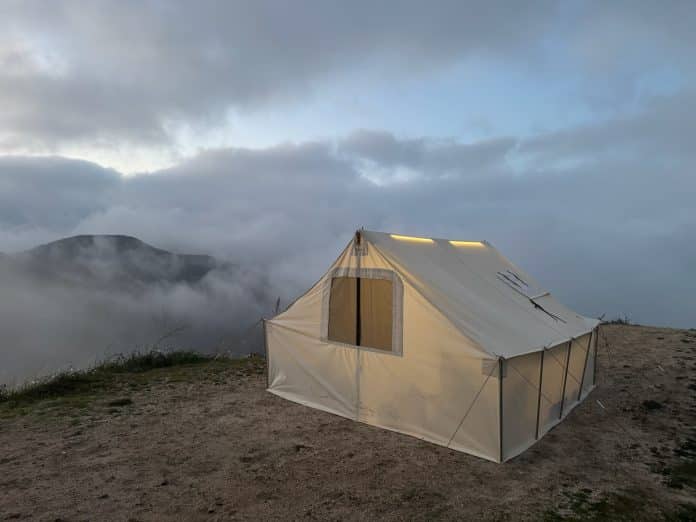
Sunforger canvas is the treated cotton fabric behind most premium American wall tents. If you shop for a canvas shelter, you see the word everywhere, yet few sellers explain it in plain terms. After touring the Davis Tent factory in Colorado and field testing a 10oz Sunforger Go Tent for four months, I learned why this fabric earns its price. This guide explains what the fabric is, how the treatment works, and whether it deserves the premium.
First, the short version. Sunforger is a finish applied to 100% cotton army duck. The finish makes the cotton water repellent and mildew resistant while keeping the fabric breathable. Because of those traits, it has become the default choice for wall tents, hot tents, and bell tents built to last decades.
Overlanders, hunters, and basecamp campers buying a four-season canvas tent benefit most. For a deeper buying framework, our canvas wall tent buying guide covers weights and stove jacks. Hunters comparing models should also see our best canvas wall tents for elk hunting. This article instead focuses on the fabric itself, since the fabric drives most of a tent’s cost and lifespan.
Key Facts About Sunforger Canvas
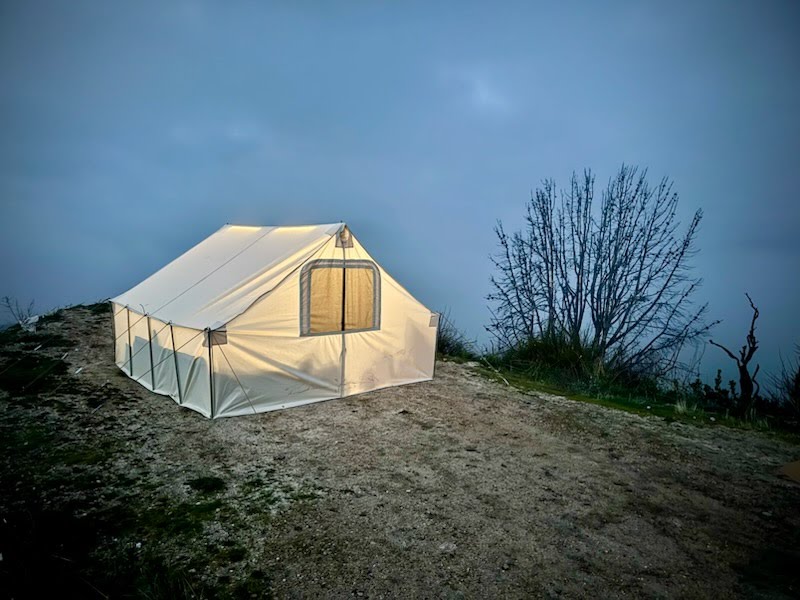
Before the deep dive, here are the core facts at a glance. Each value below comes from manufacturer specs and my own hands-on testing.
| Specification | Details |
|---|---|
| Fabric base | 100% cotton army duck |
| Common weight | 10 oz to 10.10 oz, double-fill |
| Treatment | Water repellent, mildew resistant, UV resistant |
| Other names | Marine grade, boatshrunk |
| Fire option | CPAI-84 version for CA, LA, MA, MI, MN, NY, NJ |
| Typical lifespan | Decades with proper care |
Buy Direct From Davis Tent
Get the 10oz Sunforger Go Tent
Handcrafted in Colorado since 1955 with 10oz Sunforger-treated canvas and a 5.5-inch stove jack. The exact tent I tested for four months.
How the Sunforger Treatment Works
Sunforger starts as woven cotton army duck. The mill then runs the fabric through a treatment vat twice, a process sellers also label boatshrunk or marine grade. According to Davis Tent’s own fabric explainer, the finish goes on in Butler, Georgia and preserves the cotton’s natural breathability.
The double soak does three things. First, it shrinks and tightens the weave, which sheds rain. Second, it adds mildew resistance, so a slightly damp pack-up will not ruin the tent. Third, it improves UV resistance, which slows sun damage over years of use.
One point trips up new buyers. “Army duck” is a military strength designation, not a quality grade. It means the cloth carries equal strength in both weave directions. Quality still comes down to fiber length, thread count, and the treatment. Good army duck canvas with a Sunforger finish beats heavier but loosely woven cloth.
Why Cotton Breathability Matters

Breathability is the reason serious tent makers stay with cotton instead of synthetics. Four people sleeping in a sealed tent release roughly two liters of moisture from their breath in one night. Add a propane heater or wet gear, and a non-breathing shelter drips with condensation by morning.
By contrast, cotton handles this differently. The fibers let interior moisture pass through the wall, so the inside stays drier and warmer. A quality cotton canvas tent feels comfortable in summer heat and holds warmth in winter when paired with a stove. Synthetic walls trap the moisture instead.
Sunforger keeps this advantage intact. Cheaper coatings seal the surface and choke off airflow, which raises condensation and shortens fabric life. Because the Sunforger finish repels water without blocking the weave, you get weatherproofing and breathability together.
Sunforger Canvas vs Untreated and Imported Canvas
Compare three walls of the same 10 oz double fill canvas and the differences show up after the trip, not during it. In a storm, an untreated wall, a Sunforger wall, and a fire-treated wall all shed rain well. The gap appears in how forgiving each one is afterward.
Roll up an untreated tent damp and leave it for a few days, and mildew sets in fast. A marine grade canvas finish resists the mildew, so a careless pack-up rarely ends the tent. For this reason, most American makers pay extra for the treatment.
In contrast, imported knock-offs are where buyers lose money. Many use short-fiber cloth labeled double fill, with thinner coatings instead of a true Sunforger soak. Long-fiber, double fill canvas carries roughly double the tear and burst strength of short-fiber imports. For the full picture on USA build quality, see our roundup of American-made tents of 2026.
The table below sums up the practical gap between the three walls.
| Trait | Untreated cotton | Sunforger (marine grade) | Imported knock-off |
|---|---|---|---|
| Water repellency | Good when seasoned | Strong, factory treated | Varies, often thin coating |
| Mildew resistance | None | High | Low to moderate |
| Tear and burst strength | High (long fiber) | High (long fiber) | About half (short fiber) |
| Damp pack-up tolerance | Poor | Forgiving | Poor to fair |
| Expected lifespan | Decades if stored dry | Decades | A few seasons |
One more note for cold-weather buyers. Because the Go Tent ships with a 5.5-inch stove jack, you add a compact wood stove without cutting the wall yourself. The breathable Sunforger weave then vents stove moisture instead of trapping it.
How the Canvas Held Up After Four Months
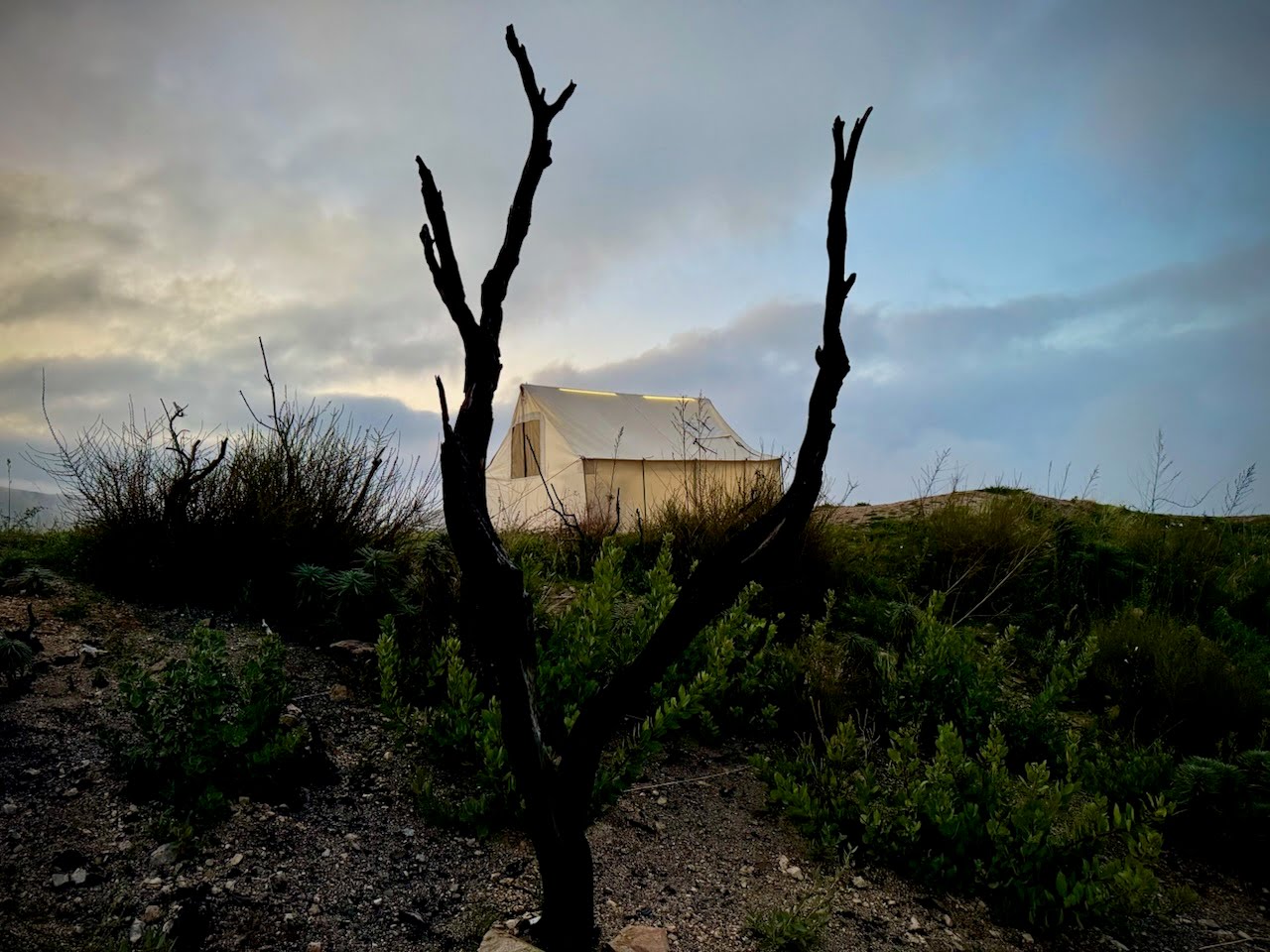
I ran a 10oz Sunforger Go Tent hard for four months across Southern California, including a 33-degree overnight near Big Bear. The full writeup lives in my Davis Tent Go Tent review, but the fabric notes are worth repeating here.
Notably, the canvas felt dense and heavy in hand, exactly what you want from treated cotton. After cold, damp nights, the interior stayed dry while a synthetic dome beside it dripped. Light rain beaded and rolled off the wall instead of soaking in.
Meanwhile, packing up taught the main lesson. Twice I rolled the tent slightly damp after dawn dew. Thanks to the mildew resistance, neither pack-up left a smell or a stain. An untreated tent would have punished the mistake instead. Touring the Colorado factory beforehand showed me the source of these results firsthand. There I met a craftsman with 40 years on the floor, watched seamstresses run industrial machines, and saw the long-fiber army duck canvas and double-soak line up close.
Is Sunforger Treated Canvas Worth It?
For a tent you plan to own for years, Sunforger canvas earns the premium. The treatment buys mildew resistance, water repellency, and UV protection without killing the breathability cotton is loved for. Those traits directly extend how long the shelter lasts.
Skip it only in narrow cases. If you want the lightest possible packed weight, a synthetic four-season tent wins on the scale. If you camp a handful of nights a year in dry country and store the tent perfectly, untreated cotton saves money. Most overlanders and hunters fall outside those cases.
Value math favors the treated fabric. Run the lifespan numbers. A treated tent used 20 nights a year across 20 years works out to a few dollars per night, while an import replaced every three or four seasons keeps resetting the meter. For the reasoning on USA-built canvas, our piece on why USA-made canvas tents are worth it goes deeper. My recommendation for a first serious canvas tent is a 10oz Sunforger model like the Davis Go Tent.
Ready to Buy?
Check Today’s Price on the Go Tent
Built by hand in Colorado with 10oz Sunforger canvas and a lifetime of breathable, weatherproof use. Direct pricing and sizing from Davis Tent.
Frequently Asked Questions
What is Sunforger canvas?
Sunforger canvas is 100% cotton army duck treated with a water-repellent, mildew-resistant, UV-resistant finish. The mill soaks the cloth twice, a step also called marine grade or boatshrunk. The result sheds weather while keeping cotton breathable.
Is Sunforger fabric waterproof?
Sunforger is water repellent rather than fully waterproof. The tight weave and finish shed rain and snow well. However, new canvas also needs a short weathering soak so the fibers swell and seal the needle holes along the seams.
How long does a Sunforger tent last?
With proper care, a Sunforger tent lasts decades, and many owners report 20 to 30 years of use. The key habit is simple. Store the tent bone dry, since the mildew resistance forgives damp pack-ups but does not replace good drying.
Is Sunforger treated cotton breathable?
Yes. Because the finish repels water without sealing the weave, interior moisture escapes through the wall. As a result, this breathability reduces condensation, a clear edge over a synthetic cotton canvas tent alternative.
Does Sunforger fabric need fire treatment?
It depends on your state. For example, California, Louisiana, Massachusetts, Michigan, Minnesota, New York, and New Jersey require CPAI-84 fire-retardant fabric. Therefore, most makers offer a fire-treated version of the same marine grade canvas for those buyers.