


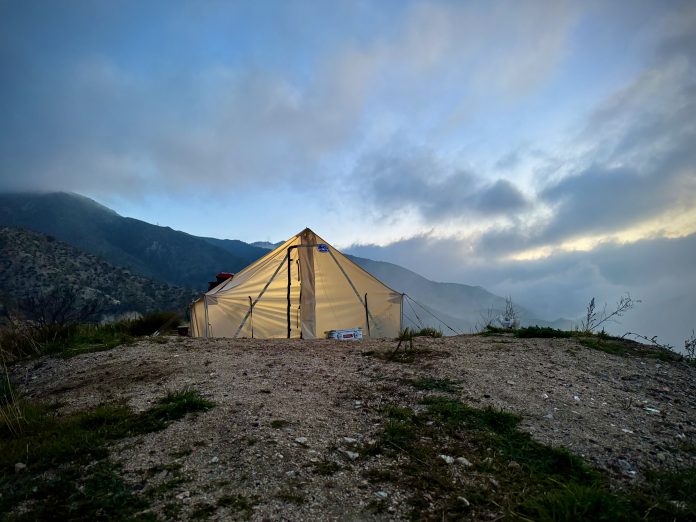

Quick Verdict: The Davis Tent 10×10 Go Tent is a premium canvas wall tent built in Colorado since 1955 using 10oz Sunforger treated canvas. After touring the factory and field testing it overnight in 33-degree temperatures near Big Bear, California, this Davis Tent Go Tent review covers everything from one-person setup (roughly 20 minutes once you know the process) to the impressive material quality. It has quickly become one of my favorite wall tents I have tested. The only drawback worth noting is the lack of a dedicated diesel heater port.
Last updated: March 2026 | 9 min read
In This Review
Overview: Who the Davis Tent Go Tent Is For
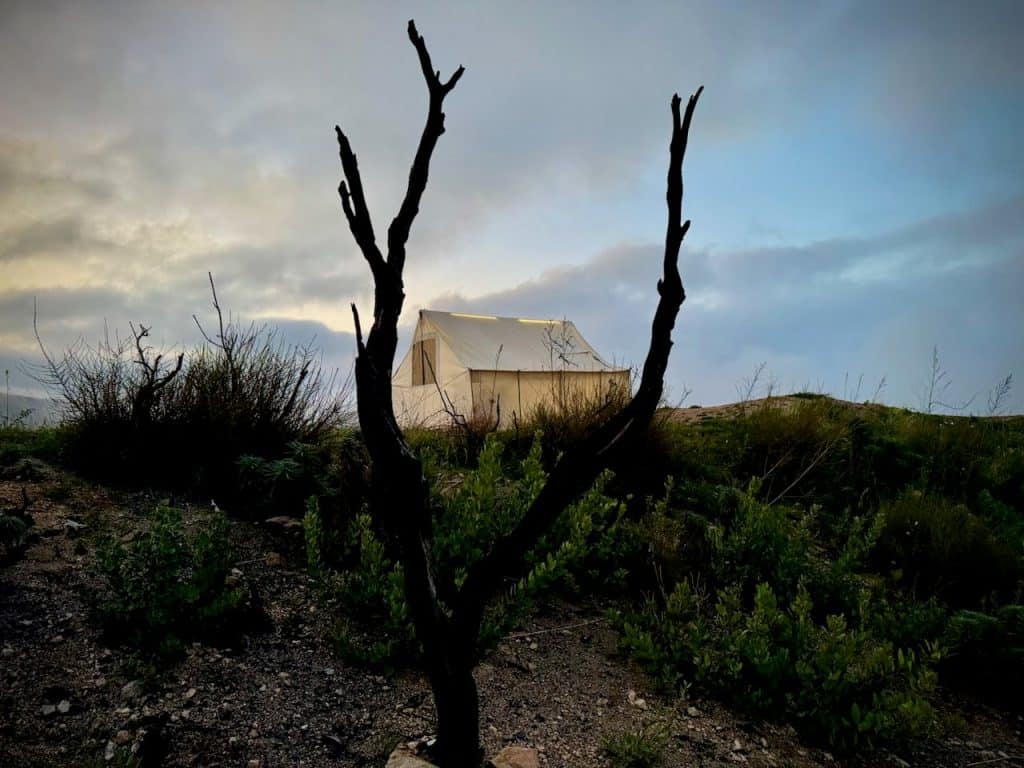
If you have been shopping for a quality canvas wall tent and feel overwhelmed by the options, this Davis Tent Go Tent review is for you. I flew to Colorado specifically to visit the factory in Arvada, walked through the entire manufacturing operation, and then brought one home to Southern California for a hands-on field test near Big Bear. After spending real time with it in cold mountain conditions, I am confident saying this is one of the best Made in USA wall tent options I have tested.
Overlanders, hunters, and car campers who want a premium tent without the bulk of a full-size model will appreciate this design. At roughly 30 pounds for the tent alone (40 pounds with the sewn-in floor), it packs down to 1’9″ x 1’6″ and fits easily in a roof cargo rack or truck bed. Davis Tent has been building these by hand in Colorado since 1955, and they price the Go Tent competitively with overseas alternatives while delivering noticeably higher quality.
The 10×10 footprint provides enough room for a queen-size cot, two camp chairs, and a small wood stove. Because canvas breathes, this shelter stays comfortable in summer heat and holds warmth in winter when paired with a stove. For solo trips or weekend outings with one other person, the Go Tent hits the right balance of livable space and portability.
Davis Tent & Awning
Davis Tent Go Tent
Handcrafted in Colorado since 1955. 10oz Sunforger-treated canvas, 5.5″ stove jack, and a traditional pole system included. Available in 10×10 and 12×12.
Key Specs at a Glance
| Specification | 10×10 Go Tent | 12×12 Go Tent |
|---|---|---|
| Footprint | 10′ x 10′ | 12′ x 12′ |
| Wall Height | 34 inches | 34 inches |
| Peak Height (Traditional Poles) | 6′ 8″ | 7′ 2″ |
| Peak Height (Internal Frame) | 6′ 5″ | 7′ 0″ |
| Canvas | 10oz Sunforger treated | 10oz Sunforger treated |
| Tent Weight (no floor) | ~30 lbs | ~47 lbs |
| Tent Weight (sewn-in floor) | ~40 lbs | ~57 lbs |
| Traditional Poles Weight | 25 lbs | 39 lbs |
| Longest Pole (Traditional) | 3′ 5″ | 4′ 2″ |
| Stove Jack | 5.5″ included | 5.5″ included |
| Packed Dimensions | 1’9″ x 1’6″ | 2’3″ x 2’1″ |
| Manufacturing | Denver, Colorado, USA | Denver, Colorado, USA |
Inside the Davis Tent Factory in Colorado
Before I ever staked this tent into the ground, I flew to Denver, Colorado and walked through the Davis Tent manufacturing facility. Seeing how these tents are built firsthand changed my perspective on what separates a premium Made in USA wall tent from a mass-produced import.
One thing stood out immediately: the people. I met a gentleman who has worked at Davis Tent for 40 years. Several other team members have been there 12 or more years. Instead of a revolving-door factory with seasonal labor, I found skilled craftspeople who understand canvas, stitching, and tent geometry at a level you only get from decades of experience. Their seamstresses operate industrial sewing machines with precision, and every tent goes through quality control before it ships.
During the tour, I saw the raw 10oz Sunforger canvas being cut, the heavy-duty brass grommets being set, and the double-stitched seams being sewn. In your hands, the material feels substantial. When you pick up a finished Go Tent, the weight tells you something serious went into it. A fully assembled Go Tent stays on display inside the facility so visitors and staff alike see the finished product daily. Walking through it at the factory gave me a strong first impression of the interior space and material quality.
First-Time Setup: What to Expect
I set up the Go Tent for the first time at a campsite near Running Springs, California. In full transparency, my first wall tent setup took roughly 45 minutes. However, I have assembled a number of wall tents over the years, and this one was noticeably more intuitive than others I have worked with.
You start by laying the tent flat and staking out the four corners. Davis Tent includes two different types of stakes: beefy spikes for the perimeter and guideline stakes for the ropes. Both are impressively heavy-duty. One of my biggest complaints with other tents is flimsy stakes, and Davis Tent solved this completely. They even include a handful of extras, which shows attention to real-world use.
The Traditional Pole System
After staking the corners, you step inside and install the ridge pole and two upright poles. Each upright has a spike on top; you line it up into a hole at the end of the ridge pole and push it into place. Davis Tent puts a rubber stopper on the bottom of each upright so it does not damage the sewn-in floor. Once the ridge is up, you add three support arms on each side wall. Then you go back outside, tighten the guidelines, and the tent takes shape. For my second outing, I expect the full wall tent setup to take 20 to 25 minutes or less. One person handles it without help.
Davis Tent & Awning
Built in Colorado Since 1955
The Go Tent comes with the traditional pole system, stakes, ropes, tensioners, and a bag. Internal frame system also available as an upgrade.
Interior Space and Comfort
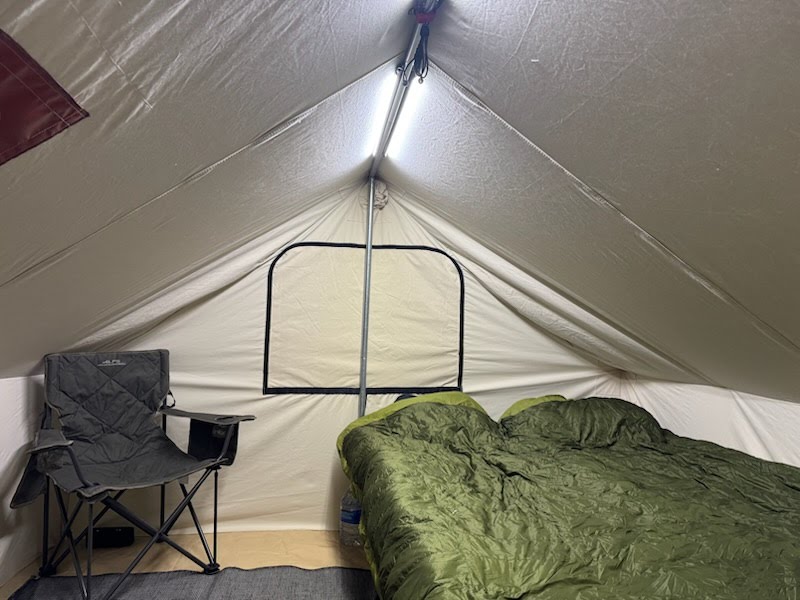
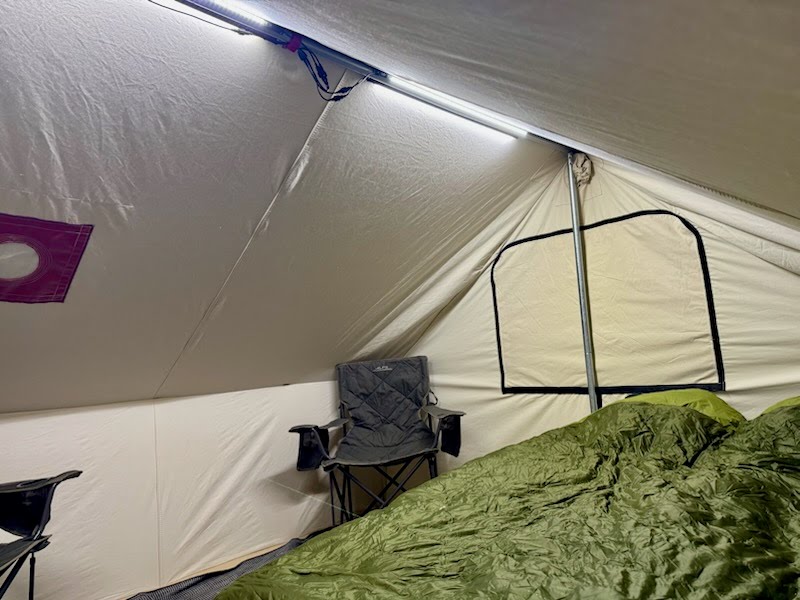
The Davis Tent Go Tent 10×10 footprint delivers more usable space than the numbers suggest. With 34-inch walls and a 6’8″ peak height (using the traditional pole system), most people stand upright inside without ducking. I set up a queen-size cot in one corner, placed two camp chairs on the opposite side, and still had room for gear. A small table fits between the chairs if you want one.
Because the Go Tent uses Sunforger-treated material, airflow stays comfortable even in warmer conditions. Canvas breathes in a way synthetic tents do not, which means less condensation on the walls overnight. On cooler nights, the thick fabric holds heat when paired with a wood stove through the 5.5″ stove jack. Additionally, the zipper door opens and closes smoothly, and a screen door receiver comes standard if you want bug-free ventilation in summer.
Davis Tent also offers a 12×12 size for those who need extra room. The larger model bumps the peak height to 7’2″ and adds significant floor space, although the weight increases to roughly 47 pounds without the floor.
Materials and Build Quality
Beyond the livable space, the materials themselves set this tent apart. After seeing the raw fabric at the Colorado factory and then handling the finished product in the field, I am impressed with the build quality. The 10oz Sunforger treated canvas is water and mildew resistant. It feels heavy and dense in your hands, which is exactly what you want from a tent designed to handle wind, rain, and snow.
Davis Tent double-stitches every seam. The brass grommets are heavy-duty, not the lightweight aluminum you find on budget tents. Pre-cut ropes with tensioners already installed save you time measuring and rigging. On top of the canvas quality, Davis Tent does not cut corners on the hardware. The pole system uses 1 3/8″ galvanized steel for the ridge pole and uprights, with 1/2″ galvanized steel for the wall poles. This is a Made in USA wall tent where every component reflects the same standard of quality.
The stove jack deserves specific mention. It sits at 5.5 inches with a reinforced material surround and a storm flap cover. During my field test, the stove jack area felt solid and well-protected. Taylor at the factory told me the stove jack material is designed for repeated high-heat exposure over years of use.
Overnight Field Test in Big Bear
I took the Davis Tent Go Tent up to Running Springs near Big Bear, California for its first real-world overnight test. Temperatures dropped to 33 degrees Fahrenheit overnight. I did not run a wood stove for this trip; instead, I brought a Sparks Overland diesel heater, although the mild cold meant I barely needed it. While 33 degrees was not extreme winter camping, it gave me a solid baseline for evaluating structural integrity and canvas performance overnight.
By morning, the tent held up perfectly. No condensation formed on the walls. The canvas stayed taut overnight despite temperature swings. After waking up, I did a walk-around inspection, and everything looked solid. Stakes stayed put, the guidelines held tension, and the structure maintained its shape throughout the night. I plan to test it again in sub-freezing conditions with the wood stove running to validate the thermal performance and stove jack under heavier use.
Morning Walk-Around Impressions
Seeing the Go Tent in daylight after spending the night in it confirmed what I felt during the factory tour. Stitching is tight and uniform. The canvas is thick, and the pole connections feel secure. Walking around the exterior, I kept noticing details: the heavy material at the corners, the reinforced stress points, and the quality of the zipper on the door. Based on the construction, this tent looks like it will hold up for years of consistent use. Several forum users on Rokslide and other outdoor communities report their Davis tents performing well in 50-60 mph gusts and heavy snow, and after seeing the build quality firsthand, those claims feel credible.
Pros and Cons
Pros
- Outstanding craftsmanship from a team with decades of experience (one employee at 40+ years)
- 10oz Sunforger-treated canvas is water/mildew resistant and feels premium
- One-person wall tent setup in roughly 20-25 minutes (after first attempt)
- Beefy stakes included with extras; guideline ropes are pre-cut and rigged
- 6’8″ peak height lets most adults stand comfortably inside
- 30-pound tent weight (without floor) makes it manageable for one person
- 5.5″ stove jack included standard with storm flap
- Made in USA since 1955 in Denver, Colorado
- Competitively priced against overseas tent alternatives
Cons
- No dedicated diesel heater port; the included stove jack is designed for wood stoves only
- First-time setup takes around 45 minutes because of guideline rigging and learning curve
Final Verdict
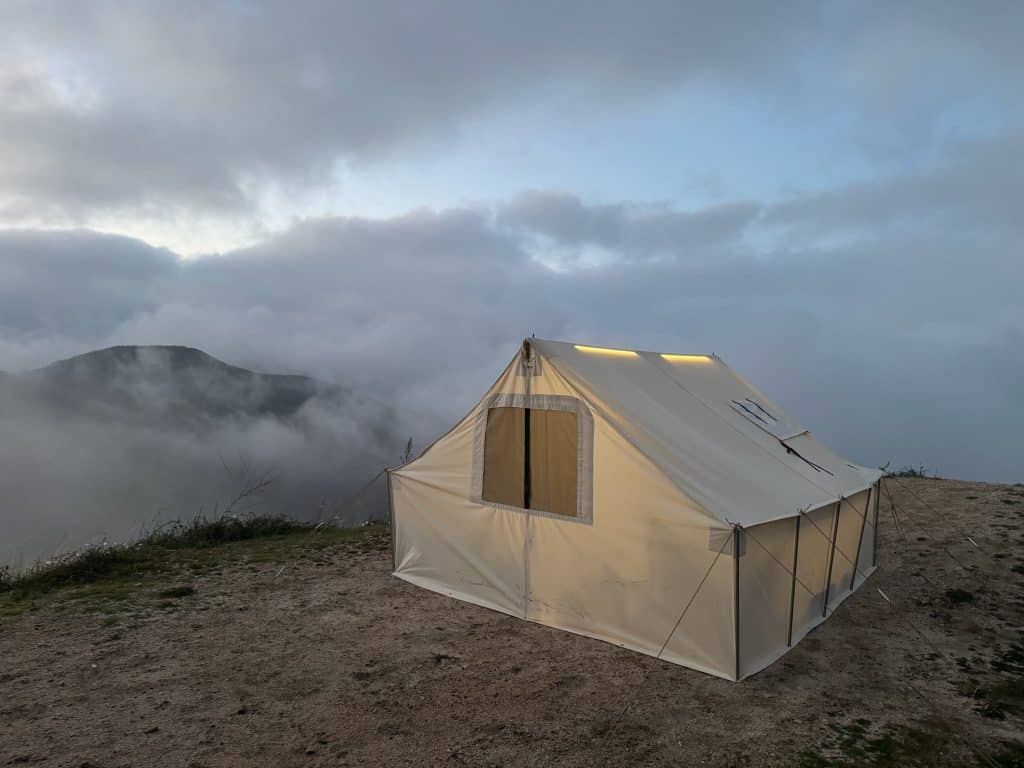
The Davis Tent 10×10 Go Tent is built for anyone who wants a high-quality, portable shelter without the hassle of complicated setups or imported materials of questionable durability. Whether you are overlanding, hunting, or setting up a basecamp for a weekend trip, this Made in USA wall tent delivers serious performance in a compact, one-person-manageable package.
Trade-offs are minimal. If you run a diesel heater instead of a wood stove, you will need to work around the stove jack or contact Davis Tent about custom port options. First-time wall tent setup takes patience because the guidelines need initial rigging. After the first outing, subsequent setups drop to the 20-minute range. Those are minor friction points for an otherwise outstanding product.
What separates this tent from the pack is the people behind it. Davis Tent employs a team of seasoned craftspeople in Colorado, some with over 40 years at the company. The 10oz Sunforger canvas, double-stitched seams, brass grommets, and galvanized steel pole system reflect a standard of quality I have not seen from competitors. After touring the factory and sleeping in the Go Tent overnight, I am adding it to my regular camping rotation. It has quickly become one of my favorite wall tents.
For the combination of portability, quality materials, American manufacturing heritage, and fair pricing, the Go Tent earns a strong recommendation from me. If you are in the market for a canvas wall tent, give these folks a serious look.
Davis Tent & Awning
Ready to Pick Up a Go Tent?
Check pricing on the 10×10 and 12×12 Go Tents, plus customization options like the screen door, Colorado door, and back wall window.
Frequently Asked Questions
How long does the Davis Tent Go Tent take to set up?
First-time setup takes roughly 45 minutes because you need to rig the guidelines and learn the pole placement. After your first outing, expect 20 to 25 minutes. One person handles the entire process without assistance. The traditional pole system is intuitive: stake four corners, install the ridge pole and uprights, add the side support arms, then tighten guidelines.
Is the Go Tent made in the USA?
Yes. Davis Tent manufactures every Go Tent at their facility in Denver, Colorado. The company has been producing handcrafted canvas tents since 1955. Specifically, their team includes employees with 12 to 40+ years of experience at the facility.
What type of canvas does the Go Tent use?
The Davis Tent 10×10 uses 10oz Sunforger treated canvas. This material is water and mildew resistant, and it breathes better than synthetic alternatives. All seams are double-stitched, and the tent includes heavy-duty brass grommets throughout. Davis Tent uses the same Sunforger-treated material on their larger, more expensive models.
Does the Go Tent have a stove jack?
Yes. A 5.5-inch stove jack comes standard on every Go Tent. It includes a storm flap cover for protection when the stove jack is not in use. The surround uses reinforced material rated for repeated high-heat exposure from wood stoves. If you run a diesel or gas heater instead of a wood stove, you will need to route the exhaust tube through the stove jack opening.
How much does the Go Tent weigh?
The Davis Tent 10×10 weighs approximately 30 pounds without a floor and 40 pounds with the sewn-in floor. Additionally, the traditional pole system adds 25 pounds, with the longest pole measuring 3’5″ when packed. Packed dimensions measure 1’9″ x 1’6″, making it compact enough for a roof rack or truck bed. Davis Tent also sells an oversized bag upgrade for easier packing.
What sizes are available for the Go Tent?
Davis Tent offers two sizes: 10×10 and 12×12. Both feature 34-inch walls. The 10×10 peaks at 6’8″ with traditional poles and weighs roughly 30 pounds, while the 12×12 peaks at 7’2″ and weighs roughly 47 pounds. Both models accept the same customization options including screen doors, back wall windows, and Colorado doors.