


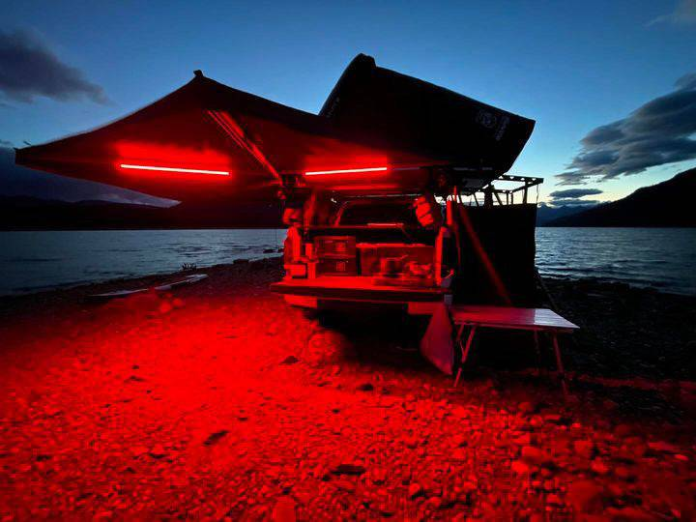

I’ve spent more nights at camp across decades of overlanding, tent camping, and trailer builds in remote corners of the American West. Many of those nights involved rooftop tent setups, primitive sites, and backcountry terrain. In all that time, the most common mistake I’ve watched campers make is flooding their site with harsh white light the moment the sun goes down. White light is bright, familiar, and feels reassuring when darkness closes in. However, after enough trips where I’ve stumbled half-blind toward my rig at 2 a.m. because I’d been sitting under a white strip light all evening. After enough of those nights, also spent swatting mosquitoes for three straight hours, I made a hard switch. I ditched white camp light after dark and haven’t looked back.
After several months of running GoFluxx tricolor LED strips on my rig, the difference is real and immediate. The light quality in red and amber modes is genuinely impressive. It’s warm enough to be comfortable, targeted enough to be useful, and smart enough to leave night vision intact. If you’ve never thought carefully about what color light you’re putting out after sunset, this article is for you. The science is straightforward, the gear upgrade is affordable, and the payoff at camp is significant.
Quick Facts:
- Topic: Red and amber camp lighting vs. white light after dark
- Featured Gear: GoFluxx 36″ Tricolor LED Strip
- Key Issue: White light destroys night vision in 20-40 minutes
- Bug Reduction: Amber at ~590nm is among the least visible wavelengths to insects
- Wildlife Impact: White/blue-rich light disrupts nocturnal animal behavior
- Solution: Tricolor LED strips with white, amber, and red modes
- Price: GoFluxx 36″ Tricolor Strip: $96
- Best for: Overlanders and campers who want smarter after-dark lighting
8 min read
In This Article
- The Problem With White Light at Camp
- White Light and Your Night Vision
- The Bug Problem: Why White Light Attracts Insects
- White Light and Wildlife Disturbance
- The Tricolor Solution: Red, Amber, and White When You Need It
- Tricolor LED Strips vs. Single-Color Camp Lights
- Pros and Cons
- Final Verdict
- Frequently Asked Questions
The Problem With White Light at Camp
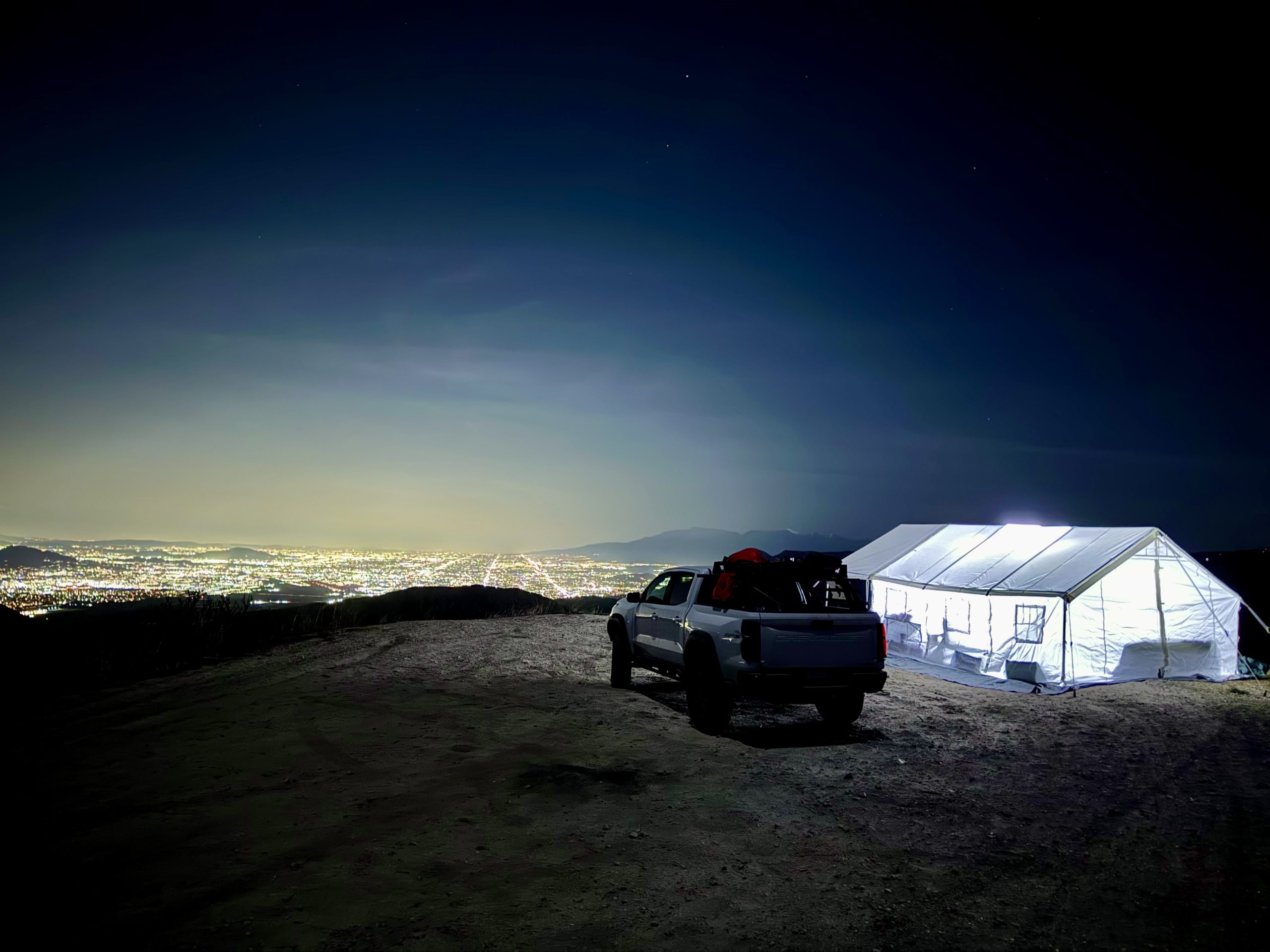
Most campers set up their white LED strips, hang their lanterns, and get to work on dinner without a second thought about what that light is doing to the rest of their evening. Red and amber camp lighting solves three separate problems that white light creates, and most people don’t realize any of them until they’re deep into a trip. Specifically, white light wrecks your night vision, pulls insects directly into your space, and disturbs nocturnal wildlife in ways that add up to a worse overall camp experience. None of these are minor inconveniences. Together, they change the entire character of your after-dark hours at camp.
The good news is that the fix is straightforward. Tricolor LED strips let you run warm white for setup, amber during the evening hours, and red when you step away from camp or head to bed. Each mode costs the same in power draw. However, each one has a dramatically different impact on your comfort, your vision, and the ecosystem around you. Understanding why those differences exist makes switching from white to red and amber feel obvious rather than optional. For a deeper look at how lumens and power draw factor into your setup, our campsite lighting basics guide covers the full picture.
White Light and Your Night Vision
Your eyes contain two types of light-sensitive cells: cones, which handle color and detail, and rods, which drive low-light vision. Rods depend on a chemical called rhodopsin, often called visual purple, to function in the dark. When white light hits your eyes, rhodopsin breaks down almost instantly. The process of rebuilding it is slow. Research from the National Park Service and multiple ophthalmology sources confirms that full dark adaptation takes 20 to 40 minutes after white light exposure. In practice, a few seconds of white light resets the entire clock.
Red light at 620 to 700 nanometers is the one exception. Rod cells are nearly insensitive to wavelengths at the far red end of the spectrum, so red light does not trigger rhodopsin breakdown. Astronomers have used this principle for generations. Aviators use red-tinted glasses before night flights to preserve their vision. At camp, the same science applies. Switching to red light after sunset means you’re fully dark-adapted within about 30 minutes. Moreover, you stay that way when you walk to the truck, check the sky, or navigate back from the tree line. That’s the core reason night vision camping demands red light rather than white.
What Dark Adaptation Feels Like in Practice
The difference is easier to appreciate after you’ve experienced it than before. Before switching to red and amber camp lighting, stepping away from a white-lit awning into the dark was jarring. The contrast was jarring, and stumbling over gear, rocks, or uneven ground was common. After running red mode for 30 minutes at camp, the same walk becomes surprisingly easy. Stars are visible. Terrain is readable. You’re not reaching for a flashlight to take ten steps. That shift alone is worth the price of a tricolor strip.
The Bug Problem: Why White Light Attracts Insects
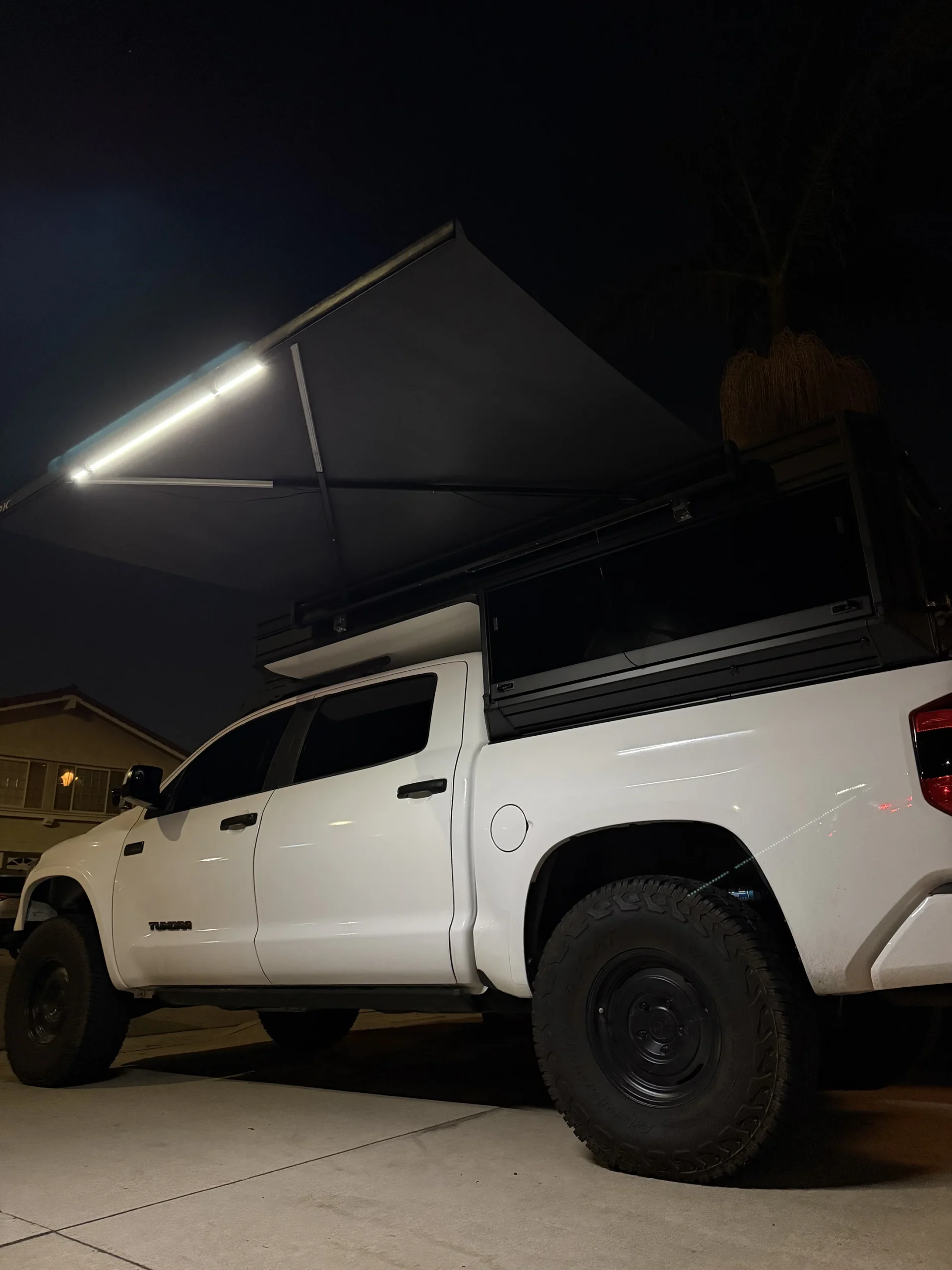
White light, especially cool-white and blue-rich LEDs, sits in the short-wavelength range that most flying insects detect easily. Many insects navigate using natural light sources, and artificial light in that same wavelength range disrupts their navigation systems, pulling them toward the source. The result at camp is familiar: a halo of moths, mosquitoes, gnats, and flies orbiting your awning light within minutes of sunset. Amber camp lighting changes that dynamic in a measurable way.
True amber LEDs emit light at approximately 590 nanometers, a wavelength that falls outside the detection range of most common insects. Research from the Smithsonian and multiple lighting studies confirms that amber light attracts significantly fewer insects than white light in outdoor settings. Red LEDs at 620 to 750 nanometers are even less visible to insects. One 2016 study found warm LEDs attracted 50% fewer bugs than traditional incandescent bulbs. Amber at ~590nm goes further than warm white. Switching to amber at dusk doesn’t eliminate insects entirely. However, the reduction is noticeable enough that dinner at camp becomes a different experience.
White Light and Wildlife Disturbance
Roughly 70% of mammals are nocturnal, according to research published in the National Institutes of Health literature. White and blue-rich light disrupts their behavior in significant ways. For nocturnal animals, bright white light saturates the rod cells in their eyes. That process, identical to what affects humans, renders them temporarily unable to see in the dark. Research from the NIEHS describes how this stops animals from using wildlife corridors, alters predator-prey relationships, and disrupts foraging patterns. When you’re camping in or near wildlife habitat, your lighting footprint matters.
The U.S. Fish and Wildlife Service recommends avoiding blue, white, and cool-toned LEDs in natural areas near wildlife. If you’ve watched a deer freeze at the edge of your camp light or seen birds veer away from a lit site, you’ve seen that response in action. Long-wavelength lights, specifically amber and red, are less detectable to most animals and cause significantly less disruption to their circadian rhythms. Running amber or red light at camp doesn’t eliminate your impact entirely. However, it reduces it in ways that align with leaving a campsite better than you found it. In remote backcountry spots, that consideration feels less optional and more like basic trail ethics.
Buy Direct From GoFluxx
Tricolor LEDs Built for Overlanders
GoFluxx 36″ Tricolor LED Strips run white, amber, and red from a single hardwired strip. IP67-rated, memory mode, free shipping over $100.
The Tricolor Solution: Red, Amber, and White When You Need It
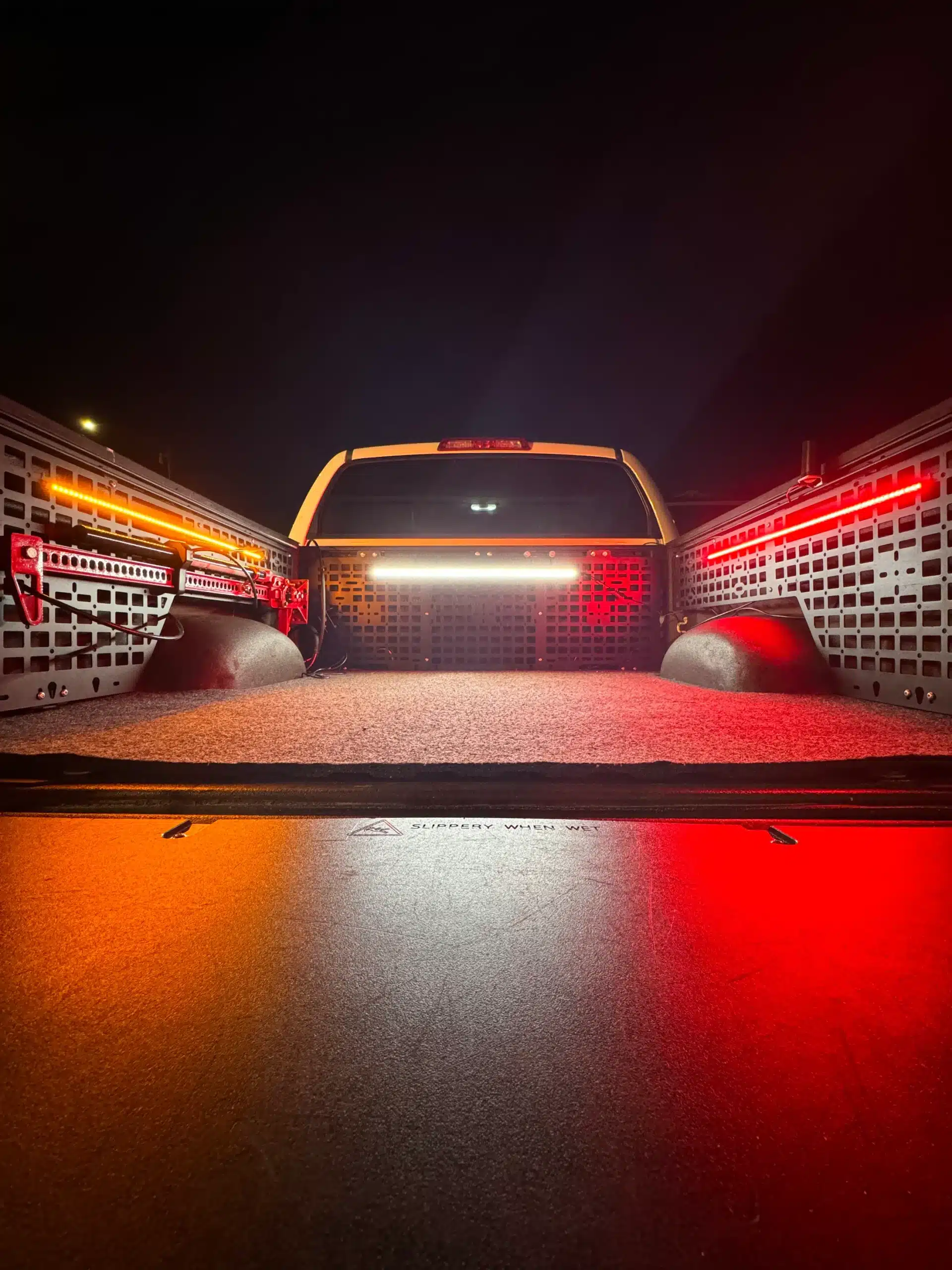
A tricolor LED strip solves the white light problem without asking you to give up bright light entirely. White mode is still there for setup, mechanical work, or cooking tasks where detail visibility matters. Amber takes over for the social hours: dinner, conversation, and evening wind-down, when you want comfortable light that doesn’t summon insects or blow your night vision. Red handles navigation, stargazing, and those middle-of-the-night trips away from the tent. Three modes, one strip, no compromises.
The GoFluxx 36″ Tricolor LED Strip puts all three modes into an IP67-rated housing mounted on an anodized aluminum track. At full white brightness, draw is approximately 1 amp at 12V. At 50% dim, draw drops to around 0.5 amps. Memory mode retains your last-used setting between power cycles. So after a night of running red, the strip returns to red automatically, with no fumbling for controls in the dark. For $96, it’s a one-time upgrade that changes how every future camp after dark feels. Our full GoFluxx lighting review covers the complete product line, wiring options, and real-world testing in detail.
When to Use Each Mode
White mode works best for arrival and camp setup, when you need maximum visibility fast. Switch to amber once the site is organized and the evening begins, specifically during cooking, eating, and relaxed conversation. Amber reduces bug attraction without making the space feel dim or clinical. Flip to red when you’re winding down, stepping away from camp, or watching the sky. Red preserves the dark adaptation you’ve built over the evening and keeps the area low-profile for wildlife nearby.
Tricolor LED Strips vs. Single-Color Camp Lights
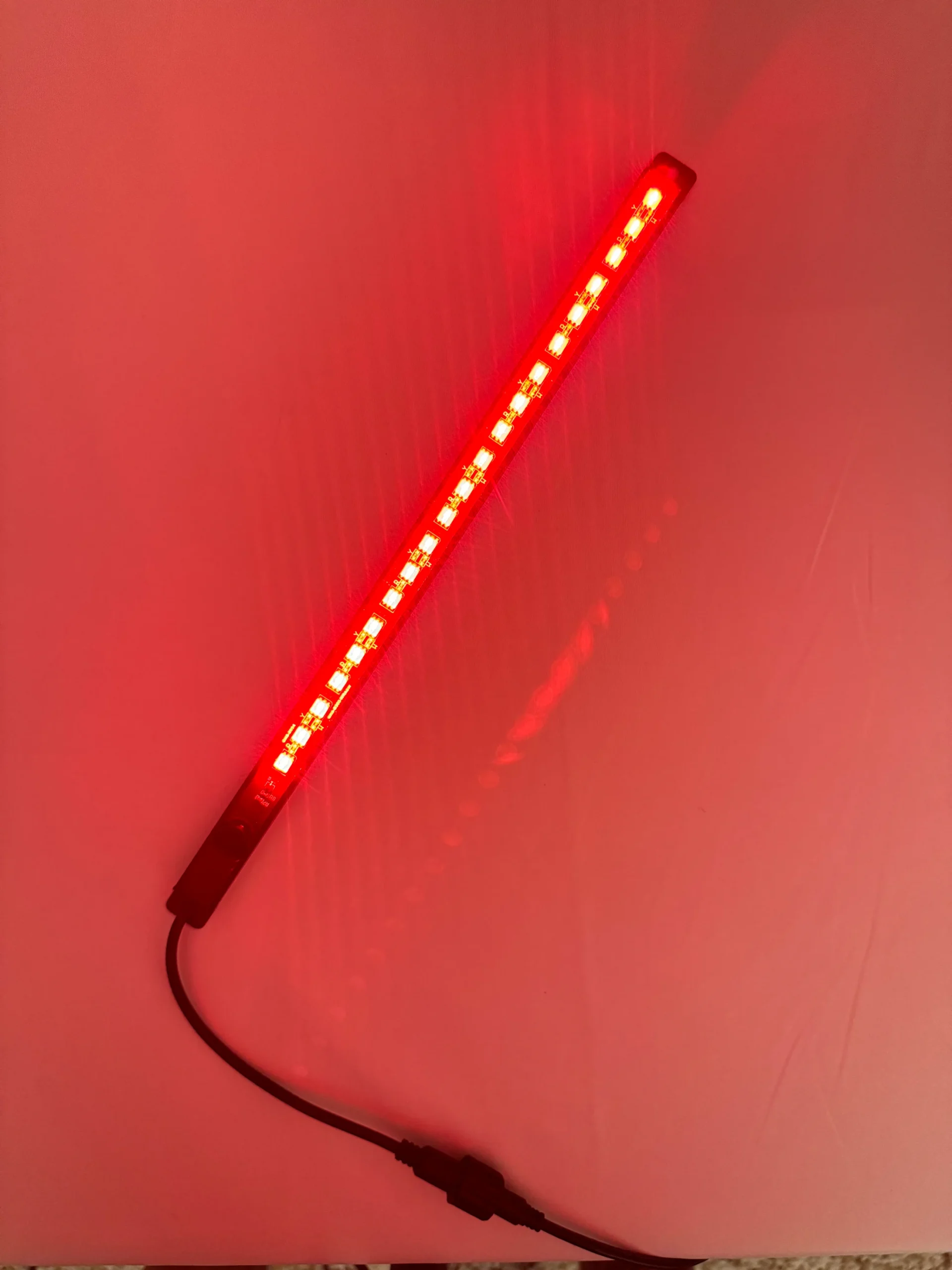
Single-color white lanterns and strips dominate the camp lighting market because they’re cheap and familiar. For most buyers, white light is the default assumption. However, those products ask you to choose between visibility and everything else. Every hour of white light is an hour of compromised night vision, elevated bug activity, and unnecessary wildlife disturbance. Single-color amber or red options exist. However, they sacrifice white mode entirely, which creates real problems during setup or mechanical work in low ambient light.
Tricolor LED strips eliminate the trade-off. White is available when you need it. Amber and red handle the hours when white light does more harm than good. The price premium over a single-color strip is modest. A quality single-color 12V strip runs $40 to $65. A GoFluxx tricolor strip at $96 adds about $30 to $55, and in return delivers three times the functionality. For a gear category where the right choice meaningfully changes your camp experience, that’s a straightforward value calculation. Check the 4wdTalk camping lights buyer’s guide for a broader look at camp lighting options across categories.
Save on GoFluxx
36″ Tricolor Strip at $96 With Free Shipping Over $100
White, amber, and red modes in one IP67-rated strip. Designed for overland rigs, trailers, and rooftop tent setups.
Pros and Cons
Pros
- Red mode preserves dark adaptation. Eyes stay adjusted after 30+ minutes of red light use.
- Amber at ~590nm sits outside the visible spectrum for most flying insects, reducing bug activity noticeably.
- Tricolor strips include white mode for tasks requiring full brightness, with no sacrifice on setup or mechanical work.
- GoFluxx memory mode retains last-used color between power cycles, so no manual reset is needed.
- IP67 rating handles rain, dust, and wet conditions common in backcountry camping.
- Lower impact on nocturnal wildlife. Amber and red are less disruptive to animal circadian rhythms than white light.
Cons
- Red mode is dim by design, so it is not suitable for detailed task work or cooking in low ambient light.
- Requires 12V hardwired install, so it is not a plug-and-play solution for casual or tent-only campers.
Final Verdict
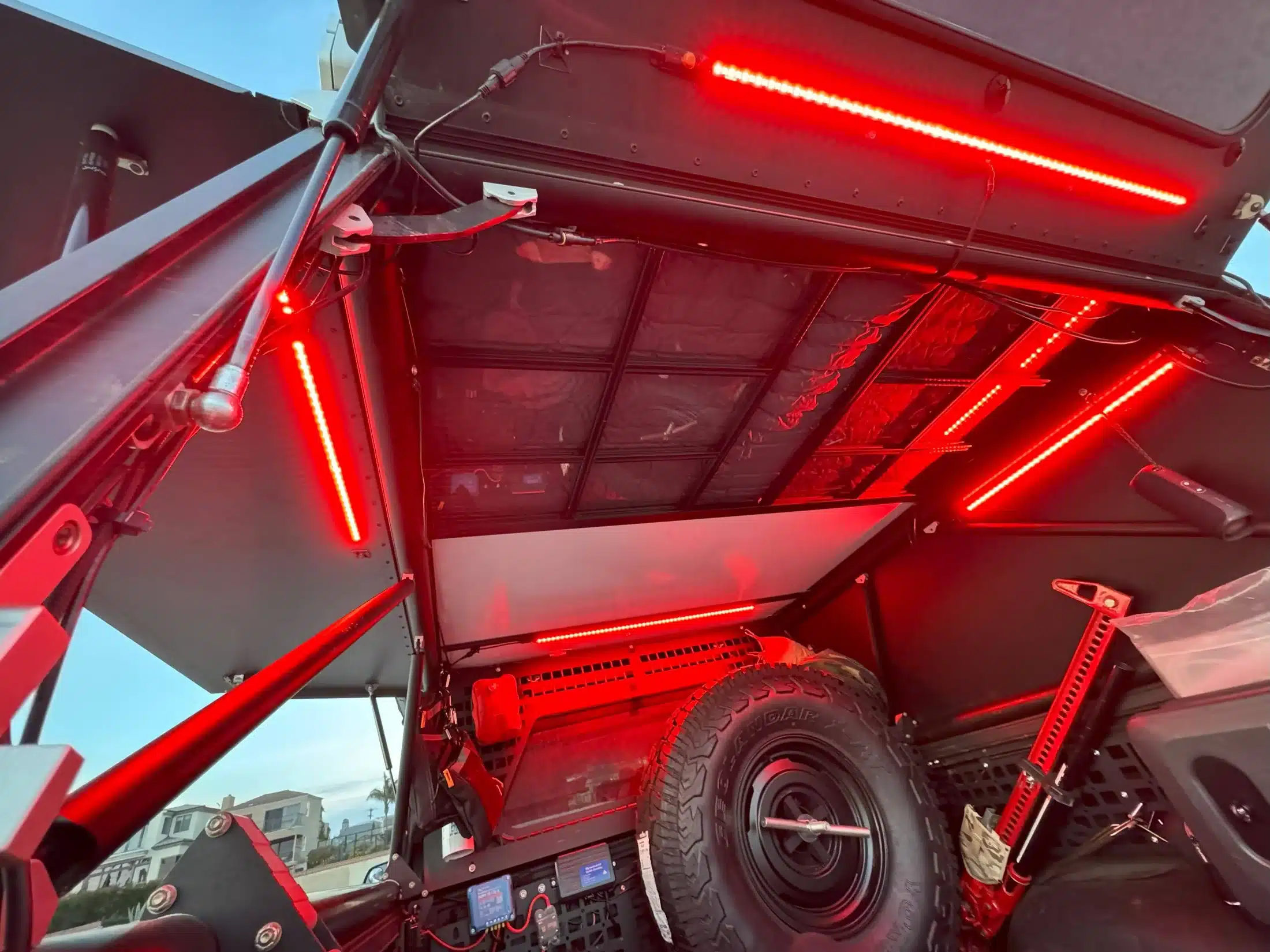
Red and amber camp lighting is the right call for anyone who spends serious time at camp after dark. If you’re running a hardwired 12V setup on an overland rig or trailer, a tricolor LED strip is one of the highest-value upgrades available for under $100. The night vision benefit alone changes how you move around camp after dark. Add in the meaningful reduction in bugs during amber mode, and the case for switching becomes hard to argue with.
White light still has a role, specifically for arrival, setup, and any task requiring real detail visibility. The point isn’t to eliminate white from your kit. Instead, stop defaulting to white for the entire evening when amber and red do the job better for most of what happens after the sun goes down. Overlanders who’ve made that shift consistently describe it as one of those changes they wished they’d made earlier.
The GoFluxx 36″ Tricolor LED Strip at $96 is the practical execution of this principle. IP67 construction, anodized aluminum housing, and memory mode combine in a single 12V strip. Together, they cover the full range of after-dark scenarios without asking you to compromise. For context on how it compares to the broader GoFluxx product line, the full review covers pod lights, awning kits, and wiring options in detail.
Ready to Buy?
Check Today’s Price on GoFluxx Tricolor Strips
Free shipping on orders over $100. Designed for overland rigs and built to last in backcountry conditions.
Frequently Asked Questions
Why does white light ruin night vision camping?
White light breaks down rhodopsin, the chemical in rod cells that enables low-light vision. Rhodopsin takes 20 to 40 minutes to regenerate after white light exposure. Red light at 620 to 700 nanometers does not trigger that breakdown. As a result, night vision camping with red light keeps your eyes dark-adapted throughout the evening.
Does Amber Camp Lighting Reduce Bugs?
Yes. Amber LEDs at approximately 590 nanometers fall outside the wavelength range most flying insects detect well. Research from the Smithsonian confirms that amber-filtered light attracts fewer insects than white light in outdoor settings. Red LEDs at 620 to 750 nanometers are even less visible to insects. Neither eliminates bugs entirely, but the reduction in mosquito and moth activity is noticeable at camp.
What’s the difference between tricolor LED camp lights and regular white strips?
Standard white LED strips output only one wavelength, typically in the 5000K to 6500K cool-white range. Tricolor LED camp lights, like the GoFluxx 36″ strip, output white, amber, and red from a single fixture. That lets you use white for setup and task work, amber during evening hours to reduce bugs, and red at night to preserve your dark adaptation. Single-color strips force you to choose one function and stick with it.
Does camp lighting disturb wildlife?
White and blue-rich light disrupts nocturnal animals significantly. For species that rely on darkness to hunt, forage, or move through wildlife corridors, artificial white light saturates their rod cells and temporarily impairs their vision. Amber and red light, with longer wavelengths above 560 nanometers, are less detectable to most animals. They also cause less disruption to circadian rhythms, an important consideration in or near wildlife habitat.
Is the GoFluxx 36″ Tricolor LED Strip worth it for overlanding?
For overlanders running a 12V electrical system, yes. The GoFluxx strip’s IP67 rating handles backcountry moisture and dust. The anodized aluminum track mounts cleanly under an awning or rooftop tent rail. Additionally, memory mode returns the strip to your last-used color without manual adjustment. At $96 with free shipping on orders over $100, it’s a one-time upgrade that changes every camp after dark.
Our articles might have affiliate links and the occasional sponsored content, but don’t sweat it – if you buy something, we get a little kickback at no extra cost to you, and we only hype products we truly believe in!