


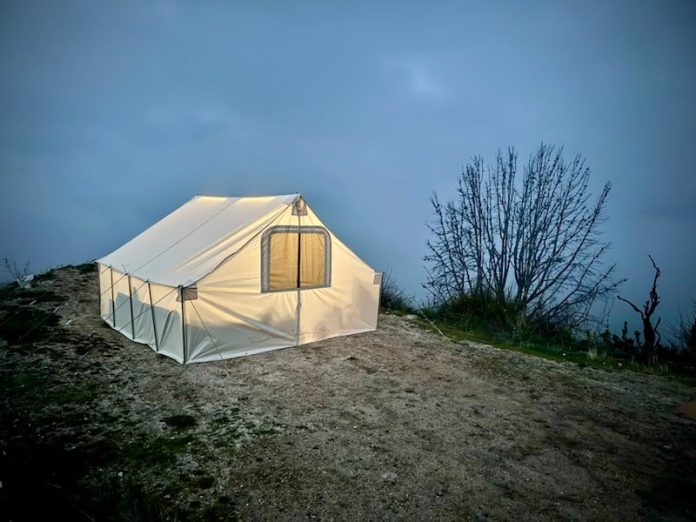

Most gear lists treat tent camping upgrades like a shopping cart problem: add more, spend more, sleep better. After decades of camping and overlanding across the American West, I have found the opposite is closer to the truth. The upgrades worth making are few, specific, and not always expensive. The ones worth skipping are usually expensive and rarely solve the right problem. I have tested gear from Coleman lanterns as a kid through high-end sleep systems and tricolor LED strips as an adult. The pattern is consistent: comfort at camp comes down to a small number of decisions done well, not a full truckload of accessories.
This guide covers seven tent camping upgrades with the highest real-world payoff. These are the ones changing how you sleep, how you see at night, and how much energy you carry into the next day. Every suggestion here reflects gear I have used across multiple seasons and terrain types, from Wyoming desert camps to alpine clearings in the Uintas. If you are planning a camping trip and want to know where the money makes a difference, start here.
Quick Facts:
- Topic: Tent camping upgrades worth the money for overlanders and car campers
- Upgrades covered: Sleep surface, sleeping bag/quilt, tent lighting, footprint, organization, pillow, headlamp
- Biggest impact upgrade: Sleep surface (cot plus quality sleeping pad combination)
- Best lighting upgrade: GoFluxx 36″ Tricolor LED Strip, $96 at gofluxx.com
- Budget range: $10 (footprint) to $350+ (quality sleep system)
- Best for: Car campers, overlanders, and anyone sleeping in a ground tent 3+ nights per year
- Common mistake: Spending on a new tent when the sleep surface is the real problem
8 min read
In This Guide
Upgrade 1: Your Sleep Surface

Among all tent camping upgrades available, the single highest-impact choice is a better sleep surface. Most campers focus on the tent itself, but a quality tent with a bad sleep surface still produces a bad night. The reverse is equally true: a modest tent with a great sleep surface delivers consistently good rest. After years of testing foam pads, air pads, cots, and combinations of both, one answer emerged. The best setup for car camping and overlanding is a cot paired with a high-R-value sleeping pad on top.
The Case for a Camping Cot
A camping cot lifts you 14 to 18 inches off the ground, solving several problems at once. Cold ground conduction is eliminated. Air circulates underneath you on warm nights, reducing the sweaty, sticky sleep common on a pad alone during summer. The space beneath a cot becomes free storage for boots, bags, and gear, which keeps the tent floor clear. For car campers and overlanders, the weight trade-off is not a concern. A good steel-frame cot weighs 15 to 21 pounds and loads in seconds. Our best camping cots for overlanding roundup tested six options across comfort, weight, and durability if you want a detailed breakdown.
The Case for a Quality Sleeping Pad on Top
A cot alone is not a complete camping sleep system. Canvas cots sleep firm and lack insulation. Pairing yours with a quality sleeping pad delivers the elevation of the cot and the cushion and warmth of the pad together, completing the camping sleep system. The HEST Foamy Wide is one of the best options in this category. It combines two layers of memory foam and an R-value of 8.8 for cold-night performance. The waterproof polyurethane bottom coat handles moisture without a separate insulating layer. It weighs 13 pounds, heavier than an air pad, but for vehicle-based camping, the weight is irrelevant. See the full HEST Foamy Wide review for specs and long-term durability notes.
If the HEST is outside your budget, a self-inflating pad in the 3-inch or thicker range delivers a noticeable improvement over thin foam. Look for an R-value of at least 3.0 for three-season camping and 5.0 or higher for shoulder-season use. Sleeping cold is the most common reason campers cut trips short, and the sleeping pad is the gear most responsible for poor outcomes.
Upgrade 2: Sleeping Bag or Quilt
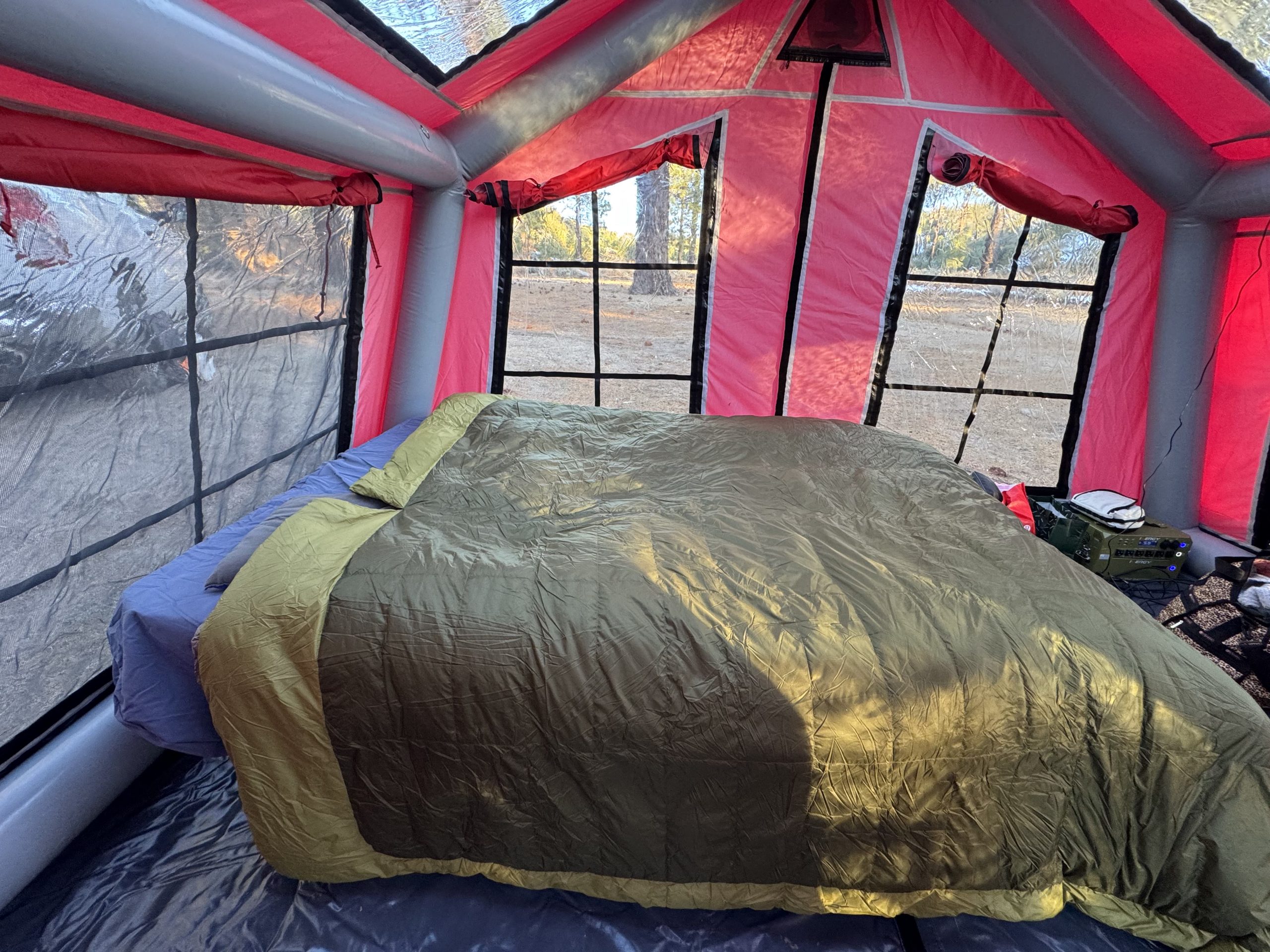
After the sleep surface, the second most common comfort failure in a camping sleep system is a sleeping bag mismatch. Specifically, these tent camping upgrades to sleep system gear change shoulder-season trips from miserable to comfortable. The fix is straightforward: match your bag to the coldest expected night temperature, not the average. Manufacturers rate sleeping bags at survival temperature, not comfort temperature. For most campers, add 10 to 15 degrees Fahrenheit to the stated rating to find the true comfort floor. A 20-degree bag is comfortable to roughly 30 to 35 degrees for most sleepers.
Down sleeping bags offer the best warmth-to-weight ratio and compress significantly smaller than synthetic bags. For most overlanders, down is the stronger long-term investment. However, the trade-off is performance when wet: down loses much of its loft and insulating ability in damp conditions. Synthetic bags retain warmth when wet and dry faster, making them a better choice for high-humidity environments or wet-weather camping. For overlanding and car camping, where weight is not a constraint and moisture control is easier, down is generally the better long-term investment.
A growing number of experienced campers are switching from traditional mummy bags to quilts. A camping quilt functions as an open-ended down blanket with straps and clips to attach to a sleeping pad. Quilts offer more freedom of movement and work especially well on cots, where the insulation beneath you is provided by the pad rather than the bag. In addition, quilts pack significantly smaller than mummy bags. The Aeronaut Hoverquilt, for instance, packs to the size of a small water bottle and handles temperatures to 30 degrees Fahrenheit. As a camping comfort upgrade, a quilt is worth considering if you find traditional bags restrictive or run warm.
Upgrade 3: Tent Lighting
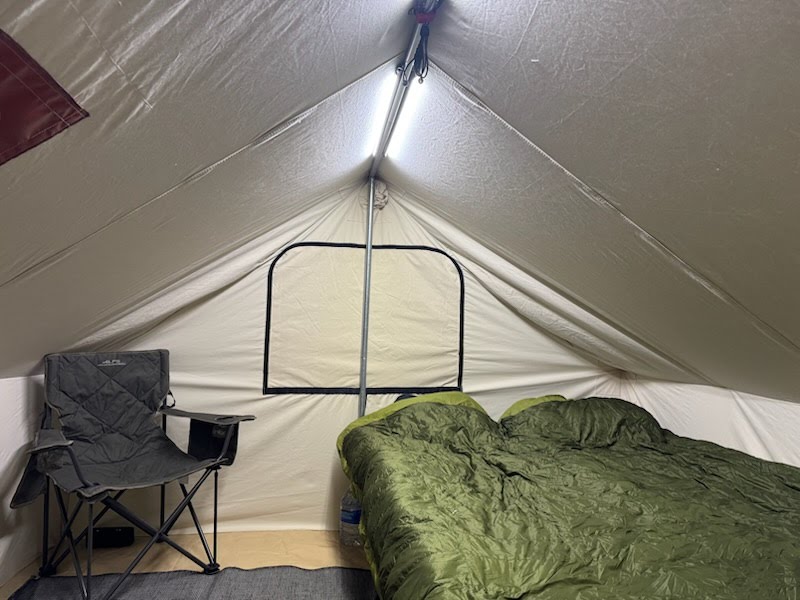
After the sleep system, the next quality-of-life gap in most tent setups is lighting. Most tent campers rely on a single lantern or headlamp after dark, and both fall short in meaningful ways. Lanterns positioned on the tent floor create harsh upward shadows. Headlamps work for focused tasks but require you to reposition your head every time you want to redirect light. Instead, a better camp lighting setup uses a strip light mounted inside the tent shell. This gives even overhead coverage across the full interior without hot spots or shadows.
I have been using GoFluxx tricolor LED strips for several months across tent camping and overlanding trips. The difference in camp quality after dark is significant. The GoFluxx 36″ Tricolor Dimming LED Strip mounts inside a rooftop tent or ground tent shell with 3M foam-backed adhesive and built-in mounting lugs. It runs on 12V at roughly 1 amp at full brightness and connects to any auxiliary battery or portable power station. The strip cycles through white, red, and amber modes at the integrated switch button. Mode memory returns the strip to its last-used color on power restore, so a red-mode tent stays in red mode on the next evening.
White mode handles task lighting: finding gear, reading, getting dressed. Amber mode creates a warm, pleasant glow for winding down without attracting insects. Red mode is the most practical for tent camping specifically, because it preserves dark-adapted vision. After 20 to 30 minutes under red light, stepping outside the tent leaves your eyes adjusted to the dark rather than temporarily blinded. For midnight bathroom trips, perimeter checks, or early morning breaks, red mode is a meaningful safety and camping comfort upgrade. After several months of real use across varied conditions, the light quality is excellent and the ease of use is hard to beat.
For a full rundown of the GoFluxx product line, including awning kits and pod lights, see the full GoFluxx lighting review. For lumen targets and power draw math across different camp lighting scenarios, the campsite lighting specs guide covers the numbers in detail.
Upgrade Your Tent Lighting
GoFluxx 36″ Tricolor Dimming LED Strip
IP67-rated, 12V hardwired, white/red/amber modes with built-in dimming. Mounts inside any tent with 3M adhesive. Mode memory preserves last-used color on power restore.
Upgrade 4: Tent Footprint
A tent footprint is a shaped ground cloth sized to fit beneath your specific tent model. It sits between the tent floor and the ground, protecting the floor material from abrasion, punctures, and moisture wicking from below. Most campers skip this because it feels like an optional accessory. In practice, it extends tent floor life significantly, especially on rocky or gravelly sites where ground contact slowly wears through coated nylon over multiple seasons.
The secondary benefit is moisture control, which is equally important for comfort and warmth. Even on dry nights, ground moisture migrates upward through fabric in contact with soil. A footprint breaks this contact and keeps the tent floor drier. Consequently, the tent interior stays warmer and less humid across multi-night trips. For overlanders using dispersed campsites on unimproved terrain where the ground surface is unpredictable, a footprint is close to essential.
Most tent manufacturers sell footprints sized to their specific models. Aftermarket options using polycryo ground cloth are lighter and cheaper, though they sacrifice some durability. Either works well. The camping comfort upgrade here is modest compared to a sleep system overhaul. However, at $20 to $50, it is one of the cheapest tent camping upgrades available. It extends the life of a tent you already own and improves floor conditions on every subsequent trip.
Upgrade 5: Organization and Gear Access
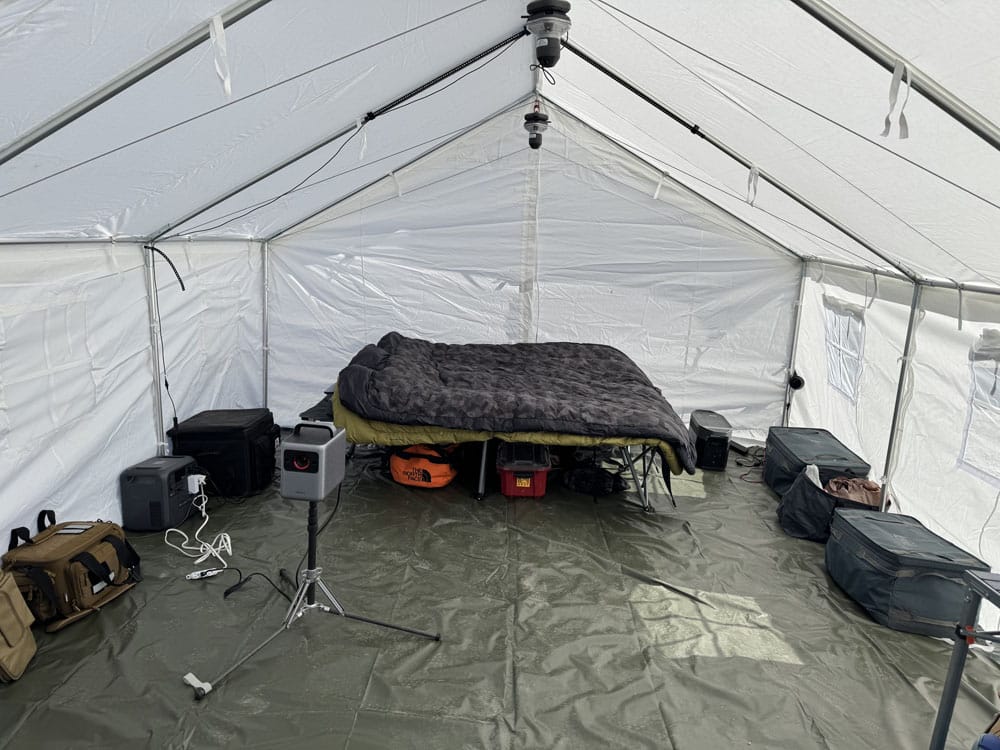
A disorganized tent is a frustrating tent, especially after dark. On a three-night trip in the Uintas, I spent ten minutes at midnight excavating a corner of the tent floor. The headlamp was buried under a pile of layers and loose gear. Gear gets kicked to corners, headlamps disappear under sleeping bags, and shoes end up somewhere requiring a full excavation at 5 AM. The fix is not more gear. Instead, a consistent storage system inside the tent solves the problem without adding weight or cost.
The highest-impact organizational tent camping upgrade is a hanging gear loft or a set of internal pockets configured deliberately. A gear loft is a lightweight mesh shelf clipping to the tent ceiling. It provides overhead storage for headlamps, phones, keys, maps, and anything else you want within reach without leaving your sleeping bag. Most quality tents include attachment points for a gear loft even if the loft itself is sold separately.
Beyond the loft, small soft-sided cubes serve well as gear organizers inside a tent. One cube for clothing layers, one for electronics and cables, one for toiletries. Each cube stays in a fixed position and packs directly from the tent into the truck without repacking. Over multiple trips, this approach saves 10 to 15 minutes of camp breakdown and ensures nothing gets left behind. Specifically, a set of packing cubes at $20 to $40 is one of the lowest-cost, highest-frequency-payoff camping gear upgrades available.
Upgrade 6: A Real Pillow

Inflatable camp pillows are a popular camping comfort upgrade recommendation, and they are consistently disappointing in practice. They compress under weight, shift during sleep, and feel nothing like an actual pillow. For car camping and overlanding where you are not counting ounces, bringing a pillow from home is the correct choice and costs nothing. Also, it is the single pillow upgrade requiring zero dollars.
If a home pillow is too bulky for your packing setup, a foam camp pillow or a down-fill compressible pillow is a meaningful step above the inflatable alternative. In particular, the key spec to look for is loft: aim for at least 3 inches of compressed height. A flat pillow produces neck strain compounding over multiple nights, especially for side sleepers. After a three-night overlanding trip with the wrong pillow, the neck pain becomes a bigger problem than any gear failure. This is a $30 to $60 upgrade with an outsized impact on morning energy levels and overall trip quality.
Upgrade 7: Headlamp with Red Light Mode
A headlamp is standard camping gear, but not all headlamps are equal for tent use. Among tent camping upgrades, a red-mode headlamp is one of the most underrated camping gear upgrades available. The specific feature worth prioritizing is a dedicated red light mode, not a simple dimmer on white light. Red light at wavelengths around 620 to 750 nanometers stimulates rod photoreceptors minimally. As a result, it preserves the dark adaptation your eyes need for nighttime navigation, bathroom trips, and low-light camp tasks.
In practice, a headlamp with red mode means stepping out of a lit tent and still seeing the ground clearly. There is no stumbling blind for 30 seconds while your eyes readjust. For overlanders camped in remote sites without ambient light, this matters more than it sounds. Look for a headlamp where a single button press activates red mode directly, rather than requiring three cycles through settings. Models from Black Diamond, Petzl, and Princeton Tec offer dedicated red-mode switches in the $30 to $60 range. This is one of the easiest tent camping upgrades to justify: low price, high daily-use payoff.
Final Verdict
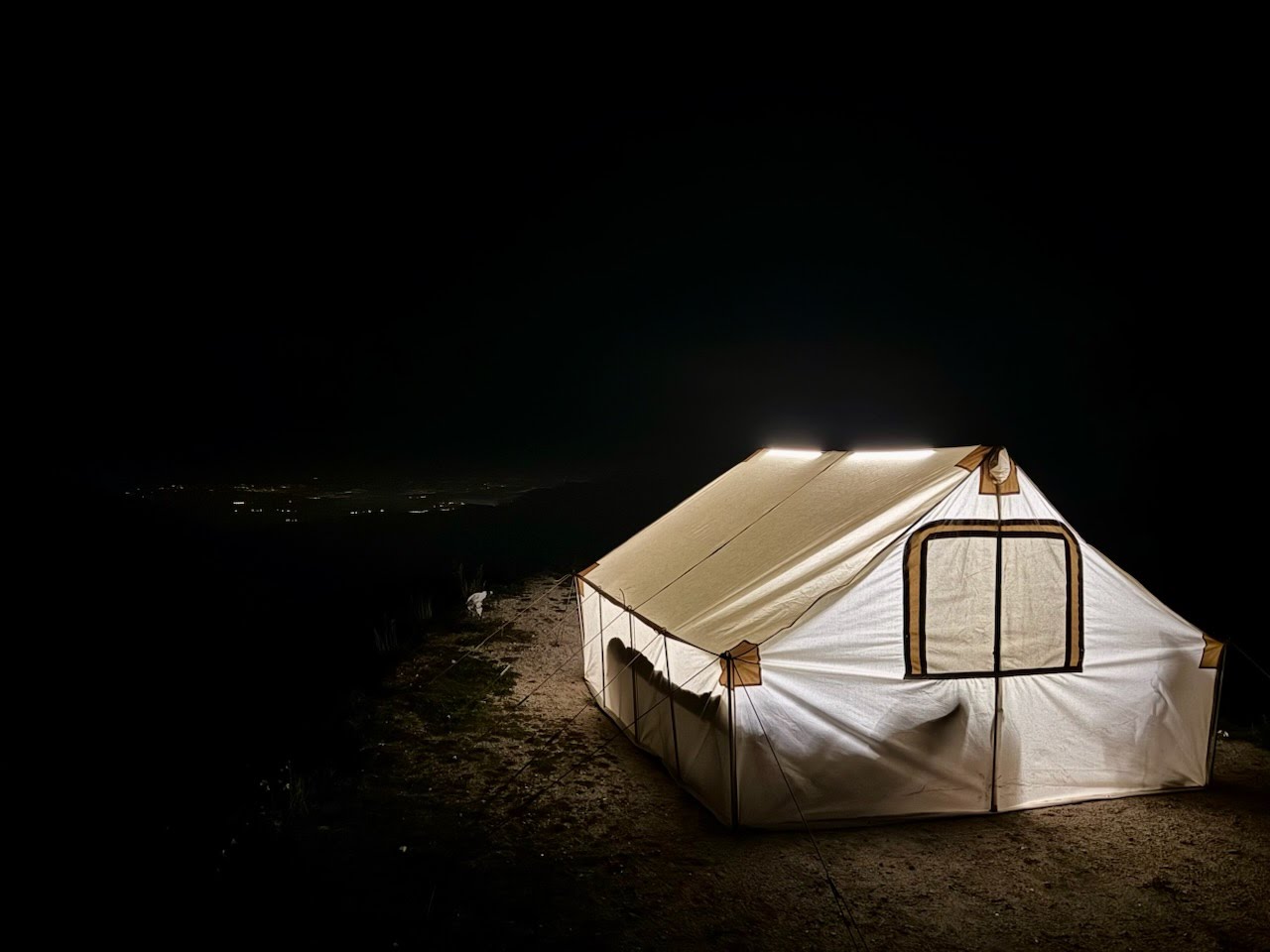
These tent camping upgrades follow a clear priority order. Sleep surface comes first: a cot and quality sleeping pad combination solves more problems than any other single purchase. Sleeping bag or quilt comes second: match the temperature rating honestly and consider a quilt if you sleep warm or use a cot regularly. Lighting is the third priority, and a tricolor LED strip inside the tent changes the overlanding tent setup experience more than any lantern or headlamp swap. Everything after those three, including footprint, organization, pillow, and headlamp, is a lower-cost improvement worth making as your setup matures.
The most common mistake campers make with tent camping upgrades is spending on a new tent when the tent itself is not the problem. A $500 tent on a thin foam pad still produces a miserable night. In contrast, a modest tent with a cot, a quality sleeping pad, and proper lighting produces a good one. These tent camping upgrades apply equally to weekend car campers and long-haul overlanding setups. The gear lives in the vehicle and performs the same job on every trip, whether you are refining an overlanding tent setup or a simple car camping kit.
After decades of testing camp gear across every category, the pattern holds: the camping sleep system and lighting decisions carry the most weight. Start with sleep, add light, and build the rest from there. In short, these tent camping upgrades are the ones earning their place on every trip. After decades in the field, the same tent camping upgrades keep proving their value season after season. Notably, the camping sleep system and lighting decisions carry the most weight of any upgrades in this list. Both your body and your next-morning energy will reflect the investment.
Level Up Your Camp Lighting
GoFluxx Tricolor LED Strips at gofluxx.com
White, red, and amber modes for every camp scenario. IP67-rated, 12V, fits inside any ground tent or RTT. Splitters let you run multiple zones from one circuit.
Frequently Asked Questions
What is the most impactful tent camping upgrade?
The sleep surface delivers the highest return of any camping comfort upgrade. Specifically, a camping cot paired with a quality sleeping pad (R-value 3.0 or higher) solves cold ground conduction and back pain from uneven terrain. It also eliminates summer heat accumulation simultaneously. Most campers sleeping poorly in a tent are sleeping on an inadequate surface, not in an inadequate tent.
Is a camping cot worth it for tent camping?
For car camping and overlanding, yes. A cot lifts you 14 to 18 inches off the ground. It eliminates ground conduction, creates storage space underneath, and allows air to circulate on warm nights. The weight penalty (15 to 21 pounds for a steel-frame model) is irrelevant when your vehicle carries the load. The only situation where a cot is not worth it is backpacking, where weight and pack size are real constraints.
What lighting works best inside a tent?
A tricolor LED strip mounted to the tent ceiling is the most functional camp lighting setup for tent interiors. It provides even overhead illumination without the hot spots and shadows of a lantern. White mode handles task lighting, amber mode works for evening relaxation with minimal bug attraction, and red mode preserves night vision for trips outside the tent. The GoFluxx 36″ Tricolor Dimming LED Strip is a strong choice at $96, with IP67 weatherproofing and a mode memory function.
What R-value sleeping pad do I need for tent camping?
For three-season camping (spring through fall), target an R-value of 3.0 to 5.0. For shoulder-season or high-elevation camping where overnight temperatures drop below 20 degrees Fahrenheit, look for R-values of 5.0 or higher. The HEST Foamy Wide at R-value 8.8 handles winter-adjacent conditions without supplemental insulation and is a strong choice for overlanders who camp across seasons.
Do I need a tent footprint?
For dispersed camping on unimproved terrain, yes. A footprint protects the tent floor from abrasion and punctures on rocky ground and blocks upward moisture migration on damp sites. At $20 to $50, it is one of the cheapest tent camping upgrades available. On maintained campgrounds with smooth, clean tent pads, a footprint is useful but less critical.
What should I look for in a camp pillow?
For car camping and overlanding trips, bring a pillow from home rather than an inflatable camp pillow. Inflatable pillows compress under body weight, shift during sleep, and do not provide adequate neck support for side sleepers. If pack size is a constraint, choose a compressible foam or down camp pillow with at least 3 inches of loft. Specifically, neck pain from a bad pillow after two or three nights is one of the most underrated camping comfort problems.
Our articles might have affiliate links and the occasional sponsored content, but don’t sweat it – if you buy something, we get a little kickback at no extra cost to you, and we only hype products we truly believe in!