


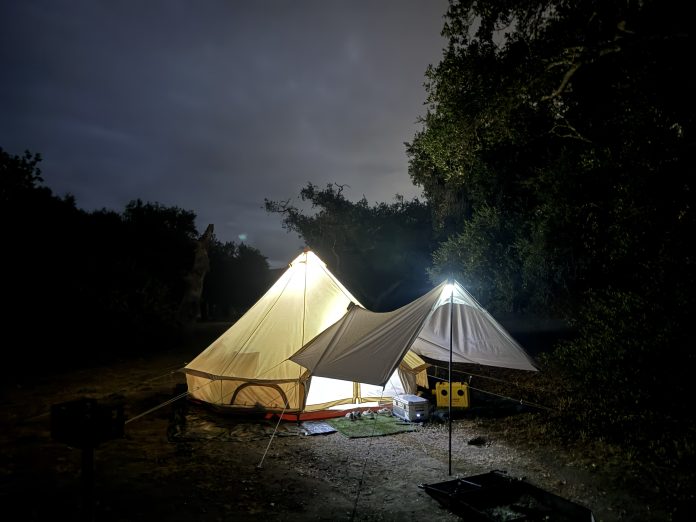

Ask ten campers about car camping vs tent camping and you’ll hear ten different answers. For example, some treat the terms as opposites. Others treat them as the same thing. The truth sits in between, because one describes how you arrive and the other describes where you sleep. Once you see the split, your gear list, your budget, and your campsite choices start to make sense.
I’ve camped for more than 30 years, and I’ve overlanded for 15 of them. As the founder of 4WDTalk, I’ve spent plenty of nights both ways, from walk-in sites to basecamps parked beside my truck. This guide explains each style, compares them side by side, and shows where a roomy canvas shelter like the Stout 5M Pro Bell Tent fits.
Quick Facts:
- Topic: Car camping vs tent camping
- Skill level: Beginner to intermediate
- Time required: About 10 minutes to compare and choose
- Featured shelter: Stout 5M Pro Bell Tent, double door
- Floor area: About 212 square feet
- Center pole: 9 feet 9 inches
- Tent price: $1,359 with free shipping in the contiguous US
- Best for: Families and couples who camp from a vehicle
8 min read
In This Guide
- Car Camping vs Tent Camping at a Glance
- Stout 5M Pro Key Specs at a Glance
- Car Camping vs Tent Camping: Key Differences
- Car Camping: Comfort and Convenience
- Tent Camping: Lighter and Farther Out
- Car Camping vs Tent Camping: Which Fits You?
- Stout 5M Pro vs. a Backpacking Tent
- Pros and Cons of a Bell Tent for Car Camping
- Final Verdict
- Frequently Asked Questions
Car Camping vs Tent Camping at a Glance

The car camping vs tent camping debate comes down to one question. Do you carry your gear on your back or in a vehicle? Car camping means you drive to a site and unload near your tent. Tent camping, in the broad sense, means any trip where a tent is your shelter, including backpacking.
However, most weekend campers do both at once. They drive to a campground, then sleep in a tent. Therefore, the real choice is how much comfort you want against how far you want to go.
Vehicle camping rewards big gear. Backcountry camping rewards light gear, so your camping style follows your load. However, each camping style has a clear winner for specific trips, and the sections below show which one.
Stout 5M Pro Key Specs at a Glance
| Specification | Details |
|---|---|
| Floor area | About 212 sq ft (16 ft across) |
| Center pole height | 9 ft 9 in |
| Doors | Two A-frame entrances, 5 ft 6 in tall |
| Tent weight | 97.2 lb (102.9 lb shipping) |
| Packed size | 42 x 12 x 12 in |
| Canvas | 100% cotton |
| Floor | Zip-away PVC tub groundsheet |
| Sidewalls | 24 in, with 360-degree mesh layer |
| Sleeps | Up to four twin beds, two queens, or one king |
| Setup space | 20 ft by 20 ft |
| Price | $1,359, free shipping in the contiguous US |
Buy Direct From Stout Tent
A Basecamp Built for Car Camping
The Stout 5M Pro double door gives you about 212 square feet, two doors, and a built-in stove jack.
Car Camping vs Tent Camping: Key Differences
Five factors separate the two styles. Specifically, they are access, gear weight, comfort, cost, and site options. The table below shows how each style handles them.
| Factor | Car camping | Backcountry tent camping |
|---|---|---|
| Access | Drive to the site | Hike or paddle in |
| Gear weight | Limited by vehicle space | Limited by your back |
| Comfort | Cots, coolers, big tents | Light pad and small shelter |
| Cost | Moderate; bulk gear is cheap | Higher; light gear costs more |
| Sites | Campgrounds and dispersed sites | Trailheads and remote spots |
First, gear weight is the biggest split. Your pack forces you to count every ounce, while a vehicle lets you carry a cooler, a camp chair, and a full kitchen. In my experience, this single factor shapes every other choice.
Site options differ too. Developed campgrounds usually offer a flat pad, a fire ring, and a picnic table, though amenities vary. Backcountry camping offers none of these, so you also carry water treatment and pack out all waste.
Next, cost follows weight. Ultralight gear is expensive because makers use costly fabrics to save ounces. By contrast, car camping gear stays affordable, since weight doesn’t matter.
Car Camping: Comfort and Convenience

Car camping works best when you want comfort. Then you park, unload, and build a real camp. Also, your vehicle shelters you from storms and offers a fast exit if the weather turns.
Shelter is where car campers gain the most. Because weight no longer limits you, a bell tent becomes realistic. The Stout 5M Pro covers about 212 square feet under a 9-foot 9-inch center pole. Stout lists room for four twin beds, two queens, or one king, so a family gets real space.
Also, two 5-foot 6-inch doors let air flow front to back. The double-wall design adds a 360-degree mesh layer, which keeps bugs out. Meanwhile, the built-in stove jack lets you add a compatible wood stove for cold nights.
However, setup is manageable. For example, the tent weighs 97.2 pounds and packs to 42 by 12 by 12 inches, so it fits in most SUV cargo areas or a truck bed. Stout lists a required setup space of 20 feet by 20 feet.
Tent Camping: Lighter and Farther Out
Backcountry tent camping works best when you want distance. You carry everything, so every item earns its place. Your backpacking tent often weighs only a few pounds, which is far less than any bell tent.
However, solitude is the payoff. Walk-in sites and trailheads put you away from road noise and crowds. As a result, many campers choose this style for fishing, hiking, and quiet.
In contrast, the cost is comfort. You sleep on a thin pad, eat from one pot, and sit on the ground. Also, there’s no vehicle to retreat to during a storm.
Therefore, pick this style for short, light trips. No 97-pound canvas tent belongs on a trail, and I’d never suggest one. Instead, leave the bell tent for the campground or the overland basecamp.
Car Camping vs Tent Camping: Which Fits You?
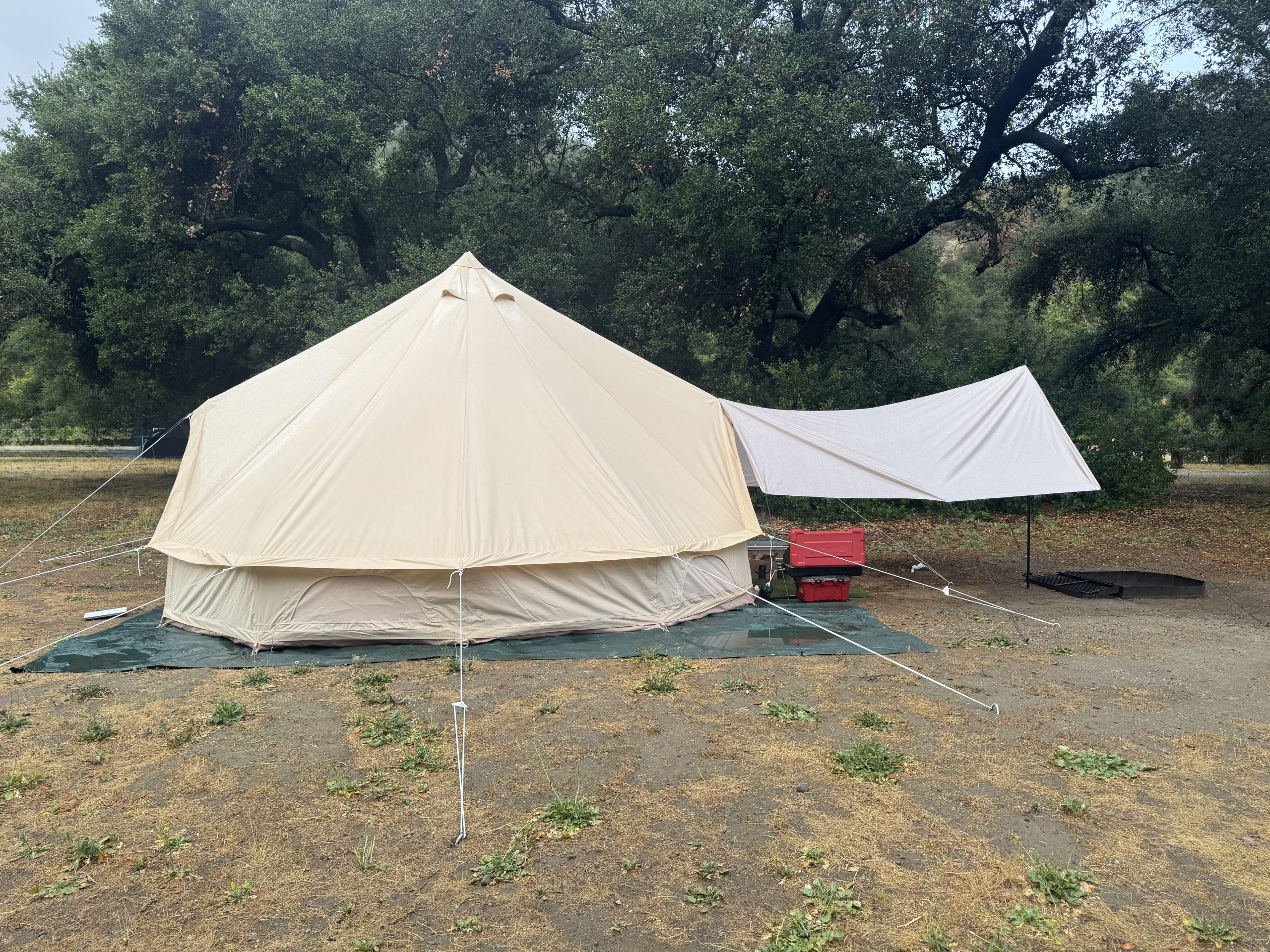
Choose car camping if you camp with family, kids, or pets. Also, choose it if you want a cooler, a stove, and a comfortable bed. It also suits beginners, since help and a vehicle sit close by.
Choose backcountry tent camping if distance matters more than comfort. For example, it fits solo trips, fishing hikes, and anyone who enjoys the challenge of going light.
Next, trip length matters. For a week at one site, car camping wins, because you settle in once and enjoy the space. For a single night on the move, a small tent is faster to pitch and pack.
Finally, think about your impact. The Leave No Trace principles ask you to camp on durable surfaces. Large tents need a large, flat site, so scout before you commit.
Season changes the answer as well. In cold weather, car camping gains an edge because you carry a stove, extra bedding, and a tent with a stove jack. In summer, a light tent and a short hike often feel better, since heat and bugs matter less when you keep moving.
Overlanding sits between the two. I drive to remote spots in the Gladiator, then settle into a basecamp, so I treat it as car camping with a longer approach. Whichever camping style you pick, match the shelter to the trip.
Ready to Camp in Comfort?
Make Your Campsite Feel Like Home
Order the Stout 5M Pro double door direct and get free shipping in the contiguous US.
Stout 5M Pro vs. a Backpacking Tent
| Feature | Stout 5M Pro | Typical backpacking tent |
|---|---|---|
| Standing room | 9 ft 9 in center pole | Usually a crouch |
| Floor space | About 212 sq ft | Far smaller |
| Setup | One center pole plus guylines | Light poles plus a rainfly |
| Stove compatibility | Built-in stove jack | Not designed for stoves |
| Weight | 97.2 lb | A few pounds |
| Price | $1,359 | Varies widely |
The backpacking tent wins on weight and portability. It fits a pack and a trail. If you hike to camp, choose it.
The 5M Pro wins on living space. For example, you stand upright, set up cots, and wait out storms in comfort. Compared to a dome tent, it also handles long stays better, since the tall walls and vents keep air moving.
Pros and Cons of a Bell Tent for Car Camping
Pros
- About 212 square feet of floor sleeps up to four twin beds or two queens
- 9 foot 9 inch center pole gives standing room for adults
- One center pole keeps the setup simple
- Cotton canvas breathes and feels sturdy
- Double-wall design adds a 360-degree mesh bug layer
- Two doors move air through the tent
- 4 windows and 4 roof vents keep air flowing
- Built-in stove jack and AC port add year-round comfort
- Zip-away PVC tub floor keeps moisture out
- Packs to 42 by 12 by 12 inches and ships free in the contiguous US
Cons
- Pitching goes faster with a helper, since the tent weighs 97.2 pounds
- It likes a flat 20 foot by 20 foot site
Final Verdict
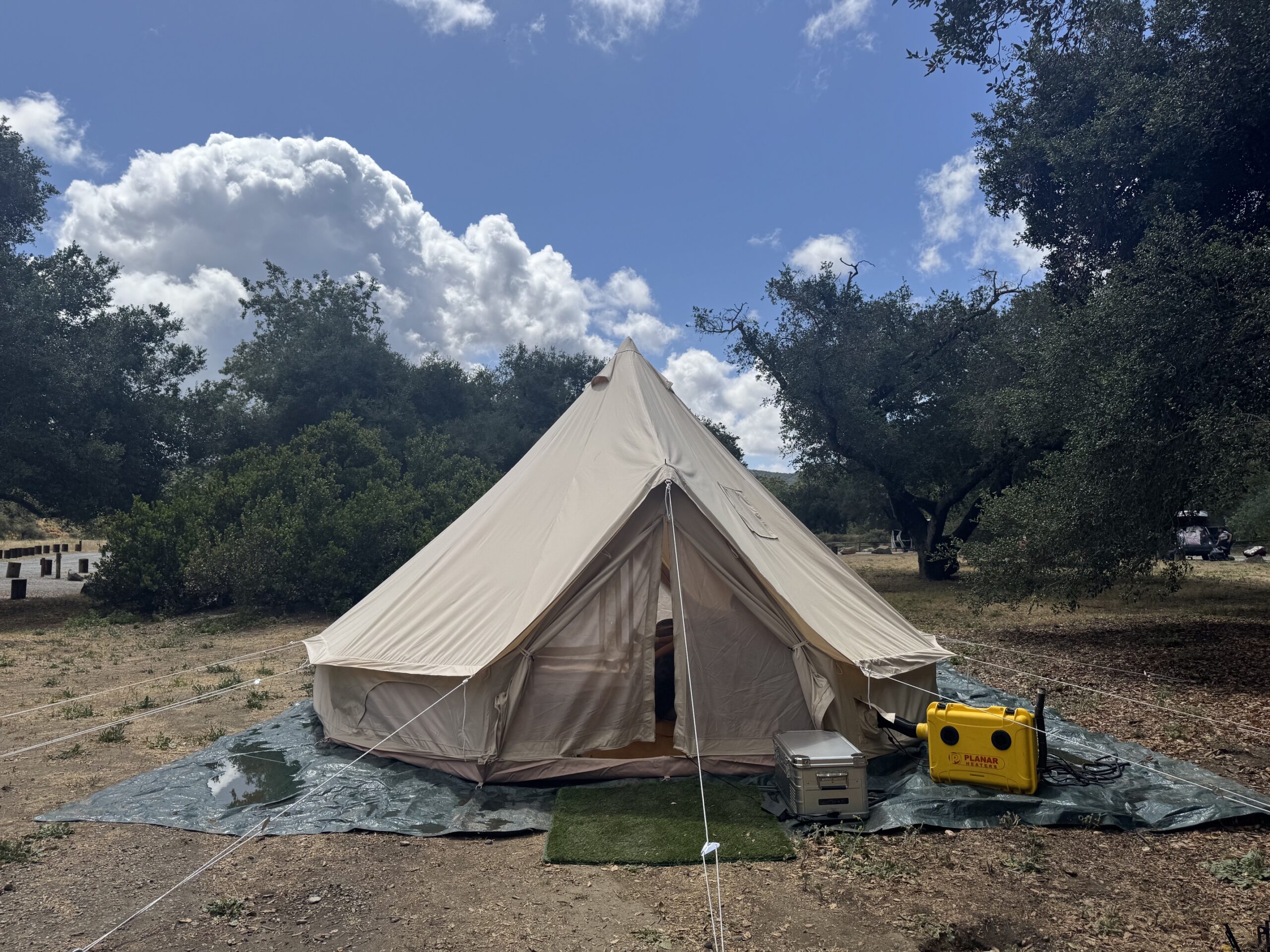
The Stout 5M Pro suits couples and families who camp from a vehicle. Its biggest strength is livable space. You get standing room, two doors, and a stove jack in a package sized for most cargo areas.
The trade-offs are weight and site size. Instead, if you hike to camp or move every day, look elsewhere. A lightweight backpacking tent fits those trips better.
On value, $1,359 buys roughly 212 square feet of cotton canvas, a double-wall mesh layer, and free shipping in the contiguous US. Since canvas lasts for many seasons, you buy once and grow into the tent.
My recommendation is simple. If you car camp with family or friends, put the 5M Pro on your short list. Otherwise, for larger groups, step up to the 6M instead.
Ready to Buy?
Get the Right-Sized Car Camping Basecamp
Order the Stout 5M Pro double door direct and get free shipping in the contiguous US.
Frequently Asked Questions
What is the difference between car camping and tent camping?
Car camping means you drive to a site and keep your gear in the vehicle. Tent camping describes any trip where a tent is your shelter, including backpacking. Many trips are both at once.
Is car camping vs tent camping a matter of comfort?
Mostly, yes. Your vehicle lets you carry a bigger tent, cots, a cooler, and a stove. By contrast, a pack limits you to the lightest gear you own, so comfort drops as distance grows.
Is a bell tent good for car camping?
Yes. Bell tents are heavy and bulky, so it suits trips where your vehicle carries it. The Stout 5M Pro weighs 97.2 pounds and packs to 42 by 12 by 12 inches.
How much space does the Stout 5M Pro need?
Stout lists a setup space of 20 feet by 20 feet. Check the pad size before you book a developed campsite. Leave extra room for guylines and a clear path to both doors.
Is car camping good for beginners?
Yes. You carry less on your back, retreat to the vehicle in bad weather, and stay near roads for help. For these reasons, I suggest it as a first step before you try a backcountry trip.