


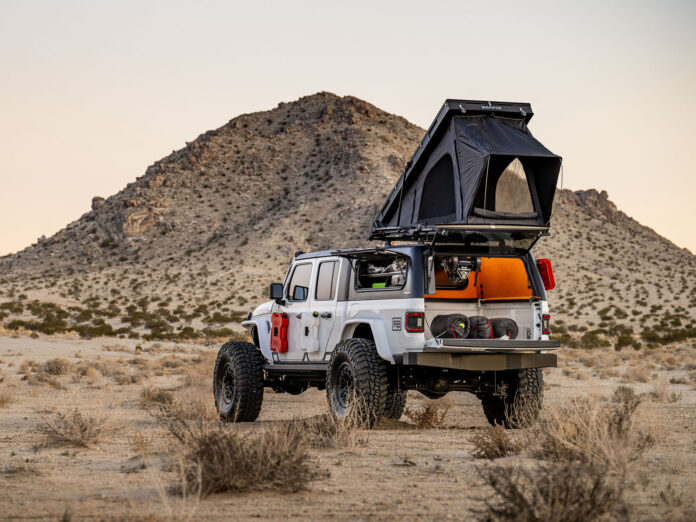

A truck cap rooftop tent sounds like the perfect camp setup, until you read the fine print. Every cap carries a weight rating, and most buyers never check it. Some caps handle 220 pounds while the truck moves. Others handle more than three times as much. Pick wrong, and you risk a cracked roof, a leaky shell, or a tent sliding loose on the highway.
I’ve spent my fair share of time camping and overlanding over the years. Building out my own truck taught me to treat every pound as a decision. So this guide explains how weight ratings work, how popular caps compare, and how to run the payload math before you drill a single hole.
Quick Facts:
- Topic: Safe weight limits for tents on truck caps
- Moving load: Dynamic rating, the lower number
- Parked load: Static rating, the higher number
- Typical dynamic range: 220 to 330 lb in our comparison
- Venturous Ozark: 750 lb dynamic, 1,500 lb static
- Hidden limit: Your truck’s payload rating
- Handling factor: Higher center of gravity
- Best for: Truck owners planning a roof tent build
8 min read
In This Guide
Can a Truck Cap Hold a Rooftop Tent?
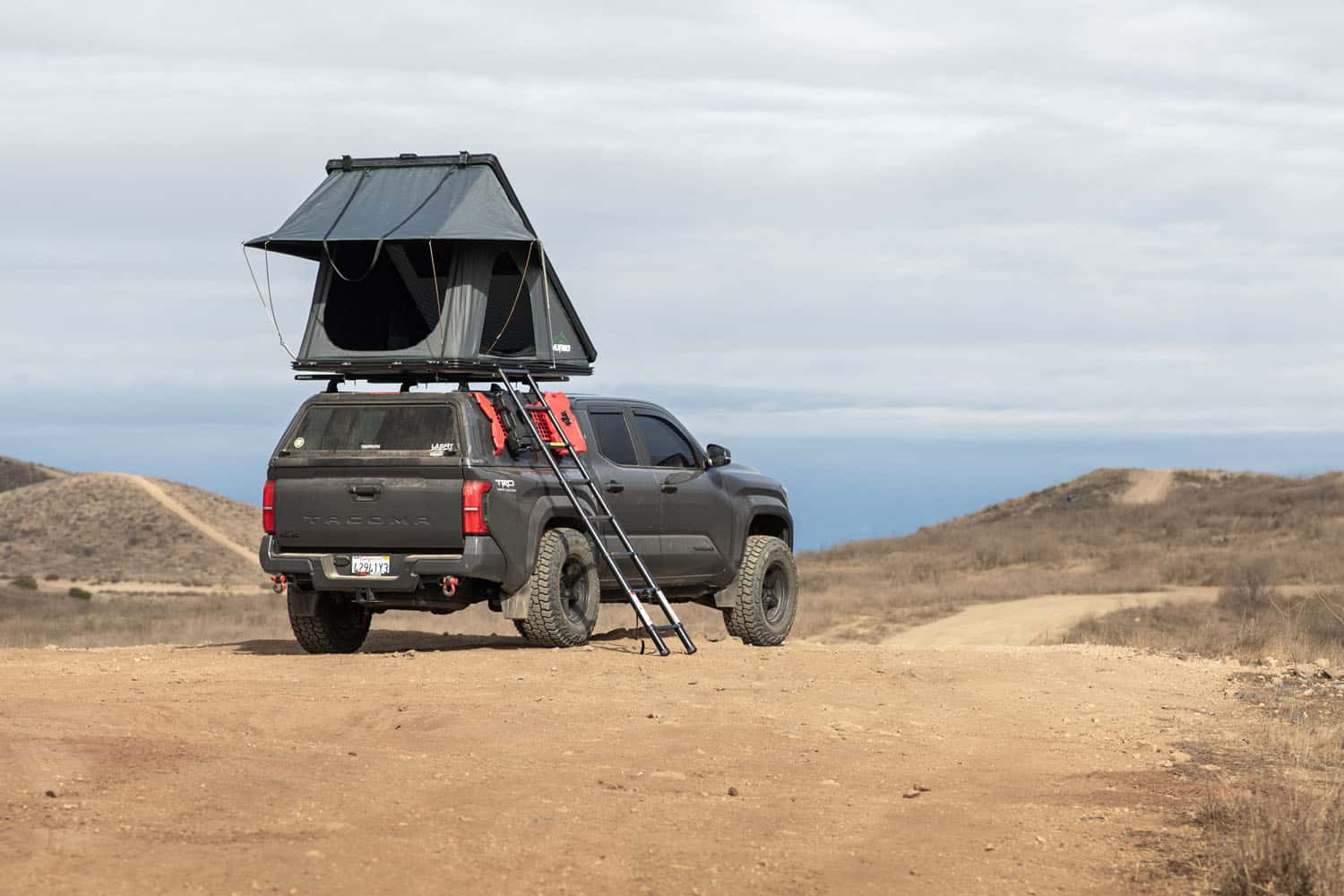
Yes, many caps hold a tent, but only when the load stays inside the rating. A truck cap rooftop tent build adds more than the tent itself. Many rooftop tents weigh between 100 and 200 lb. Crossbars, mounts, and a ladder add more. Therefore, a cap rated for 220 lb while driving leaves almost no margin.
Two numbers decide the answer. The dynamic weight rating covers the load while you drive. The static weight rating covers the load while you sleep. Cap makers publish them differently, and some don’t publish them at all.
For this reason, this guide covers more than the cap. We’ll compare published ratings, walk through the payload math, and look at center of gravity.
Published Ratings Compared
However, every truck cap weight rating you find online comes with a catch. The table below lines up the figures we found.
| Truck Cap | Dynamic Rating | Static Rating |
|---|---|---|
| LEER | 220 lb | 1,000 lb |
| SmartCap | 330 lb | 770 lb |
| Venturous Ozark | 750 lb | 1,500 lb |
Notice how the gap between the two numbers changes. LEER lists 1,000 lb static against 220 lb dynamic, a ratio above four to one. The Ozark’s ratio is two to one. Consequently, a big static number tells you little about the load your roof handles on a rough road.
Ratings also change by model, truck, and rack system, so ask before you buy. Before you buy, ask the dealer for the written rating on your exact cap.
Built for Roof Loads
See the Venturous Ozark Ratings
A 750 lb dynamic rating gives your tent, bars, and gear real headroom on the trail.
Static vs. Dynamic Ratings Explained
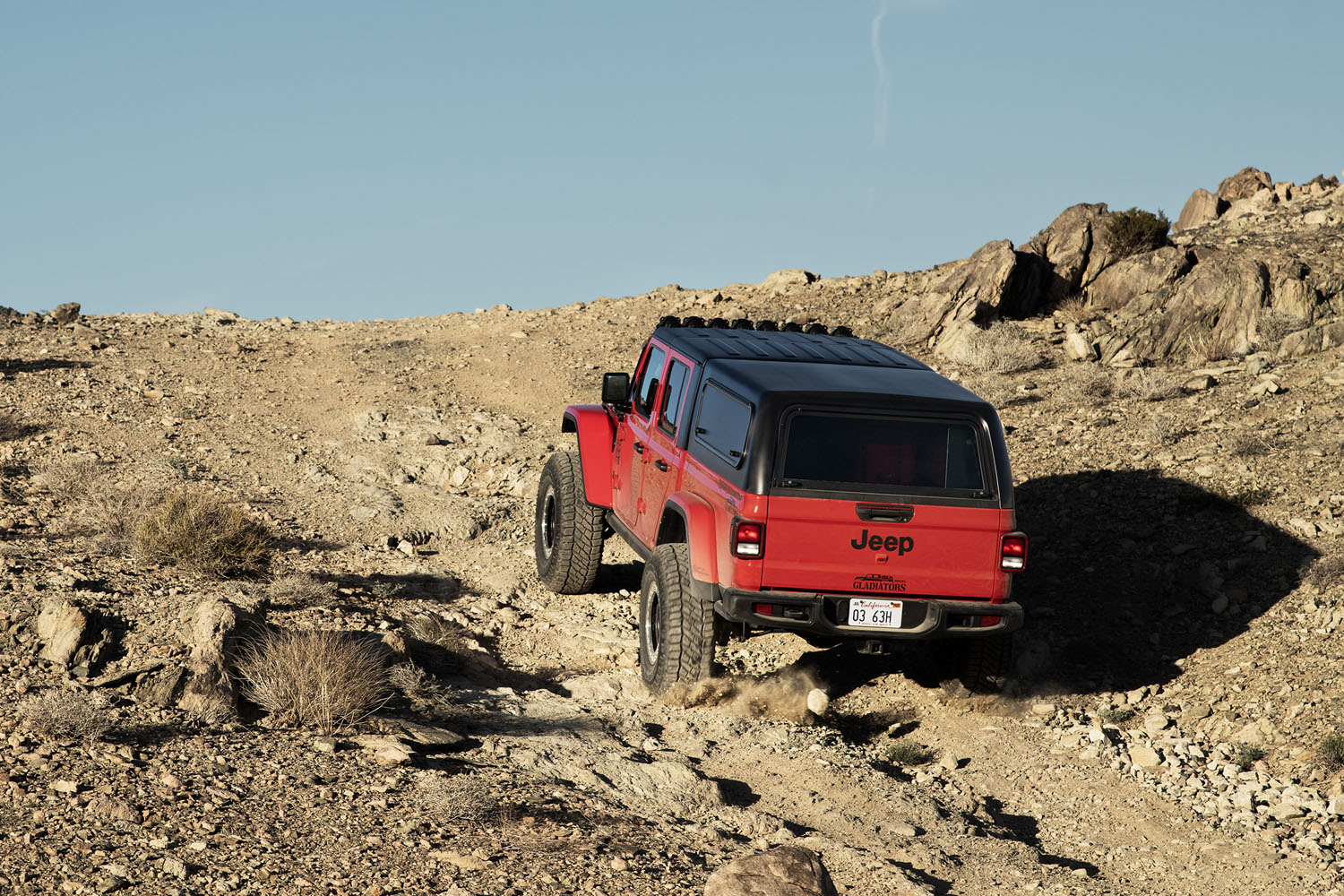
The dynamic weight rating is the number to watch most closely. Specifically, it describes what the roof carries while the truck moves. Potholes, washboard, and hard braking multiply the force on the roof. Therefore, dynamic ratings always sit far below static ones.
The static weight rating describes the roof while you’re parked. It covers the tent, the sleepers, and the bedding, for example. For example, say two adults weigh 180 lb each, the tent weighs 150 lb, and the bars add 40 lb. Your static load is 550 lb, and your dynamic load is 190 lb.
Now compare those loads to the table. A 190 lb dynamic load uses 86% of the LEER rating. It uses about 58% of the SmartCap rating and only 25% of the Ozark rating. Likewise, the 550 lb static load uses 37% of the Ozark’s static rating.
A Simple Buffer Rule
A good rule is to stay under about 80% of the dynamic rating. This buffer covers rough roads, loose gear, and a tent heavier than its label. By this rule, the LEER example fails. SmartCap passes with room to spare, and the Ozark passes by a wide margin.
Also remember the rating covers everything on the roof. For instance, a recovery board, a solar panel, or a spare bag makes the total climb. Always weigh your actual tent and bars on a bathroom scale before you trust the label.
Truck Cap Rooftop Tent Payload Math
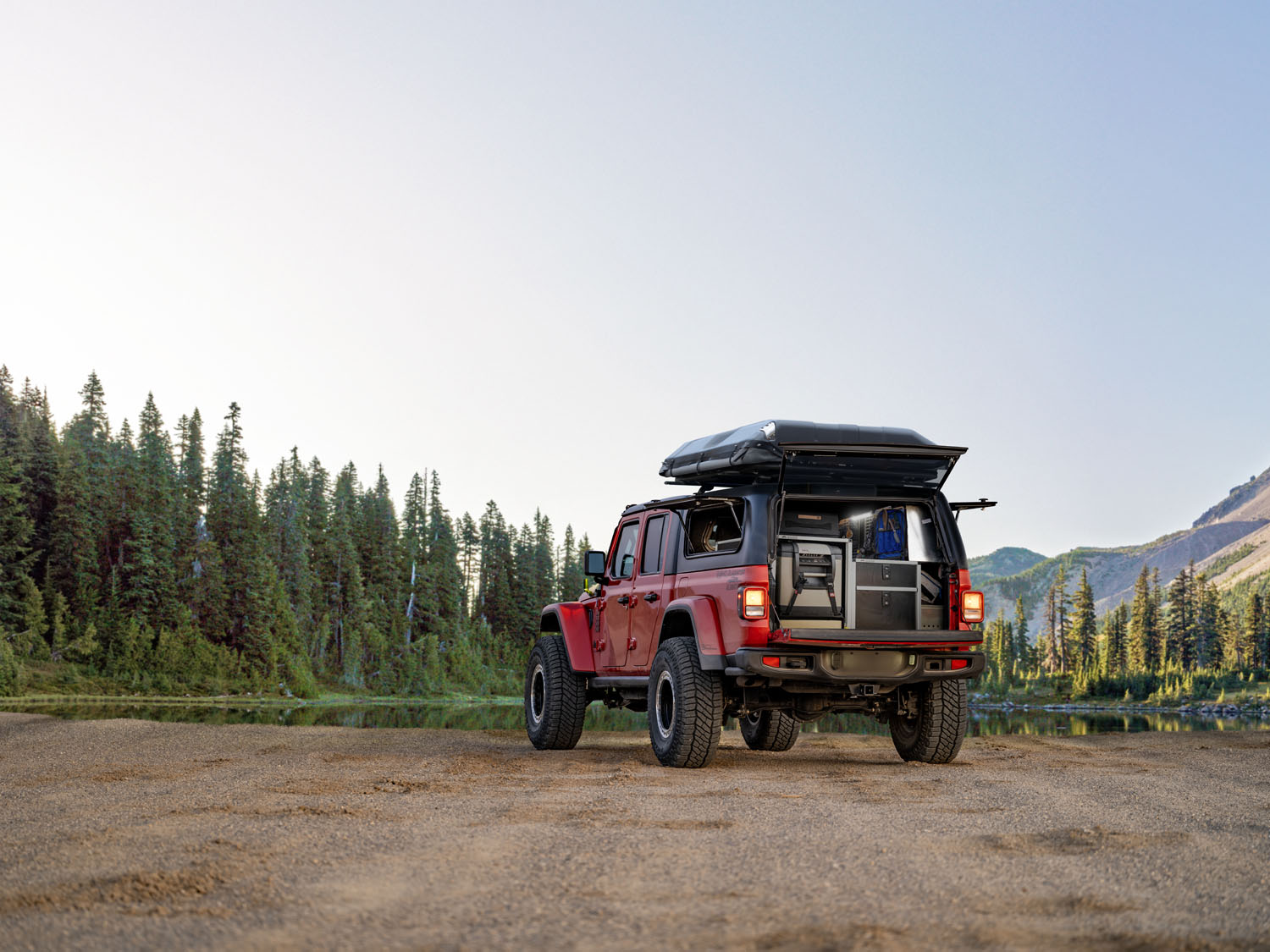
The cap’s rating is only half the story. Your truck’s payload is the total weight it carries above curb weight. This includes passengers, gear, the cap, and the tent. A strong roof won’t help if the whole truck sits overloaded.
Start with the yellow Tire and Loading Information sticker in your driver’s door jamb. It lists the maximum combined weight of people and cargo. Notably, this number often runs lower than the brochure figure, because options add curb weight.
Next, add up everything you’ll carry. The example below uses made-up numbers to show the method. Swap in your own.
| Item (Example) | Weight |
|---|---|
| Cap | 180 lb |
| Rooftop tent | 150 lb |
| Crossbars and mounts | 40 lb |
| Two adults | 360 lb |
| Water and food | 100 lb |
| Recovery gear | 60 lb |
| Camp kitchen and bedding | 80 lb |
| Total | 970 lb |
Suppose your door sticker lists 1,400 lb. This build leaves 430 lb, which sounds fine. However, add a bumper, a winch, or a full tank of extra fuel, and the margin vanishes quickly. Because payload is tighter, midsize trucks feel this first.
Because of this, weight savings pay off twice. Venturous says its PolyFuse process makes the Ozark 38% lighter than a traditionally built cap. Every pound saved on the shell returns to your payload.
How a Truck Cap Rooftop Tent Changes Handling
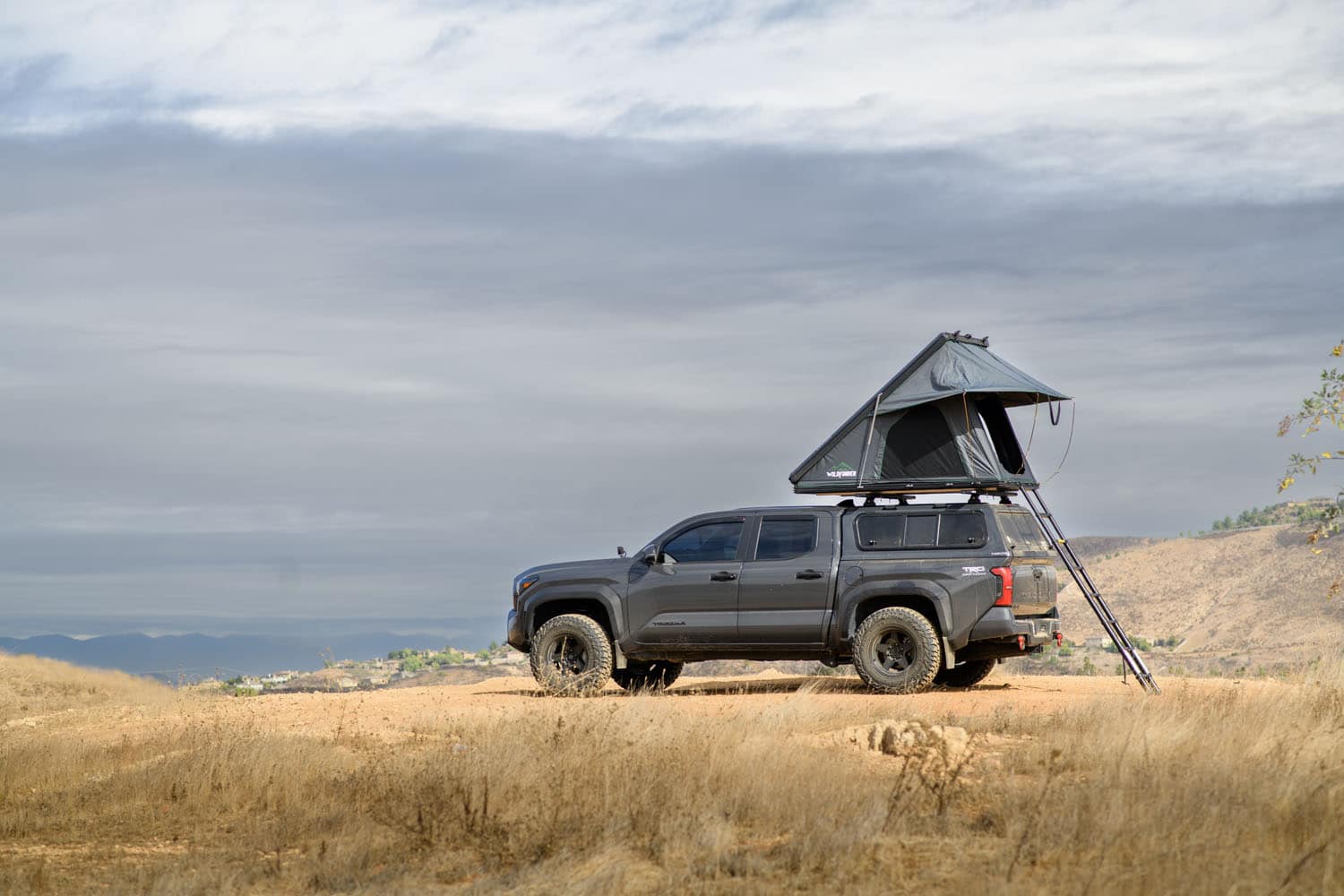
Weight up high behaves differently than weight in the bed. A TacomaWorld commenter warned heavy roof loads change how the truck handles in turns. In my experience on off-camber trails, the warning holds up. A tent on a cap sits well above the cab roofline, so body roll increases in corners.
Also, crosswinds push harder on a tent, while side slopes feel steeper. Similarly, emergency lane changes feel slower and wallowier. As a result, braking distances stretch as total weight climbs. None of this shows up in a cap rating.
Keep Heavy Gear Low
First, store water, fuel, and recovery gear low and centered in the bed. Instead of strapping jerry cans to the tent or rack, mount them on a bumper or keep them inside. On my Gladiator build, I watch every pound above the beltline, because roof weight costs more than bed weight.
Finally, check your tire pressure before every trip with the tent loaded. Also consider upgraded shocks if the truck feels floaty.
Fiberglass Truck Cap Strength and the Venturous Ozark
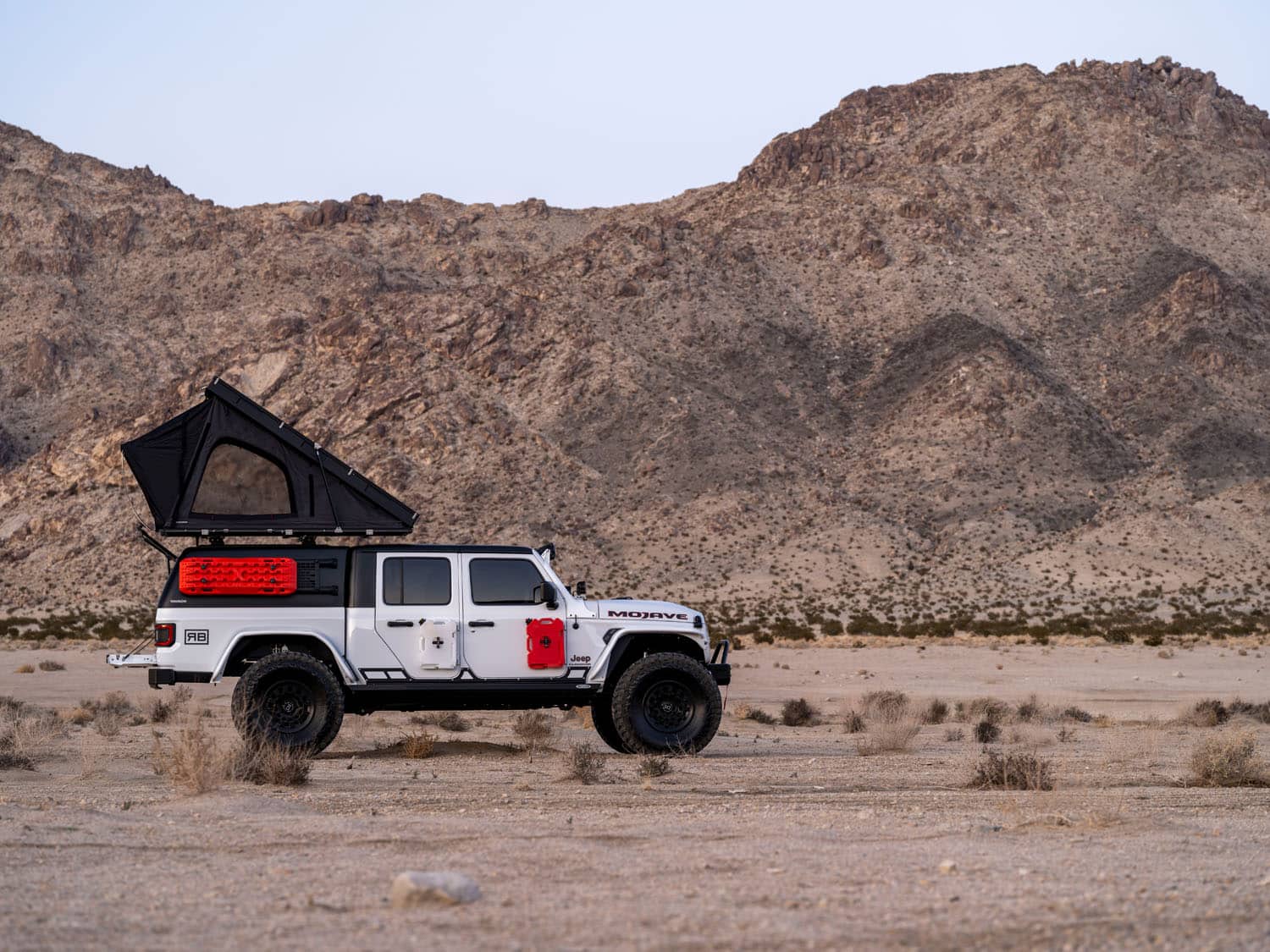
Many fiberglass caps were built to protect cargo, not to carry constant point loads from rack feet. Over time, flexing under a tent often leads to stress cracks and, in some cases, delamination. Construction method matters as much as the number on the sticker.
In contrast, the Ozark takes a different route. It uses Venturous’s patented PolyFuse injection-molding process, which the company says produces triple the strength of a traditionally built cap. The roof uses PET foam reinforcement made for racks and rooftop tents. According to Venturous, this eliminates the chance of delamination.
Mounting hardware matters too. The Ozark offers Rhino-Rack and Yakima bars or tracks as factory options. Therefore, you won’t need to guess where the shell is strong enough to drill. It also includes oversized sliding side windows with screens, tinted glass, an aluminum-frame rear door, and Axalta paint matched to your truck. Venturous builds it for Chevy, Ford, GMC, Jeep, RAM, and Toyota trucks.
Lighter and Stronger
Save Payload for Your Gear
The Ozark is 38% lighter than a traditional cap and holds 1,500 lb parked.
Final Verdict
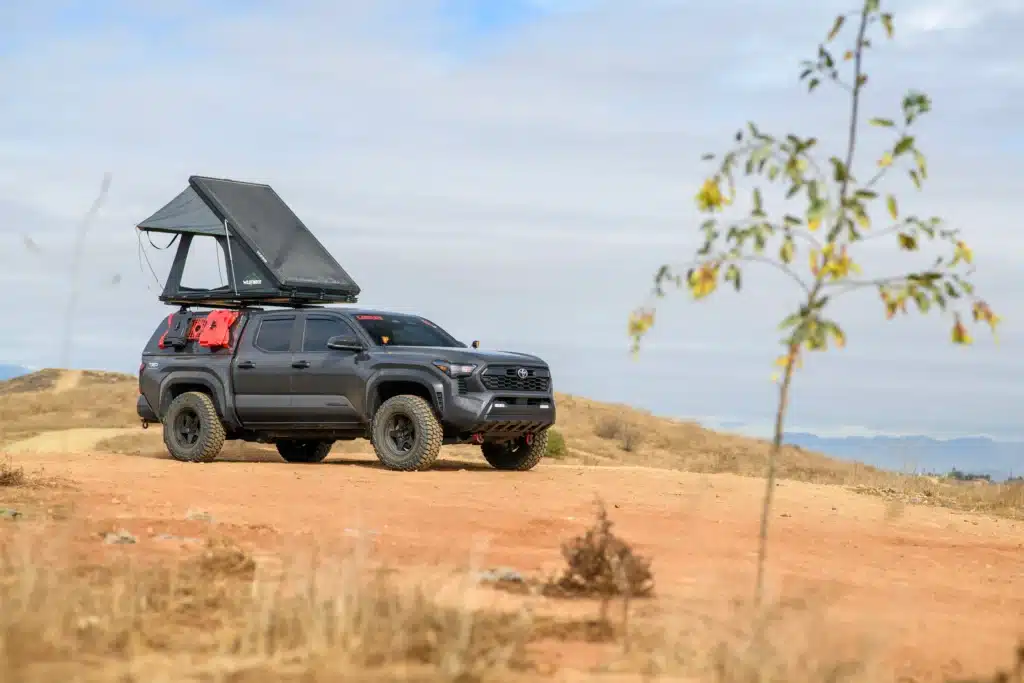
A tent on your cap works when three numbers line up: the dynamic rating, the static rating, and your truck’s payload. The Ozark’s biggest strength is its 750 lb dynamic rating. This figure is more than double the next-highest one in our comparison. It also carries a limited lifetime warranty on paint and structure, which adds value.
The trade-off is physics. No rating changes center of gravity, so a heavy roof still leans harder in turns. Drivers who spend most weekends on off-camber trails should consider a lighter softshell tent. A low-mounted bed rack is another option. However, buyers who never plan to carry a tent don’t need a 750 lb roof.
On value, a stronger and lighter shell pays for itself in payload and peace of mind. Meanwhile, pricing for the Ozark is quote-based through Venturous dealers. Compare this cost to replacing a cracked cap and the gear soaked underneath it.
For most overlanders running a tent on a cap, the Ozark is the safer pick. If your tent weighs under 120 lb and your budget is tight, a SmartCap at 330 lb dynamic is the nearest alternative. Either way, run the math before you mount anything.
Ready to Build?
Put Your Tent on a Cap Built for It
Get a quote on the Venturous Ozark with factory rack options for your truck.
FAQ
Will a fiberglass shell hold a rooftop tent?
Many will, as long as the tent, bars, and gear stay under the dynamic rating. Ratings in our comparison run from 220 to 750 lb. Confirm the figure for your exact model before mounting anything.
Is a truck cap rooftop tent safe off-road?
It is safe when the total roof load stays well under the dynamic rating. Rough roads multiply forces, so leave a buffer of about 20%. Also watch handling on side slopes, because weight up high raises the tipping risk.
What is a typical truck cap weight rating?
Dynamic ratings in our comparison run from 220 to 330 lb for standard caps. The Venturous Ozark lists 750 lb dynamic and 1,500 lb static. Static ratings are always higher than dynamic ones.
Does a truck cap rooftop tent change how the truck handles?
Yes. Weight on the roof raises the center of gravity, so the truck leans more in turns and feels less stable in crosswinds. Keep heavy gear low in the bed to offset it.
Friendly disclaimer: Our articles may contain affiliate links that support us without costing you more, and sometimes we spice things up with sponsored content—but only for products we truly stand behind!