


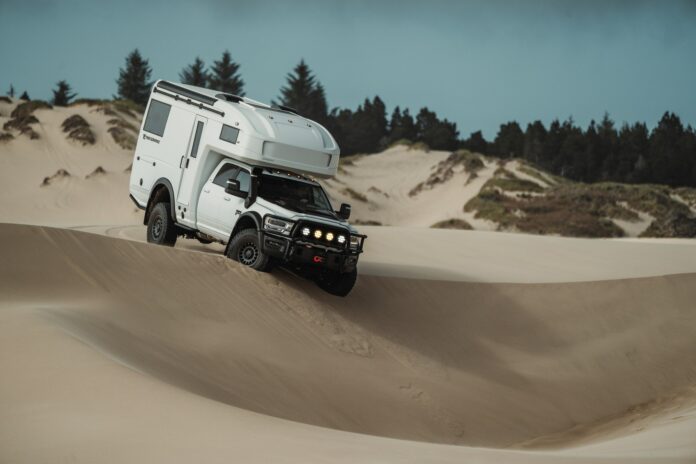
Quick Facts:
- Product: TruckHouse BCR, a carbon fiber camper built on a Ram 3500.
- Starting price: $510,000 including the truck, with a $50,000 deposit to order.
- Weight: under 13,000 pounds for a fully equipped four-door diesel, per the company.
- Range: 74-gallon tank, with 1,000-plus miles listed by the maker.
- Power: 10,240 Wh lithium bank on a 48-volt system.
- Tires: 40-inch BFGoodrich HD-Terrain on 18-inch AEV wheels.
- Builder: TruckHouse of Reno, Nevada, with American Expedition Vehicles.
- Best for: buyers who want a self-contained rig light enough for Moab trails.
5 min read
In This Article
Overview
Most luxury expedition camper builds trade trail ability for comfort. The TruckHouse BCR aims to keep both at under 13,000 pounds, by the company’s count. Notably, a November 2 report from Truck Camper Adventure, based on an interview with the company’s Matt Linder, puts numbers behind the pitch.
According to Linder, the figure covers a fully equipped four-door diesel. TruckHouse builds the truck and the camper as one package. Moreover, the truck is a Ram 3500 upfitted by American Expedition Vehicles into its AEV Prospector XL. Pricing starts at $510,000 with the truck. 4wdTalk has not tested the BCR, so read each figure as a claim from the maker or its interview.
TruckHouse unveiled the BCR in 2023 and announced the production Carbon BCR in 2024, so the fresh data is the news. According to Linder, demand grew enough for TruckHouse to move into a larger Reno factory. He also says its two demonstrators have logged more than 100,000 combined miles.
Most readers will never write the $50,000 deposit check, yet the best idea costs far less. The BCR charges its house batteries from a dedicated alternator, and the same approach works in a truck you already own. A Victron Orion-Tr Smart 12/12-30A isolated DC-DC charger moves the power. Likewise, a Victron SmartShunt 500A battery monitor tracks it, and a LiTime 12V 100Ah LiFePO4 battery stores it. However, check the battery’s maximum charge rate before you size the charger.
Gear to charge and monitor a house battery


TruckHouse BCR Key Specs at a Glance
Back to the rig itself. The maker publishes the following figures for the BCR.
| Specification | Details |
|---|---|
| Chassis | AEV Prospector XL on a Ram 3500 |
| Engine | Cummins diesel or Hemi gasoline |
| Length | 23 ft regular cab, 25.5 ft crew cab, including bumper and spare |
| Width and height | 88 in wide, 10.8 ft tall |
| Fuel and towing | 74 gallons, 10,000 lb towing |
| House battery | 10,240 Wh lithium, 48 volt |
| Fresh water | 40 gallons |
| Weight | Under 13,000 lb for a fully equipped four-door diesel, per the company |
| Starting price | $510,000 with the truck |
Weight, Tires and Moab Trail Runs

Weight is the main selling point. The Ram 3500 carries a gross vehicle weight rating of about 14,000 pounds. Therefore, a complete rig under 13,000 pounds, by Linder’s figure, leaves roughly 1,000 pounds or more for people and gear. In addition, Linder says a regular-cab gasoline version might land near 11,000 pounds, though TruckHouse has mostly built diesels so far.
The shell explains the savings. TruckHouse vacuum-infuses its carbon fiber camper body around a 2-inch aerospace foam core. Next, molded interior parts bond straight to the shell. Likewise, a carbon-integrated floor removes the metal subframe and saves more than 500 pounds, according to the maker. For a smaller use of the same material, see the Narwhal carbon fiber topper.
Tires add the next saving. Linder says each wheel-and-tire assembly weighs about 135 pounds, compared with roughly 280 pounds for some military-style tires on larger rigs. Overall, the gap is 145 pounds per wheel of unsprung weight. Regular tire dealers sell and service the BFGoodrich tires, Linder adds, and they carry a 99-mph speed rating.
The company’s own trail runs back the pitch. For instance, Linder says the regular-cab demonstrator ran Hell’s Revenge and Poison Spider Mesa in Moab. Steel skid plates protect the shell’s underside and rear departure area. Linder recalls repeatedly dragging the rear across steep rock ledges during testing, and says the protection performed as intended.
TruckHouse BCR vs. EarthRoamer
Linder measures the BCR against EarthRoamer, one of the best-known luxury expedition builders. By his estimates, the four-door BCR runs about 5 feet shorter, while the two-door runs about 8 feet shorter. He also puts it roughly 18 inches lower, 18 inches narrower and up to 7,000 pounds lighter.
Those are one builder’s estimates, and the gap depends on the EarthRoamer model. Neither rig has been tested by 4wdTalk, so treat the figures as maker claims. However, the trade-off is clear. EarthRoamer buyers get more living volume, while BCR buyers get a shorter, lighter rig for tight trails.
48-Volt Power and Winter Heat
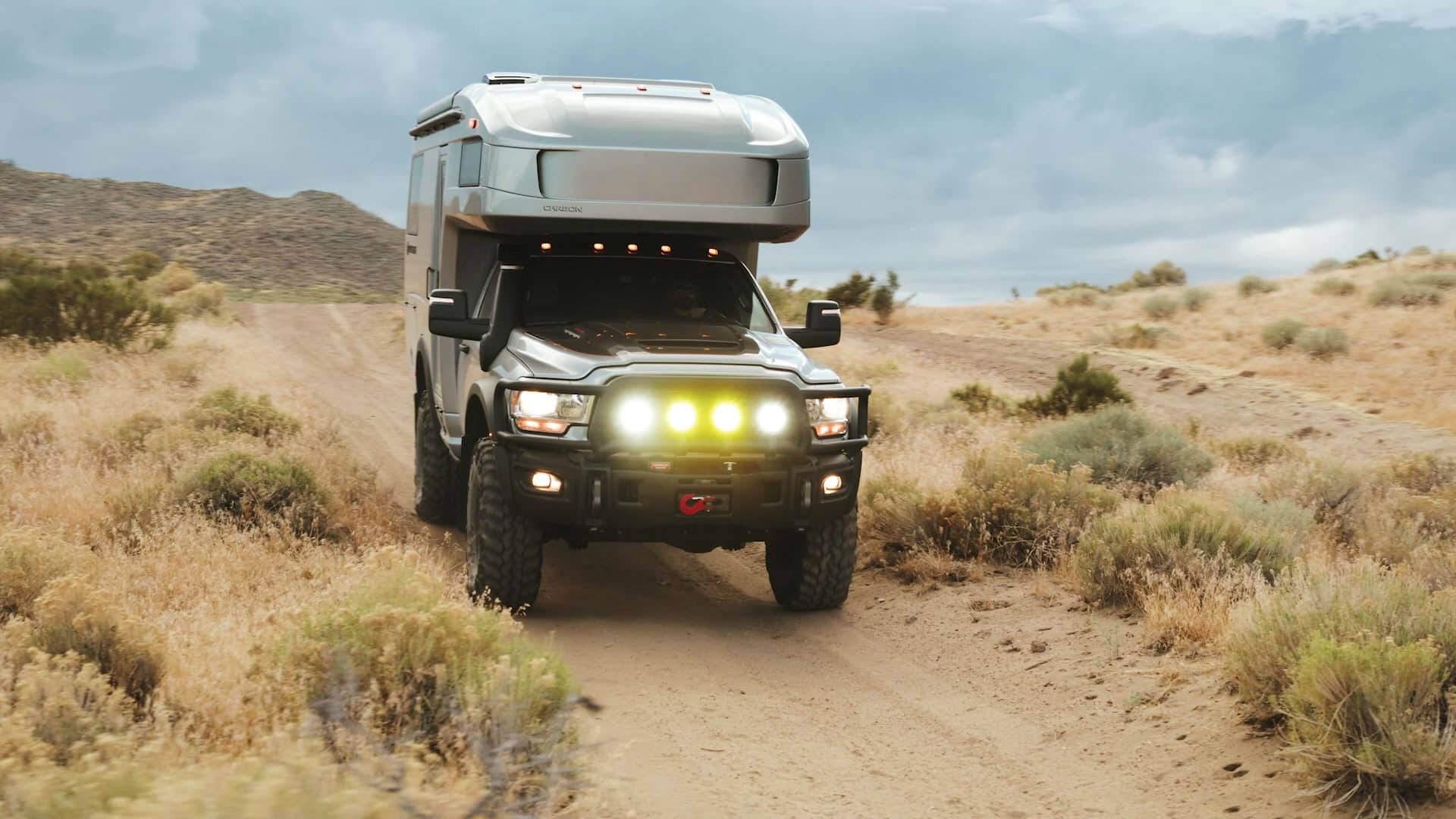
Charging While You Drive
The BCR runs a 48-volt house system with a 10,240 Wh lithium bank. A dedicated 48-volt alternator refills it from empty in 1.25 hours of driving, per the maker. Alternator output tops 7,000 watts, Linder adds. Options include 600 watts of solar and a 48-volt air conditioner. Moreover, TruckHouse says the air conditioner runs more than 50 hours between charges. For a smaller setup, our guide to battery-powered air conditioning shows how to size one.
Heat for Subzero Camps
Insulation comes first. Linder estimates the shell at about R-15, with no continuous metal framing to carry cold inside. Heat then comes from a hydronic system. On the diesel truck, it draws fuel from the Ram’s tank. Together, three cabin air handlers total 35,500 BTUs, according to Truck Camper Adventure. On a trip to Stanley, Idaho, at about 15 degrees below zero, Linder says the interior held 75 degrees with full water tanks and hot showers. However, this was one trip, not a lab test.
Most camps have no hydronic loop, but a diesel heater borrows the fuel idea at a fraction of the cost. The VEVOR 8KW diesel heater is forced air, not hydronic, so it is a budget cousin of the BCR system. Fuel-burning heat also calls for a Kidde AA battery-powered carbon monoxide detector, so pair the two. Then read our portable diesel heater guide for the specs to weigh.
Cold-weather camp heat and safety
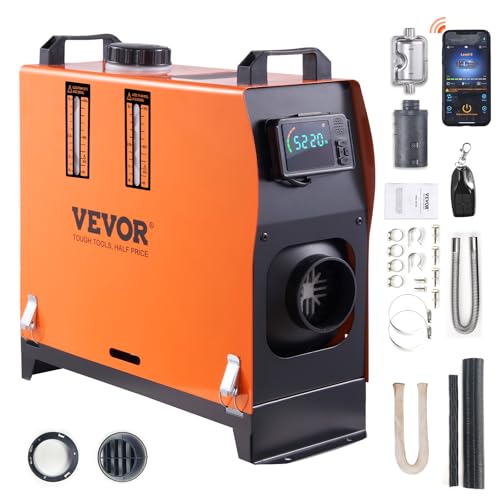
VEVOR 8KW Diesel Heater with Bluetooth App Control | For Vehicles a…


What This Means for You
Start with the money. Truck Camper Adventure reports a well-equipped BCR at $530,000 to $550,000, and fully custom work adds another $50,000. Since each build is made to order, ask TruckHouse about lead times.
Fit matters as much as price. The camper and truck are one integrated unit, so you cannot unload the camper and use the pickup alone. In contrast, a slide-in camper or cap keeps the pickup free, as our truck cap types comparison explains.
Owners of other rigs gain three ideas. First, count tire weight, because lighter wheels cut unsprung weight. Second, charge house batteries from the alternator instead of waiting on solar. Third, size heat for the coldest night you plan to camp, and add a carbon monoxide detector if the heater burns fuel.
If cost is the sticking point, compare the 2027 OPUS OP15 and OP13 for off-grid capacity at a lower price.
Final Thoughts
The TruckHouse BCR suits a buyer with a half-million-dollar budget who still wants to drive Moab trails and sleep warm at 15 below. Its biggest strength is weight. Indeed, a reported weight under 13,000 pounds for a fully equipped four-door diesel would be a notable achievement for an expedition camper, if the figure holds up.
The trade-offs are plain. First, the camper does not come off the truck, and the price sits far beyond most budgets. Also, nearly every figure here comes from the maker or its interview, so treat the numbers as promises until independent weights and owner reports arrive. Owners have little long-term history to compare yet.
If the price is out of reach, take the ideas instead. Lighter wheels, alternator charging and properly sized winter heat suit almost any rig, and none of them needs a six-figure check. If you do want the BCR, ask TruckHouse for current weights, loaded with water and fuel, on your exact configuration before you sign.
FAQ
How much does the TruckHouse BCR cost?
Pricing starts at $510,000 including the truck. A well-equipped build runs $530,000 to $550,000, and fully custom work adds another $50,000. The maker requires a $50,000 deposit and a signed purchase agreement to order.
How much does the TruckHouse BCR weigh?
Linder says a fully equipped four-door diesel weighs under 13,000 pounds. The Ram 3500 chassis also has a gross vehicle weight rating of about 14,000 pounds.
What truck is the TruckHouse BCR built on?
It uses a Ram 3500 upfitted by American Expedition Vehicles into its Prospector XL. Buyers choose a Cummins diesel or a Hemi gasoline engine, and a regular or crew cab.
How far does the BCR drive on a tank?
The tank holds 74 gallons, and the maker lists more than 1,000 miles of range. Linder reports nearly 16 mpg at about 65 mph and about 12.5 mpg at 85 to 90 mph.