


Is a 300-square-foot tent overkill? The number sounds ridiculous at first. A twin bed takes about 20 square feet and a queen takes about 33, so a bell tent with 304 square feet of floor looks like far more tent than anyone needs. For a solo trip or a weekend with your partner, that reaction is right. You’d haul extra weight, hunt for a bigger site, and wrestle more canvas for space you’d never use. However, the math changes fast once you add five people, a few cots, a wood stove, and three days of rain.
After a lifetime of camping and overlanding, I’ve learned to size a shelter by the group and the weather, not by the number on the box. That’s why right-sizing matters to me.
This guide matches group size to floor space, starting with the Stout 6M Pro Bell Tent. You’ll see where 300 square feet is excess, where it’s the right call, and where a smaller tent fits better. For the hands-on details, read my Stout 6M bell tent review.
Quick Facts:
- Product: Stout 6M Pro Bell Tent, double door
- Topic: Is a 300-square-foot tent overkill for your group?
- Floor area: 304 square feet, about 20 feet across
- Center pole: 11 feet 4 inches
- Weight: 135.9 pounds
- Canvas: 340 gsm (10.06 oz) cotton
- Price: $1,559 with free shipping in the contiguous US
- Best for: Groups of five or six, and long basecamp stays
7 min read
In This Guide
- Is a 300-Square-Foot Tent Overkill?
- Stout 6M Pro Key Specs at a Glance
- Right-Sizing Your Basecamp for Group Size
- When a 300-Square-Foot Tent Is the Right Call
- When a 300-Square-Foot Tent Is Overkill
- Stout 6M Pro vs. the 5M and 4M
- Pros and Cons of a 300-Square-Foot Tent
- Final Verdict
- Frequently Asked Questions
Is a 300-Square-Foot Tent Overkill?

For two people, yes, a 300-square-foot tent is overkill. For six people, however, it’s right-sized. Headcount, bed layout, and time spent indoors decide the answer.
The Stout 6M Pro measures about 20 feet across and covers 304 square feet. For comparison, a queen mattress covers about 33 square feet. For example, three queens use 100 square feet, which leaves roughly two thirds of the floor open.
Because open floor makes a bell tent feel like a basecamp, the extra space isn’t wasted. However, you pay for it with weight, pack size, and site requirements. This guide weighs both sides, so you pick the right size once.
Stout 6M Pro Key Specs at a Glance
| Specification | Details |
|---|---|
| Floor area | 304 sq ft (about 20 ft diameter) |
| Center pole height | 11 ft 4 in |
| Doors | Two 6 ft entrances, front and back |
| Tent weight | 135.9 lb (141.6 lb shipping) |
| Canvas | 340 gsm (10.06 oz) 100% cotton |
| Floor | Zip-away PVC tub groundsheet |
| Ventilation | 4 half-moon windows, 4 roof vents, 360-degree mesh layer |
| Extras | Built-in stove jack, AC port, CPAI-84 fire-retardant tag |
| Setup space | 25 ft by 25 ft |
| Price | $1,559, free shipping in the contiguous US |
Buy Direct From Stout Tent
Room for the Whole Crew
The Stout 6M Pro gives you 304 square feet, 340 gsm cotton canvas, and a built-in stove jack.
Right-Sizing Your Basecamp for Group Size
Start with sleeping footprints, then add living space. First, a twin mattress covers about 20 square feet. A queen covers about 33, and a king covers about 42.
Stout lists room for six twin beds, three queens, or two kings in the 6M. Six twins use about 119 square feet, or 39 percent of the floor. Therefore, a full house still leaves room for cots, a table, and a stove.
| Group | Sleeping layout | Best bell tent size | Floor per person |
|---|---|---|---|
| Solo or couple | One queen | 4M, 132 sq ft | 66 sq ft |
| Family of four | Four twins or two queens | 5M, 212 sq ft | 53 sq ft |
| Five or six people | Six twins or three queens | 6M, 304 sq ft | 51 to 61 sq ft |
| Seven or more | Split sleeping across shelters | 6M plus a second shelter | Varies |
Group camping tent buyers often pick by the sleeping number on the box. Instead, pick your bell tent size by adding beds, cots, and a gear zone. The sleeping count alone hides how much floor you’ll want during a storm.
My rule of thumb is 50 to 60 square feet per person. Use this number especially when you expect to spend rainy days inside. Since a tight tent turns into a wet, crowded afternoon fast, I’d rather round up.
When a 300-Square-Foot Tent Is the Right Call
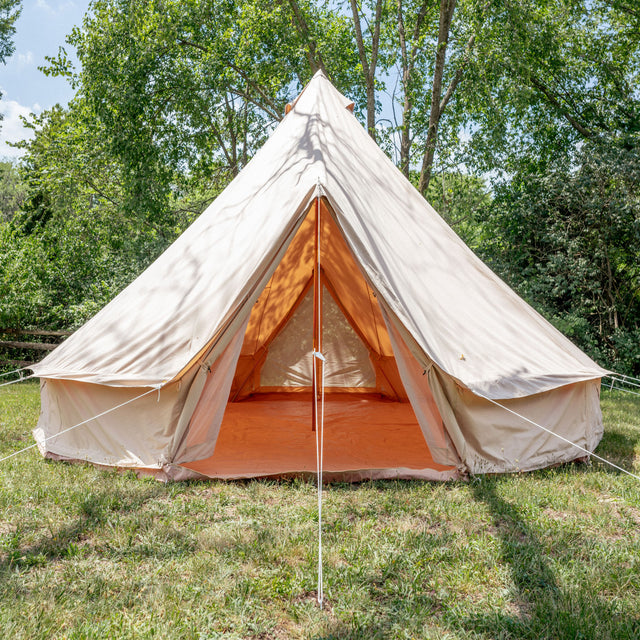
A 300-square-foot tent earns its size with five or six people. It also works well for a multi-day basecamp, where the tent becomes your kitchen, living room, and storm shelter.
The 11-foot 4-inch center pole matters here. Most adults stand upright across a big share of the floor, so changing clothes and moving cots isn’t a hassle. Also, two 6-foot doors let air move front to back, which helps on warm nights.
The double-wall design adds a 360-degree mesh layer. As a result, bugs stay out while the vents and windows keep air moving. Because the canvas is 340 gsm cotton, it breathes better than most synthetic shelters.
While any bell tent size suits some trips, a group camping tent needs real floor space. The 6M delivers it without turning into a circus tent.
Setup time stays reasonable. Expect 21 to 38 minutes with two people and 45 to 80 minutes solo. Specifically, a second set of hands matters most when you raise the center pole.
When a 300-Square-Foot Tent Is Overkill
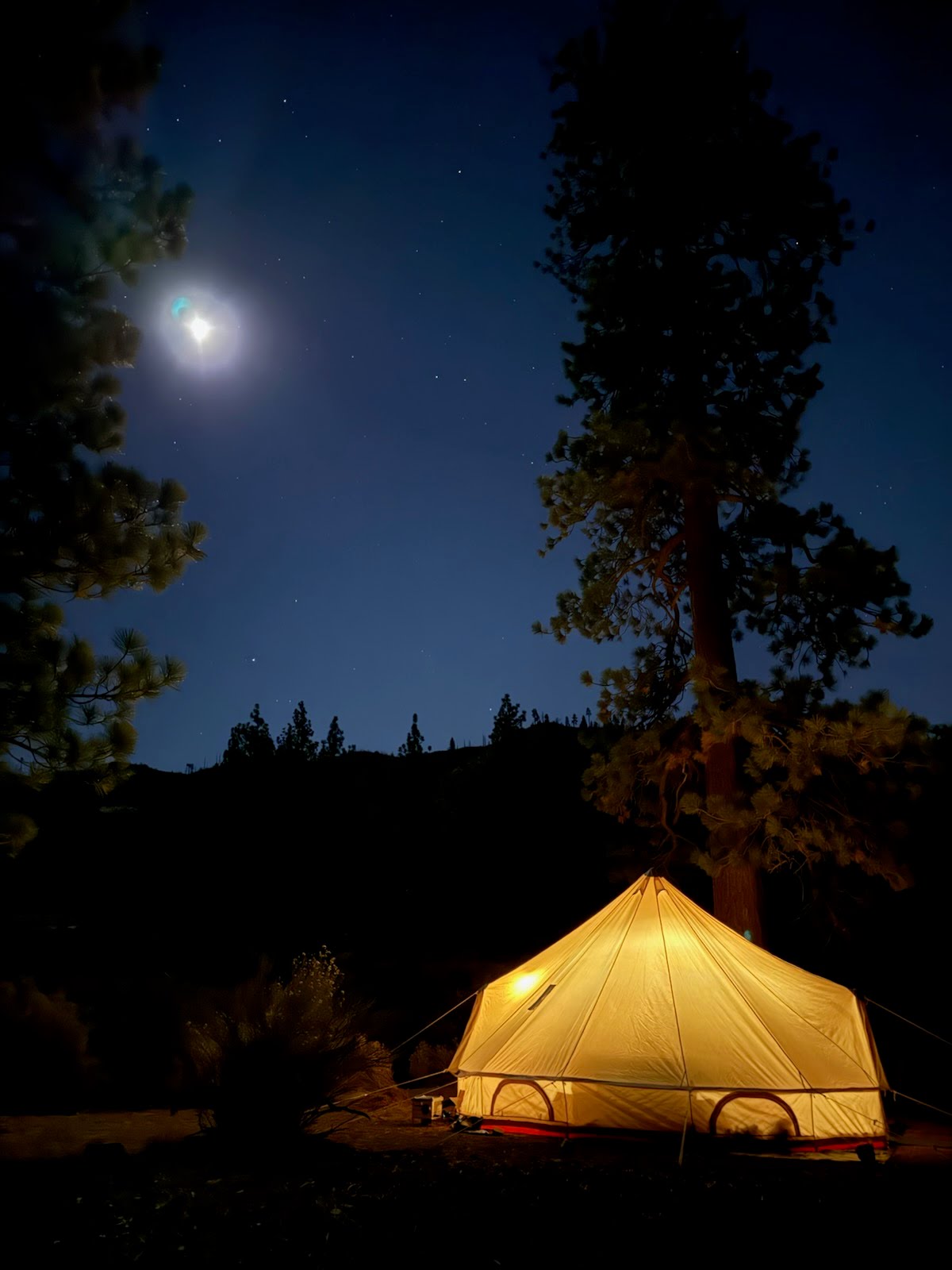
A 300-square-foot tent is overkill for solo trips and couples. It’s also overkill for one-night stops, where you pitch camp after dark and leave at sunrise. A 4M at 132 square feet suits those trips better.
Site size is the other limit. Stout lists a required setup space of 25 feet by 25 feet. However, many developed campsites have smaller tent pads, so check the dimensions before you book.
Group trips add one more wrinkle. A large group camping tent works best when everyone helps carry and pitch it. A solo camper hauling 136 pounds of canvas will feel the difference every morning and every night.
Weight also counts for overlanders. Because it weighs 135.9 pounds, the 6M takes real payload in a mid-size truck. I weigh it against water, fuel, and recovery gear before every trip, and you should too.
Finally, remember your impact. Leave No Trace asks you to camp on durable surfaces. A big footprint needs a site built for it.
Ready to Size Up?
Built for Groups and Long Stays
Free shipping in the contiguous US and a limited lifetime warranty come with the Stout 6M Pro.
Stout 6M Pro vs. the 5M and 4M
| Model | Floor area | Pole height | Weight | Price |
|---|---|---|---|---|
| 4M Pro | 132 sq ft | 8 ft 3 in | 76 lb | From $1,059 |
| 5M Pro | 212 sq ft | 9 ft 9 in | 96 lb | $1,259 |
| 6M Pro | 304 sq ft | 11 ft 4 in | 135.9 lb | $1,559 |
Each bell tent size changes more than floor space. Taller poles, heavier canvas, and larger packs come with every step up. Therefore, compare weight and pole height, not only square feet.
The jump from the 5M to the 6M adds 92 square feet and about 40 pounds. It also adds $300. In contrast, the 4M to 5M step adds 80 square feet and 20 pounds for $200.
For instance, most families of four land on the 5M. Groups of five or six, or anyone who lives in the tent through bad weather, belong in the 6M. Compared to the 5M, the 6M also gives you a taller pole and more standing room.
Pros and Cons of a 300-Square-Foot Tent
Pros
- 304 square feet sleeps up to six twins, three queens, or two kings
- 11 foot 4 inch center pole gives standing room across most of the floor
- 340 gsm cotton canvas breathes well and feels sturdy
- Double-wall design adds a 360-degree mesh bug layer
- Two 6-foot doors move air through the tent
- 4 windows and 4 roof vents keep air flowing
- Built-in stove jack and AC port add year-round comfort
- Zip-away PVC tub floor keeps moisture out
- CPAI-84 fire-retardant certification adds peace of mind
- Free shipping in the contiguous US and a limited lifetime warranty
Cons
- Setup goes faster with a second person, since the tent weighs 135.9 pounds
- It likes a flat 25 foot by 25 foot site, so scout ahead
Final Verdict
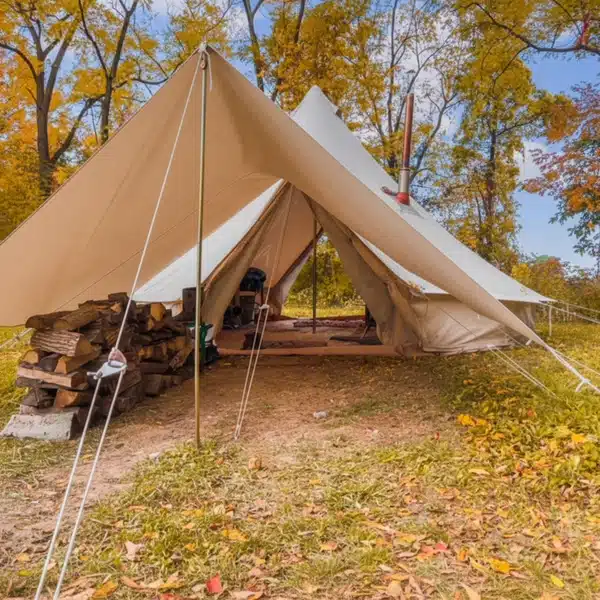
The Stout 6M Pro suits groups of five or six, and anyone who treats the tent as a basecamp. Its biggest strength is livable space. Specifically, you get a tall pole, two doors, and enough floor for beds, cots, and a stove.
The trade-offs are weight and site size. Instead, if you camp solo or as a couple, or you move camp every day, look elsewhere. Those trips don’t need 304 square feet.
On value, $1,559 buys 304 square feet of cotton canvas, a stove jack, and a double-wall mesh layer. Since you’re paying for floor space, buy only the amount you’ll use.
My recommendation is simple. Choose the 6M for five or more people and long stays. Otherwise, pick the 5M Pro for a family of four. Either way, the 6M tent is a basecamp you’ll use for years.
Ready to Buy?
Get the Right-Sized Basecamp
Order the Stout 6M Pro direct and get free shipping in the contiguous US.
Frequently Asked Questions
Is a 300-square-foot tent too big for a family of four?
It’s bigger than a family of four needs for sleeping. Four twin beds use about 79 square feet, so the rest becomes living space. If you want a dry hangout zone for rainy days, the extra room earns its keep. Otherwise, the 5M Pro at 212 square feet fits better.
How many people does the Stout 6M Pro sleep?
Stout lists room for six twin beds, three queen beds, or two king beds. For a comfortable stay, I’d plan on five or six people. Cots, stoves, and gear tables also take floor space, so count them in.
How much space do you need to pitch a 6M bell tent?
Stout lists a required setup space of 25 feet by 25 feet. Check your site before you buy. Also leave room around the tent for guylines and a clear path to both doors.
Does a bigger bell tent take longer to set up?
Yes, but not by much with two people. Plan on 21 to 38 minutes for two people and 45 to 80 minutes solo on the 6M. The weight is the real difference, because the tent weighs 135.9 pounds.
Is a 6M bell tent too heavy for overlanding?
It’s heavy, but it’s manageable. Pack it inside your vehicle or on a hitch carrier instead of a roof rack. Weigh it against your water, fuel, and recovery gear before you commit.
Our articles might have affiliate links and the occasional sponsored content, but don’t sweat it – if you buy something, we get a little kickback at no extra cost to you, and we only hype products we truly believe in!