


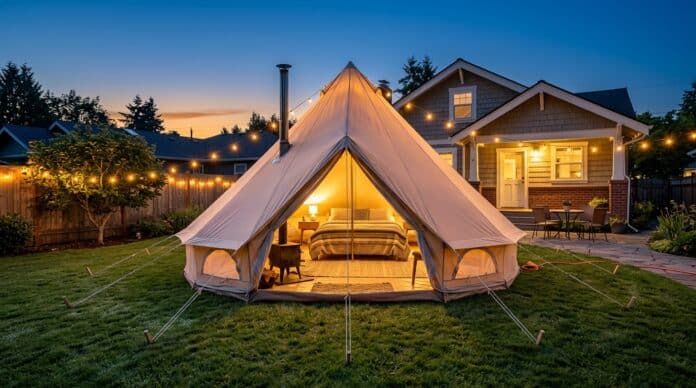

Quick Facts:
- Topic: Backyard glamping guest room and rental setup
- Tent used: Elk Mountain Yukon Bell Tent, 16 ft
- Interior space: 201 sq ft, 10 ft peak height
- Setup time: Under 20 minutes solo
- Skill level: Beginner, no contractor needed
- Cost to start: About $1,074 for the tent, plus gear you likely own
- Heating: Built-in stove jack for four-season use
- Best for: Overlanders who want a guest room and rental income at home
8 min read
In This Guide
- Backyard Glamping Overview
- Elk Mountain Yukon: Key Specs
- Your Overlanding Gear Covers Half the Build
- Setting Up the Bell Tent in Your Yard
- Backyard Glamping Ideas for the Guest Room
- Four-Season Glamping Comfort: Rain, Heat, Cold
- Turning It Into Rental Income
- Bell Tent vs. Other Backyard Guest Options
- Final Verdict
- Frequently Asked Questions
Backyard Glamping Overview: The Guest Room You Already Own the Gear For
Backyard glamping turns a corner of your yard into a private guest room, and you skip the contractor, the six-month build, and the five-figure invoice. If you overland, you already own most of the parts. Your camp stove, cots, sleeping pads, portable power station, and rugs sit in the garage between trips. A canvas bell tent gives all of it a permanent home a few steps from your back door. Run a heavy-duty extension cord from the house, and you have light, heat, and a phone charger without a battery to babysit.
This guide speaks to a specific reader. You host family a few times a year, your kids want a sleepover spot, or you want a second income stream from your land. A backyard glamping tent solves all three for a fraction of a room addition. I have spent about six months living out of the 16 ft Elk Mountain Yukon Bell Tent, so the advice here comes from real nights in the canvas rather than a spec sheet. For a full teardown of the tent itself, read our Elk Mountain Yukon bell tent review.
The Overlander’s Cost Advantage
The math stays friendly. A 16 ft Yukon runs about $1,074, and the gear beside it likely came from your existing overlanding budget. Compare it to $20,000 or more for a permanent guest suite. Also, the same tent packs down for a trip whenever you want it back. Instead of sinking cash into a fixed structure, you stretch gear you already bought across a second use at home.
First, though, here is what the Elk Mountain Yukon brings to a backyard build.
Elk Mountain Yukon Bell Tent: Key Specs
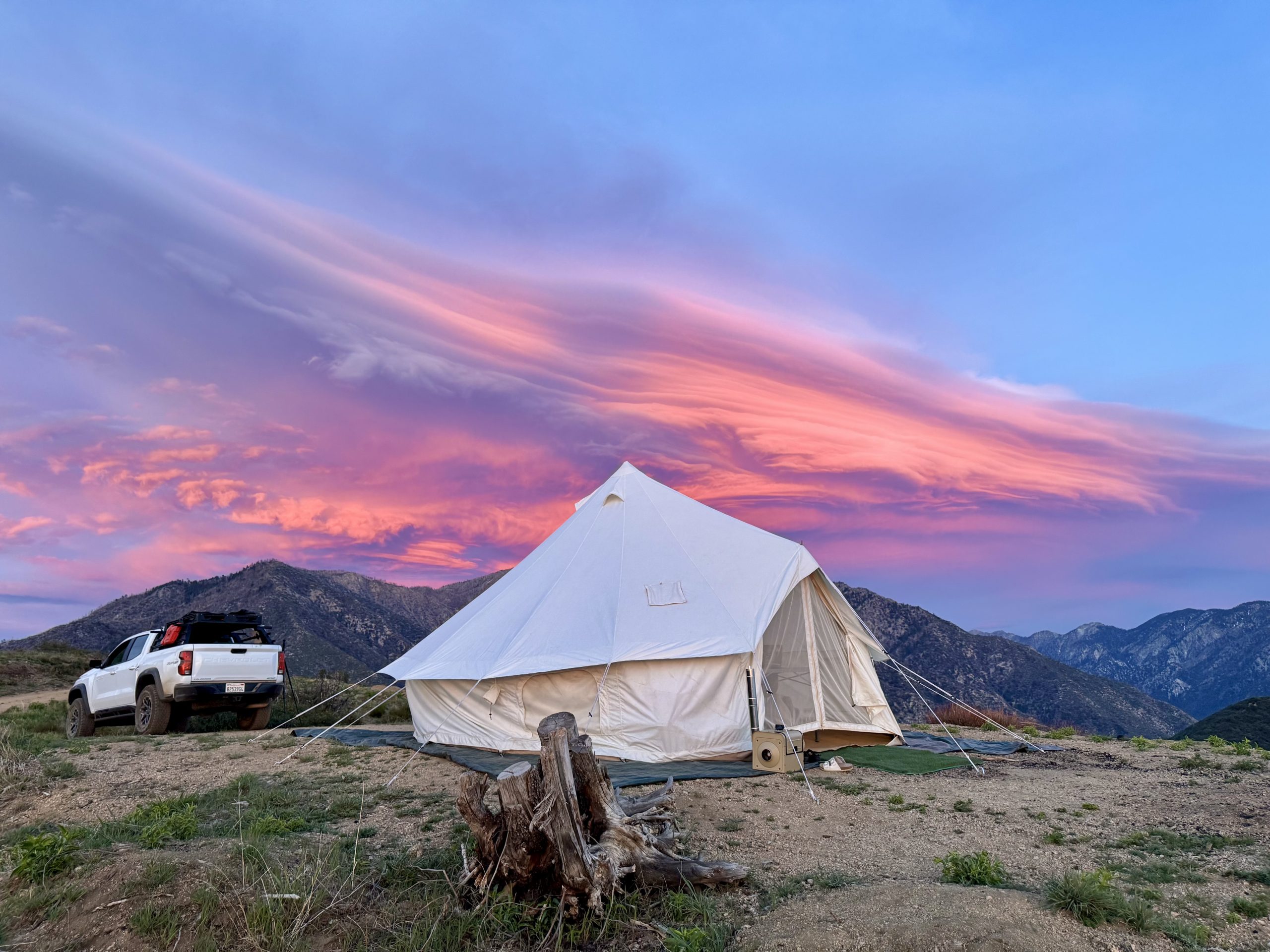
The 16 ft Yukon is the size I recommend for a guest room, because the extra floor space fits a queen bed and a chair with room to stand. Here are the numbers for the model I tested.
| Specification | Details |
|---|---|
| Model | Elk Mountain Yukon Bell Tent, 16 ft |
| Floor space | 201 sq ft |
| Peak height | 10 ft |
| Weight | About 95 lbs |
| Canvas | PolyShield polyester, waterproof, mold and mildew resistant |
| Stove jack | Built in, cuts to fit a 4, 5, or 6 inch stovepipe |
| Ventilation | 4 screened windows, 4 screened peak vents |
| Floor | Zip-in, curves up the walls to block water |
| Price | About $1,074 |
Buy Direct From Elk Mountain
The 16 ft Yukon Bell Tent
Waterproof PolyShield canvas resists mold and mildew, so it holds up to a full season in your yard. Order the tent, and the wood stove ships free.
Your Overlanding Gear Already Covers Half the Build
The reason a backyard glamping build costs so little is simple. Overlanders already own the interior. Walk through your garage and count what applies. For instance, a cot or roll-out mattress becomes the bed. Your portable power station or a shore-power cord runs lights and a fan. A camp rug covers the floor for warmth underfoot. Even your folding table and camp chairs move straight from the truck to the tent.
Power is where a backyard setup beats a remote campsite. Instead of rationing a battery, you run a heavy-duty extension cord from a garage or exterior outlet. Suddenly a space heater, string lights, and a fan all work at once. For safety, use an outdoor-rated cord sized for the load, and keep connections off wet ground. This one change turns a camping tent into a livable room.
Because the gear already sits in your garage, the added spend stays close to the tent price alone. As a result, you get a second season of use out of gear otherwise waiting for the next trip. For an overlander, this is the whole appeal.
Setting Up the Bell Tent in Your Yard
Site choice matters more for a backyard glamping tent than on a trip, since it stays put for weeks. Pick a level spot with good drainage, away from the low point where rain pools. Morning sun helps dry overnight condensation. A little afternoon shade keeps summer heat down. Avoid pitching directly under a tree prone to dropping sap or heavy limbs.
Pitching the 16 ft Yukon takes me under 20 minutes solo. You stake the perimeter, raise the center pole, then set the A-frame door pole and tension the guy lines. For a semi-permanent build, add a groundsheet or interlocking foam tiles under the zip-in floor to block ground moisture and add insulation. New to the process? Our step-by-step how to set up a bell tent guide covers each stage.
High wind is the one variable to respect in a yard. During my testing, the Yukon held through strong gusts once I drove the stakes deep and kept every guy line tight. Check the tension weekly, especially after storms. Re-stake anything the ground works loose over time.
Backyard Glamping Ideas for the Guest Room
Comfort separates a tent from a guest room, so start with the bed. A raised queen air mattress or a pair of cots keeps sleepers off the cold floor. Add a real mattress topper, sheets, and a duvet, because guests notice bedding first. Then layer a wool rug over the floor for warmth and a finished look.
Lighting sets the mood and the function. Warm LED string lights around the center pole give ambient glow, while a small lamp on a side table handles reading. A battery fan or a corded box fan moves summer air. For colder nights, a low-wattage electric heater on the house cord keeps the chill off before bed.
Small touches turn backyard glamping ideas into a space guests remember. For example, a folding nightstand holds phones and water. Hang an organizer to keep glasses and chargers within reach. A door mat and a boot tray keep grass and mud outside. Our guide to making a bell tent comfortable digs deeper into layout and heating. Together, these backyard glamping ideas cost little yet raise the experience toward a boutique hotel feel.
Four-Season Glamping Comfort: Rain, Heat, and Cold
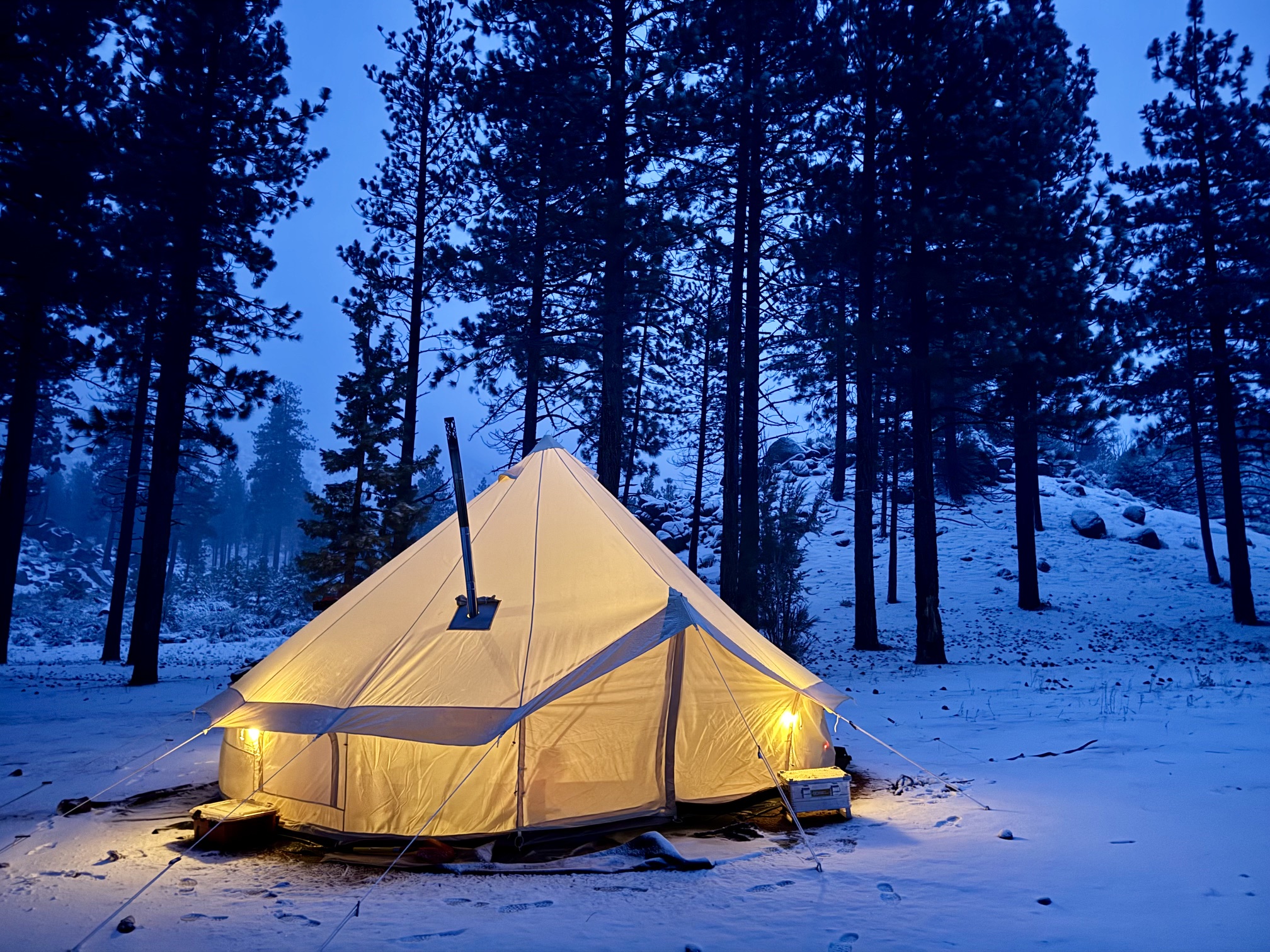
A backyard glamping guest room earns its keep only when it works past summer. Across six months of testing, I ran the Yukon through heavy rain, high wind, hot afternoons, and near-freezing nights. As a result, the polyester canvas shed rain without a rainfly, and no water wicked through the walls. In addition, the zip-in floor curving up the sidewalls kept runoff outside during the worst downpours.
Summer heat calls for airflow. Roll up the sidewalls, open the four screened windows, and let the four peak vents pull warm air out the top. The screens keep bugs out while the breeze moves through. On the hottest days, a fan on the house cord makes the space usable at midday, not only after dark.
Meanwhile, cold weather is where the built-in stove jack shines. Slide a wood stove pipe through the jack and the tent becomes a hot tent, warm enough for winter sleepovers. Follow stove safety carefully: a carbon monoxide detector, a spark arrestor, and clearance from the canvas are non-negotiable. Our explainer on heating a canvas tent with a stove covers the setup step by step.
Turning Your Backyard Glamping Setup Into Rental Income
Once the guest room works, the same tent becomes a revenue stream. Platforms like Airbnb and Hipcamp list backyard stays and glamping tent rental sites, and a styled bell tent photographs well enough to stand out. Because bell tent glamping listings with real beds and rugs book faster than bare tents, a styled interior pays off. A tent rental carries almost no overhead beyond laundry and cleaning, so most of the nightly rate lands in your pocket.
Pricing depends on your region and how the space presents. Glamping tent rental listings often run between $40 and $150 a night in US markets, with polished, well-located setups reaching the top of the range. Run the numbers for your area before you list. At $90 a night across eight weekends, or 16 nights, a bell tent rental pays back the tent cost in a single season. Because a wood stove turns the canvas into a hot tent, a styled setup like the Elk Mountain Yukon keeps booking through fall and winter, not only summer. To host paid guests, list your land on Hipcamp and study comparable stays nearby. For hosting groups, our look at a large bell tent for hosting guests shows how the space handles more people.
Permits and rules deserve a hard look before any money changes hands. Short-term rental laws, zoning, and HOA covenants vary widely by city and county. Some areas allow a backyard glamping rental with no paperwork, while others require a permit or cap the number of nights. Call your local planning office and read your HOA rules first. Skipping this step risks fines heavy enough to erase a season of income.
Bell Tent vs. Other Backyard Guest Options
A canvas bell tent is not the only way to add a guest space, so weigh it against the alternatives. Take a permanent room addition or an ADU: it offers year-round, insulated space, yet it starts around $20,000 and climbs past $100,000 with permits and utilities. Meanwhile, a shed conversion lands in the middle on price but needs framing, insulation, and wiring before anyone sleeps in it. Both lock you into a fixed structure with property-tax and permit exposure.
In contrast, the bell tent trades permanence for speed, cost, and flexibility. You gain a usable guest room in an afternoon for about $1,074, and you move or store it whenever plans change. The trade-off is upkeep, since canvas needs airing, occasional cleaning, and winterizing in harsh climates. For seasonal hosting and backyard glamping income, the tent wins on payback. For a daily-use spare bedroom in a cold climate, a hard structure fits better.
An RV or camper is the third option, and it costs far more up front while depreciating each year. A bell tent holds its usefulness at a fraction of the price. For most overlanders weighing bell tent glamping against a big purchase, the canvas route frees up cash for the truck and the trips.
Final Verdict
A canvas bell tent is the fastest, cheapest path to real backyard glamping, and it fits overlanders best of all. You already own the stove, the cots, the power, and the rugs. The tent gives your kit a home at the house, and a heavy-duty cord from the garage supplies all the power a guest needs. For hosting family and earning rental income, the payback beats every fixed structure.
Still, the trade-offs are honest. Canvas needs airing and seasonal care, and a cold-climate daily bedroom favors an insulated build. High wind demands tight guy lines and deep stakes. None of these undo the core value for weekend hosting and seasonal rental.
On value, the 16 ft Elk Mountain Yukon stands out. Its polyester canvas resists mold and sheds rain, the built-in stove jack opens up winter use, and the 201 sq ft holds a queen bed with room to spare. At about $1,074, it costs less than a month of many mortgage payments while adding a room and an income stream.
My recommendation is the 16 ft Yukon for anyone serious about a guest room plus rental income. If you want a smaller footprint or a lower entry price, the 13 ft Yukon covers a solo or couple’s space for about $875. Either way, this is how you get more mileage out of the overlanding gear already sitting in your garage.
Ready to Buy?
Check Today’s Price on the Yukon
The 16 ft Yukon ships with the full frame, ropes, and stakes, and the wood stove ships free when you add one to your order.
Frequently Asked Questions
What is a bell tent?
A bell tent is a round canvas shelter with a single center pole and a bell-shaped roof. The design gives tall headroom, a large floor, and quick setup. Canvas versions add breathability and weather resistance, which makes them a favorite for glamping and backyard guest rooms.
Is it safe to leave a bell tent up all year?
Yes, a quality polyester bell tent like the Yukon holds up to year-round use with basic care. Air it out after rain, keep guy lines tight, and clear snow load from the roof. In harsh winters, take it down during the worst months to extend the canvas life.
How much does a bell tent rental cost per night?
Bell tent rental rates commonly fall between $40 and $150 a night in US markets. Location, styling, amenities, and season all move the price. A well-photographed backyard setup near a city or attraction reaches the higher end.
How much money will a backyard glamping tent earn?
Earnings depend on your rate and booked nights. At $90 a night across eight weekends, or 16 nights, a backyard glamping tent brings in about $1,440 in a season, enough to pay back a $1,074 tent and still turn a profit. Busier markets and year-round hosting raise the total.
What is the difference between a bell tent and a yurt?
A bell tent uses a single center pole and stakes for a fast, portable pitch. A yurt uses a lattice wall frame and a heavier roof structure, so it is more permanent and harder to move. For a flexible backyard guest room, the bell tent wins on speed and cost.
Do you need a permit or HOA approval for a backyard glamping rental?
Often yes, depending on your city, county, and HOA. Short-term rental rules, zoning, and covenants vary widely. Some areas allow a backyard glamping rental with no paperwork, while others require a permit or limit nights. Check with your local planning office and HOA before you list.