


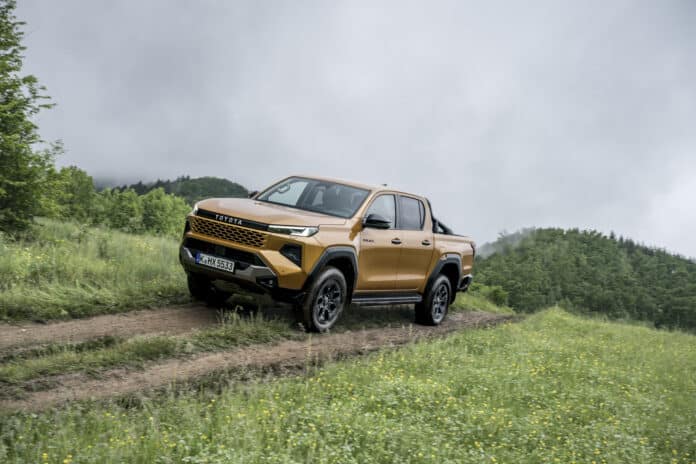

Quick Facts:
- Vehicle: Toyota Hilux EV (Hilux BEV), Double Cab, permanent AWD
- Power: 278 hp (208 kW) combined, 348 lb-ft of torque, dual motor
- Range: Up to 160 miles WLTP from a 59.2 kWh battery
- Towing: Over 3,700 lbs (1,700 kg)
- Ground clearance: 212 mm (8.3 in), wading depth 700 mm (27 in)
- Charging: 125 kW DC, 10 to 80 percent in about 30 minutes
- Price: From £42,170 in the UK (about $56,500), AUD $74,990 in Australia
- Best for: Day trips and light trails, not long-range overlanding
7 min read
In This Article
- Toyota Hilux EV Overview: Built for Trails, Limited by Range
- Toyota Hilux EV Specs at a Glance
- The Range Problem: 160 Miles Off-Grid
- Off-Road Hardware: What the Electric Hilux Gets Right
- Charging the Hilux BEV in the Backcountry
- Payload and Towing for a Loaded Rig
- Toyota Hilux EV vs. the Diesel Hilux for Overlanding
- Is the Toyota Hilux EV Coming to the US?
- Final Verdict
- Frequently Asked Questions
Toyota Hilux EV Overview: Built for Trails, Limited by Range
The Toyota Hilux EV is the first body-on-frame electric pickup from Toyota, and on paper it reads like an overlander’s dream. It rides on a true ladder frame. It uses permanent all-wheel drive. Toyota even added a dedicated off-road terrain system. For a brand with 27 million Hilux trucks sold over seven decades, this electric version carries real expectations.
However, the spec sheet tells a more complicated story. Range tops out at 160 miles on the WLTP cycle, and the battery sits low under the floor. With this layout, ground clearance also drops to 212 mm. For overlanders who measure trips in fuel range and remote miles, those two numbers change everything.
So who is this truck for? Right now, it suits commuters, light trail users, and fleet buyers in markets like the UK and Australia. Serious overlanders, though, will find the range and charging gaps hard to ignore.
Toyota Hilux EV Specs at a Glance

Here are the core numbers Toyota published for the Toyota electric pickup. Each figure matters when you weigh this truck against a diesel overland build.
| Specification | Details |
|---|---|
| Body style | Double Cab, body-on-frame |
| Drivetrain | Permanent AWD, dual motor |
| Power and torque | 278 hp (208 kW) combined, 348 lb-ft |
| Battery | 59.2 kWh, 80 cells, water-cooled |
| Range (WLTP) | Up to 160 miles, 236 miles city cycle |
| Fast charging | 125 kW DC, 10 to 80 percent in 30 minutes |
| Towing | Over 3,700 lbs (1,700 kg) |
| Ground clearance | 212 mm (8.3 in) |
| Wading depth | 700 mm (27 in) |
The Range Problem: 160 Miles Off-Grid
Range is the first wall you hit. The electric Hilux delivers up to 160 miles on the WLTP cycle from its 59.2 kWh battery. WLTP figures also run optimistic, so real highway range sits lower, especially at speed.
Now add the conditions overlanders face on the trail. Low-range crawling, soft sand, a roof rack, and a loaded bed all cut range hard. Cold weather trims it further. As a result, a realistic off-grid figure might fall well under 120 miles between charges.
Compared to a diesel Hilux, which travels 400 to 500 miles on a tank and refuels in five minutes from a spare fuel jug, the difference is large. For a weekend trail run near town, 160 miles works. For a multi-day route across remote country, however, it forces constant range math instead of driving.
Off-Road Hardware: What the Electric Hilux Gets Right
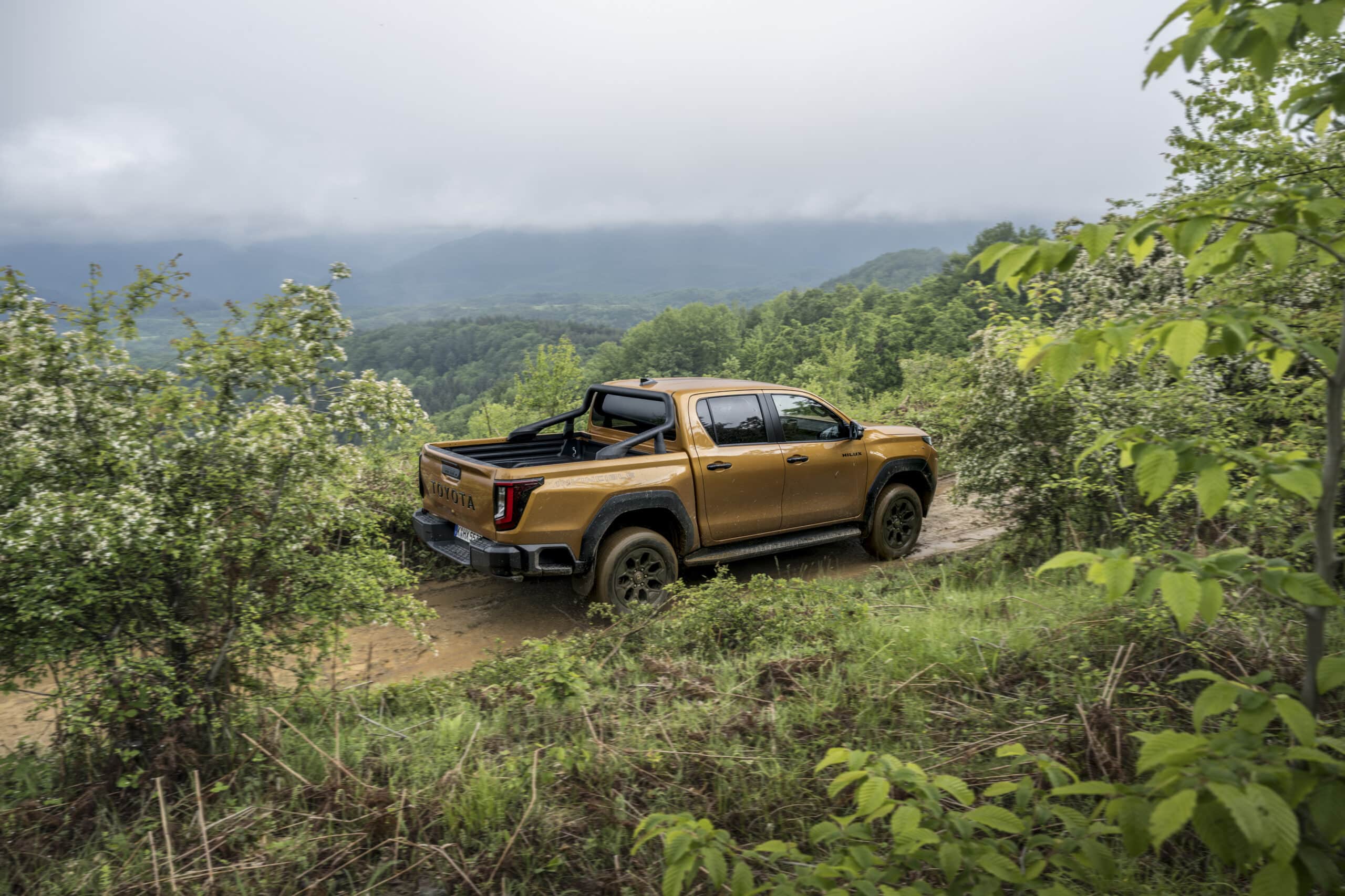
The hardware story is genuinely stronger. Toyota built the Toyota Hilux EV on a body-on-frame chassis, the same architecture serious off-road trucks rely on. The eAxles are also reinforced, and they wear special undercovers for off-road protection. This is not a soft crossover wearing trail badges. For 4×4 buyers, it sits at the center of a broader debate about the future of off-road powertrains.
Multi-Terrain Select and Drive Modes
The electric Hilux is also Toyota’s first EV with Multi-Terrain Select. The system offers five drive modes, and it shifts between them automatically to match the surface. Instant electric torque helps here too. Because 348 lb-ft arrives the moment you press the pedal, low-speed rock and sand control feels precise and controllable.
Ground Clearance and Wading Depth
Wading depth holds up at 700 mm, on par with other Hilux models. Ground clearance, though, drops to 212 mm because the battery sits under the floor. For context, a standard Hilux clears more, and many serious overlanders run lifts for even greater height. Consequently, the lower belly limits the lines you take on rough terrain, and it raises the risk of dragging the battery pack.
Charging the Hilux BEV in the Backcountry
Charging is where the overlanding case grows weakest. The Hilux BEV accepts 125 kW DC fast charging and refills from 10 to 80 percent in about 30 minutes. Near a city, this pace is fine. Out where overlanders travel, fast chargers rarely exist.
Backcountry routes, forest roads, and desert tracks have no charging infrastructure at all. Therefore your range becomes a hard round-trip budget from the last charger. Solar charging and off-grid power for overlanders exist, yet topping a 59.2 kWh truck battery from portable panels takes days, not hours. A diesel rig sidesteps this entirely with cheap jerry cans of fuel.
This single gap, more than any other, keeps the Toyota Hilux EV parked closer to pavement than the overlanding crowd needs.
Payload and Towing for a Loaded Rig
Towing looks respectable at over 3,700 lbs. A trailer behind any EV, though, drains the battery quickly, so towing one of the best EV camping trailers would slash the already short range by a large margin. For overlanders who haul a trailer to base camp, the math gets tight fast.
Payload is the bigger limit for an overland build. Drawers, water, recovery gear, a rooftop tent, and fuel add hundreds of pounds. Since the heavy battery already eats into the truck’s weight budget, every accessory you bolt on cuts capability further. A loaded electric truck works for a short trip, but it strains under a full expedition kit.
Toyota Hilux EV vs. the Diesel Hilux for Overlanding
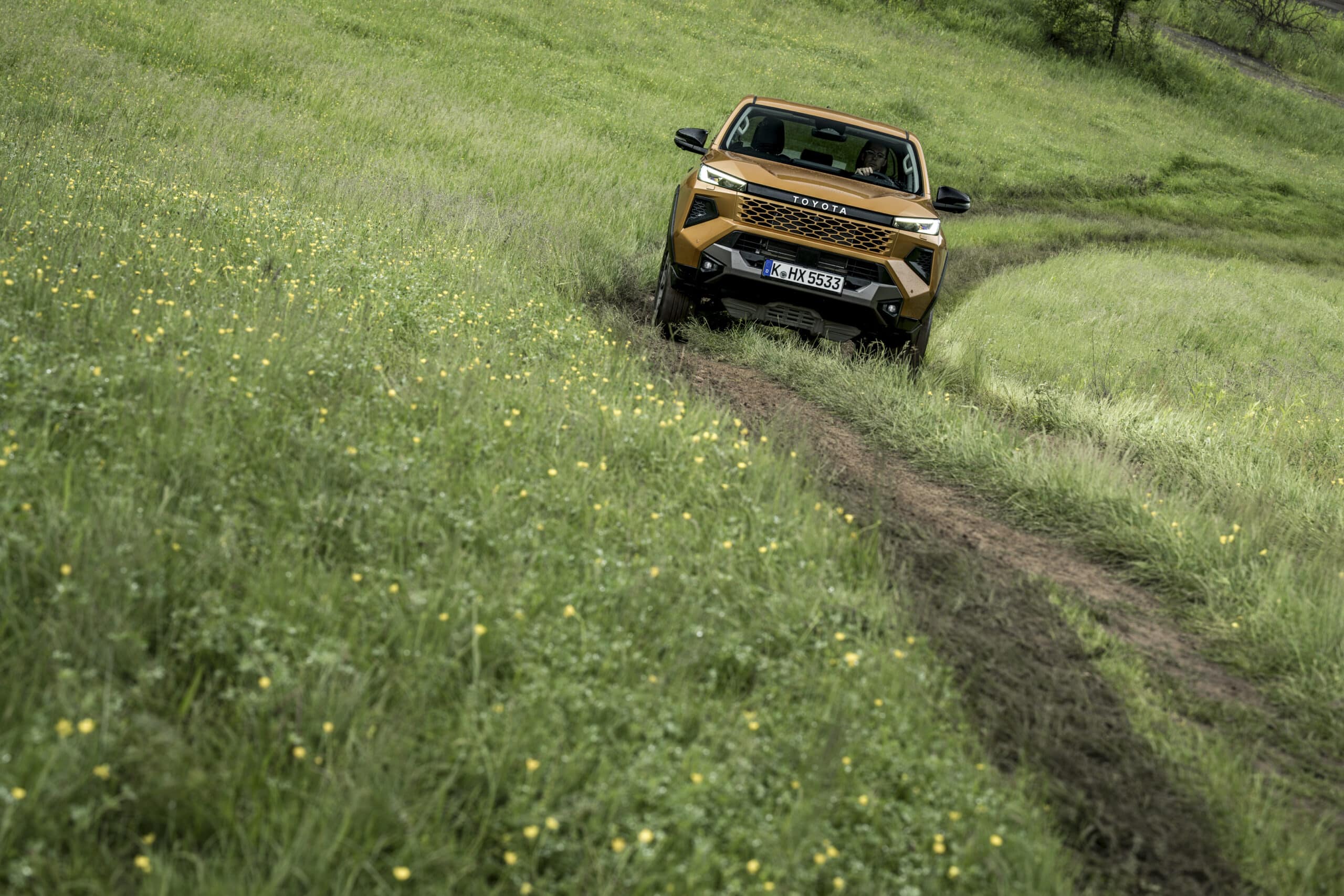
The cleanest comparison is the truck against its own diesel sibling. The Toyota Hilux EV wins on instant torque, quiet operation, and refined low-speed control. For technical trails close to home, those traits are real advantages. Against the wider field, our roundup of the best overland vehicles of 2026 still leans heavily on diesel and hybrid rigs.
The diesel Hilux, however, wins on the metrics overlanding rewards most. It covers 400 to 500 miles per tank, refuels anywhere in minutes, and carries a heavier kit without a range penalty. It also avoids the clearance hit from a floor-mounted battery.
For now, the choice is simple. Pick the electric Hilux for short trail days and daily driving. Pick the diesel for remote, multi-day overlanding where fuel and range decide whether you make it back.
Is the Toyota Hilux EV Coming to the US?
For US overlanders, the answer is blunt. Toyota does not sell the gas Hilux in the US, and there is no plan to bring the electric version either. On top of this, current import tariffs would push the price even higher.
Instead, Toyota offers US buyers three electric SUVs, with a three-row Highlander BEV joining later in the year. None of those is a body-on-frame truck. So if you overland in North America, the Toyota first electric pickup stays a vehicle you read about rather than buy.
Final Verdict
The Toyota Hilux EV is a serious piece of engineering, and its best strength is hardware. Body-on-frame construction, reinforced eAxles, Multi-Terrain Select, and 348 lb-ft of instant torque give it real off-road credibility. As a daily driver and light-trail truck, it delivers.
The trade-offs, though, land exactly where overlanders feel them most. A 160-mile WLTP range, no backcountry charging, lower ground clearance, and a payload squeezed by battery weight all work against long-range expedition use. These are not small caveats for the overlanding mission.
On value, markets like the UK and Australia get a capable electric work truck near $56,500. For an overland tool, however, the same money buys a diesel rig with far greater range and zero charging anxiety.
So the verdict is clear: the electric Hilux is not a viable overlanding rig yet. The bones are right, and a future version with double the range would change the conversation. Until then, overlanders are better served by a diesel Hilux or one of Toyota’s factory overland trucks like the Tacoma or a Tundra build. Watch this platform, because the next generation might finally close the gap.
Frequently Asked Questions
What is the range of the Toyota Hilux EV?
The Toyota Hilux EV offers up to 160 miles on the WLTP cycle and 236 miles on the city cycle from a 59.2 kWh battery. Real-world off-road range drops lower under load, on soft terrain, or in cold weather.
Is the electric Hilux good for off-road use?
The hardware is strong. The Toyota electric pickup uses a body-on-frame chassis, permanent AWD, reinforced eAxles, and Multi-Terrain Select with five drive modes. Lower ground clearance of 212 mm and short range still limit serious off-road trips.
How long does the Hilux BEV take to charge?
The Hilux BEV recharges from 10 to 80 percent in about 30 minutes on a 125 kW DC fast charger. Remote trails have no fast chargers, so backcountry travel depends entirely on your round-trip range from the last charging point.
Does the Toyota Hilux EV tow a camper?
The truck tows over 3,700 lbs (1,700 kg). Towing a trailer drains the battery quickly, though, so pulling a camper sharply reduces the already short range and limits how far you travel between charges.
Will the Toyota first electric pickup come to the US?
No. Toyota does not sell the gas Hilux in the US and has no plan to bring the Toyota first electric pickup to market. Import tariffs would raise the price further. US buyers get Toyota electric SUVs instead, including a Highlander BEV later in the year.