


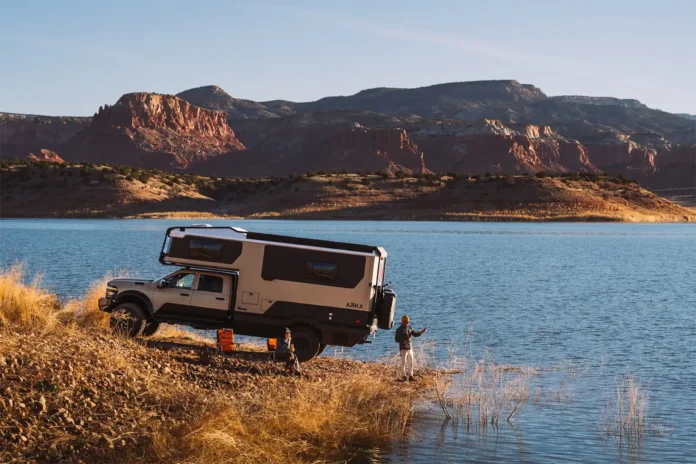

Quick Verdict: The Winnebago ARKA is a new off-grid adventure truck. It rides on a RAM 5500 crew cab chassis with a 6.7L Cummins inline-six. Towing is rated at 15,000 pounds. Moreover, Winnebago slots it into the Backcountry Series alongside the Revel and EKKO. As a result, the rig gets a 48-volt electrical system, up to 15 kWh of lithium, and a 3,600-watt inverter. In addition, the operating range runs from -10 to 120 degrees Fahrenheit. The 20Z floorplan sleeps four and stays off-grid for up to 14 days. Overall, it stickers at about $331,901 fully equipped. Finally, the ARKA debuts at Overland Expo West in Flagstaff on May 15 through 17, 2026.
9 min read
In This Article
- Winnebago ARKA Overview: A New Backcountry Truck
- Key Specs at a Glance
- RAM 5500 Chassis and Cummins Diesel Power
- Off-Grid Power, Solar, and Water Systems
- Interior, Sleeping, and Gear Garage
- All-Season Climate Control and Insulation
- Where to See ARKA in Person
- Pros and Cons
- An Overlander’s Take on the ARKA
- Frequently Asked Questions
Winnebago ARKA Overview: A New Backcountry Truck

The Winnebago ARKA launched on May 11, 2026, from Forest City, Iowa. Winnebago designed the rig for travelers who go farther into the backcountry. Also, it targets owners who stay longer once they get there. As a result, the new model joins the brand’s Backcountry Series. The series already includes the Sprinter-based Revel camper van and the Ford Transit-based EKKO Class C.
However, the ARKA pushes into heavier territory than its Backcountry siblings. The Revel covers solo and couples weekending. Meanwhile, the EKKO adds a pop-top and room for four. In contrast, the Winnebago ARKA steps up to heavy-duty truck size. It rides on a RAM 5500 crew cab chassis with a 15,000-pound tow rating. Also, it gets a 48-volt electrical system and accepts up to 15 kWh of lithium battery storage. So, owners get a self-reliant basecamp for real backcountry travel.
Winnebago says the ARKA went through tough durability simulations. Specifically, the testing replicated over 100,000 miles of road and trail input. As a result, every system was built around what breaks down and what creates friction. Indeed, the focus stayed on what gives owners confidence days away from pavement. Stefanie Whittington serves as the brand’s senior product manager for compact Class C and adventure platforms. According to her, the team listened to backcountry travelers first, then engineered from there.
If you have shopped the heavy-duty overland RV space, you already know the competition. For example, the ARKA stacks up against an EarthRoamer or a GXV. Specifically, the ARKA lands at about $331,901 fully equipped for the 20Z floorplan. Therefore, it sits well below an EarthRoamer LTX but above a fully optioned EKKO. For more on how rigs like this fit a backcountry travel plan, see our beginner’s guide to overlanding.
Key Specs at a Glance
| Specification | Detail |
|---|---|
| Base chassis | RAM 5500 crew cab |
| Engine | 6.7L Cummins inline-six turbo diesel |
| Output | 360 hp and 800 lb-ft of torque |
| Transmission | 8-speed automatic |
| GVWR / GCWR | 19,500 lb / 43,000 lb |
| Towing capacity | 15,000 lb |
| Exterior length | 26 feet 7 inches |
| Exterior height | 11 feet 9 inches |
| Wheelbase | 197.4 inches |
| Sleeps | 4 |
| Off-grid duration | Up to 14 days |
| Electrical architecture | 48 volt |
| Battery | Up to 15 kWh lithium (Lithionics) |
| Inverter | 3,600 watts |
| Solar | 800 watts standard, expandable to 1,200 watts |
| Freshwater capacity | 60 gallons, heated |
| Operating range | -10 degrees Fahrenheit to 120 degrees Fahrenheit |
| Insulation rating | R-15 roof and floor, R-12 walls |
| Starting price (20Z, equipped) | $331,901 |
RAM 5500 Chassis and Cummins Diesel Power
Winnebago built the ARKA on the RAM 5500 crew cab chassis. Notably, it is the same heavy-duty platform used by ambulance fleets and serious commercial overlanders. Under the hood, the 6.7L Cummins inline-six turbo diesel produces 360 horsepower. Additionally, it makes 800 lb-ft of torque. The engine is mated to an 8-speed automatic transmission. Moreover, GVWR comes in at 19,500 pounds and GCWR at 43,000 pounds. As a result, the rig is built for sustained load and tough terrain.
Also, the 15,000-pound towing capacity matters here. For instance, backcountry travelers will tow a side-by-side, a teardrop, or a flat-tow Jeep behind the rig. Even when fully loaded with gear, water, and fuel, they will appreciate the extra headroom. Moreover, the Cummins brings its usual diesel benefits. First, fuel range is long. Second, low-end torque pulls grades without hunting through gears. Finally, heavy-truck shops across North America already know how to service the engine.
Next, Winnebago paired the platform with a purpose-built exterior and an optimized underbody. However, the brand has not yet published approach, departure, or breakover angles. Therefore, those numbers should be the first thing buyers ask about at a dealer. For context on trail geometry, our guide on how to build a trail-ready overlanding setup explains why clearance and underbody armor matter.
Off-Grid Power, Solar, and Water Systems
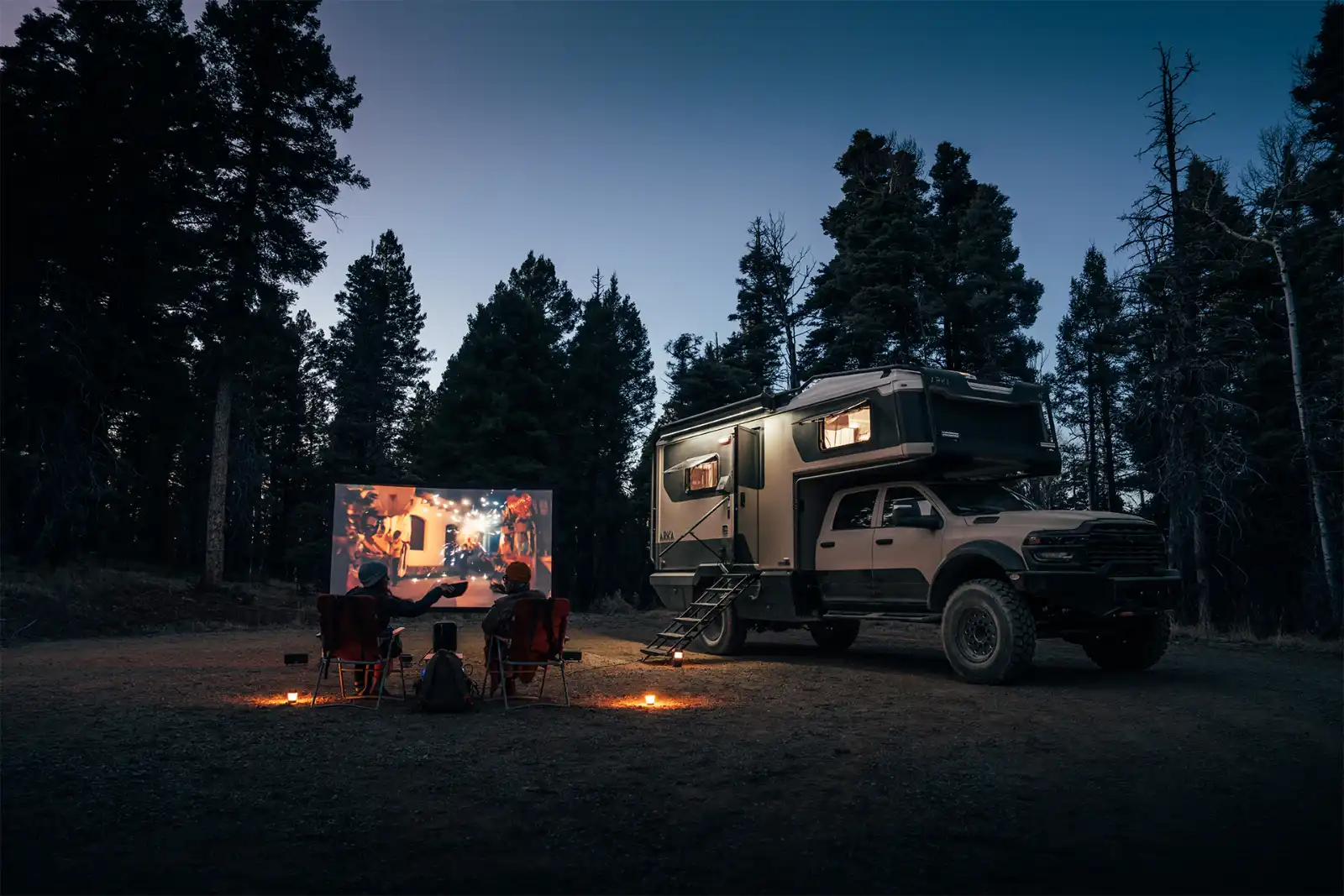
Here is where the ARKA separates from a typical Class C motorhome. Specifically, Winnebago designed a 48-volt electrical architecture with up to 15 kWh of Lithionics lithium battery capacity. By comparison, most factory adventure vans top out around 5 to 7 kWh. As a result, the ARKA roughly doubles the storage. In addition, a 3,600-watt inverter handles AC loads. The system pulls charge from solar, alternator, and shore power. Also, an EcoFlow power hub ties it all together.
Next, standard solar starts at 800 watts and expands to 1,200 watts. Both totals are well above the 400-watt baseline common on van conversions. Therefore, the expansion lets owners size the array to their climate. For example, travelers in cloudy regions like the Pacific Northwest will want the full 1,200 watts. By contrast, desert overlanders will get by with the 800-watt baseline.
Water is handled by a 60-gallon heated freshwater tank. Additionally, an Elwell Timberline continuous hot water system feeds the showers. Also, Guzzle H2O UV purification cleans the supply. Heated tanks matter here. For example, a winter trip to Big Bear or the Eastern Sierra will freeze an unheated reservoir overnight. Meanwhile, a UV purifier lets owners refill from a backcountry stream without packing a separate filter. For background, see our breakdown on AGM vs lithium batteries and how solar power works for overlanding.
Interior, Sleeping, and Gear Garage
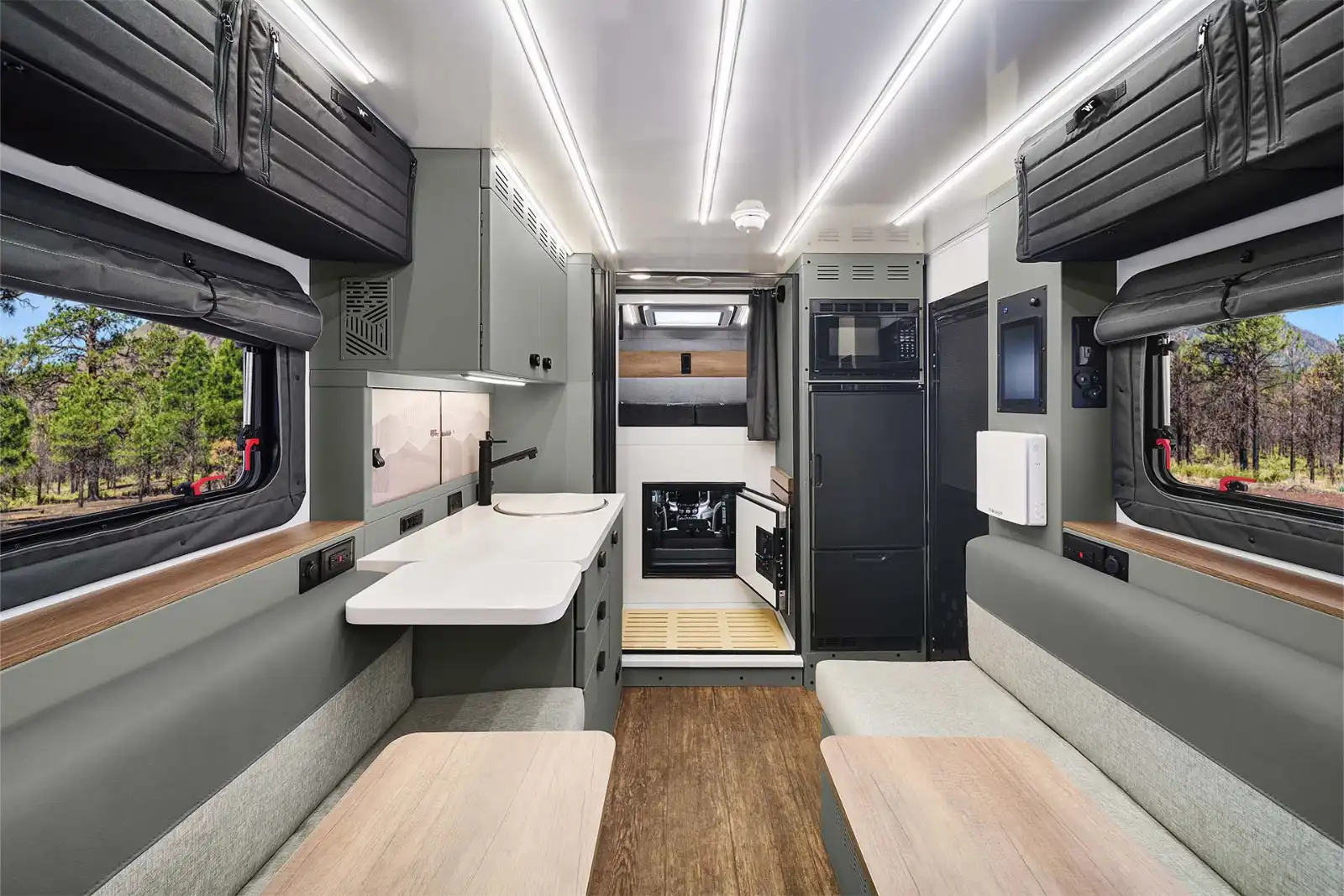
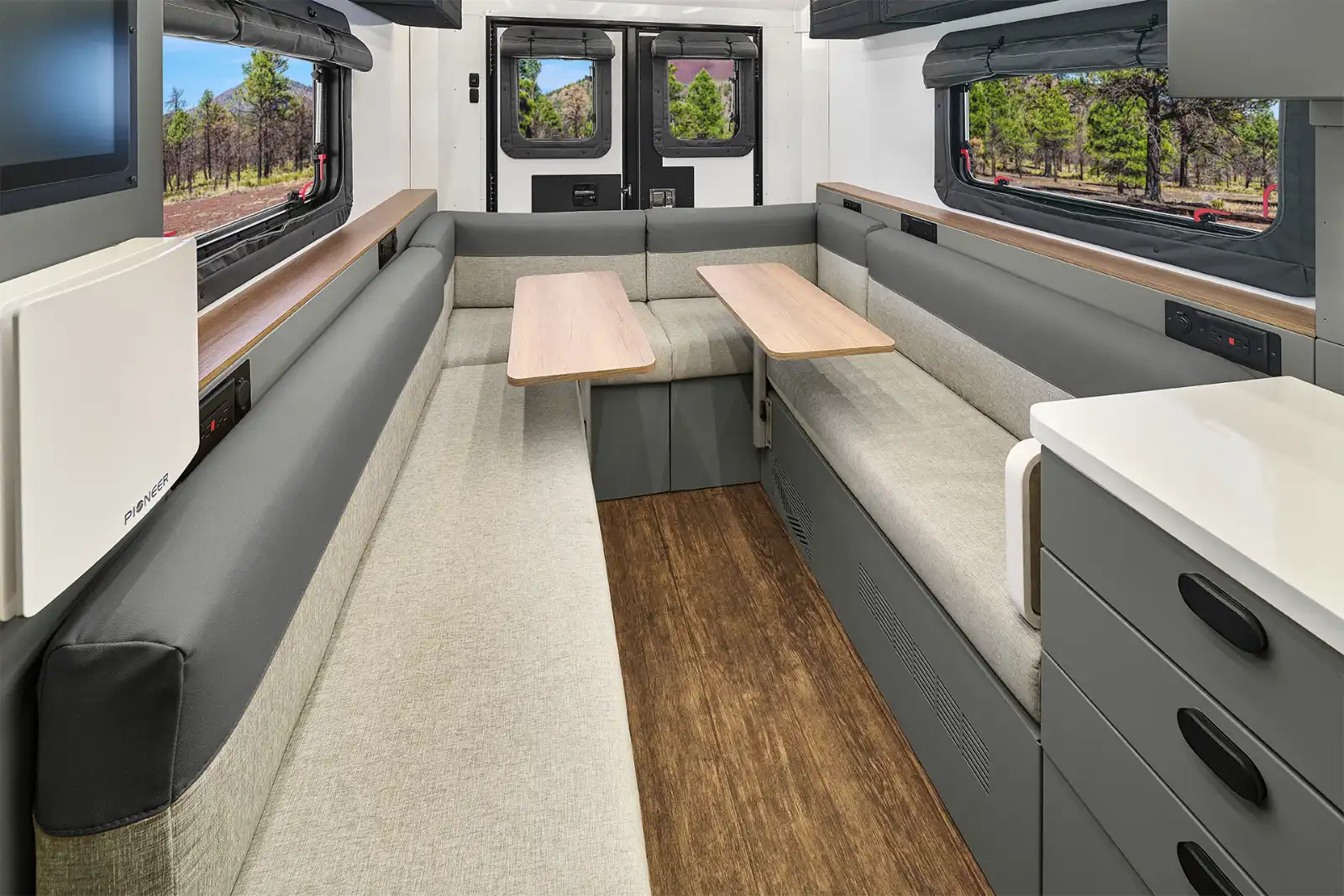
Inside, the ARKA 20Z floorplan sleeps four. Notably, Winnebago fits aluminum cabinetry instead of wood-style laminate. As a result, the cabin sheds weight and survives the bouncing of washboard roads. In addition, a convertible dinette adds a daytime workspace or a second sleeping area. Moreover, L-track mounting points run along the walls, so owners reposition gear and accessories as they go.
Next, a full-height gear garage is the standout interior feature. Indeed, mountain bikes, kayaks, fishing gear, and recovery hardware all fit without competing for living space. By contrast, the EKKO Transit uses an under-bed storage bay. While this design works for shorter gear, it limits anything tall. However, the ARKA’s full-height bay is closer to what Earthcruiser offers. Therefore, the design choice tells you who Winnebago is chasing.
Also, modular sleeping options round out the layout. For instance, solo travelers will fold one sleeping area down for more cargo. Meanwhile, a family of four will keep both beds set up. Moreover, Winnebago offers a curated catalog of bolt-on accessories. So, the setup evolves over time. As an overlander, this matters to me. Trail use teaches you what you need within the first season, not on the showroom floor. To see how other rigs handle this, our best off-road campers of 2025 roundup is a useful comparison.
All-Season Climate Control and Insulation
The ARKA is rated to operate from minus 10 to 120 degrees Fahrenheit. To pull this off, Winnebago specs R-15 insulation in the roof and floor. Also, R-12 covers the walls. Moreover, hydronic heating, heated tanks, and heated floors cover the cold side. Moreover, the brand says the ARKA includes an industry-first heat recovery ventilation system. Specifically, it regulates temperature, manages humidity, and reduces condensation.
Indeed, heat recovery ventilation is the detail worth pausing on. In a sealed RV, occupant breath and cooking steam will fog windows over time. As a result, insulation rots from the inside. However, a recovery ventilator brings in fresh outside air. Meanwhile, it reclaims heat from the air going out. Therefore, the cabin stays dry without losing all the warmth. For winter campers, this is the difference between dry windows and a soggy headliner.
Also, hot-weather capability leans on the insulation package and the 48-volt architecture. As a result, the system runs a high-efficiency air conditioner without bogging the battery. For example, desert overlanders in Death Valley or southern Utah will appreciate this. Typical RV air conditioners flatten a 12-volt house bank in a few hours. By contrast, the ARKA system runs on solar and battery for longer overnight pulls. Therefore, owners do not have to fire the generator or chassis engine.
Where to See ARKA in Person
First, the Winnebago ARKA debuts at Overland Expo West in Flagstaff, Arizona, on May 15 through 17, 2026. Next, the truck tours to Overland Expo PNW in Redmond, Oregon, on June 26 through 28. Finally, it lands at Overland Mountain West in Loveland, Colorado, on August 21 through 23. Importantly, each event puts the rig in front of Winnebago’s target buyers. For example, experienced overlanders, hunters, photographers, and remote workers all attend.
If you have not been to an Overland Expo, plan on at least a full day. Winnebago will have product specialists on hand. Also, walk-throughs of the 20Z layout will run all weekend. In addition, attendees will sit in the dinette and inspect the gear garage in person. However, showroom photos and brochures hide details like seat comfort, headroom, and reach to upper cabinets. By contrast, a 10-minute walk-through reveals all of those immediately. For additional model information, visit winnebago.com/models/arka.
Notably, Chris West, president of Winnebago Motorhomes, called the ARKA a new chapter for the brand. Indeed, Winnebago has been part of the RV industry since 1958. As a result, a 68-year-old brand does not launch a new flagship every year. Also, the ARKA is the first heavy-duty adventure truck in the lineup. Therefore, Winnebago is putting public events ahead of dealer rollouts to build credibility with the overlanding community first.
Pros and Cons
Pros
- RAM 5500 chassis with 15,000 lb towing
- 6.7L Cummins diesel with 800 lb-ft of torque
- Up to 15 kWh lithium battery and 1,200 W solar
- All-season range from -10 F to 120 F
- Industry-first heat recovery ventilation
- Full-height gear garage and L-track mounts
- Aluminum cabinetry for weight and durability
- Winnebago Connect remote system control
Cons
- Starting price near $331,901 for the 20Z
- 11 ft 9 in height limits some forest roads
- 26 ft 7 in length is awkward in tight switchbacks
- Approach and departure angles not yet published
- Diesel service network sparse in remote areas
- Heavier rig stays under the CDL threshold but requires skilled handling
An Overlander’s Take on the ARKA
I have run a Jeep Gladiator Rubicon for four seasons. Also, I drive a 2025 Chevy Colorado ZR2 across Big Bear and the Eastern Sierra. In addition, I rented a Ford Bronco Badlands for a week of Utah backcountry travel. So, I have a fair sense of where adventure rigs hit their limits. Looking at the ARKA on paper, three things stand out to me.
First, the 15 kWh battery and 1,200 watts of solar will keep a family of four comfortable for a full work week off-grid. Indeed, this is a real shift. By comparison, my ZR2 with a rooftop tent gets two nights before I ration the fridge. Second, heat recovery ventilation in a sealed RV is rare. In fact, I have only seen it in tiny home builds before now. On a winter trip near Mammoth Lakes, this matters more than a heated floor. Third, the 11 ft 9 in height is a real limit. Specifically, it will keep the ARKA out of dispersed campsites where Forest Service roads run under low branches.
However, for buyers cross-shopping a Bronco Badlands or a Wrangler Rubicon, the ARKA is not the same purchase. Rather, it is an RV with off-road hardware, not a rock crawler. Instead, compare it to an EarthRoamer LTX or a Global Expedition Vehicles Pangea. There, the conversation centers on autonomy, comfort, and total trip duration. For a deeper look at the adventure truck market, our best overland vehicles of 2026 roundup covers the alternatives. Additionally, for truck-bed-camper alternatives, see overlanding with a truck bed camper.
Frequently Asked Questions
How much does the Winnebago ARKA cost?
The Winnebago ARKA 20Z is listed at approximately $331,901 fully equipped. Additionally, the truck is available for pre-order through the Winnebago website.
What chassis does the Winnebago ARKA use?
The Winnebago ARKA is built on a RAM 5500 crew cab chassis with a 6.7L Cummins inline-six diesel and an 8-speed automatic transmission.
How long is the Winnebago ARKA?
The Winnebago ARKA measures 26 feet 7 inches in length, 11 feet 9 inches in height, and rides on a 197.4-inch wheelbase.
How many days will the Winnebago ARKA run off-grid?
Winnebago says the ARKA supports up to 14 days off-grid. Specifically, the rig combines a 15 kWh lithium battery, 1,200 watts of expandable solar, and a 60-gallon heated freshwater tank.
How many people does the Winnebago ARKA sleep?
The ARKA 20Z sleeps four people, with a convertible dinette and modular sleeping options for solo travelers, couples, and families.
When and where will the Winnebago ARKA debut?
First, the Winnebago ARKA debuts at Overland Expo West in Flagstaff, Arizona, from May 15 through 17, 2026. Next, it appears at Overland Expo PNW June 26 through 28. Finally, it lands at Overland Mountain West August 21 through 23.
How does the Winnebago ARKA compare to the Revel and EKKO?
The Winnebago ARKA is a heavier-duty adventure truck on a RAM 5500 chassis. By comparison, the Sprinter-based Revel and the Ford Transit-based EKKO target couples and small families in tighter vehicles. As a result, the ARKA delivers a much higher tow rating, battery capacity, and off-grid duration. For background on the lifestyle these rigs serve, see our keys to the overlanding lifestyle primer.