


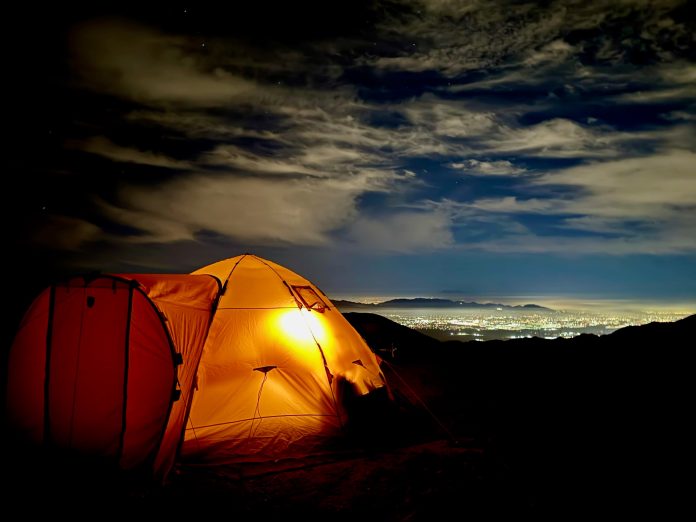

I’ve owned a lot of tents. First came a $129 big-box dome tent, replaced after two seasons when the zippers failed. Then a $280 three-season shelter, retired when the poles cracked at -10°F. Finally, a $350 backpacking tent, outgrown when my style shifted to week-long winter overlanding. Total spent: over $750 before I bought one quality tent and stopped spending. Every camper I know has a version of this story. The case for buying one quality tent is worth making plainly, with real numbers, before you repeat it.
The Bereg UP-5 costs $2,439.00 at the time of writing. For most people, this number stops the conversation. However, when you compare it to what overlanders spend replacing mediocre shelters over five to ten years of serious use, the UP-5 is not the expensive option. In fact, it is the cost-effective one. I’ve run the UP-5 in Sierra snowstorms, desert wind, and sub-freezing base camps where a cheaper tent would have ended the trip. After five years and zero failures, I understand why quality camping gear is cheaper in the long run, even when it costs more up front.
Quick Facts:
- Topic: Why buying one quality tent beats buying multiple cheap ones
- Featured Product: Bereg UP-5 hot tent
- UP-5 Price: $2,439.00
- UP-5 Capacity: 3-5 people with stove and beds; up to 11 sleeping-bag configuration
- UP-5 Temperature Rating: -50°C (-58°F) with stove and accessory kit
- UP-5 Setup Time: Under 60 seconds (built-in aluminum frame)
- UP-5 Weight: 29 kg (64 lbs)
- Best for: Overlanders, winter campers, and hunters tired of replacing cheap shelters every 2-3 seasons
8 min read
In This Article
The Buy Once, Cry Once Argument

The phrase “buy once, cry once” describes paying a premium for quality camping gear upfront, feeling the sting, and never regretting it. When you buy one quality tent built for every season, the math shifts quickly. A $300 tent replaced every three seasons costs $900 over nine years. A $2,439.00 tent lasting 15 or more years costs less per year. It also stops the cycle of trips cut short by under-built gear. The cost-per-use argument for quality gear is not a rationalization. Specifically, it is arithmetic.
Most campers think about tent cost as a single purchase price rather than a lifecycle cost. As a result, they underestimate the true cost of cheap shelters over time. A $200 tent failing at the trailhead on the third night of a five-night winter trip does not cost $200. It costs $200 plus the price of the trip you cut short and the replacement you buy in a panic. You also lose confidence in your shelter at the moment you need it most. When you are overlanding in Wyoming in February and a storm comes in, you are not shopping for a replacement tent. You are inside the one you have, hoping it holds. Gear failure in the field is when you understand what quality camping gear means.
The investment argument for buying one quality tent rests on three factors: total lifecycle cost, performance in real conditions, and the value of never losing a trip to gear failure. Moreover, each factor points in the same direction. The overlanding community has long debated the real cost of overlanding. In particular, shelter consistently ranks as the category where cheap choices cost the most over time.
The Real Cost of Cheap Tents Over Time

To make the cost-per-use case concrete, consider a realistic cheap-tent lifecycle. Entry-level and mid-range tents in the $150 to $400 range typically last two to four seasons. Zippers fail, seams delaminate, poles crack, or waterproof coatings degrade beyond usability. At $250 per tent with a three-season lifespan, three tents over nine years cost $750. Per night of use, the math averages $83 per year or $4.16 per night.
A quality tent rated for -50°C sits at a different price point. However, its lifespan changes the math entirely. At 15 years of equivalent use, the UP-5 cost drops to $159.43 per year. At 20 years, common for well-maintained aluminum-frame shelters, the annual cost falls below $119.39. Per night, a quality tent at 20-year lifespan costs less than the mid-range replacement cycle. Moreover, it never fails you in a storm.
Spreadsheets miss one category entirely: opportunity cost. A tent failing on a multi-day trip ends the trip or forces an expensive workaround. Overlanders driving hours into the backcountry know what you need for camping off grid: a gear shop is not on the list. When a shelter fails in a remote location, the cost is not the tent price. It is the entire trip.
Where Cheap Tents Fail Most Often
Zipper failure accounts for a large share of cheap-tent retirements. Coil zippers rated for 500 to 1,000 cycles fail faster under cold and freeze-thaw stress. Pole systems using fiberglass or low-grade aluminum bend under sustained wind. Seam tape peels after two to three seasons of UV exposure. Waterproof coatings on budget fabrics (typically PU 800 to 1,500 mmAq) degrade with every wash and packing cycle. Quality camping gear addresses each failure point with materials rated for real conditions, not optimistic packaging claims.
What a Quality Tent Delivers
Quality camping gear is not about a higher price tag. It delivers specific engineering outcomes: a 4,000 mmAq waterproof rating, frame material rated for wind load without fatigue failure, zipper systems rated for thousands of cycles, and fabric matched to the conditions you camp in. When a tent claims to handle -50°C, the claim rests on insulation values, stove jack fire resistance, and frame stability at those temperatures.
For winter campers and overlanders, best tent for all seasons performance requires more than weather resistance. A shelter designed for a wood or diesel stove requires a heat-resistant stove jack with a reinforced metal ring. It also requires ventilation preventing dangerous carbon monoxide buildup while maintaining warmth. These features don’t appear on a $300 big-box tent.
Additionally, setup speed reflects build quality more than convenience. A hot tent with a built-in frame sets up in under 60 seconds. A budget tent with loose poles, tangled in a frozen bag, takes 15 to 20 minutes at -20°F. This difference is exposure time and physical strain before you’ve done anything else. In cold conditions, the gap matters.
Buy Direct From Bereg Canada
The Last Tent You’ll Ever Buy
The Bereg UP-5 is built for -50°C conditions with aircraft-grade aluminum, a one-minute setup, and a stove jack rated for year-round heat. Built once. Built right.
The Bereg UP-5: A Case Study in Quality Camping Gear
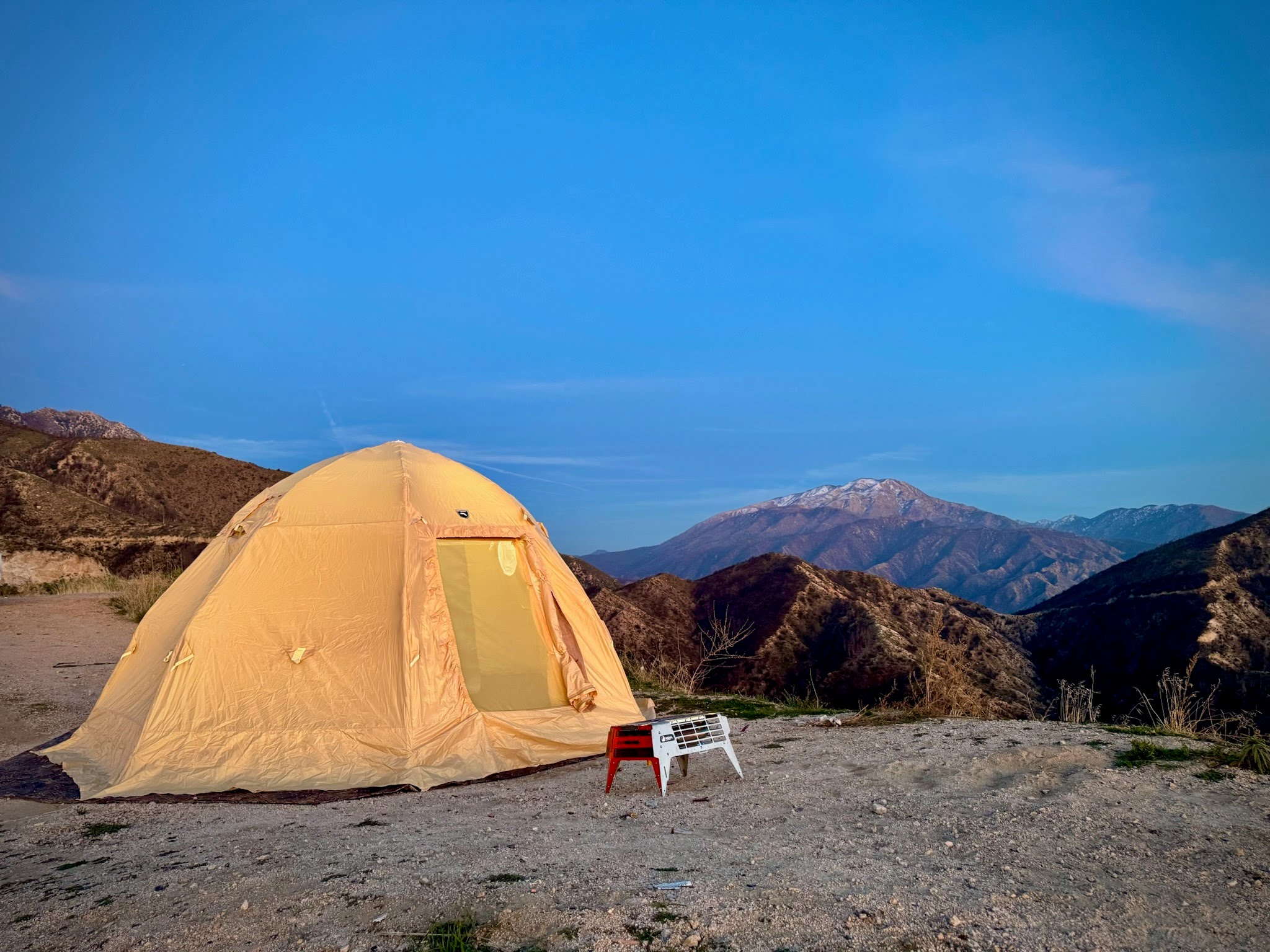
The Bereg UP-5 illustrates every point in the buy one quality tent argument. Its frame uses 10mm aircraft-grade aluminum alloy (B95T1). The outer fly is Oxford 300 fabric with PU 4,000 mmAq waterproof coating, two to five times the rating of most budget four-season tents depending on the model. The inner fly uses Oxford 210 with PU 2,000 mmAq impregnation. An air gap between the two layers reduces condensation. Budget tents in winter often force wet sleeping bags by day two of a cold trip because of this problem.
The dome-umbrella design sheds snow load instead of accumulating it. Most budget four-season tents require occupants to push snow off the roof to prevent pole failure. The UP-5’s geometry routes snow off without manual intervention. For solo campers in multi-day storms, this matters significantly. In addition, two entrances, built-in pockets, a mesh shelf, and spring hooks let the interior function as a base camp, not a temporary bivouac.
The built-in frame eliminates the most common winter setup failure point: pole assembly in frozen conditions. The entire structure goes up in under 60 seconds. In a whiteout or at 2 AM in -30°C, setup speed is not a convenience. It is a safety margin.
UP-5 Specifications at a Glance
| Specification | Details |
|---|---|
| Price | $2,439.00 |
| Dimensions | 4.4 x 4.4 x 2.2 m |
| Packed size | 130 x 30 x 30 cm |
| Weight | 29 kg (64 lbs) |
| Frame material | 10mm aircraft-grade aluminum alloy (B95T1) |
| Outer fly waterproof rating | PU 4,000 mmAq |
| Inner fly waterproof rating | PU 2,000 mmAq |
| Temperature rating | -50°C (-58°F) with stove and full accessory kit |
| Setup time | Under 60 seconds |
| Capacity | 3-5 people with stove and beds; 11 sleeping-bag |
| Stove jack | Built-in, heat-resistant with reinforced metal ring |
Save on the Bereg UP-5
One Tent for Every Season and Condition
Rated to -50°C, set up in under 60 seconds, and built to outlast the truck you drive to the trailhead. The UP-5 is the cost-per-use argument in hardware form.
Who Should Buy One Quality Tent

The buy one quality tent argument applies most clearly to three types of campers. The first is the year-round user camping across all seasons and climates. Maintaining separate three-season and winter shelters doubles cost, storage space, and setup knowledge. One shelter rated to -50°C handles August conditions as well as February conditions. The floor is removable, the ventilation is adjustable, and the interior volume suits both car camping and base camp use.
The second is the overlander or backcountry hunter using a shelter as a multi-day base of operations. These users push gear harder than weekend car campers. They pack and unpack in the dark, set up in wind and rain, and leave shelters standing for days. For them, quality camping gear is not a lifestyle upgrade. It is a functional requirement. A hot tent for all seasons at base camp means dry gear, quality sleep, and a warm space to plan the next route regardless of overnight weather.
The third group is the camper who has already spent $500 to $1,000 replacing budget shelters and is doing the math. If your current tent cost $350 and you’re already planning a replacement for zipper or pole issues, you are at the inflection point. At $2,392.60, the annual cost of a quality shelter is comparable to your replacement cycle. The difference is the quality shelter doesn’t force this conversation again in two years.
One Great Tent vs. Three Mediocre Ones: Which Should You Choose?

The direct comparison comes down to three factors: total cost, performance ceiling, and trip reliability. Three mid-range tents over nine years at $250 to $400 each cost $750 to $1,200. Add replacement logistics and overlapping storage, and the real cost climbs further. A quality shelter at $2,439.00 costs more upfront. However, over nine years, it delivers a lower annual cost and performs where mid-range options fail. It also never strands you without a functioning shelter mid-trip.
The performance ceiling matters most where cheap tents fail. Most three-season and mid-range four-season tents perform adequately in mild conditions. Poles crack at -20°F. Guy lines pull out in sustained 40 mph wind. Zippers fail early under cold and freeze-thaw stress. These are the limits of cheap shelters. A quality tent for all seasons operates at its rated specification across its full lifespan. Its performance ceiling is not hypothetical. It is where you camp when you are serious about backcountry winter use.
Who should buy multiple cheaper tents instead? Someone who camps fewer than ten nights per year in mild conditions and has no plans to winter camp. For this person, a $250 tent is a reasonable fit. However, as soon as camping frequency or season range grows, the math shifts toward buying one quality tent. The sooner you make the switch, the less you spend on interim gear before getting there.
Pros and Cons of Buying One Quality Tent
Pros
- Lower annual cost over 10+ years compared to replacing mid-range tents every 3 seasons
- No mid-trip gear failures: aircraft-grade aluminum frame and PU 4,000 mmAq fabric hold in real conditions
- One shelter covers all seasons: removable floor and adjustable ventilation work from summer to -50°C winter
- Built-in stove jack enables heated interior camping, eliminating the cost of a separate winter shelter
- Under 60-second setup reduces exposure time and physical strain in cold conditions
- 3-5 person capacity with stove and beds enables group trips on one tent budget
- Dome-umbrella geometry sheds snow load automatically, no manual clearing required
Cons
- $2,439.00 upfront cost requires advance planning and budgeting
- 29 kg (64 lbs) weight makes the UP-5 a vehicle-based shelter, not a backpacking option
- Not practical for occasional summer-only campers with no winter camping plans
- Packed size (130 x 30 x 30 cm) requires dedicated vehicle storage space
- Learning curve for stove operation and ventilation management in cold conditions
Final Verdict
The case for buying one quality tent instead of three mediocre ones holds up under financial analysis, field performance data, and straightforward camping logic. For overlanders, winter campers, and backcountry hunters using their shelter hard across multiple seasons, the cost-per-use argument for quality camping gear is clear. It is the financially responsible choice. A shelter rated to -50°C, built from aircraft-grade aluminum, and standing in under 60 seconds earns its price back in the first five years of serious use.
The argument against the quality option applies to one specific camper: someone who camps infrequently in mild conditions, with no plans beyond summer car camping. For this person, a $250 tent is a reasonable match. However, if you camp in winter, camp frequently, or face a second replacement, a quality shelter is the more efficient choice. The Bereg UP-5 is not for everyone. It is for the camper who has outgrown the cycle of replacing gear without solving the problem.
Compared to two or three mid-range shelters over nine years at $526 to $842 total, the UP-5’s $2,439 costs more upfront. However, it performs where mid-range options fail, adds heated interior camping without a separate shelter purchase, and eliminates the replacement cycle. Over a 15-year lifespan, the annual cost drops to $159, below the $58 to $94 per year of the replacement cycle. Gear failure disruptions add further real cost on top of those numbers.
For overlanders who have studied the real cost of this hobby, shelter is the category where quality investments pay off fastest. The Bereg UP-5 is among the clearest examples of the buy-once-cry-once argument in outdoor gear. If you camp seriously, more than ten nights a year in real conditions, buying it once is cheaper than the alternative.
Ready to Buy?
Check Today’s Price on the Bereg UP-5
Available direct from Bereg Canada. Aircraft-grade aluminum frame, -50°C rating, and a one-minute setup built to work in any conditions you encounter.
Frequently Asked Questions
Is it worth buying an expensive tent?
For campers using their shelter more than ten nights per year, the decision to buy one quality tent is worth it financially. A shelter at approximately $1,754 to $2,456 lasting 15 to 20 years costs less per year than replacing mid-range tents every two to three seasons. Beyond cost, a quality tent for all seasons performs in conditions where budget options fail, which matters when gear failure means ending a backcountry trip early.
How long does a quality tent last?
A quality tent built from aircraft-grade aluminum lasts 15 to 25 years with proper maintenance. Dry storage, seam resealing every few years, and frame inspection after high wind all contribute to this lifespan. Budget tents in the $150 to $400 range typically last two to four seasons before zippers, seams, or poles require replacement. The cost per use camping advantage of a quality shelter compounds significantly over time.
What is the buy once cry once philosophy for camping gear?
Buy once cry once describes the practice of paying a premium upfront for quality camping gear instead of replacing cheaper versions repeatedly. The “cry” is the initial sticker shock. However, over a typical ten-year period, quality gear costs less annually than its budget equivalent. Replacement cycles and the indirect costs of gear failure add up quickly.
Is the Bereg UP-5 worth the price?
For serious winter campers and overlanders needing a shelter rated to -50°C with a built-in stove jack, the Bereg UP-5 is worth the price. At $2,439, it costs significantly more than budget alternatives. However, its aircraft-grade aluminum frame, PU 4,000 mmAq waterproof rating, and 15-plus-year lifespan produce a lower annual cost for campers using it frequently in serious conditions.
What makes a tent worth the investment?
A tent worth the investment combines four things: a 4,000 mmAq waterproof rating, a frame rated for real wind loads, a setup fast enough for extreme conditions, and a lifespan making the cost per use camping math work in your favor. When you buy one quality tent with these characteristics, the best tent for all seasons standard applies. Build to the specification of your worst conditions, not your average ones.
Our articles might have affiliate links and the occasional sponsored content, but don’t sweat it – if you buy something, we get a little kickback at no extra cost to you, and we only hype products we truly believe in!