


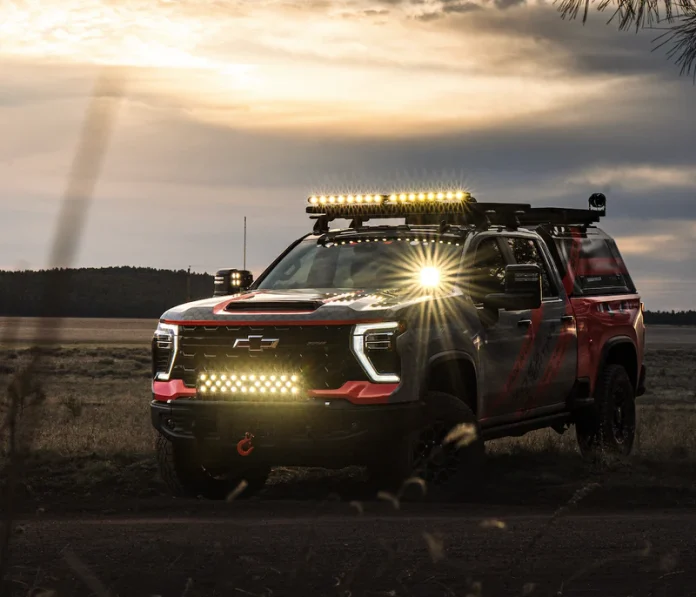

Quick Verdict: Light bar laws by state differ widely across the U.S., and most states restrict LED light bars to off-road use only. The common thread: forward-facing auxiliary lights must emit white or amber light, mount between 16 and 42 inches from the ground for on-road use, and stay covered or switched off on public highways if roof-mounted. Fines for violations range from $50 to $250 depending on your state, so knowing the rules before you bolt on a bar saves you money and headaches on the trail.
Last updated: March 2026 | 11 min read
In This Article
- Why Light Bar Laws by State Matter for Off-Roaders
- Federal Lighting Standards: The Baseline Every State Builds On
- Key Facts at a Glance
- California and Oregon: Strictest Western Light Bar Laws
- Southern and Midwest Off-Road Light Bar Laws
- Eastern and Northeast State Regulations
- Mounting Height and Brightness Limits
- Color Restrictions: White, Amber, and Everything Banned
- Cover Requirements and Compliance Strategies
- Fines, Penalties, and Real Enforcement
- On-Road vs. Off-Road Use: Where the Line Falls
- Pros and Cons of Auxiliary Off-Road Lighting
- Final Verdict
- Frequently Asked Questions
Why Light Bar Laws by State Matter for Off-Roaders
One uncovered roof-mounted light bar on a Virginia highway costs you $250, an inspection failure, and a conversation with a state trooper you did not plan for. Understanding light bar laws by state is essential before you spend $200 to $2,000 on auxiliary off-road lighting. Every state writes its own vehicle equipment code, and what passes in Arizona will earn you a citation in New York. Consequently, overlanders and trail runners who cross state lines need a working knowledge of these regulations.
The core issue is straightforward: off-road LED light bars produce 10,000 to 50,000+ lumens, which is 3 to 10 times brighter than stock headlights. All of those lumens keep you safe on a dark trail. On a two-lane highway, however, they blind oncoming drivers. For this reason, most auxiliary light laws allow bars to be mounted on your vehicle while restricting when and where you turn them on.
Specifically, regulations typically address four areas: mounting height, brightness limits (measured in candlepower), approved colors, and whether roof-mounted bars need opaque covers on public roads. Getting any one of these wrong results in a fix-it ticket at best and a $250 fine at worst. Because light bar laws by state vary so widely, the sections below break down regulations region by region, with specific statutes and dollar amounts so you know exactly where you stand.
Federal Lighting Standards: The Baseline Every State Builds On

Before examining state-specific rules, it helps to understand the federal framework. The National Highway Traffic Safety Administration (NHTSA) enforces Federal Motor Vehicle Safety Standard 108 (FMVSS 108), which governs all vehicle lighting sold in the United States. This standard covers headlamps, tail lamps, turn signals, and reflectors on factory vehicles.
FMVSS 108 does not directly regulate aftermarket auxiliary lights like LED light bars. Instead, it sets performance benchmarks for original equipment. Aftermarket lights fall under SAE (Society of Automotive Engineers) standards, and products labeled “DOT compliant” or “SAE approved” have passed third-party testing for vibration resistance, water intrusion, and optical performance. Therefore, buying DOT/SAE-compliant lights gives you the strongest LED light bar legal footing regardless of your state.
Also important: federal law prohibits forward-facing red or blue lights on civilian vehicles nationwide. This applies to all 50 states without exception. Consequently, emergency vehicles hold exclusive rights to red and blue lighting. Violating this carries serious penalties, including potential felony charges in some jurisdictions for impersonating emergency services.
Key Facts at a Glance
| Regulation Area | Common Standard |
|---|---|
| Approved Forward Colors | White and amber only (all 50 states) |
| Banned Forward Colors | Red and blue (reserved for emergency vehicles) |
| On-Road Mounting Height | 16 to 42 inches above ground (most states) |
| Roof Mount On-Road Rule | Must be covered or off on public roads |
| Max Simultaneous Lights >300cp | 4 lights in most states (NC, OH, others) |
| Beam Cutoff Distance | 75 to 100 feet ahead on roadway |
| Typical Fine Range | $50 to $250 per violation |
| Federal Standard | FMVSS 108 (factory lighting baseline) |
Featured Partner
Boss Lighting: American-Made, DOT-Ready LED Systems
Every Boss Lighting product ships with CNC-machined 6061 aluminum housings and a limited lifetime warranty. Engineered and manufactured in the USA for off-road, marine, and tactical applications.
California and Oregon: Strictest Western Light Bar Laws
Western states see heavy off-road traffic, and their light bar laws by state reflect a balance between trail access and highway safety. California and Oregon stand out with the most prescriptive rules. Under California Vehicle Code Sections 24400-24411, all forward-facing auxiliary lights must emit white or amber light. Additionally, mounting height tops out at 54 inches from the ground, slightly more generous than the 42-inch limit in most other states. However, any auxiliary light operating on a public road must not project a glaring or dazzling beam into oncoming traffic.
Oregon takes a more prescriptive approach under ORS 816.060. The state limits drivers to 2 front auxiliary driving lamps and 2 fog lamps. Auxiliary lamps must mount no higher than 42 inches. Roof-mounted or roll-bar-mounted LED light bars must stay covered and switched off on all public highways. This rule applies even if the light bar is technically DOT compliant.
Arizona (ARS 28-947) permits auxiliary lighting but restricts lamp types and beam aim on public roads. Nevada and Utah are comparatively lenient because of their vast BLM and public trail networks, though both states still enforce the white-and-amber-only rule for any forward-facing light on a highway. Having covered the western region, the pattern shifts slightly as you move east.
Southern and Midwest Off-Road Light Bar Laws
Southern and Midwest states tend to follow a consistent pattern around off-road light bar laws. North Carolina allows a maximum of 2 front auxiliary LED light bars, plus 2 fog lamps mounted between 12 and 30 inches from the ground, and 2 additional spot lamps. The critical restriction: no more than 4 lights exceeding 300 candlepower are permitted to operate simultaneously on any public road. Beams must not project onto the road surface beyond 75 feet ahead of the vehicle.
Ohio enforces similar rules under Administrative Code 4501-15-06. Each auxiliary LED light bar must emit white light only, with proper aiming required. Like North Carolina, Ohio caps simultaneous operation at 4 lights over 300 candlepower. Arkansas adds a mounting height range of 16 to 42 inches and restricts beam projection to 100 feet.
Texas requires auxiliary lights to be covered or turned off on public roadways, though enforcement varies between urban counties (where citations are common) and rural areas near popular trail systems. Because enforcement inconsistency does not change the law, the safest approach in Texas is to keep roof bars covered on all public roads regardless of county. If you want to learn more about choosing the right equipment for your rig, check out our off-road lighting buying guide for product-level recommendations. The eastern seaboard takes an even harder line on auxiliary lighting.
Featured on Boss Lighting
Excel Series Ditch Light Packages
Bumper-height ditch lights mount within legal height requirements in every state. The Excel Cube 4 package delivers focused flood and spot patterns where you need them most.
Eastern and Northeast State Regulations
Eastern states generally enforce stricter auxiliary lighting rules. New York permits LED light bars for off-road use only, meaning your bar must be completely off and preferably covered when driving on any public road. Virginia goes further by requiring light bars to be physically disconnected or covered with opaque material on public highways.
Connecticut, Massachusetts, and New Jersey follow similar patterns. These states restrict auxiliary lights to a combined maximum of 4 forward-facing lamps (including headlights) operating simultaneously. Because most vehicles already run 2 headlights, this leaves room for only 2 additional auxiliary lights on-road. For comparison, the four types of KC off-road lights article breaks down which light categories fit specific mounting positions.
Pennsylvania offers a slightly more moderate approach, allowing up to 4 auxiliary lamps in addition to headlights, provided each emits white or amber light and mounts below the roofline. For overlanders traveling the Northeast corridor, the safest strategy is to keep covers on any roof-mounted bars and limit on-road use to bumper-mounted fog or driving lights mounted between 16 and 42 inches.
Mounting Height and Brightness Limits
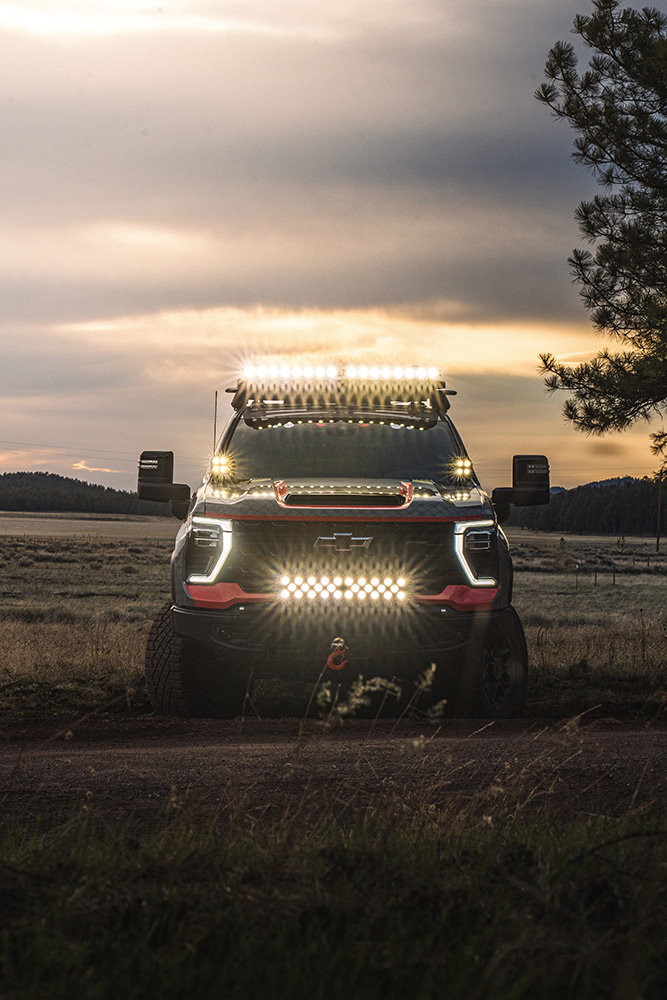
Mounting height is the single most common factor determining whether your LED light bar is street-legal. Across most states, the legal window for on-road auxiliary lights sits between 16 and 42 inches above ground level. Specifically, lights mounted within this range at or near headlight height face fewer restrictions because they integrate with the vehicle’s existing lighting profile.
Roof-mounted bars create the biggest legal challenge. At 60+ inches above the ground on a full-size truck, a roof bar exceeds the legal mounting height in every state. For this reason, roof-mounted auxiliary lights are universally restricted to off-road use. Even in states without an explicit height cap, the glare produced by a high-mounted 50,000-lumen bar violates anti-glare statutes.
Candlepower and Lumen Thresholds
Several states reference 300 candlepower as the threshold for “high intensity” auxiliary lights. North Carolina, Ohio, and Alaska all use this benchmark. Any light producing over 300 candlepower counts toward the simultaneous operation limit (typically 4 lights maximum). A standard 20-inch LED light bar produces 12,000 to 20,000 lumens. Using the standard conversion (lumens divided by 12.57), a 12,000-lumen bar equals approximately 954 candlepower, while a 20,000-lumen bar reaches roughly 1,590 candlepower. Even a modest light bar exceeds the 300-candlepower threshold by 3 to 5 times.
Color Restrictions: White, Amber, and Everything Banned
Color compliance is the simplest rule to follow and the easiest to violate accidentally. All 50 states permit white and amber for forward-facing auxiliary lights. In contrast, no exceptions exist for blue, red, green, or purple forward-facing lights on civilian vehicles.
Amber holds a specific advantage for off-road use: it cuts through dust, fog, and rain with less backscatter than white light. For this reason, many trail runners choose amber auxiliary lights for their fog zones. Fortunately, amber is fully street-legal in every state for forward-facing use, making amber-equipped light bars a versatile choice for rigs moving between highway and trail.
The danger zone involves RGB or multi-color LED bars. Several aftermarket light bars offer color-changing modes via Bluetooth or remote control. While these are popular for show trucks, switching to blue or red on a public road, even accidentally, creates a serious legal problem. In some states, displaying blue or red forward-facing lights constitutes impersonation of an emergency vehicle, which is a misdemeanor or felony depending on the jurisdiction.
Cover Requirements and Compliance Strategies
Light bar covers provide the simplest path to compliance when driving on public roads. Several states, including Oregon, Virginia, and New York, specifically require opaque covers over auxiliary lights during on-road operation. Even in states without an explicit light bar cover requirements law, using covers demonstrates a good-faith effort to comply. Consequently, officers frequently take cover usage into account during traffic stops.
Beyond covers, consider these compliance strategies for your off-road light bar setup. First, wire your light bar to a dedicated switch rather than your high-beam circuit. Although wiring to high beams seems convenient, it creates a legal problem: your auxiliary lights activate automatically whenever you toggle high beams, making accidental on-road activation inevitable. A dedicated switch with an indicator light on your dash gives you full control.
Documentation and Product Selection
Second, choose DOT/SAE-compliant LED light bar products from manufacturers who test to federal standards. Products built with proper beam cutoff optics and appropriate lumen ratings face fewer legal challenges. Specifically, look for SAE J583 (fog lamps) or SAE J581 (auxiliary driving lamps) certifications. If you want to see how premium LED bars perform on the trail, our KC Hilites Gravity Pro6 review covers a DOT-compliant option in detail.
Third, keep proof of your light bar’s specifications in your glove box. A product spec sheet showing DOT compliance, lumen output, and beam pattern gives you documentation during any traffic stop. This step takes 5 minutes and provides significant legal protection during roadside encounters.
Fines, Penalties, and Real Enforcement
Fines for light bar violations typically range from $50 to $250 per offense. In states with strict vehicle inspection programs (like New York, Virginia, and Pennsylvania), a non-compliant light bar results in an automatic inspection failure. Consequently, the real cost includes the fine plus the expense of correcting the installation to pass re-inspection.
Enforcement patterns vary significantly by geography. Urban and suburban areas see more citations because officers encounter aftermarket lighting during routine traffic stops. In contrast, rural areas near popular trail systems often see less aggressive enforcement, especially if your lights are off and covered on the highway. Still, state troopers on interstate highways regularly cite trucks with uncovered, roof-mounted light bars.
The most severe penalties apply to color violations. Displaying red or blue forward-facing lights on a civilian vehicle crosses from an equipment violation into potential criminal territory. In Florida, impersonating an emergency vehicle is a third-degree felony. Even without intent to impersonate, displaying restricted colors triggers a citation and potential vehicle impoundment in multiple states.
On-Road vs. Off-Road Use: Where the Line Falls
The legal distinction between on-road and off-road use is the foundation of every off-road light bar law. On public roads, your vehicle must comply with state vehicle equipment codes. Off-road, on private property, or on designated trails, these codes generally do not apply. This distinction creates a clear strategy: equip your rig for maximum trail visibility while maintaining a compliant configuration for highway driving.
Dual-purpose rigs benefit most from bumper-mounted lights within the 16-to-42-inch height range. For example, a pair of driving lights or a short light bar mounted at bumper height provides meaningful trail lighting while staying within LED light bar legal parameters for road use. Roof-mounted bars and overhead light racks should be treated as off-road-only equipment with covers for highway transit.
One common misconception: “off-road only” labels on light bars do not protect you legally. If a light bar is mounted on a vehicle driven on public roads, state equipment codes apply whether the light is on or off. Auxiliary light laws do not recognize manufacturer disclaimers as a defense. Your compliance responsibility begins the moment you drive onto a public road.
Pros and Cons of Auxiliary Off-Road Lighting
Pros
- LED light bars produce 10,000 to 50,000+ lumens for complete trail visibility at night
- Amber auxiliary lights reduce dust and fog backscatter by up to 40% compared to white
- Bumper-mounted lights at 16-42 inches are street-legal in most states with proper aiming
- DOT/SAE-compliant options give you documentation during traffic stops
- Modern LED bars draw 50-70% less power than halogen equivalents at equivalent brightness
- Quality LED bars rated at 50,000+ hours of operation outlast the vehicle they mount to
Cons
- Roof-mounted bars exceed legal height limits in all 50 states for on-road use
- Fines range from $50 to $250 per violation, plus inspection failure costs
- Multi-color RGB bars create felony-level risk if red or blue activates on-road
- State laws differ enough to create compliance complexity for cross-country overlanders
- Light bar covers add $30 to $80 per bar and require removal at trailheads
Final Verdict
Light bar laws by state follow a consistent logic even though the details differ. White and amber colors are universally approved for light bar laws by state compliance. Similarly, mounting heights between 16 and 42 inches keep you in the legal zone for on-road use. Roof-mounted bars require covers on public roads, period. And no state tolerates red or blue forward-facing lights on a civilian vehicle.
The real trade-off sits between maximum trail visibility and highway compliance. If your rig sees both environments, the smartest approach is a two-tier lighting strategy: bumper-height driving lights or a short light bar for legal on-road use, plus a roof-mounted bar with covers for off-road-only sessions. This setup keeps you legal during the highway miles and fully lit when the pavement ends.
For overlanders who cross multiple state lines, the safest baseline is to follow the most restrictive state on your route. If Virginia requires covers, use covers through every state on your trip. Taking this conservative approach eliminates the guesswork and keeps your focus on the trail instead of your rearview mirror.
Investing in DOT/SAE-compliant lighting from a reputable manufacturer simplifies the compliance equation. American-made products built to federal standards, like those from Boss Lighting, ship with proper beam optics, tested lumen ratings, and documentation you keep in your glovebox. Compliance starts with buying the right product, and the right product starts with a manufacturer who builds to the standard.
Featured on Boss Lighting
Built in the USA. Backed for Life.
Boss Lighting’s full LED lineup ships with CNC-machined 6061 aluminum housings, patented cooling technology, and a limited lifetime warranty. From the Premier Series light bars to the Excel Cube ditch lights, every product is engineered for trail performance and built to last.
Frequently Asked Questions
Are LED light bars illegal on public roads?
In most states, LED light bars are legal to mount on your vehicle but restricted during on-road use. Specifically, roof-mounted bars must stay off and covered on public roads. Bumper-height auxiliary lights (16-42 inches) are permitted in many states when properly aimed and producing white or amber light only. Since LED light bar legal requirements differ by state, always check your specific state’s vehicle equipment code before installing.
Do I need to cover my light bar when driving on the highway?
Yes, if your light bar mounts above the legal height limit (typically 42 inches). States like Oregon, Virginia, and New York explicitly require opaque covers over roof-mounted auxiliary lights during highway driving. Even in states without a specific light bar cover requirements statute, using opaque covers demonstrates compliance and reduces citation risk during traffic stops.
What is the legal mounting height for off-road auxiliary lights?
Most states set the on-road legal range between 16 and 42 inches above ground level. California extends the maximum to 54 inches. Lights mounted above these thresholds are restricted to off-road use only. For the broadest legal compliance across multiple states, mount auxiliary driving lights between 16 and 42 inches.
What fines will I face for an off-road light bar violation?
Fines typically range from $50 to $250 per violation depending on your state. However, in states with mandatory vehicle inspections (New York, Virginia, Pennsylvania), a non-compliant LED light bar also triggers an inspection failure. Color violations involving red or blue lights carry significantly higher penalties, including potential criminal charges for emergency vehicle impersonation.
Are amber off-road lights legal for on-road use?
Yes. Amber is a federally approved color for forward-facing auxiliary lights in all 50 states. Because amber light produces less backscatter in dust and fog than white, it is a popular choice for off-road fog zones. On a dual-purpose rig, amber auxiliary lights offer full legal compliance on-road and superior performance in low-visibility trail conditions.
Does a “DOT approved” label make my light bar street-legal?
A DOT/SAE compliance label means the light bar passed standardized testing for optical performance, durability, and beam pattern. However, compliance alone does not override state-specific mounting height, brightness, or light bar cover requirements across varying auxiliary light laws. A DOT-approved bar still needs to mount within the legal height range and follow your state’s operational rules. The label strengthens your legal position but does not guarantee blanket legality across all off-road light bar laws.
<!–
IMAGE RECOMMENDATIONS:
1. Hero: Truck with LED light bar on trail at dusk – Search: https://www.shutterstock.com/search/truck-light-bar-off-road-trail-night
2. In-use: Close-up of covered light bar on highway driving truck – Search: https://www.shutterstock.com/search/light-bar-cover-truck-highway
3. Detail: Light bar mounting bracket at bumper height – Search: https://www.shutterstock.com/search/led-light-bar-bumper-mount-truck
4. Context: Amber fog lights cutting through dust on dirt road – Search: https://www.shutterstock.com/search/amber-fog-lights-truck-dust-trail
5. Infographic: State map showing light bar regulation strictness – Search: https://www.shutterstock.com/search/us-state-map-infographic-vehicle-laws