


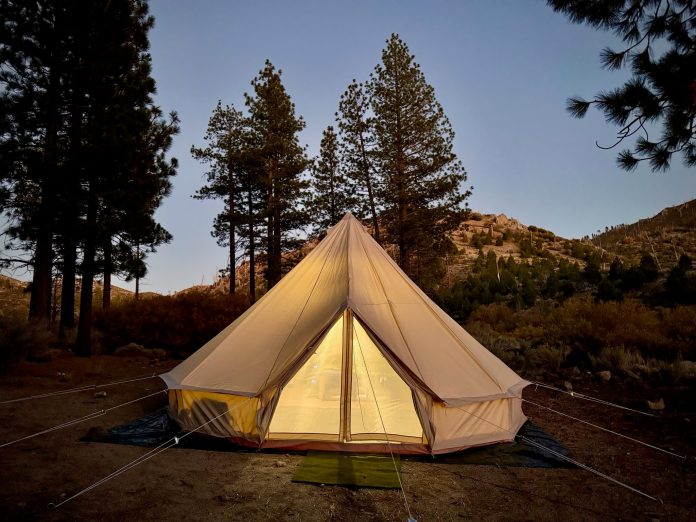

Quick Facts:
- Topic: How long bell tents last and what decides their lifespan
- Realistic lifespan range: 5 to 15 years (quality, care, and use pattern dependent)
- Tents tested by author: Stout 5M Pro (3-month review) and Stout 6M (6-month review)
- Operator proof point: Stout’s 7,000-tent festival fleet and permanent George, WA glamping camp
- Top failure modes: UV-degraded canvas, zipper failure, stove jack burn-through, peak ring abrasion
- Maintenance required: Annual reproofing, dry storage, mildew prevention
- Best for: Buyers comparing bell tents on durability before purchase
8 min read
In This Guide
- How Long Do Bell Tents Last? The Honest Lifespan Range
- Stout Bell Tent Quick Specs and Field Test Conditions
- The Stout 7,000-Tent Festival Proof Point Nobody Talks About
- Bell Tent Canvas Materials and How Long Do Bell Tents Last by Spec
- Hardware Failure Modes: Where Bell Tents Break First
- Six Months in the Stout 5M Pro and 6M: What Real Use Showed
- How to Make a Bell Tent Last 15 Years
- Stout vs Competitor Bell Tents: Where Stout Pulls Ahead
- Stout Bell Tent Pros and Cons After Six Months
- Final Verdict
- Frequently Asked Questions
How Long Do Bell Tents Last? The Honest Lifespan Range
How long do bell tents last? Most online answers give you a vague window of 2 to 15 years and stop there. After six months of personal field-testing two Stout bell tents, plus a closer look at how Stout themselves use their own tents, the honest answer comes into focus. A quality bell tent built from the right canvas, fitted with the right hardware, and given basic care will deliver 10 to 15 years of recreational use. A poorly built one falls apart in two seasons.
The gap between those outcomes lives in three places: canvas specification, hardware grade, and the kind of stress data only an operator-grade fleet generates. Most bell tents on the shelf look almost identical from the outside. However, the materials underneath behave differently once the rain hits and the wind picks up. So when buyers ask how long do bell tents last, the answer depends entirely on those three inputs.
This guide answers the durability question by combining hands-on test data from the Stout 5M Pro and 6M with a side of the Stout business almost no buyer knows about. For a deeper look at choosing your first canvas shelter, our bell tent buying guide covers the broader purchase decision. Specifically, this article focuses on what makes one bell tent outlive another by a decade.
Stout Bell Tent Quick Specs and Field Test Conditions
| Specification | Details |
|---|---|
| Tents under test | Stout 5M Pro Edition (3 months), Stout 6M (6 months) |
| Canvas weight (Pro Edition) | 340 GSM (10.06 oz) cotton, single-weave construction |
| Canvas treatment | 100% natural cotton, factory-treated for waterproofing and mildew resistance; fireproofed at the stove jack |
| Center pole | Brass, 3-section adjustable |
| Zippers | YKK heavy-duty coil, dual door on Pro Edition |
| Stove jack | Silicone-coated fiberglass, 3 inch built-in, adjustable up to 6 inches |
| Floor | PVC zip-away bathtub style |
| Test conditions | Rain, sun, wind gusts, freeze cycles, repeated pack-down |
Buy Direct From Stout
See the Full Stout Bell Tent Lineup
Stout sells direct from the factory and backs every tent with a lifetime warranty against manufacturing defects. Sizes 4M, 5M, and 6M ship in stock, with 7M available as a custom order.
The Stout 7,000-Tent Festival Proof Point Nobody Talks About
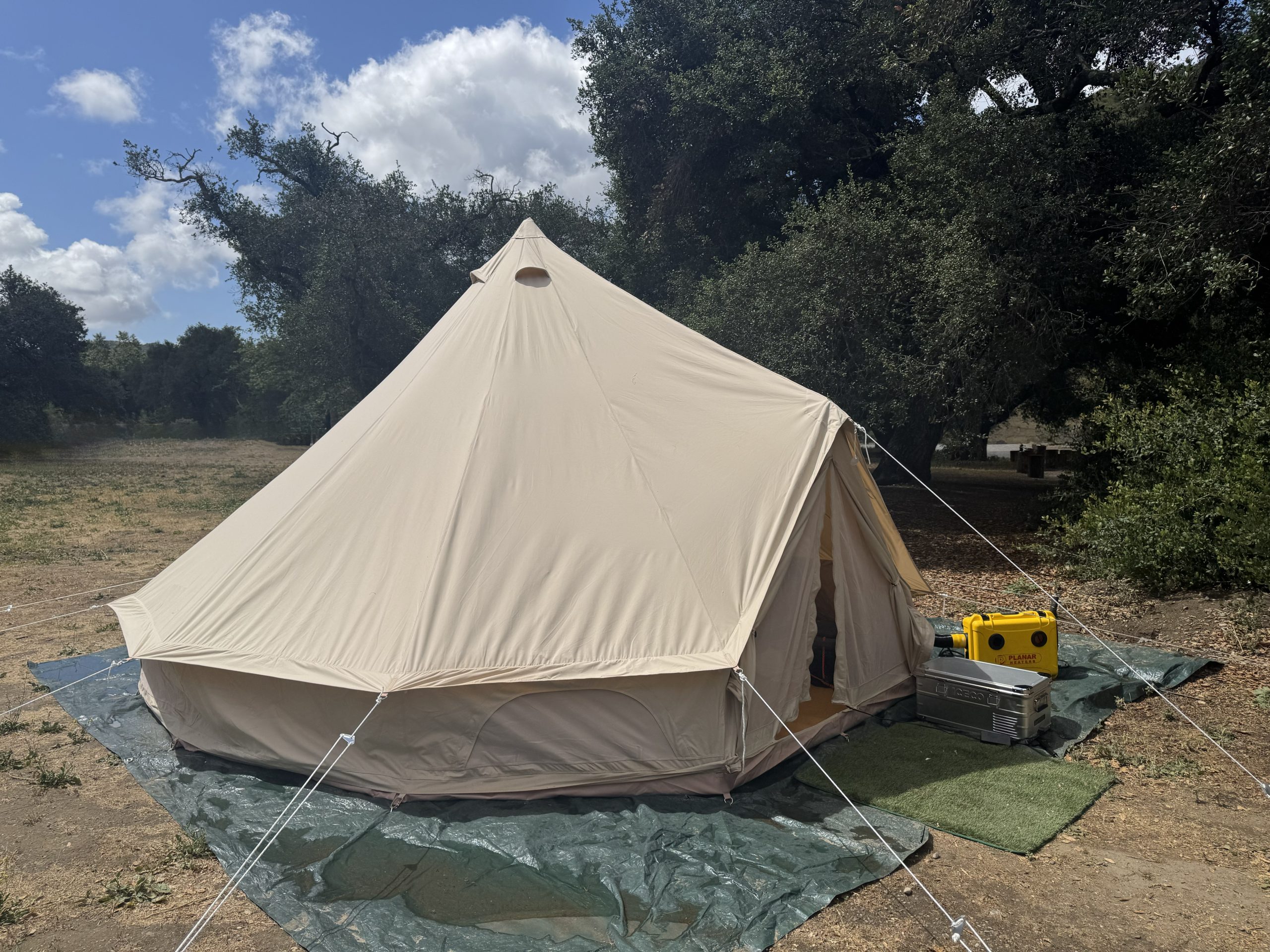
Here is the part of the Stout story almost no consumer knows. Stout runs a second business depending on the same tents they sell to you holding up under real punishment. Specifically, the company sets up around 7,000 bell tents at music festivals across the country, often left standing for months at a time. They also operate a permanent glamping location in George, Washington, where their tents go up in April and stay pitched through August.
This side of the business has never been marketed publicly. Yet it answers the biggest buying barrier in the bell tent category better than any spec sheet. Most competitors design a tent, ship it, and move on. Stout has a tent-operations business with revenue on the line if their hardware fails. Festival guests track mud through dozens of zip cycles a day. Glamping guests open and close doors hundreds of times across a season. Wind, dew, UV, and rough handling hit the entire fleet every single week.
As a result, bell tent durability is not a marketing claim for Stout. It is a survival requirement. When you buy a Stout bell tent, you receive the same hardware grade their own operations depend on. After six months of personal testing both the 5M Pro and the 6M, this backstory shifted my read of the product entirely. You think you know a company, and then you learn the company stress-tests its own gear at a scale almost nobody else does.
Bell Tent Canvas Materials and How Long Do Bell Tents Last by Spec
Bell tent canvas is the single biggest predictor of lifespan. The most durable bell tent canvas options on the market use 100% cotton in the 280 to 360 GSM range, with single-weave or ripstop construction. Stout’s Pro Edition tents land at 340 GSM cotton, which sits squarely in the operator-grade band and explains why the same fabric runs across both consumer and festival fleet units.
Heavier canvas resists UV breakdown longer because more fiber mass stands between the sun and the inside of the tent. However, heavier canvas also weighs more and dries slower, so the right weight depends on your use pattern. For example, weekend campers do fine with 285 GSM (the Stout Ultimate Series). Full-season glamping operators step up to 340 GSM (the Pro Edition) for extra UV margin.
Factory Waterproofing and Why It Matters
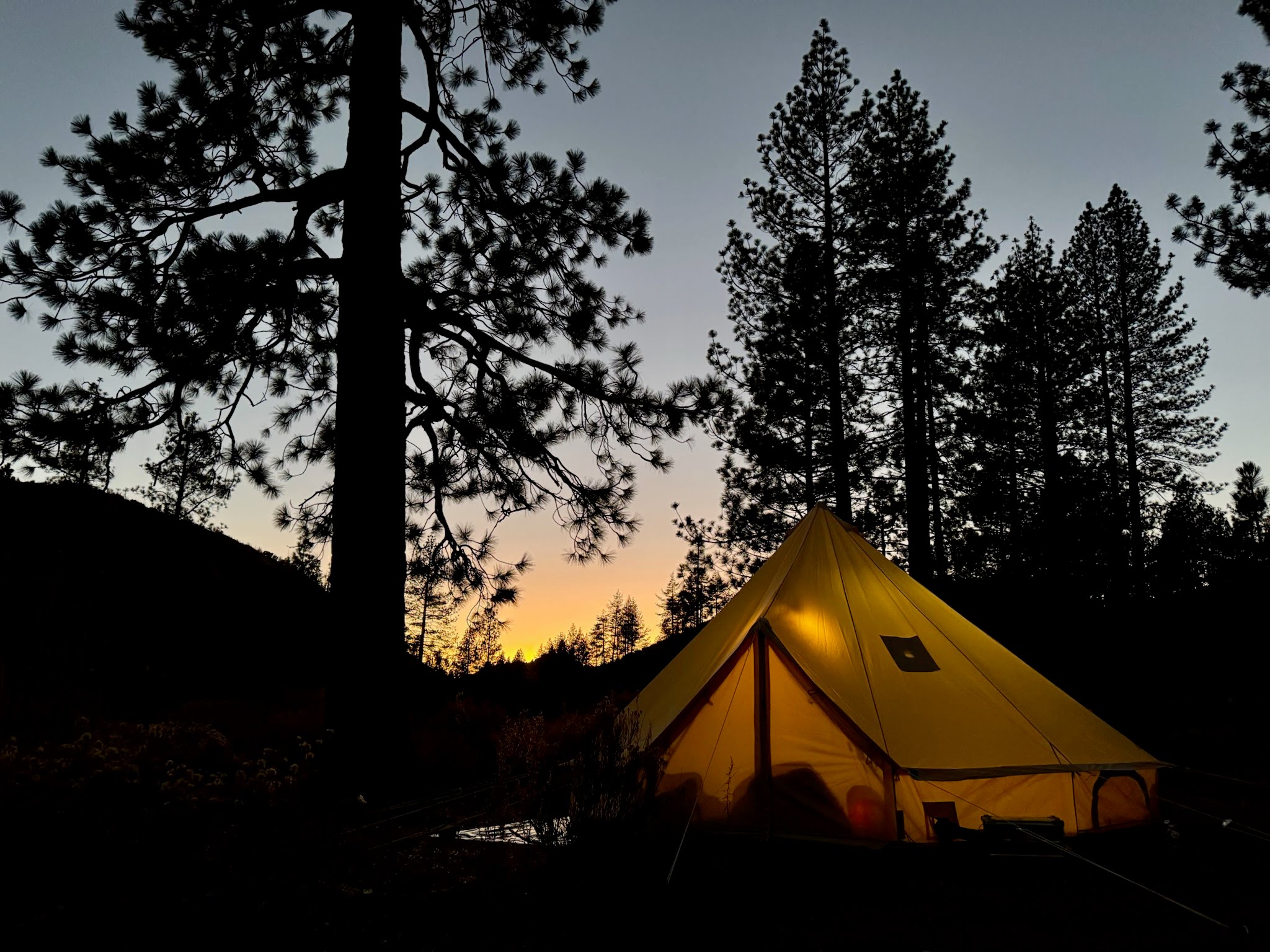
Stout describes the Pro Edition canvas as 100% natural cotton, factory-treated for waterproofing and mildew resistance. Untreated cotton canvas swells when wet, dries slowly, and grows mildew within days if stored damp. By contrast, a properly treated cotton canvas sheds water immediately, resists mildew through normal storage cycles, and pushes UV degradation back by years. After six months of mixed-weather testing, neither tent showed any sign of mildew or water seepage at the seams.
Polycotton vs Cotton vs Polyester
Polycotton blends trade some breathability for lower weight and faster drying. Pure polyester tents are the lightest and cheapest, but they breathe poorly and rarely last beyond five seasons of regular use. Cotton at 280 GSM and above, treated correctly, is still the bell tent material with the longest documented service life. For broader canvas options across brands, our top canvas tents of 2025 roundup compares fabric specs side by side.
Hardware Failure Modes: Where Bell Tents Break First
Bell tents almost never fail because of the canvas itself. Instead, they fail at the hardware points where stress concentrates. After six months in the 5M Pro and 6M, plus reviewing failure data from operator-scale fleets, four hardware components carry most of the risk.
First, zippers. A festival door zipper opens and closes 30 to 50 times a day. Cheap coil zippers strip within one season under the load. YKK heavy-duty coil zippers, like the ones Stout uses, survive multiple seasons of the same cycle. Second, stove jacks. Silicone-coated fiberglass holds up to roughly 500 degrees Fahrenheit at the silicone layer. Aluminized cloth substitutes fail faster and risk scorching the surrounding canvas.
Third, peak rings and pole feet. The peak ring at the top of a bell tent carries the full canvas tension. Cast aluminum rings deform after a few storms. Welded steel peak rings, paired with powder-coated steel pole feet, survive years of repeated tensioning. Fourth, peg points. Grommets blow out first on cheaper tents because the reinforcement patch is too small. Stout uses oversized layered reinforcement at every peg point, which is the same upgrade festival operators specify before they buy at scale. For deeper stove-related hardware reading, see our stove jack safety guide.
Save on Stout Tents
Shop Current Stout Bell Tent Pricing
Stout posts seasonal pricing direct from the factory. Bundle deals on stoves, footprints, and stakes appear regularly throughout the year.
Six Months in the Stout 5M Pro and 6M: What Real Use Showed
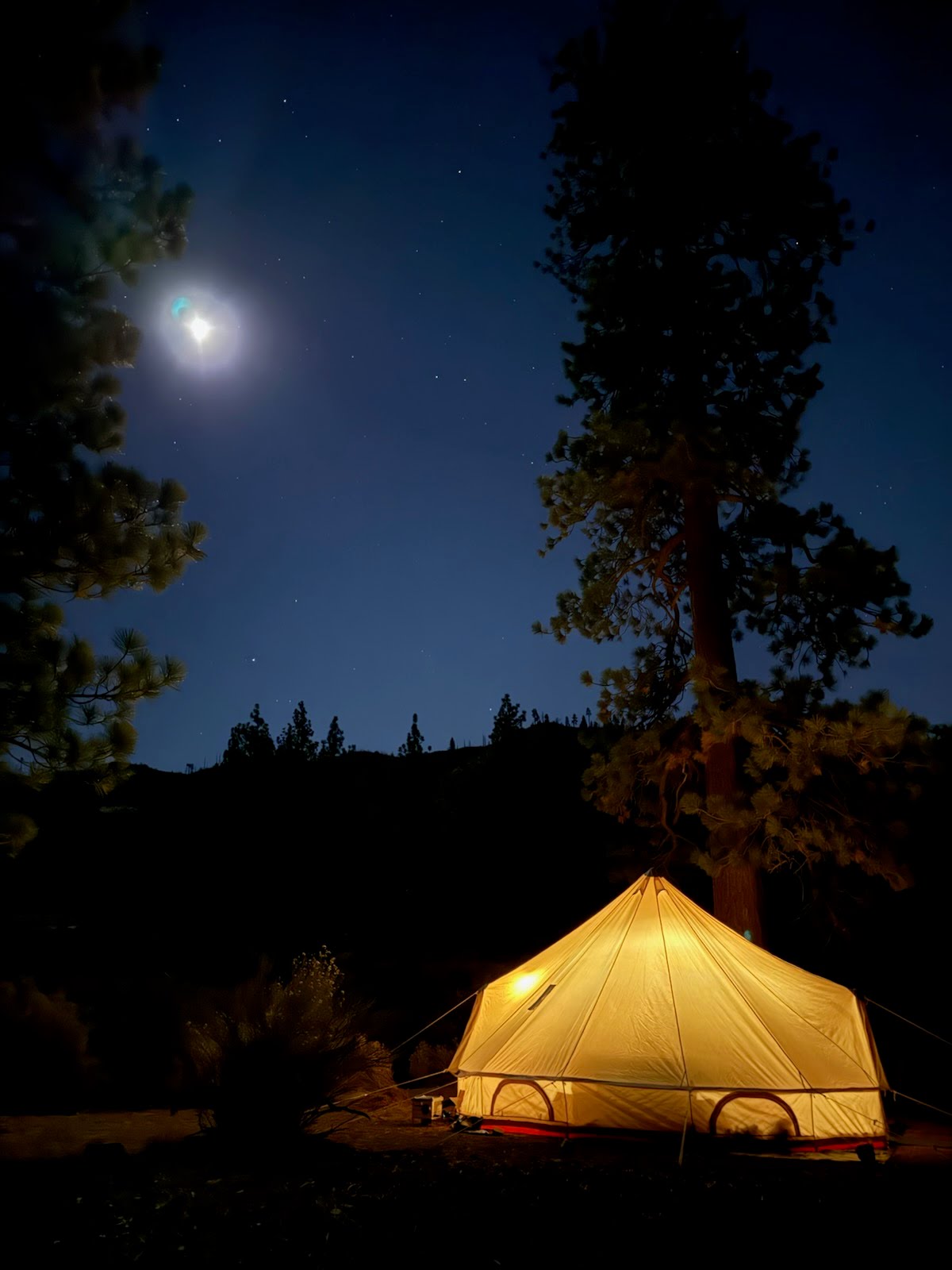
The 5M Pro went up first and ran for three months across spring conditions. The 6M followed and is now past six months of mixed-season use. Both tents pitched in roughly 20 minutes after the first setup learning curve. Wind gusts pushed past 35 mph on two separate trips. Neither tent shifted on its pegs after a basic guy-out routine using all 16 attachment points.
Rain came in heavy on a four-day stretch with the 6M. Water beaded and rolled off the factory-treated cotton canvas without seepage. Inside humidity stayed manageable thanks to the four mesh-backed vents near the peak. After drying and packing wet on one occasion, both tents reopened mildew-free thanks to immediate air-out within 24 hours.
Setup and teardown cycles, which often expose hardware weaknesses, ran cleanly. Zippers stayed smooth after dozens of cycles. The brass center pole shows no corrosion at the joints. Stake points hold tension on the same forged pegs included in the box. For the full long-form takes, see the full 5M Pro field test and the six-month 6M review. The picture matches what Stout’s own retired festival fleet shows: 5 to 8 years of service per unit before retirement, with hardware refurbishment as the typical service item along the way.
How to Make a Bell Tent Last 15 Years
The difference between a five-year tent and a 15-year tent is mostly the owner. First, never store a bell tent damp. Mildew is the number-one lifespan killer because spores embed in the cotton weave and weaken the fiber permanently. After a wet trip, set the tent back up at home or in a garage and air it for 24 to 48 hours before packing.
Second, reproof annually if you camp more than 10 nights a year. A fresh coat of waterproofing keeps the original factory treatment from thinning out. Third, season the canvas before its first heavy rain. Light wetting and drying tightens the weave and improves water shedding. Finally, store the tent in a dry, rodent-free container. Rodents love cotton canvas for nesting material and will chew through a year’s worth of careful waterproofing in one winter.
Stout vs Competitor Bell Tents: Where Stout Pulls Ahead
The closest direct competitors are White Duck Outdoors and Life inTents. White Duck offers similar 280 GSM cotton at a slightly lower price, although hardware grade is one tier below Stout. Life inTents competes on accessory ecosystem more than canvas spec, often pairing modest canvas weights with strong glamping accessory bundles.
Stout pulls ahead in three measurable ways. First, the festival-fleet stress data effectively pre-tests every consumer unit at a scale none of the competitors run. Second, Stout’s standard hardware (YKK zippers, welded peak ring, oversized reinforcements) matches what high-end operators normally upgrade to. Third, Stout’s direct-to-consumer pricing eliminates dealer markup, so the spec-to-dollar ratio favors the buyer. For broader comparison shopping, see our top bell tents of 2025 roundup.
Stout Bell Tent Pros and Cons After Six Months
Pros
- 340 GSM Pro Edition cotton with factory waterproofing resists UV and mildew through full seasons
- YKK heavy-duty coil zippers survive operator-grade cycling
- Welded steel peak ring holds canvas tension without deformation
- Oversized reinforcement patches at every peg point prevent grommet blowouts
- Stout’s own 7,000-tent festival fleet provides real durability data
- Setup time under 20 minutes once the routine is learned
- Direct factory pricing without dealer markup
- Lifetime manufacturer warranty against defects, plus lifetime customer support
Cons
- Cotton canvas weighs more than synthetic equivalents (5M Pro Double-Door weighs 97.2 lb per Stout’s spec sheet)
- Drying time after heavy rain runs 12 to 24 hours minimum
- Higher upfront price than entry-level polyester bell tents
- Annual reproofing required for heavy users
- Stove not included with base purchase
Final Verdict
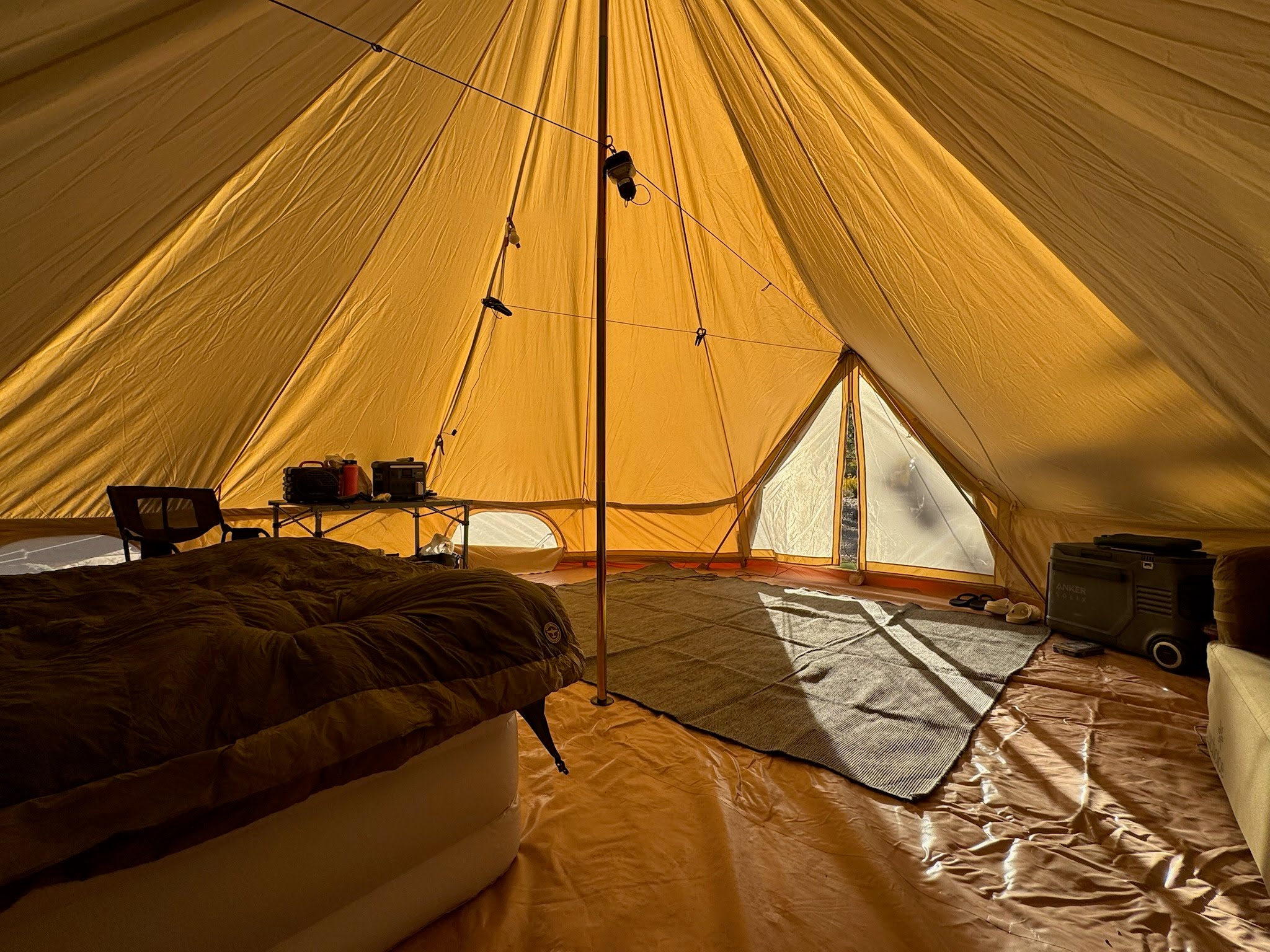
If you want a bell tent built to last 10 to 15 years, Stout’s Pro Edition combination of 340 GSM single-weave cotton with factory waterproofing, YKK zippers, brass center pole, and operator-grade reinforcement is the strongest spec-to-price package on the bell tent market today. The hardware is not marketing copy. It is the same hardware Stout depends on across 7,000 festival deployments and a permanent Washington glamping camp.
Trade-offs are real, however. Cotton weighs more than polyester. Annual reproofing is part of the deal if you camp heavily. Buyers who want a single-season festival shelter or a 5-pound backpacking option should look elsewhere. Polyester pop-ups handle the role better.
On value, the cost-per-night math favors Stout almost immediately. A 5M Pro priced in the $900 to $1,400 range, spread over 15 years of recreational use, lands near $60 to $95 per year before any glamping or rental income offsets. By comparison, a $300 polyester tent replaced every two seasons runs $150 per year with no resale value.
If the Stout fit feels right for your use pattern, the 5M Pro and 6M are the two strongest models in the lineup. For broader landscape context before you commit, the top bell tents of 2025 roundup compares the rest of the field side by side.
Ready to Buy?
Check Today’s Price on Stout Bell Tents
Stout ships direct from the factory with a lifetime warranty against manufacturing defects. Sizes 4M, 5M, and 6M in stock, plus accessories, stoves, and footprints.
Frequently Asked Questions
How long does a canvas bell tent last with regular use?
A well-built cotton canvas bell tent lasts 10 to 15 years under recreational use, assuming annual reproofing, dry storage, and basic seam care. Heavy festival or glamping use shortens lifespan to 5 to 8 years because of the dramatic increase in setup cycles and UV exposure. So how long do bell tents last in practice? Bracket the answer to your use pattern first.
What is the most durable bell tent material on the market?
The most durable bell tent material is 280 to 360 GSM cotton canvas treated with Sunforger or an equivalent water, mildew, and UV finish. Heavier weight resists UV breakdown longer, while the treatment prevents mildew and seam leakage during normal storage cycles.
Are Stout bell tents waterproof out of the box?
Yes, Stout bell tent waterproof performance is rated from day one because Stout describes the Pro Edition canvas as 100% natural cotton, factory-treated for waterproofing and mildew resistance. After the first season, light reproofing every 12 months keeps the canvas performing at its rated level.
How long does a Stout bell tent last under heavy festival use?
Stout’s own festival fleet sees 5 to 8 years of service before retirement, despite seasonal exposure running roughly 10 times the load of recreational use. Most retired festival tents still pass canvas integrity checks, with hardware refurbishment as the typical service item.
Do bell tents survive snow and wind storms?
Quality bell tents with a steel center pole and full guy-out tolerate wind gusts past 35 mph and several inches of wet snow without damage. Light snow brushing during storms prevents accumulation at the peak, which is the only meaningful winter risk.
What GSM canvas is best for a bell tent?
For recreational use, 280 to 300 GSM cotton offers the best balance of UV resistance, weight, and breathability. Full-season glamping operators sometimes step up to 320 GSM or heavier, accepting the extra pack weight in exchange for longer canvas life.