


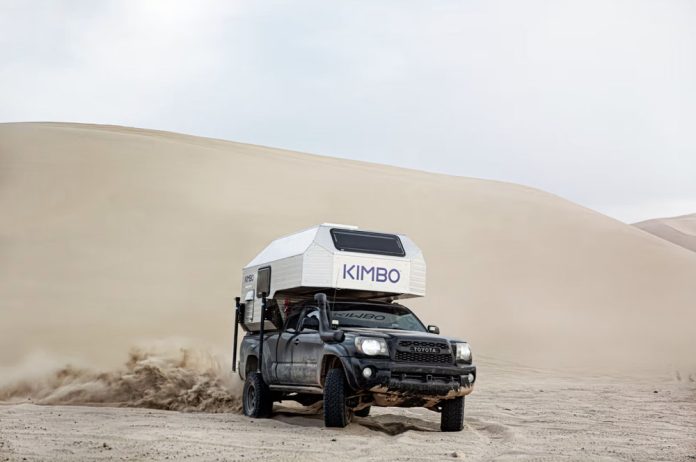

Editor’s note: I’ve been camping since I was a kid, starting in tents and eventually moving to a bumper pull camper as an adult. These days I travel with a fifth wheel to accommodate my family, and I almost always boondock — hookups and crowded campgrounds aren’t really my style. I prefer the peace and quiet you only get when you’re genuinely off the grid. For family trips, the extra space of a fifth wheel is non-negotiable. For solo or couples boondocking, though, a compact rig like the Kimbo 6 hits a sweet spot: you get real off-grid comfort without giving up access to the remote spots worth visiting.
Boondocking with a truck camper gives you access to the kind of campsites most people never see: empty deserts, high-alpine meadows, remote forest roads, and coastal bluffs with no neighbors in sight. Unlike campground camping, you’re not paying for a hookup or sharing a fire ring wall-to-wall with strangers. Instead, you’re relying entirely on what you brought with you, which means every system on your rig needs to earn its spot. The more efficiently your camper manages power, water, and temperature, the longer you stay out and the better you feel doing it.
Getting boondocking right takes more than a good location. It comes down to choosing a truck camper with the right combination of off-grid systems and understanding how to use each one effectively. Whether you’re planning weekend boondocking trips into BLM land or extended remote camping lasting weeks, the principles are the same: manage your resources, control your climate, and set up systems working together without demanding constant attention. The Kimbo 6, starting at $27,990, is one of the better-equipped platforms for this, and we’ll use it throughout this guide as a working example of what a purpose-built off-grid truck camper looks like in practice.
Quick Verdict: Boondocking with a truck camper rewards preparation and smart system design. The Kimbo 6 pairs a frameless aluminum shell with R-5 insulation, 120W roof-mounted solar, and a modular upgrade path including up to 2,074Wh of lithium battery storage, a Dickinson Marine propane heater, and a Dometic 44L 12V refrigerator. Starting at $27,990, it’s a capable off-grid platform for overlanders who want serious capability without the bulk of a traditional hard-sided camper.
Last updated: May 2026 | 10 min read
In This Guide
- Why Truck Campers Are Built for Boondocking
- Kimbo 6 Key Specs at a Glance
- Managing Power Off-Grid
- Water Strategy for Extended Remote Camping
- Climate Control and Four-Season Comfort
- Shell Construction and Why It Matters for Boondocking
- Campsite Setup and Modular Systems
- Kimbo 6 vs. Traditional Truck Campers for Off-Grid Use
- Pros and Cons
- Final Verdict
- Frequently Asked Questions
Why Truck Campers Are Built for Boondocking
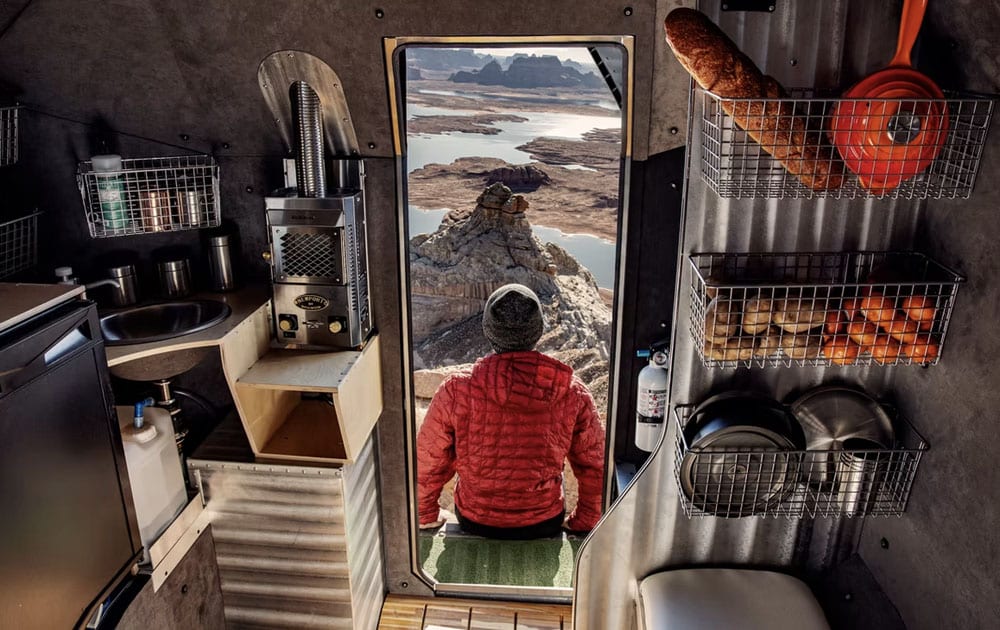
Truck campers occupy a specific niche in the overlanding world: they’re compact enough to go where fifth-wheels and travel trailers stall out, yet spacious enough to sleep, cook, and live in comfortably for days or weeks at a stretch. Because they sit in the bed of a truck rather than trailing behind one, you keep full four-wheel-drive capability, opening up dirt roads, rutted two-tracks, and rocky approaches ending any towing trip immediately. This access is the foundation of serious boondocking with a truck camper.
However, access alone doesn’t make boondocking comfortable. Once you’re parked at a site with no hookups, you’re running entirely off what’s onboard. Solar panels have to supply enough power for lights, ventilation, and refrigeration. Your water supply has to stretch across multiple days. Your heating system has to keep the interior livable when temperatures drop overnight, which they often do at higher elevations. Choosing a camper with well-integrated off-grid systems means the difference between thriving in a remote location and cutting the trip short after two days. For a deeper look at how the Kimbo’s construction sets it apart from standard builds, see our breakdown of the exterior design features setting the Kimbo Camper apart.
Kimbo 6 Key Specs at a Glance
| Specification | Details |
|---|---|
| Starting Price | $27,990 |
| Dry Weight | 980–1,300 lbs fully built |
| Shell | Frameless 0.1″ 5052 aluminum monocoque, riveted and sealed |
| Insulation | R-5 foam (walls and ceiling) |
| Loft Bed | 75″L x 54″W, 8″ memory foam/spring hybrid mattress |
| Interior Height | 75″ |
| Solar (standard) | 120W Renogy ShadowFlux roof panel |
| Battery (upgraded) | Bluetti Elite 200 – 2,074Wh, 2,600W output |
| Ventilation | MaxxAir Deluxe 7500K – 10-speed reversible with rain shield |
| Heating (optional) | Dickinson Marine propane heater ($2,350 installed) |
| Refrigerator (optional) | Dometic 44L 12V ($3,850 with power upgrade package) |
| Truck Compatibility | Most mid-size and full-size trucks |
| Build Time | 4–6 weeks |
Managing Power Off-Grid
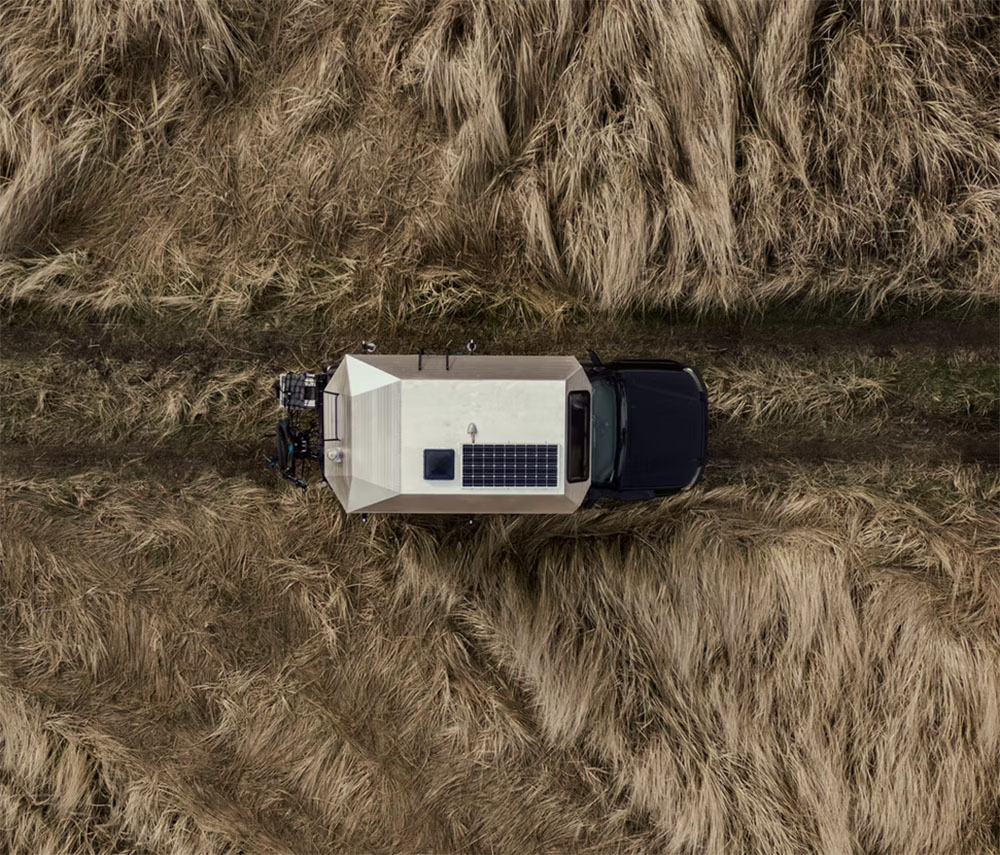
Power management is the central discipline of boondocking with a truck camper. The Kimbo 6 ships standard with a 120W Renogy ShadowFlux roof panel. ShadowFlux technology maintains output under partial shade better than conventional rigid panels, which matters when you’re parked under trees or in broken cloud cover. One 120W panel handles lights, the MaxxAir fan, and USB charging in fair conditions, but won’t sustain a refrigerator without supplemental capacity. The Refrigerator and Off-Grid Power Upgrade adds a second 100W panel and the Bluetti Elite 200 battery, bringing total usable capacity to 2,074Wh. At typical off-grid consumption rates, 2,074Wh supports refrigeration, lighting, and device charging for two to three days without solar input. On a clear day, the 220W combined array recharges fast enough to offset normal daily use. Owners wanting additional flexibility add a third panel or connect portable fold-away panels via the optional SAE exterior input port ($260 installed). For a broader look at what to prioritize when evaluating off-grid solar setups, see our guide to the top off-grid features to look for in a truck camper.
Featured Truck Camper
Kimbo 6 — Built for Off-Grid Living
Frameless aluminum construction, R-5 insulation, and a modular upgrade path designed for serious boondocking. Starting at $27,990.
Water Strategy for Extended Remote Camping
Water is typically the first constraint limiting how long you stay out. Most boondockers carry five to fifteen gallons for a solo trip, stretching the supply across drinking, cooking, and basic hygiene. The Kimbo 6 includes a kitchen sink module ($1,790) with a 2.9-gallon undercounter fresh water tank and a smart-touch pressurized faucet. For shorter trips, the onboard tank covers basic needs. For extended remote camping, most owners supplement with exterior RotoPax containers in two- or five-gallon configurations. The optional Joolca Hottap Outdoor Shower System ($1,660 installed) adds on-demand hot water via propane rather than an electric heating element, conserving battery power where it matters most. Carrying a compact water filter alongside your tanks also gives you flexibility to refill from streams and springs where regulations permit.
Climate Control and Four-Season Comfort
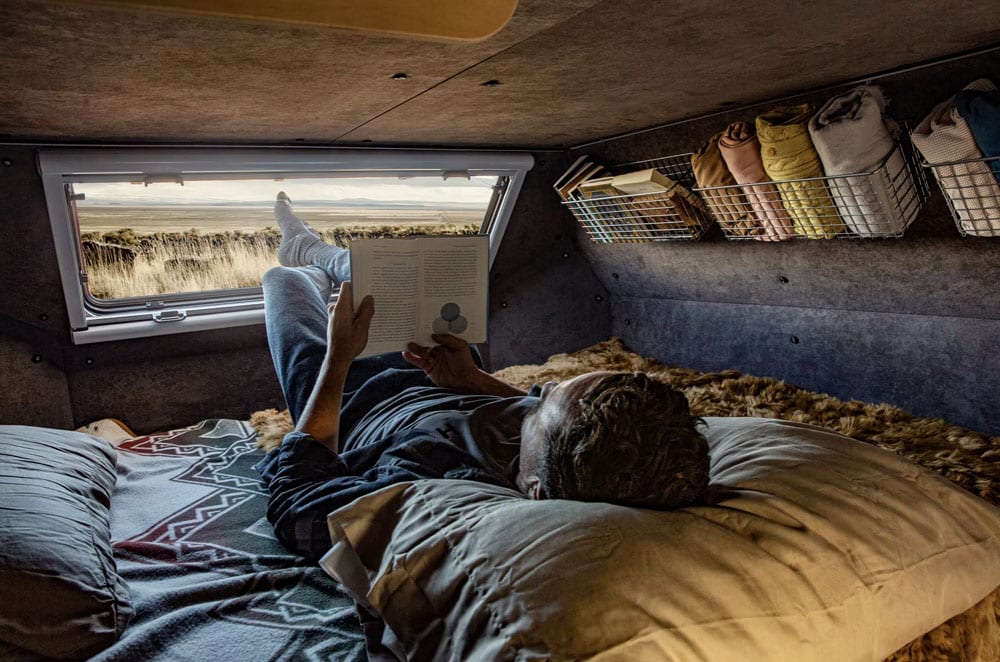
Temperature is the variable most people underestimate when planning boondocking trips. Desert nights drop into the 30s even in summer. Alpine sites at 10,000 feet see freezing temperatures year-round. A truck camper without serious thermal management either forces you into campgrounds or sends you home early.
Heating in Cold Conditions
The Kimbo 6 uses the Dickinson Marine propane heater as its primary heat source, installed with a weatherproof exterior chimney and a fully integrated propane line. Unlike electric heaters, the Dickinson vents combustion gases outside the camper, eliminating interior condensation and CO risk. It also draws no battery power during operation, which is critical when managing a limited electrical budget overnight. A 30-pound propane tank upgrade delivers substantially more runtime than the standard 20-pound tank. Real-world owners report maintaining 70°F interior temperatures with the Dickinson running in 25°F ambient conditions.
Ventilation and Cooling
Warm-weather boondocking relies on airflow management. The MaxxAir Deluxe 7500K fan operates at 10 speeds in both intake and exhaust modes, so you pull cool air in during the evening and exhaust hot air during the day. Its built-in rain shield means you leave it running during light rain without flooding the interior. For situations where passive ventilation isn’t enough, the Kimbo 6 includes a pre-installed A/C passthrough and the optional shore-powered air conditioning system ($1,830 installed). Dedicated boondockers typically rely on fan ventilation and strategic campsite positioning in the shade, since the A/C option requires shore power or a generator to run.
Shell Construction and Why It Matters for Boondocking
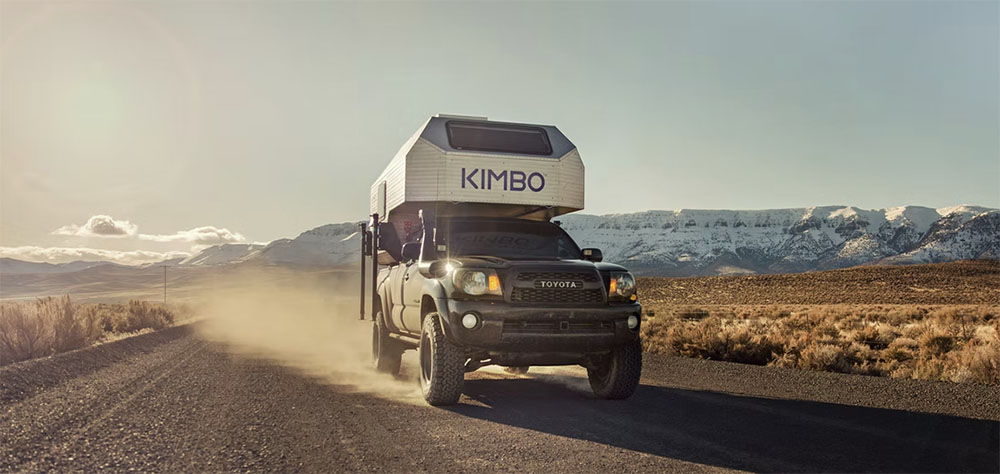
Most traditional truck campers use wood-framed construction with fiberglass skins bonded to foam insulation. This approach builds reasonably well under factory conditions but becomes a long-term liability when exposed to vibration, moisture, and temperature cycling on rough roads. Delamination, rot, and structural flex all degrade a wood-framed camper over time, often quietly, until a wall buckles or a window seal fails.
The Kimbo 6 uses a frameless 0.1″ 5052 aluminum monocoque shell, riveted and sealed as a single-material structure. Aluminum doesn’t absorb moisture, doesn’t rot, and flexes and recovers consistently without the stress fractures affecting fiberglass. R-5 foam insulation lines the walls and ceiling, and Arctic Tern double-pane windows with blackout shades handle both thermal performance and light blocking. For a closer look at how the build quality translates to real-world durability, see our full Kimbo Camper review and our detailed examination of the interior features making the Kimbo Camper easy to live in.
Campsite Setup and Modular Systems
Arriving at a boondocking site and getting settled quickly matters more than most people expect, especially when you’ve been driving for hours and the light is fading. The Kimbo 6 uses a modular system approach minimizing the steps between parking and being fully set up. Removable jack legs with a quick-release kit stabilize the camper in minutes. The Thule 8.5-foot side-mount awning ($1,980) deploys rapidly for shade and outdoor living space. Interior modules, including the swivel table and storage system ($1,120) and the utility storage and seating platform ($1,220), stay in place during travel and convert immediately to functional living surfaces on arrival. Because everything is factory-installed rather than pieced together from aftermarket components, the systems work together without compatibility issues common with custom builds. Those planning seasonal trips should also read our guide on seasonal camping with the Kimbo Camper from winter to summer adventures for tips on adjusting your setup across conditions.
Ready to Go Off-Grid?
Build Your Kimbo 6 Configuration
Choose your modules, configure your power system, and reserve your build slot. 4–6 week lead time with a 2-year transferable warranty.
Kimbo 6 vs. Traditional Truck Campers for Off-Grid Use
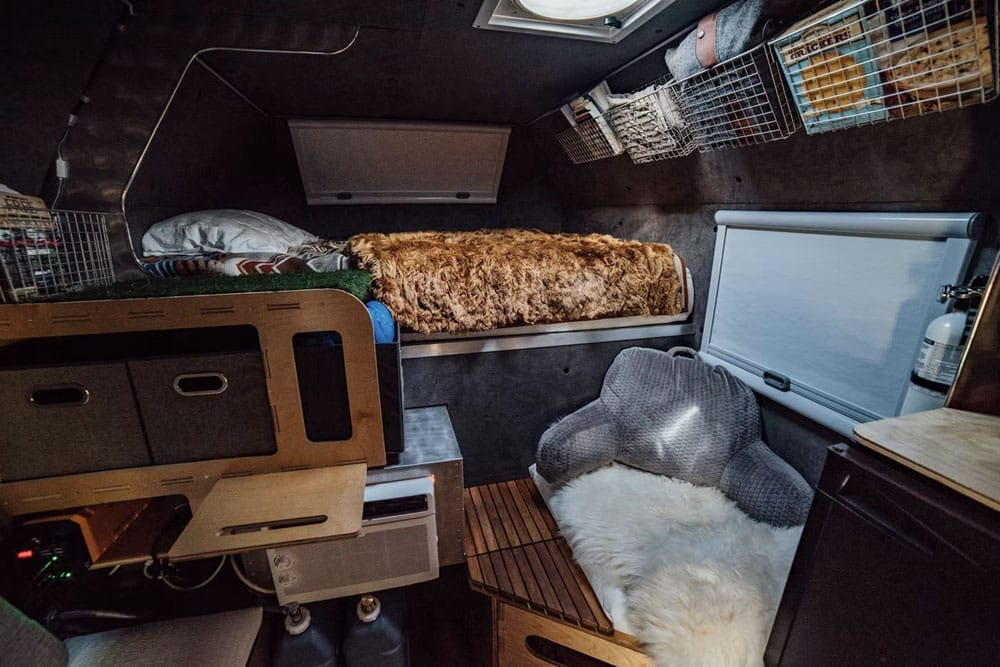
Traditional hard-sided truck campers from manufacturers like Lance, Northstar, or Adventurer average between 1,500 and 2,800 pounds at full build-out, use wood framing with fiberglass shells, and often include built-in fresh water tanks in the 25–40 gallon range. For buyers wanting a fully plumbed RV-style experience with onboard shower, toilet, and dedicated kitchen, these rigs deliver more out of the box. The trade-off is weight, which reduces payload margin on mid-size trucks and limits access on softer terrain. The Kimbo 6 takes the opposite approach: at 980–1,300 pounds fully built, it keeps your truck’s payload safe and maintains full suspension clearance for technical terrain. The modular build means you add only the systems you need rather than paying for features you’ll never use. Buyers specifically needing an onboard toilet or larger fresh water capacity will find traditional rigs better suited, but for boondocking with a truck camper on remote and technical routes, the Kimbo 6’s weight advantage translates directly into more and better campsites.
Pros and Cons
Pros
- Frameless 5052 aluminum monocoque shell resists delamination and moisture damage affecting wood-framed competitors
- R-5 insulation with Arctic Tern double-pane windows maintains interior temps effectively in cold and hot conditions
- Modular upgrade path lets you configure exactly what you need, from basic weekend rigs to fully outfitted off-grid platforms
- Bluetti Elite 200 upgrade delivers 2,074Wh of usable lithium storage, roughly double the capacity of most standard truck camper batteries
- Dickinson Marine heater vents combustion gases externally, eliminating condensation and CO risk
- 980–1,300 lb dry weight keeps mid-size truck payload margins safe and preserves off-road suspension performance
- Compatible with most mid-size and full-size trucks including Tacoma, F-150, Ram, and GMC Sierra
Cons
- Starting price of $27,990 climbs quickly once refrigerator, battery upgrade, heater, and shower are added
- No built-in onboard toilet option
- Onboard fresh water supply (2.9-gallon standard tank) requires supplemental exterior containers for extended trips
- 4–6 week build lead time means no same-week availability
- Full-size trucks need the optional jack bracket extension kit ($780) for proper fit
- A/C option is shore-power dependent, impractical at true remote boondocking sites without a generator
Final Verdict
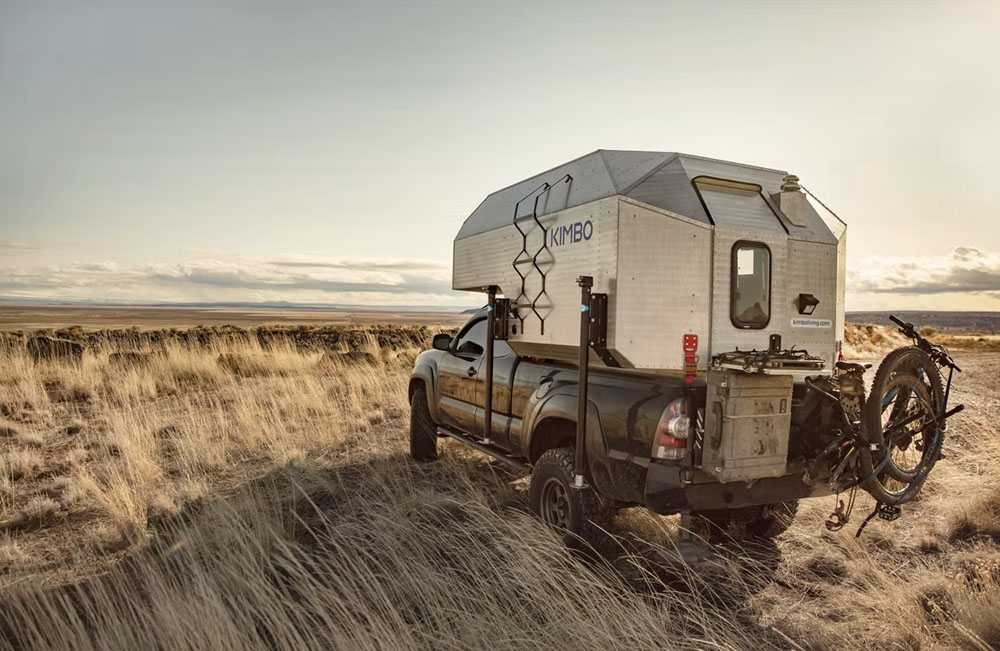
Boondocking with a truck camper comes down to how well your rig manages the three fundamentals: power, water, and temperature. The Kimbo 6 handles all three with a thoughtfully designed system architecture. The aluminum monocoque shell holds heat better than fiberglass in cold conditions and sheds water without the long-term delamination risk of bonded construction. The solar and battery system scales from a basic 120W/sealed battery setup to a 220W/2,074Wh lithium platform capable of running refrigeration for two to three days without sun. The Dickinson Marine heater gives you genuine four-season boondocking capability without relying on shore power. For solo overlanders and couples wanting serious off-grid capability in a compact package, this is one of the stronger options at this price point.
Buyers needing an onboard toilet or a 25+ gallon fresh water system will find traditional hard-sided rigs like the Lance 825 or Northstar Laredo SC better suited to those requirements, though both run 1,500–2,500 pounds fully loaded and narrow your access on soft and technical terrain. The Kimbo 6’s weight advantage translates directly into better campsite access for boondocking with a truck camper on demanding routes.
Value-wise, the Kimbo 6 is not cheap. However, the aluminum construction and modular design are built for longevity. One documented owner reported only $75 in major repair and upkeep costs over four years of full-time use. A fully outfitted boondocking configuration with heater, refrigerator, and upgraded battery runs approximately $35,850. At this figure, the Kimbo 6 competes directly with comparable hard-sided builds while offering a significantly lighter and more durable platform. If maximizing time in remote locations is the goal, it’s worth serious consideration. For more on how the Kimbo supports an extended remote lifestyle, see our piece on how the Kimbo Camper supports simple mobile lifestyles.
Frequently Asked Questions
What trucks are compatible with the Kimbo 6 for boondocking?
The Kimbo 6 fits most mid-size and full-size trucks with typical suspension adjustments, including the Toyota Tacoma (2nd and 3rd gen), Ford F-150, Ram 1500/2500/3500, Chevy Silverado, and GMC Sierra. Full-size trucks often need a raised platform or the optional jack bracket extension kit to clear cab and bed rail dimensions. A fitment consultation is recommended for the Jeep Gladiator, Ford Maverick, and Rivian R1T. Kimbo offers a downloadable fit guide for detailed compatibility by model.
How long does the Kimbo 6 battery last when boondocking with a truck camper?
With the standard 12V sealed battery, expect one to two days of off-grid use running lights, the MaxxAir fan, and device charging before needing solar recharge. Upgrading to the Bluetti Elite 200 at 2,074Wh extends off-grid runtime to two to three days without solar input at typical consumption rates. Adding the Dometic refrigerator increases daily draw by approximately 400–600Wh, so the full refrigerator and power upgrade package is strongly recommended for boondocking trips where you want continuous refrigeration.
Is the Kimbo 6 genuinely four-season capable for remote camping?
Yes, with the right configuration. The R-5 insulated shell and Arctic Tern double-pane windows hold interior temperature well in cold and hot conditions alike. The Dickinson Marine propane heater, when installed, delivers dry heat without condensation and has been documented maintaining 70°F interiors at 25°F ambient temperatures. For serious winter boondocking at sub-freezing temperatures, the propane heater is a near-essential addition rather than an optional one.
How much does a fully equipped Kimbo 6 cost for off-grid camping?
The base Kimbo 6 Ready-to-Camp starts at $27,990. Adding the Dickinson Marine propane heater ($2,350), the Refrigerator and Off-Grid Power Upgrade ($3,850), and the Joolca outdoor shower ($1,660) brings a well-equipped boondocking configuration to approximately $35,850 before additional accessories. Build time runs four to six weeks from order confirmation.
Our articles might have affiliate links and the occasional sponsored content, but don’t sweat it – if you buy something, we get a little kickback at no extra cost to you, and we only hype products we truly believe in!