


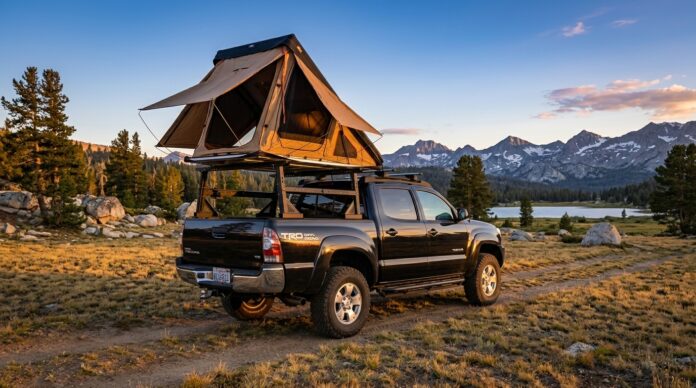

Quick Facts:
- Product: Featherlyte Outdoors Aircrest 2-Person Rooftop Tent
- Capacity: 2+ persons, 57-inch interior height
- Weight: 112 pounds
- Dimensions: 86 x 56 x 57 inches open; 7-inch profile closed
- Shell: PP hollow board hardshell, clamshell-style
- Fabric: 600D Oxford polyester body, 1680D PVC-coated rainfly
- Mattress: 2 cm EPE foam over 5 cm high-density sponge
- Included: ladder, mattress, iPad pouch, USB LED strip, mounting hardware
- Price: $1,799 at Spirit of 1876
- Best for: daily drivers wanting a sub-150-pound serviceable hardshell
8 min read
In This Review
- Featherlyte Aircrest Overview
- Key Specs at a Glance
- Build Quality and Hardshell Construction
- Inside the Aircrest: Fabric, Mattress, Accessories
- What Makes This Lightweight Rooftop Tent Serviceable
- Install and Daily-Driver Use
- Aircrest vs. ROKK OVRLNDR 2P
- Pros and Cons
- Final Verdict
- Frequently Asked Questions
Featherlyte Aircrest Overview: A Lightweight Rooftop Tent for Daily Drivers
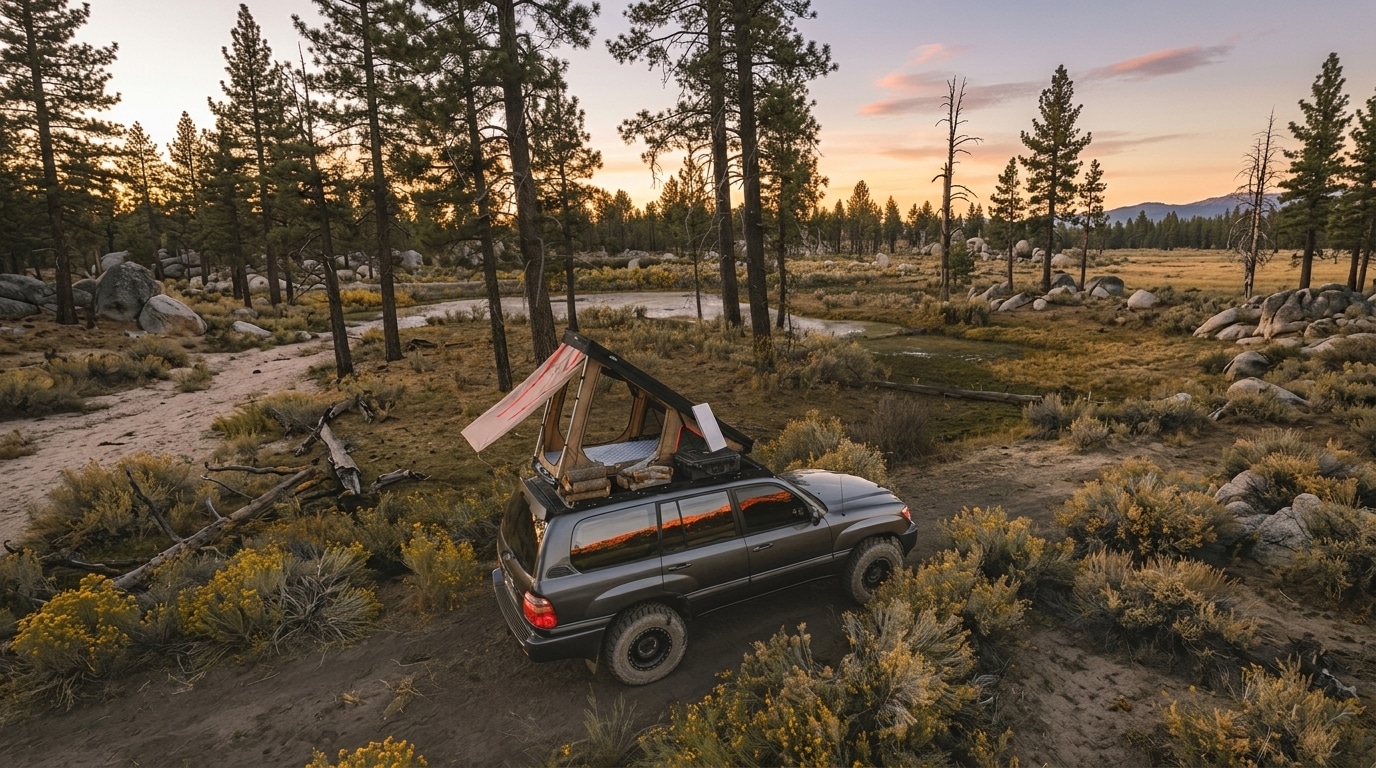
The Featherlyte Aircrest is a 112-pound lightweight rooftop tent built for overlanders who want hardshell convenience without trading away their daily-driver fuel economy. At $1,799 through Spirit of 1876, it sits at the affordable end of the hardshell category. The headline feature most owners care about is the engineering bet behind the product: every component is replaceable. Last month I flew from California to Colorado to inspect the Aircrest in person at Spirit of 1876, where I walked the rooftop tent floor and put hands on the Aircrest specifically.
This Featherlyte Aircrest review combines the hands-on showroom inspection with verified specs from Featherlyte Outdoors. We also pulled field observations from Expedition Portal, IH8MUD, and the r/rooftoptents community. For shoppers comparing this lightweight rooftop tent against the broader market, our best rooftop tents of 2025 roundup covers competing hardshell and softshell options.
Featherlyte built the Aircrest around two design priorities. First, keep the weight low so non-dedicated rigs are able to carry it. Second, engineer the tent so every part bolts on instead of rivets. As a result, the Aircrest qualifies as both a clamshell rooftop tent and a fully serviceable rooftop tent in one package. I confirmed solo-lift weight in the warehouse, and the bolted-not-riveted approach lets owners replace fabric, hinges, or hardware years down the road.
Although the tent is brand-new for 2026 and long-term owner data is still building, early signals from forum threads and the showroom inspection point in the same direction. Before reading further, first-time hardshell buyers should review our hardtop rooftop tent buyer’s guide to understand category basics.
Key Specs at a Glance
| Specification | Details |
|---|---|
| Sleep capacity | 2+ persons |
| Weight | 112 pounds |
| Open dimensions (L x W x H) | 86 x 56 x 57 inches |
| Closed dimensions | 86 x 56 x 7 inches |
| Interior height | 57 inches |
| Shell material | PP hollow board |
| Body fabric | 600D Oxford polyester, waterproof |
| Rainfly fabric | 1680D PVC-coated woven Oxford |
| Mattress | 2 cm EPE foam over 5 cm high-density sponge |
| Included accessories | Ladder, mattress, iPad pouch, USB LED strip, mounting hardware |
| Serviceability | All major parts replaceable; bolted, not riveted |
| Price | $1,799 at Spirit of 1876 |
Buy From Spirit of 1876
Featherlyte Aircrest 2-Person Rooftop Tent
Spirit of 1876 carries the Aircrest in Colorado with a deep rooftop tent inventory. Listed at $1,799.
Build Quality: Hardshell Construction in a Lightweight Rooftop Tent
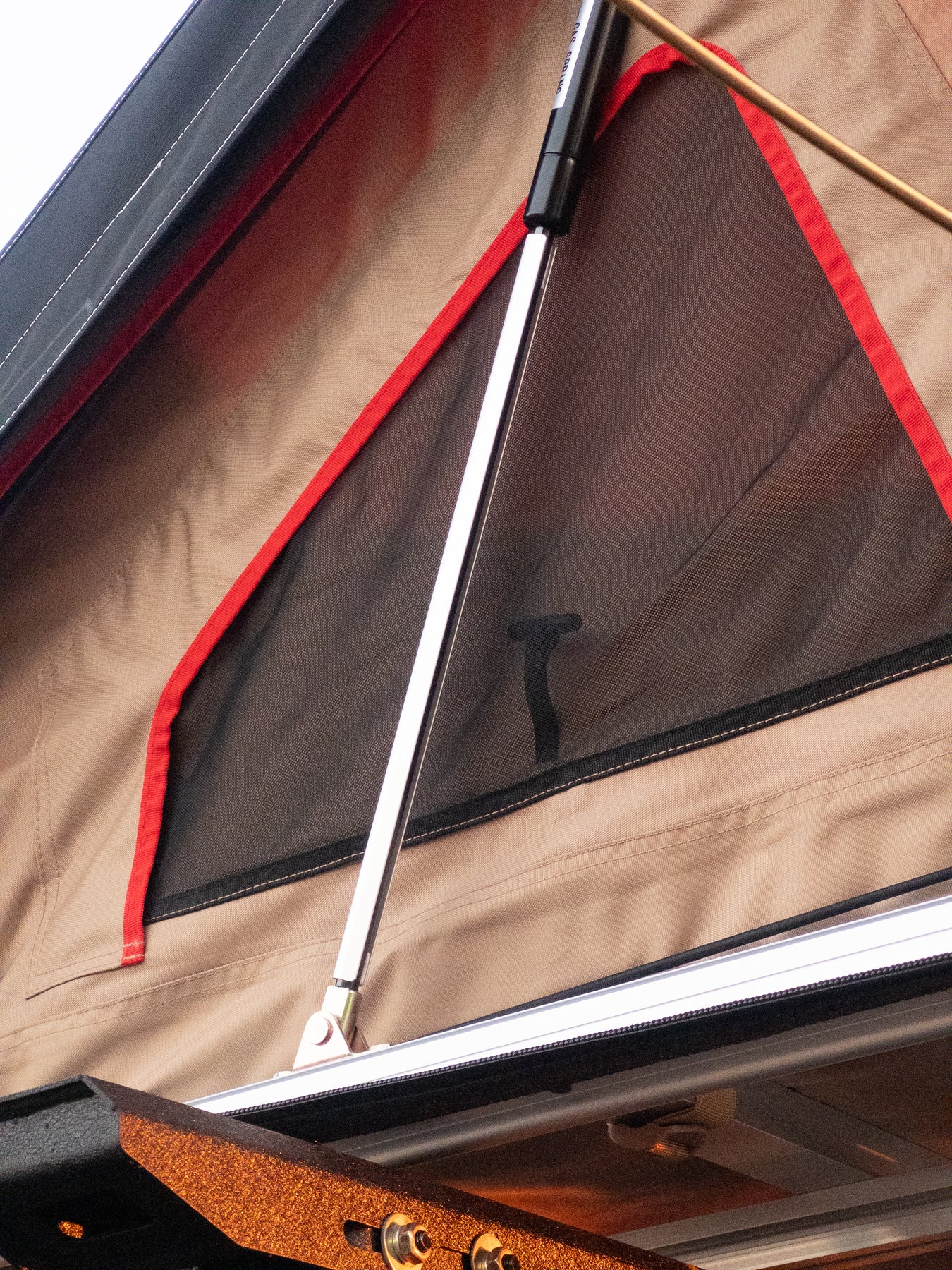
Featherlyte uses a PP (polypropylene) hollow board for the Aircrest shell. On the Spirit of 1876 showroom floor, the panel felt rigid when I pressed against it. No give around the latches or hinges. Most competing hardshells use ABS, aluminum, or composite materials. PP hollow board is lighter and cheaper than those alternatives. Some buyers question its long-term UV resistance after five Colorado summers. For now, however, the Aircrest’s shell behaves like a proper hardshell rather than a clamshell wrapper over canvas.
The 86-inch length and 56-inch width make this a true two-person clamshell rooftop tent for most adults. However, couples taller than 6 feet 1 inch should look at wider options. The 7-inch closed profile matters more than many first-time buyers realize. Many competing hardshells stack 10 to 14 inches above the roof rack when closed. The extra height crushes fuel economy and turns drive-through fast food into an embarrassment. By contrast, the Aircrest’s low profile keeps your rig closer to stock height.
Latch quality on the showroom unit felt solid. Featherlyte has been quiet on hinge specifications, although the visible hardware looked higher grade than the zinc-plated steel I see on budget hardshells. Owners in the Northeast and Pacific Northwest should expect competitive corrosion resistance, although long-term salt-air data is not yet published.
Inside the Aircrest: Fabric, Mattress, and Accessories
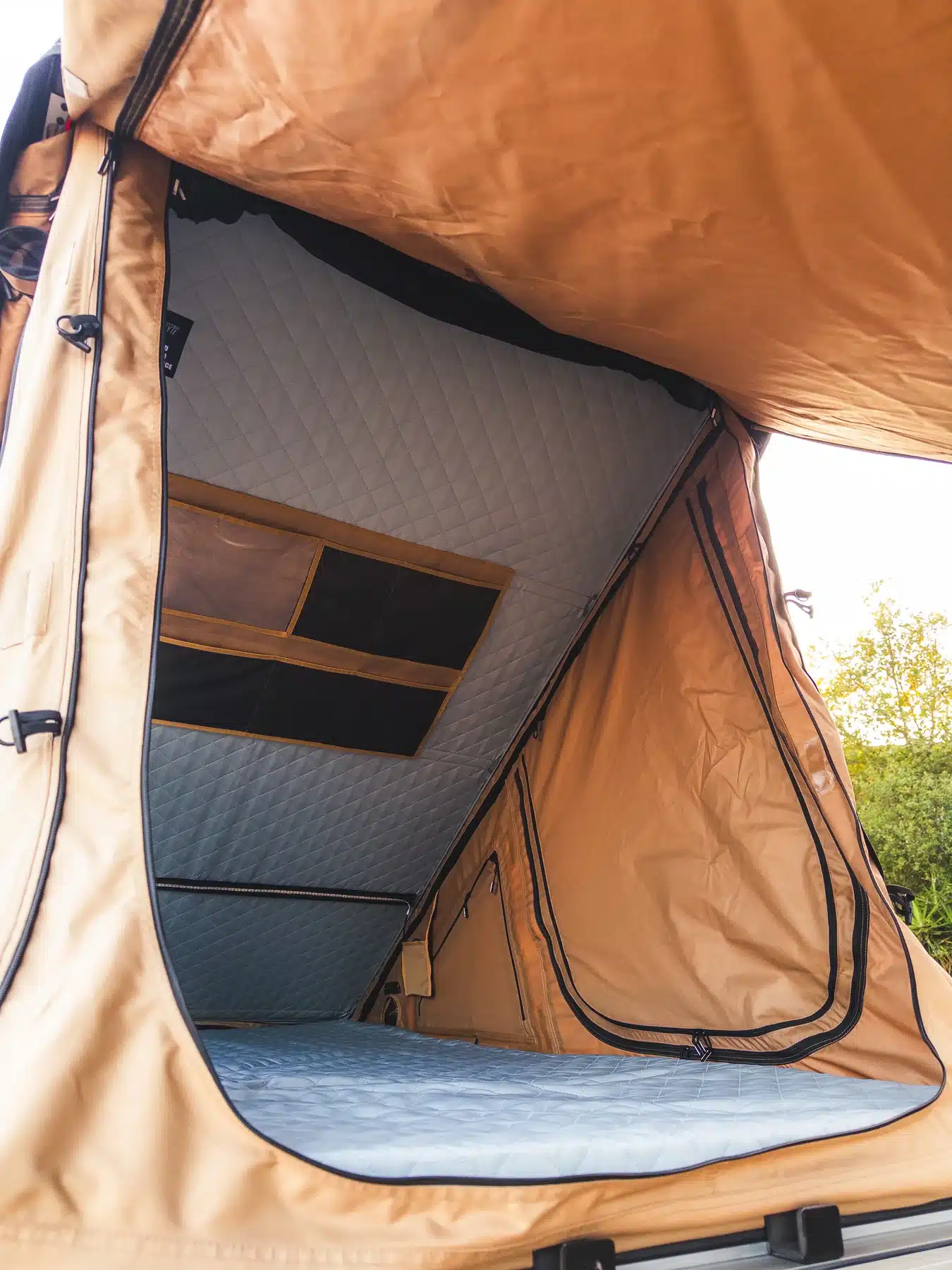
The 600D Oxford polyester body is a step up from the no-name fabric on budget Chinese rooftop tents. I felt the material firsthand in Colorado. The weave is tight and the coating feels uniform. Owners on Reddit’s r/rooftoptents community have made comparable observations. One buyer wrote the tent fabric was “by far superior to the San Hima tent” they had returned. The 1680D PVC-coated Oxford rainfly handles most of the waterproofing. PVC coating is heavier than silicone, although it holds up better in heavy rain over multiple seasons. For a lightweight rooftop tent at this price, the fabric quality is a genuine selling point.
The mattress measures about 2.75 inches thick total, layering thin closed-cell EPE foam over a high-density sponge core. It sits between budget RTT padding and the premium foam shipped on flagship hardshells. Although the Aircrest mattress is not luxurious, it holds shape and avoids the pancaking common with cheap foam. Build quality matched the spec sheet when I leaned into it at the warehouse.
The included accessory package solves two complaints most new RTT owners voice in their first month. Specifically, you get pouches with an iPad holder (notable in this price band) and a USB-powered LED strip for nighttime visibility. Most clamshell rooftop tents at $1,799 ship without either extra. Including them in the box is a meaningful detail.
What Makes This Lightweight Rooftop Tent Serviceable

Serviceability is the single biggest differentiator between the Aircrest and most competing lightweight rooftop tents. Featherlyte bolted on the parts other brands rivet. The cover slides off without tools. Likewise, the main tent fabric zips into the shell. A torn body fabric becomes a 20-minute swap instead of a full replacement tent. For comparison, most hardshell RTT manufacturers consider the fabric and shell a single unit. If the body tears or the rainfly fails outside warranty, you face buying an entirely new tent. The Aircrest as a serviceable rooftop tent breaks the pattern.
I asked the Spirit of 1876 staff to walk me through a bolted hinge connection. The difference became immediate. Rivets fail loudly when they fail, while bolts back out with a wrench. Featherlyte’s bet: a tent designed to outlive its weakest part will keep buyers loyal. The brand offers replacement fabric, replacement shells, and replacement hinges as separately listed parts.
For overlanders who keep gear for decades, this matters more than the spec sheet suggests. A traditional hardshell with a torn fabric body often becomes a paperweight once the warranty lapses. An Aircrest with the same damage is a fabric swap at a fraction of replacement cost. Buying a serviceable rooftop tent today protects the investment for the next decade. Our framework for evaluating these long-term tradeoffs is covered in our anatomy of a great rooftop tent explainer.
Install and Daily-Driver Use
Installation works on most factory crossbars and aftermarket roof racks. Confirm your rack’s dynamic load rating before mounting. Solo installation is realistic at 112 pounds. I lifted one end of the Aircrest off the showroom floor myself. I would not attempt the same lift with a 200-pound-class traditional hardshell. Featherlyte specifically pitched the design for solo removal. The brand told forum users: “Being able to remove the tent without it being a 4 person job was a huge part of our inspiration.”
For a daily driver, the closed profile and weight matter more than headline overland specs. A Honda CR-V, Subaru Outback, or a midsize sedan with a rated roof rack is able to carry the Aircrest. The 7-inch closed height keeps frontal area close to stock, which protects highway fuel economy in a way taller hardshells do not. Weekend road trips stay viable instead of becoming gas-station math problems.
Trade-Offs and Setup Caveats
The trade-off is real. Specifically, the Aircrest does not offer an annex or change-room option. Couples who want a downstairs setup for cooking or changing should look at softer-shell competitors. For shoppers weighing this entire shelter category against truck-camper alternatives, our truck camper vs rooftop tent piece breaks down the tradeoffs.
However, one negative theme came up consistently in forum research. Owners on Expedition Portal flagged the vertical support poles as a fiddly install step the first time you set up the tent. After a few cycles, the process becomes routine, although new owners should budget extra time for their first deployment.
Save on the Aircrest
Shipping Now From Spirit of 1876
Spirit of 1876 stocks the Aircrest in Colorado and ships across the lower 48. Current price holds at $1,799.
Aircrest vs. ROKK OVRLNDR 2P: Which Lightweight Rooftop Tent Wins?
The closest peer in 4wdTalk’s tested inventory is the ROKK OVRLNDR 2P, another sub-150-pound hardshell with a hands-on writeup at our ROKK OVRLNDR 2P review. Both tents target overlanders who want hardshell speed without the weight penalty. However, the differences come down to construction philosophy and target use case.
The OVRLNDR 2P costs more and is built tougher for harsh weather, with a heavier fabric package and floor structure engineered for snow loading. The Aircrest costs less, weighs slightly less, and prioritizes serviceability. For an overlander pushing into Patagonia or the Yukon in winter, the OVRLNDR is the safer bet. For a weekend camper hauling a Tacoma to Moab or a Subaru Outback to the Sierras, however, the Aircrest is the better lightweight rooftop tent value and the easier daily-driver companion. The verdict on this matchup comes down to climate: pick the OVRLNDR for snow-and-storm rigs, pick the Aircrest for fair-weather daily drivers.
Featherlyte also positions the Aircrest against the GoFast Superlite in its own brand video on YouTube. Both target the minimalist serviceable hardshell shopper. For buyers cross-shopping clamshell rooftop tent options at this weight class, the Aircrest is the value pick of the two.
Pros and Cons
Pros
- 112-pound weight enables solo installation and removal
- Every component bolts on instead of rivets, allowing 20-minute fabric swaps
- 7-inch closed profile preserves daily-driver fuel economy
- 600D Oxford polyester body outperforms budget RTT fabrics in owner reports
- 1680D PVC-coated rainfly handles multi-season rain exposure
- Included iPad pouch and USB LED strip add $50 to $80 of value
- $1,799 price undercuts most clamshell hardshells with comparable specs
- 57-inch interior height accommodates seated adults inside the tent
Cons
- Open-bottom design requires drying before closing in wet climates
- PP hollow board shell lacks long-term UV-resistance data
- No annex or change-room option for downstairs use
- 56-inch width tight for adults over 6 feet 1 inch
Final Verdict
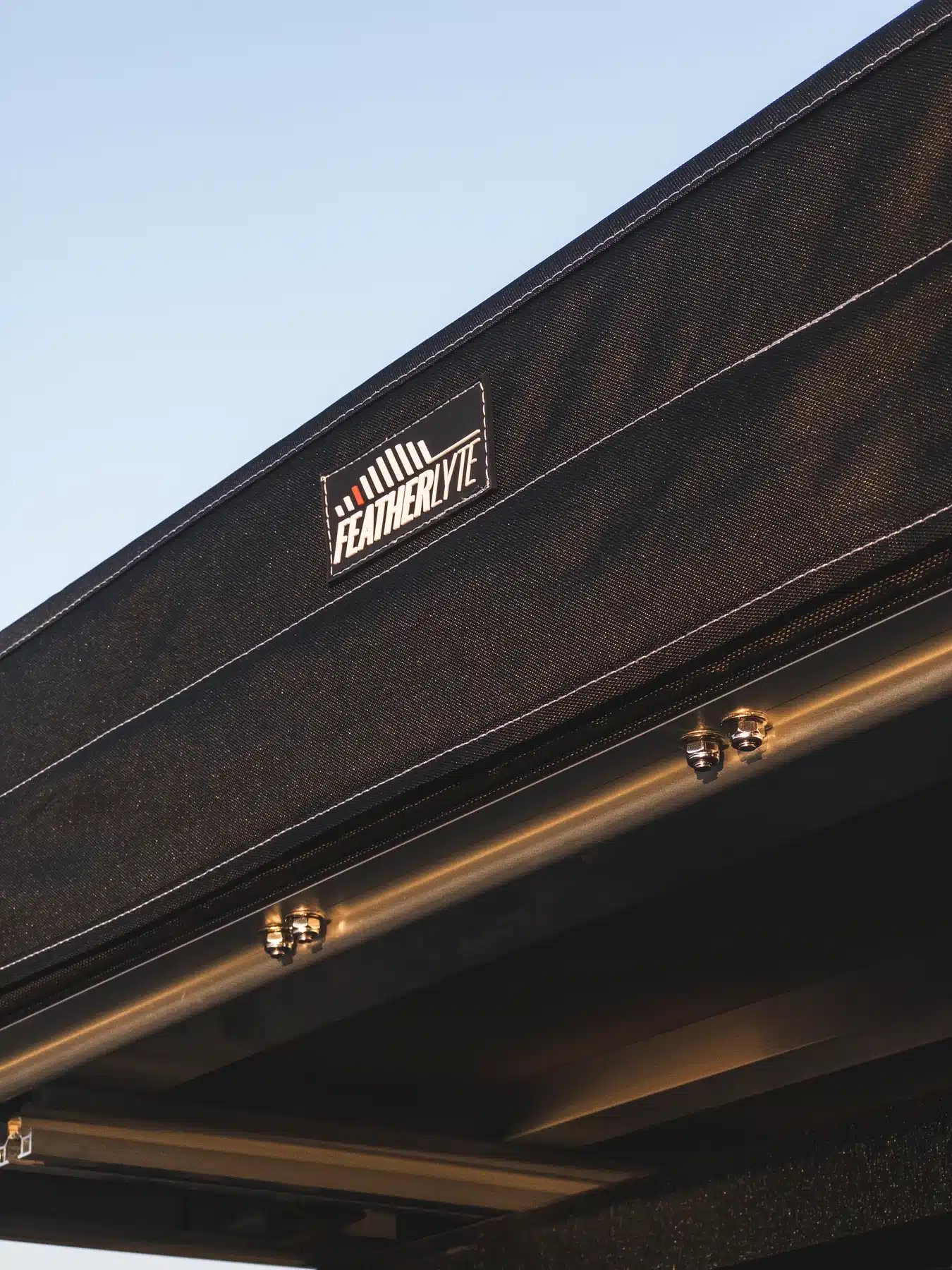
The Featherlyte Aircrest is the right lightweight rooftop tent for a specific buyer: someone who wants hardshell convenience on a vehicle pulling double duty as a daily driver, and who values long-term repairability. At 112 pounds and $1,799, the Aircrest punches above its price point on the fundamentals most owners care about.
However, the trade-offs are real. The open-bottom design keeping weight down means you will dry the tent thoroughly before closing it in wet climates. Owner threads on Expedition Portal flagged the vertical supports as a fiddly install step. Moreover, the PP hollow board shell has not been on the market long enough to know how it weathers five Colorado summers. None of these are dealbreakers for the daily-driver overlander, although they are worth understanding.
Against the GoFast Superlite, the Aircrest brings a more generous mattress and broader accessory package at a similar price. Against second-tier clamshells, the serviceability story is the single biggest reason to pay the difference. Buyers who need harsh-weather capability should consider the ROKK OVRLNDR 2P or step up to a Roofnest Falcon. Conversely, buyers who want maximum value should put the Aircrest at the top of their shortlist.
For my own use case (Sierra camping with a midsize SUV), this lightweight rooftop tent hits the right balance. Therefore, this Featherlyte Aircrest review recommends it for daily-driver overlanders, weekend campers, and anyone prioritizing serviceability over absolute weather toughness in a sub-150-pound rooftop tent.
Ready to Buy?
Check Today’s Price on the Aircrest
Spirit of 1876 carries the Aircrest in Colorado and offers in-person showroom inspection before you buy. Verify current stock and pricing.
Frequently Asked Questions
How heavy is the Featherlyte Aircrest rooftop tent?
The Aircrest weighs 112 pounds, which places it firmly in the lightweight rooftop tent category. Solo lifting is realistic for most adults, though a second pair of hands speeds up the install onto a vehicle roof. By comparison, traditional hardshell rooftop tents often weigh 180 to 220 pounds.
Will the Aircrest fit on a daily-driver SUV or sedan?
Yes, provided your roof rack is rated for at least 165 pounds dynamic load. The 7-inch closed profile minimizes drag, and the 112-pound weight is below the dynamic load capacity of most factory crossbars on a Honda CR-V, Subaru Outback, or comparable midsize vehicle.
Is the Aircrest waterproof in heavy rain?
The 1680D PVC-coated Oxford rainfly handles heavy rain well in owner reports. However, the open-bottom design means you should dry the tent thoroughly before closing it in wet climates. Some forum owners in the Pacific Northwest noted this drying step as a routine part of their pack-up.
What makes the Aircrest a serviceable rooftop tent?
Featherlyte bolted on the parts other brands rivet. The cover slides off without tools, while the main tent fabric zips into the shell for replacement. As a result, a torn fabric body is a 20-minute swap instead of a full tent replacement. Featherlyte sells fabric, hinges, and shell components as individual SKUs.
How does the Aircrest compare to the GoFast Superlite?
Featherlyte itself positions the Aircrest against the GoFast Superlite in its marketing. The Aircrest offers a more generous mattress (7 centimeters versus a thinner pad on the Superlite) and a broader accessory package including the iPad pouch and USB LED strip at a similar price point. Both tents target the minimalist serviceable hardshell buyer.
Where to buy the Featherlyte Aircrest
Spirit of 1876 carries the Aircrest at $1,799 and ships from Colorado. The brand also sells direct through Featherlyte’s site. For buyers in the Mountain West, Spirit of 1876 offers the option to inspect the tent in person before buying.