


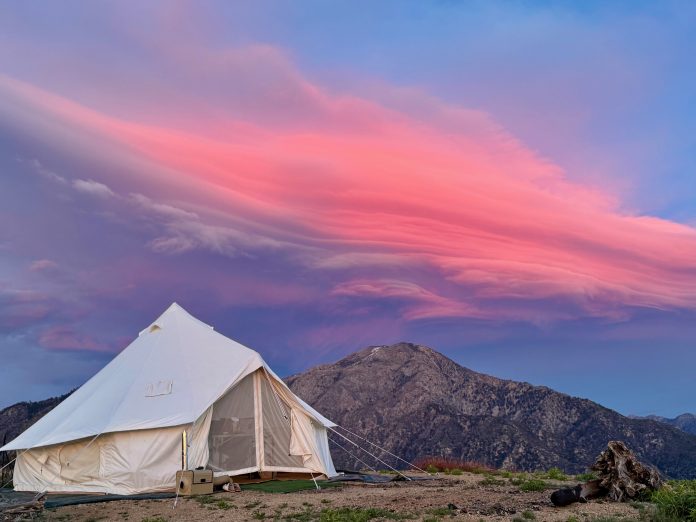

Quick Verdict: Knowing how to pick a safe campsite separates a great night under the stars from a dangerous situation. This 9-point campsite safety checklist covers the campsite hazards most backcountry campers overlook: widow-makers, flash flood zones, fire clearances, and Leave No Trace waste management. Follow it every time you pull off the trail, and you will protect yourself, your rig, and the land.
Last updated: March 2026 | 10 min read
In This Article
- Why Campsite Selection Matters More Than Your Gear
- The 9-Point Campsite Safety Checklist
- Check Above: Widow-Makers and Dead Trees
- Check Below: Flash Flood Zones and Drainage
- Campfire Safety: The 15-Foot Rule
- Vehicle Positioning on Backcountry Terrain
- Reading Wind and Weather Before You Set Up
- Wildlife and Food Storage at Your Campsite
- Leave No Trace: Pack Out Your Waste
- Arrive Early to Secure the Best Spot
- Developed Campgrounds vs. Dispersed Camping Safety
- Pros and Cons of Dispersed Backcountry Camping
- Final Verdict
- Frequently Asked Questions
Why Campsite Selection Matters More Than Your Gear
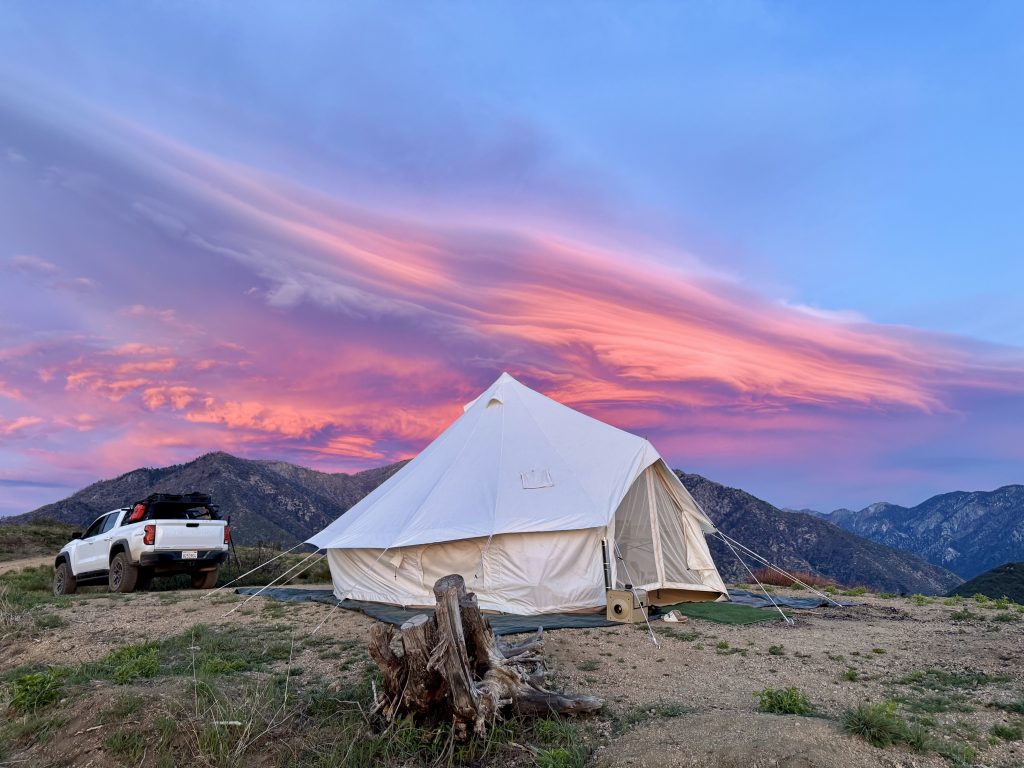
Learning how to pick a safe campsite is the single most important skill for backcountry 4WD camping. Your tent, your recovery gear, and your rig all matter. However, none of them protect you from a widow-maker branch crashing down at 2 AM or a flash flood tearing through a dry wash while you sleep. The right campsite eliminates these risks before they become emergencies.
More than 100 people die from falling trees and branches in the United States every year, according to OSHA. Flash floods killed 145 people across the country in 2024 alone. These are preventable deaths. Specifically, most of them trace back to one decision: where someone chose to set up camp.
This backcountry campsite safety guide walks you through a 9-point checklist with dispersed camping safety tips built from years of experience in places like Big Bear, Joshua Tree, and Alabama Hills. Each point addresses a specific hazard, includes measurable distances, and gives you a pass/fail test to run before you unload your gear. Whether you are new to overlanding or have hundreds of nights on the trail, this checklist keeps you honest.
Print it. Save it on your phone. Tape it to your dash. Because knowing how to pick a safe campsite matters more than finding the prettiest sunset view. After all, the best site is the one where you wake up safe in the morning.
The 9-Point Campsite Safety Checklist
| Check | What to Look For | Safe Distance / Standard |
|---|---|---|
| 1. Overhead Hazards | Dead branches, leaning trees, widow-makers | 1.5x tree height minimum |
| 2. Flood Risk | Dry washes, canyon bottoms, debris lines on trees | 200+ feet from water/washes |
| 3. Fire Clearance | Brush, pine needles, low branches near fire ring | 15 feet all directions |
| 4. Vehicle Terrain | Slope angle, soft ground, exit route | Level ground, nose out |
| 5. Wind Exposure | Ridge lines, open flats, canyon funnels | Sheltered, mid-slope preferred |
| 6. Wildlife / Food | Animal trails, scat, food storage distance | 200 feet from cooking area |
| 7. Water Proximity | Streams, lakes, springs | 200 feet (70 adult paces) |
| 8. Waste Plan | Human waste, toilet paper, trash | Pack it all out |
| 9. Arrival Time | Daylight for assessment, site competition | Arrive by noon on weekends |
Check Above: Widow-Makers and Dead Trees
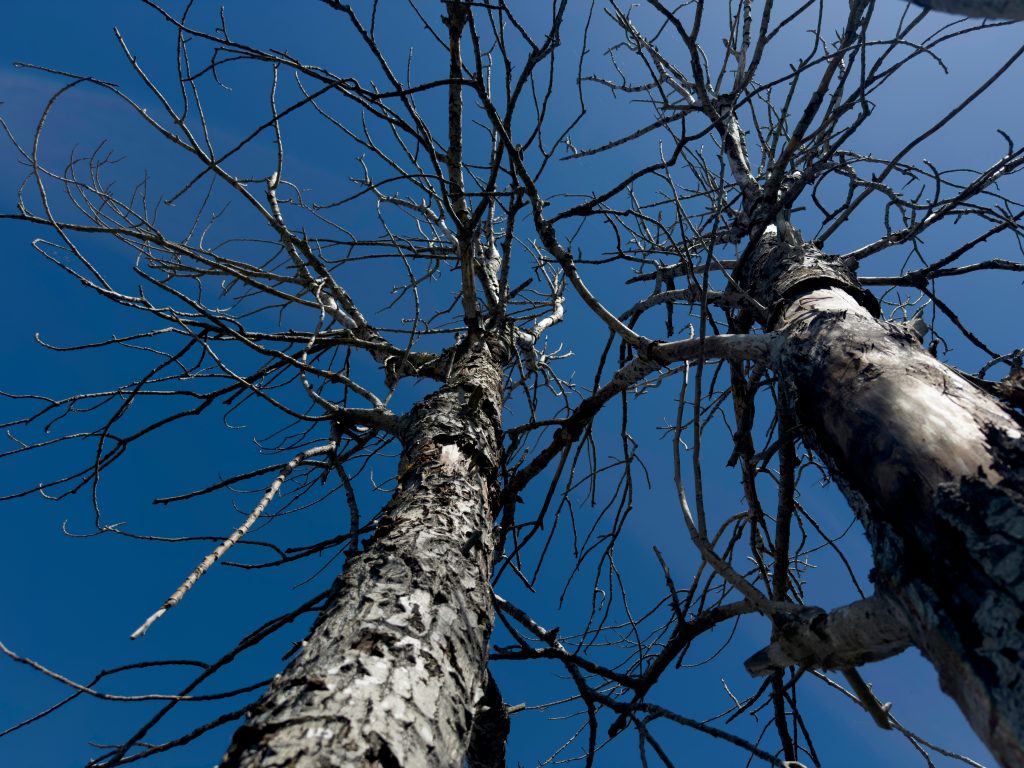
Before you even open your tailgate, look up. Widow-makers are dead branches or leaning trees suspended overhead. They fall without warning, especially during wind gusts. A study of 407 tree-failure deaths from 1995 to 2007 found thunderstorms caused 41% and nonconvective high winds caused 35% of fatalities. You will not hear a falling branch coming.
The safe standard is straightforward: camp at least 1.5 times the height of the nearest dead tree away from your site. For a 40-foot dead pine, keep 60 feet of distance. Also look for “hangers,” which are broken branches caught in the canopy above. These are common in pine forests around Big Bear and the Eastern Sierra. For instance, a single branch weighing 50 to 100 pounds will crush a tent, a rooftop tent, or a person beneath it.
Walk your prospective campsite in a circle and look at every tree within 60 feet. Specifically, check for dead limbs, split trunks, and root-heave at the base. If you see bark peeling off in sheets or mushrooms growing at the trunk base, the tree is compromised. Move to a different spot. No view is worth sleeping under a widow-maker.
Check Below: Flash Flood Zones and Drainage
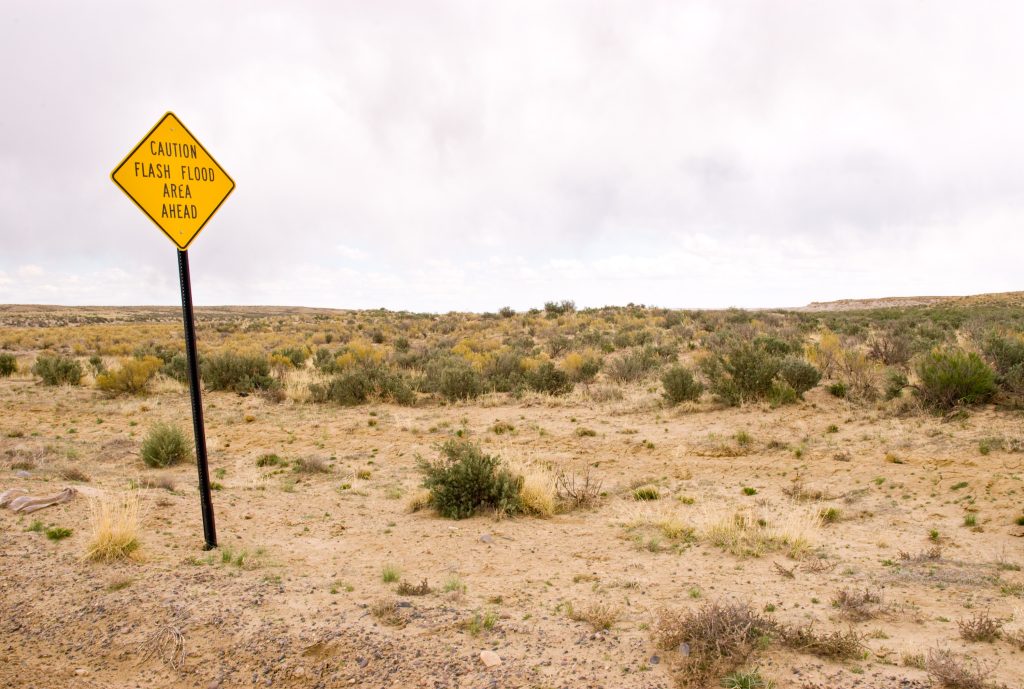
Flash floods killed 145 people in the United States in 2024. A significant number of those deaths occurred in recreation areas, including campsites in dry washes and canyon bottoms. In particular, desert environments like Joshua Tree and Alabama Hills are deceptive because the ground looks bone-dry until a storm 20 miles upstream sends a wall of water downhill.
Your dispersed camping safety tips should include three flood-risk indicators when you assess campsite hazards. First, look for debris lines on trees and boulders. Sticks, leaves, and trash lodged 3 to 6 feet up a trunk mark previous high-water lines. Second, check the ground surface. Smooth, rounded rocks and fine silt deposits indicate regular water flow. Third, examine the terrain shape. Narrow canyons, dry washes, and areas at canyon mouths funnel water rapidly during storms.
The Leave No Trace standard requires camping 200 feet (70 adult paces) from any water source. For flash flood safety in desert terrain, double this distance when camping near dry washes. Consequently, if you spot any debris lines or smooth-washed rock channels, relocate to higher ground immediately. A campsite sitting 10 feet above the wash bottom is safer than one sitting 200 feet downstream on flat ground.
Campfire Safety: The 15-Foot Rule
The U.S. Forest Service, CAL FIRE, and the National Park Service all enforce the same standard: maintain 15 feet of clearance between your campfire and any tent, vehicle, tree, or brush. This is not a suggestion. Fire regulations on BLM and National Forest dispersed camping areas make this a legal requirement in most western states.
Before lighting a fire, clear the ground within a 15-foot radius of leaves, pine needles, and dry grass. Also check above the fire ring for low-hanging branches. The vertical clearance should be at least 3 times the expected flame height. For a typical campfire, maintain 10 to 15 feet of overhead clearance. If you are using a portable fire pit, the same 15-foot rule applies in every direction.
Wind changes everything. A steady 10 mph breeze throws embers 30 feet or more downwind. On windy evenings, skip the campfire entirely. Use your camp stove for cooking instead. In fire-restricted areas (check 2026 fire restrictions for camping and overlanding before your trip), campfires are prohibited regardless of conditions.
Vehicle Positioning on Backcountry Terrain
Where you park your rig matters as much as where you pitch your tent. Always park with your nose pointed toward the exit. If you need to leave quickly due to wildfire, weather, or wildlife, a 3-point turn on soft sand or muddy ground costs you critical time.
Similarly, level ground is essential, especially if you run a rooftop tent or truck bed camper. Even a 5-degree slope creates an uncomfortable night and puts stress on your vehicle’s parking brake. Walk the site and check for hidden ruts, soft shoulders, and loose rock before committing. If the ground feels spongy underfoot, your tires will sink deeper overnight as dew settles.
Carry traction boards or recovery mats for insurance. Position them within arm’s reach of your tires, not buried in the back of your rig. Similarly, keep a kinetic recovery rope accessible. An impromptu campsite on a scenic hillside turns into a recovery mission when morning frost slicks the ground beneath your tires.
Featured by Elk Mountain Tents
Yukon Bell Tent: 4-Season Canvas Built for Backcountry
100% polyester canvas withstands 60 mph winds without a rainfly. Built-in stove jack, 4 screened windows, and zippered floor. Tested in Big Bear snow and Alabama Hills wind. Starting at $745.
Reading Wind and Weather Before You Set Up
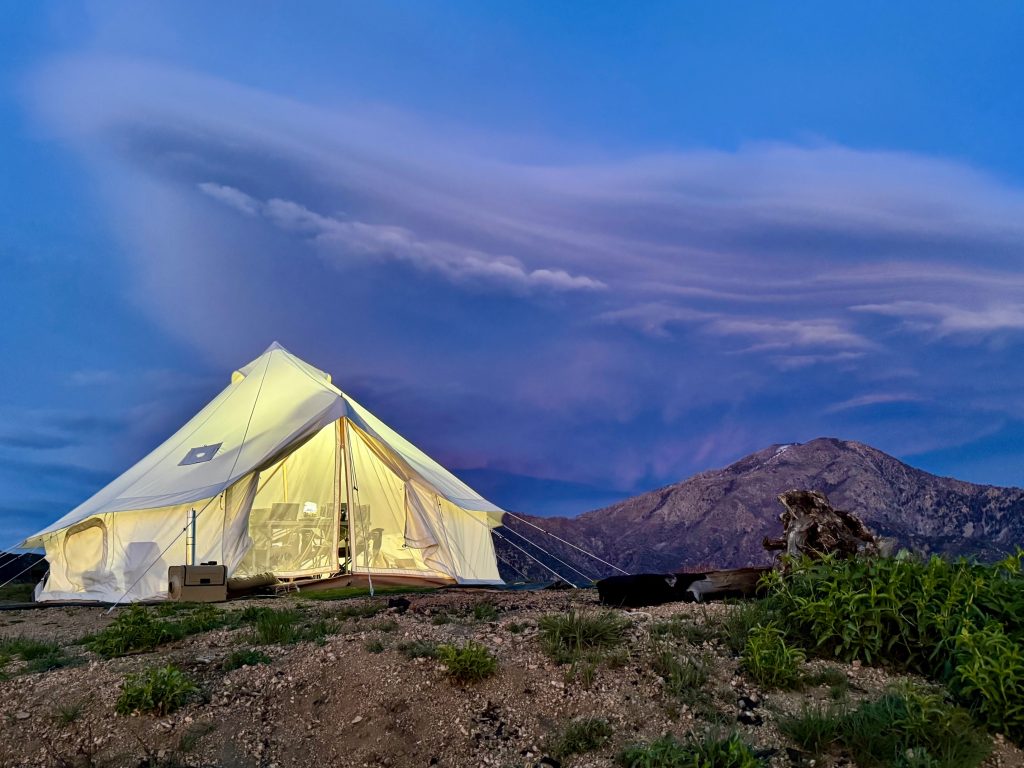
Among all campsite hazards, wind exposure is the most underestimated by 4WD campers. Exposed ridgelines and open flats look photogenic, but sustained 30 mph gusts will shred a poorly anchored tent, sandblast your gear, and make sleep impossible. Quality 4-season canvas tents rated for 60 mph winds exist. Still, choosing a sheltered spot eliminates the need to test your gear’s limits every night.
Mid-slope positions offer the best balance between wind protection and cold air drainage. Valley bottoms collect cold air overnight, dropping temperatures 10 to 15 degrees compared to a site 200 feet uphill. Conversely, ridgetops and saddles channel wind. The sweet spot sits partway up a slope, tucked behind a natural windbreak like a rock outcropping or dense tree line.
Before setting up, check the weather forecast for your specific area. Download offline maps and weather data before you lose cell service. Notably, desert regions like Joshua Tree and Alabama Hills experience 30-degree temperature swings between day and night. Afternoon heat fades fast once the sun drops below the horizon.
Wildlife and Food Storage at Your Campsite
Store all food, coolers, and scented items at least 200 feet from your sleeping area. This standard comes from the Appalachian Trail Conservancy, the U.S. Forest Service, and bear management guidelines across California, Oregon, and Washington. The 200-foot rule also applies to cooking. Prepare and eat meals 200 feet from your tent, then store food in your vehicle or a bear canister.
In addition, land managers require bear canisters in parts of Sequoia and Kings Canyon National Parks, the Eastern Sierra, and specific wilderness zones throughout the Pacific Crest Trail corridor. Before your trip, check the local ranger district website for food storage requirements at your destination. Even in areas where canisters are not required, hard-sided storage prevents raccoons, coyotes, and rodents from raiding your campsite overnight.
Before unpacking, scan your campsite for animal trails, fresh scat, and tracks. These campsite hazards are easy to miss in fading light. For instance, a well-worn animal path running through your site means wildlife uses the area regularly. Therefore, move your camp 100 feet to either side of the trail. Additionally, avoid camping near water sources at dawn and dusk, since these are peak times for wildlife activity.
Leave No Trace: Pack Out Your Waste
Backcountry campsite safety goes beyond protecting yourself; it also means protecting the land. Popular dispersed camping areas across the West are losing access because of human waste. Walk 50 yards from any yellow-post campsite at Big Bear, Joshua Tree, or Alabama Hills and you will find toilet paper, human waste, and hygiene products scattered across the desert floor. Concentrated waste at these sites has already triggered increased restrictions and area closures in California.
However, the solution is simple: pack out everything you bring in, including human waste. WAG bags (Waste Alleviation and Gelling bags) weigh a few ounces empty and seal odor completely. They cost roughly $3 per use. For comparison, the cleanup and restoration costs from contaminated campsites run into the hundreds of thousands of dollars for land management agencies. Those costs eventually lead to area closures and access restrictions for all of us.
Besides human waste, follow the full Leave No Trace standard. Follow Leave No Trace camping principles and camp on established sites or durable surfaces. Do not build new fire rings. Scatter natural materials you collected for firewood. Carry a dedicated trash bag in your rig and fill it before you leave. If every 4WD camper packed out 5 extra pieces of litter per trip, popular sites like Alabama Hills would stay open and clean for years to come.
Pack It Out
Cleanwaste GO Anywhere WAG Bags (12-Pack)
NASA-developed gelling powder neutralizes odor instantly. Double-bag system prevents leaks. Each kit includes toilet paper and hand wipe. Highly rated on Amazon. ~$38.99 for 12.
Arrive Early to Secure the Best Spot
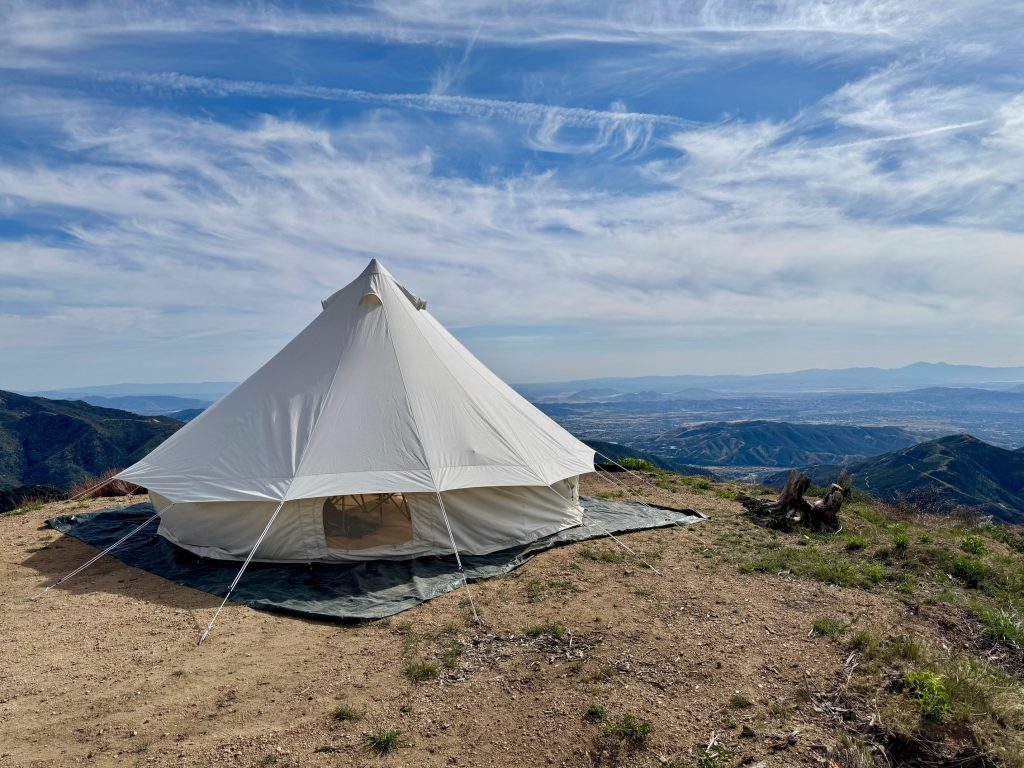
Following Leave No Trace standards also means choosing your campsite with time and care. The safest campsite is the one you select with daylight and options. Understanding how to pick a safe campsite means building arrival time into your trip plan. Arriving at a popular dispersed area at 6 PM on a Saturday means you are picking from leftover spots in fading light. As a result, you skip the safety assessment because you are tired, hungry, and running out of daylight. This is how people end up parked under widow-makers or in dry wash bottoms.
Plan to arrive by noon on weekends at popular areas, especially during spring and fall when the weather is mild and campsite demand peaks. Conversely, weekday arrivals give you the widest selection. For spots like Alabama Hills, Big Bear, and the Eastern Sierra, Friday afternoon arrivals secure premium sites. By Saturday morning, the best locations are taken.
Early arrival also gives you time to walk the area, run through your checklist, and set up before dark. You will have time to identify a backup spot if your first choice fails a safety check. Consequently, building an extra hour of daylight into your travel plan is the cheapest insurance policy in overlanding.
Developed Campgrounds vs. Dispersed Camping Safety
Developed campgrounds handle most safety decisions for you. The Forest Service or concessionaire has already cleared overhead hazards, graded the pad, installed fire rings with proper clearances, and positioned sites away from flood zones. You pay $20 to $45 per night for this convenience. For families and newer campers, developed sites reduce risk significantly.
Dispersed camping puts every safety decision on you. Knowing how to pick a safe campsite matters here because there are no graded pads, no maintained fire rings, and no one checking for widow-makers overhead. The freedom is the appeal, but the responsibility is real. If you run through the 9-point checklist in this article before every setup, dispersed camping is safe and rewarding. Skipping the checklist because you are in a hurry, however, increases the risks dramatically.
For 4WD campers looking to find secluded camping spots, the payoff of dispersed camping is worth the extra diligence. Fewer neighbors, better views, and no reservation systems. Before heading out, learn how to read MVUMs and find legal campsites so you know you are setting up in a permitted area. The tradeoff is taking full ownership of your campsite safety assessment every single time.
Pros and Cons of Dispersed Backcountry Camping
Pros
- Free camping on BLM and National Forest land (no fees at most dispersed sites)
- No reservation system; spontaneous trip planning is possible year-round
- Privacy and solitude; sites are often 0.25 to 1 mile apart
- Closer access to trails, fishing, and hunting than developed campgrounds
- No generator-hour restrictions or quiet-time rules from camp hosts
- Full vehicle access means you bring your full gear setup without weight limits
Cons
- No maintained fire rings, leveled pads, or overhead hazard clearance
- No potable water, trash service, or restroom facilities at most sites
- Human waste management falls entirely on you (WAG bags required)
- Flash flood, widow-maker, and wildlife risks require personal assessment
- Cell service is often unavailable, limiting emergency communication
Final Verdict
Knowing how to pick a safe campsite is the foundation of every good backcountry trip. The 9-point checklist in this article covers the specific hazards you will encounter on dispersed BLM and National Forest land across the West: widow-makers, flash flood zones, fire clearances, vehicle terrain, wind exposure, wildlife, water proximity, waste management, and arrival timing. Each point includes a measurable standard you apply on-site.
The tradeoffs of dispersed camping are real. You give up the convenience of developed campgrounds in exchange for freedom, privacy, and access to the best spots in the backcountry. This tradeoff only works if you commit to running the safety assessment every time. Skipping it because “the spot looks fine” is how accidents happen and how beautiful public lands get closed to vehicle access.
The Leave No Trace problem at Big Bear, Joshua Tree, and Alabama Hills is getting worse every season. Toilet paper graveyards and contaminated soil at yellow-post sites are leading to increased restrictions and area closures. Carrying WAG bags, packing out all trash, and camping on established surfaces are the minimum standard for keeping these areas open for 4WD campers.
If you are new to dispersed camping, start with the checklist taped to your dash. Run through all 9 points before you unload a single piece of gear. After a dozen trips, the assessment becomes second nature. Until then, treat the checklist as your most important piece of overlanding gear.
Frequently Asked Questions
How far should you camp from a water source in the backcountry?
The Leave No Trace standard requires camping at least 200 feet (approximately 70 adult paces) from any stream, lake, river, or spring. This distance protects water quality, reduces your impact on riparian habitats, and lowers your flash flood risk. In desert environments near dry washes, double this distance for safety.
What is a widow-maker and how do you spot one?
A widow-maker is a dead branch or leaning tree suspended overhead. These fall without warning, particularly during wind gusts. Look for broken limbs caught in the canopy, peeling bark, mushrooms at the trunk base, and split trunks. Camp at least 1.5 times the height of the nearest dead tree away from your site.
Is dispersed camping safe for beginners?
Dispersed camping is safe for beginners who follow a structured campsite safety checklist. The key is assessing hazards before setting up: overhead threats, flood risk, fire clearances, and terrain stability. Start with well-known areas where other campers are nearby, then work toward more remote sites as your assessment skills improve.
Do you need to pack out human waste when dispersed camping?
In many popular dispersed areas, packing out human waste is either required or strongly recommended. Areas like Joshua Tree, parts of the Eastern Sierra, and heavily used BLM land near Alabama Hills are seeing site closures due to accumulated waste. WAG bags cost roughly $3 per use and eliminate the problem entirely. Always pack out toilet paper regardless of location.
How early should you arrive to get a good dispersed campsite?
Arrive by noon on weekends at popular dispersed camping areas, especially during spring and fall. Friday afternoon arrivals secure the best spots at high-demand locations like Alabama Hills, Big Bear, and Eastern Sierra sites. Weekday arrivals offer the widest selection. Early arrival also gives you daylight to run a proper safety assessment before setting up.
What is the 15-foot campfire safety rule?
The U.S. Forest Service, CAL FIRE, and the National Park Service require a minimum 15-foot clearance between your campfire and any tent, vehicle, tree, brush, or flammable material. Clear the ground within this radius of leaves and pine needles. Also maintain vertical clearance of at least 3 times the expected flame height above the fire ring.