


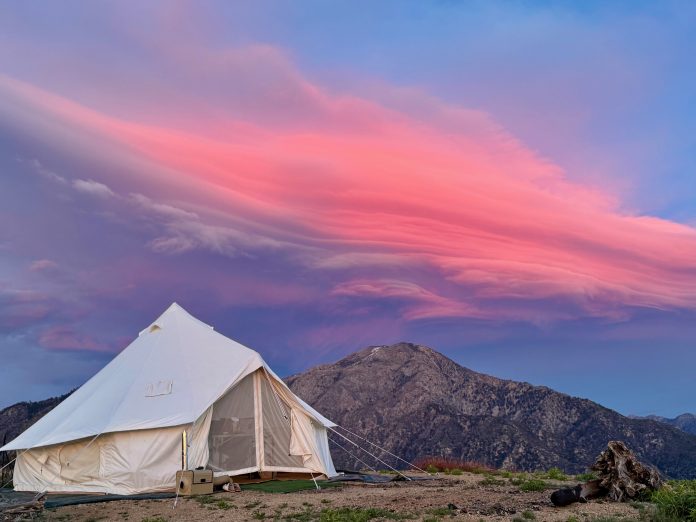

Quick Verdict: Bell tent history stretches across 170 years, from British Army barracks in 1855 Crimea to glamping resorts in 2026. The conical canvas shelter survived because the design works: fast setup, unobstructed interior, stove-ready peak, and weather performance at a price soldiers and civilians both accept. Modern evolutions like the Elk Mountain Yukon bell tent ($875 to $1,274) keep the classic silhouette while upgrading canvas chemistry, floor systems, and ventilation.
Last updated: April 2026 | 9 min read
In This Article
- Bell Tent History Overview
- Bell Tent Timeline at a Glance
- 1855: The Crimean War Origin
- 1856 to 1865: Sibley Tents and the American Civil War
- 1899 to 1902: The Boer War and British Expansion
- Victorian and Edwardian Sporting Culture
- World War One Field Use
- 1920s Safari Camps and Global Adoption
- Traditional Canvas vs Modern Polyester Bell Tents
- The Elk Mountain Yukon: A Modern Heir
- Pros and Cons of Bell Tent Ownership
- Final Verdict
- Frequently Asked Questions
Bell Tent History Overview: Why the Design Has Outlasted Everything Else
Bell tent history begins in 1855 and continues uninterrupted into your backyard glamping setup today. While nylon dome tents, A-frames, and geodesics have all come and gone through various phases of popularity, the conical canvas bell tent has served soldiers, explorers, safari hunters, and modern campers without ever leaving the field. For nearly two centuries the same core design has held up, which is rare in outdoor gear.
Three design choices explain the survival. First, a single center pole creates usable standing room across the entire floor plan, something no dome will match at comparable weight. Second, the conical shape sheds rain, snow, and wind from every direction equally, so tent orientation matters less during pitching. Third, the peak vent sits directly above a natural heat column, which makes the structure stove-compatible without engineering workarounds.
Whether you’re a weekend camper looking for easier family setup, an overlander running a four-season base camp, a hunter wanting a stove-ready shelter, or a history buff drawn to heritage gear, the same military bell tent design answers the brief. Modern brands have layered upgraded amenities onto the 1855 foundation, and the Elk Mountain Yukon is one example of how the design has evolved with better materials and construction methods.
Bell Tent Timeline at a Glance
| Year | Event | Significance |
|---|---|---|
| 1855 | Crimean War deployment | British Army adopts the bell tent as standard barracks shelter |
| 1856 | Sibley tent patent | Henry Hopkins Sibley patents the American cone tent design |
| 1861 to 1865 | American Civil War | Union Army issues roughly 44,000 Sibley tents |
| 1899 to 1902 | Second Boer War | British field camps standardize bell tent rows across South Africa |
| 1914 to 1918 | World War One | Red Cross field hospitals deploy bell tents on the Western Front |
| 1920s | Safari era | Bell tents become the standard for British East African hunting camps |
| 2000s | Glamping revival | Bell tents return as premium outdoor lodging at $200 to $400 per night |
| 2020s | Material evolution | Polyester blends like Elk Mountain’s PolyShield replace traditional cotton canvas |
Modern Bell Tent Evolution
See How the Yukon Modernizes 170 Years of Design
The Elk Mountain Yukon keeps the historic silhouette while upgrading canvas chemistry, floor sealing, and stove jack integration.
1855: The Crimean War and the Rise of the Bell Tent
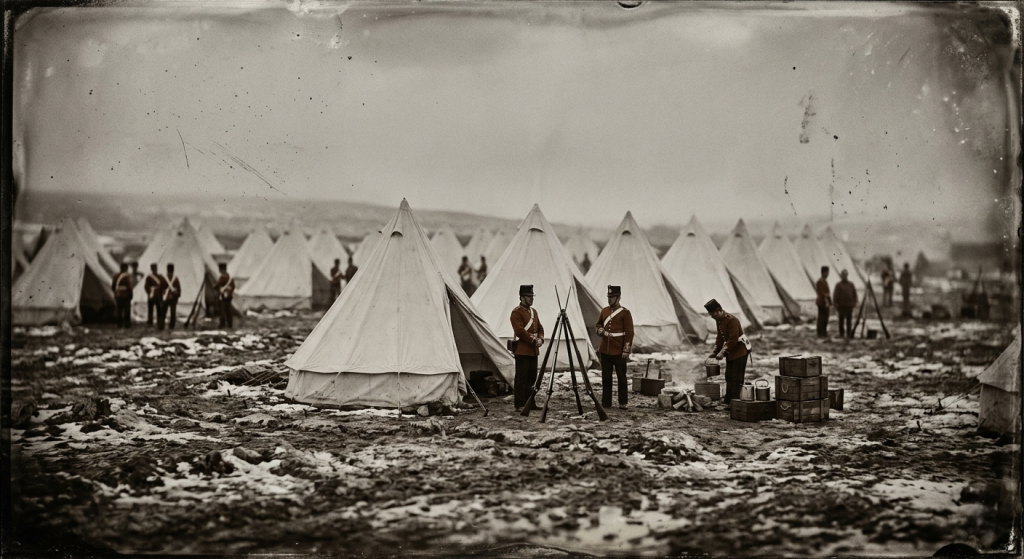
Bell tent history in its modern form begins with a supply disaster. During the brutal first winter of the Crimean War in 1854 to 1855, British troops besieging Sevastopol suffered catastrophic losses to cold, dysentery, and exposure. The small ridge tents in field use at the time offered almost no headroom, poor ventilation, and no path for heating stoves.
British quartermasters responded by standardizing a single-pole conical canvas shelter for the 1855 summer deployment. The design, borrowed from earlier Ottoman and Central Asian nomadic tents, pitched in under 15 minutes with one pole and a perimeter of pegs. Because the peak reached roughly 10 feet, soldiers were able to stand upright, and a metal chimney collar at the apex allowed for stove integration during cold months.
After Crimea, the War Office kept the bell tent as the British Army’s standard barracks shelter for the next six decades. Every deployment from the 1860s forward featured the familiar cone silhouette, and the bell tent origin in 1855 locked in a template every later canvas tent maker would reference.
1856 to 1865: Sibley Tents and the American Civil War
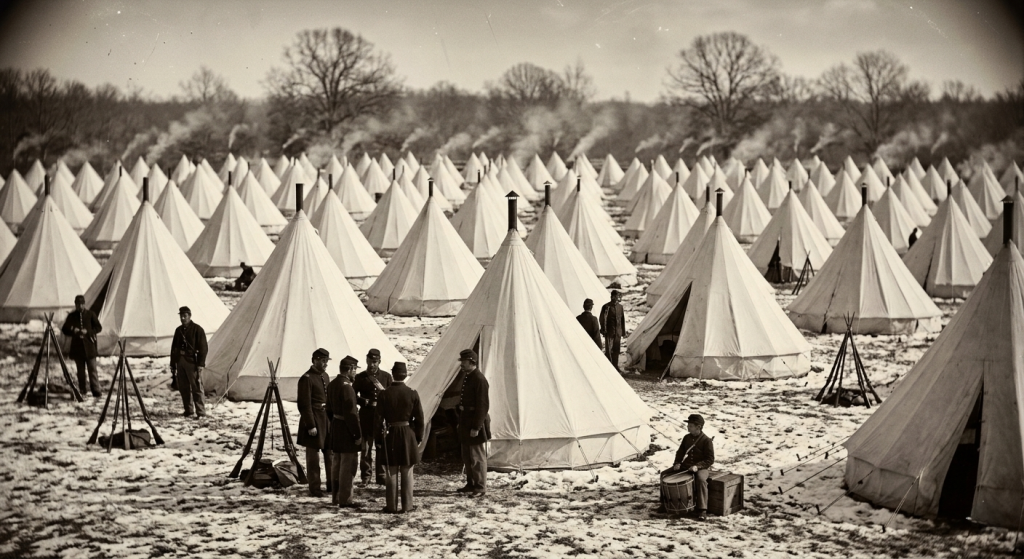
While the British Army was refining its bell tent doctrine, a US Army officer named Henry Hopkins Sibley patented a nearly identical design in April 1856. Sibley had observed Plains Indian teepees during his frontier service and combined their conical frame with canvas construction and a center pole. The result, called the Sibley tent, was essentially a bell tent with American branding.
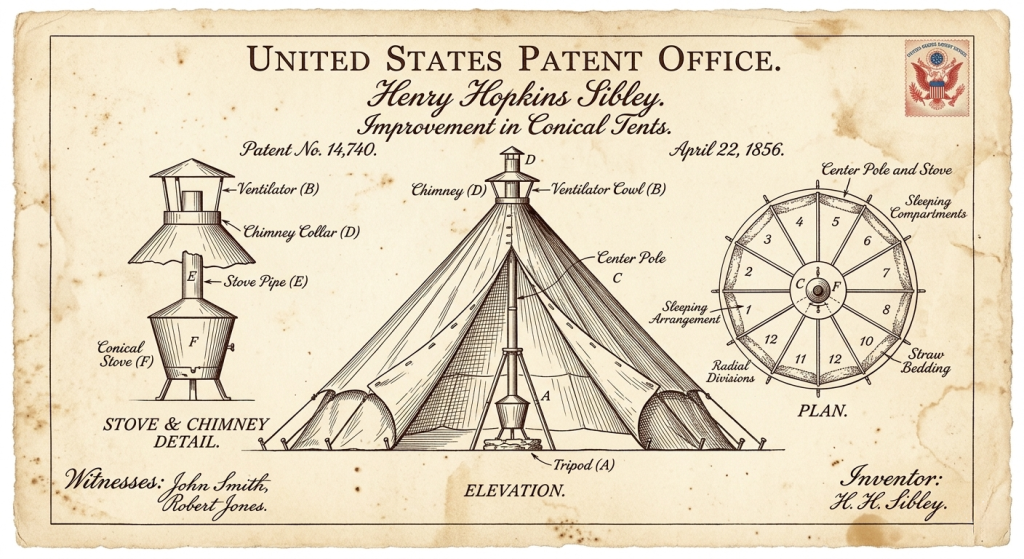
During the American Civil War, the Union Army issued approximately 44,000 Sibley tents between 1861 and 1862. Each tent slept 12 soldiers arranged feet-inward around the center pole, and every unit came with a small conical stove venting through the peak. Consequently, Union camps during winter campaigns showed the same rows of white canvas cones you see in British colonial photos from the same decade.
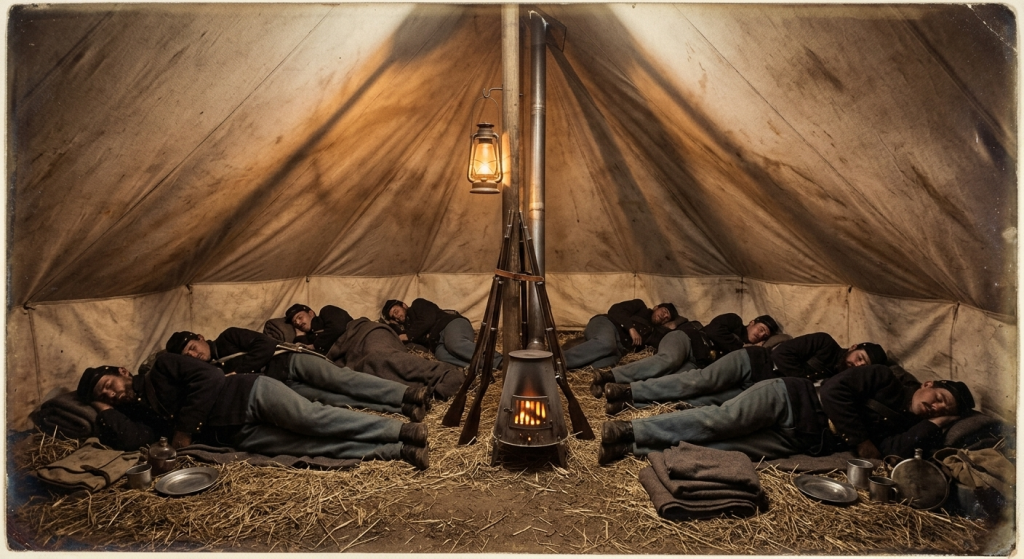
Sibley himself defected to the Confederacy in 1861, which created a patent royalty dispute with the US government lasting for decades. Nevertheless, his design survived the political mess and cemented the canvas bell tent as the workhorse military shelter of the 19th century.
1899 to 1902: The Boer War and British Expansion
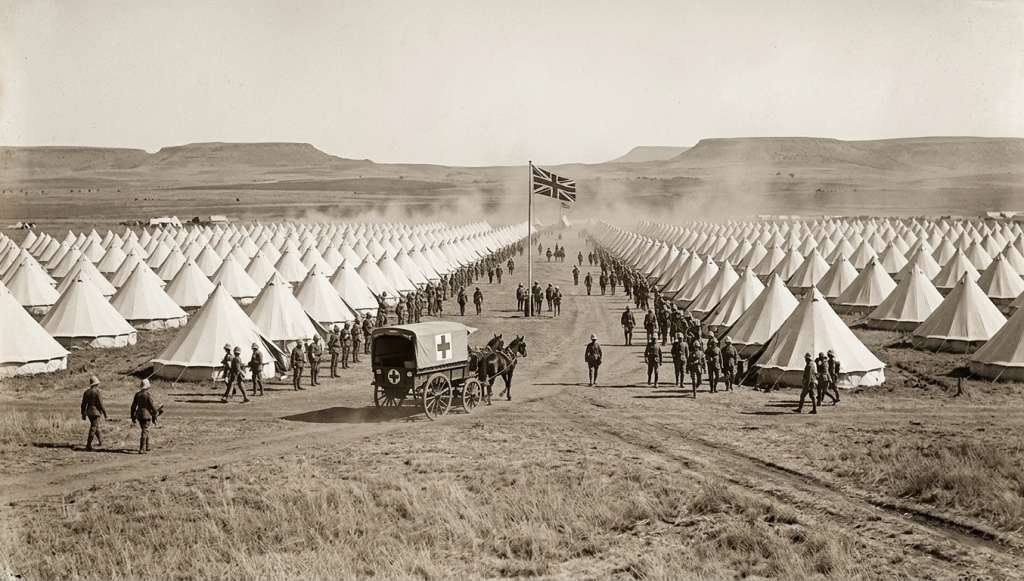
By the time the Second Boer War broke out in 1899, the British Army had refined bell tent logistics into an industrial system. More than 400,000 British soldiers were deployed to South Africa during the three-year conflict, and field camps stretched for miles across the veldt in orderly rows of white canvas cones. Photographs from the era show camps at Bloemfontein, Modder River, and Pretoria with hundreds of bell tents pitched on identical grid patterns.
The Boer War also exposed the limits of untreated cotton canvas. African conditions, specifically dust storms, extreme UV, sudden thunderstorms, and persistent mildew, degraded fabric in months rather than years. British quartermasters began experimenting with linseed oil treatments and paraffin coatings to extend service life, early predecessors to today’s water repellent finishes.
This period marks when bell tent history shifted from pure military use toward engineered durability. Afterward, the design was no longer only about shelter, but rather about how long canvas would survive under specific environmental stress. Every modern treatment, from Sunforger cotton to PolyShield polyester, traces its research lineage back to these Boer War field failures.
Skip the Annual Canvas Care
One Tent. Zero Seasoning, Shrinkage, or Re-waterproofing.
Yukon PolyShield fabric delivers 449 lbs of breaking strength and zero water absorption, which saves owners the yearly canvas care ritual cotton owners still perform.
Victorian and Edwardian Sporting Culture
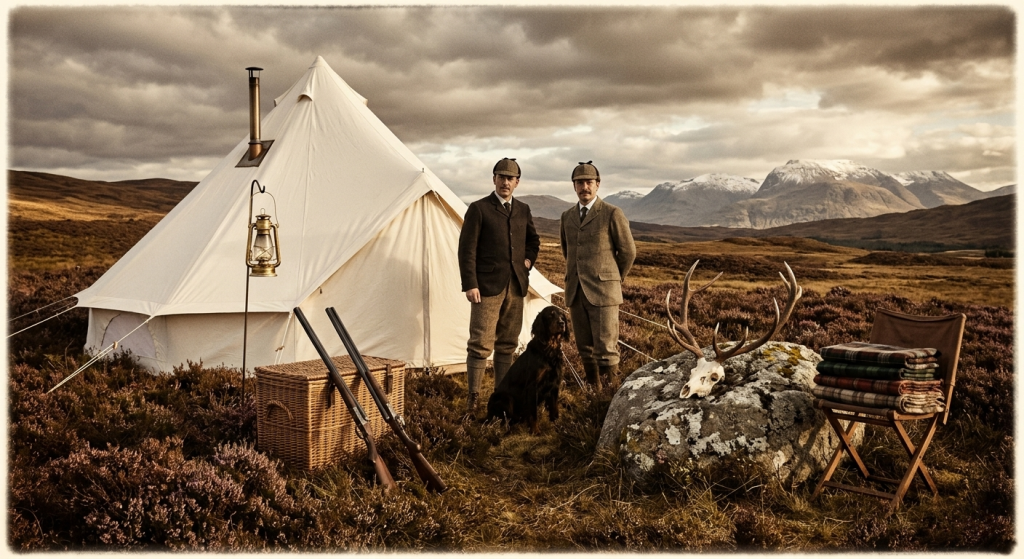
Between 1870 and 1910, the military bell tent migrated from army depots into aristocratic sporting use. Wealthy British sportsmen took canvas cones to the Scottish Highlands for deer stalking, to Norwegian rivers for salmon fishing, and to the Swiss Alps for expedition camps. Brass oil lanterns, wool plaid blankets, and wicker hampers turned the soldier’s shelter into a gentleman’s field lodge.
This era established the bell tent as a leisure product rather than strictly a military one. Period catalogs from firms like Edgington and Silver & Edgington advertised conical tent sizes from 8 feet up to 18 feet in diameter, with optional groundsheets, fly sheets, and detachable verandas. The modern glamping industry, now worth over $4 billion globally, descends directly from these Victorian sporting camps.
World War One Field Use
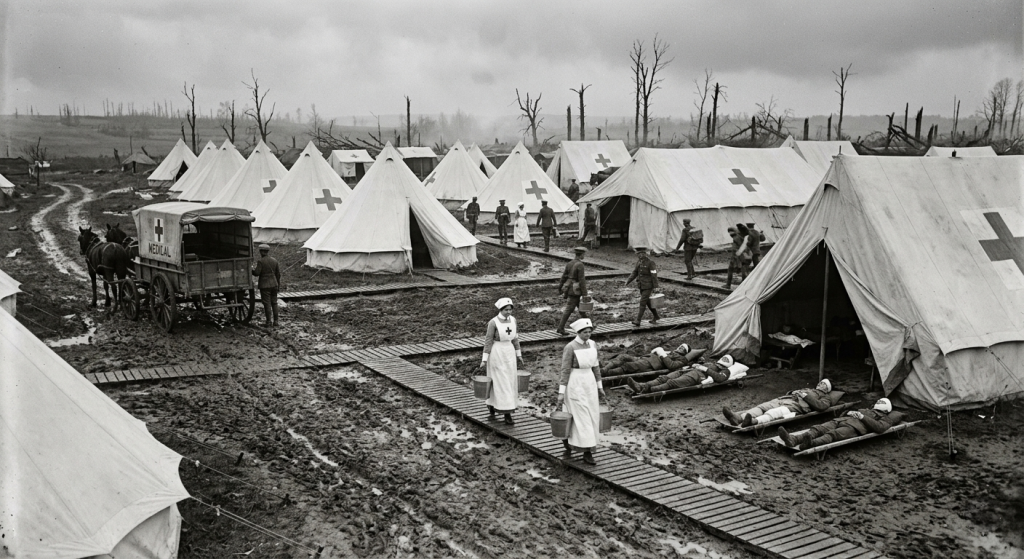
World War One tested the canvas bell tent under artillery conditions no previous conflict had seen. Red Cross field hospitals behind the Western Front pitched large bell tents marked with red crosses to house wounded soldiers before evacuation. British, French, and American medical units all deployed the same conical canvas shelters, often in clusters of 20 or more tents with plank walkways between them.
However, WWI also accelerated the decline of the bell tent as a frontline shelter. Trench warfare and fixed positions favored earth-covered dugouts and larger rectangular hospital marquees. Still, the canvas bell tent remained the go-to structure for rear-area logistics, ambulance staging, and officer quarters through all four years of the war.
1920s Safari Camps and Global Adoption

After World War One ended in 1918, the bell tent entered its most photogenic era. British East Africa, now Kenya and Tanzania, became the global center of safari tourism, and white canvas bell tents under acacia trees defined the aesthetic. Outfitters like Safariland and Newland Tarlton ran multi-week expeditions using bell tents for clients, African guides, and equipment storage.
The safari era also introduced the luxury amenities now shaping modern glamping. Specifically, folding canvas chairs, brass wash basins, hanging lanterns, Persian rugs, and camp cots all appeared inside safari bell tents by the 1920s. When modern Airbnb glamping operators charge $300 per night for a canvas tent with a bed, a rug, and a wood stove, they’re running a playbook written 100 years ago on the Kenyan savanna. For a closer look at how to think about bell tent sizing, features, and four-season readiness in 2026, see our bell tent buying guide.
Between the 1920s safari era and the 2010s glamping boom, bell tent design sat mostly frozen in cotton canvas. Meanwhile, synthetic fabric research during World War Two and the petrochemical boom of the 1950s produced polyester, nylon, and treated blends the original British Army quartermasters would not recognize. By the 2010s, these materials finally reached tent manufacturing at consumer prices, which set up the biggest material shift in bell tent history since Crimea.
Traditional Canvas vs Modern Polyester Bell Tents
The biggest change in bell tent history during the last 20 years is material chemistry. Historic cotton canvas, used from 1855 through roughly 2010, performs well in dry heat but struggles with three failure modes: shrinkage during wet cycles, water absorption adding 20 to 40 pounds to canvas weight, and mildew growth in stored or damp tents. Owners had to season cotton canvas before first use and treat it annually to fight these problems.
| Attribute | Traditional Cotton Canvas | Modern PolyShield Polyester |
|---|---|---|
| Breaking Strength (warp) | 210 to 382 lbs | 449 lbs |
| Water Absorption | 20 to 40 lbs when wet | Zero |
| Shrinkage | Yes, requires seasoning | None |
| Mildew Risk | High without treatment | Low, treated fabric |
| Annual Maintenance | Re-waterproofing required | None |
For owners who want the historic bell tent silhouette without the traditional canvas maintenance burden, modern polyester wins on every performance axis. Cotton purists still prefer the breathability and feel of historic canvas, while most buyers in 2026 choose engineered polyester for the durability gains. Shoppers cross-shopping canvas shelter types should also check our wall tent vs bell tent comparison before picking a silhouette.
The Elk Mountain Yukon: A Modern Heir to Bell Tent History
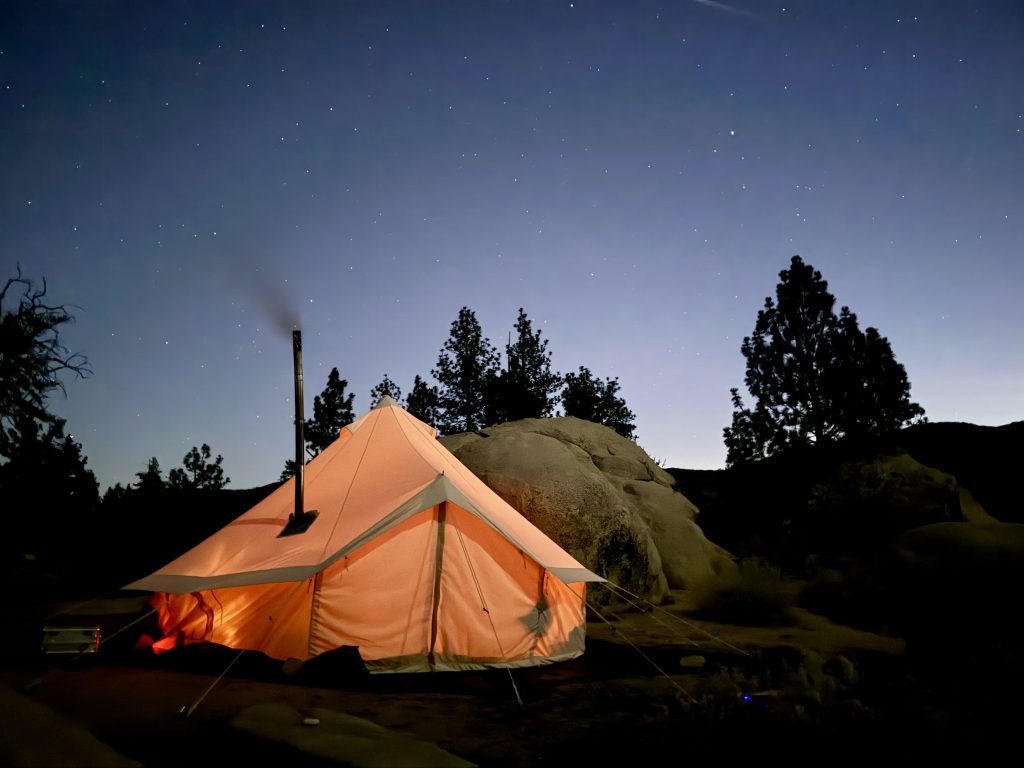
The Elk Mountain Yukon bell tent takes the 1855 Crimean War design and applies 170 years of accumulated lessons. Its conical silhouette, single center pole, peak vent, and canvas wall construction are immediately recognizable to anyone familiar with bell tent history. However, six specific upgrades separate the Yukon from the traditional version.
First, PolyShield polyester canvas replaces cotton entirely, eliminating shrinkage, water absorption, and most mildew problems at 11 oz per square yard with 449 lb warp breaking strength. Second, a zipped-in 540g PVC floor curves 3.5 inches up the walls, keeping moisture and insects out, something the Victorian hunting camps would have paid handsomely for. Third, four screened peak air vents plus four screened zip windows provide ventilation the 1855 design relied on a single chimney opening for.
Fourth, the galvanized steel center pole splits into three segments for transport, where historic bell tents required a single 10-foot wooden pole. Fifth, an uncut fiberglass stove jack lets owners cut the opening to 4, 5, or 6 inches based on their specific stove pipe. Sixth, the optional PolyShield+ upgrade adds integrated fire and mildew resistance for $199, not as a surface coating but as part of the fabric itself.
Available in 13-foot, 16-foot, and 20-foot diameters priced between $875 and $1,274, the Yukon covers solo base camp use through 6-person family glamping. For context, Alex Schultz ran a three-month field test on the 16-foot Yukon prototype through sub-freezing Michigan nights. Watch the full review here: Yukon 16-foot prototype three-month review. Our written breakdown lives in the Elk Mountain Yukon bell tent review, which goes deeper on build quality, weather performance, and real-world setup time.
Pros and Cons of Bell Tent Ownership
Pros
- Setup time averages 15 to 30 minutes with one person
- Single center pole leaves 133 to 304 square feet of unobstructed floor space
- Peak vent accepts 4, 5, or 6 inch stove pipe for four-season use
- Conical shape sheds wind and precipitation from every direction
- Canvas construction muffles outside noise by roughly 10 to 15 decibels compared to nylon
- Modern polyester versions require no seasoning or annual re-waterproofing
- Proven across 170 years of field use in every climate zone
Cons
- Packed weight of 80 to 115 lbs makes vehicle transport mandatory
- Traditional cotton versions absorb up to 40 lbs of water when wet
- Single door configuration limits emergency egress options
- Tall peak height of 8 to 11.5 feet restricts low-clearance sites
- Not rated for heavy snow loads without internal pole reinforcement
Starting at $875
Pick Your Size. Pitch It in 30 Minutes. Sleep Under Canvas Tonight.
Three Yukon sizes from 13 to 20 feet, optional PolyShield+ fire and mildew treatment, and fast shipping from Idaho.
Final Verdict
Bell tent history is unusually clean for an outdoor product category. One design emerged in 1855, survived two world wars, crossed continents with colonial expansion and safari tourism, and now anchors the modern glamping industry without major structural changes. The cone works, the single pole works, the peak vent works, and 170 years of field testing has confirmed it.
For buyers considering a bell tent in 2026, the real decision is material chemistry rather than structural design. Cotton canvas has heritage appeal and breathability, while modern polyester blends like PolyShield solve every traditional failure mode at a lower lifetime cost. Hunters and overlanders running serious four-season use cases benefit most from the engineered materials, while heritage-focused glampers sometimes prefer the look and feel of traditional cotton.
The Elk Mountain Yukon bell tent sits in the modern polyester category with pricing between $875 and $1,274 across three sizes. Its zipped-in PVC floor, screened ventilation, integrated stove jack, and PolyShield fabric address the specific failure modes historic British Army quartermasters documented during 170 years of field use. Each upgrade solves a real problem rather than adding marketing features.
For buyers who want the bell tent aesthetic with modern performance, the Yukon is a strong fit. If you want the heritage silhouette plus durability upgrades the 1855 designers never had access to, this is the pick. Buyers who specifically want cotton canvas should look at Sunforger-canvas options from heritage makers instead, while those prioritizing ultra-lightweight backcountry use should consider a geodesic or tipi from brands like Seek Outside. For broader cross-shopping, see our top bell tents roundup and our guide to maximizing comfort when tent camping off the grid.
Frequently Asked Questions
Who invented the bell tent?
The modern bell tent was standardized by the British Army in 1855 during the Crimean War, though similar conical tent designs existed in Central Asian and Ottoman nomadic cultures for centuries earlier. Henry Hopkins Sibley patented a nearly identical American version in April 1856, inspired by Plains Indian teepees he observed during frontier service.
When were bell tents first used?
Bell tents entered widespread military use in the summer of 1855 with British Army deployments in the Crimean War. Before then, smaller ridge and wedge tents had been the standard field shelter. Bell tent origin as a formalized military design traces to specific quartermaster orders placed between 1854 and 1855 in response to catastrophic winter losses at Sevastopol.
What is a Sibley tent and how is it different from a bell tent?
A Sibley tent is the American name for the conical canvas military tent patented by Henry Hopkins Sibley in 1856. Structurally it is nearly identical to the British bell tent, though Sibley tents typically included a tripod base at the center pole and were designed to sleep 12 Union soldiers. British bell tents generally held 15 to 20 men sleeping feet-inward around the pole.
Why are they called bell tents?
The name comes from the shape, since the conical canvas profile resembles an inverted bell when pitched. British military quartermasters used the term officially by 1855, and the name carried into civilian sporting and glamping use through the Victorian era. Some period sources also called them cone tents or round tents, but bell tent became the dominant term by 1900.
Are modern bell tents waterproof?
Traditional cotton canvas bell tents are water-resistant rather than fully waterproof, and they rely on tight fabric weave plus natural fiber swelling when wet to shed water. Modern polyester versions like the Elk Mountain Yukon use waterproof PolyShield fabric with sealed seams, and the material does not absorb water at all. Both types benefit from a rain fly during heavy prolonged precipitation.
How long do canvas bell tents last?
Traditional cotton canvas bell tents last 10 to 20 years with proper seasoning, storage, and annual re-waterproofing. Modern polyester versions rate for roughly 3 years of continuous UV exposure, which translates to 15-plus years under normal seasonal use. Elk Mountain specifies about three years of cumulative UV exposure before canvas degradation becomes noticeable.