


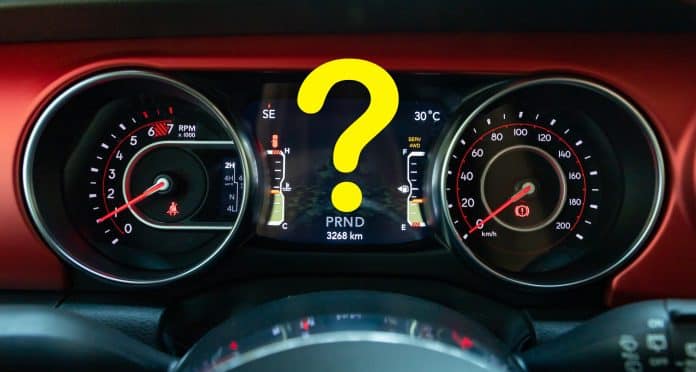

Quick Answer:
Most trucks and SUVs allow you to drive up to 55-62 mph in 4H (4WD High) based on manufacturer owner’s manual specifications. Toyota allows shifting into 4H at up to 62 mph. Jeep recommends 50 mph or below. Ford and Chevy specify 55 mph as the shift limit. The safe operating range on loose surfaces is 30-45 mph. Driving faster is mechanically possible but increases drivetrain wear and reduces your ability to react to terrain changes.
Last updated: March 2026 | 10 min read
Search “how fast can you drive in 4 high” and you will find dozens of forum threads where one person says 55 mph and the next says 80 mph. Neither cites a source. We went to the actual owner’s manuals for Toyota, Jeep, Ford, Chevy, and Ram to get the factory-specified speed limits for 4H engagement and operation.
The results surprised us. Toyota allows shifting into 4H at up to 62 mph. Jeep caps it at 50 mph. Below, you will find the exact specs for 10 popular trucks and SUVs, safe speed ranges by terrain type, and a clear breakdown of what happens if you exceed these limits.
In This Article
How Fast Can You Drive in 4 High? Speed Limits by Vehicle
The table below lists the 4WD high speed limit for each vehicle: the max speed for shifting into 4H and the recommended operating speed. These numbers come directly from manufacturer owner’s manuals and service documentation.
| Vehicle | Max Shift Speed (2H to 4H) | Recommended Max in 4H | 4WD Type |
|---|---|---|---|
| Toyota 4Runner (5th Gen) | 62 mph | 55-60 mph | Part-Time |
| Toyota Tacoma (3rd Gen) | 62 mph | 55-60 mph | Part-Time |
| Jeep Wrangler (JL) | 50 mph | 45 mph | Part-Time |
| Jeep Gladiator | 50 mph | 45 mph | Part-Time |
| Ford F-150 (14th Gen) | 55 mph | 50-55 mph | Part-Time |
| Ford Bronco | 55 mph | 50-55 mph | Part-Time |
| Chevy Silverado 1500 | 55 mph | 50-55 mph | Part-Time |
| Ram 1500 (DT) | 55 mph | 50-55 mph | Part-Time |
| Land Cruiser (300 Series) | Any speed | Any speed | Full-Time |
| Land Rover Defender | Any speed | Any speed | Full-Time |
Note: These are manufacturer engagement speeds for shifting into 4H while the vehicle is moving. Once in 4H, the mechanical top speed matches the vehicle’s normal top speed. The recommended max refers to the highest speed at which 4H use is practical and safe on loose surfaces. Your 4×4 high speed limit depends on your specific make and model.
Toyota sets the highest shift-into threshold at 62 mph. Jeep is the most conservative at 50 mph. Ford, Chevy, and Ram all cluster around 55 mph. Full-time 4WD vehicles like the Land Cruiser and Defender operate in 4WD at all speeds because they use a center differential.
Safe Speeds in 4 High by Terrain
The shift speed in the table above tells you the max speed in 4 high for engagement. Once engaged, the speed you drive at should match the surface conditions, not the mechanical limit.
| Terrain Type | Recommended Speed in 4H | Why |
|---|---|---|
| Snowy highway | 35-45 mph | 4H adds traction but does not improve braking. Stopping distances on snow increase 3-4x compared to dry pavement. |
| Gravel or dirt road | 25-40 mph | Loose surfaces reduce tire grip. Ruts and washboard sections appear without warning at higher speeds. |
| Mud | 5-20 mph | Momentum matters, but too much speed sends mud into the engine bay and reduces steering control. |
| Sand | 15-30 mph | Tire pressure and momentum are more important than speed. Air down tires to 18-22 PSI for traction. |
| Icy road | 25-35 mph | Black ice has nearly zero traction. 4H helps you accelerate, not stop. |
| Wet pavement (heavy rain) | 40-55 mph | 4H distributes power to all four wheels, reducing hydroplaning risk. Keep speeds moderate. |
The pattern: if the road is bad enough to need 4H, it is bad enough to slow down. The 4WD system gives you better acceleration and stability, not shorter braking distances.
What Happens If You Drive Too Fast in 4H
Exceeding the recommended speed in 4H does not immediately destroy your drivetrain. The consequences are gradual and depend on the surface.
On loose surfaces at high speed: The front and rear axles spin at the same rate in part-time 4WD. On gravel or snow, the loose surface absorbs the rotational difference between front and rear wheels during turns. At 60+ mph, you reduce your reaction time to obstacles, ruts, and wildlife. A blown tire or deep rut at 60 mph in loose gravel is far more dangerous than at 35 mph.
On dry pavement: This is where speed in 4H creates real mechanical problems. Part-time 4WD systems lock the front and rear axles together at a 50/50 power split. On dry, high-traction surfaces, the front and rear wheels need to spin at different speeds during turns. When they cannot, energy accumulates in the transfer case and driveline. This is called “drivetrain binding” or “axle wind-up.” At low speeds, you will feel the steering get stiff and hear clicking or clunking during turns. At higher speeds, stress on the transfer case, driveshaft U-joints, and front differential increases significantly.
The result of prolonged high-speed 4H use on dry pavement:
- Premature wear on the transfer case chain or gear set
- Damaged front differential gears
- Worn or cracked driveshaft U-joints
- Increased tire wear (front tires scrub during turns)
- Higher fuel consumption (10-15% more than 2WD)
4H vs. 4L: When to Use Each
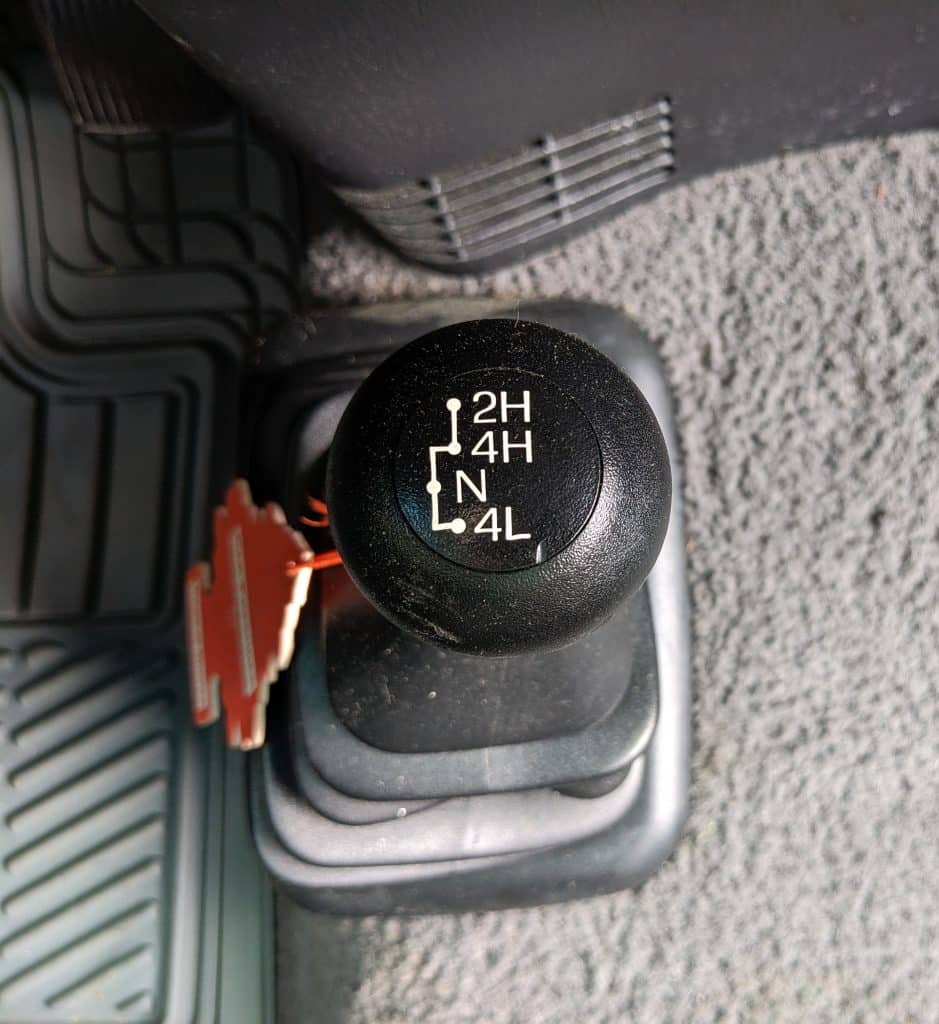
4H and 4L serve different purposes. The difference is gear reduction, not the number of driven wheels.
| 4H (High Range) | 4L (Low Range) | |
|---|---|---|
| Gear ratio | 1:1 (normal) | 2.5:1 to 4:1 (reduced) |
| Speed range | 0-55+ mph | 0-25 mph |
| Torque | Normal engine torque | 2.5-4x multiplied torque |
| Use when | Snow, gravel, rain, sand at speed | Rock crawling, steep grades, deep mud, recovery |
| Shifting requirement | Shift on the fly (under 50-62 mph) | Stop or near stop, transmission in neutral |
A simple rule: if you are moving faster than 25 mph, use 4H. If you need maximum crawling torque at walking speed, use 4L. Third gear in 4L is roughly equivalent to first gear in 4H, which is why 4L is reserved for extreme terrain.
Driving in 4 High on Dry Pavement
Short answer: avoid it. Manufacturers did not design part-time 4WD systems for high-traction surfaces.
When you engage 4H on a part-time system, the front and rear axles lock together and rotate at the same speed. On loose surfaces (dirt, gravel, snow), the tires slip slightly to accommodate the speed difference between front and rear wheels during turns. On dry pavement, tires grip fully and cannot slip. The rotational difference has nowhere to go, so it builds up as stress in the transfer case, driveshaft, and differential gears.
A few hundred feet of dry pavement in 4H will not damage your truck. Driving several miles at speed will cause binding, clicking during turns, and accelerated component wear. Extended use leads to transfer case damage.
Exceptions: Full-time 4WD vehicles (Land Cruiser, Land Rover, Jeep Grand Cherokee Quadra-Trac II) use a center differential that allows the front and rear axles to spin at different speeds. These systems are designed for dry pavement at any speed. If your vehicle has a center differential, 4H on dry pavement is fine.
Full-Time 4WD vs. Part-Time 4WD Speed Differences
The speed question changes completely based on whether your vehicle uses a part-time or full-time 4WD system.
Part-time 4WD (Toyota 4Runner, Jeep Wrangler, Ford F-150, Chevy Silverado) locks the front and rear axles together with no center differential. Engagement speed is capped at 50-62 mph depending on the manufacturer. Use only on loose or slippery surfaces.
Full-time 4WD (Land Cruiser, some Land Rover models, Jeep Grand Cherokee with Quadra-Trac II) runs in 4WD at all times using a center differential to split power between axles. No speed limit applies. The system handles highway speeds on dry pavement without drivetrain stress.
AWD (All-Wheel Drive) systems found in crossovers and some trucks (like the Ford Maverick) are a different category entirely. AWD systems actively vary power distribution and have no speed restrictions, but they also lack low-range gearing for serious off-road use.
Check your owner’s manual to confirm which system your vehicle uses. The shift knob or selector will tell you: if it shows “2H, 4H, 4L” positions, you have part-time 4WD. If it shows “4H, 4L, center diff lock,” you have full-time 4WD.
Driving in 4 High on the Highway
People search “how fast can you drive in 4 high” because they want to know if they should engage 4H on a snowy or icy interstate. Many also ask, “can you drive in 4 high on the highway?” The answer depends on conditions.
When 4H makes sense on the highway:
- Snow-covered roads where the surface is uniformly loose
- Heavy rain with standing water on the road
- Ice storms where the entire road surface is compromised
- Unpaved highways or long stretches of gravel road
When 4H does NOT make sense on the highway:
- Dry pavement with clear lanes (even if shoulders are snowy)
- Light rain on well-maintained asphalt
- Plowed and salted highway with occasional wet patches
If the road has consistent snow or ice coverage, engage 4H and reduce your speed to 35-45 mph regardless of what the speed limit sign says. 4WD helps you maintain traction during acceleration and lane changes. It does not reduce stopping distance. Your braking performance is identical in 2WD and 4WD because brakes work on all four wheels in every mode.
One common mistake: drivers engage 4H on an icy highway and then maintain normal speed because the truck “feels” more stable. The improved traction creates a false sense of security. The vehicle accelerates and handles better, but stops at the same distance. This leads to higher-speed crashes when traffic slows suddenly.
Frequently Asked Questions
How fast is too fast in 4 high?
For part-time 4WD systems, the manufacturer shift limit (50-62 mph depending on make) is the absolute ceiling. On loose surfaces where 4H is appropriate, 30-45 mph is the practical speed range. Going faster than 45 mph on gravel, snow, or mud reduces your reaction time and increases rollover risk without improving traction.
Is it OK to drive 70 mph in 4WD high?
On a full-time 4WD system with a center differential (Land Cruiser, some Land Rovers), yes. On part-time 4WD (most trucks and Jeeps), 70 mph exceeds every manufacturer’s engagement speed. The drivetrain will not break immediately, but sustained highway speeds in part-time 4H on dry pavement accelerates wear on the transfer case, U-joints, and front differential.
Does 4 high use more gas?
Yes. Expect a 10-15% increase in fuel consumption compared to 2WD. The engine powers two additional half-shafts, a front differential, and a transfer case. The added rotating mass and drivetrain friction consume more energy. On a truck averaging 20 mpg in 2WD, 4H operation typically drops efficiency to 17-18 mpg.
When should I switch from 4H to 4L?
Switch to 4L when you need maximum torque at low speed: rock crawling, steep hill climbs, deep mud recovery, or pulling a stuck vehicle. The threshold is roughly 25 mph. If you are moving faster than that, stay in 4H. Most vehicles require you to stop or slow to under 5 mph before shifting from 4H to 4L.
Is it safe to leave my truck in 4 high all winter?
If your vehicle has part-time 4WD, no. Driving on dry or cleared pavement in 4H causes drivetrain binding and premature wear. Engage 4H only when road conditions require it (active snow, ice, or unplowed roads) and switch back to 2H when roads are clear. If your vehicle has full-time 4WD, it operates in 4WD continuously by design.
What is the difference between 4H and AWD?
4H (part-time 4WD) locks the front and rear axles at a fixed power split (typically 50/50) and must be manually engaged. AWD continuously varies the power split between axles (often 60/40 or 90/10 front/rear) and operates automatically at all times. 4H provides more traction in extreme conditions. AWD offers seamless on-road handling without driver intervention. 4H includes low-range gearing for off-road use; AWD does not.
Do I need 4 high in the rain?
For light to moderate rain on paved roads, 2WD with good tires is sufficient. For heavy downpours with standing water, or on unpaved roads that turn to mud, 4H provides better traction and stability. If you hydroplane in 2WD, 4H distributes power to all four wheels and reduces the chance of losing control. Reduce speed to 40-50 mph regardless of which mode you use.
How do I know if my truck has part-time or full-time 4WD?
Look at your transfer case selector. Part-time systems show “2H, 4H, 4L” (sometimes labeled 2WD, 4WD High, 4WD Low). Full-time systems show “4H, 4H Lock, 4L” or similar. Your owner’s manual will specify which system is installed. Common part-time vehicles: Toyota 4Runner, Tacoma, Jeep Wrangler, Ford F-150, Chevy Silverado. Common full-time vehicles: Toyota Land Cruiser, Lexus GX, Land Rover Defender, Jeep Grand Cherokee (Quadra-Trac II).
The Bottom Line
How fast you drive in 4 high depends on your vehicle and the surface underneath your tires. Part-time 4WD systems (Toyota 4Runner, Jeep Wrangler, Ford F-150, Chevy Silverado, Ram 1500) top out between 50-62 mph for engagement based on owner’s manual specs. Full-time 4WD vehicles (Land Cruiser, Land Rover Defender) operate in 4WD at any speed.
The mechanical limits are one thing. The practical limits are another. On snow, gravel, mud, or ice, keep your speed at 30-45 mph regardless of what the transfer case allows. The 4WD system improves traction for acceleration and stability, not braking distance. That distinction saves trucks and lives.
Bookmark the vehicle speed table above for quick reference the next time conditions get rough. And if your truck has part-time 4WD, remember to shift back to 2H when the road clears.
Related Reading on 4WDtalk: