


Some links below are Amazon affiliate links. If you buy through them, 4wdTalk earns a small commission at no extra cost to you, which helps fund our hands-on testing.
Quick Facts:
- Comparison: Tacoma vs Tundra as a camper build base
- Tacoma payload: 1,380 to 1,710 lb on paper, often under 900 lb loaded
- Tundra payload: up to 1,940 lb, with more usable headroom
- Tacoma towing: up to 6,500 lb
- Tundra towing: up to 12,000 lb
- Bed lengths: Tacoma 5 or 6 ft; Tundra 5.5, 6.5, or 8.1 ft
- Best for weekends and tight trails: Tacoma
- Best for full-time and family builds: Tundra
8 min read
In This Guide
Tacoma vs Tundra Overview for Camper Builders
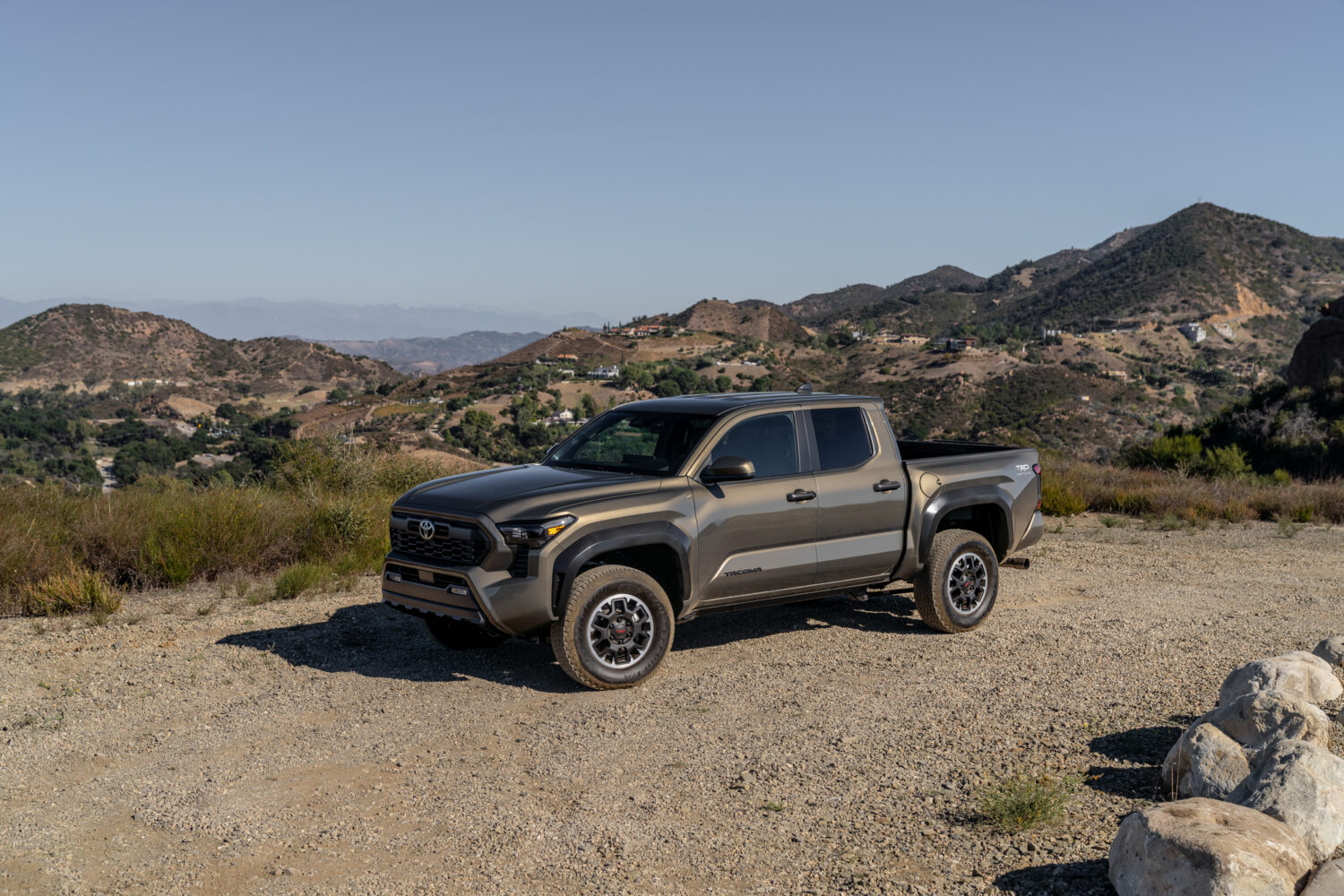
The tacoma vs tundra decision comes down to one question most spec sheets dodge: how much weight will your build truly carry once it is loaded? I have built and lived out of overland rigs for years, first a Jeep Gladiator and then a Chevy ZR2, so I know the gap between a truck’s paper payload and its real payload. This gap is the crux of the decision. Both Toyotas are proven platforms, yet they solve two different problems for a camper build.
The Tacoma is the mid-size favorite. It slots onto tight forest roads, sips fuel, and carries a deep aftermarket catalog. However, its payload shrinks fast once you add a camper shell, a rooftop tent, water, and passengers. The Tundra, on the other hand, is the full-size answer. It brings a higher ceiling for weight and towing, so a heavier build stays inside its limits.
Price also separates these two trucks. A well-equipped Tacoma TRD Off-Road lands in the low-to-mid $40,000s, while a comparable Tundra climbs into the $50,000s. For a weekend couple with a light setup, the Tacoma often makes sense. For a family running a heavy pop-up camper on long highways, the Tundra earns its cost. Throughout this guide, I weigh each factor against real build weights.
Key Specs at a Glance
Before the deep dive, here are the current figures for both trucks. These are manufacturer maximums, so treat them as ceilings rather than everyday realities.
| Specification | Toyota Tacoma | Toyota Tundra |
|---|---|---|
| Class | Mid-size | Full-size |
| Max payload | 1,380 to 1,710 lb | Up to 1,940 lb |
| Max towing | 6,500 lb | 12,000 lb |
| Bed lengths | 5 ft, 6 ft | 5.5 ft, 6.5 ft, 8.1 ft |
| Engine (top) | 2.4L i-FORCE MAX hybrid | 3.4L i-FORCE MAX hybrid |
| Approx. build cost base | Low-mid $40,000s | Low-mid $50,000s |
Start Your Build Up Top
SmittyBilt Overland GEN2 Rooftop Tent
A proven 2 to 3 person soft-shell tent to fit a bed rack on either truck. It sets up in minutes and sleeps you off the ground on any trail.
Tacoma vs Tundra Payload: The Real Numbers

Payload is where the tacoma vs tundra debate gets honest. On paper, a Tacoma carries between 1,380 and 1,710 pounds. In practice, the number falls apart once you build. Add a steel camper shell at 300 pounds, a rooftop tent and rack at 200 pounds, drawers and a fridge at 150 pounds, plus 30 gallons of water at 250 pounds. Now add two adults and a dog. Suddenly your margin drops toward zero, and many built Tacomas run near their rear axle rating.
The Tundra handles the same gear with room to spare. Run the identical package on a Tundra rated near 1,940 pounds and you keep roughly 400 to 600 pounds of margin. This surviving headroom is what the Tacoma lacks once loaded. It matters for braking, tire wear, and washboard handling. For this reason, heavy builds lean Tundra without much argument.
Towing Capacity and Trailer Plans
Towing widens the gap further. The Tacoma tops out at 6,500 pounds with the gas engine, or 6,000 pounds as an i-FORCE MAX hybrid, which covers a small teardrop or a light off-road trailer. The Tundra tows up to 12,000 pounds, so it pulls a large adventure trailer or a boat while still carrying a loaded bed. If your plan includes a trailer alongside a camper, the Tundra is the safer engineering choice. Still, remember payload, not towing, is the limit most builders hit first. Weigh your gear before you weigh the trailer. If you are unsure how heavy your kit will get, our guide on how to size an overland fridge shows how quickly cargo weight adds up.
Bed Length and Camper Fit

Bed length shapes which camper you build. The Tacoma offers a 5-foot or 6-foot bed, while the Tundra offers 5.5, 6.5, or 8.1 feet. For a rooftop tent mounted on a bed rack, either truck works, since the rack spans the bed rails rather than filling the floor. As a result, many first builds start with a tent up top on whichever truck the owner already owns.
Slide-in and flatbed campers tell a different story. A pop-up camper needs a longer, wider bed to sit securely and to leave room for a passthrough or a gear garage. The Tundra’s 6.5 and 8.1-foot beds accept full slide-in units and flatbed habitats a short Tacoma bed will never hold. Consequently, hard-side and full-time campers push builders toward the Tundra almost by default.
For the tacoma vs tundra bed size question, match the bed to the sleeping system, not the other way around. A couple planning a tent build should pick either truck and browse our hands-on rooftop tent picks to size the right model. A family wanting a walk-in pop-up needs to size the truck to the camper first. In both cases, measure your camper first. The tacoma vs tundra bed size gap drives this decision more than any other spec.
Tacoma vs Tundra Size on Tight Trails
Size on the trail is the Tacoma’s home turf. The tacoma vs tundra size gap shows up first here. It is narrower and shorter than the Tundra, so it threads through tight tree gaps and rocky shelf roads where a full-size truck has to crawl around. On narrow forest routes and technical desert two-tracks, the smaller footprint saves body panels and nerves. For trail-tight users, the Tacoma remains the more relaxed tool.
The Tundra pays a real penalty in tight terrain. Its width and long wheelbase make three-point turns and off-camber squeezes harder, and its longer overhangs limit break-over angle on steep crests. On open desert, forest highway, and graded fire roads, however, the size disappears and the stability helps. So the honest read depends on where you camp more often, not on which truck sounds tougher. For a closer look at how the mid-size platform behaves off-road, see how the Tacoma stacks up against the 4Runner for overlanding.
Drivetrain, Fuel Economy, and Reliability
Fuel economy leans toward the smaller truck, though the gap is narrower than many expect. A hybrid Tacoma returns low-to-mid 20s mpg unloaded, while a Tundra i-FORCE MAX lands in the high teens to low 20s. Once both trucks carry a full build, real-world numbers converge, because the Tacoma works harder to move similar weight. For the tacoma vs tundra mpg comparison, the Tacoma still wins on daily driving. So the tacoma vs tundra mpg edge fades exactly when you tour with a heavy rig.
Reliability is a strength for both platforms, and this is where the tundra vs tacoma reliability question rarely produces a clear loser. Toyota’s truck drivetrains have a long record of high-mileage service, and both trucks now share hybrid i-FORCE MAX technology. The Tacoma’s four-cylinder hybrid is newer, while the Tundra’s larger V6 hybrid has a few more model years behind it. On the tundra vs tacoma reliability question, neither choice should worry an owner who follows maintenance intervals.
Power delivery favors the Tundra for heavy work. Its i-FORCE MAX makes far more torque, so it climbs grades under load without straining. The Tacoma’s engine is capable but works harder with a full camper aboard. For this reason, highway-heavy and towing-heavy builders often prefer the Tundra’s easy power. Buyers weighing other Toyota options might also find value in our Land Cruiser and 4Runner comparison.
Cost and Aftermarket Support
Cost favors the Tacoma at every stage. It costs less to buy, less to fuel, and often less to insure. Its parts and accessories also run cheaper, since mid-size components are lighter and more common. For a budget-minded weekend build, those savings add up.
Aftermarket support is deep for both trucks, yet the Tacoma holds a real edge in catalog volume and price. Bumpers, sliders, suspension kits, bed racks, and camper shells exist in huge numbers for the Tacoma, so competition keeps prices lower and used parts easier to find. The Tundra’s catalog is smaller but mature, and it covers every major build category. For a first-time builder watching the budget, the wider Tacoma parts market shaves real dollars off the total.
Final Verdict by Use Case
For weekend warriors and solo or couple builds, the Tacoma is the smarter base. It costs less, sips less fuel, and fits the tight trails where mid-size trucks shine. A light tent-and-drawer setup stays inside its payload, so the paper limits never bite. If your trips run two or three nights on forest roads, the Tacoma delivers the most fun per dollar.
For full-time travel, family builds, and heavy campers, the Tundra is the right call. Its higher payload ceiling and 12,000-pound towing keep a loaded rig safely inside its limits. As a result, brakes, tires, and long-term reliability all benefit. The trade-offs stay clear, since it costs more, drinks more fuel, and feels big on tight trails. Buyers who camp mostly on narrow routes should still weigh the Tacoma instead.
On value, each truck wins its own lane. The Tacoma gives the lowest total cost for a light build, while the Tundra gives the most usable capacity per dollar for a heavy one. Above all, avoid buying a Tacoma and then loading it like a Tundra, because the overload path ends in a stressed rear axle.
My Recommendation by Build Weight
Weigh your planned build first. Then pick the truck whose real payload covers it with margin to spare. If your loaded weight lands under about 900 pounds of gear and passengers, buy the Tacoma. If it climbs higher, step up to the Tundra and build with confidence. A camper is only as good as the fridge keeping your food safe, so plan cooling early.
Finish the Build Right
ICECO APL55 Dual-Zone 12V Fridge
A 55-liter dual-zone fridge freezer with a SECOP compressor runs on 12V, 24V, or shore power. It fits behind the seats or in the bed of either Toyota.
Frequently Asked Questions
Is the Tundra or Tacoma better for a camper build?
It depends on weight. For a light weekend setup, the Tacoma wins on cost, fuel, and trail size. For a heavy full-time or family camper, the Tundra wins because its higher payload keeps the loaded rig inside safe limits.
What is the real-world payload of a Tacoma once loaded?
Although the Tacoma lists 1,380 to 1,710 pounds, a camper shell, rack, drawers, water, and two passengers eat most of the total. Many built Tacomas end up with under 900 pounds of usable margin, so weigh your gear before you buy.
Which Toyota truck fits a truck bed camper better?
A Tundra fits slide-in and flatbed campers better because of its 6.5 and 8.1-foot bed options. Meanwhile, the Tacoma’s 5 and 6-foot beds suit rooftop tents and smaller shells rather than full walk-in campers.
Is the Tundra too big for tight trails?
Yes, the Tundra is wider and longer, so it struggles on narrow tree-lined and rocky trails where the Tacoma slips through easily. On open desert and graded roads, however, its size is no problem.
Which is more reliable, the Tacoma or the Tundra?
Both share Toyota’s strong truck reliability record. The Tundra’s V6 hybrid has slightly more model years behind it, while the Tacoma’s four-cylinder hybrid is newer. Regular maintenance keeps either truck dependable for high mileage.
Does the Tundra get worse gas mileage than the Tacoma?
Unloaded, the Tacoma returns better mpg. Once both trucks carry a full build, the numbers move closer, because the Tacoma works harder to haul similar weight. On daily driving it still holds the fuel advantage.