


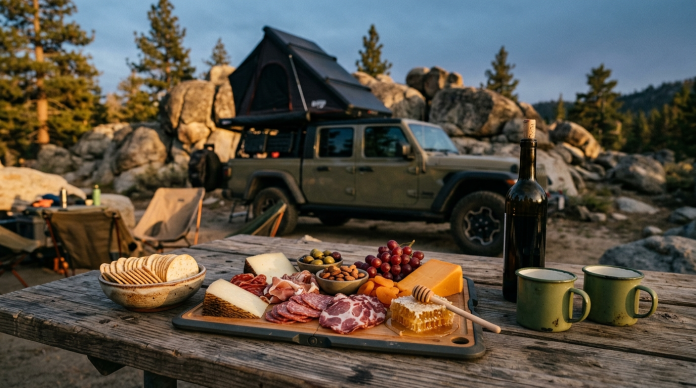

Quick Verdict: These 20 no cook camping meals solve three overland problems: arrival nights when you’re exhausted, fire restriction days when open flame is banned, and hot afternoons when turning on a stove sounds miserable. Every recipe assembles in 5 to 15 minutes with zero heat source required. Tested at overland base camps from Big Bear to the Mojave. If you need a meal without the cook, start here.
Last updated: April 2026 | 12 min read
Written by Alex Schult
Editor in Chief of 4wdTalk.com. 15+ years of off-road and overlanding experience with 1,000+ hours on the trail. Tests no-cook meals at base camps on a Jeep Gladiator and Chevy Colorado ZR2 across the Sierras, Mojave, and Big Bear backcountry.
We tested every meal in this guide on actual overland trips. Amazon affiliate links support 4wdTalk.com at no extra cost to you.
In This Guide
Why No-Cook Meals Work for Overlanders
No cook camping meals earn permanent rotation in my overland kit for three reasons tied directly to trip reality. First, arrival nights at base camp after a long drive leave no energy for fire building or briquette lighting. Second, fire restrictions on public lands during dry summer months ban open flame and charcoal. Third, Mojave afternoons above 100F make cooking uncomfortable and wasteful. Zero-flame meals solve all three scenarios.
Over 40+ overland trips testing no-cook meals across the Sierras, Mojave, and Big Bear backcountry, I learned three rules. First, a quality 12V fridge or cooler determines which no-cook recipes stay food-safe past day 2. Second, make-ahead prep at home beats every on-site assembly for time and cleanup. Third, shelf-stable pantry items extend your no-cook range to day 14 without refrigeration. This guide covers all three plus the 20 tested meals I rely on.
For cooked dinners, reference the dutch oven camping recipes and campfire recipes hubs. Meanwhile, for wrapped coal meals, see the foil packet camping recipes collection. Additionally, all four method-based hubs roll up to our camp cooking for overlanders guide.
No-Cook Gear Primer: What You Need
No-cook meals require the lowest gear investment of any camp cooking method. However, three specific tools separate clean assembly from disorganized chaos.
Cutting Board and Knife
A compact camp cutting board and a sharp folding knife handle 90% of no-cook prep. The GSI Outdoors Ultralight Cutting Board weighs 2 ounces and folds flat for drawer storage. Pair it with a Buck 110 folding knife or Opinel No. 8 for a reliable cutting kit under $60 combined.
Cold Storage
A quality 12V fridge or cooler determines your no-cook range. For 2-day trips, a Yeti Tundra 45 pre-chilled with a 10-pound ice block maintains sub-40F for 48+ hours. However, for 5+ day trips, step up to a 12V fridge like the ICECO VL75 ProD which holds cold indefinitely on vehicle power.
Serving Setup
Enamel camp plates, collapsible bowls (Sea to Summit X-Bowl), and insulated tumblers handle serving without bulk. Avoid single-use plates since no-cook meals generate less waste than cooked meals, and the advantage disappears with disposables.
Keep No-Cook Meals Cold: The 12V Fridge I Trust
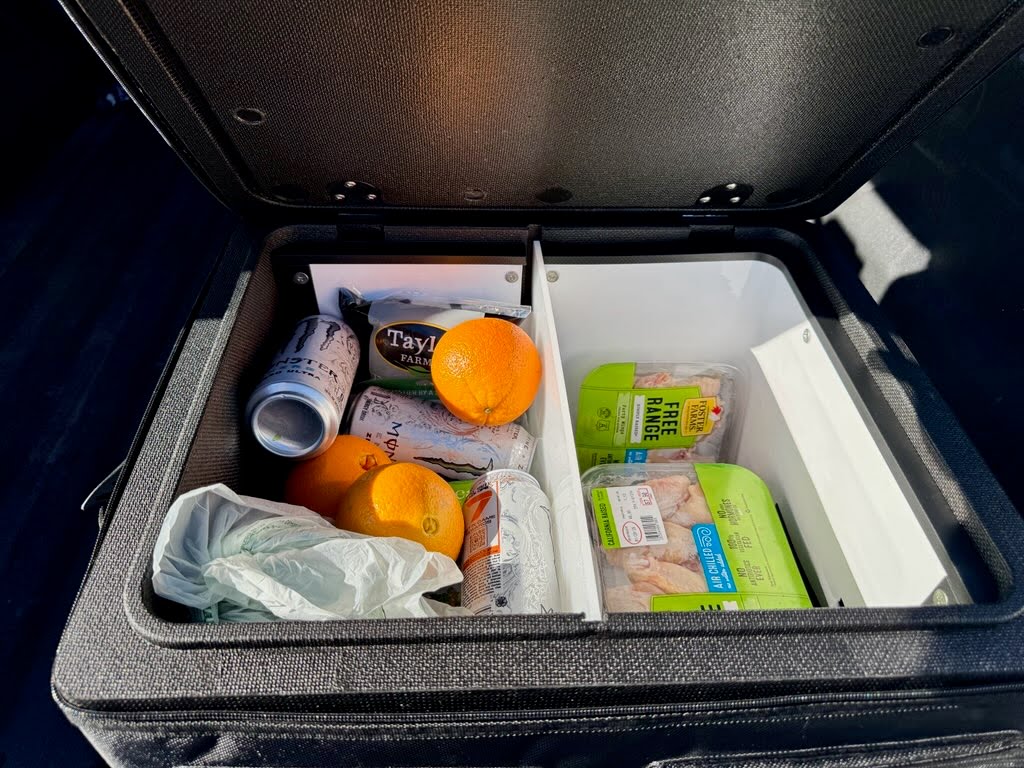
No-cook meals lean hard on cold-chain reliability. Greek yogurt parfaits, hummus wraps, deli sandwiches, and charcuterie boards all need steady temperatures below 40°F to stay safe through a multi-day trip. Ice coolers handle this for the first 36 to 48 hours, then meltwater starts pooling and your sliced turkey ends up swimming. Switching to a 12V fridge solves the problem at the source.
After three months of overland testing across Big Bear, the Mojave, and weekend runs with my 2025 Chevy Colorado ZR2, the TRP 4×4 Mammoth 40L has earned its spot in my rig. The 15-pound EPP shell holds 35°F through 95°F afternoons while pulling under 1 amp on ECO mode, which means a single LiFePO4 battery powers it for two full days without solar input. For no-cook menus heavy on dairy and produce, the Mammoth’s freezer mode also doubles as a backup ice maker for the rare moments you want a frozen treat at camp.
At $450 with a one-year warranty, the Mammoth costs less than two seasons of premium ice runs. Beyond the cost math, it removes the daily drain-and-restock ritual ice coolers force on you. Spend prep time assembling fresh wraps and parfaits instead of managing meltwater. For a deeper breakdown of how it performed across a full overland season, read my full TRP 4×4 Mammoth 40L review.
Tested on the Trail
TRP 4×4 Mammoth 40L Freezer & Fridge
15 pounds, EPP shell, freezer-capable, $450. Skip the daily ice runs and keep your no-cook meals at perfect temps for 4-day trips.
Cooler Strategy for No-Cook Meals
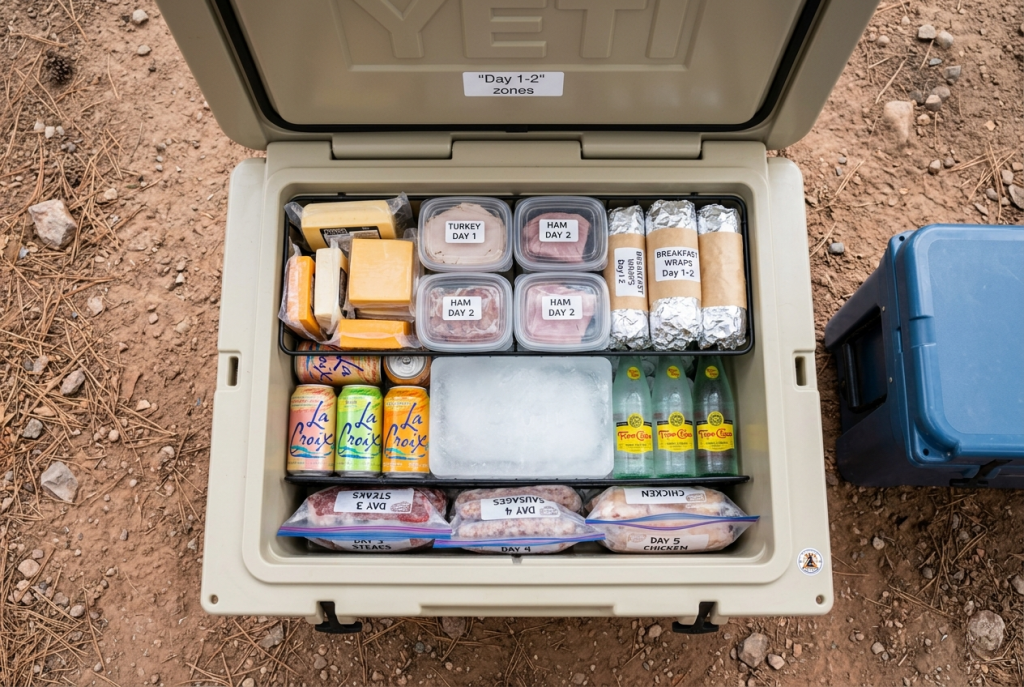
No cook camping meals depend on cooler performance more than any other method. Here is the framework for keeping food safe across trip lengths.
Days 1 to 2: Fresh Perishables
During the first 48 hours, your cooler holds fresh deli meat, sliced cheese, raw vegetables, yogurt, and dairy-based dips. Specifically, these ingredients stay food-safe below 40F in a properly iced cooler. Most no-cook breakfast and lunch meals in this guide work within this window.
Days 3 to 4: Transition Phase
As cooler temperatures climb, shift to ingredients with more forgiveness. Hard cheeses (cheddar, parmesan) last longer than soft (brie, cream cheese). Cured meats (salami, pepperoni) outlast deli meat. Apples and oranges outlast berries. Consequently, plan your menu so delicate ingredients get eaten first.
Day 5 and Beyond: Shelf-Stable Only
Past day 4, assume your cooler is room temperature. Shelf-stable pantry items (nut butters, jerky, tortillas, crackers, dried fruit, nuts, shelf-stable tuna pouches, hard salami, vacuum-sealed cheese) extend no-cook meals indefinitely. Every trip should include a shelf-stable backup plan.
5 No-Cook Breakfast Meals
Breakfast without a fire beats waiting 45 minutes for coal-ready flames when the goal is hitting the trail early. Specifically, these five no cook camping meals assemble in under 10 minutes.
1. Overnight Oats
Serves 2 | Prep 5 min (night before) | Assembly 0 min
Rolled oats, chia seeds, milk (or plant milk), honey, and fruit layered in a Mason jar or insulated container the night before. Next morning, open and eat. No stove, no fire, no cleanup beyond rinsing the jar.
Full recipe coming soon
2. Yogurt and Granola Bar Board
Serves 4 | Prep 0 min | Assembly 5 min
Individual yogurt cups, granola, fresh berries, sliced banana, honey, and chopped nuts arranged on a cutting board. Diners build their own bowls. Kid-friendly and endlessly customizable for dietary restrictions.
Full recipe coming soon
3. Cold Brew Coffee Setup
Serves 4 | Prep 12 hours (at home) | Assembly 0 min
1 cup coarse-ground coffee steeped in 4 cups cold water overnight at home. Strain and pour into a vacuum-insulated thermos. Keeps cold and strong for 48 hours in the cooler. Pour over ice with milk or plant milk.
Full recipe coming soon
4. Breakfast Burritos (Pre-Made)
Serves 4 | Prep 30 min (at home) | Assembly 2 min (camp)
Pre-cook scrambled eggs, breakfast sausage, diced peppers, and cheese at home. Then wrap in tortillas, freeze flat, and pack in cooler. Thaw overnight in the cooler. Eat cold or warm on a rock in the sun for 20 minutes before eating.
Full recipe coming soon
5. Bagels with Cream Cheese and Lox
Serves 4 | Prep 0 min | Assembly 5 min
Pre-sliced everything bagels, whipped cream cheese, smoked salmon (vacuum-sealed), thinly sliced red onion, capers, and fresh dill. Assembles faster than waiting for coffee to brew. Day 1 or 2 only due to dairy and fish.
Full recipe coming soon
10 No-Cook Lunches and Dinners
Lunch and dinner without heat means thinking like a cold buffet builder. Moreover, these ten no-cook camping food ideas deliver real meals, not snack substitutes.
6. Overland Charcuterie Board
Serves 4 | Prep 0 min | Assembly 10 min
Cured meats (salami, prosciutto, chorizo), hard cheeses (manchego, cheddar, parmesan), crackers, olives, dried fruit, almonds, and honey on a camp cutting board. Notably, the easiest way to feed 4 people without cooking anything.
Full recipe coming soon
7. Cold-Cut Sub Sandwich Bar
Serves 4 | Prep 0 min | Assembly 10 min
Sub rolls or ciabatta, deli ham and turkey, provolone, sliced tomato, lettuce, red onion, pickles, mayo, and mustard. Each person builds their own sub. Day 1 or 2 window for deli meat safety.
Full recipe coming soon
8. Make-Ahead Camping Wraps
Serves 4 | Prep 20 min (at home) | Assembly 0 min
Flour tortillas filled with hummus, roasted peppers, spinach, feta, and grilled chicken or chickpeas. Roll tight, wrap in foil, chill in cooler. Eat cold for lunch. Specifically, stays food-safe for 36 hours in a proper cooler.
Full recipe coming soon
9. Tuna Salad Overland Lunch
Serves 2 | Prep 5 min | Assembly 5 min
Shelf-stable tuna pouches (StarKist Creations or Wild Planet) mixed with mayo, diced celery, red onion, and cracked pepper. Serve on crackers, in pita, or over lettuce. Works on day 5+ when cooler is done.
Full recipe coming soon
10. Cold Pasta Salad
Serves 4 | Prep 20 min (at home) | Assembly 0 min
Cooked rotini or fusilli pasta tossed with Italian dressing, cubed salami, mozzarella balls, cherry tomatoes, black olives, and fresh basil. Made at home, chilled overnight, eaten cold at camp. Day 1 or 2 window.
Full recipe coming soon
11. Hummus and Veggie Platter
Serves 4 | Prep 0 min | Assembly 8 min
Pre-made hummus (Sabra, Cedar’s), pita bread, carrot sticks, cucumber slices, cherry tomatoes, bell pepper strips, and Kalamata olives. Moreover, pairs with the charcuterie board for a full Mediterranean spread.
Full recipe coming soon
12. Cold Grain Bowls
Serves 2 | Prep 30 min (at home) | Assembly 3 min
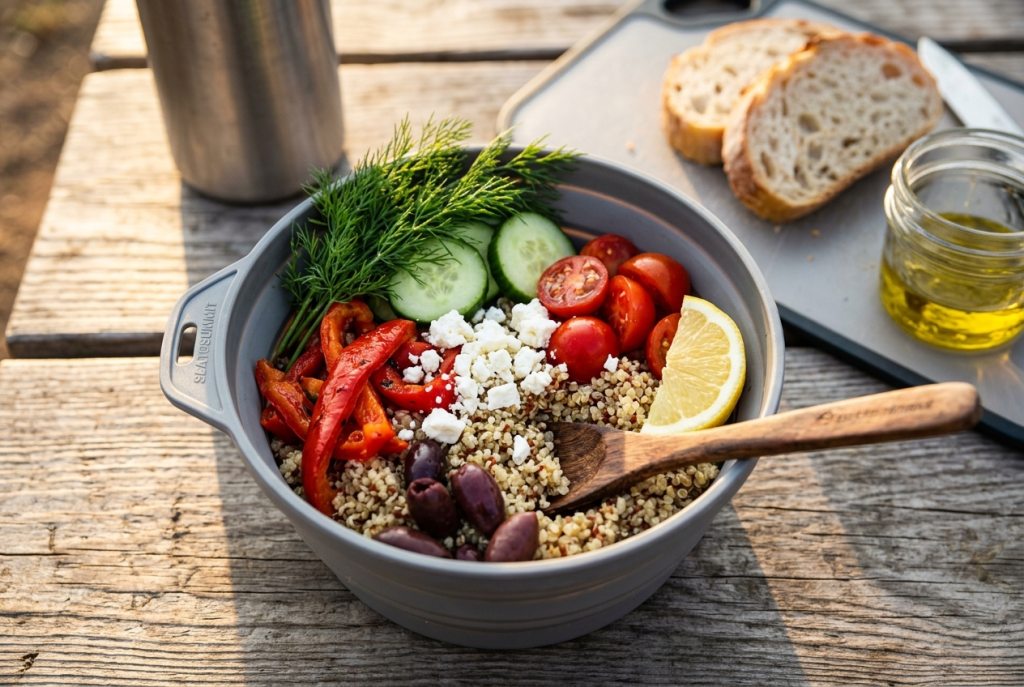
Pre-cooked quinoa or farro tossed with roasted vegetables, feta or goat cheese, lemon vinaigrette, and fresh herbs. Chill overnight, eat cold. Notably, holds up to 48 hours in a properly iced cooler.
Full recipe coming soon
13. Caprese Skewers
Serves 4 | Prep 0 min | Assembly 10 min
Fresh mozzarella balls, cherry tomatoes, and fresh basil leaves on toothpicks or small skewers. Drizzle with balsamic glaze and olive oil. Finally, a restaurant-quality appetizer with zero cooking.
Full recipe coming soon
14. Chicken Salad Wrap
Serves 4 | Prep 15 min (at home) | Assembly 2 min
Pre-made chicken salad (rotisserie chicken, mayo, celery, grapes, walnuts) wrapped in tortillas or spread on croissants. Packs cold, eats cold. Day 1 or 2 window.
Full recipe coming soon
15. Shelf-Stable Chickpea Salad
Serves 2 | Prep 0 min | Assembly 5 min
Canned chickpeas drained, mixed with olive oil, lemon juice, cumin, diced red onion, cherry tomatoes, and parsley. Works on any trip day because all ingredients are shelf-stable or ambient-tolerant.
Full recipe coming soon
Cold Storage
Yeti Tundra 45 Hard Cooler
45-quart capacity. Holds sub-40F for 60+ hours with pre-chill and a 10-pound ice block at 85F ambient. The single most important tool for no-cook overland meals.
5 No-Cook Snacks and Trail Food
Snacks keep energy up between meals and cover gaps when cooking is out of the question. Specifically, these five cold camping meals work as trail food, snacks, or emergency backups.
16. Beef Jerky and Nut Mix
Serves 4 | Prep 0 min | Assembly 2 min
Premium beef jerky (Country Archer, People’s Choice), mixed nuts (almonds, cashews, pecans), dried cranberries, and dark chocolate chunks. Combine in a reusable pouch. Shelf-stable for the full trip.
Full recipe coming soon
17. Apple Slices with Peanut Butter
Serves 2 | Prep 0 min | Assembly 2 min
Sliced apples (Honeycrisp or Fuji hold best), natural peanut butter (Smucker’s Natural or Jif Natural), and a sprinkle of cinnamon. Apples keep well at ambient temperature for 5+ days without refrigeration.
Full recipe coming soon
18. Cheese and Cracker Plate
Serves 4 | Prep 0 min | Assembly 3 min
Hard cheddar, aged gouda, or parmesan (vacuum-sealed varieties last 7+ days unrefrigerated below 85F) with Ritz or Triscuit crackers and dried apricots. Simple but satisfying.
Full recipe coming soon
19. Trail Bar Assembly
Serves 4 | Prep 20 min (at home) | Assembly 0 min
Rolled oats, peanut butter, honey, dark chocolate chips, and dried fruit pressed into a pan, chilled, and cut into bars. Wrapped individually in parchment. Finally, better than any store-bought bar and lasts 10 days.
Full recipe coming soon
20. Pickles and Pretzels
Serves 4 | Prep 0 min | Assembly 2 min
Dill pickle spears (Vlasic or Claussen) with hard pretzels and yellow mustard. Replaces electrolytes lost on hot trail days. Notably, an acquired but addictive combination.
Full recipe coming soon
10 Pro Tips From the Trail
After 40+ overland trips running no cook camping meals in real conditions, these ten tips solve the failure modes killing otherwise-good meals. Moreover, each one comes from a specific trip where the lesson was learned firsthand.
- Pre-chill the cooler 12 hours before loading. Otherwise, room-temperature coolers waste 8 hours of ice capacity cooling the walls instead of your food.
- Freeze water bottles for dual-purpose ice. Specifically, they keep food cold and become drinking water as they thaw.
- Pack meats at the bottom of the cooler. Because cold sinks, meats stay freshest closest to the coldest zone.
- Vacuum-seal cheese and deli meats at home. Notably, vacuum sealing extends shelf life 3x over standard deli wrap.
- Label day 1 vs day 3+ foods. Moreover, colored tape on containers prevents accidentally eating day-4 meals on day 1.
- Keep a dedicated cooler for drinks. Every time someone opens the food cooler, it loses 5 degrees for 15 minutes.
- Bring a collapsible cutting board. For example, plastic or silicone boards fold and pack smaller than rigid wood.
- Pack shelf-stable protein for day 5+ backup. Additionally, jerky, canned tuna pouches, and hard salami save trips running long.
- Test the “finger temp” of cooler contents daily. If the surface feels lukewarm, then eat remaining perishables or discard them.
- Compost food waste into a sealed container. Because scraps attract wildlife, a sealed Plano trunk keeps them contained for pack-out.
Frequently Asked Questions
What are the best no-cook camping meals for hot weather?
The best no cook camping meals for hot weather include overland charcuterie boards, cold grain bowls, make-ahead wraps, and caprese skewers. These meals require zero heat exposure during assembly, contain hydrating ingredients like fresh vegetables and fruit, and serve cold straight from the cooler. Additionally, skip dairy-heavy meals in temperatures above 90F since cooler performance degrades fast in direct sun.
How long do cold-cut sandwiches stay safe without refrigeration?
Cold-cut sandwiches with deli meat stay food-safe for up to 2 hours at ambient temperatures above 40F. In a cooler below 40F, the safe window extends to 36 to 48 hours. For longer trips, switch to cured meats (salami, pepperoni) which last 5+ days unrefrigerated and 2+ weeks in a cooler.
What shelf-stable foods work best for multi-day overland trips?
The best shelf-stable foods for multi-day overland trips include vacuum-sealed hard cheeses, cured meats (salami, pepperoni, jerky), tortillas, crackers, nut butters, shelf-stable tuna pouches, canned chickpeas, dried fruit, nuts, and hard salami. These staples safely store at ambient temperatures up to 85F for 7 to 14 days and form the foundation of no-cook meals on day 3 and beyond.
Is it safe to eat leftover no-cook meals from the cooler the next day?
Yes, leftover no-cook meals from a properly iced cooler (sub-40F) stay food-safe for 24 hours after initial preparation. However, discard any dairy-based meals (yogurt, creamy dips) left at ambient temperature longer than 2 hours. Meats with visible moisture changes or off-smells should be discarded immediately regardless of cooler temperature.
How do you keep fresh vegetables crisp in a cooler?
Keep fresh vegetables crisp by storing them in sealed containers or zip bags with a paper towel inside to absorb moisture. Specifically, hardy vegetables (carrots, celery, peppers, cabbage) last 5+ days in a cooler. Delicate vegetables (lettuce, spinach, herbs) wilt within 48 hours and should be eaten first. Avoid packing vegetables directly on ice which causes freezer damage.
What no-cook camping meals work for a 7-day trip?
For a 7-day overland trip, front-load perishable meals on days 1 to 2 (cold-cut subs, caprese skewers, fresh wraps), transition to semi-perishable meals on days 3 to 4 (hard cheese and cracker plates, chickpea salads, cured meat charcuterie), and rely on shelf-stable meals on days 5 to 7 (tuna pouches, peanut butter apple slices, trail bars). Plan menus around your cooler’s realistic cold-holding window.
Will no-cook meals work without any cooler at all?
Yes, no-cook meals without a cooler work using shelf-stable ingredients exclusively. Tuna pouches, peanut butter, tortillas, hard salami, vacuum-sealed cheese, crackers, dried fruit, nuts, and instant oatmeal (with cold water) form a complete no-cooler menu. These meals trade variety for simplicity but work indefinitely at ambient temperatures up to 85F.
Are no-cook meals safe during fire bans on public lands?
Yes, no-cook meals are always safe during fire bans because they require no heat source, open flame, or charcoal. During Stage 2 fire restrictions on USFS, BLM, and NPS lands, all wood fires and charcoal are banned but propane stoves and no-cook meals remain permitted. Therefore, no-cook meals serve as the fail-safe fallback when fire regulations change mid-trip.